
Musicians
Authority Sources
Member of
Creator: Bodalia, Chandra
Description
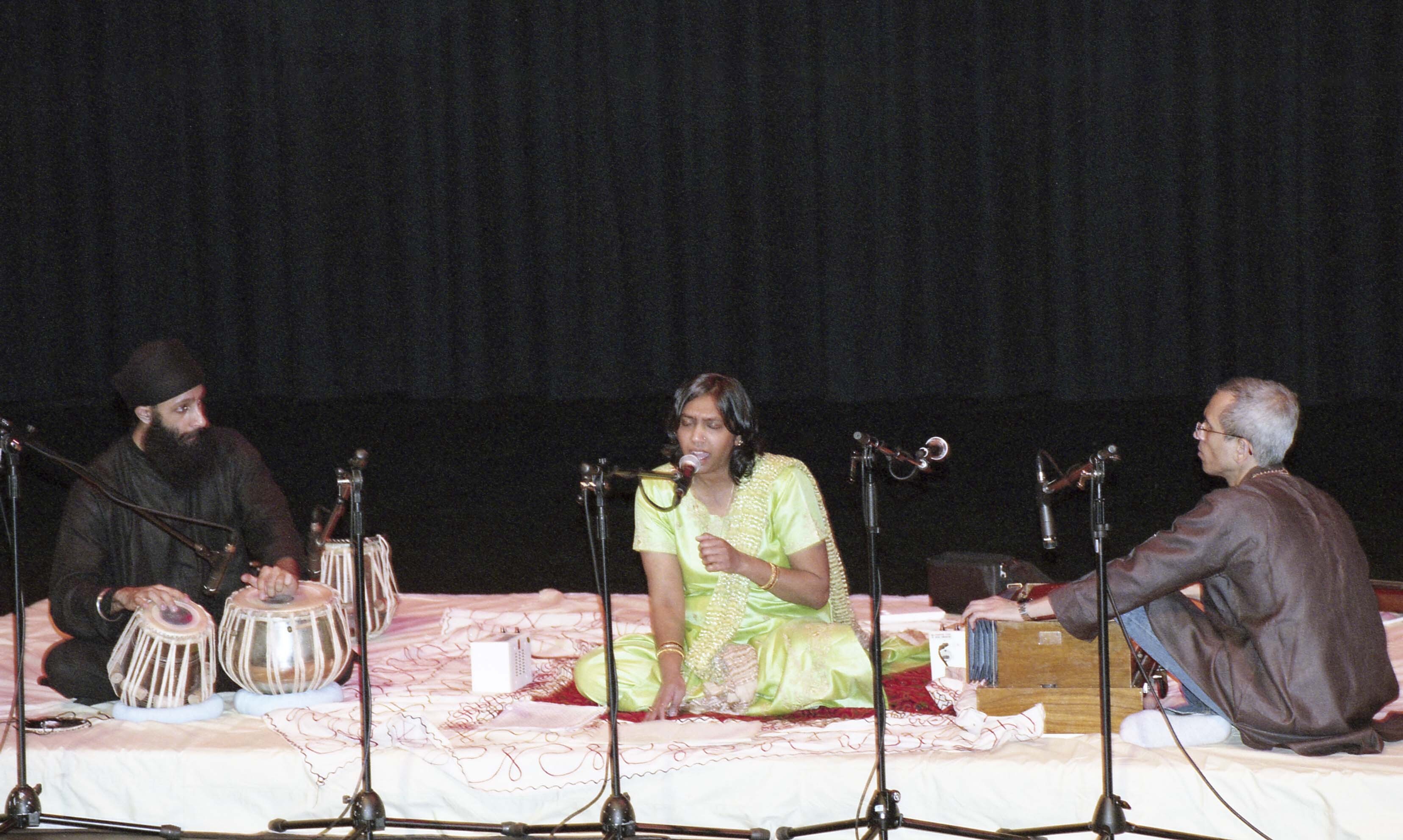
Photograph of an unidentified individual performing at a variety show organized by the Pandit Jasraj School of Music Foundation. The individual is accompanied by Neelamjit Dhillon on tabla (hand drums) and Mohan Bhide on harmonium. The show featured students from the Pandit Jasraj School of Music and other performing artists of Vancouver.
Neelamjit Dhillon is a professional musician equally versed in both Eastern and Western traditions. He is an award-winning multi-instrumentalist and composer based in Los Angeles. Born and raised in Vancouver, Canada, Dhillon is skilled in both North Indian classical and American jazz music. He has obtained a Bachelor of Music degree in Jazz Studies (majoring in saxophone performance) from Capilano College and has also completed a Bachelor of Education degree in Secondary Music Education from the University of British Columbia. The tabla is Dhillon's first instrument, an instrument he has played since the age of 10, and he studies under the tutelage of Ustad Zakir Hussain. His primary instruments also include the saxophone and bansuri. Dhillon has had the distinction of working with some of India's finest, such as Louiz Banks, Fazal Qureshi, Rakesh Chaurasia and Taufiq Qureshi. He has performed around the world at events and festivals in locales such as Somalia, India, Brazil, Europe, the United States, and Canada.
Mohan Bhide learnt Indian music from the age of 6 and took advanced music courses under the tutelage of Balasaheb Mate and Govindrao Patwardhan – both accomplished harmonium players and versatile musicians. Bhide has played with many well-known artists, including Chota Gandharva, Sudhir Datar, Shaila Datar, Ashwini Bhide-Deshpande, Shubha Mudgal, and Sanjeev Abhyankar to name a few.
The Pandit Jasraj School of Music Foundation was incorporated in 1994 as a Society in the Province of British Columbia, dedicated to promoting vocal music in the Mewati Gharana within the Lower Mainland of Vancouver. Their Mission is to promote classical Indian music through instruction and performance.
Neelamjit Dhillon is a professional musician equally versed in both Eastern and Western traditions. He is an award-winning multi-instrumentalist and composer based in Los Angeles. Born and raised in Vancouver, Canada, Dhillon is skilled in both North Indian classical and American jazz music. He has obtained a Bachelor of Music degree in Jazz Studies (majoring in saxophone performance) from Capilano College and has also completed a Bachelor of Education degree in Secondary Music Education from the University of British Columbia. The tabla is Dhillon's first instrument, an instrument he has played since the age of 10, and he studies under the tutelage of Ustad Zakir Hussain. His primary instruments also include the saxophone and bansuri. Dhillon has had the distinction of working with some of India's finest, such as Louiz Banks, Fazal Qureshi, Rakesh Chaurasia and Taufiq Qureshi. He has performed around the world at events and festivals in locales such as Somalia, India, Brazil, Europe, the United States, and Canada.
Mohan Bhide learnt Indian music from the age of 6 and took advanced music courses under the tutelage of Balasaheb Mate and Govindrao Patwardhan – both accomplished harmonium players and versatile musicians. Bhide has played with many well-known artists, including Chota Gandharva, Sudhir Datar, Shaila Datar, Ashwini Bhide-Deshpande, Shubha Mudgal, and Sanjeev Abhyankar to name a few.
The Pandit Jasraj School of Music Foundation was incorporated in 1994 as a Society in the Province of British Columbia, dedicated to promoting vocal music in the Mewati Gharana within the Lower Mainland of Vancouver. Their Mission is to promote classical Indian music through instruction and performance.
Member of
Creator: Bodalia, Chandra
Description
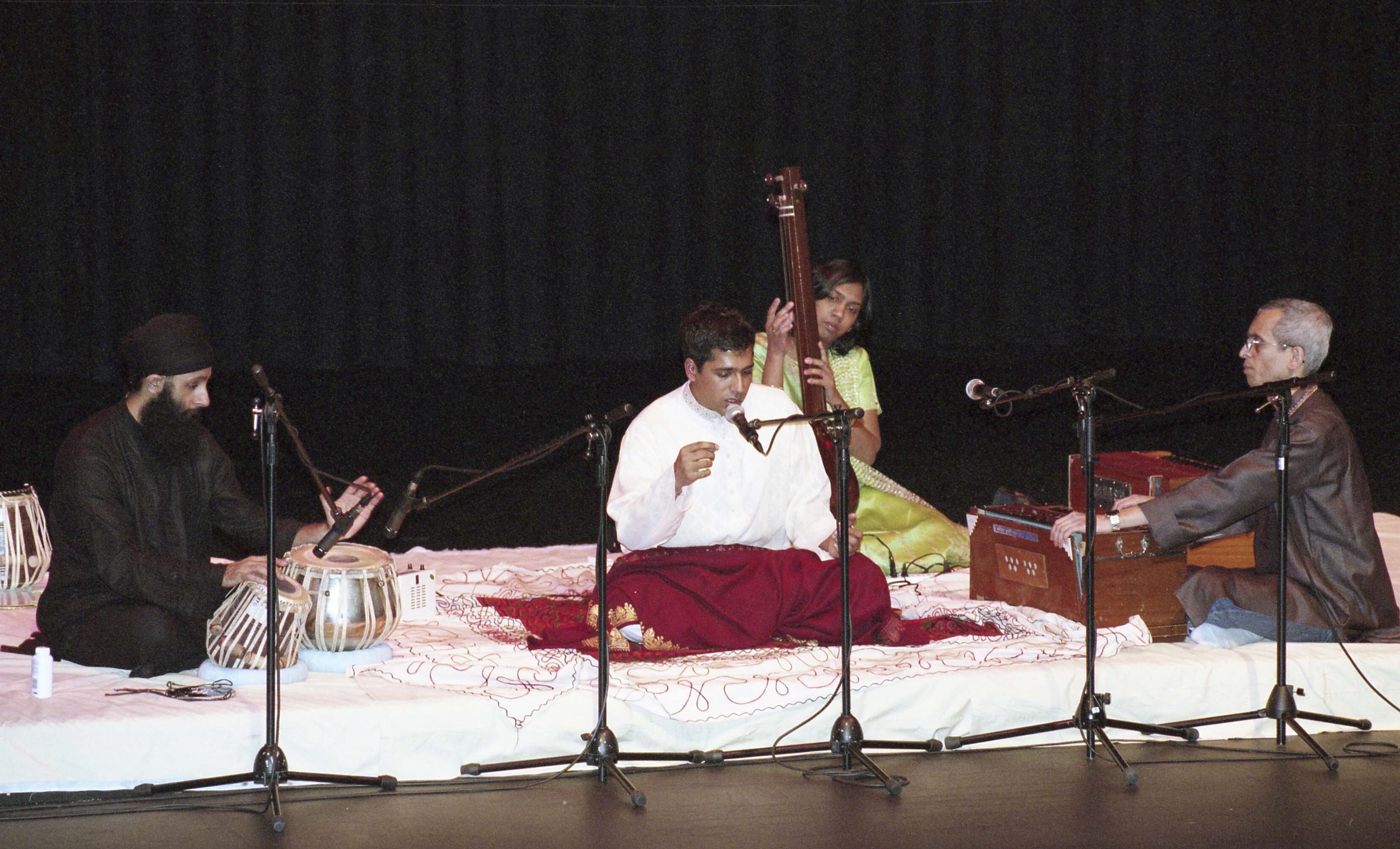
Photograph of unidentified individuals performing at a variety show organized by the Pandit Jasraj School of Music Foundation. The individuals are accompanied by Neelamjit Dhillon on tabla (hand drums) and Mohan Bhide on harmonium. The show featured students from the Pandit Jasraj School of Music and other performing artists of Vancouver.
Neelamjit Dhillon is a professional musician equally versed in both Eastern and Western traditions. He is an award-winning multi-instrumentalist and composer based in Los Angeles. Born and raised in Vancouver, Canada, Dhillon is skilled in both North Indian classical and American jazz music. He has obtained a Bachelor of Music degree in Jazz Studies (majoring in saxophone performance) from Capilano College and has also completed a Bachelor of Education degree in Secondary Music Education from the University of British Columbia. The tabla is Dhillon's first instrument, an instrument he has played since the age of 10, and he studies under the tutelage of Ustad Zakir Hussain. His primary instruments also include the saxophone and bansuri. Dhillon has had the distinction of working with some of India's finest, such as Louiz Banks, Fazal Qureshi, Rakesh Chaurasia and Taufiq Qureshi. He has performed around the world at events and festivals in locales such as Somalia, India, Brazil, Europe, the United States, and Canada.
Mohan Bhide learnt Indian music from the age of 6 and took advanced music courses under the tutelage of Balasaheb Mate and Govindrao Patwardhan – both accomplished harmonium players and versatile musicians. Bhide has played with many well-known artists, including Chota Gandharva, Sudhir Datar, Shaila Datar, Ashwini Bhide-Deshpande, Shubha Mudgal, and Sanjeev Abhyankar to name a few.
The Pandit Jasraj School of Music Foundation was incorporated in 1994 as a Society in the Province of British Columbia, dedicated to promoting vocal music in the Mewati Gharana within the Lower Mainland of Vancouver. Their Mission is to promote classical Indian music through instruction and performance.
Neelamjit Dhillon is a professional musician equally versed in both Eastern and Western traditions. He is an award-winning multi-instrumentalist and composer based in Los Angeles. Born and raised in Vancouver, Canada, Dhillon is skilled in both North Indian classical and American jazz music. He has obtained a Bachelor of Music degree in Jazz Studies (majoring in saxophone performance) from Capilano College and has also completed a Bachelor of Education degree in Secondary Music Education from the University of British Columbia. The tabla is Dhillon's first instrument, an instrument he has played since the age of 10, and he studies under the tutelage of Ustad Zakir Hussain. His primary instruments also include the saxophone and bansuri. Dhillon has had the distinction of working with some of India's finest, such as Louiz Banks, Fazal Qureshi, Rakesh Chaurasia and Taufiq Qureshi. He has performed around the world at events and festivals in locales such as Somalia, India, Brazil, Europe, the United States, and Canada.
Mohan Bhide learnt Indian music from the age of 6 and took advanced music courses under the tutelage of Balasaheb Mate and Govindrao Patwardhan – both accomplished harmonium players and versatile musicians. Bhide has played with many well-known artists, including Chota Gandharva, Sudhir Datar, Shaila Datar, Ashwini Bhide-Deshpande, Shubha Mudgal, and Sanjeev Abhyankar to name a few.
The Pandit Jasraj School of Music Foundation was incorporated in 1994 as a Society in the Province of British Columbia, dedicated to promoting vocal music in the Mewati Gharana within the Lower Mainland of Vancouver. Their Mission is to promote classical Indian music through instruction and performance.
Member of
Creator: Bodalia, Chandra
Description
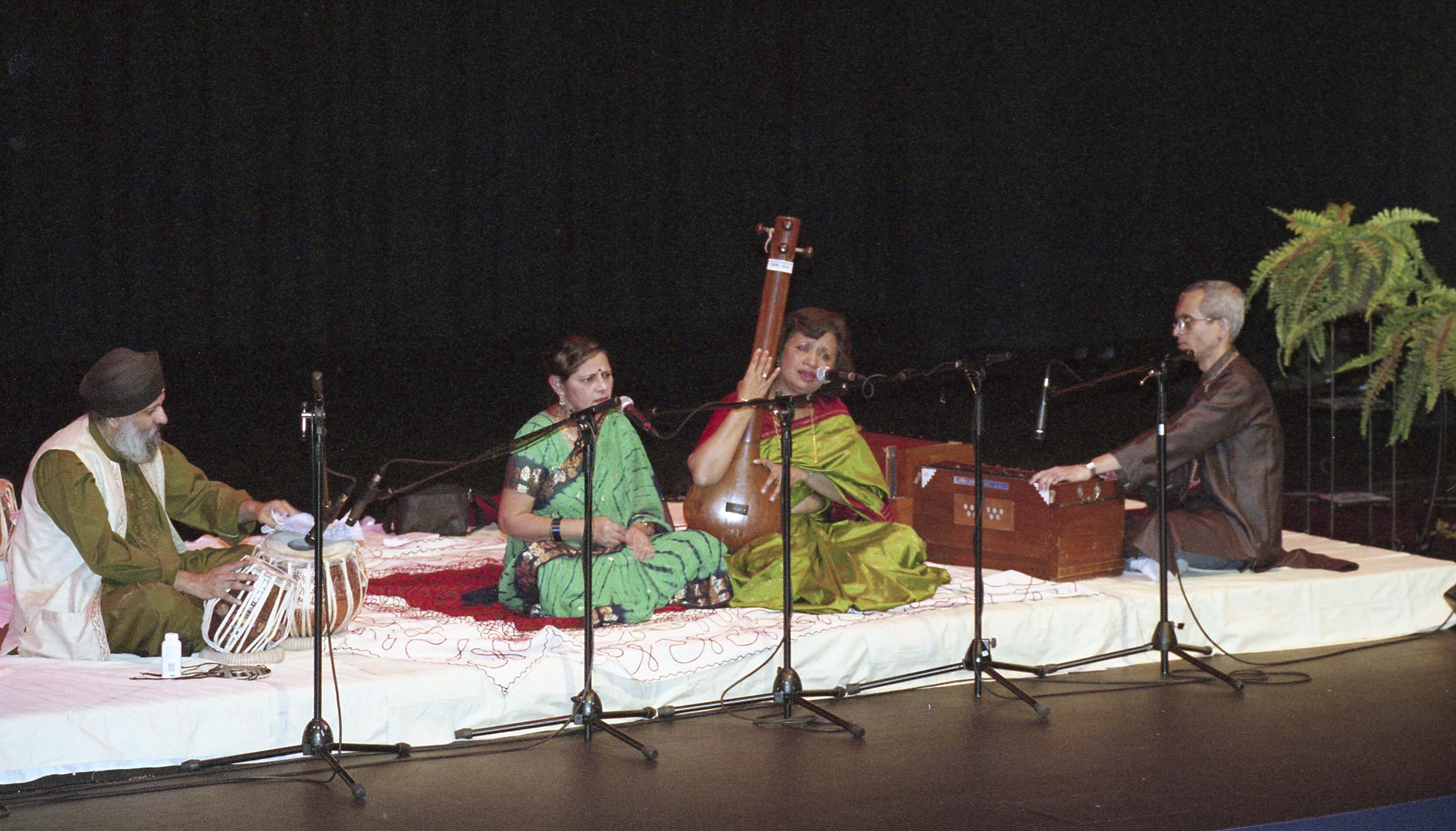
Photograph of unidentified individuals performing at a variety show organized by the Pandit Jasraj School of Music Foundation. The individuals are accompanied by Amritpal Jabbal on tabla (hand drums) and Mohan Bhide on harmonium. The show featured students from the Pandit Jasraj School of Music and other performing artists of Vancouver.
Amritpal Jabbal is a tabla player who is a disciple of Ustad Zakir Hussain. He has accompanied many of India's great artists, including Padmavibhushan Pandit Jasraj, Pandit Jitendra Abisheki, Rattan Mohan Sharma and Hemang Mehta. Jabbal also served on the board of the Pandit Jasraj School of Music Foundation.
Mohan Bhide learnt Indian music from the age of 6 and took advanced music courses under the tutelage of Balasaheb Mate and Govindrao Patwardhan – both accomplished harmonium players and versatile musicians. Bhide has played with many well-known artists, including Chota Gandharva, Sudhir Datar, Shaila Datar, Ashwini Bhide-Deshpande, Shubha Mudgal, and Sanjeev Abhyankar to name a few.
The Pandit Jasraj School of Music Foundation was incorporated in 1994 as a Society in the Province of British Columbia, dedicated to promoting vocal music in the Mewati Gharana within the Lower Mainland of Vancouver. Their Mission is to promote classical Indian music through instruction and performance.
Amritpal Jabbal is a tabla player who is a disciple of Ustad Zakir Hussain. He has accompanied many of India's great artists, including Padmavibhushan Pandit Jasraj, Pandit Jitendra Abisheki, Rattan Mohan Sharma and Hemang Mehta. Jabbal also served on the board of the Pandit Jasraj School of Music Foundation.
Mohan Bhide learnt Indian music from the age of 6 and took advanced music courses under the tutelage of Balasaheb Mate and Govindrao Patwardhan – both accomplished harmonium players and versatile musicians. Bhide has played with many well-known artists, including Chota Gandharva, Sudhir Datar, Shaila Datar, Ashwini Bhide-Deshpande, Shubha Mudgal, and Sanjeev Abhyankar to name a few.
The Pandit Jasraj School of Music Foundation was incorporated in 1994 as a Society in the Province of British Columbia, dedicated to promoting vocal music in the Mewati Gharana within the Lower Mainland of Vancouver. Their Mission is to promote classical Indian music through instruction and performance.
Creator: Bodalia, Chandra
Description
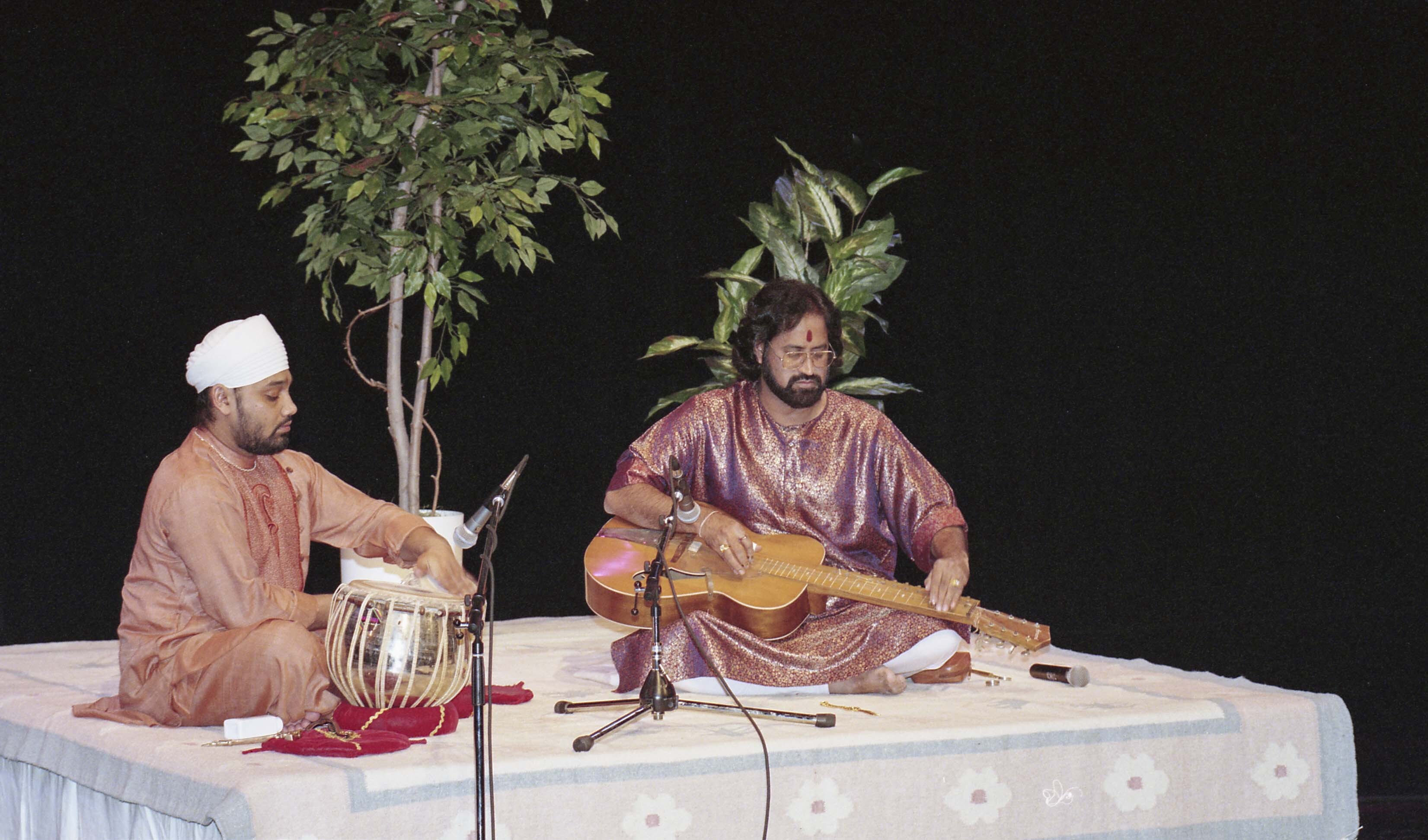
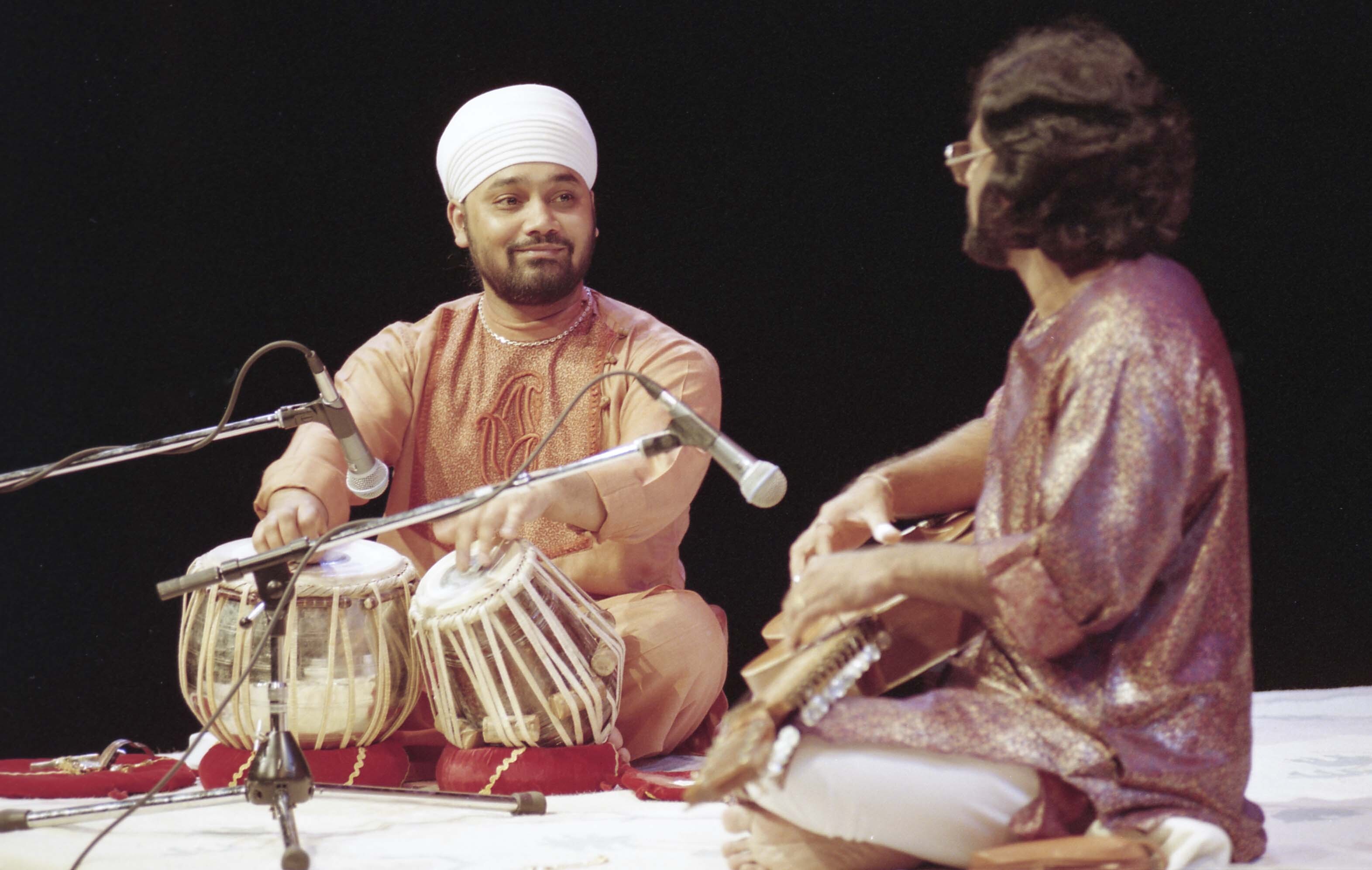
Photograph of Vishwa Mohan Bhatt performing with an unidentified individual at the Michael J Fox Theatre in Burnaby, British Columbia (B.C.).
Vishwa Mohan Bhatt is an Indian classical music instrumentalist and creator of the instrument, the mohan veena. Bhatt was the disciple of Pandit Ravi Shankar and belongs to the elite body of musicians which traces its origins to the Moughal emperor Akbar's court musician Tansen and his guru the Hindu Mystic Swami Haridas. Bhatt is the creator of the mohan veena, a hybrid slide guitar that has been added to the list of Indian classical instruments. The mohan veena is a highly modified archtop, which Bhatt plays lap-style. It has 19 strings. three melody strings and four three drone strings coming out of the peg heads, and 12 sympathetic strings mounted to a piece of wood added to the side of the neck. The melody strings are on what we would consider the treble side of the neck, and the drone strings are on the bass side. The drone strings are lower in height than the melody strings to allow for unrestricted playing of the melody strings. The sympathetic strings run underneath the melody and drone strings to yet another level in the bridge. The instrument has a carved spruced top, mahogany back and sides, a mahogany neck, and a flat, fretless, rosewood fingerboard. Due to his contributions to Indian classical music and musicians, Bhatt was honored with the Padma Bhusan and Padma Shri. In 1994, Bhatt won a grammy award along with Ry Cooder for their World Music Album, 'A Meeting by the River'.
The Michael J Fox Theatre is located in Burnaby South Secondary School in B.C. Burnaby South Secondary School is one of eight secondary schools within the Burnaby School District, in south central Burnaby. Built as part of the school in 1993, the Michael J Fox Theatre is overseen by an independent, non-profit society. The Michael J Fox Theatre Society Board consists of community volunteers and functions independently of the Burnaby School Board. In November 1995, the Theatre was officially named after Michael J. Fox, in recognition of his achievements in the arts and commitment to the community.
Vishwa Mohan Bhatt is an Indian classical music instrumentalist and creator of the instrument, the mohan veena. Bhatt was the disciple of Pandit Ravi Shankar and belongs to the elite body of musicians which traces its origins to the Moughal emperor Akbar's court musician Tansen and his guru the Hindu Mystic Swami Haridas. Bhatt is the creator of the mohan veena, a hybrid slide guitar that has been added to the list of Indian classical instruments. The mohan veena is a highly modified archtop, which Bhatt plays lap-style. It has 19 strings. three melody strings and four three drone strings coming out of the peg heads, and 12 sympathetic strings mounted to a piece of wood added to the side of the neck. The melody strings are on what we would consider the treble side of the neck, and the drone strings are on the bass side. The drone strings are lower in height than the melody strings to allow for unrestricted playing of the melody strings. The sympathetic strings run underneath the melody and drone strings to yet another level in the bridge. The instrument has a carved spruced top, mahogany back and sides, a mahogany neck, and a flat, fretless, rosewood fingerboard. Due to his contributions to Indian classical music and musicians, Bhatt was honored with the Padma Bhusan and Padma Shri. In 1994, Bhatt won a grammy award along with Ry Cooder for their World Music Album, 'A Meeting by the River'.
The Michael J Fox Theatre is located in Burnaby South Secondary School in B.C. Burnaby South Secondary School is one of eight secondary schools within the Burnaby School District, in south central Burnaby. Built as part of the school in 1993, the Michael J Fox Theatre is overseen by an independent, non-profit society. The Michael J Fox Theatre Society Board consists of community volunteers and functions independently of the Burnaby School Board. In November 1995, the Theatre was officially named after Michael J. Fox, in recognition of his achievements in the arts and commitment to the community.
Creator: Bodalia, Chandra
Description
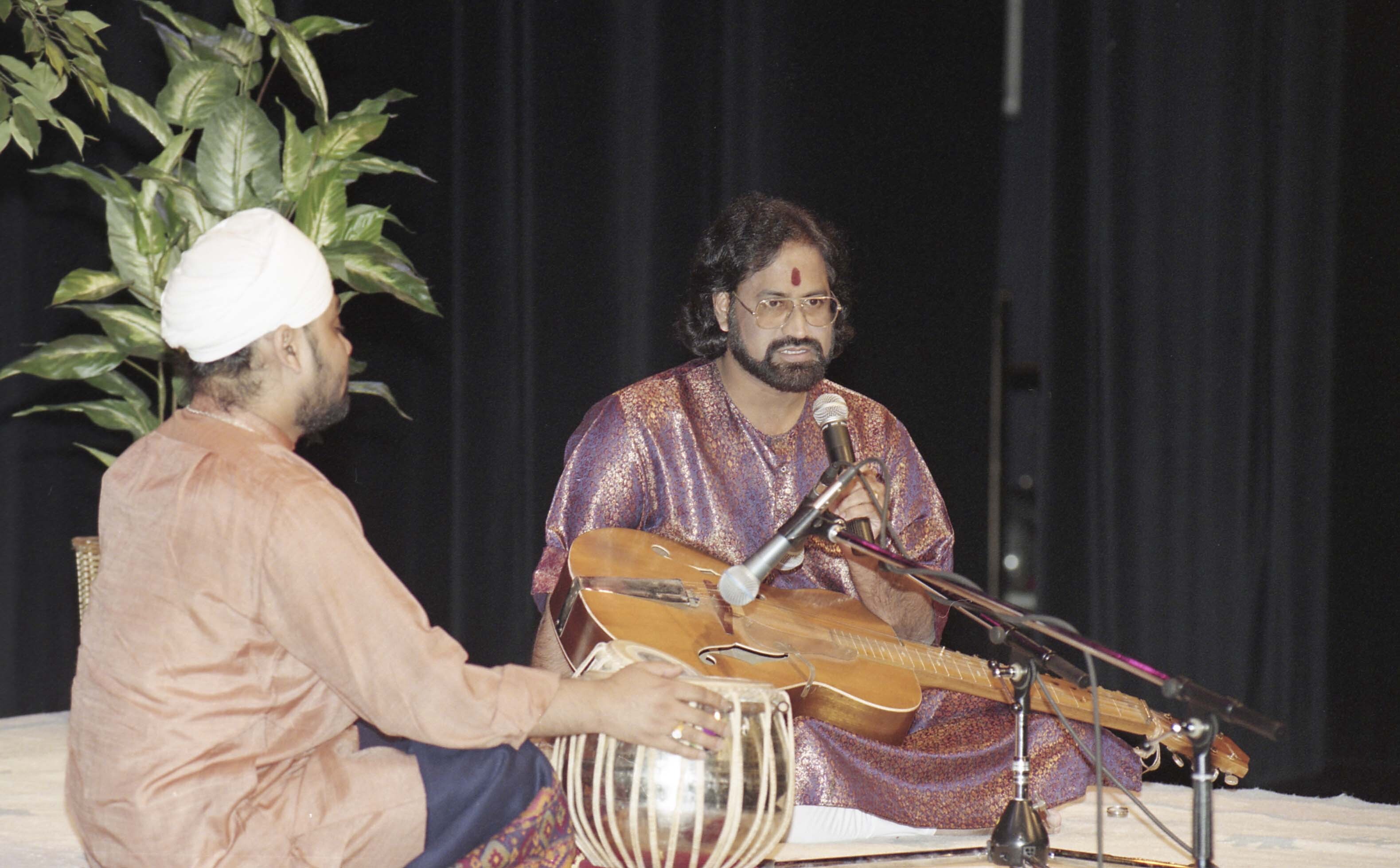
Photograph of Vishwa Mohan Bhatt performing with an unidentified individual at the Michael J Fox Theatre in Burnaby, British Columbia (B.C.).
Vishwa Mohan Bhatt is an Indian classical music instrumentalist and creator of the instrument, the mohan veena. Bhatt was the disciple of Pandit Ravi Shankar and belongs to the elite body of musicians which traces its origins to the Moughal emperor Akbar's court musician Tansen and his guru the Hindu Mystic Swami Haridas. Bhatt is the creator of the mohan veena, a hybrid slide guitar that has been added to the list of Indian classical instruments. The mohan veena is a highly modified archtop, which Bhatt plays lap-style. It has 19 strings. three melody strings and four three drone strings coming out of the peg heads, and 12 sympathetic strings mounted to a piece of wood added to the side of the neck. The melody strings are on what we would consider the treble side of the neck, and the drone strings are on the bass side. The drone strings are lower in height than the melody strings to allow for unrestricted playing of the melody strings. The sympathetic strings run underneath the melody and drone strings to yet another level in the bridge. The instrument has a carved spruced top, mahogany back and sides, a mahogany neck, and a flat, fretless, rosewood fingerboard. Due to his contributions to Indian classical music and musicians, Bhatt was honored with the Padma Bhusan and Padma Shri. In 1994, Bhatt won a grammy award along with Ry Cooder for their World Music Album, 'A Meeting by the River'.
The Michael J Fox Theatre is located in Burnaby South Secondary School in B.C. Burnaby South Secondary School is one of eight secondary schools within the Burnaby School District, in south central Burnaby. Built as part of the school in 1993, the Michael J Fox Theatre is overseen by an independent, non-profit society. The Michael J Fox Theatre Society Board consists of community volunteers and functions independently of the Burnaby School Board. In November 1995, the Theatre was officially named after Michael J. Fox, in recognition of his achievements in the arts and commitment to the community.
Vishwa Mohan Bhatt is an Indian classical music instrumentalist and creator of the instrument, the mohan veena. Bhatt was the disciple of Pandit Ravi Shankar and belongs to the elite body of musicians which traces its origins to the Moughal emperor Akbar's court musician Tansen and his guru the Hindu Mystic Swami Haridas. Bhatt is the creator of the mohan veena, a hybrid slide guitar that has been added to the list of Indian classical instruments. The mohan veena is a highly modified archtop, which Bhatt plays lap-style. It has 19 strings. three melody strings and four three drone strings coming out of the peg heads, and 12 sympathetic strings mounted to a piece of wood added to the side of the neck. The melody strings are on what we would consider the treble side of the neck, and the drone strings are on the bass side. The drone strings are lower in height than the melody strings to allow for unrestricted playing of the melody strings. The sympathetic strings run underneath the melody and drone strings to yet another level in the bridge. The instrument has a carved spruced top, mahogany back and sides, a mahogany neck, and a flat, fretless, rosewood fingerboard. Due to his contributions to Indian classical music and musicians, Bhatt was honored with the Padma Bhusan and Padma Shri. In 1994, Bhatt won a grammy award along with Ry Cooder for their World Music Album, 'A Meeting by the River'.
The Michael J Fox Theatre is located in Burnaby South Secondary School in B.C. Burnaby South Secondary School is one of eight secondary schools within the Burnaby School District, in south central Burnaby. Built as part of the school in 1993, the Michael J Fox Theatre is overseen by an independent, non-profit society. The Michael J Fox Theatre Society Board consists of community volunteers and functions independently of the Burnaby School Board. In November 1995, the Theatre was officially named after Michael J. Fox, in recognition of his achievements in the arts and commitment to the community.
Creator: Bodalia, Chandra
Description
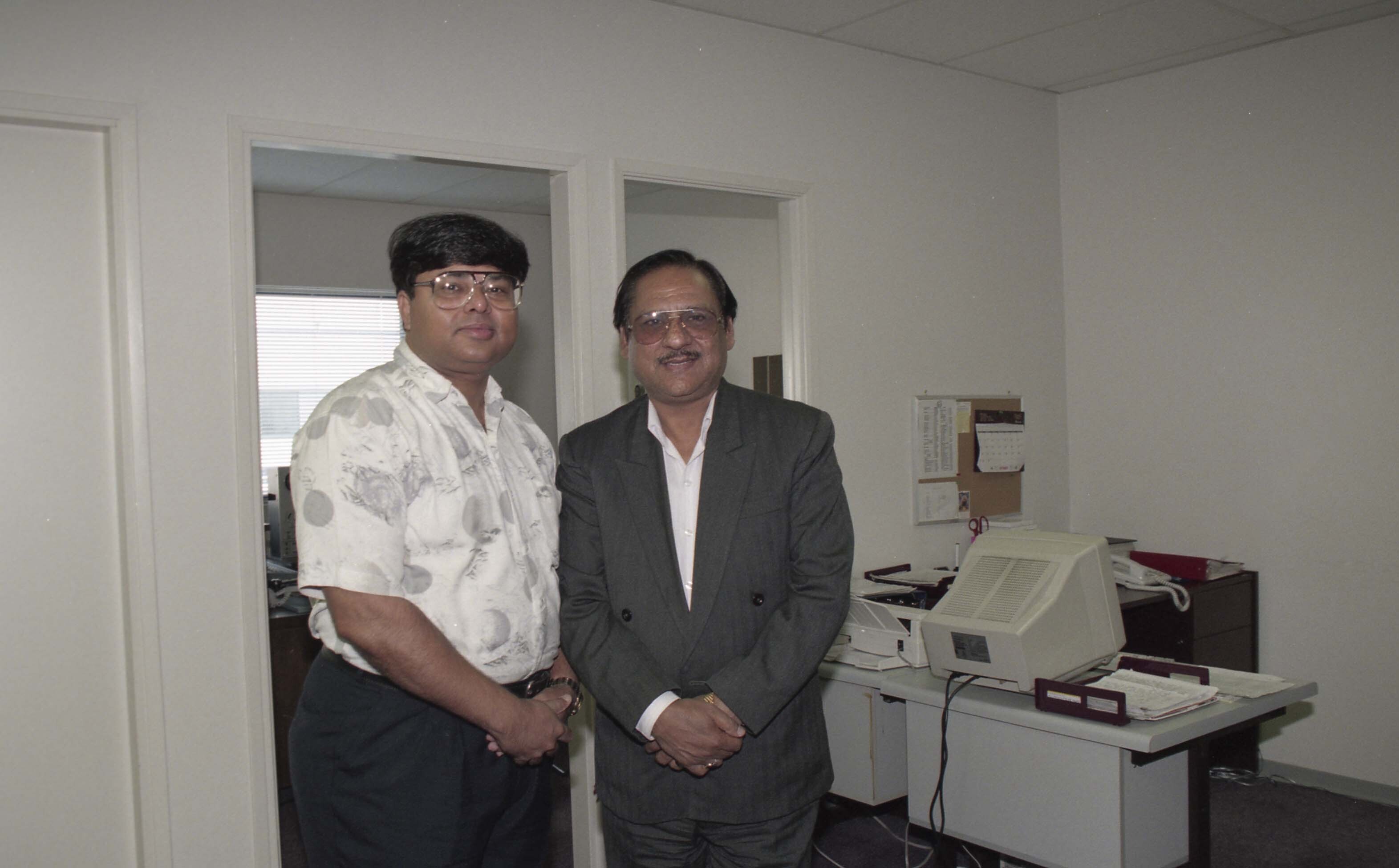
Photograph of Vishwa Mohan Bhatt performing with an unidentified individual at the Michael J Fox Theatre in Burnaby, British Columbia (B.C.).
Vishwa Mohan Bhatt is an Indian classical music instrumentalist and creator of the instrument, the mohan veena. Bhatt was the disciple of Pandit Ravi Shankar and belongs to the elite body of musicians which traces its origins to the Moughal emperor Akbar's court musician Tansen and his guru the Hindu Mystic Swami Haridas. Bhatt is the creator of the mohan veena, a hybrid slide guitar that has been added to the list of Indian classical instruments. The mohan veena is a highly modified archtop, which Bhatt plays lap-style. It has 19 strings. three melody strings and four three drone strings coming out of the peg heads, and 12 sympathetic strings mounted to a piece of wood added to the side of the neck. The melody strings are on what we would consider the treble side of the neck, and the drone strings are on the bass side. The drone strings are lower in height than the melody strings to allow for unrestricted playing of the melody strings. The sympathetic strings run underneath the melody and drone strings to yet another level in the bridge. The instrument has a carved spruced top, mahogany back and sides, a mahogany neck, and a flat, fretless, rosewood fingerboard. Due to his contributions to Indian classical music and musicians, Bhatt was honored with the Padma Bhusan and Padma Shri. In 1994, Bhatt won a grammy award along with Ry Cooder for their World Music Album, 'A Meeting by the River'.
The Michael J Fox Theatre is located in Burnaby South Secondary School in B.C. Burnaby South Secondary School is one of eight secondary schools within the Burnaby School District, in south central Burnaby. Built as part of the school in 1993, the Michael J Fox Theatre is overseen by an independent, non-profit society. The Michael J Fox Theatre Society Board consists of community volunteers and functions independently of the Burnaby School Board. In November 1995, the Theatre was officially named after Michael J. Fox, in recognition of his achievements in the arts and commitment to the community.
Vishwa Mohan Bhatt is an Indian classical music instrumentalist and creator of the instrument, the mohan veena. Bhatt was the disciple of Pandit Ravi Shankar and belongs to the elite body of musicians which traces its origins to the Moughal emperor Akbar's court musician Tansen and his guru the Hindu Mystic Swami Haridas. Bhatt is the creator of the mohan veena, a hybrid slide guitar that has been added to the list of Indian classical instruments. The mohan veena is a highly modified archtop, which Bhatt plays lap-style. It has 19 strings. three melody strings and four three drone strings coming out of the peg heads, and 12 sympathetic strings mounted to a piece of wood added to the side of the neck. The melody strings are on what we would consider the treble side of the neck, and the drone strings are on the bass side. The drone strings are lower in height than the melody strings to allow for unrestricted playing of the melody strings. The sympathetic strings run underneath the melody and drone strings to yet another level in the bridge. The instrument has a carved spruced top, mahogany back and sides, a mahogany neck, and a flat, fretless, rosewood fingerboard. Due to his contributions to Indian classical music and musicians, Bhatt was honored with the Padma Bhusan and Padma Shri. In 1994, Bhatt won a grammy award along with Ry Cooder for their World Music Album, 'A Meeting by the River'.
The Michael J Fox Theatre is located in Burnaby South Secondary School in B.C. Burnaby South Secondary School is one of eight secondary schools within the Burnaby School District, in south central Burnaby. Built as part of the school in 1993, the Michael J Fox Theatre is overseen by an independent, non-profit society. The Michael J Fox Theatre Society Board consists of community volunteers and functions independently of the Burnaby School Board. In November 1995, the Theatre was officially named after Michael J. Fox, in recognition of his achievements in the arts and commitment to the community.
Member of
Creator: Bodalia, Chandra
Description
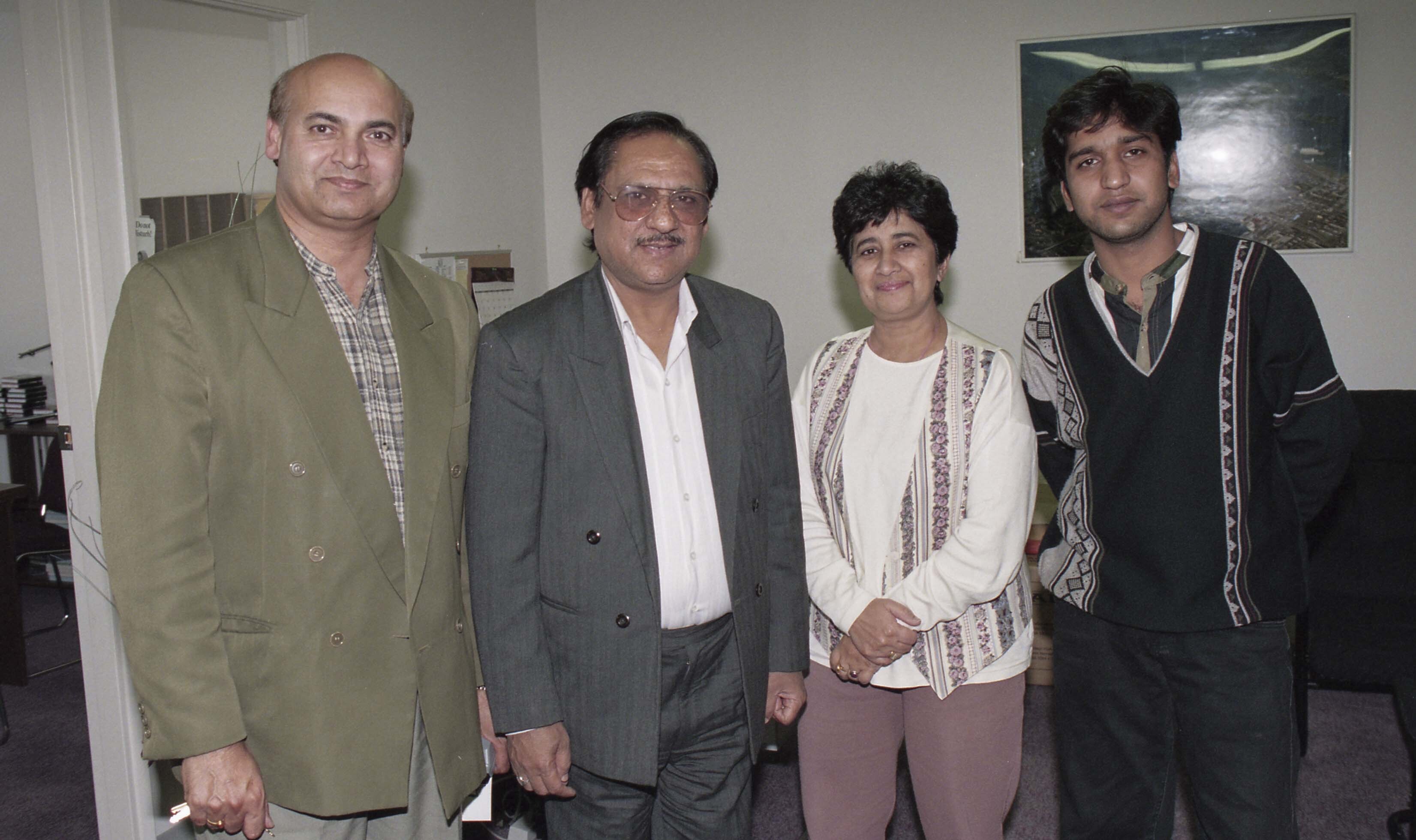
Photograph of Ghulam Ali with Chandra Bodalia.
Ghulam Ali is a Pakistani ghazal singer of the Patiala gharana. Ali was born on December 5, 1940, in the village of Kaleke in the Sialkot district of Panjab, pre-partition India (now Pakistan). He belongs to a musical family, his father was a vocalist and a sarangi player who initiated Ali to music from his childhood. At 15, Ali became a student of Bade Ghulam Ali Khan, a master of the Patiala gharana (Patiala School) of Hindustani music. Ali started singing for Radio Lahore in 1960. Along with singing ghazals, he also composes the music for his ghazals. Ali has also contributed to Bollywood with his music. Ali is considered as one of the greatest ghazal singers of his era, as his style and variations in singing ghazals are unique. In 1979 he received the Price of Performance Award and in 2013 he was honored with the Sitara-i-Imtiaz Award by the President of Pakistan.
Born in 1948 in Sisodra, a village in Gujarat, India, Chandravadan "Chandra" Bodalia was a talented artist who pursued higher education in commercial arts and painting at the prestigious Sheth C. N. College of Fine Arts in Ahmedabad. After immigrating to Canada in 1976, Bodalia settled in Vancouver, British Columbia, where he initially worked various jobs, including creating art props and souvenirs for cultural events. In the late 1980s, Bodalia embarked on a career as a photojournalist, documenting the lives of South Asian Canadians with unparalleled dedication. Bodalia photographed important events for the South Asian Canadian community across B.C. and highlighted the unique stories and experiences of the community. He covered a range of events and various facets of life, from community programs and celebrations to cradle to grave events such as weddings, birthdays, cultural festivals, honoring events, political gatherings, and religious ceremonies. The photographs also reflect the intercultural connections and collaborations within the immigrant communities in Canada as well as transnational ties to the South Asian region. Bodalia's work appeared in local newspapers such as The Voice and The Link, earning him widespread recognition and over 20 awards, including a Lifetime Achievement Award from The Times of Canada. Bodalia passed away in 2017.
Ghulam Ali is a Pakistani ghazal singer of the Patiala gharana. Ali was born on December 5, 1940, in the village of Kaleke in the Sialkot district of Panjab, pre-partition India (now Pakistan). He belongs to a musical family, his father was a vocalist and a sarangi player who initiated Ali to music from his childhood. At 15, Ali became a student of Bade Ghulam Ali Khan, a master of the Patiala gharana (Patiala School) of Hindustani music. Ali started singing for Radio Lahore in 1960. Along with singing ghazals, he also composes the music for his ghazals. Ali has also contributed to Bollywood with his music. Ali is considered as one of the greatest ghazal singers of his era, as his style and variations in singing ghazals are unique. In 1979 he received the Price of Performance Award and in 2013 he was honored with the Sitara-i-Imtiaz Award by the President of Pakistan.
Born in 1948 in Sisodra, a village in Gujarat, India, Chandravadan "Chandra" Bodalia was a talented artist who pursued higher education in commercial arts and painting at the prestigious Sheth C. N. College of Fine Arts in Ahmedabad. After immigrating to Canada in 1976, Bodalia settled in Vancouver, British Columbia, where he initially worked various jobs, including creating art props and souvenirs for cultural events. In the late 1980s, Bodalia embarked on a career as a photojournalist, documenting the lives of South Asian Canadians with unparalleled dedication. Bodalia photographed important events for the South Asian Canadian community across B.C. and highlighted the unique stories and experiences of the community. He covered a range of events and various facets of life, from community programs and celebrations to cradle to grave events such as weddings, birthdays, cultural festivals, honoring events, political gatherings, and religious ceremonies. The photographs also reflect the intercultural connections and collaborations within the immigrant communities in Canada as well as transnational ties to the South Asian region. Bodalia's work appeared in local newspapers such as The Voice and The Link, earning him widespread recognition and over 20 awards, including a Lifetime Achievement Award from The Times of Canada. Bodalia passed away in 2017.
Member of
Creator: Bodalia, Chandra
Description
Photograph of Ghulam Ali and Shushma Datt with unidentified individuals.
Ghulam Ali is a Pakistani ghazal singer of the Patiala gharana. Ali was born on December 5, 1940, in the village of Kaleke in the Sialkot district of Panjab, pre-partition India (now Pakistan). He belongs to a musical family, his father was a vocalist and a sarangi player who initiated Ali to music from his childhood. At 15, Ali became a student of Bade Ghulam Ali Khan, a master of the Patiala gharana (Patiala School) of Hindustani music. Ali started singing for Radio Lahore in 1960. Along with singing ghazals, he also composes the music for his ghazals. Ali has also contributed to Bollywood with his music. Ali is considered as one of the greatest ghazal singers of his era, as his style and variations in singing ghazals are unique. In 1979 he received the Price of Performance Award and in 2013 he was honored with the Sitara-i-Imtiaz Award by the President of Pakistan.
Shushma Datt is a pioneer in the broadcasting industry in Canada, known as the first Indo-Canadian broadcaster in the country. Born and raised in Kenya, Datt earned a university degree from the University of New Delhi in India. She then began her career in journalism by working as a reporter for the Times of India. From there Datt moved to London, England, where she was employed by the British Broadcasting Corporation (BBC). Datt emigrated to Canada in 1972 and settled in Vancouver, where she broke new ground by hosting Indian programming on CJVB, where she was the first announcer to broadcast in Hindi and Panjabi. In 1987, Datt founded Rim Jhim, the world's first 24-hour South Asian radio station outside of India. In 2005, Shushma secured an AM license to launch RJ1200, now Spice Radio, further cementing her legacy. In 2007 Shushma Datt received the Influential Women in Business Award (BC) for her many accomplishments in broadcasting and multicultural programming. She has also received the Order of British Columbia (1992), the Queen's Golden Jubilee Commemorative Medal (2002), the YWCA's "Women of Distinction" Award and the Humanitarian Award from the Vancouver Multicultural Society. Datt is listed as one of the 150 most influential British Columbians by the Royal British Columbia Museum and the 100 most influential Indo-Canadians by the Vancouver Sun. Shushma's work not only transformed ethnic broadcasting but also paved the way for women and cultural understanding in Canada.
Ghulam Ali is a Pakistani ghazal singer of the Patiala gharana. Ali was born on December 5, 1940, in the village of Kaleke in the Sialkot district of Panjab, pre-partition India (now Pakistan). He belongs to a musical family, his father was a vocalist and a sarangi player who initiated Ali to music from his childhood. At 15, Ali became a student of Bade Ghulam Ali Khan, a master of the Patiala gharana (Patiala School) of Hindustani music. Ali started singing for Radio Lahore in 1960. Along with singing ghazals, he also composes the music for his ghazals. Ali has also contributed to Bollywood with his music. Ali is considered as one of the greatest ghazal singers of his era, as his style and variations in singing ghazals are unique. In 1979 he received the Price of Performance Award and in 2013 he was honored with the Sitara-i-Imtiaz Award by the President of Pakistan.
Shushma Datt is a pioneer in the broadcasting industry in Canada, known as the first Indo-Canadian broadcaster in the country. Born and raised in Kenya, Datt earned a university degree from the University of New Delhi in India. She then began her career in journalism by working as a reporter for the Times of India. From there Datt moved to London, England, where she was employed by the British Broadcasting Corporation (BBC). Datt emigrated to Canada in 1972 and settled in Vancouver, where she broke new ground by hosting Indian programming on CJVB, where she was the first announcer to broadcast in Hindi and Panjabi. In 1987, Datt founded Rim Jhim, the world's first 24-hour South Asian radio station outside of India. In 2005, Shushma secured an AM license to launch RJ1200, now Spice Radio, further cementing her legacy. In 2007 Shushma Datt received the Influential Women in Business Award (BC) for her many accomplishments in broadcasting and multicultural programming. She has also received the Order of British Columbia (1992), the Queen's Golden Jubilee Commemorative Medal (2002), the YWCA's "Women of Distinction" Award and the Humanitarian Award from the Vancouver Multicultural Society. Datt is listed as one of the 150 most influential British Columbians by the Royal British Columbia Museum and the 100 most influential Indo-Canadians by the Vancouver Sun. Shushma's work not only transformed ethnic broadcasting but also paved the way for women and cultural understanding in Canada.
Member of
Creator: Bodalia, Chandra
Description
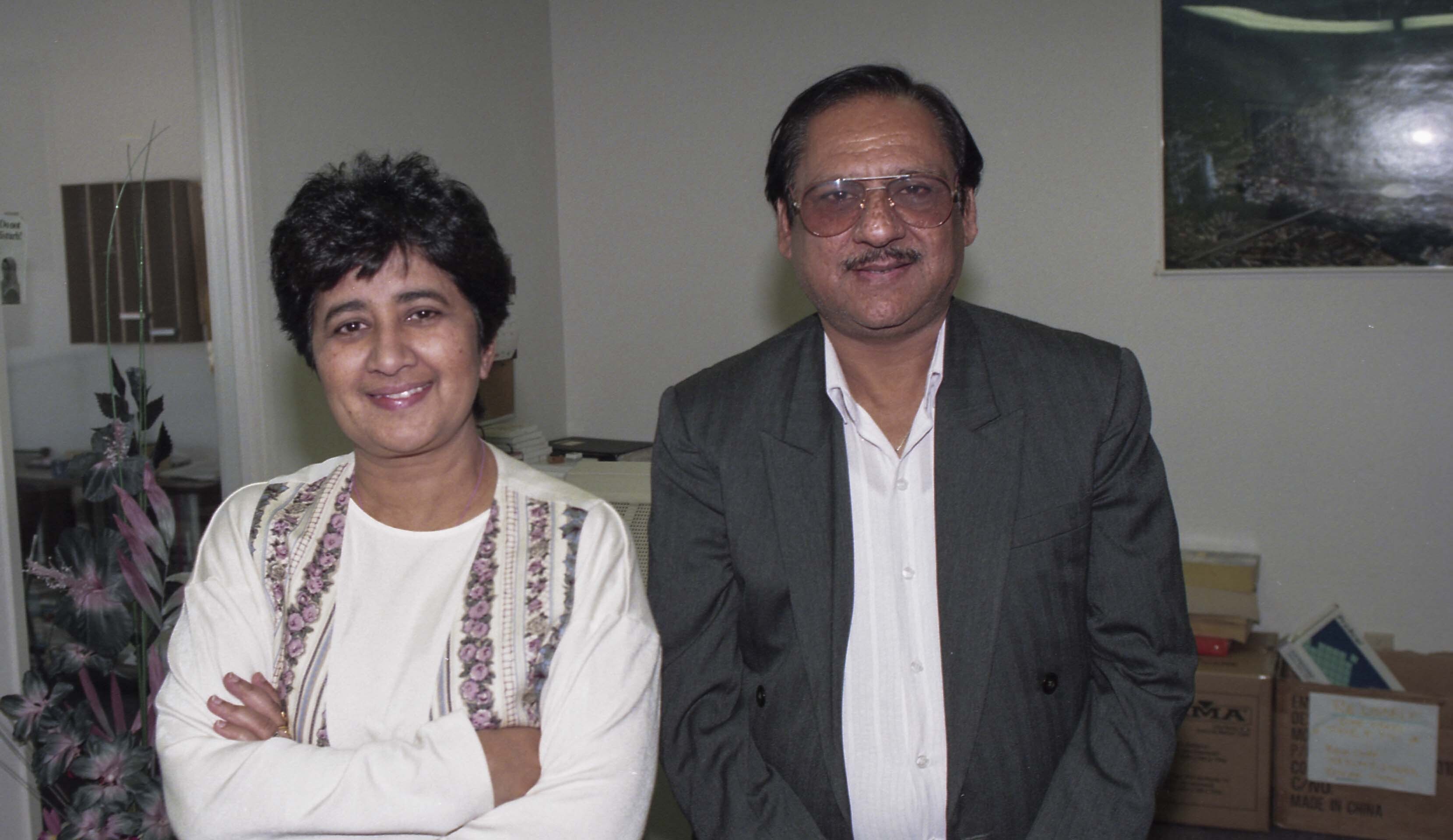
Photograph of Ghulam Ali with Shushma Datt.
Ghulam Ali is a Pakistani ghazal singer of the Patiala gharana. Ali was born on December 5, 1940, in the village of Kaleke in the Sialkot district of Panjab, pre-partition India (now Pakistan). He belongs to a musical family, his father was a vocalist and a sarangi player who initiated Ali to music from his childhood. At 15, Ali became a student of Bade Ghulam Ali Khan, a master of the Patiala gharana (Patiala School) of Hindustani music. Ali started singing for Radio Lahore in 1960. Along with singing ghazals, he also composes the music for his ghazals. Ali has also contributed to Bollywood with his music. Ali is considered as one of the greatest ghazal singers of his era, as his style and variations in singing ghazals are unique. In 1979 he received the Price of Performance Award and in 2013 he was honored with the Sitara-i-Imtiaz Award by the President of Pakistan.
Shushma Datt is a pioneer in the broadcasting industry in Canada, known as the first Indo-Canadian broadcaster in the country. Born and raised in Kenya, Datt earned a university degree from the University of New Delhi in India. She then began her career in journalism by working as a reporter for the Times of India. From there Datt moved to London, England, where she was employed by the British Broadcasting Corporation (BBC). Datt emigrated to Canada in 1972 and settled in Vancouver, where she broke new ground by hosting Indian programming on CJVB, where she was the first announcer to broadcast in Hindi and Panjabi. In 1987, Datt founded Rim Jhim, the world's first 24-hour South Asian radio station outside of India. In 2005, Shushma secured an AM license to launch RJ1200, now Spice Radio, further cementing her legacy. In 2007 Shushma Datt received the Influential Women in Business Award (BC) for her many accomplishments in broadcasting and multicultural programming. She has also received the Order of British Columbia (1992), the Queen's Golden Jubilee Commemorative Medal (2002), the YWCA's "Women of Distinction" Award and the Humanitarian Award from the Vancouver Multicultural Society. Datt is listed as one of the 150 most influential British Columbians by the Royal British Columbia Museum and the 100 most influential Indo-Canadians by the Vancouver Sun. Shushma's work not only transformed ethnic broadcasting but also paved the way for women and cultural understanding in Canada.
Ghulam Ali is a Pakistani ghazal singer of the Patiala gharana. Ali was born on December 5, 1940, in the village of Kaleke in the Sialkot district of Panjab, pre-partition India (now Pakistan). He belongs to a musical family, his father was a vocalist and a sarangi player who initiated Ali to music from his childhood. At 15, Ali became a student of Bade Ghulam Ali Khan, a master of the Patiala gharana (Patiala School) of Hindustani music. Ali started singing for Radio Lahore in 1960. Along with singing ghazals, he also composes the music for his ghazals. Ali has also contributed to Bollywood with his music. Ali is considered as one of the greatest ghazal singers of his era, as his style and variations in singing ghazals are unique. In 1979 he received the Price of Performance Award and in 2013 he was honored with the Sitara-i-Imtiaz Award by the President of Pakistan.
Shushma Datt is a pioneer in the broadcasting industry in Canada, known as the first Indo-Canadian broadcaster in the country. Born and raised in Kenya, Datt earned a university degree from the University of New Delhi in India. She then began her career in journalism by working as a reporter for the Times of India. From there Datt moved to London, England, where she was employed by the British Broadcasting Corporation (BBC). Datt emigrated to Canada in 1972 and settled in Vancouver, where she broke new ground by hosting Indian programming on CJVB, where she was the first announcer to broadcast in Hindi and Panjabi. In 1987, Datt founded Rim Jhim, the world's first 24-hour South Asian radio station outside of India. In 2005, Shushma secured an AM license to launch RJ1200, now Spice Radio, further cementing her legacy. In 2007 Shushma Datt received the Influential Women in Business Award (BC) for her many accomplishments in broadcasting and multicultural programming. She has also received the Order of British Columbia (1992), the Queen's Golden Jubilee Commemorative Medal (2002), the YWCA's "Women of Distinction" Award and the Humanitarian Award from the Vancouver Multicultural Society. Datt is listed as one of the 150 most influential British Columbians by the Royal British Columbia Museum and the 100 most influential Indo-Canadians by the Vancouver Sun. Shushma's work not only transformed ethnic broadcasting but also paved the way for women and cultural understanding in Canada.
Member of
Creator: Bodalia, Chandra
Description
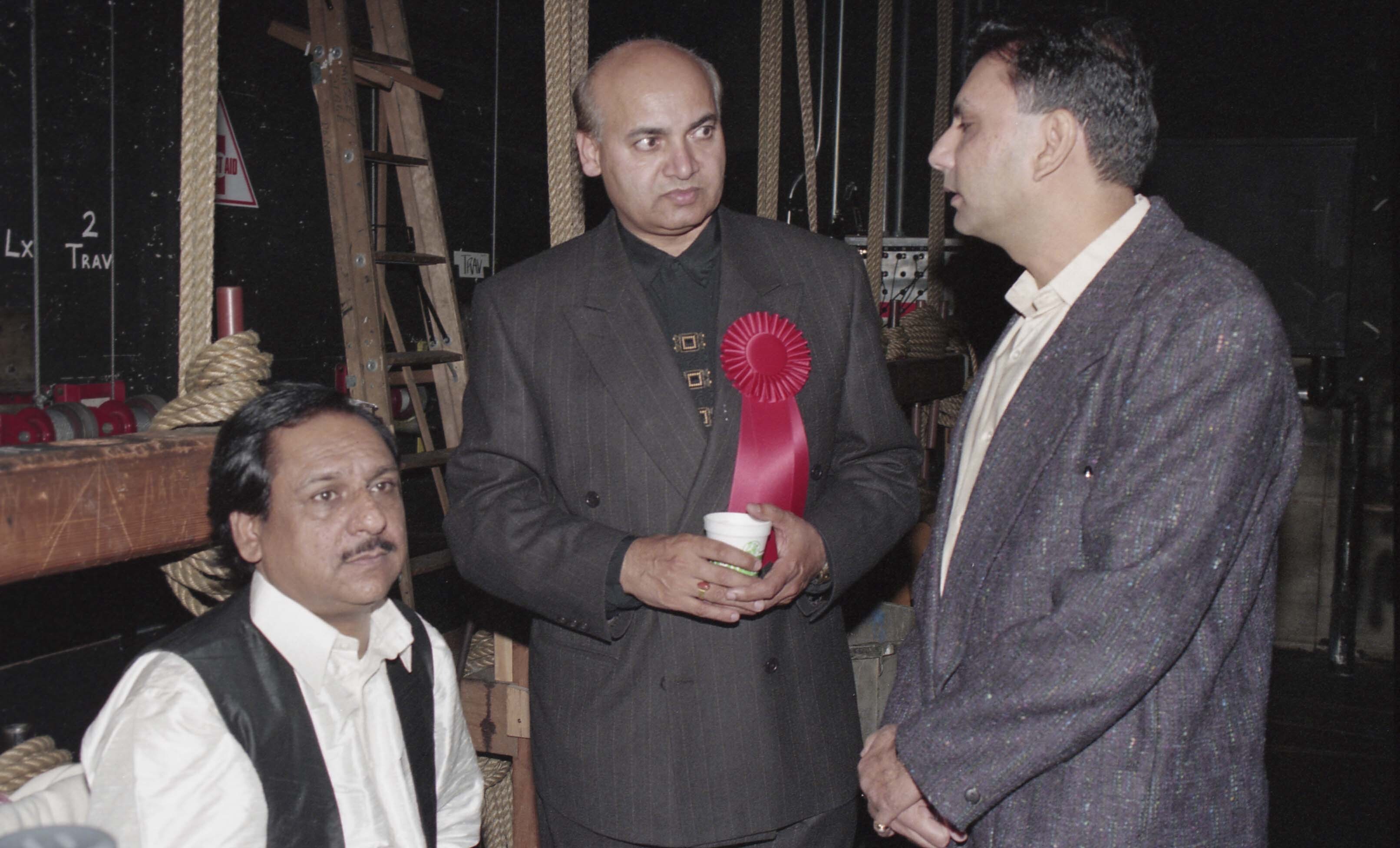
Photograph of Ghulam Ali with unidentified individuals backstage at a concert in which Ali performed.
Ghulam Ali is a Pakistani ghazal singer of the Patiala gharana. Ali was born on December 5, 1940, in the village of Kaleke in the Sialkot district of Panjab, pre-partition India (now Pakistan). He belongs to a musical family, his father was a vocalist and a sarangi player who initiated Ali to music from his childhood. At 15, Ali became a student of Bade Ghulam Ali Khan, a master of the Patiala gharana (Patiala School) of Hindustani music. Ali started singing for Radio Lahore in 1960. Along with singing ghazals, he also composes the music for his ghazals. Ali has also contributed to Bollywood with his music. Ali is considered as one of the greatest ghazal singers of his era, as his style and variations in singing ghazals are unique. In 1979 he received the Price of Performance Award and in 2013 he was honored with the Sitara-i-Imtiaz Award by the President of Pakistan.
Ghulam Ali is a Pakistani ghazal singer of the Patiala gharana. Ali was born on December 5, 1940, in the village of Kaleke in the Sialkot district of Panjab, pre-partition India (now Pakistan). He belongs to a musical family, his father was a vocalist and a sarangi player who initiated Ali to music from his childhood. At 15, Ali became a student of Bade Ghulam Ali Khan, a master of the Patiala gharana (Patiala School) of Hindustani music. Ali started singing for Radio Lahore in 1960. Along with singing ghazals, he also composes the music for his ghazals. Ali has also contributed to Bollywood with his music. Ali is considered as one of the greatest ghazal singers of his era, as his style and variations in singing ghazals are unique. In 1979 he received the Price of Performance Award and in 2013 he was honored with the Sitara-i-Imtiaz Award by the President of Pakistan.