
Musicians
Authority Sources
Member of
Creator: Del Monte Studio
Description
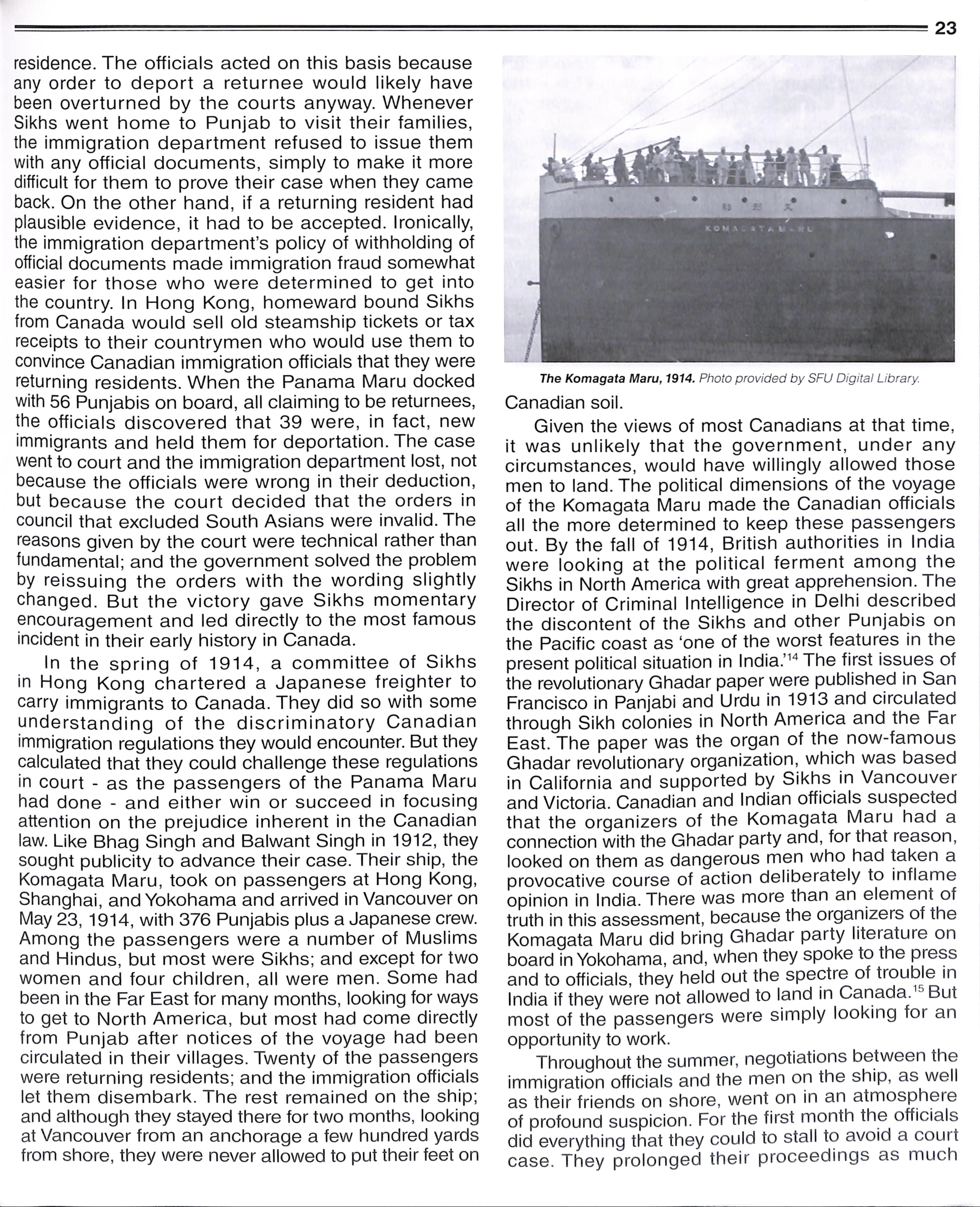
Image of four unidentified men sitting in the Gurdwara. The unidentified men are musicians, as one of the men sings into the microphone and plays a small piano and another musician holds a drum.
Member of
Creator: Del Monte Studio
Description
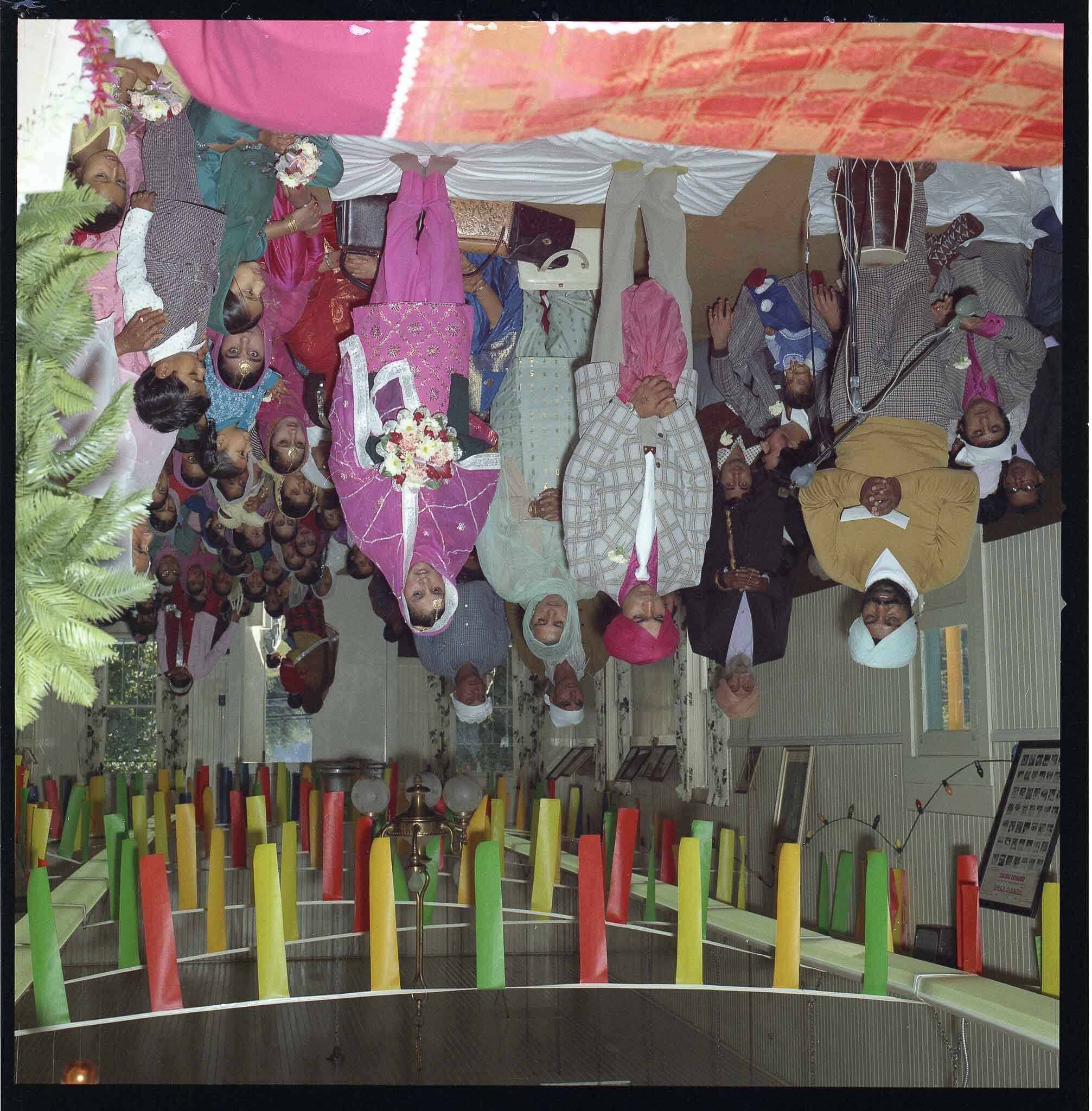
Group photo of Kehar S. Cheema and unidentified bride with wedding guests standing and praying in front of the Sri Guru Granth Sahib alongside Head Granthi (Sikh priest) singing the Ard?s (prayer).
Member of
Creator: Del Monte Studio
Description
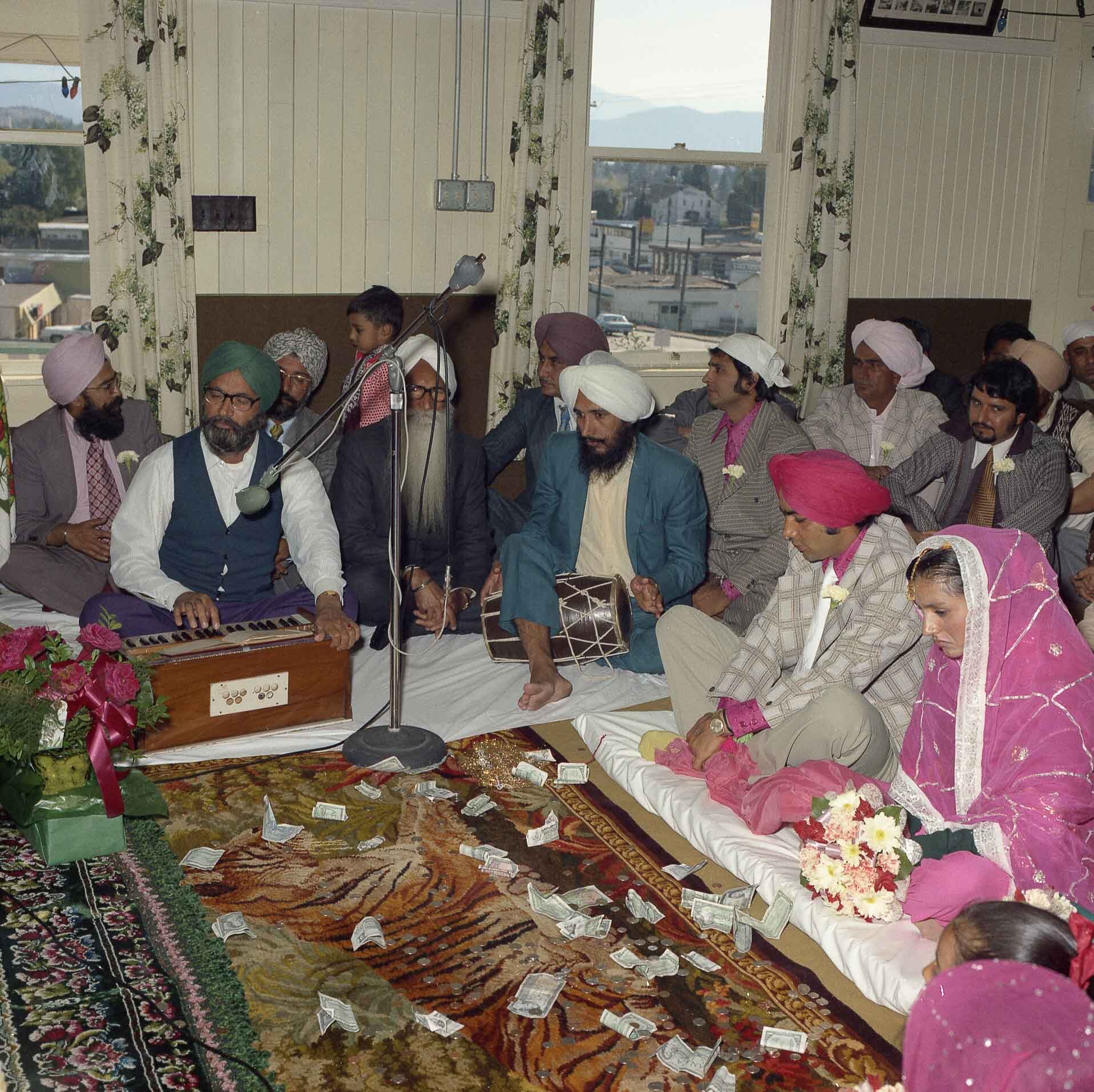
Group photo of Kehar S. Cheema and unidentified bride sitting on the floor with wedding guests. There are 3 ragis (Sikh musician) playing tabla and harmonium.
Creator: Del Monte Studio
Description
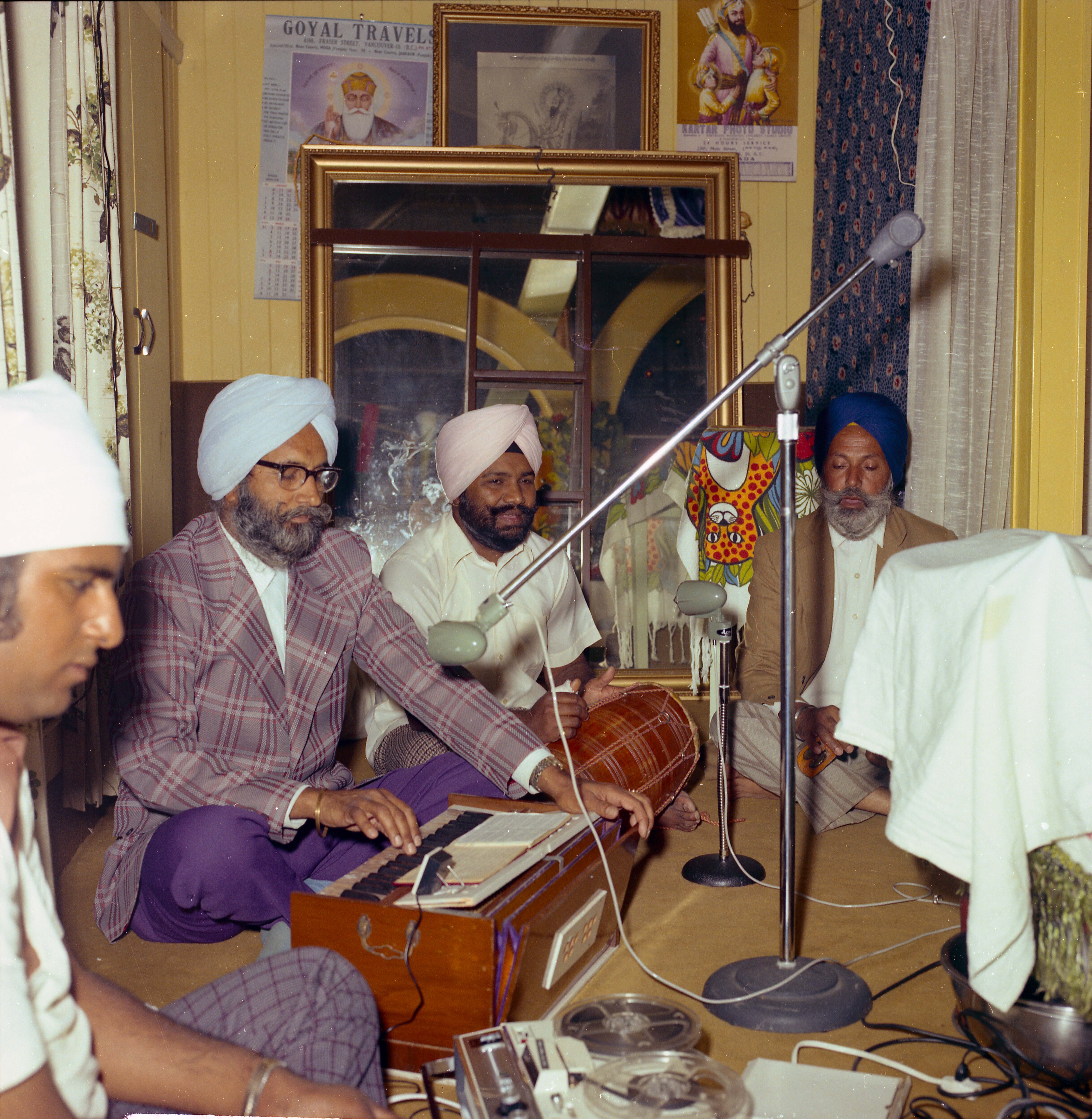
Image of four unidentified musicians playing instruments at Baldave Sidhu and Sharn Kingra's wedding ceremony in the Gurdwara.
Creator: Del Monte Studio
Description
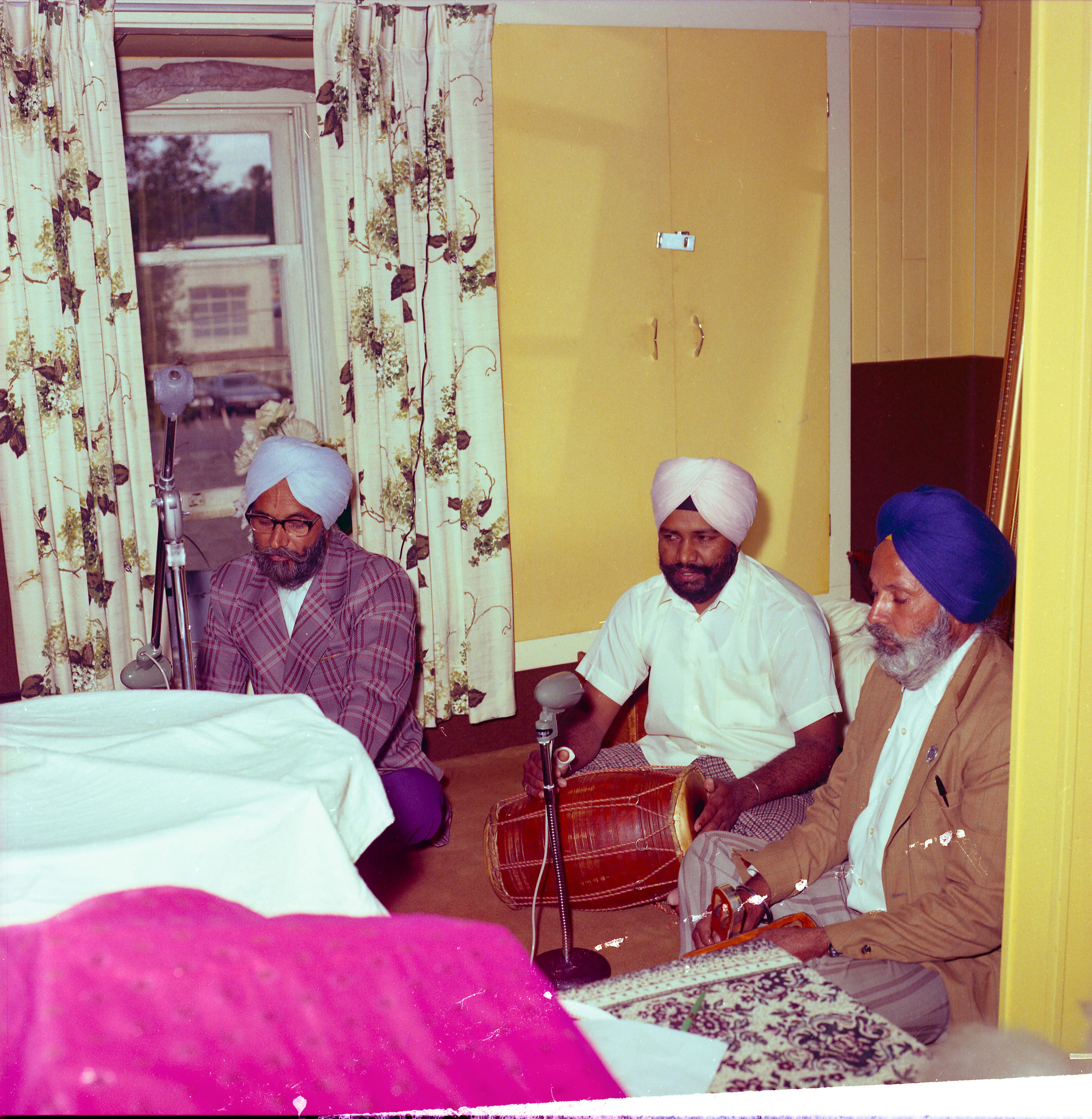
Image of three unidentified men sitting and playing musical instruments. One of the unidentified men is playing a drum.
Member of
Creator: Chow, Yucho
Description
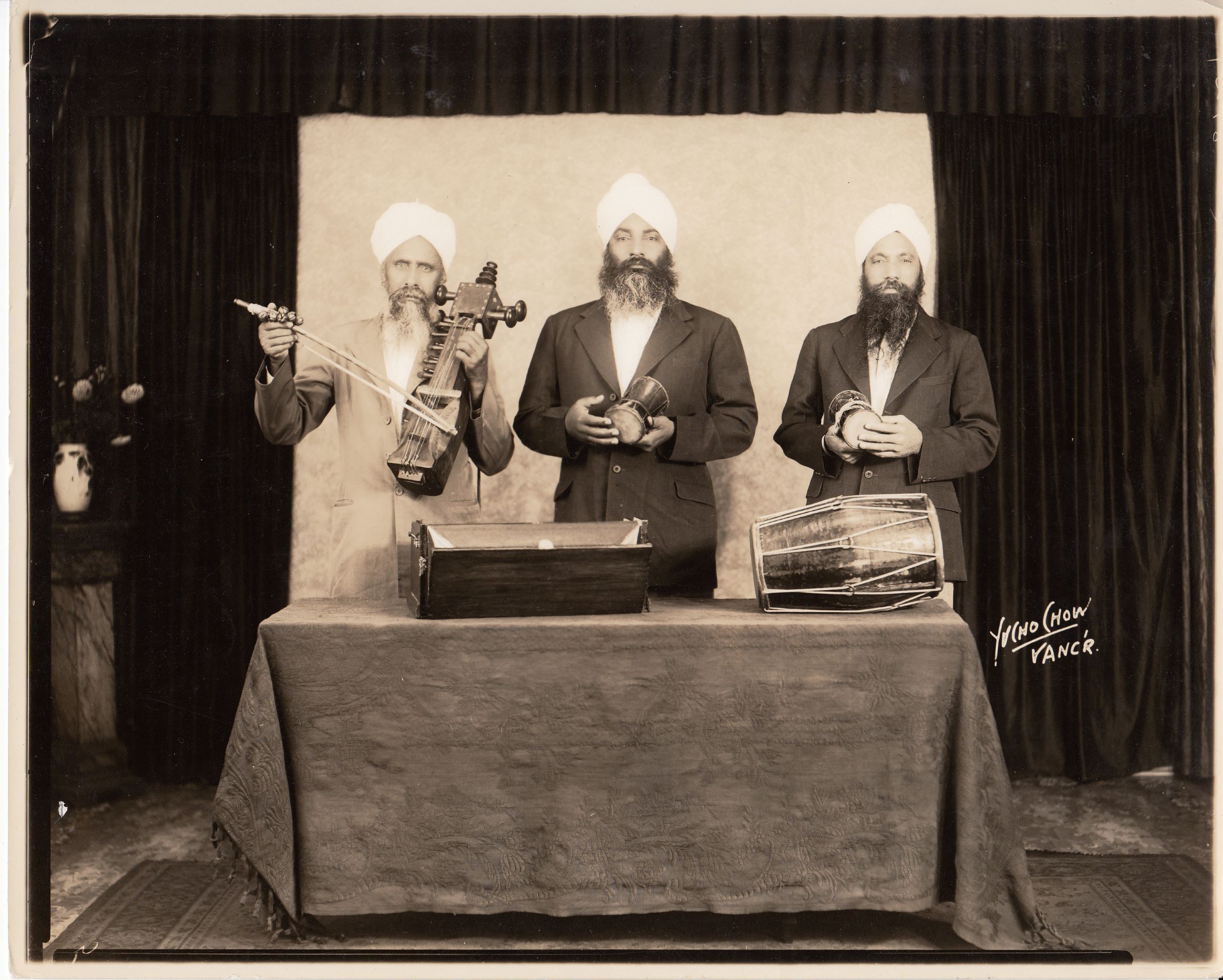
Group photograph of three dhadis taken in Vancouver, BC. Dhadis are Sikh musical performers who sing ballads accompanied by Punjabi folk instruments. One musician is seen holding a sarangi, and the other two are holding dhads. On a table in front of the men is a harmonium and a dholki.
Member of
Creator: Bodalia, Chandra
Description
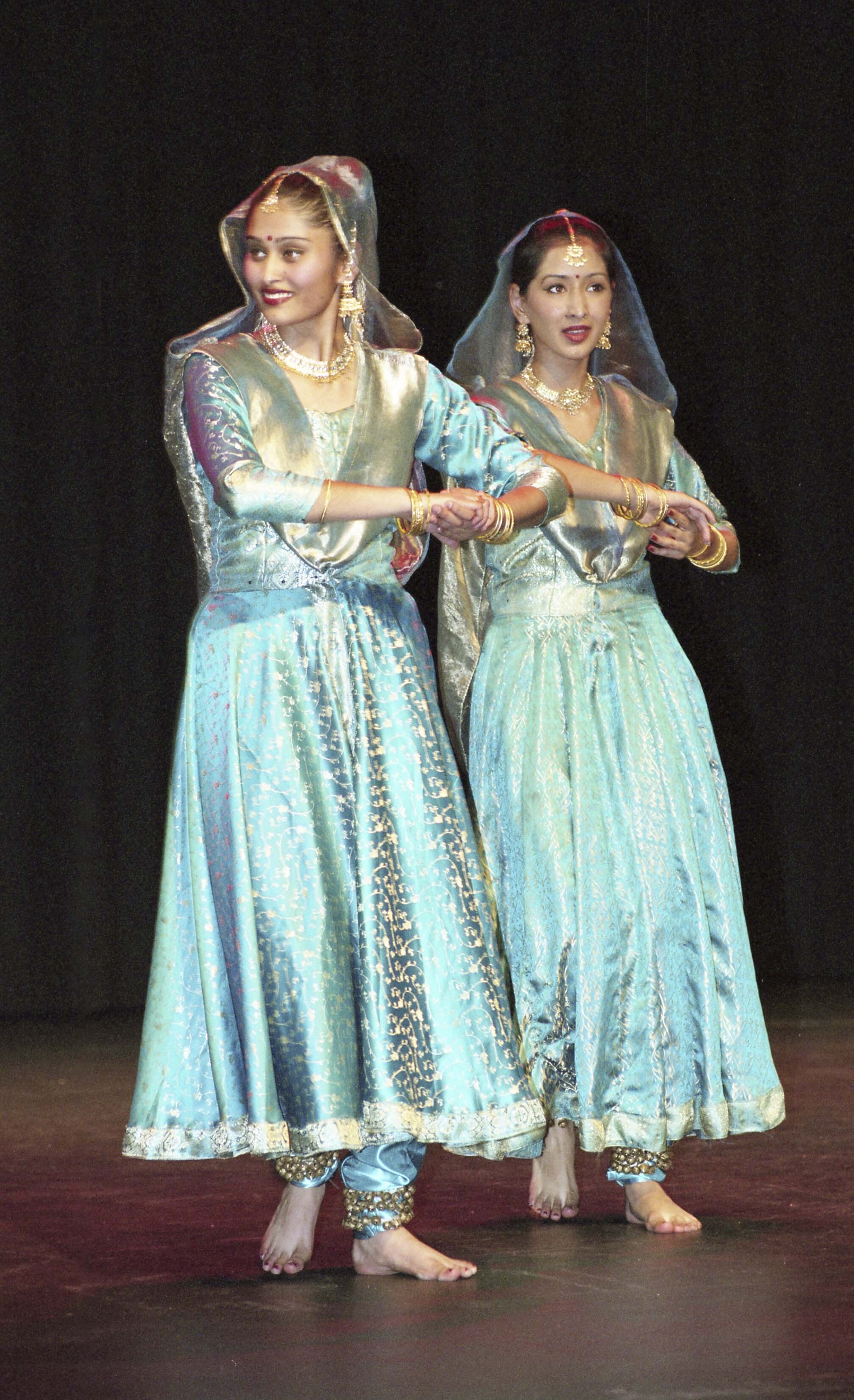
Photograph of unidentified individuals performing kathak dance at a variety show organized by the Pandit Jasraj School of Music Foundation. The show featured students from the Pandit Jasraj School of Music and other performing artists of Vancouver. The individuals performing kathak were from the Nritya Manjaree School of Kathak.
Kathak is one of the eight major forms of Indian classical dance. Derived from the Sanskrit word kathakar, meaning "storyteller," it refers to the nomadic performers who narrated the tales of Mahabharata and the Ramayana through dance, music, and gestures. It is characterized by its extensive footwork, precise hand and body movements, flexibility, and facial expressions, which all comes together to tell a story.
Nritya Manjaree School of Kathak was established in 1978 by Madhu Khare. Khare is a gifted dancer and obtained her Bachelor in Kathak in 1965 from the University of Bhat Khande, Lucknow, India. She also received higher training from various Gurus in India, such as Shambhu Maharaj, and has performed in cities in India and Canada. The Nritya Manjaree School of Kathak is located in Delta, British Columbia (B.C.).
The Pandit Jasraj School of Music Foundation was incorporated in 1994 as a Society in the Province of British Columbia, dedicated to promoting vocal music in the Mewati Gharana within the Lower Mainland of Vancouver. Their Mission is to promote classical Indian music through instruction and performance.
Kathak is one of the eight major forms of Indian classical dance. Derived from the Sanskrit word kathakar, meaning "storyteller," it refers to the nomadic performers who narrated the tales of Mahabharata and the Ramayana through dance, music, and gestures. It is characterized by its extensive footwork, precise hand and body movements, flexibility, and facial expressions, which all comes together to tell a story.
Nritya Manjaree School of Kathak was established in 1978 by Madhu Khare. Khare is a gifted dancer and obtained her Bachelor in Kathak in 1965 from the University of Bhat Khande, Lucknow, India. She also received higher training from various Gurus in India, such as Shambhu Maharaj, and has performed in cities in India and Canada. The Nritya Manjaree School of Kathak is located in Delta, British Columbia (B.C.).
The Pandit Jasraj School of Music Foundation was incorporated in 1994 as a Society in the Province of British Columbia, dedicated to promoting vocal music in the Mewati Gharana within the Lower Mainland of Vancouver. Their Mission is to promote classical Indian music through instruction and performance.
Member of
Creator: Bodalia, Chandra
Description
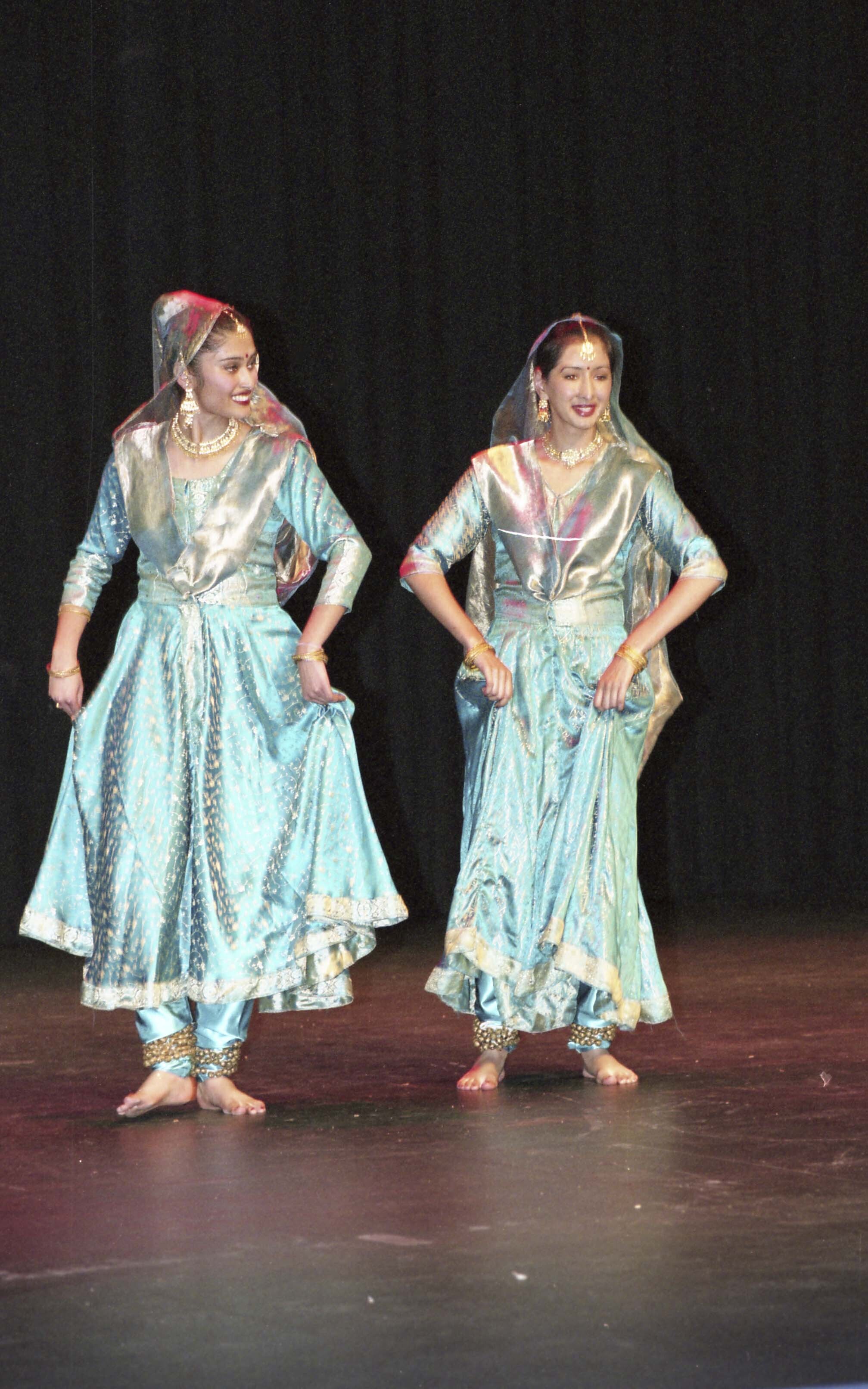
Photograph of unidentified individuals performing kathak dance at a variety show organized by the Pandit Jasraj School of Music Foundation. The show featured students from the Pandit Jasraj School of Music and other performing artists of Vancouver. The individuals performing kathak were from the Nritya Manjaree School of Kathak.
Kathak is one of the eight major forms of Indian classical dance. Derived from the Sanskrit word kathakar, meaning "storyteller," it refers to the nomadic performers who narrated the tales of Mahabharata and the Ramayana through dance, music, and gestures. It is characterized by its extensive footwork, precise hand and body movements, flexibility, and facial expressions, which all comes together to tell a story.
Nritya Manjaree School of Kathak was established in 1978 by Madhu Khare. Khare is a gifted dancer and obtained her Bachelor in Kathak in 1965 from the University of Bhat Khande, Lucknow, India. She also received higher training from various Gurus in India, such as Shambhu Maharaj, and has performed in cities in India and Canada. The Nritya Manjaree School of Kathak is located in Delta, British Columbia (B.C.).
The Pandit Jasraj School of Music Foundation was incorporated in 1994 as a Society in the Province of British Columbia, dedicated to promoting vocal music in the Mewati Gharana within the Lower Mainland of Vancouver. Their Mission is to promote classical Indian music through instruction and performance.
Kathak is one of the eight major forms of Indian classical dance. Derived from the Sanskrit word kathakar, meaning "storyteller," it refers to the nomadic performers who narrated the tales of Mahabharata and the Ramayana through dance, music, and gestures. It is characterized by its extensive footwork, precise hand and body movements, flexibility, and facial expressions, which all comes together to tell a story.
Nritya Manjaree School of Kathak was established in 1978 by Madhu Khare. Khare is a gifted dancer and obtained her Bachelor in Kathak in 1965 from the University of Bhat Khande, Lucknow, India. She also received higher training from various Gurus in India, such as Shambhu Maharaj, and has performed in cities in India and Canada. The Nritya Manjaree School of Kathak is located in Delta, British Columbia (B.C.).
The Pandit Jasraj School of Music Foundation was incorporated in 1994 as a Society in the Province of British Columbia, dedicated to promoting vocal music in the Mewati Gharana within the Lower Mainland of Vancouver. Their Mission is to promote classical Indian music through instruction and performance.
Member of
Creator: Bodalia, Chandra
Description
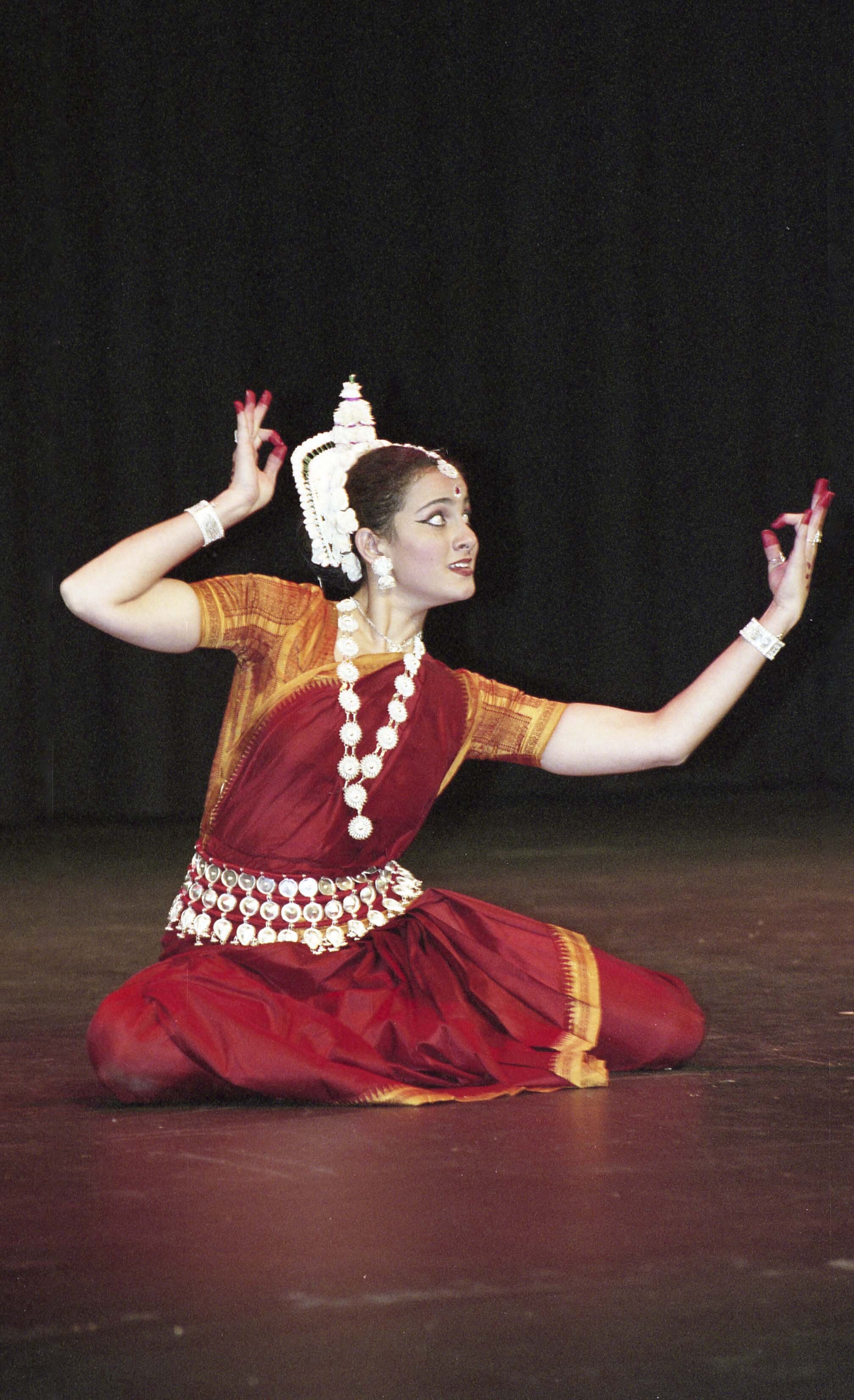
Photograph of Sitara Thobani performing odissi dance at a variety show organized by the Pandit Jasraj School of Music Foundation. The show featured students from the Pandit Jasraj School of Music and other performing artists of Vancouver.
Sitara Thobani first began dancing at the age of 8 under the direction of Lata Pada in the Bharatanatyam tradition. She began her training in the Odissi tradition under Dr. Ratna Roy in 1997. She has undertaken intensive training in India at the esteemed Nrityagram dance school as well as in Bhubaneswar in Orissa, the heart of Odissi dance tradition. Thobani has performed at many cultural and art events in Canada and the United States, including at the International Odissi Conference in Washington, D.C. in August 2003. She has also performed at the Diamond Jubilee Hall in Dar-es-Salaam, the Zanzibar International Film Festival in Tanzania, as well as in Calcutta and Delhi, India. Thobani has dedicated herself to continuing the Odissi dance tradition of Guru Pankaj Charan Das as transmitted to her by her Guru, Dr. Ratna Roy. Thobani has a PhD in Social and Cultural Anthropology from the University of Oxford, an MA in Sociology and Equity Studies from the University of Toronto, and a BA in Anthropology and Asian Studies from the University of British Columbia. An Assistant Professor in Residential College in the Arts and Humanities, she is also affiliated with the Asian Studies Program and the Muslim Studies Program at Michigan State University.
Odissi is a classical Indian dance style which originates from the eastern state of Odisha, India. It is one of eight classical dance forms in India. Since the 12th century, odissi has been danced by maharis (people devoted to the dance) in temples. Odissi expresses traditional poetry and songs through movements. Many of the poems performed through Odissi come from the Sanskrit collection of romantic poetry, Gita Govinda, written by Jayadeva Goswami.
The Pandit Jasraj School of Music Foundation was incorporated in 1994 as a Society in the Province of British Columbia, dedicated to promoting vocal music in the Mewati Gharana within the Lower Mainland of Vancouver. Their Mission is to promote classical Indian music through instruction and performance.
Sitara Thobani first began dancing at the age of 8 under the direction of Lata Pada in the Bharatanatyam tradition. She began her training in the Odissi tradition under Dr. Ratna Roy in 1997. She has undertaken intensive training in India at the esteemed Nrityagram dance school as well as in Bhubaneswar in Orissa, the heart of Odissi dance tradition. Thobani has performed at many cultural and art events in Canada and the United States, including at the International Odissi Conference in Washington, D.C. in August 2003. She has also performed at the Diamond Jubilee Hall in Dar-es-Salaam, the Zanzibar International Film Festival in Tanzania, as well as in Calcutta and Delhi, India. Thobani has dedicated herself to continuing the Odissi dance tradition of Guru Pankaj Charan Das as transmitted to her by her Guru, Dr. Ratna Roy. Thobani has a PhD in Social and Cultural Anthropology from the University of Oxford, an MA in Sociology and Equity Studies from the University of Toronto, and a BA in Anthropology and Asian Studies from the University of British Columbia. An Assistant Professor in Residential College in the Arts and Humanities, she is also affiliated with the Asian Studies Program and the Muslim Studies Program at Michigan State University.
Odissi is a classical Indian dance style which originates from the eastern state of Odisha, India. It is one of eight classical dance forms in India. Since the 12th century, odissi has been danced by maharis (people devoted to the dance) in temples. Odissi expresses traditional poetry and songs through movements. Many of the poems performed through Odissi come from the Sanskrit collection of romantic poetry, Gita Govinda, written by Jayadeva Goswami.
The Pandit Jasraj School of Music Foundation was incorporated in 1994 as a Society in the Province of British Columbia, dedicated to promoting vocal music in the Mewati Gharana within the Lower Mainland of Vancouver. Their Mission is to promote classical Indian music through instruction and performance.
Member of
Creator: Bodalia, Chandra
Description
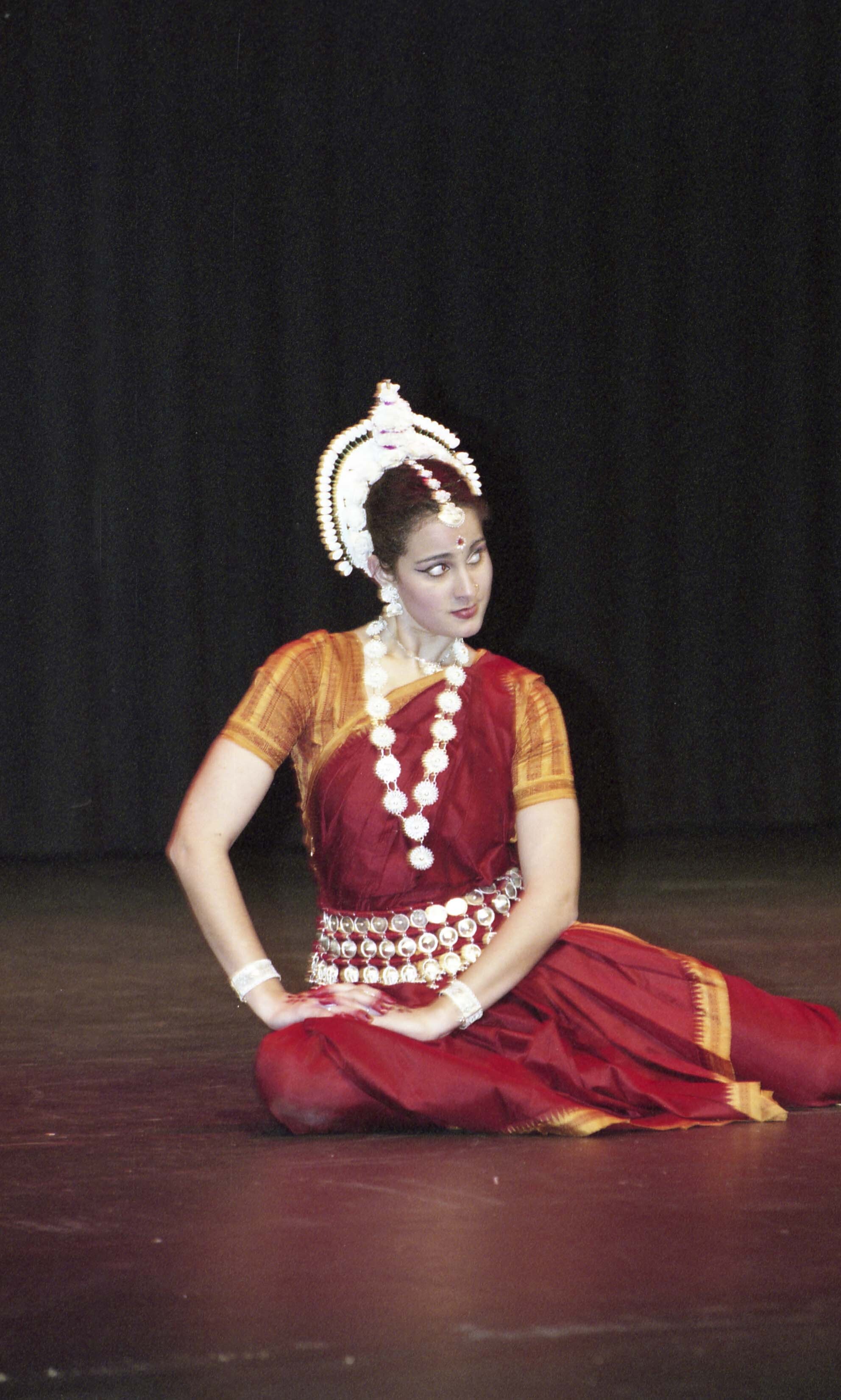
Photograph of Sitara Thobani performing odissi dance at a variety show organized by the Pandit Jasraj School of Music Foundation. The show featured students from the Pandit Jasraj School of Music and other performing artists of Vancouver.
Sitara Thobani first began dancing at the age of 8 under the direction of Lata Pada in the Bharatanatyam tradition. She began her training in the Odissi tradition under Dr. Ratna Roy in 1997. She has undertaken intensive training in India at the esteemed Nrityagram dance school as well as in Bhubaneswar in Orissa, the heart of Odissi dance tradition. Thobani has performed at many cultural and art events in Canada and the United States, including at the International Odissi Conference in Washington, D.C. in August 2003. She has also performed at the Diamond Jubilee Hall in Dar-es-Salaam, the Zanzibar International Film Festival in Tanzania, as well as in Calcutta and Delhi, India. Thobani has dedicated herself to continuing the Odissi dance tradition of Guru Pankaj Charan Das as transmitted to her by her Guru, Dr. Ratna Roy. Thobani has a PhD in Social and Cultural Anthropology from the University of Oxford, an MA in Sociology and Equity Studies from the University of Toronto, and a BA in Anthropology and Asian Studies from the University of British Columbia. An Assistant Professor in Residential College in the Arts and Humanities, she is also affiliated with the Asian Studies Program and the Muslim Studies Program at Michigan State University.
Odissi is a classical Indian dance style which originates from the eastern state of Odisha, India. It is one of eight classical dance forms in India. Since the 12th century, odissi has been danced by maharis (people devoted to the dance) in temples. Odissi expresses traditional poetry and songs through movements. Many of the poems performed through Odissi come from the Sanskrit collection of romantic poetry, Gita Govinda, written by Jayadeva Goswami.
The Pandit Jasraj School of Music Foundation was incorporated in 1994 as a Society in the Province of British Columbia, dedicated to promoting vocal music in the Mewati Gharana within the Lower Mainland of Vancouver. Their Mission is to promote classical Indian music through instruction and performance.
Sitara Thobani first began dancing at the age of 8 under the direction of Lata Pada in the Bharatanatyam tradition. She began her training in the Odissi tradition under Dr. Ratna Roy in 1997. She has undertaken intensive training in India at the esteemed Nrityagram dance school as well as in Bhubaneswar in Orissa, the heart of Odissi dance tradition. Thobani has performed at many cultural and art events in Canada and the United States, including at the International Odissi Conference in Washington, D.C. in August 2003. She has also performed at the Diamond Jubilee Hall in Dar-es-Salaam, the Zanzibar International Film Festival in Tanzania, as well as in Calcutta and Delhi, India. Thobani has dedicated herself to continuing the Odissi dance tradition of Guru Pankaj Charan Das as transmitted to her by her Guru, Dr. Ratna Roy. Thobani has a PhD in Social and Cultural Anthropology from the University of Oxford, an MA in Sociology and Equity Studies from the University of Toronto, and a BA in Anthropology and Asian Studies from the University of British Columbia. An Assistant Professor in Residential College in the Arts and Humanities, she is also affiliated with the Asian Studies Program and the Muslim Studies Program at Michigan State University.
Odissi is a classical Indian dance style which originates from the eastern state of Odisha, India. It is one of eight classical dance forms in India. Since the 12th century, odissi has been danced by maharis (people devoted to the dance) in temples. Odissi expresses traditional poetry and songs through movements. Many of the poems performed through Odissi come from the Sanskrit collection of romantic poetry, Gita Govinda, written by Jayadeva Goswami.
The Pandit Jasraj School of Music Foundation was incorporated in 1994 as a Society in the Province of British Columbia, dedicated to promoting vocal music in the Mewati Gharana within the Lower Mainland of Vancouver. Their Mission is to promote classical Indian music through instruction and performance.