
Holī (Hindu festival)
Authority Sources
Member of
Creator: Bodalia, Chandra
Description
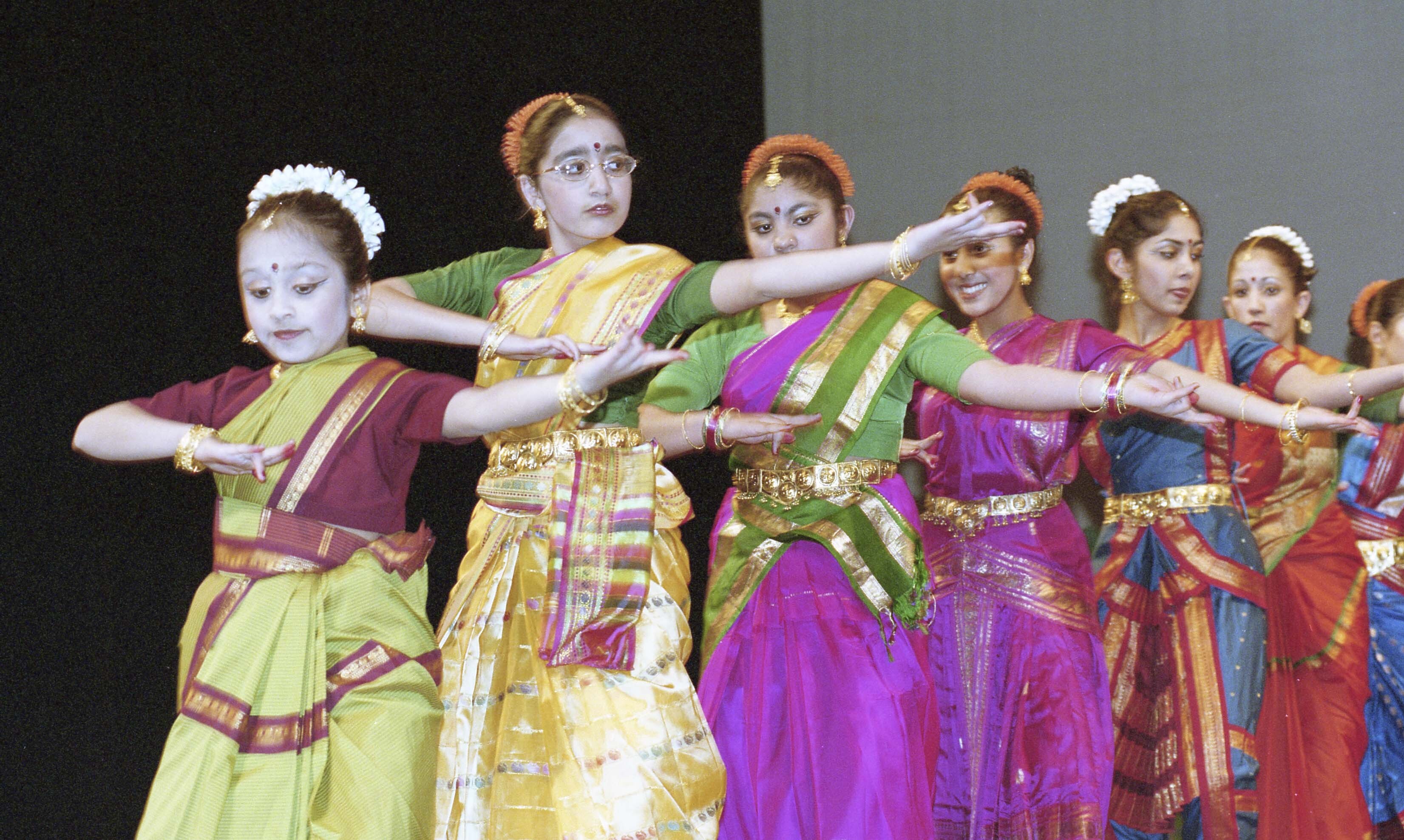
Photograph of a Kathak performance at a Holi celebration hosted at the Shree Mahalakshmi Temple in Vancouver, B.C.
Holi, often called the "festival of colors," is a vibrant and joyful Hindu celebration that marks spring's arrival and the triumph of good over evil. This festival, mainly observed in South Asia but also recognized globally, typically spans two days and is rooted in ancient traditions, mythology and community gatherings. Its date changes, as it is based on the full moon in the month of Phalguna, part of the Hindu lunar calendar, usually falling in late February or March. Holi, dating back to the 4th century, stands alongside Diwali, the festival of lights, as one of the most prominent Hindu celebrations and is famous for the playful tossing of colored powders and water.
Kathak is one of the eight major forms of Indian classical dance. Derived from the Sanskrit word kathakar, meaning "storyteller," it refers to the nomadic performers who narrated the tales of Mahabharata and the Ramayana through dance, music, and gestures. It is characterized by its extensive footwork, precise hand and body movements, flexibility, and facial expressions, which all comes together to tell a story.
Established in 1990, by Pandit Pramera Chaitanya, Shree Mahalakshmi Temple is a Hindu temple dedicated to Goddess Mahalakshmi. They offer various services, including workship, chanting, meditations, and ritualistic celebrations of all the Hindu festivals.
Holi, often called the "festival of colors," is a vibrant and joyful Hindu celebration that marks spring's arrival and the triumph of good over evil. This festival, mainly observed in South Asia but also recognized globally, typically spans two days and is rooted in ancient traditions, mythology and community gatherings. Its date changes, as it is based on the full moon in the month of Phalguna, part of the Hindu lunar calendar, usually falling in late February or March. Holi, dating back to the 4th century, stands alongside Diwali, the festival of lights, as one of the most prominent Hindu celebrations and is famous for the playful tossing of colored powders and water.
Kathak is one of the eight major forms of Indian classical dance. Derived from the Sanskrit word kathakar, meaning "storyteller," it refers to the nomadic performers who narrated the tales of Mahabharata and the Ramayana through dance, music, and gestures. It is characterized by its extensive footwork, precise hand and body movements, flexibility, and facial expressions, which all comes together to tell a story.
Established in 1990, by Pandit Pramera Chaitanya, Shree Mahalakshmi Temple is a Hindu temple dedicated to Goddess Mahalakshmi. They offer various services, including workship, chanting, meditations, and ritualistic celebrations of all the Hindu festivals.
Member of
Creator: Bodalia, Chandra
Description
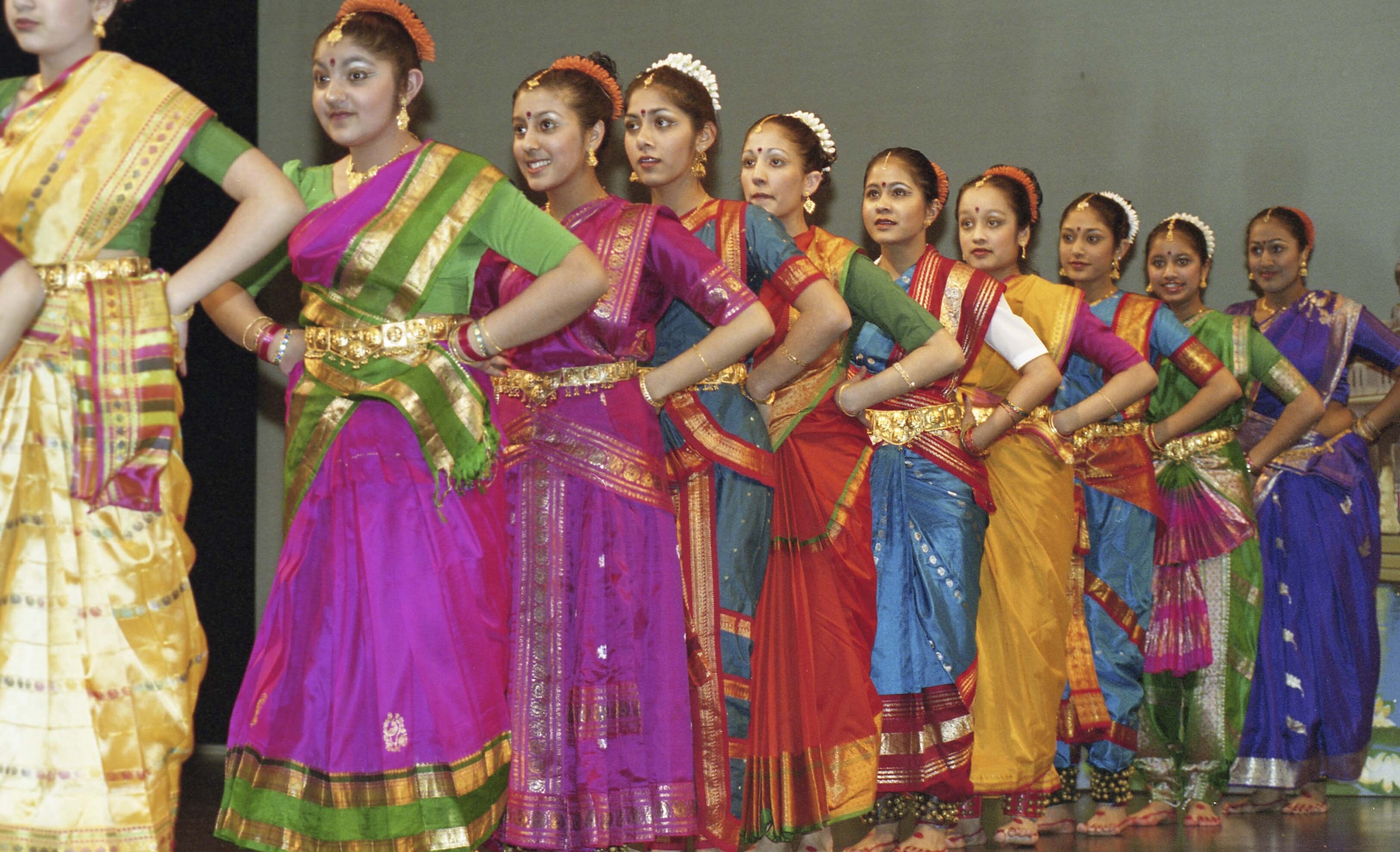
Photograph of a Kathak performance at a Holi celebration hosted at the Shree Mahalakshmi Temple in Vancouver, B.C.
Holi, often called the "festival of colors," is a vibrant and joyful Hindu celebration that marks spring's arrival and the triumph of good over evil. This festival, mainly observed in South Asia but also recognized globally, typically spans two days and is rooted in ancient traditions, mythology and community gatherings. Its date changes, as it is based on the full moon in the month of Phalguna, part of the Hindu lunar calendar, usually falling in late February or March. Holi, dating back to the 4th century, stands alongside Diwali, the festival of lights, as one of the most prominent Hindu celebrations and is famous for the playful tossing of colored powders and water.
Kathak is one of the eight major forms of Indian classical dance. Derived from the Sanskrit word kathakar, meaning "storyteller," it refers to the nomadic performers who narrated the tales of Mahabharata and the Ramayana through dance, music, and gestures. It is characterized by its extensive footwork, precise hand and body movements, flexibility, and facial expressions, which all comes together to tell a story.
Established in 1990, by Pandit Pramera Chaitanya, Shree Mahalakshmi Temple is a Hindu temple dedicated to Goddess Mahalakshmi. They offer various services, including workship, chanting, meditations, and ritualistic celebrations of all the Hindu festivals.
Holi, often called the "festival of colors," is a vibrant and joyful Hindu celebration that marks spring's arrival and the triumph of good over evil. This festival, mainly observed in South Asia but also recognized globally, typically spans two days and is rooted in ancient traditions, mythology and community gatherings. Its date changes, as it is based on the full moon in the month of Phalguna, part of the Hindu lunar calendar, usually falling in late February or March. Holi, dating back to the 4th century, stands alongside Diwali, the festival of lights, as one of the most prominent Hindu celebrations and is famous for the playful tossing of colored powders and water.
Kathak is one of the eight major forms of Indian classical dance. Derived from the Sanskrit word kathakar, meaning "storyteller," it refers to the nomadic performers who narrated the tales of Mahabharata and the Ramayana through dance, music, and gestures. It is characterized by its extensive footwork, precise hand and body movements, flexibility, and facial expressions, which all comes together to tell a story.
Established in 1990, by Pandit Pramera Chaitanya, Shree Mahalakshmi Temple is a Hindu temple dedicated to Goddess Mahalakshmi. They offer various services, including workship, chanting, meditations, and ritualistic celebrations of all the Hindu festivals.
Member of
Creator: Bodalia, Chandra
Description
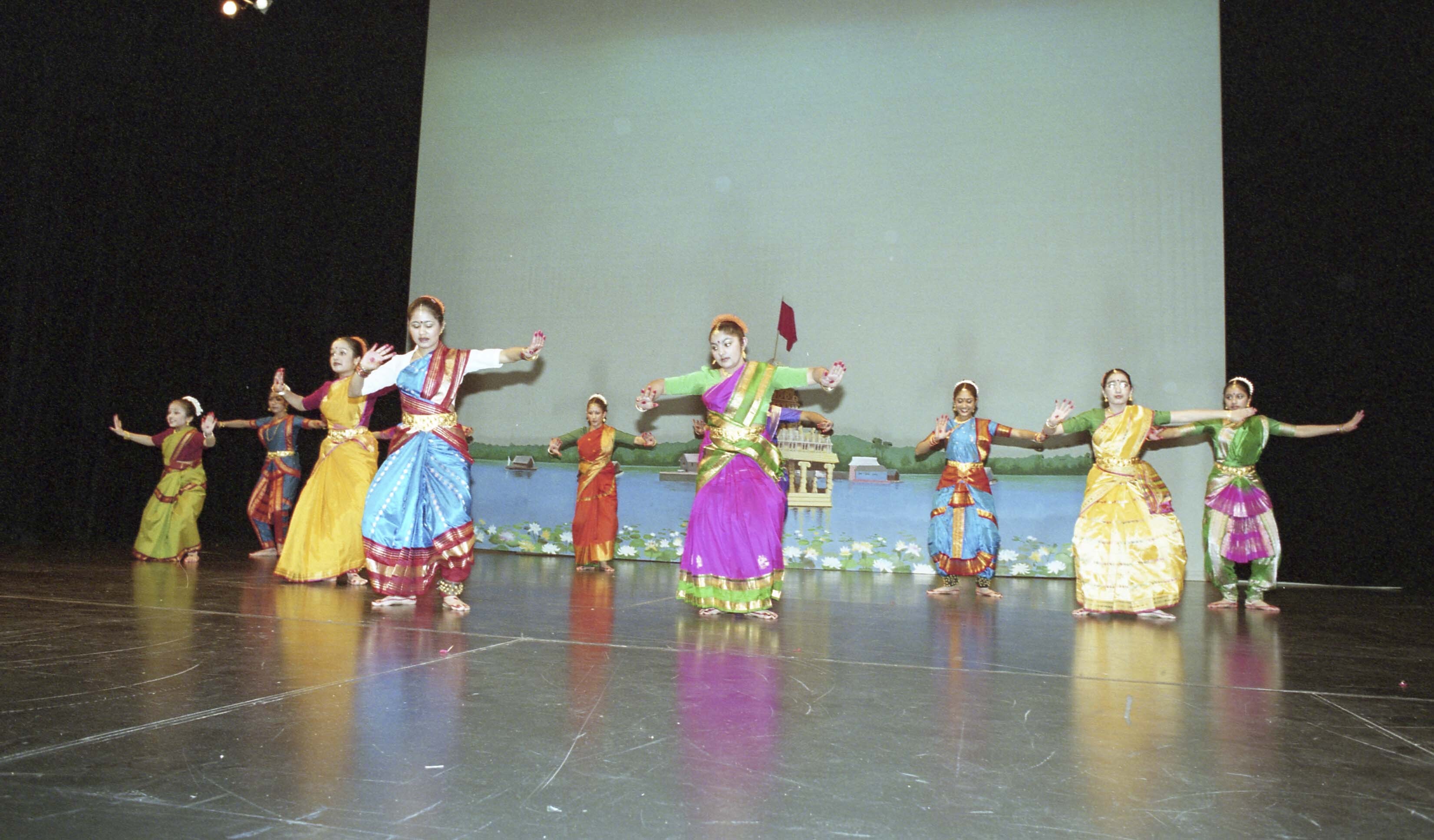
Photograph of a Kathak performance at a Holi celebration hosted at the Shree Mahalakshmi Temple in Vancouver, B.C.
Holi, often called the "festival of colors," is a vibrant and joyful Hindu celebration that marks spring's arrival and the triumph of good over evil. This festival, mainly observed in South Asia but also recognized globally, typically spans two days and is rooted in ancient traditions, mythology and community gatherings. Its date changes, as it is based on the full moon in the month of Phalguna, part of the Hindu lunar calendar, usually falling in late February or March. Holi, dating back to the 4th century, stands alongside Diwali, the festival of lights, as one of the most prominent Hindu celebrations and is famous for the playful tossing of colored powders and water.
Kathak is one of the eight major forms of Indian classical dance. Derived from the Sanskrit word kathakar, meaning "storyteller," it refers to the nomadic performers who narrated the tales of Mahabharata and the Ramayana through dance, music, and gestures. It is characterized by its extensive footwork, precise hand and body movements, flexibility, and facial expressions, which all comes together to tell a story.
Established in 1990, by Pandit Pramera Chaitanya, Shree Mahalakshmi Temple is a Hindu temple dedicated to Goddess Mahalakshmi. They offer various services, including workship, chanting, meditations, and ritualistic celebrations of all the Hindu festivals.
Holi, often called the "festival of colors," is a vibrant and joyful Hindu celebration that marks spring's arrival and the triumph of good over evil. This festival, mainly observed in South Asia but also recognized globally, typically spans two days and is rooted in ancient traditions, mythology and community gatherings. Its date changes, as it is based on the full moon in the month of Phalguna, part of the Hindu lunar calendar, usually falling in late February or March. Holi, dating back to the 4th century, stands alongside Diwali, the festival of lights, as one of the most prominent Hindu celebrations and is famous for the playful tossing of colored powders and water.
Kathak is one of the eight major forms of Indian classical dance. Derived from the Sanskrit word kathakar, meaning "storyteller," it refers to the nomadic performers who narrated the tales of Mahabharata and the Ramayana through dance, music, and gestures. It is characterized by its extensive footwork, precise hand and body movements, flexibility, and facial expressions, which all comes together to tell a story.
Established in 1990, by Pandit Pramera Chaitanya, Shree Mahalakshmi Temple is a Hindu temple dedicated to Goddess Mahalakshmi. They offer various services, including workship, chanting, meditations, and ritualistic celebrations of all the Hindu festivals.

Member of
Creator: Bodalia, Chandra
Description
Photograph of Dr. Gulzar Singh Cheema at a Holi celebration hosted at the Shree Mahalakshmi Temple in Vancouver, B.C.
Dr. Gulzar Singh Cheema is a family physician in Surrey, British Columbia, and a former member of the Legislative Assembly in Manitoba, 1988-1993. Cheema immigrated to Canada in December, 1979, and was the first Indian-born Canadian doctor to be elected to a legislative assembly in Canada in 1988. Cheema was elected in B.C. in May 2001 to represent the riding of Surrey-Panorama Ridge. On June 05, 2001 Cheema was appointed as a member of the Executive Council for the Government of B.C. as Minister of State for Mental Health. On January 26, 2004, he was appointed as a member of the Executive Council for the Government of B.C. as Minister of State for Immigration and Multicultural Services. He also served as a critic for health. He received his Bachelor of Medicine and surgery from India's Punjab University, interned at the University of Newfoundland and was a resident at Saskatoon's University Hospital. In 1992 he was awarded the Canada 125 Medal for community service. In 2014, Cheema was recognized by the Doctors of British Columbia Medical Association, for an Individual Award of Excellence in Health Promotion for his outstanding and continuing work educating the Indo-Canadian population about disease prevention and promotion.
Holi, often called the "festival of colors," is a vibrant and joyful Hindu celebration that marks spring's arrival and the triumph of good over evil. This festival, mainly observed in South Asia but also recognized globally, typically spans two days and is rooted in ancient traditions, mythology and community gatherings. Its date changes, as it is based on the full moon in the month of Phalguna, part of the Hindu lunar calendar, usually falling in late February or March. Holi, dating back to the 4th century, stands alongside Diwali, the festival of lights, as one of the most prominent Hindu celebrations and is famous for the playful tossing of colored powders and water.
Established in 1990, by Pandit Pramera Chaitanya, Shree Mahalakshmi Temple is a Hindu temple dedicated to Goddess Mahalakshmi. They offer various services, including workship, chanting, meditations, and ritualistic celebrations of all the Hindu festivals.
Dr. Gulzar Singh Cheema is a family physician in Surrey, British Columbia, and a former member of the Legislative Assembly in Manitoba, 1988-1993. Cheema immigrated to Canada in December, 1979, and was the first Indian-born Canadian doctor to be elected to a legislative assembly in Canada in 1988. Cheema was elected in B.C. in May 2001 to represent the riding of Surrey-Panorama Ridge. On June 05, 2001 Cheema was appointed as a member of the Executive Council for the Government of B.C. as Minister of State for Mental Health. On January 26, 2004, he was appointed as a member of the Executive Council for the Government of B.C. as Minister of State for Immigration and Multicultural Services. He also served as a critic for health. He received his Bachelor of Medicine and surgery from India's Punjab University, interned at the University of Newfoundland and was a resident at Saskatoon's University Hospital. In 1992 he was awarded the Canada 125 Medal for community service. In 2014, Cheema was recognized by the Doctors of British Columbia Medical Association, for an Individual Award of Excellence in Health Promotion for his outstanding and continuing work educating the Indo-Canadian population about disease prevention and promotion.
Holi, often called the "festival of colors," is a vibrant and joyful Hindu celebration that marks spring's arrival and the triumph of good over evil. This festival, mainly observed in South Asia but also recognized globally, typically spans two days and is rooted in ancient traditions, mythology and community gatherings. Its date changes, as it is based on the full moon in the month of Phalguna, part of the Hindu lunar calendar, usually falling in late February or March. Holi, dating back to the 4th century, stands alongside Diwali, the festival of lights, as one of the most prominent Hindu celebrations and is famous for the playful tossing of colored powders and water.
Established in 1990, by Pandit Pramera Chaitanya, Shree Mahalakshmi Temple is a Hindu temple dedicated to Goddess Mahalakshmi. They offer various services, including workship, chanting, meditations, and ritualistic celebrations of all the Hindu festivals.
Member of
Creator: Bodalia, Chandra
Description
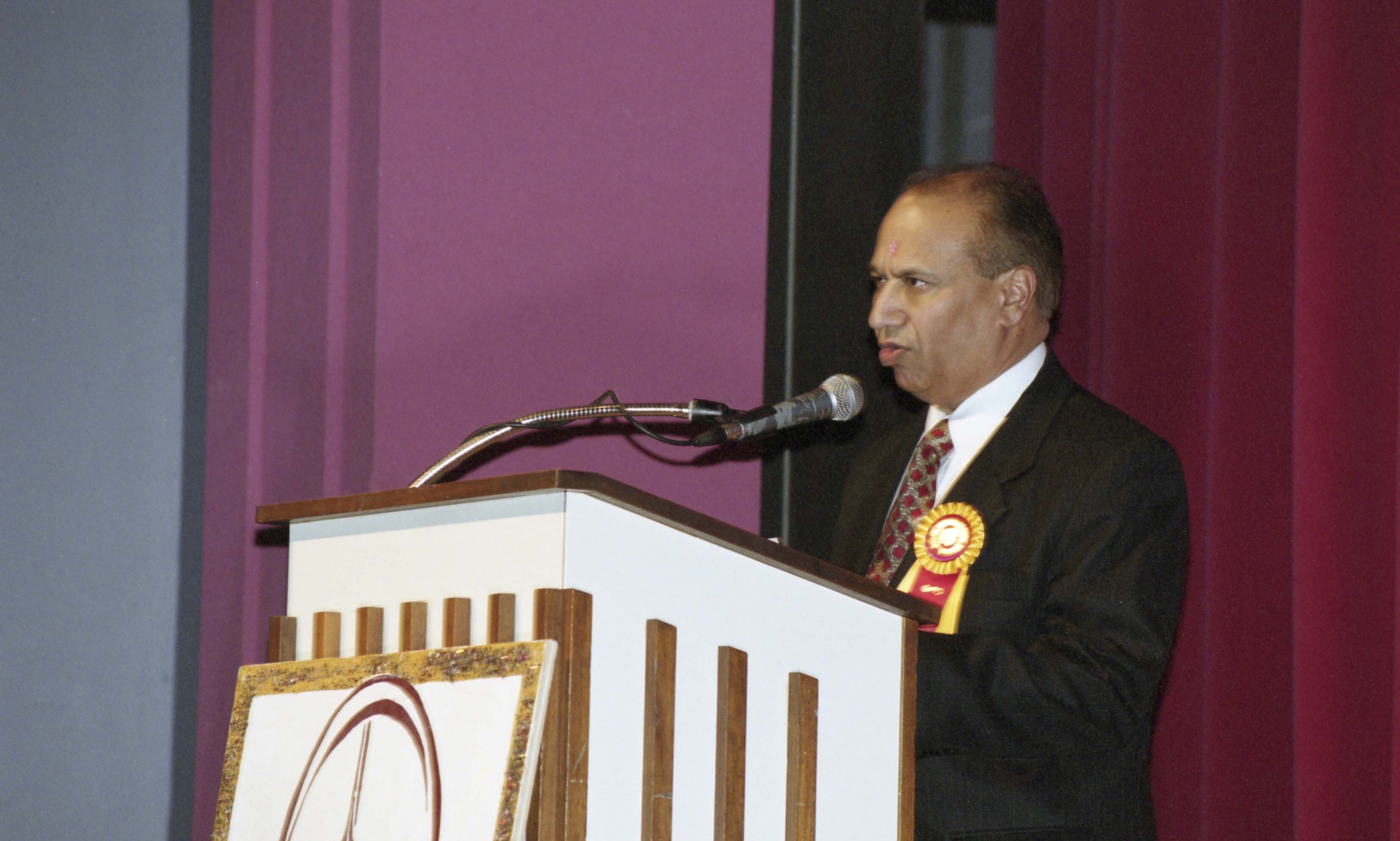
Photograph of an unidentified man speaking at a Holi celebration hosted at the Shree Mahalakshmi Temple in Vancouver, B.C.
Holi, often called the "festival of colors," is a vibrant and joyful Hindu celebration that marks spring's arrival and the triumph of good over evil. This festival, mainly observed in South Asia but also recognized globally, typically spans two days and is rooted in ancient traditions, mythology and community gatherings. Its date changes, as it is based on the full moon in the month of Phalguna, part of the Hindu lunar calendar, usually falling in late February or March. Holi, dating back to the 4th century, stands alongside Diwali, the festival of lights, as one of the most prominent Hindu celebrations and is famous for the playful tossing of colored powders and water.
Established in 1990, by Pandit Pramera Chaitanya, Shree Mahalakshmi Temple is a Hindu temple dedicated to Goddess Mahalakshmi. They offer various services, including workship, chanting, meditations, and ritualistic celebrations of all the Hindu festivals.
Holi, often called the "festival of colors," is a vibrant and joyful Hindu celebration that marks spring's arrival and the triumph of good over evil. This festival, mainly observed in South Asia but also recognized globally, typically spans two days and is rooted in ancient traditions, mythology and community gatherings. Its date changes, as it is based on the full moon in the month of Phalguna, part of the Hindu lunar calendar, usually falling in late February or March. Holi, dating back to the 4th century, stands alongside Diwali, the festival of lights, as one of the most prominent Hindu celebrations and is famous for the playful tossing of colored powders and water.
Established in 1990, by Pandit Pramera Chaitanya, Shree Mahalakshmi Temple is a Hindu temple dedicated to Goddess Mahalakshmi. They offer various services, including workship, chanting, meditations, and ritualistic celebrations of all the Hindu festivals.
Member of
Creator: Bodalia, Chandra
Description
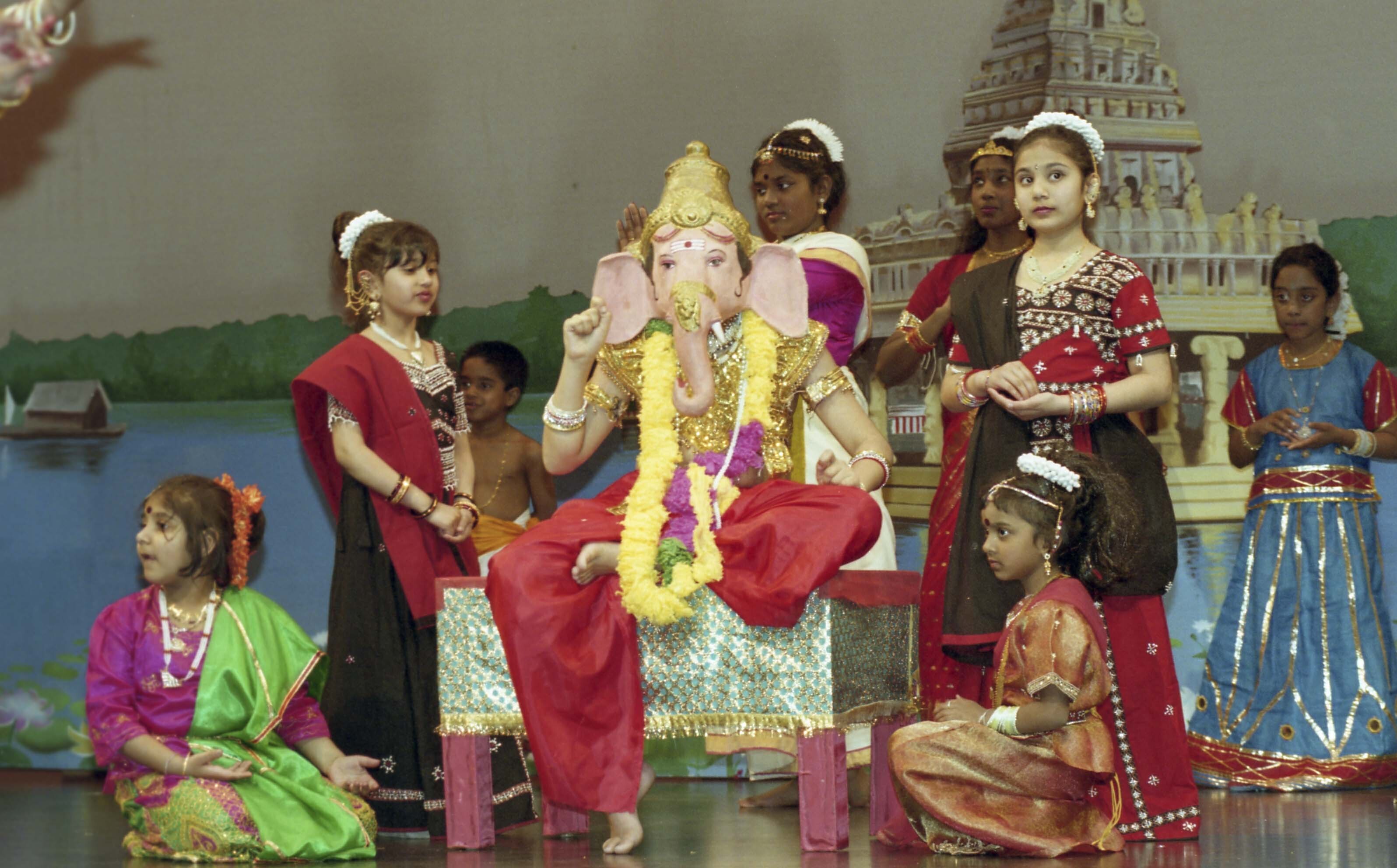
Photograph of children putting on a performance at a Holi celebration hosted at the Shree Mahalakshmi Temple in Vancouver, B.C.
Holi, often called the "festival of colors," is a vibrant and joyful Hindu celebration that marks spring's arrival and the triumph of good over evil. This festival, mainly observed in South Asia but also recognized globally, typically spans two days and is rooted in ancient traditions, mythology and community gatherings. Its date changes, as it is based on the full moon in the month of Phalguna, part of the Hindu lunar calendar, usually falling in late February or March. Holi, dating back to the 4th century, stands alongside Diwali, the festival of lights, as one of the most prominent Hindu celebrations and is famous for the playful tossing of colored powders and water.
Established in 1990, by Pandit Pramera Chaitanya, Shree Mahalakshmi Temple is a Hindu temple dedicated to Goddess Mahalakshmi. They offer various services, including workship, chanting, meditations, and ritualistic celebrations of all the Hindu festivals.
Holi, often called the "festival of colors," is a vibrant and joyful Hindu celebration that marks spring's arrival and the triumph of good over evil. This festival, mainly observed in South Asia but also recognized globally, typically spans two days and is rooted in ancient traditions, mythology and community gatherings. Its date changes, as it is based on the full moon in the month of Phalguna, part of the Hindu lunar calendar, usually falling in late February or March. Holi, dating back to the 4th century, stands alongside Diwali, the festival of lights, as one of the most prominent Hindu celebrations and is famous for the playful tossing of colored powders and water.
Established in 1990, by Pandit Pramera Chaitanya, Shree Mahalakshmi Temple is a Hindu temple dedicated to Goddess Mahalakshmi. They offer various services, including workship, chanting, meditations, and ritualistic celebrations of all the Hindu festivals.
Member of
Creator: Bodalia, Chandra
Description
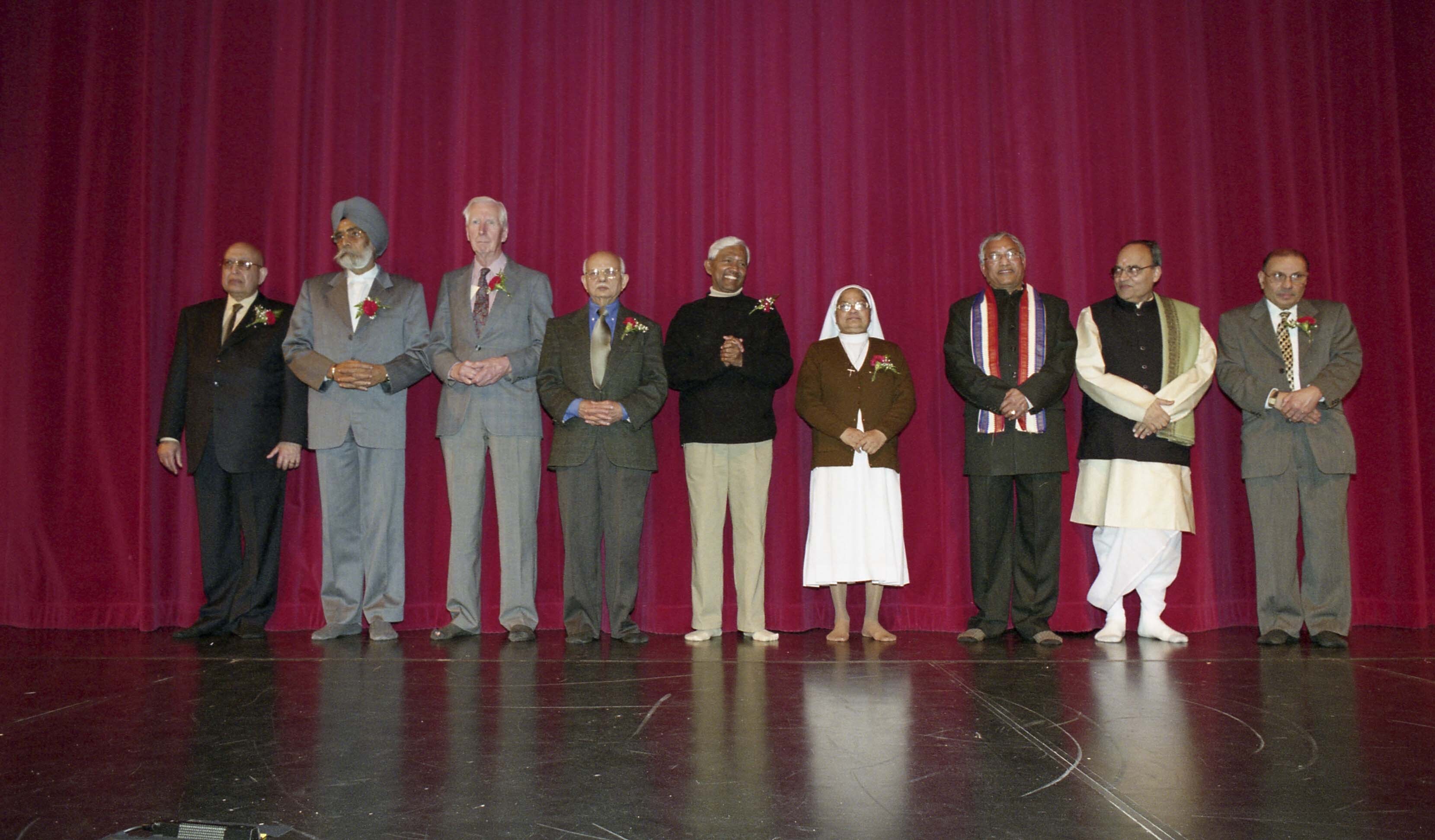
Group portrait of unidentified individuals on stage at a Holi celebration hosted at the Shree Mahalakshmi Temple in Vancouver, B.C.
Holi, often called the "festival of colors," is a vibrant and joyful Hindu celebration that marks spring's arrival and the triumph of good over evil. This festival, mainly observed in South Asia but also recognized globally, typically spans two days and is rooted in ancient traditions, mythology and community gatherings. Its date changes, as it is based on the full moon in the month of Phalguna, part of the Hindu lunar calendar, usually falling in late February or March. Holi, dating back to the 4th century, stands alongside Diwali, the festival of lights, as one of the most prominent Hindu celebrations and is famous for the playful tossing of colored powders and water.
Established in 1990, by Pandit Pramera Chaitanya, Shree Mahalakshmi Temple is a Hindu temple dedicated to Goddess Mahalakshmi. They offer various services, including workship, chanting, meditations, and ritualistic celebrations of all the Hindu festivals.
Holi, often called the "festival of colors," is a vibrant and joyful Hindu celebration that marks spring's arrival and the triumph of good over evil. This festival, mainly observed in South Asia but also recognized globally, typically spans two days and is rooted in ancient traditions, mythology and community gatherings. Its date changes, as it is based on the full moon in the month of Phalguna, part of the Hindu lunar calendar, usually falling in late February or March. Holi, dating back to the 4th century, stands alongside Diwali, the festival of lights, as one of the most prominent Hindu celebrations and is famous for the playful tossing of colored powders and water.
Established in 1990, by Pandit Pramera Chaitanya, Shree Mahalakshmi Temple is a Hindu temple dedicated to Goddess Mahalakshmi. They offer various services, including workship, chanting, meditations, and ritualistic celebrations of all the Hindu festivals.
Member of
Creator: Bodalia, Chandra
Description
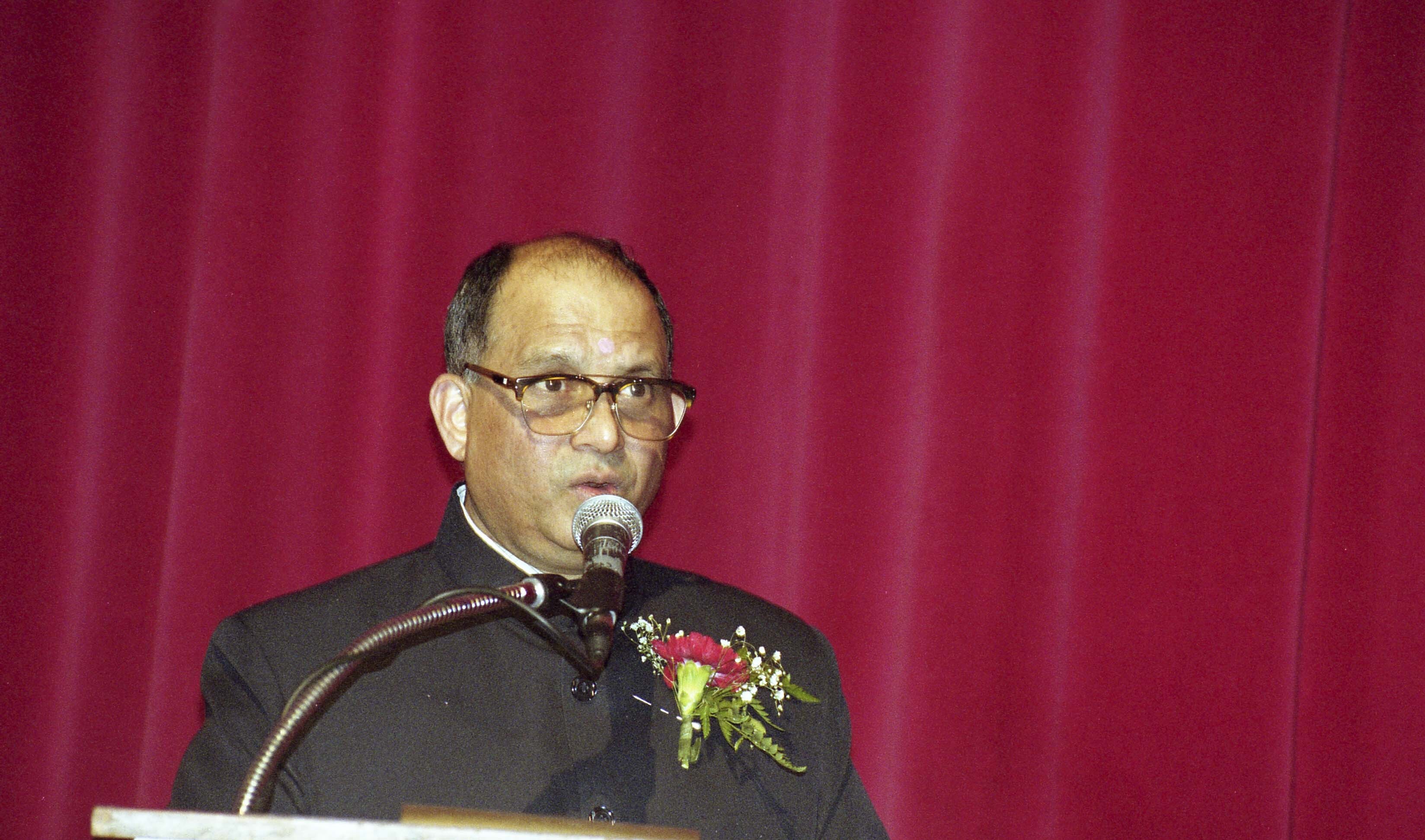
Photograph of an unidentified man speaking at a Holi celebration hosted at the Shree Mahalakshmi Temple in Vancouver, B.C.
Holi, often called the "festival of colors," is a vibrant and joyful Hindu celebration that marks spring's arrival and the triumph of good over evil. This festival, mainly observed in South Asia but also recognized globally, typically spans two days and is rooted in ancient traditions, mythology and community gatherings. Its date changes, as it is based on the full moon in the month of Phalguna, part of the Hindu lunar calendar, usually falling in late February or March. Holi, dating back to the 4th century, stands alongside Diwali, the festival of lights, as one of the most prominent Hindu celebrations and is famous for the playful tossing of colored powders and water.
Established in 1990, by Pandit Pramera Chaitanya, Shree Mahalakshmi Temple is a Hindu temple dedicated to Goddess Mahalakshmi. They offer various services, including workship, chanting, meditations, and ritualistic celebrations of all the Hindu festivals.
Holi, often called the "festival of colors," is a vibrant and joyful Hindu celebration that marks spring's arrival and the triumph of good over evil. This festival, mainly observed in South Asia but also recognized globally, typically spans two days and is rooted in ancient traditions, mythology and community gatherings. Its date changes, as it is based on the full moon in the month of Phalguna, part of the Hindu lunar calendar, usually falling in late February or March. Holi, dating back to the 4th century, stands alongside Diwali, the festival of lights, as one of the most prominent Hindu celebrations and is famous for the playful tossing of colored powders and water.
Established in 1990, by Pandit Pramera Chaitanya, Shree Mahalakshmi Temple is a Hindu temple dedicated to Goddess Mahalakshmi. They offer various services, including workship, chanting, meditations, and ritualistic celebrations of all the Hindu festivals.
Member of
Creator: Bodalia, Chandra
Description
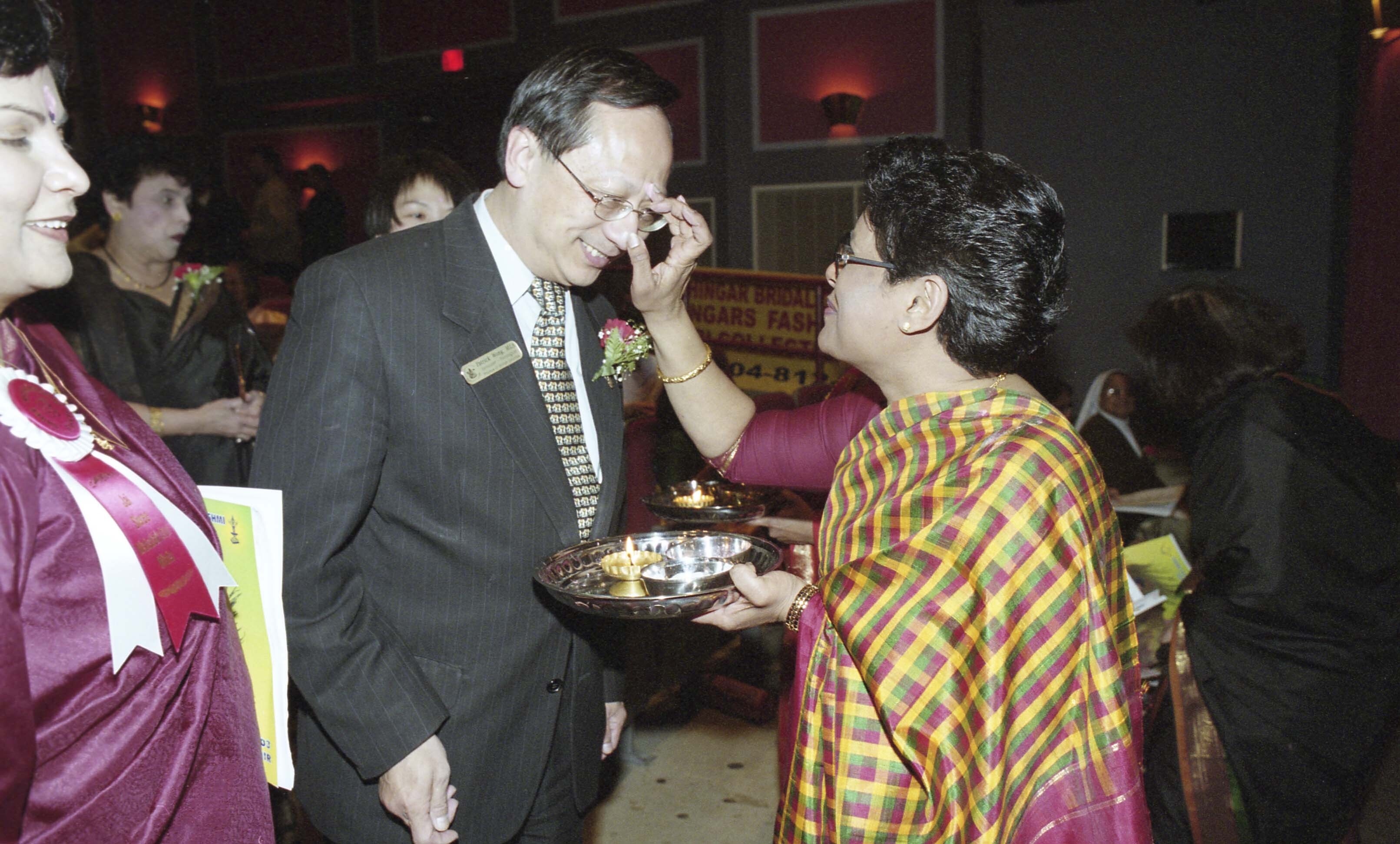
Photograph of an unidentified woman applying tilak to an unidentified man at a Holi celebration hosted at the Shree Mahalakshmi Temple in Vancouver, B.C.
Holi, often called the "festival of colors," is a vibrant and joyful Hindu celebration that marks spring's arrival and the triumph of good over evil. This festival, mainly observed in South Asia but also recognized globally, typically spans two days and is rooted in ancient traditions, mythology and community gatherings. Its date changes, as it is based on the full moon in the month of Phalguna, part of the Hindu lunar calendar, usually falling in late February or March. Holi, dating back to the 4th century, stands alongside Diwali, the festival of lights, as one of the most prominent Hindu celebrations and is famous for the playful tossing of colored powders and water.
Established in 1990, by Pandit Pramera Chaitanya, Shree Mahalakshmi Temple is a Hindu temple dedicated to Goddess Mahalakshmi. They offer various services, including workship, chanting, meditations, and ritualistic celebrations of all the Hindu festivals.
Holi, often called the "festival of colors," is a vibrant and joyful Hindu celebration that marks spring's arrival and the triumph of good over evil. This festival, mainly observed in South Asia but also recognized globally, typically spans two days and is rooted in ancient traditions, mythology and community gatherings. Its date changes, as it is based on the full moon in the month of Phalguna, part of the Hindu lunar calendar, usually falling in late February or March. Holi, dating back to the 4th century, stands alongside Diwali, the festival of lights, as one of the most prominent Hindu celebrations and is famous for the playful tossing of colored powders and water.
Established in 1990, by Pandit Pramera Chaitanya, Shree Mahalakshmi Temple is a Hindu temple dedicated to Goddess Mahalakshmi. They offer various services, including workship, chanting, meditations, and ritualistic celebrations of all the Hindu festivals.
Member of
Creator: Bodalia, Chandra
Description
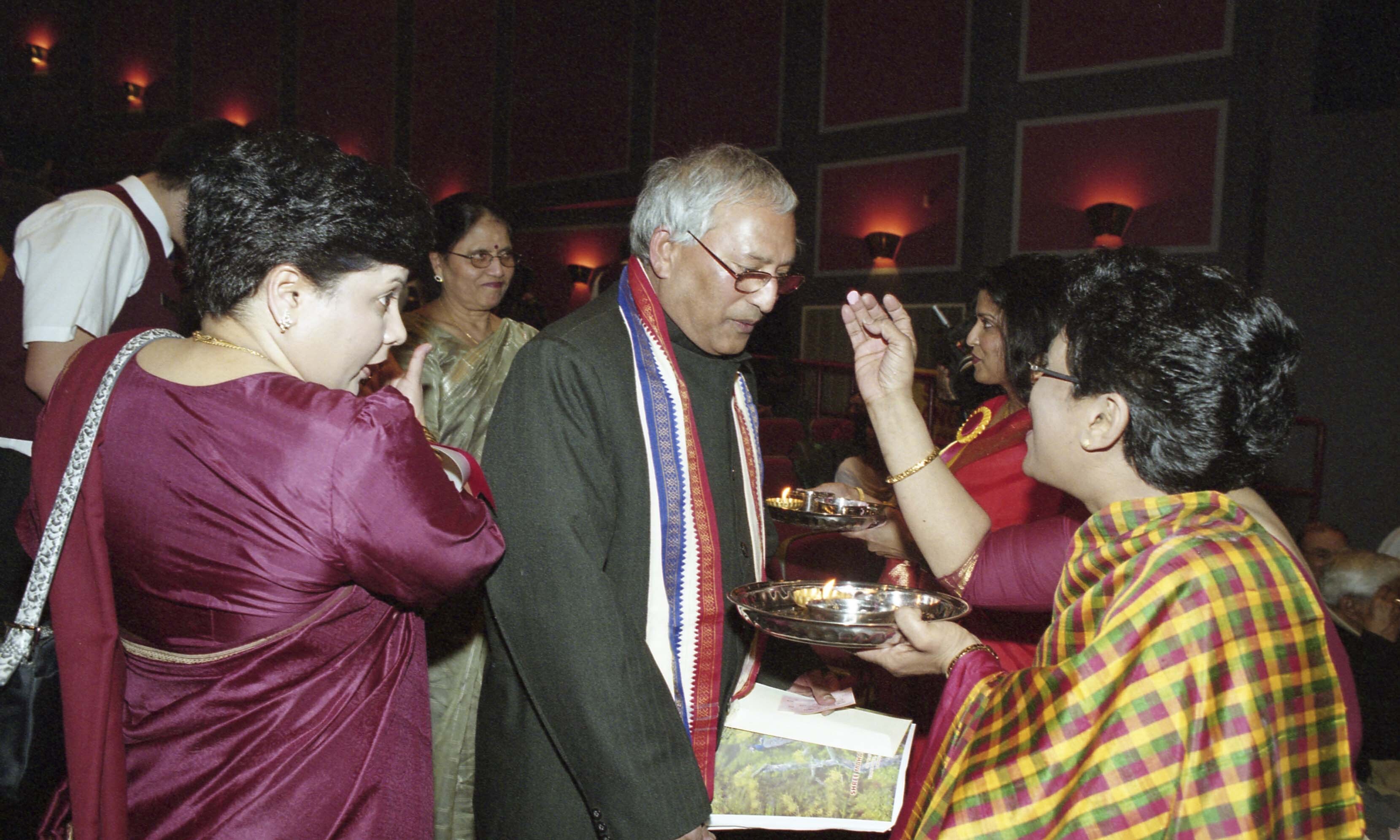
Photograph of an unidentified woman applying tilak to an unidentified man at a Holi celebration hosted at the Shree Mahalakshmi Temple in Vancouver, B.C.
Holi, often called the "festival of colors," is a vibrant and joyful Hindu celebration that marks spring's arrival and the triumph of good over evil. This festival, mainly observed in South Asia but also recognized globally, typically spans two days and is rooted in ancient traditions, mythology and community gatherings. Its date changes, as it is based on the full moon in the month of Phalguna, part of the Hindu lunar calendar, usually falling in late February or March. Holi, dating back to the 4th century, stands alongside Diwali, the festival of lights, as one of the most prominent Hindu celebrations and is famous for the playful tossing of colored powders and water.
Established in 1990, by Pandit Pramera Chaitanya, Shree Mahalakshmi Temple is a Hindu temple dedicated to Goddess Mahalakshmi. They offer various services, including workship, chanting, meditations, and ritualistic celebrations of all the Hindu festivals.
Holi, often called the "festival of colors," is a vibrant and joyful Hindu celebration that marks spring's arrival and the triumph of good over evil. This festival, mainly observed in South Asia but also recognized globally, typically spans two days and is rooted in ancient traditions, mythology and community gatherings. Its date changes, as it is based on the full moon in the month of Phalguna, part of the Hindu lunar calendar, usually falling in late February or March. Holi, dating back to the 4th century, stands alongside Diwali, the festival of lights, as one of the most prominent Hindu celebrations and is famous for the playful tossing of colored powders and water.
Established in 1990, by Pandit Pramera Chaitanya, Shree Mahalakshmi Temple is a Hindu temple dedicated to Goddess Mahalakshmi. They offer various services, including workship, chanting, meditations, and ritualistic celebrations of all the Hindu festivals.