
Holī (Hindu festival)
Authority Sources
Member of
Creator: Bodalia, Chandra
Description
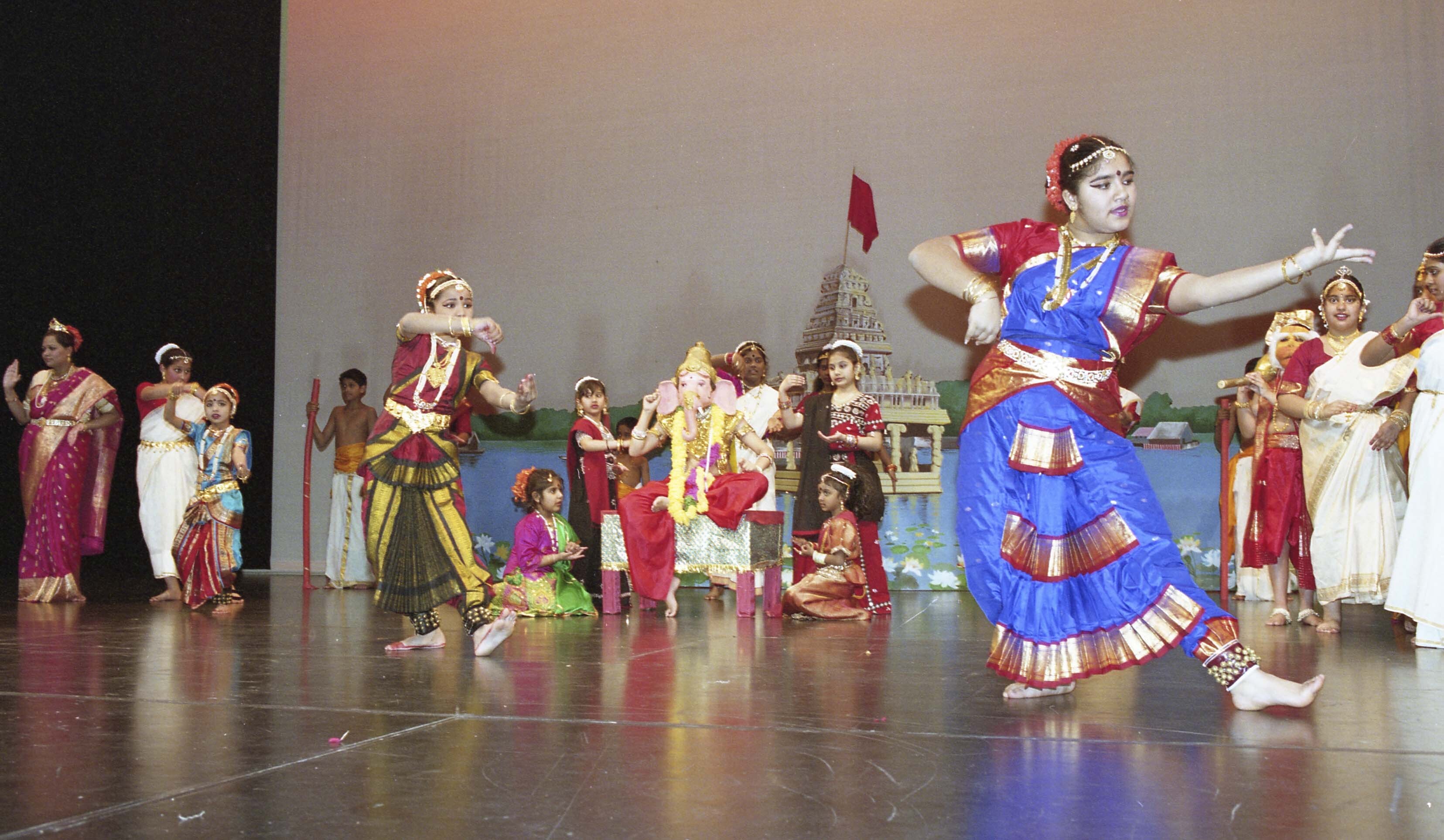
Photograph of a Bharatanatyam performance by children at a Holi celebration hosted at the Shree Mahalakshmi Temple in Vancouver, B.C.
Holi, often called the "festival of colors," is a vibrant and joyful Hindu celebration that marks spring's arrival and the triumph of good over evil. This festival, mainly observed in South Asia but also recognized globally, typically spans two days and is rooted in ancient traditions, mythology and community gatherings. Its date changes, as it is based on the full moon in the month of Phalguna, part of the Hindu lunar calendar, usually falling in late February or March. Holi, dating back to the 4th century, stands alongside Diwali, the festival of lights, as one of the most prominent Hindu celebrations and is famous for the playful tossing of colored powders and water.
Bharatanatyam, a classical dance style of India, is indigenous to the Tamil Nadu region and prevalent in southern India. Bharatanatyam serves the expression of Hindu religious themes and devotions. Bharatanatyam was originally performed exclusively by female temple dancers and was not brought to the stage for public performance until about 1930. A vital tradition of Bharatanatyam is a graduation performance, called Arangetram, in which graduates showcase their talents.
Established in 1990, by Pandit Pramera Chaitanya, Shree Mahalakshmi Temple is a Hindu temple dedicated to Goddess Mahalakshmi. They offer various services, including workship, chanting, meditations, and ritualistic celebrations of all the Hindu festivals.
Holi, often called the "festival of colors," is a vibrant and joyful Hindu celebration that marks spring's arrival and the triumph of good over evil. This festival, mainly observed in South Asia but also recognized globally, typically spans two days and is rooted in ancient traditions, mythology and community gatherings. Its date changes, as it is based on the full moon in the month of Phalguna, part of the Hindu lunar calendar, usually falling in late February or March. Holi, dating back to the 4th century, stands alongside Diwali, the festival of lights, as one of the most prominent Hindu celebrations and is famous for the playful tossing of colored powders and water.
Bharatanatyam, a classical dance style of India, is indigenous to the Tamil Nadu region and prevalent in southern India. Bharatanatyam serves the expression of Hindu religious themes and devotions. Bharatanatyam was originally performed exclusively by female temple dancers and was not brought to the stage for public performance until about 1930. A vital tradition of Bharatanatyam is a graduation performance, called Arangetram, in which graduates showcase their talents.
Established in 1990, by Pandit Pramera Chaitanya, Shree Mahalakshmi Temple is a Hindu temple dedicated to Goddess Mahalakshmi. They offer various services, including workship, chanting, meditations, and ritualistic celebrations of all the Hindu festivals.
Member of
Creator: Bodalia, Chandra
Description
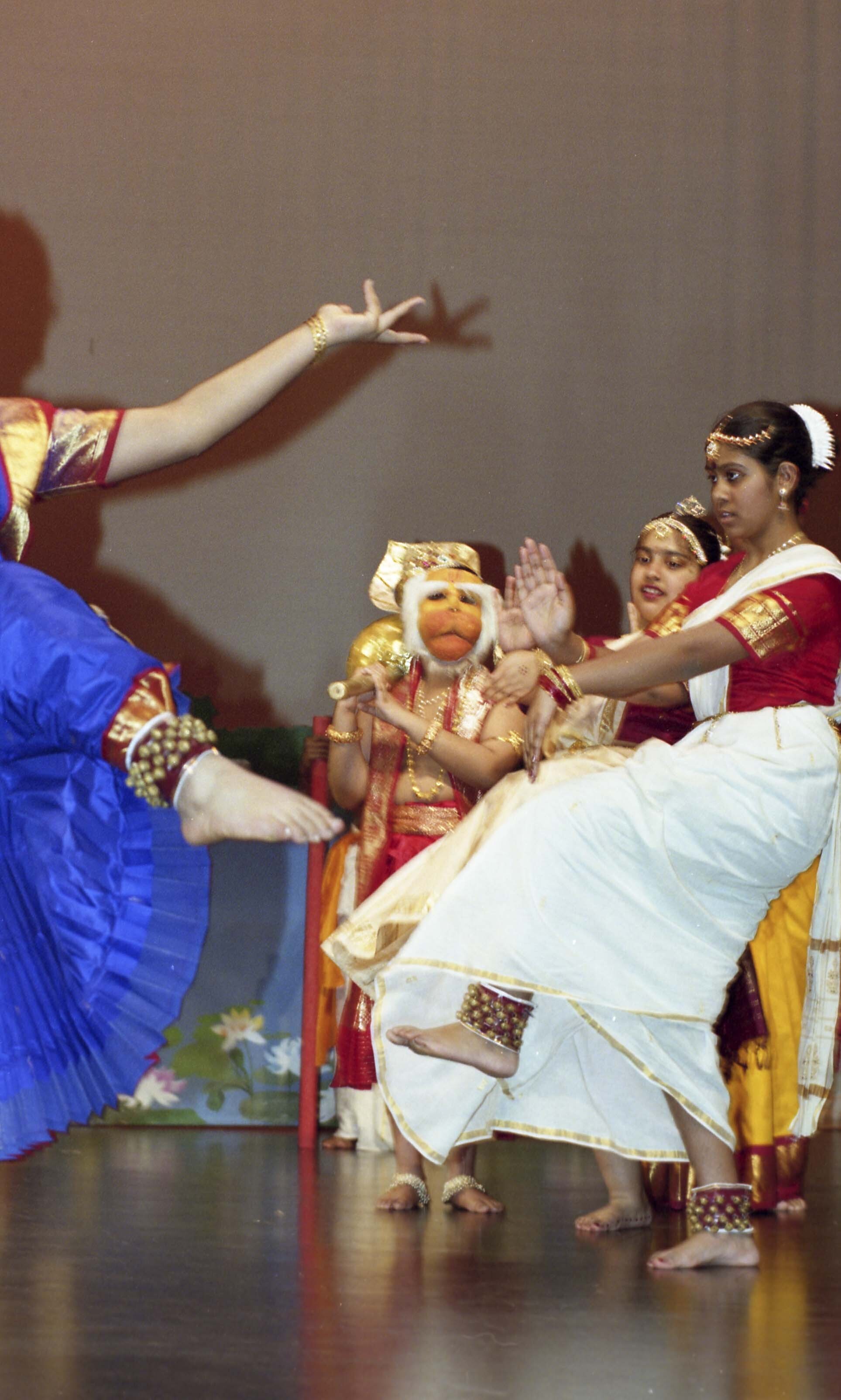
Photograph of a Bharatanatyam performance by children at a Holi celebration hosted at the Shree Mahalakshmi Temple in Vancouver, B.C.
Holi, often called the "festival of colors," is a vibrant and joyful Hindu celebration that marks spring's arrival and the triumph of good over evil. This festival, mainly observed in South Asia but also recognized globally, typically spans two days and is rooted in ancient traditions, mythology and community gatherings. Its date changes, as it is based on the full moon in the month of Phalguna, part of the Hindu lunar calendar, usually falling in late February or March. Holi, dating back to the 4th century, stands alongside Diwali, the festival of lights, as one of the most prominent Hindu celebrations and is famous for the playful tossing of colored powders and water.
Bharatanatyam, a classical dance style of India, is indigenous to the Tamil Nadu region and prevalent in southern India. Bharatanatyam serves the expression of Hindu religious themes and devotions. Bharatanatyam was originally performed exclusively by female temple dancers and was not brought to the stage for public performance until about 1930. A vital tradition of Bharatanatyam is a graduation performance, called Arangetram, in which graduates showcase their talents.
Established in 1990, by Pandit Pramera Chaitanya, Shree Mahalakshmi Temple is a Hindu temple dedicated to Goddess Mahalakshmi. They offer various services, including workship, chanting, meditations, and ritualistic celebrations of all the Hindu festivals.
Holi, often called the "festival of colors," is a vibrant and joyful Hindu celebration that marks spring's arrival and the triumph of good over evil. This festival, mainly observed in South Asia but also recognized globally, typically spans two days and is rooted in ancient traditions, mythology and community gatherings. Its date changes, as it is based on the full moon in the month of Phalguna, part of the Hindu lunar calendar, usually falling in late February or March. Holi, dating back to the 4th century, stands alongside Diwali, the festival of lights, as one of the most prominent Hindu celebrations and is famous for the playful tossing of colored powders and water.
Bharatanatyam, a classical dance style of India, is indigenous to the Tamil Nadu region and prevalent in southern India. Bharatanatyam serves the expression of Hindu religious themes and devotions. Bharatanatyam was originally performed exclusively by female temple dancers and was not brought to the stage for public performance until about 1930. A vital tradition of Bharatanatyam is a graduation performance, called Arangetram, in which graduates showcase their talents.
Established in 1990, by Pandit Pramera Chaitanya, Shree Mahalakshmi Temple is a Hindu temple dedicated to Goddess Mahalakshmi. They offer various services, including workship, chanting, meditations, and ritualistic celebrations of all the Hindu festivals.
Member of
Creator: Bodalia, Chandra
Description
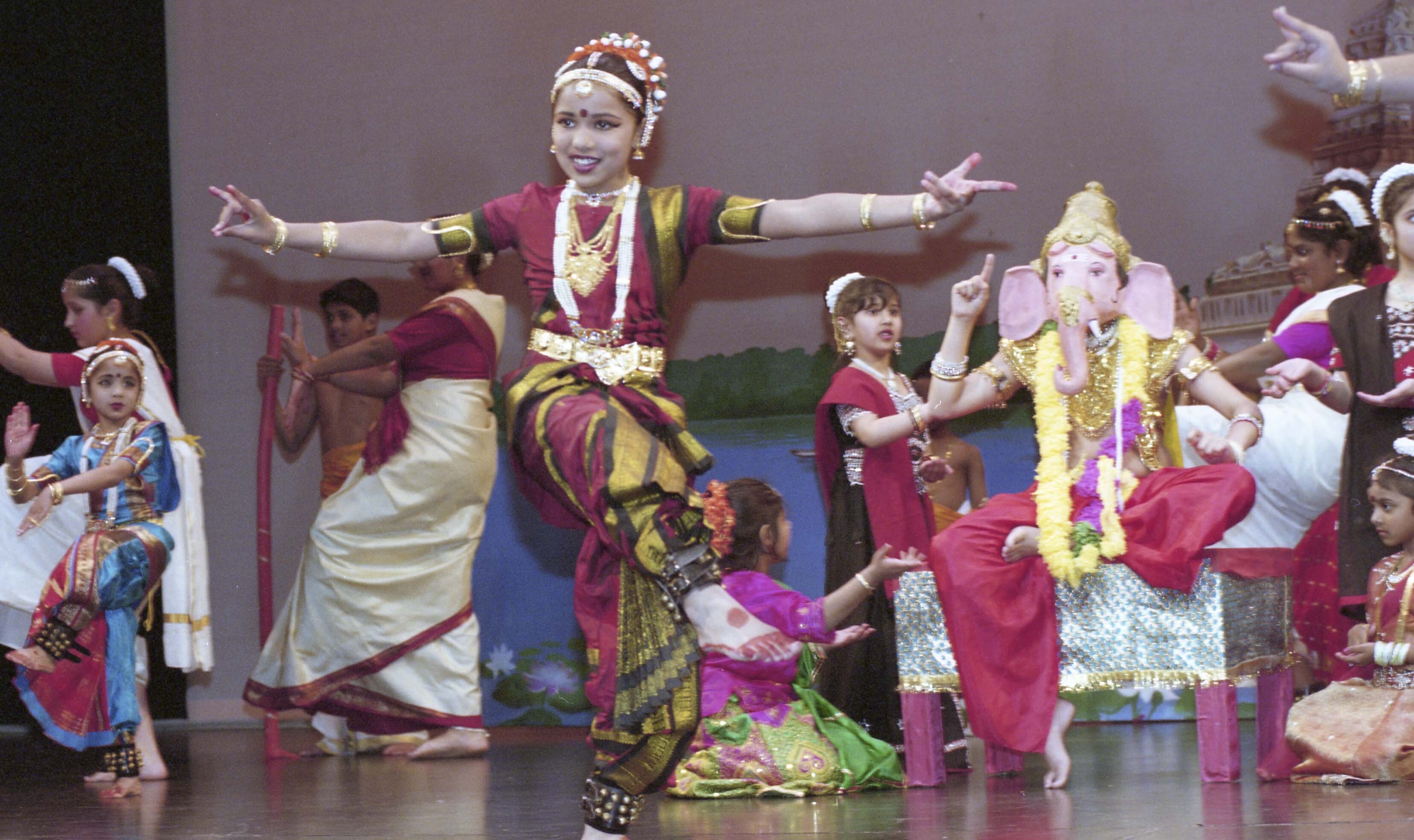
Photograph of a Bharatanatyam performance by children at a Holi celebration hosted at the Shree Mahalakshmi Temple in Vancouver, B.C.
Holi, often called the "festival of colors," is a vibrant and joyful Hindu celebration that marks spring's arrival and the triumph of good over evil. This festival, mainly observed in South Asia but also recognized globally, typically spans two days and is rooted in ancient traditions, mythology and community gatherings. Its date changes, as it is based on the full moon in the month of Phalguna, part of the Hindu lunar calendar, usually falling in late February or March. Holi, dating back to the 4th century, stands alongside Diwali, the festival of lights, as one of the most prominent Hindu celebrations and is famous for the playful tossing of colored powders and water.
Bharatanatyam, a classical dance style of India, is indigenous to the Tamil Nadu region and prevalent in southern India. Bharatanatyam serves the expression of Hindu religious themes and devotions. Bharatanatyam was originally performed exclusively by female temple dancers and was not brought to the stage for public performance until about 1930. A vital tradition of Bharatanatyam is a graduation performance, called Arangetram, in which graduates showcase their talents.
Established in 1990, by Pandit Pramera Chaitanya, Shree Mahalakshmi Temple is a Hindu temple dedicated to Goddess Mahalakshmi. They offer various services, including workship, chanting, meditations, and ritualistic celebrations of all the Hindu festivals.
Holi, often called the "festival of colors," is a vibrant and joyful Hindu celebration that marks spring's arrival and the triumph of good over evil. This festival, mainly observed in South Asia but also recognized globally, typically spans two days and is rooted in ancient traditions, mythology and community gatherings. Its date changes, as it is based on the full moon in the month of Phalguna, part of the Hindu lunar calendar, usually falling in late February or March. Holi, dating back to the 4th century, stands alongside Diwali, the festival of lights, as one of the most prominent Hindu celebrations and is famous for the playful tossing of colored powders and water.
Bharatanatyam, a classical dance style of India, is indigenous to the Tamil Nadu region and prevalent in southern India. Bharatanatyam serves the expression of Hindu religious themes and devotions. Bharatanatyam was originally performed exclusively by female temple dancers and was not brought to the stage for public performance until about 1930. A vital tradition of Bharatanatyam is a graduation performance, called Arangetram, in which graduates showcase their talents.
Established in 1990, by Pandit Pramera Chaitanya, Shree Mahalakshmi Temple is a Hindu temple dedicated to Goddess Mahalakshmi. They offer various services, including workship, chanting, meditations, and ritualistic celebrations of all the Hindu festivals.
Member of
Creator: Bodalia, Chandra
Description
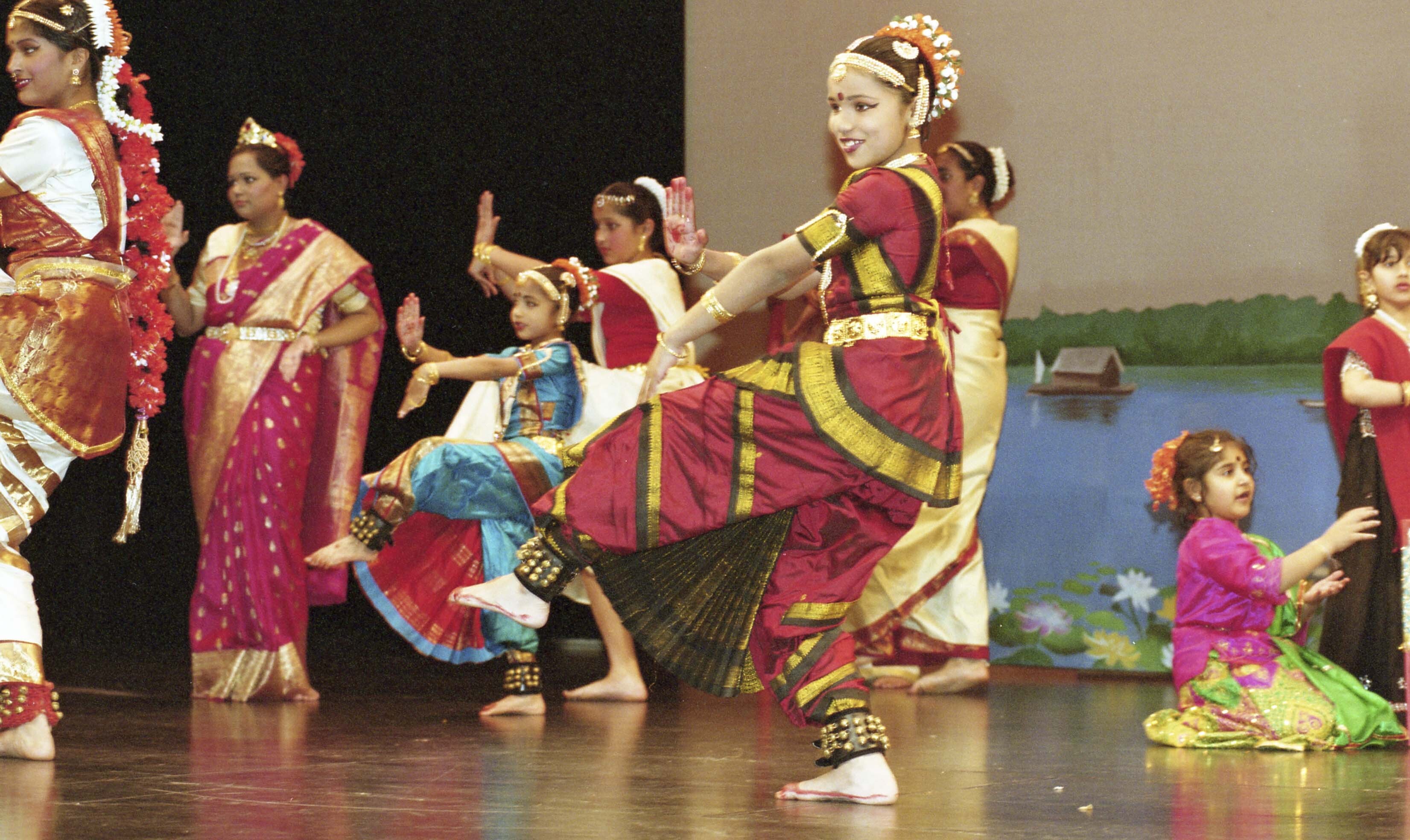
Photograph of a Bharatanatyam performance by children at a Holi celebration hosted at the Shree Mahalakshmi Temple in Vancouver, B.C.
Holi, often called the "festival of colors," is a vibrant and joyful Hindu celebration that marks spring's arrival and the triumph of good over evil. This festival, mainly observed in South Asia but also recognized globally, typically spans two days and is rooted in ancient traditions, mythology and community gatherings. Its date changes, as it is based on the full moon in the month of Phalguna, part of the Hindu lunar calendar, usually falling in late February or March. Holi, dating back to the 4th century, stands alongside Diwali, the festival of lights, as one of the most prominent Hindu celebrations and is famous for the playful tossing of colored powders and water.
Bharatanatyam, a classical dance style of India, is indigenous to the Tamil Nadu region and prevalent in southern India. Bharatanatyam serves the expression of Hindu religious themes and devotions. Bharatanatyam was originally performed exclusively by female temple dancers and was not brought to the stage for public performance until about 1930. A vital tradition of Bharatanatyam is a graduation performance, called Arangetram, in which graduates showcase their talents.
Established in 1990, by Pandit Pramera Chaitanya, Shree Mahalakshmi Temple is a Hindu temple dedicated to Goddess Mahalakshmi. They offer various services, including workship, chanting, meditations, and ritualistic celebrations of all the Hindu festivals.
Holi, often called the "festival of colors," is a vibrant and joyful Hindu celebration that marks spring's arrival and the triumph of good over evil. This festival, mainly observed in South Asia but also recognized globally, typically spans two days and is rooted in ancient traditions, mythology and community gatherings. Its date changes, as it is based on the full moon in the month of Phalguna, part of the Hindu lunar calendar, usually falling in late February or March. Holi, dating back to the 4th century, stands alongside Diwali, the festival of lights, as one of the most prominent Hindu celebrations and is famous for the playful tossing of colored powders and water.
Bharatanatyam, a classical dance style of India, is indigenous to the Tamil Nadu region and prevalent in southern India. Bharatanatyam serves the expression of Hindu religious themes and devotions. Bharatanatyam was originally performed exclusively by female temple dancers and was not brought to the stage for public performance until about 1930. A vital tradition of Bharatanatyam is a graduation performance, called Arangetram, in which graduates showcase their talents.
Established in 1990, by Pandit Pramera Chaitanya, Shree Mahalakshmi Temple is a Hindu temple dedicated to Goddess Mahalakshmi. They offer various services, including workship, chanting, meditations, and ritualistic celebrations of all the Hindu festivals.
Member of
Creator: Bodalia, Chandra
Description
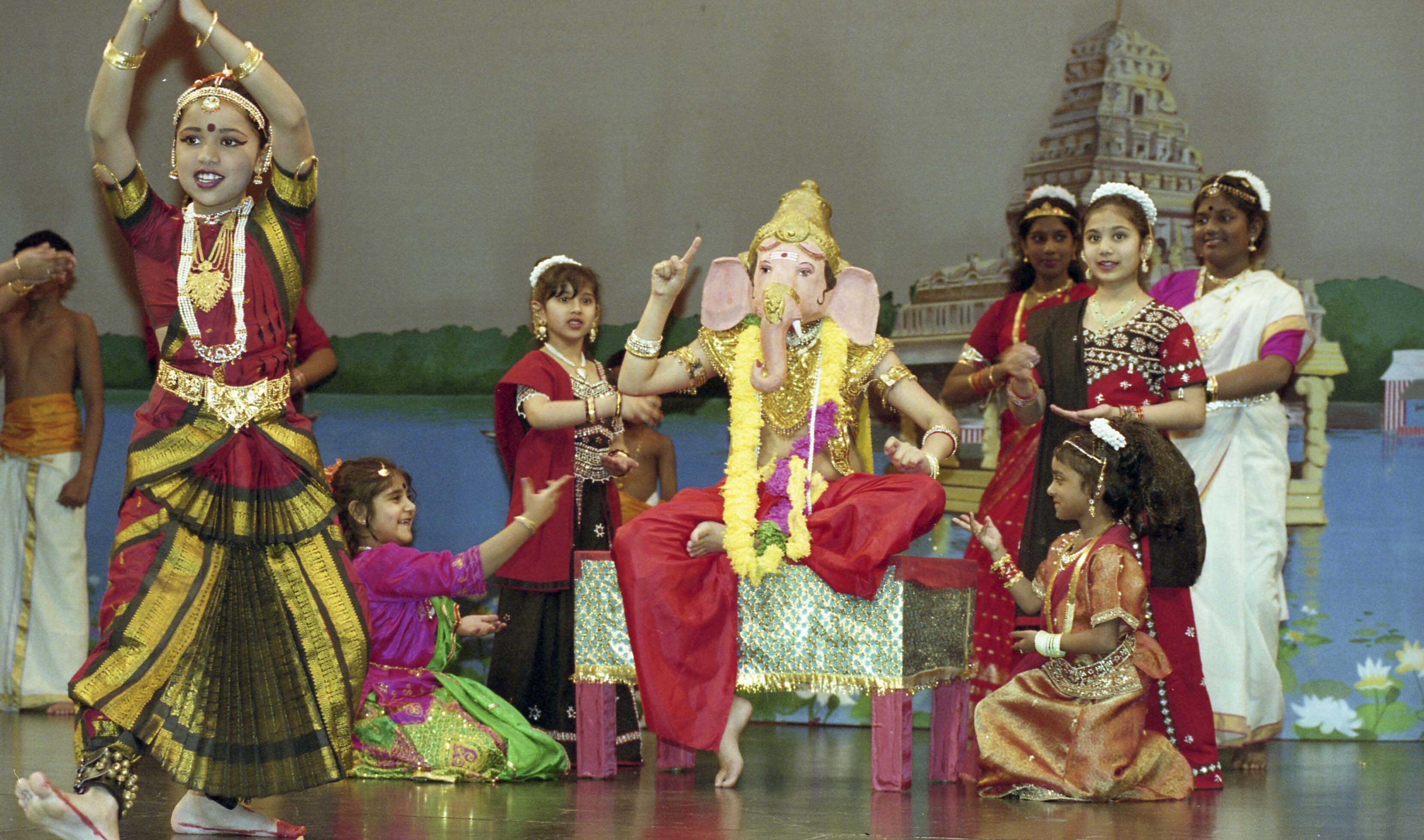
Photograph of a Bharatanatyam performance by children at a Holi celebration hosted at the Shree Mahalakshmi Temple in Vancouver, B.C.
Holi, often called the "festival of colors," is a vibrant and joyful Hindu celebration that marks spring's arrival and the triumph of good over evil. This festival, mainly observed in South Asia but also recognized globally, typically spans two days and is rooted in ancient traditions, mythology and community gatherings. Its date changes, as it is based on the full moon in the month of Phalguna, part of the Hindu lunar calendar, usually falling in late February or March. Holi, dating back to the 4th century, stands alongside Diwali, the festival of lights, as one of the most prominent Hindu celebrations and is famous for the playful tossing of colored powders and water.
Bharatanatyam, a classical dance style of India, is indigenous to the Tamil Nadu region and prevalent in southern India. Bharatanatyam serves the expression of Hindu religious themes and devotions. Bharatanatyam was originally performed exclusively by female temple dancers and was not brought to the stage for public performance until about 1930. A vital tradition of Bharatanatyam is a graduation performance, called Arangetram, in which graduates showcase their talents.
Established in 1990, by Pandit Pramera Chaitanya, Shree Mahalakshmi Temple is a Hindu temple dedicated to Goddess Mahalakshmi. They offer various services, including workship, chanting, meditations, and ritualistic celebrations of all the Hindu festivals.
Holi, often called the "festival of colors," is a vibrant and joyful Hindu celebration that marks spring's arrival and the triumph of good over evil. This festival, mainly observed in South Asia but also recognized globally, typically spans two days and is rooted in ancient traditions, mythology and community gatherings. Its date changes, as it is based on the full moon in the month of Phalguna, part of the Hindu lunar calendar, usually falling in late February or March. Holi, dating back to the 4th century, stands alongside Diwali, the festival of lights, as one of the most prominent Hindu celebrations and is famous for the playful tossing of colored powders and water.
Bharatanatyam, a classical dance style of India, is indigenous to the Tamil Nadu region and prevalent in southern India. Bharatanatyam serves the expression of Hindu religious themes and devotions. Bharatanatyam was originally performed exclusively by female temple dancers and was not brought to the stage for public performance until about 1930. A vital tradition of Bharatanatyam is a graduation performance, called Arangetram, in which graduates showcase their talents.
Established in 1990, by Pandit Pramera Chaitanya, Shree Mahalakshmi Temple is a Hindu temple dedicated to Goddess Mahalakshmi. They offer various services, including workship, chanting, meditations, and ritualistic celebrations of all the Hindu festivals.
Member of
Creator: Bodalia, Chandra
Description
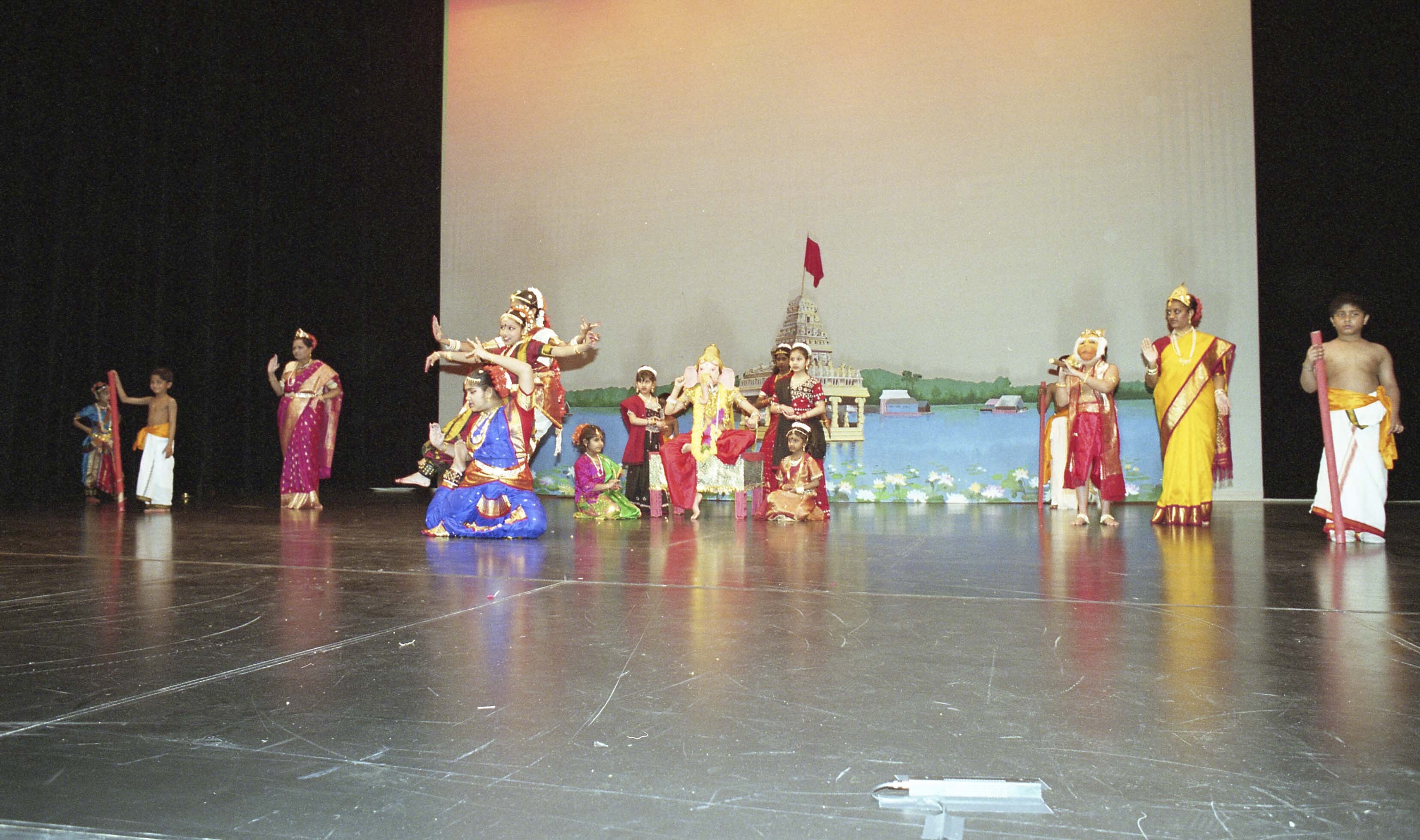
Photograph of a Bharatanatyam performance by children at a Holi celebration hosted at the Shree Mahalakshmi Temple in Vancouver, B.C.
Holi, often called the "festival of colors," is a vibrant and joyful Hindu celebration that marks spring's arrival and the triumph of good over evil. This festival, mainly observed in South Asia but also recognized globally, typically spans two days and is rooted in ancient traditions, mythology and community gatherings. Its date changes, as it is based on the full moon in the month of Phalguna, part of the Hindu lunar calendar, usually falling in late February or March. Holi, dating back to the 4th century, stands alongside Diwali, the festival of lights, as one of the most prominent Hindu celebrations and is famous for the playful tossing of colored powders and water.
Bharatanatyam, a classical dance style of India, is indigenous to the Tamil Nadu region and prevalent in southern India. Bharatanatyam serves the expression of Hindu religious themes and devotions. Bharatanatyam was originally performed exclusively by female temple dancers and was not brought to the stage for public performance until about 1930. A vital tradition of Bharatanatyam is a graduation performance, called Arangetram, in which graduates showcase their talents.
Established in 1990, by Pandit Pramera Chaitanya, Shree Mahalakshmi Temple is a Hindu temple dedicated to Goddess Mahalakshmi. They offer various services, including workship, chanting, meditations, and ritualistic celebrations of all the Hindu festivals.
Holi, often called the "festival of colors," is a vibrant and joyful Hindu celebration that marks spring's arrival and the triumph of good over evil. This festival, mainly observed in South Asia but also recognized globally, typically spans two days and is rooted in ancient traditions, mythology and community gatherings. Its date changes, as it is based on the full moon in the month of Phalguna, part of the Hindu lunar calendar, usually falling in late February or March. Holi, dating back to the 4th century, stands alongside Diwali, the festival of lights, as one of the most prominent Hindu celebrations and is famous for the playful tossing of colored powders and water.
Bharatanatyam, a classical dance style of India, is indigenous to the Tamil Nadu region and prevalent in southern India. Bharatanatyam serves the expression of Hindu religious themes and devotions. Bharatanatyam was originally performed exclusively by female temple dancers and was not brought to the stage for public performance until about 1930. A vital tradition of Bharatanatyam is a graduation performance, called Arangetram, in which graduates showcase their talents.
Established in 1990, by Pandit Pramera Chaitanya, Shree Mahalakshmi Temple is a Hindu temple dedicated to Goddess Mahalakshmi. They offer various services, including workship, chanting, meditations, and ritualistic celebrations of all the Hindu festivals.
Member of
Creator: Bodalia, Chandra
Description
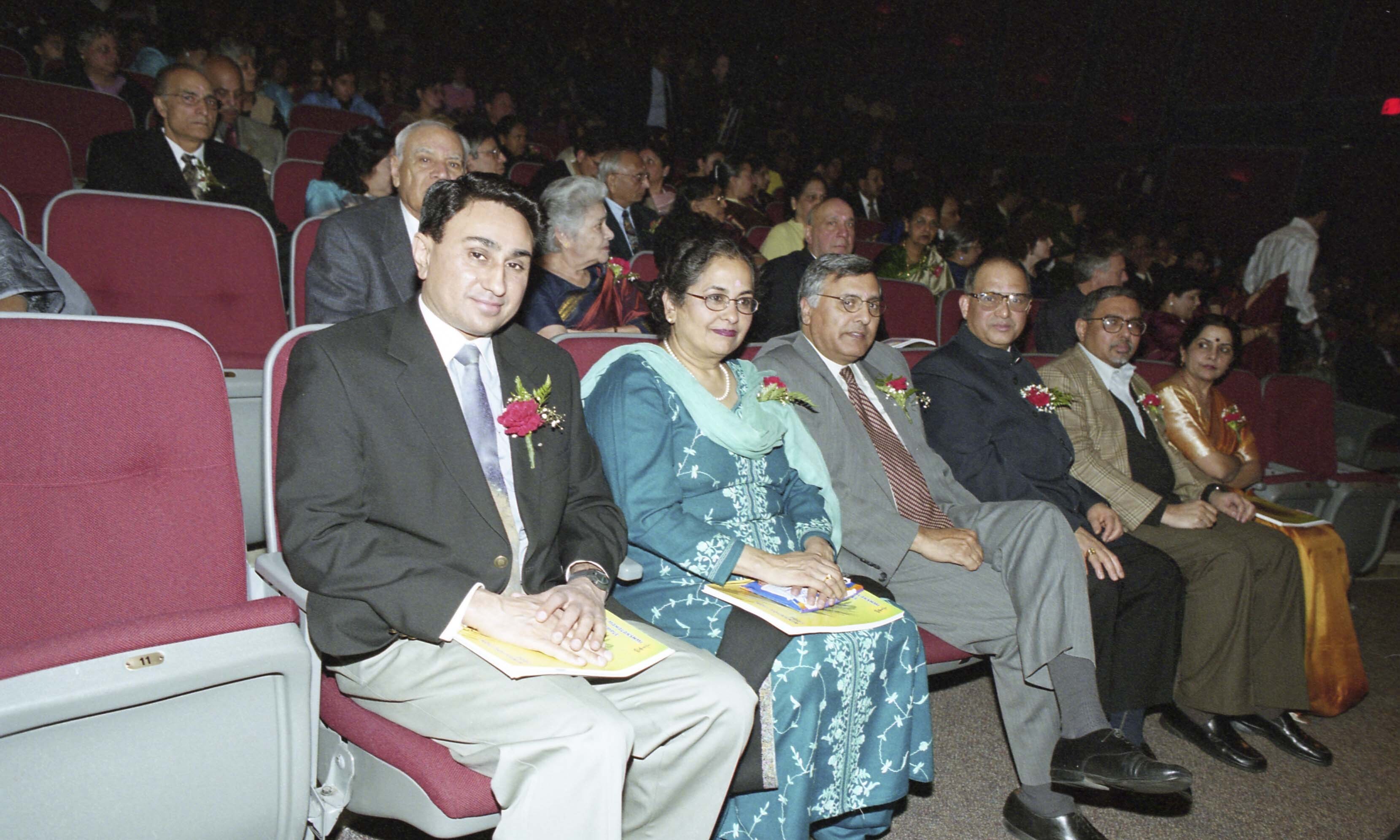
Photograph of former Premier Ujjal Dosanjh sitting in the audience at a Holi celebration hosted at the Shree Mahalakshmi Temple in Vancouver, B.C.
Ujjal Dosanjh is a Canadian lawyer, civil rights activist, and politician. Born in Panjab, India in 1947, Dosanjh emigrated to England at the age of 17 and came to Canada four years later, in 1968. He started off at a Vancouver sawmill, but when a back injury hindered his career at the mill, he enrolled at Langara College and completed a degree in political science at Simon Fraser University. He earned a law degree at the University of British Columbia and established a law practice in Vancouver in 1979. First elected as MLA for Vancouver-Kensington in 1991, Dosanjh twice served as Caucus Chair and also chaired the Select Standing Committee on Parliamentary Reform, Ethical Conduct, Standing Orders and Private Bills. Dosanjh was sworn in as British Columbia's 33rd Premier and Canada's first Indo-Canadian Premier on February 24, 2000, serving until 2001. He had previously served as Minister of Government Services and Minister Responsible for Multiculturalism, Human Rights, Sports and Immigration in 1995, and served as Attorney General from August 1995 to February 2000. He was also the leader of the provincial New Democratic Party (NDP) and later served as a Member of Parliament with the Liberal Party. A long time human rights activist, his past community involvements include: South Vancouver Neighbourhood House, MOSAIC, the B.C. Multicultural Society and the B.C. Civil Liberties Association. In 1977 he helped set up the first farm workers' legal information services while he was chair of the Labour Advocacy Research Association. Throughout his career, Dosanjh has been a strong advocate for social justice, healthcare, and public policy issues.
Holi, often called the "festival of colors," is a vibrant and joyful Hindu celebration that marks spring's arrival and the triumph of good over evil. This festival, mainly observed in South Asia but also recognized globally, typically spans two days and is rooted in ancient traditions, mythology and community gatherings. Its date changes, as it is based on the full moon in the month of Phalguna, part of the Hindu lunar calendar, usually falling in late February or March. Holi, dating back to the 4th century, stands alongside Diwali, the festival of lights, as one of the most prominent Hindu celebrations and is famous for the playful tossing of colored powders and water.
Established in 1990, by Pandit Pramera Chaitanya, Shree Mahalakshmi Temple is a Hindu temple dedicated to Goddess Mahalakshmi. They offer various services, including workship, chanting, meditations, and ritualistic celebrations of all the Hindu festivals.
Ujjal Dosanjh is a Canadian lawyer, civil rights activist, and politician. Born in Panjab, India in 1947, Dosanjh emigrated to England at the age of 17 and came to Canada four years later, in 1968. He started off at a Vancouver sawmill, but when a back injury hindered his career at the mill, he enrolled at Langara College and completed a degree in political science at Simon Fraser University. He earned a law degree at the University of British Columbia and established a law practice in Vancouver in 1979. First elected as MLA for Vancouver-Kensington in 1991, Dosanjh twice served as Caucus Chair and also chaired the Select Standing Committee on Parliamentary Reform, Ethical Conduct, Standing Orders and Private Bills. Dosanjh was sworn in as British Columbia's 33rd Premier and Canada's first Indo-Canadian Premier on February 24, 2000, serving until 2001. He had previously served as Minister of Government Services and Minister Responsible for Multiculturalism, Human Rights, Sports and Immigration in 1995, and served as Attorney General from August 1995 to February 2000. He was also the leader of the provincial New Democratic Party (NDP) and later served as a Member of Parliament with the Liberal Party. A long time human rights activist, his past community involvements include: South Vancouver Neighbourhood House, MOSAIC, the B.C. Multicultural Society and the B.C. Civil Liberties Association. In 1977 he helped set up the first farm workers' legal information services while he was chair of the Labour Advocacy Research Association. Throughout his career, Dosanjh has been a strong advocate for social justice, healthcare, and public policy issues.
Holi, often called the "festival of colors," is a vibrant and joyful Hindu celebration that marks spring's arrival and the triumph of good over evil. This festival, mainly observed in South Asia but also recognized globally, typically spans two days and is rooted in ancient traditions, mythology and community gatherings. Its date changes, as it is based on the full moon in the month of Phalguna, part of the Hindu lunar calendar, usually falling in late February or March. Holi, dating back to the 4th century, stands alongside Diwali, the festival of lights, as one of the most prominent Hindu celebrations and is famous for the playful tossing of colored powders and water.
Established in 1990, by Pandit Pramera Chaitanya, Shree Mahalakshmi Temple is a Hindu temple dedicated to Goddess Mahalakshmi. They offer various services, including workship, chanting, meditations, and ritualistic celebrations of all the Hindu festivals.
Member of
Creator: Bodalia, Chandra
Description
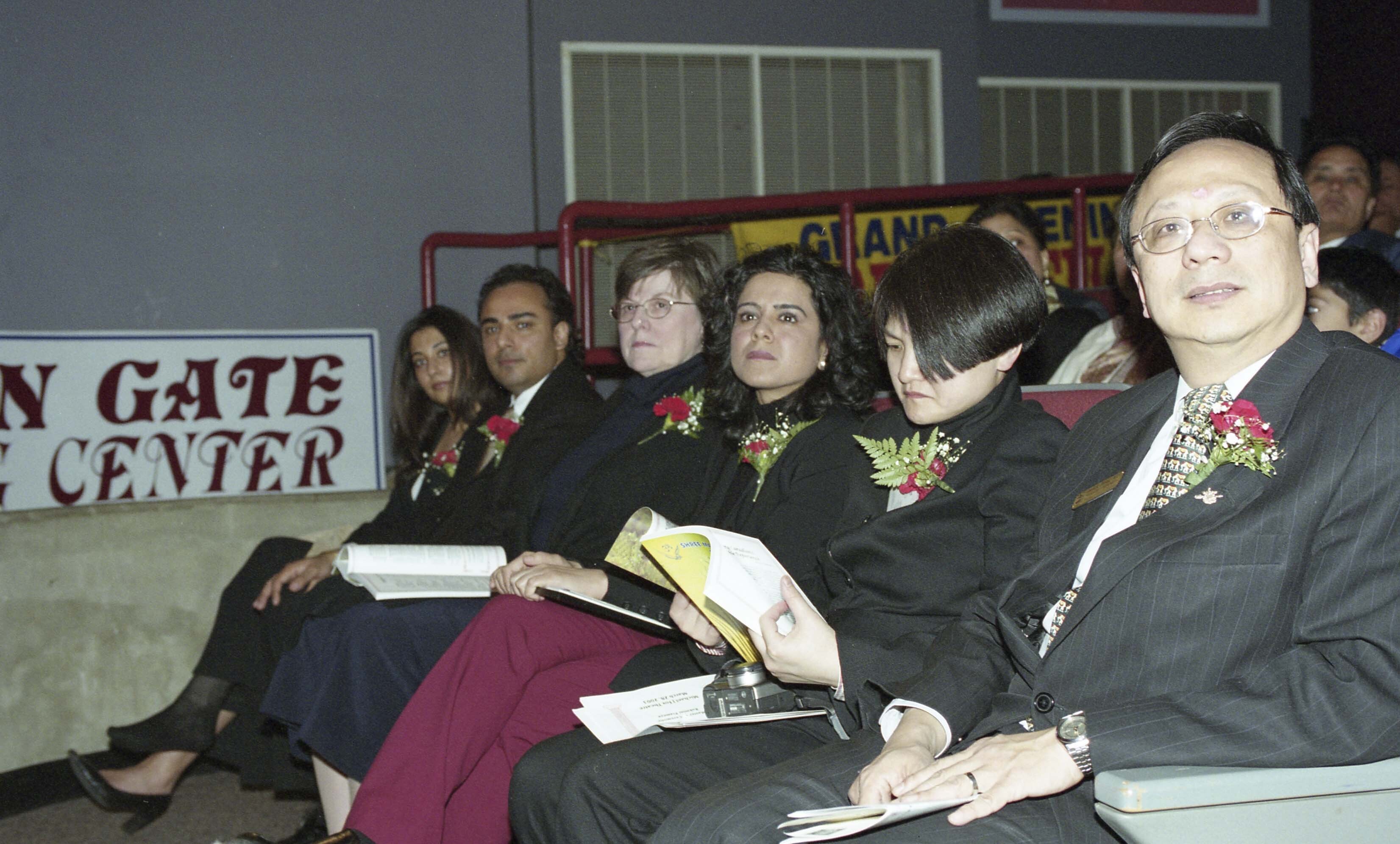
Photograph of former MLA Patty Sahota sitting in the audience at a Holi celebration hosted at the Shree Mahalakshmi Temple in Vancouver, B.C.
Patty Sahota was a Canadian politician who served as the Minister of State for Resort Development in British Columbia from 2005. She was first elected to the Legislative Assembly in 2001, representing Burnaby-Edmonds. During her tenure, she played a key role in securing the 2009 World Police and Fire Games for Burnaby and contributed to various legislative committees on Aboriginal affairs, finance, health, and policing. Before politics, she worked in the forestry industry and commercial real estate. Sahota held a BA in political science from the University of Victoria and had been actively involved with the B.C. Liberal Party. Born in India, she grew up in Merritt, B.C. She passed away February 12, 2024, at the age of 54.
Holi, often called the "festival of colors," is a vibrant and joyful Hindu celebration that marks spring's arrival and the triumph of good over evil. This festival, mainly observed in South Asia but also recognized globally, typically spans two days and is rooted in ancient traditions, mythology and community gatherings. Its date changes, as it is based on the full moon in the month of Phalguna, part of the Hindu lunar calendar, usually falling in late February or March. Holi, dating back to the 4th century, stands alongside Diwali, the festival of lights, as one of the most prominent Hindu celebrations and is famous for the playful tossing of colored powders and water.
Established in 1990, by Pandit Pramera Chaitanya, Shree Mahalakshmi Temple is a Hindu temple dedicated to Goddess Mahalakshmi. They offer various services, including workship, chanting, meditations, and ritualistic celebrations of all the Hindu festivals.
Patty Sahota was a Canadian politician who served as the Minister of State for Resort Development in British Columbia from 2005. She was first elected to the Legislative Assembly in 2001, representing Burnaby-Edmonds. During her tenure, she played a key role in securing the 2009 World Police and Fire Games for Burnaby and contributed to various legislative committees on Aboriginal affairs, finance, health, and policing. Before politics, she worked in the forestry industry and commercial real estate. Sahota held a BA in political science from the University of Victoria and had been actively involved with the B.C. Liberal Party. Born in India, she grew up in Merritt, B.C. She passed away February 12, 2024, at the age of 54.
Holi, often called the "festival of colors," is a vibrant and joyful Hindu celebration that marks spring's arrival and the triumph of good over evil. This festival, mainly observed in South Asia but also recognized globally, typically spans two days and is rooted in ancient traditions, mythology and community gatherings. Its date changes, as it is based on the full moon in the month of Phalguna, part of the Hindu lunar calendar, usually falling in late February or March. Holi, dating back to the 4th century, stands alongside Diwali, the festival of lights, as one of the most prominent Hindu celebrations and is famous for the playful tossing of colored powders and water.
Established in 1990, by Pandit Pramera Chaitanya, Shree Mahalakshmi Temple is a Hindu temple dedicated to Goddess Mahalakshmi. They offer various services, including workship, chanting, meditations, and ritualistic celebrations of all the Hindu festivals.
Member of
Creator: Bodalia, Chandra
Description
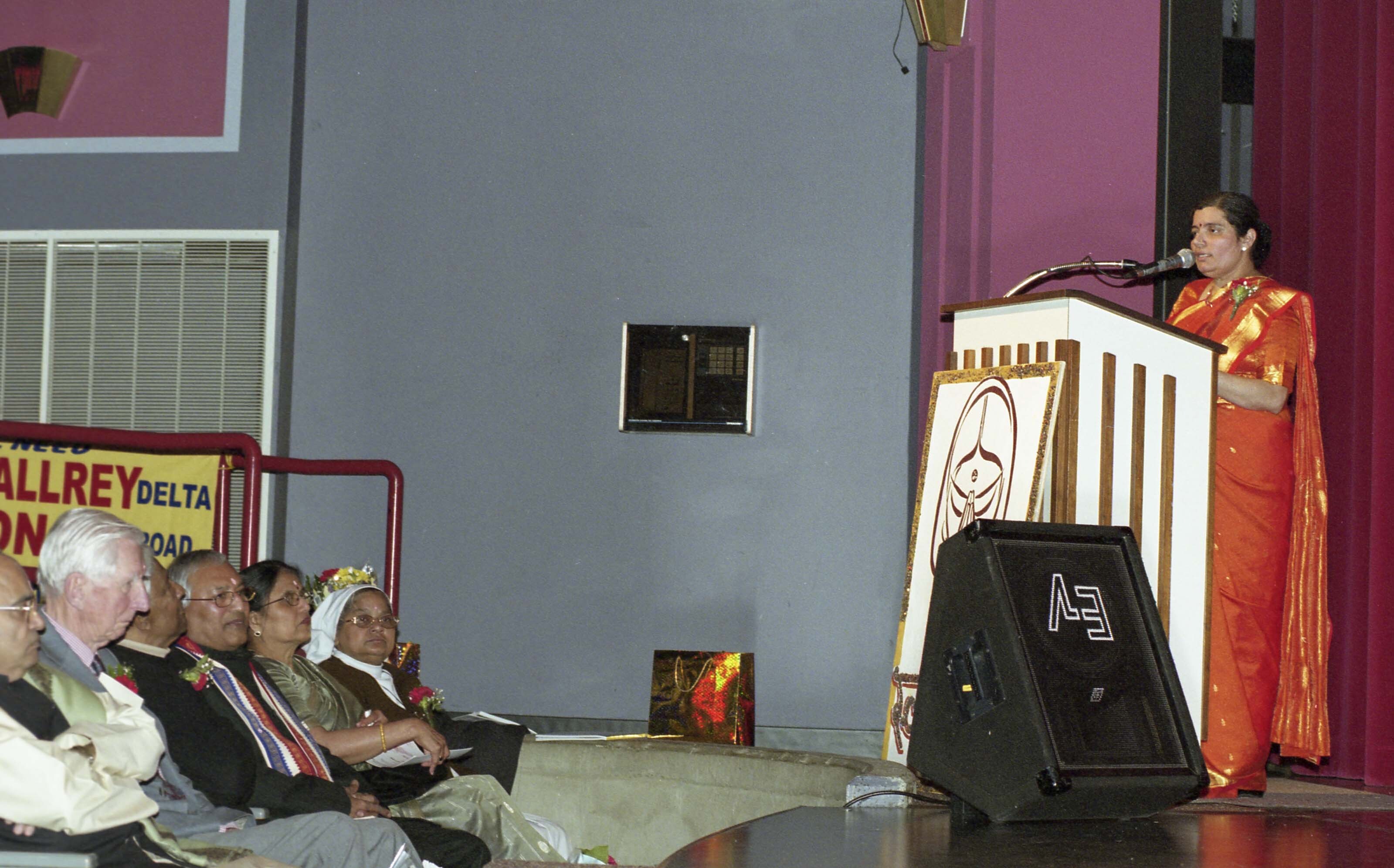
Photograph of an unidentified woman speaking at a Holi celebration hosted at the Shree Mahalakshmi Temple in Vancouver, B.C.
Holi, often called the "festival of colors," is a vibrant and joyful Hindu celebration that marks spring's arrival and the triumph of good over evil. This festival, mainly observed in South Asia but also recognized globally, typically spans two days and is rooted in ancient traditions, mythology and community gatherings. Its date changes, as it is based on the full moon in the month of Phalguna, part of the Hindu lunar calendar, usually falling in late February or March. Holi, dating back to the 4th century, stands alongside Diwali, the festival of lights, as one of the most prominent Hindu celebrations and is famous for the playful tossing of colored powders and water.
Established in 1990, by Pandit Pramera Chaitanya, Shree Mahalakshmi Temple is a Hindu temple dedicated to Goddess Mahalakshmi. They offer various services, including workship, chanting, meditations, and ritualistic celebrations of all the Hindu festivals.
Holi, often called the "festival of colors," is a vibrant and joyful Hindu celebration that marks spring's arrival and the triumph of good over evil. This festival, mainly observed in South Asia but also recognized globally, typically spans two days and is rooted in ancient traditions, mythology and community gatherings. Its date changes, as it is based on the full moon in the month of Phalguna, part of the Hindu lunar calendar, usually falling in late February or March. Holi, dating back to the 4th century, stands alongside Diwali, the festival of lights, as one of the most prominent Hindu celebrations and is famous for the playful tossing of colored powders and water.
Established in 1990, by Pandit Pramera Chaitanya, Shree Mahalakshmi Temple is a Hindu temple dedicated to Goddess Mahalakshmi. They offer various services, including workship, chanting, meditations, and ritualistic celebrations of all the Hindu festivals.
Member of
Creator: Bodalia, Chandra
Description
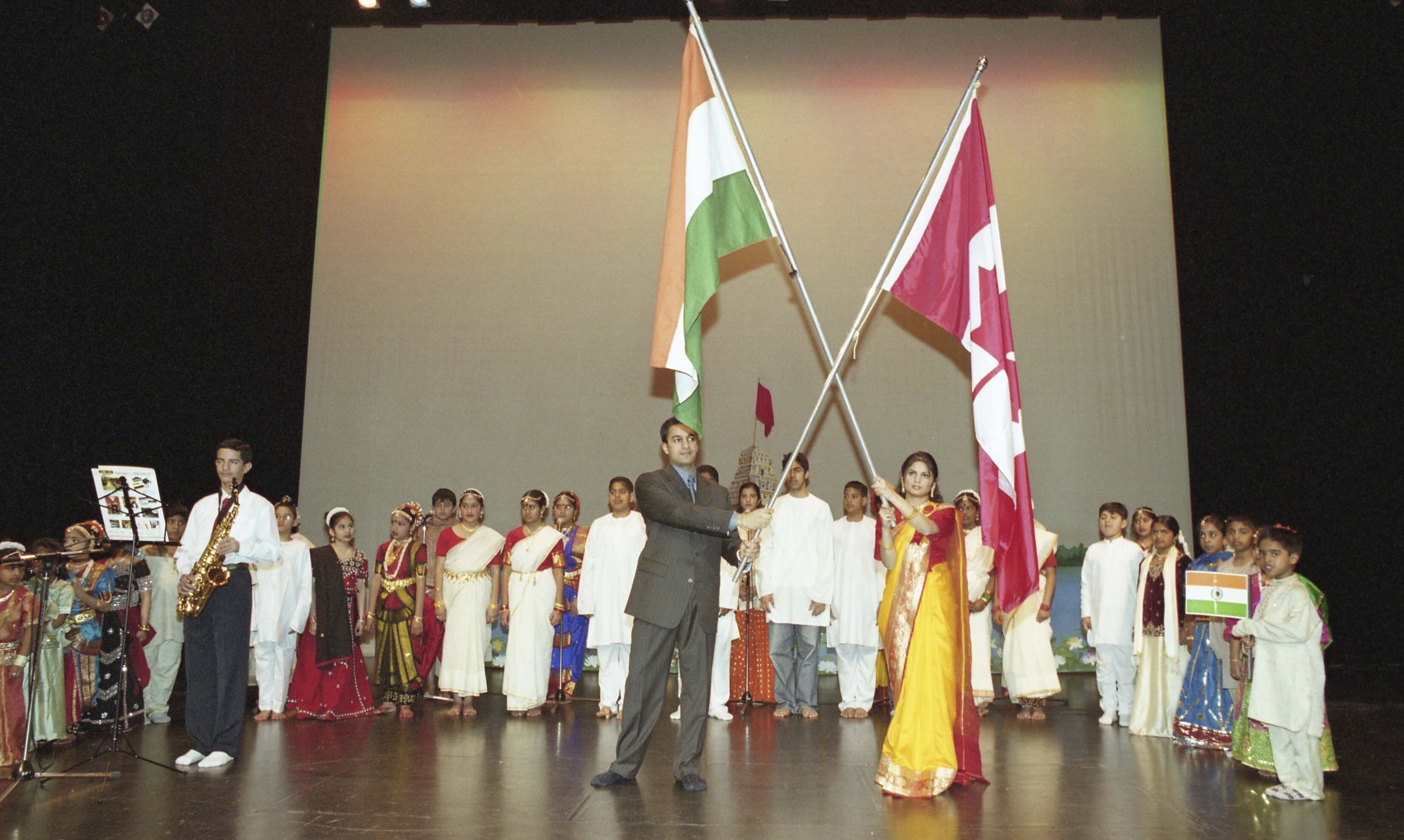
Photograph of the Canadian and Indian flag being held up on stage at a Holi celebration hosted at the Shree Mahalakshmi Temple in Vancouver, B.C.
Holi, often called the "festival of colors," is a vibrant and joyful Hindu celebration that marks spring's arrival and the triumph of good over evil. This festival, mainly observed in South Asia but also recognized globally, typically spans two days and is rooted in ancient traditions, mythology and community gatherings. Its date changes, as it is based on the full moon in the month of Phalguna, part of the Hindu lunar calendar, usually falling in late February or March. Holi, dating back to the 4th century, stands alongside Diwali, the festival of lights, as one of the most prominent Hindu celebrations and is famous for the playful tossing of colored powders and water.
Established in 1990, by Pandit Pramera Chaitanya, Shree Mahalakshmi Temple is a Hindu temple dedicated to Goddess Mahalakshmi. They offer various services, including workship, chanting, meditations, and ritualistic celebrations of all the Hindu festivals.
Holi, often called the "festival of colors," is a vibrant and joyful Hindu celebration that marks spring's arrival and the triumph of good over evil. This festival, mainly observed in South Asia but also recognized globally, typically spans two days and is rooted in ancient traditions, mythology and community gatherings. Its date changes, as it is based on the full moon in the month of Phalguna, part of the Hindu lunar calendar, usually falling in late February or March. Holi, dating back to the 4th century, stands alongside Diwali, the festival of lights, as one of the most prominent Hindu celebrations and is famous for the playful tossing of colored powders and water.
Established in 1990, by Pandit Pramera Chaitanya, Shree Mahalakshmi Temple is a Hindu temple dedicated to Goddess Mahalakshmi. They offer various services, including workship, chanting, meditations, and ritualistic celebrations of all the Hindu festivals.