
Politicians
Authority Sources
Creator: Bodalia, Chandra
Description
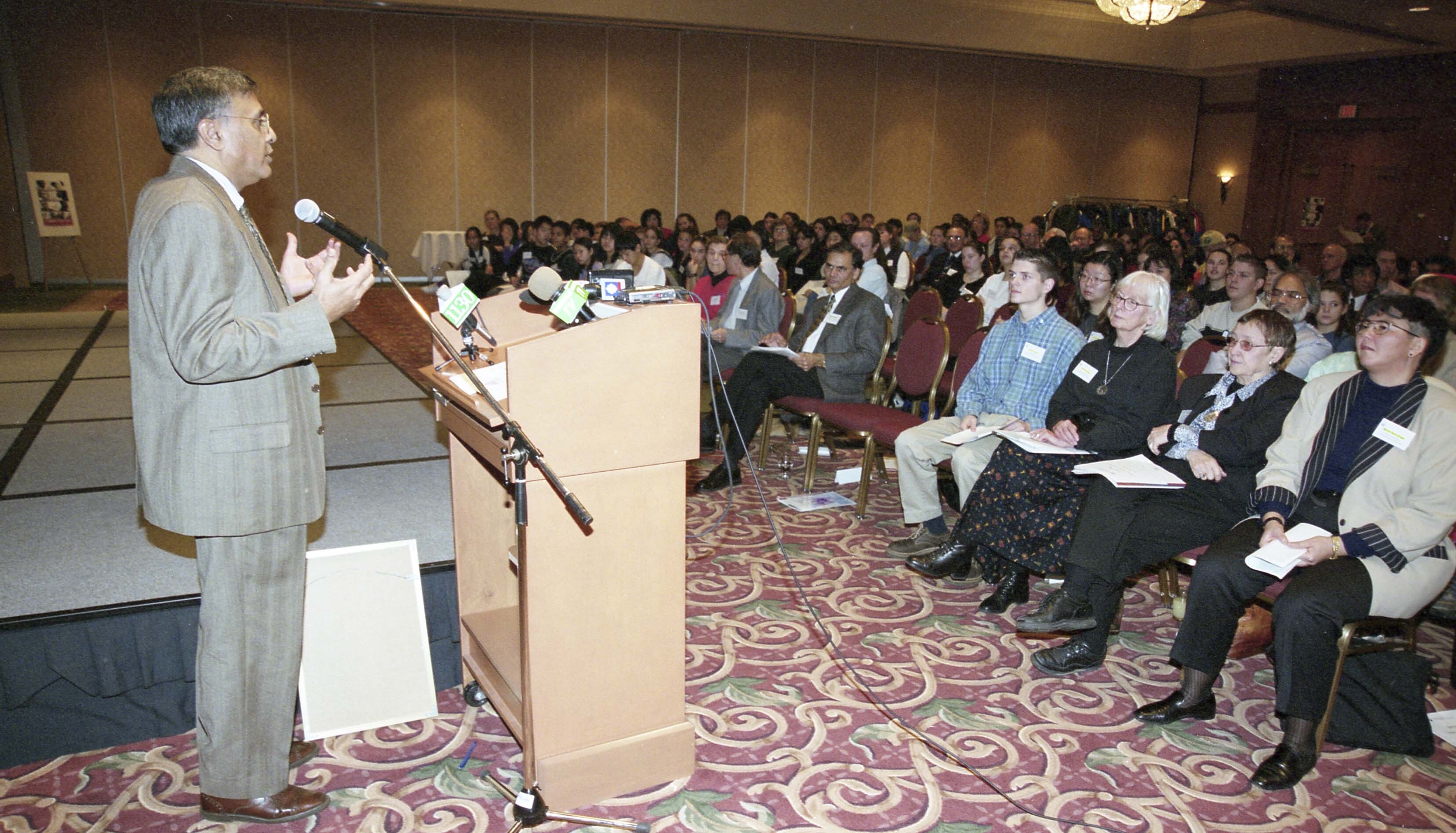
Photograph of Ujjal Dosanjh addressing the audience at the Learning Together event in Vancouver, British Columbia (B.C.). The event was hosted at the Hilton Hotel by the B.C. Human Rights Commission.
Ujjal Dosanjh is a Canadian lawyer, civil rights activist, and politician. Born in Panjab, India in 1947, Dosanjh emigrated to England at the age of 17 and came to Canada four years later, in 1968. He started off at a Vancouver sawmill, but when a back injury hindered his career at the mill, he enrolled at Langara College and completed a degree in political science at Simon Fraser University. He earned a law degree at the University of British Columbia and established a law practice in Vancouver in 1979. First elected as MLA for Vancouver-Kensington in 1991, Dosanjh twice served as Caucus Chair and also chaired the Select Standing Committee on Parliamentary Reform, Ethical Conduct, Standing Orders and Private Bills. Dosanjh was sworn in as British Columbia's 33rd Premier and Canada's first Indo-Canadian Premier on February 24, 2000, serving until 2001. He had previously served as Minister of Government Services and Minister Responsible for Multiculturalism, Human Rights, Sports and Immigration in 1995, and served as Attorney General from August 1995 to February 2000. He was also the leader of the provincial New Democratic Party (NDP) and later served as a Member of Parliament with the Liberal Party. A long time human rights activist, his past community involvements include: South Vancouver Neighbourhood House, MOSAIC, the B.C. Multicultural Society and the B.C. Civil Liberties Association. In 1977 he helped set up the first farm workers' legal information services while he was chair of the Labour Advocacy Research Association. Throughout his career, Dosanjh has been a strong advocate for social justice, healthcare, and public policy issues.
On August 4, 2017 Premier John Horgan along with Attorney General David Eby announced that British Columbia (B.C.) will re-establish the B.C. Human Rights Commission to address inequality and discrimination. In 2018, changes to B.C.'s Human Rights Code established the Office of the Human Rights Commissioner as an independent office of the Legislature and the Commissioner as the first independent Human Rights Commissioner in B.C.'s history. Under the Code, the Commissioner is responsible for promoting and protecting human rights in British Columbia. BC's Office of the Human Rights Commissioner exists to address the root causes of inequality, discrimination, and injustice in B.C. by shifting laws, policies, practices and cultures. They do this work through education, research, advocacy, inquiry and monitoring.
Ujjal Dosanjh is a Canadian lawyer, civil rights activist, and politician. Born in Panjab, India in 1947, Dosanjh emigrated to England at the age of 17 and came to Canada four years later, in 1968. He started off at a Vancouver sawmill, but when a back injury hindered his career at the mill, he enrolled at Langara College and completed a degree in political science at Simon Fraser University. He earned a law degree at the University of British Columbia and established a law practice in Vancouver in 1979. First elected as MLA for Vancouver-Kensington in 1991, Dosanjh twice served as Caucus Chair and also chaired the Select Standing Committee on Parliamentary Reform, Ethical Conduct, Standing Orders and Private Bills. Dosanjh was sworn in as British Columbia's 33rd Premier and Canada's first Indo-Canadian Premier on February 24, 2000, serving until 2001. He had previously served as Minister of Government Services and Minister Responsible for Multiculturalism, Human Rights, Sports and Immigration in 1995, and served as Attorney General from August 1995 to February 2000. He was also the leader of the provincial New Democratic Party (NDP) and later served as a Member of Parliament with the Liberal Party. A long time human rights activist, his past community involvements include: South Vancouver Neighbourhood House, MOSAIC, the B.C. Multicultural Society and the B.C. Civil Liberties Association. In 1977 he helped set up the first farm workers' legal information services while he was chair of the Labour Advocacy Research Association. Throughout his career, Dosanjh has been a strong advocate for social justice, healthcare, and public policy issues.
On August 4, 2017 Premier John Horgan along with Attorney General David Eby announced that British Columbia (B.C.) will re-establish the B.C. Human Rights Commission to address inequality and discrimination. In 2018, changes to B.C.'s Human Rights Code established the Office of the Human Rights Commissioner as an independent office of the Legislature and the Commissioner as the first independent Human Rights Commissioner in B.C.'s history. Under the Code, the Commissioner is responsible for promoting and protecting human rights in British Columbia. BC's Office of the Human Rights Commissioner exists to address the root causes of inequality, discrimination, and injustice in B.C. by shifting laws, policies, practices and cultures. They do this work through education, research, advocacy, inquiry and monitoring.
Creator: Bodalia, Chandra
Description
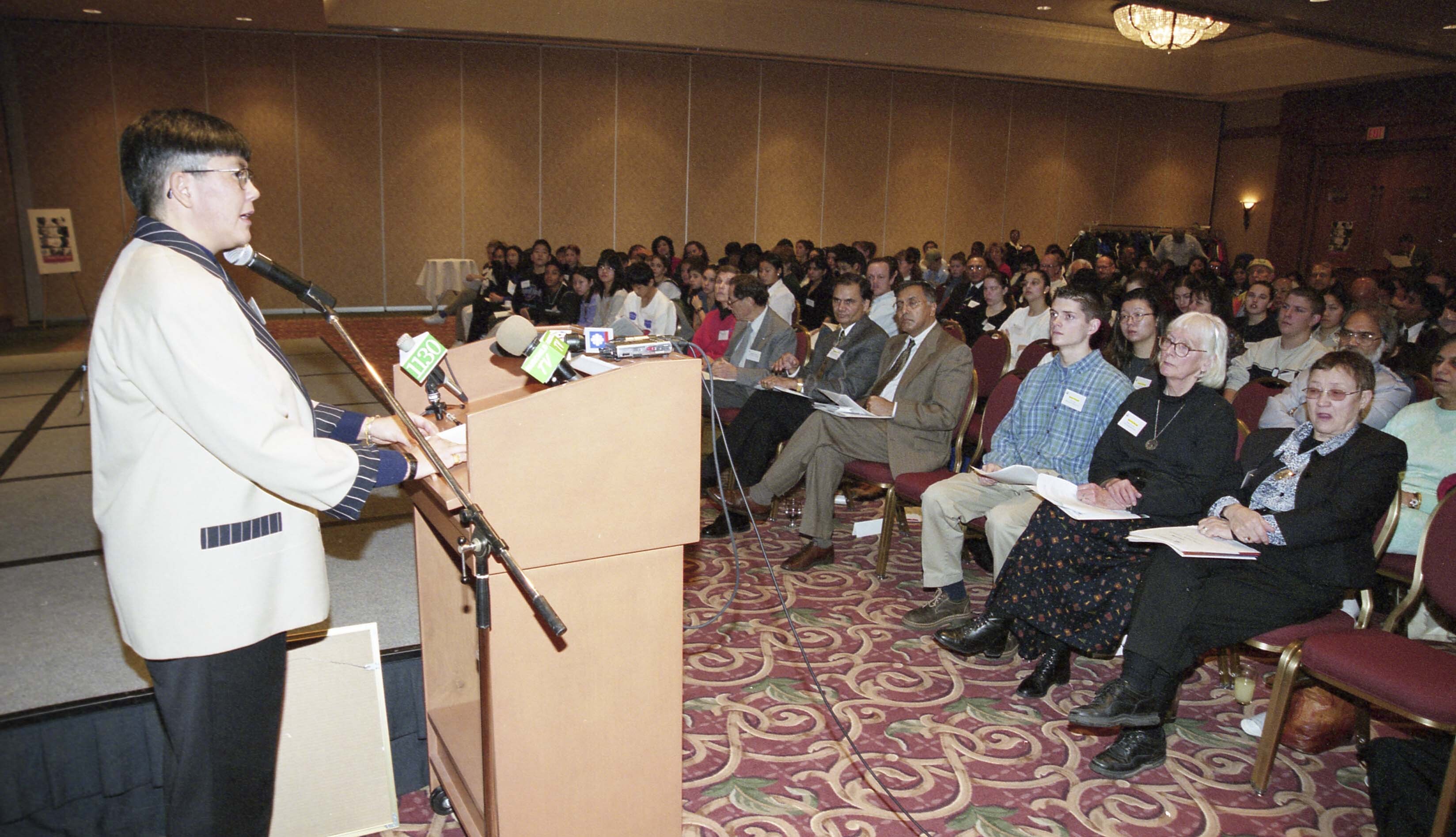
Photograph of Mary Woo Sims addressing the audience at the Learning Together event in Vancouver, British Columbia (B.C.). The event was hosted at the Hilton Hotel by the B.C. Human Rights Commission.
Mary Woo Sims was born in Hong Kong and became a Canadian citizen in 1978. Sims is a social justice activist, politician, and the former chief commissioner of the British Columbia Human Rights Commission from 1997 to 2001. As the chief human rights commissioner, she helped found the Women Against Violence Against Women (WAVAW) Rape Crisis Centre in Vancouver and recommended to expand the Human Rights Code to include gender identity. Sims was also a candidate for the New Democratic Party in the Port Moody – Westwood – Port Coquitlam district in the 2006 federal election. As an advocate of LGBTQ rights, same-sex spousal rights, employment equity, and co-chair of the Campaign for Equal Families, Sims' community work has been recognized through awards such as the Chinese National Council's 'Chinese Canadian Pioneer' Award, Metropolitan Community Church of Toronto's ˜Honoring Heroes' award, and awards from the Gay Asians of Toronto.
On August 4, 2017 Premier John Horgan along with Attorney General David Eby announced that British Columbia (B.C.) will re-establish the B.C. Human Rights Commission to address inequality and discrimination. In 2018, changes to B.C.'s Human Rights Code established the Office of the Human Rights Commissioner as an independent office of the Legislature and the Commissioner as the first independent Human Rights Commissioner in B.C.'s history. Under the Code, the Commissioner is responsible for promoting and protecting human rights in British Columbia. BC's Office of the Human Rights Commissioner exists to address the root causes of inequality, discrimination, and injustice in B.C. by shifting laws, policies, practices and cultures. They do this work through education, research, advocacy, inquiry and monitoring.
Mary Woo Sims was born in Hong Kong and became a Canadian citizen in 1978. Sims is a social justice activist, politician, and the former chief commissioner of the British Columbia Human Rights Commission from 1997 to 2001. As the chief human rights commissioner, she helped found the Women Against Violence Against Women (WAVAW) Rape Crisis Centre in Vancouver and recommended to expand the Human Rights Code to include gender identity. Sims was also a candidate for the New Democratic Party in the Port Moody – Westwood – Port Coquitlam district in the 2006 federal election. As an advocate of LGBTQ rights, same-sex spousal rights, employment equity, and co-chair of the Campaign for Equal Families, Sims' community work has been recognized through awards such as the Chinese National Council's 'Chinese Canadian Pioneer' Award, Metropolitan Community Church of Toronto's ˜Honoring Heroes' award, and awards from the Gay Asians of Toronto.
On August 4, 2017 Premier John Horgan along with Attorney General David Eby announced that British Columbia (B.C.) will re-establish the B.C. Human Rights Commission to address inequality and discrimination. In 2018, changes to B.C.'s Human Rights Code established the Office of the Human Rights Commissioner as an independent office of the Legislature and the Commissioner as the first independent Human Rights Commissioner in B.C.'s history. Under the Code, the Commissioner is responsible for promoting and protecting human rights in British Columbia. BC's Office of the Human Rights Commissioner exists to address the root causes of inequality, discrimination, and injustice in B.C. by shifting laws, policies, practices and cultures. They do this work through education, research, advocacy, inquiry and monitoring.
Creator: Bodalia, Chandra
Description
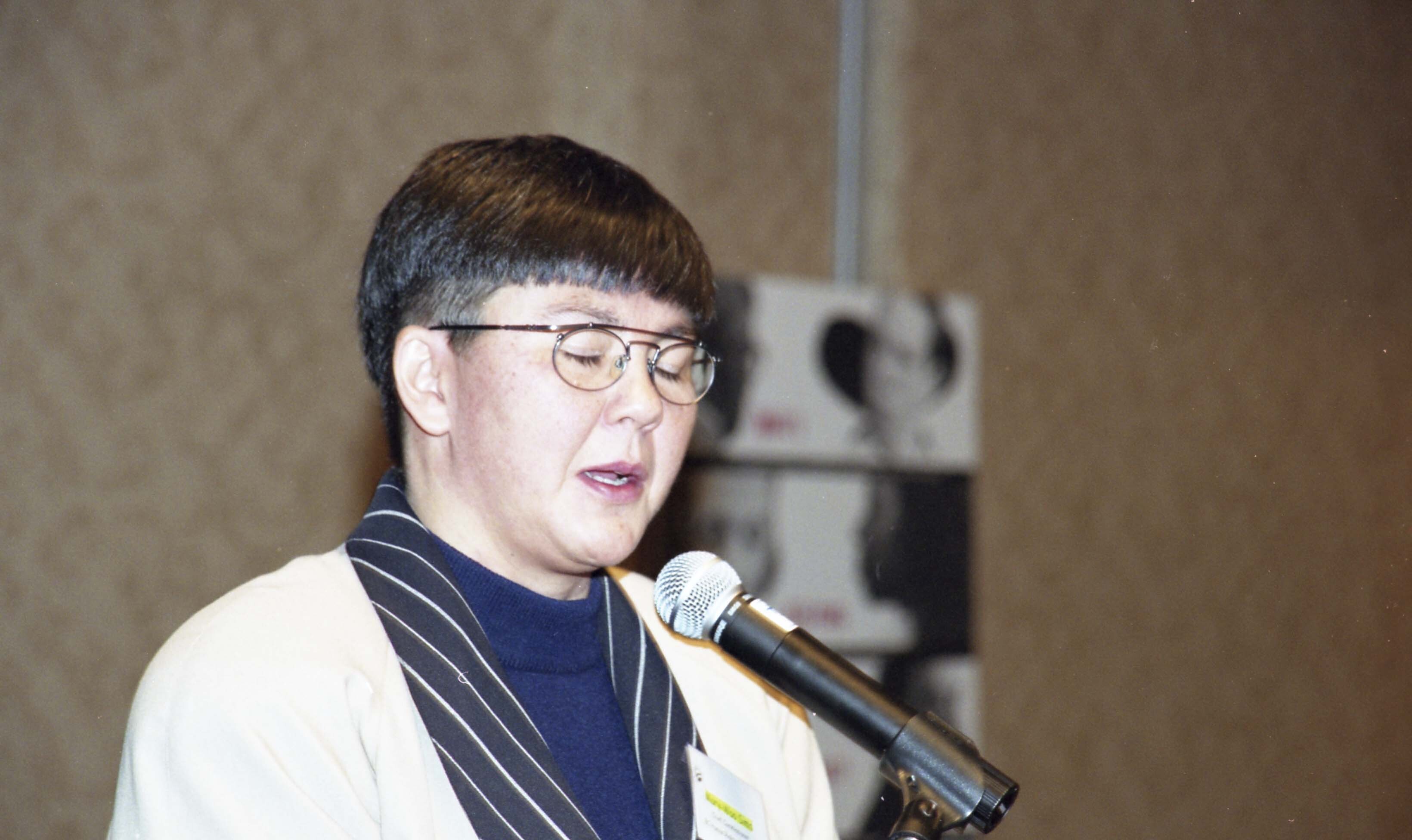
Photograph of Mary Woo Sims addressing the audience at the Learning Together event in Vancouver, British Columbia (B.C.). The event was hosted at the Hilton Hotel by the B.C. Human Rights Commission.
Mary Woo Sims was born in Hong Kong and became a Canadian citizen in 1978. Sims is a social justice activist, politician, and the former chief commissioner of the British Columbia Human Rights Commission from 1997 to 2001. As the chief human rights commissioner, she helped found the Women Against Violence Against Women (WAVAW) Rape Crisis Centre in Vancouver and recommended to expand the Human Rights Code to include gender identity. Sims was also a candidate for the New Democratic Party in the Port Moody – Westwood – Port Coquitlam district in the 2006 federal election. As an advocate of LGBTQ rights, same-sex spousal rights, employment equity, and co-chair of the Campaign for Equal Families, Sims' community work has been recognized through awards such as the Chinese National Council's 'Chinese Canadian Pioneer' Award, Metropolitan Community Church of Toronto's ˜Honoring Heroes' award, and awards from the Gay Asians of Toronto.
On August 4, 2017 Premier John Horgan along with Attorney General David Eby announced that British Columbia (B.C.) will re-establish the B.C. Human Rights Commission to address inequality and discrimination. In 2018, changes to B.C.'s Human Rights Code established the Office of the Human Rights Commissioner as an independent office of the Legislature and the Commissioner as the first independent Human Rights Commissioner in B.C.'s history. Under the Code, the Commissioner is responsible for promoting and protecting human rights in British Columbia. BC's Office of the Human Rights Commissioner exists to address the root causes of inequality, discrimination, and injustice in B.C. by shifting laws, policies, practices and cultures. They do this work through education, research, advocacy, inquiry and monitoring.
Mary Woo Sims was born in Hong Kong and became a Canadian citizen in 1978. Sims is a social justice activist, politician, and the former chief commissioner of the British Columbia Human Rights Commission from 1997 to 2001. As the chief human rights commissioner, she helped found the Women Against Violence Against Women (WAVAW) Rape Crisis Centre in Vancouver and recommended to expand the Human Rights Code to include gender identity. Sims was also a candidate for the New Democratic Party in the Port Moody – Westwood – Port Coquitlam district in the 2006 federal election. As an advocate of LGBTQ rights, same-sex spousal rights, employment equity, and co-chair of the Campaign for Equal Families, Sims' community work has been recognized through awards such as the Chinese National Council's 'Chinese Canadian Pioneer' Award, Metropolitan Community Church of Toronto's ˜Honoring Heroes' award, and awards from the Gay Asians of Toronto.
On August 4, 2017 Premier John Horgan along with Attorney General David Eby announced that British Columbia (B.C.) will re-establish the B.C. Human Rights Commission to address inequality and discrimination. In 2018, changes to B.C.'s Human Rights Code established the Office of the Human Rights Commissioner as an independent office of the Legislature and the Commissioner as the first independent Human Rights Commissioner in B.C.'s history. Under the Code, the Commissioner is responsible for promoting and protecting human rights in British Columbia. BC's Office of the Human Rights Commissioner exists to address the root causes of inequality, discrimination, and injustice in B.C. by shifting laws, policies, practices and cultures. They do this work through education, research, advocacy, inquiry and monitoring.
Creator: Bodalia, Chandra
Description
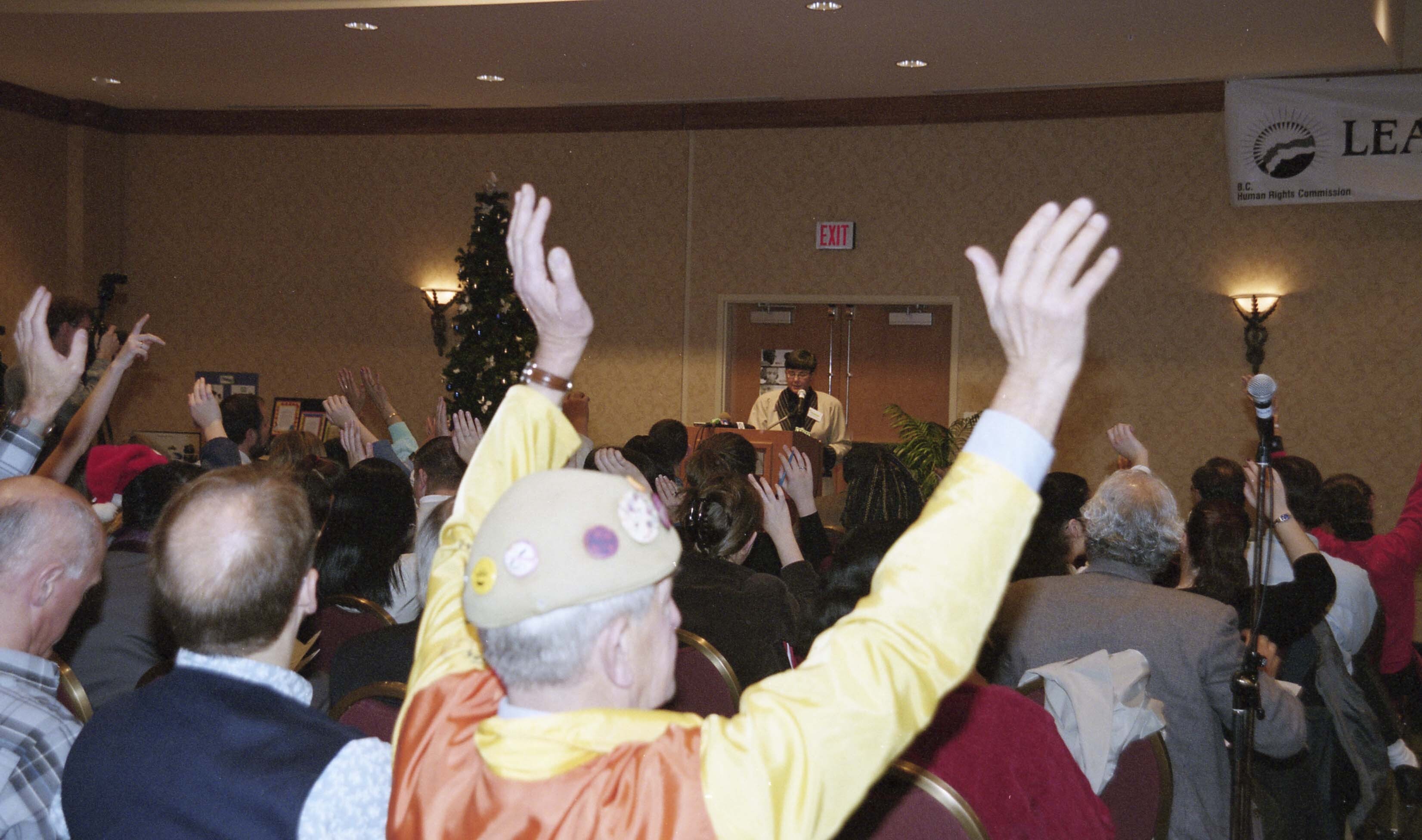
Photograph of Mary Woo Sims addressing the audience at the Learning Together event in Vancouver, British Columbia (B.C.). The event was hosted at the Hilton Hotel by the B.C. Human Rights Commission.
Mary Woo Sims was born in Hong Kong and became a Canadian citizen in 1978. Sims is a social justice activist, politician, and the former chief commissioner of the British Columbia Human Rights Commission from 1997 to 2001. As the chief human rights commissioner, she helped found the Women Against Violence Against Women (WAVAW) Rape Crisis Centre in Vancouver and recommended to expand the Human Rights Code to include gender identity. Sims was also a candidate for the New Democratic Party in the Port Moody – Westwood – Port Coquitlam district in the 2006 federal election. As an advocate of LGBTQ rights, same-sex spousal rights, employment equity, and co-chair of the Campaign for Equal Families, Sims' community work has been recognized through awards such as the Chinese National Council's 'Chinese Canadian Pioneer' Award, Metropolitan Community Church of Toronto's ˜Honoring Heroes' award, and awards from the Gay Asians of Toronto.
On August 4, 2017 Premier John Horgan along with Attorney General David Eby announced that British Columbia (B.C.) will re-establish the B.C. Human Rights Commission to address inequality and discrimination. In 2018, changes to B.C.'s Human Rights Code established the Office of the Human Rights Commissioner as an independent office of the Legislature and the Commissioner as the first independent Human Rights Commissioner in B.C.'s history. Under the Code, the Commissioner is responsible for promoting and protecting human rights in British Columbia. BC's Office of the Human Rights Commissioner exists to address the root causes of inequality, discrimination, and injustice in B.C. by shifting laws, policies, practices and cultures. They do this work through education, research, advocacy, inquiry and monitoring.
Mary Woo Sims was born in Hong Kong and became a Canadian citizen in 1978. Sims is a social justice activist, politician, and the former chief commissioner of the British Columbia Human Rights Commission from 1997 to 2001. As the chief human rights commissioner, she helped found the Women Against Violence Against Women (WAVAW) Rape Crisis Centre in Vancouver and recommended to expand the Human Rights Code to include gender identity. Sims was also a candidate for the New Democratic Party in the Port Moody – Westwood – Port Coquitlam district in the 2006 federal election. As an advocate of LGBTQ rights, same-sex spousal rights, employment equity, and co-chair of the Campaign for Equal Families, Sims' community work has been recognized through awards such as the Chinese National Council's 'Chinese Canadian Pioneer' Award, Metropolitan Community Church of Toronto's ˜Honoring Heroes' award, and awards from the Gay Asians of Toronto.
On August 4, 2017 Premier John Horgan along with Attorney General David Eby announced that British Columbia (B.C.) will re-establish the B.C. Human Rights Commission to address inequality and discrimination. In 2018, changes to B.C.'s Human Rights Code established the Office of the Human Rights Commissioner as an independent office of the Legislature and the Commissioner as the first independent Human Rights Commissioner in B.C.'s history. Under the Code, the Commissioner is responsible for promoting and protecting human rights in British Columbia. BC's Office of the Human Rights Commissioner exists to address the root causes of inequality, discrimination, and injustice in B.C. by shifting laws, policies, practices and cultures. They do this work through education, research, advocacy, inquiry and monitoring.
Creator: Bodalia, Chandra
Description
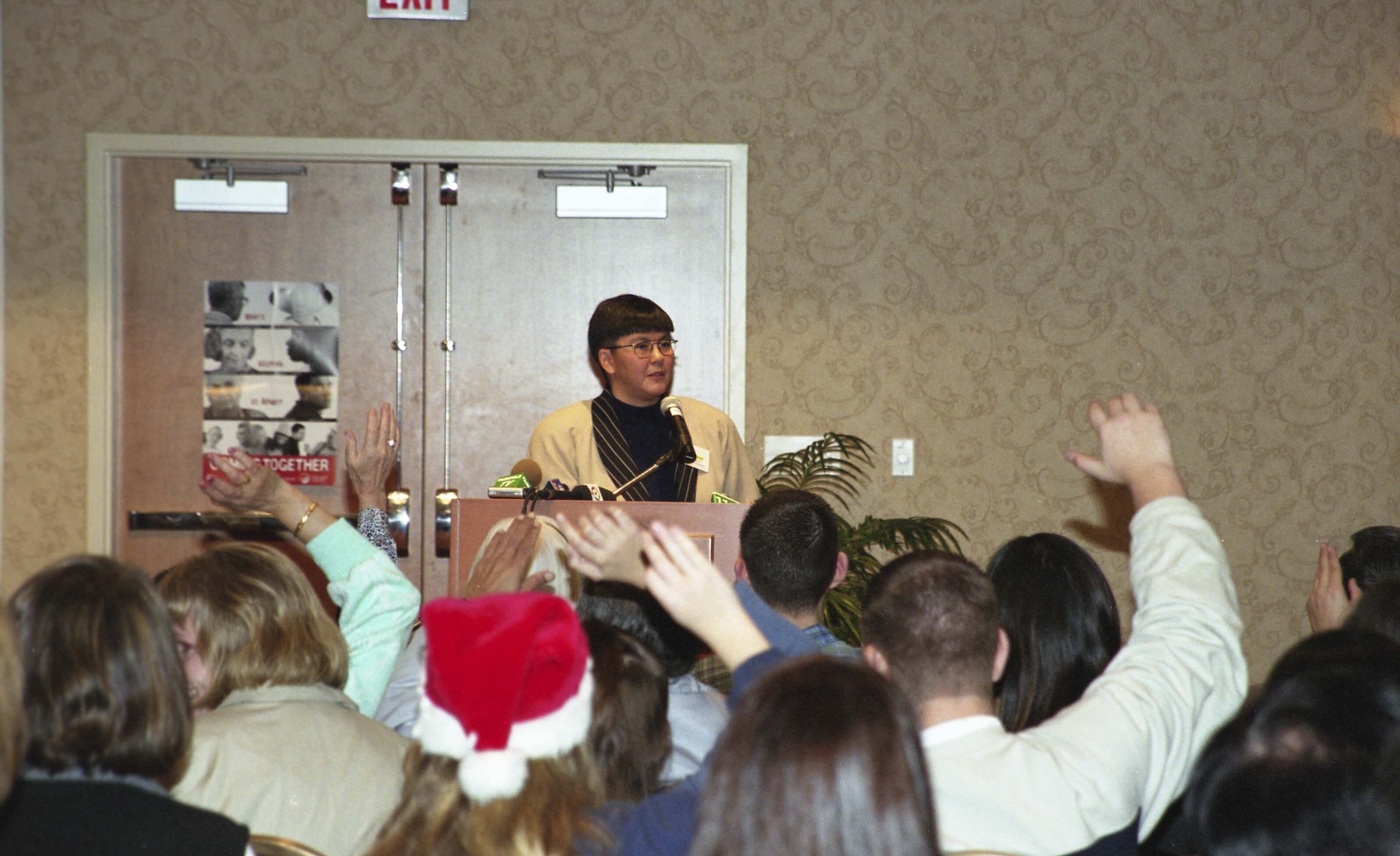
Photograph of Mary Woo Sims addressing the audience at the Learning Together event in Vancouver, British Columbia (B.C.). The event was hosted at the Hilton Hotel by the B.C. Human Rights Commission.
Mary Woo Sims was born in Hong Kong and became a Canadian citizen in 1978. Sims is a social justice activist, politician, and the former chief commissioner of the British Columbia Human Rights Commission from 1997 to 2001. As the chief human rights commissioner, she helped found the Women Against Violence Against Women (WAVAW) Rape Crisis Centre in Vancouver and recommended to expand the Human Rights Code to include gender identity. Sims was also a candidate for the New Democratic Party in the Port Moody – Westwood – Port Coquitlam district in the 2006 federal election. As an advocate of LGBTQ rights, same-sex spousal rights, employment equity, and co-chair of the Campaign for Equal Families, Sims' community work has been recognized through awards such as the Chinese National Council's 'Chinese Canadian Pioneer' Award, Metropolitan Community Church of Toronto's ˜Honoring Heroes' award, and awards from the Gay Asians of Toronto.
On August 4, 2017 Premier John Horgan along with Attorney General David Eby announced that British Columbia (B.C.) will re-establish the B.C. Human Rights Commission to address inequality and discrimination. In 2018, changes to B.C.'s Human Rights Code established the Office of the Human Rights Commissioner as an independent office of the Legislature and the Commissioner as the first independent Human Rights Commissioner in B.C.'s history. Under the Code, the Commissioner is responsible for promoting and protecting human rights in British Columbia. BC's Office of the Human Rights Commissioner exists to address the root causes of inequality, discrimination, and injustice in B.C. by shifting laws, policies, practices and cultures. They do this work through education, research, advocacy, inquiry and monitoring.
Mary Woo Sims was born in Hong Kong and became a Canadian citizen in 1978. Sims is a social justice activist, politician, and the former chief commissioner of the British Columbia Human Rights Commission from 1997 to 2001. As the chief human rights commissioner, she helped found the Women Against Violence Against Women (WAVAW) Rape Crisis Centre in Vancouver and recommended to expand the Human Rights Code to include gender identity. Sims was also a candidate for the New Democratic Party in the Port Moody – Westwood – Port Coquitlam district in the 2006 federal election. As an advocate of LGBTQ rights, same-sex spousal rights, employment equity, and co-chair of the Campaign for Equal Families, Sims' community work has been recognized through awards such as the Chinese National Council's 'Chinese Canadian Pioneer' Award, Metropolitan Community Church of Toronto's ˜Honoring Heroes' award, and awards from the Gay Asians of Toronto.
On August 4, 2017 Premier John Horgan along with Attorney General David Eby announced that British Columbia (B.C.) will re-establish the B.C. Human Rights Commission to address inequality and discrimination. In 2018, changes to B.C.'s Human Rights Code established the Office of the Human Rights Commissioner as an independent office of the Legislature and the Commissioner as the first independent Human Rights Commissioner in B.C.'s history. Under the Code, the Commissioner is responsible for promoting and protecting human rights in British Columbia. BC's Office of the Human Rights Commissioner exists to address the root causes of inequality, discrimination, and injustice in B.C. by shifting laws, policies, practices and cultures. They do this work through education, research, advocacy, inquiry and monitoring.
Creator: Bodalia, Chandra
Description
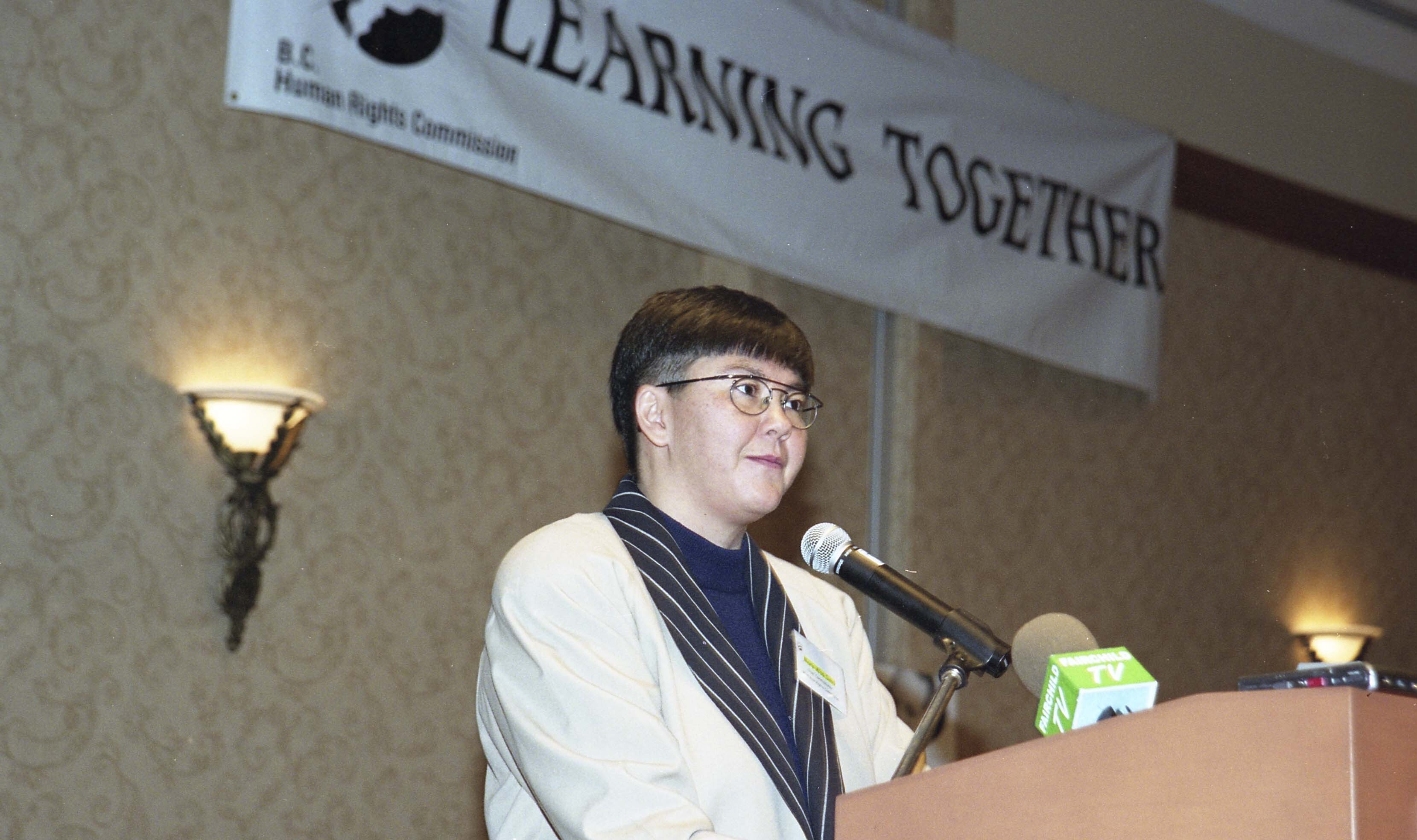
Photograph of Mary Woo Sims addressing the audience at the Learning Together event in Vancouver, British Columbia (B.C.). The event was hosted at the Hilton Hotel by the B.C. Human Rights Commission.
Mary Woo Sims was born in Hong Kong and became a Canadian citizen in 1978. Sims is a social justice activist, politician, and the former chief commissioner of the British Columbia Human Rights Commission from 1997 to 2001. As the chief human rights commissioner, she helped found the Women Against Violence Against Women (WAVAW) Rape Crisis Centre in Vancouver and recommended to expand the Human Rights Code to include gender identity. Sims was also a candidate for the New Democratic Party in the Port Moody – Westwood – Port Coquitlam district in the 2006 federal election. As an advocate of LGBTQ rights, same-sex spousal rights, employment equity, and co-chair of the Campaign for Equal Families, Sims' community work has been recognized through awards such as the Chinese National Council's 'Chinese Canadian Pioneer' Award, Metropolitan Community Church of Toronto's ˜Honoring Heroes' award, and awards from the Gay Asians of Toronto.
On August 4, 2017 Premier John Horgan along with Attorney General David Eby announced that British Columbia (B.C.) will re-establish the B.C. Human Rights Commission to address inequality and discrimination. In 2018, changes to B.C.'s Human Rights Code established the Office of the Human Rights Commissioner as an independent office of the Legislature and the Commissioner as the first independent Human Rights Commissioner in B.C.'s history. Under the Code, the Commissioner is responsible for promoting and protecting human rights in British Columbia. BC's Office of the Human Rights Commissioner exists to address the root causes of inequality, discrimination, and injustice in B.C. by shifting laws, policies, practices and cultures. They do this work through education, research, advocacy, inquiry and monitoring.
Mary Woo Sims was born in Hong Kong and became a Canadian citizen in 1978. Sims is a social justice activist, politician, and the former chief commissioner of the British Columbia Human Rights Commission from 1997 to 2001. As the chief human rights commissioner, she helped found the Women Against Violence Against Women (WAVAW) Rape Crisis Centre in Vancouver and recommended to expand the Human Rights Code to include gender identity. Sims was also a candidate for the New Democratic Party in the Port Moody – Westwood – Port Coquitlam district in the 2006 federal election. As an advocate of LGBTQ rights, same-sex spousal rights, employment equity, and co-chair of the Campaign for Equal Families, Sims' community work has been recognized through awards such as the Chinese National Council's 'Chinese Canadian Pioneer' Award, Metropolitan Community Church of Toronto's ˜Honoring Heroes' award, and awards from the Gay Asians of Toronto.
On August 4, 2017 Premier John Horgan along with Attorney General David Eby announced that British Columbia (B.C.) will re-establish the B.C. Human Rights Commission to address inequality and discrimination. In 2018, changes to B.C.'s Human Rights Code established the Office of the Human Rights Commissioner as an independent office of the Legislature and the Commissioner as the first independent Human Rights Commissioner in B.C.'s history. Under the Code, the Commissioner is responsible for promoting and protecting human rights in British Columbia. BC's Office of the Human Rights Commissioner exists to address the root causes of inequality, discrimination, and injustice in B.C. by shifting laws, policies, practices and cultures. They do this work through education, research, advocacy, inquiry and monitoring.
Member of
Creator: Bodalia, Chandra
Description
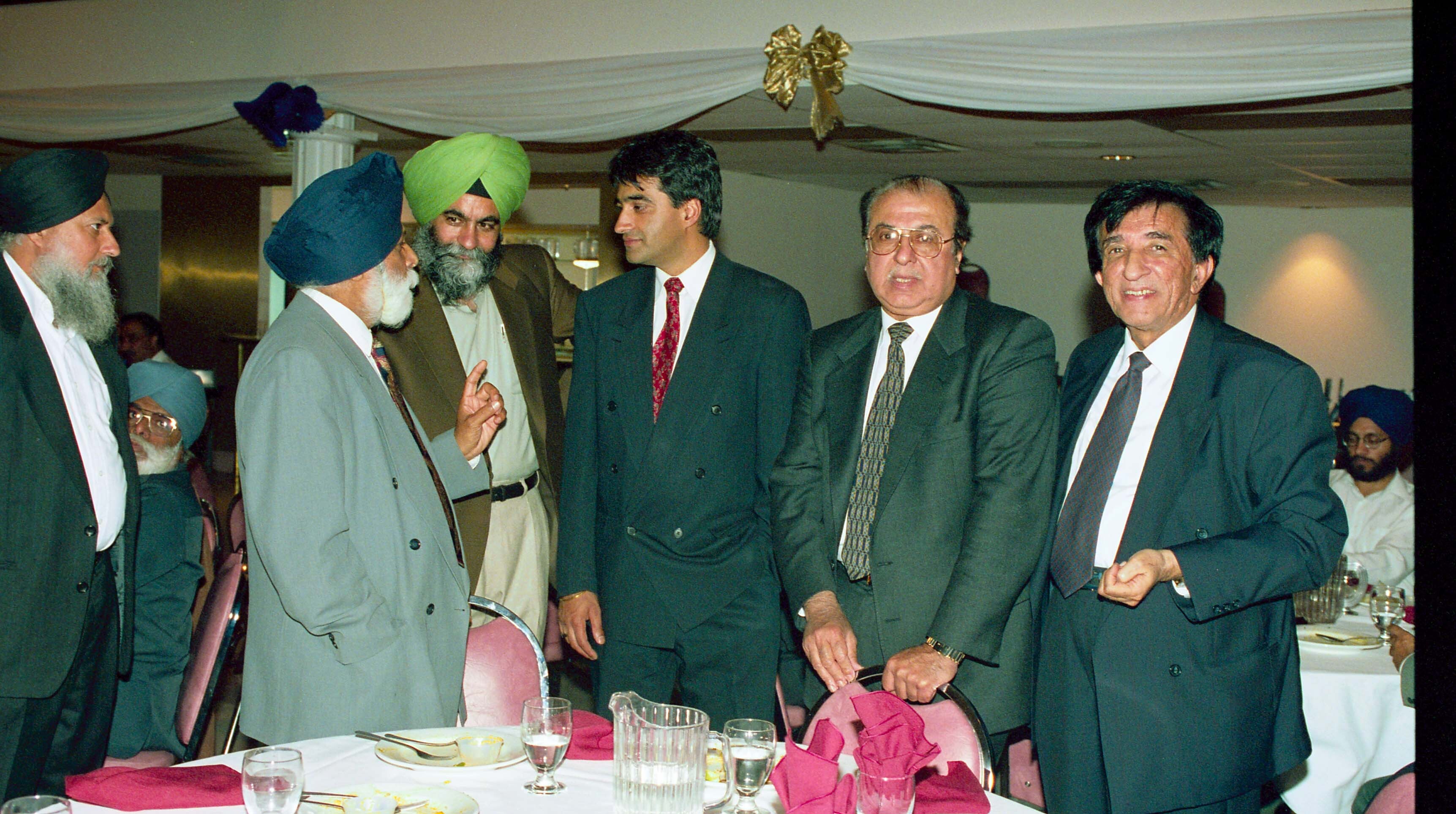
Photograph of Moe Sihota and Aziz Khaki conversing with attendees at a cultural event organised at Riverside Banquet Hall in Richmond.
Munmohan Singh "Moe" Sihota is a prominent Canadian politician and broadcaster, recognized for his pioneering role as the first Indo-Canadian elected to a legislative assembly in Canada and the Western world in 1986. Born in Duncan, British Columbia, Sihota served as a member of the New Democratic Party (NDP) and held various cabinet positions in the British Columbia provincial government, making significant contributions to policy, including the creation of new provincial parks and the expansion of workers' compensation coverage. After retiring from politics in 2001, he transitioned to broadcasting and business ventures, and later served as president of the BC NDP. Sihota's contributions to Canadian society have been widely recognized, earning him the Queen's Diamond Jubilee Medal and the Lifetime Achievement Award from the Parvasi Awards.
Dr. Abdulaziz 'Aziz' Khaki was an activist and leader in the Canadian Muslim community. He served as vice-president of the Canadian Muslim Federation and the Council of Muslim Communities of Canada. Dr. Khaki was a strong advocate for human rights, interfaith dialogue, and the integration of Muslim communities into Canadian society.
Munmohan Singh "Moe" Sihota is a prominent Canadian politician and broadcaster, recognized for his pioneering role as the first Indo-Canadian elected to a legislative assembly in Canada and the Western world in 1986. Born in Duncan, British Columbia, Sihota served as a member of the New Democratic Party (NDP) and held various cabinet positions in the British Columbia provincial government, making significant contributions to policy, including the creation of new provincial parks and the expansion of workers' compensation coverage. After retiring from politics in 2001, he transitioned to broadcasting and business ventures, and later served as president of the BC NDP. Sihota's contributions to Canadian society have been widely recognized, earning him the Queen's Diamond Jubilee Medal and the Lifetime Achievement Award from the Parvasi Awards.
Dr. Abdulaziz 'Aziz' Khaki was an activist and leader in the Canadian Muslim community. He served as vice-president of the Canadian Muslim Federation and the Council of Muslim Communities of Canada. Dr. Khaki was a strong advocate for human rights, interfaith dialogue, and the integration of Muslim communities into Canadian society.
Member of
Creator: Bodalia, Chandra
Description
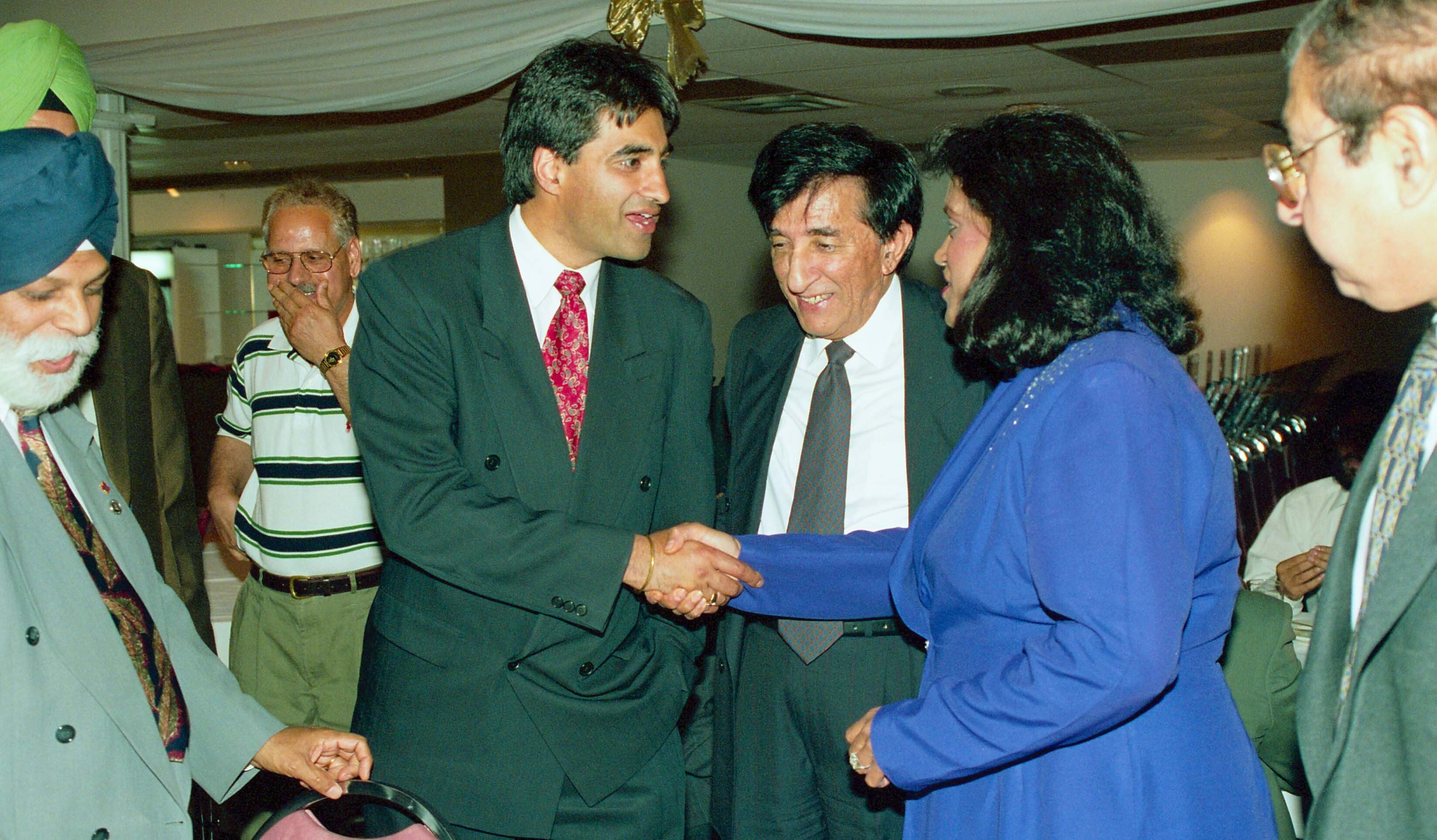
Photograph of Moe Sihota and Aziz Khaki greeting attendees at a cultural event organised at Riverside Banquet Hall in Richmond.
Munmohan Singh "Moe" Sihota is a prominent Canadian politician and broadcaster, recognized for his pioneering role as the first Indo-Canadian elected to a legislative assembly in Canada and the Western world in 1986. Born in Duncan, British Columbia, Sihota served as a member of the New Democratic Party (NDP) and held various cabinet positions in the British Columbia provincial government, making significant contributions to policy, including the creation of new provincial parks and the expansion of workers' compensation coverage. After retiring from politics in 2001, he transitioned to broadcasting and business ventures, and later served as president of the BC NDP. Sihota's contributions to Canadian society have been widely recognized, earning him the Queen's Diamond Jubilee Medal and the Lifetime Achievement Award from the Parvasi Awards.
Dr. Abdulaziz 'Aziz' Khaki was an activist and leader in the Canadian Muslim community. He served as vice-president of the Canadian Muslim Federation and the Council of Muslim Communities of Canada. Dr. Khaki was a strong advocate for human rights, interfaith dialogue, and the integration of Muslim communities into Canadian society.
Munmohan Singh "Moe" Sihota is a prominent Canadian politician and broadcaster, recognized for his pioneering role as the first Indo-Canadian elected to a legislative assembly in Canada and the Western world in 1986. Born in Duncan, British Columbia, Sihota served as a member of the New Democratic Party (NDP) and held various cabinet positions in the British Columbia provincial government, making significant contributions to policy, including the creation of new provincial parks and the expansion of workers' compensation coverage. After retiring from politics in 2001, he transitioned to broadcasting and business ventures, and later served as president of the BC NDP. Sihota's contributions to Canadian society have been widely recognized, earning him the Queen's Diamond Jubilee Medal and the Lifetime Achievement Award from the Parvasi Awards.
Dr. Abdulaziz 'Aziz' Khaki was an activist and leader in the Canadian Muslim community. He served as vice-president of the Canadian Muslim Federation and the Council of Muslim Communities of Canada. Dr. Khaki was a strong advocate for human rights, interfaith dialogue, and the integration of Muslim communities into Canadian society.
Member of
Creator: Bodalia, Chandra
Description
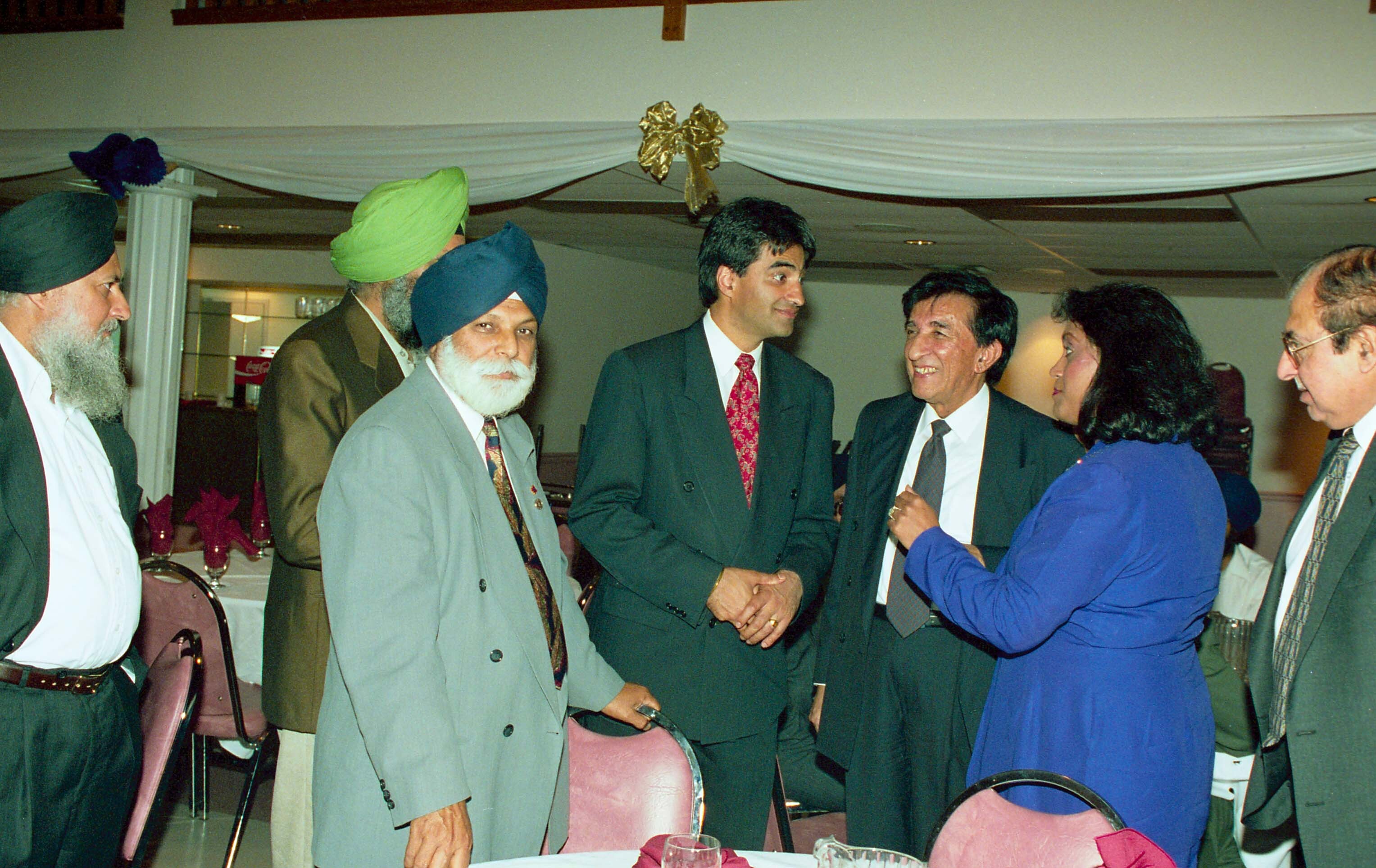
Photograph of Moe Sihota and Aziz Khaki greeting attendees at a cultural event organised at Riverside Banquet Hall in Richmond.
Munmohan Singh "Moe" Sihota is a prominent Canadian politician and broadcaster, recognized for his pioneering role as the first Indo-Canadian elected to a legislative assembly in Canada and the Western world in 1986. Born in Duncan, British Columbia, Sihota served as a member of the New Democratic Party (NDP) and held various cabinet positions in the British Columbia provincial government, making significant contributions to policy, including the creation of new provincial parks and the expansion of workers' compensation coverage. After retiring from politics in 2001, he transitioned to broadcasting and business ventures, and later served as president of the BC NDP. Sihota's contributions to Canadian society have been widely recognized, earning him the Queen's Diamond Jubilee Medal and the Lifetime Achievement Award from the Parvasi Awards.
Dr. Abdulaziz 'Aziz' Khaki was an activist and leader in the Canadian Muslim community. He served as vice-president of the Canadian Muslim Federation and the Council of Muslim Communities of Canada. Dr. Khaki was a strong advocate for human rights, interfaith dialogue, and the integration of Muslim communities into Canadian society.
Munmohan Singh "Moe" Sihota is a prominent Canadian politician and broadcaster, recognized for his pioneering role as the first Indo-Canadian elected to a legislative assembly in Canada and the Western world in 1986. Born in Duncan, British Columbia, Sihota served as a member of the New Democratic Party (NDP) and held various cabinet positions in the British Columbia provincial government, making significant contributions to policy, including the creation of new provincial parks and the expansion of workers' compensation coverage. After retiring from politics in 2001, he transitioned to broadcasting and business ventures, and later served as president of the BC NDP. Sihota's contributions to Canadian society have been widely recognized, earning him the Queen's Diamond Jubilee Medal and the Lifetime Achievement Award from the Parvasi Awards.
Dr. Abdulaziz 'Aziz' Khaki was an activist and leader in the Canadian Muslim community. He served as vice-president of the Canadian Muslim Federation and the Council of Muslim Communities of Canada. Dr. Khaki was a strong advocate for human rights, interfaith dialogue, and the integration of Muslim communities into Canadian society.
Member of
Creator: Bodalia, Chandra
Description
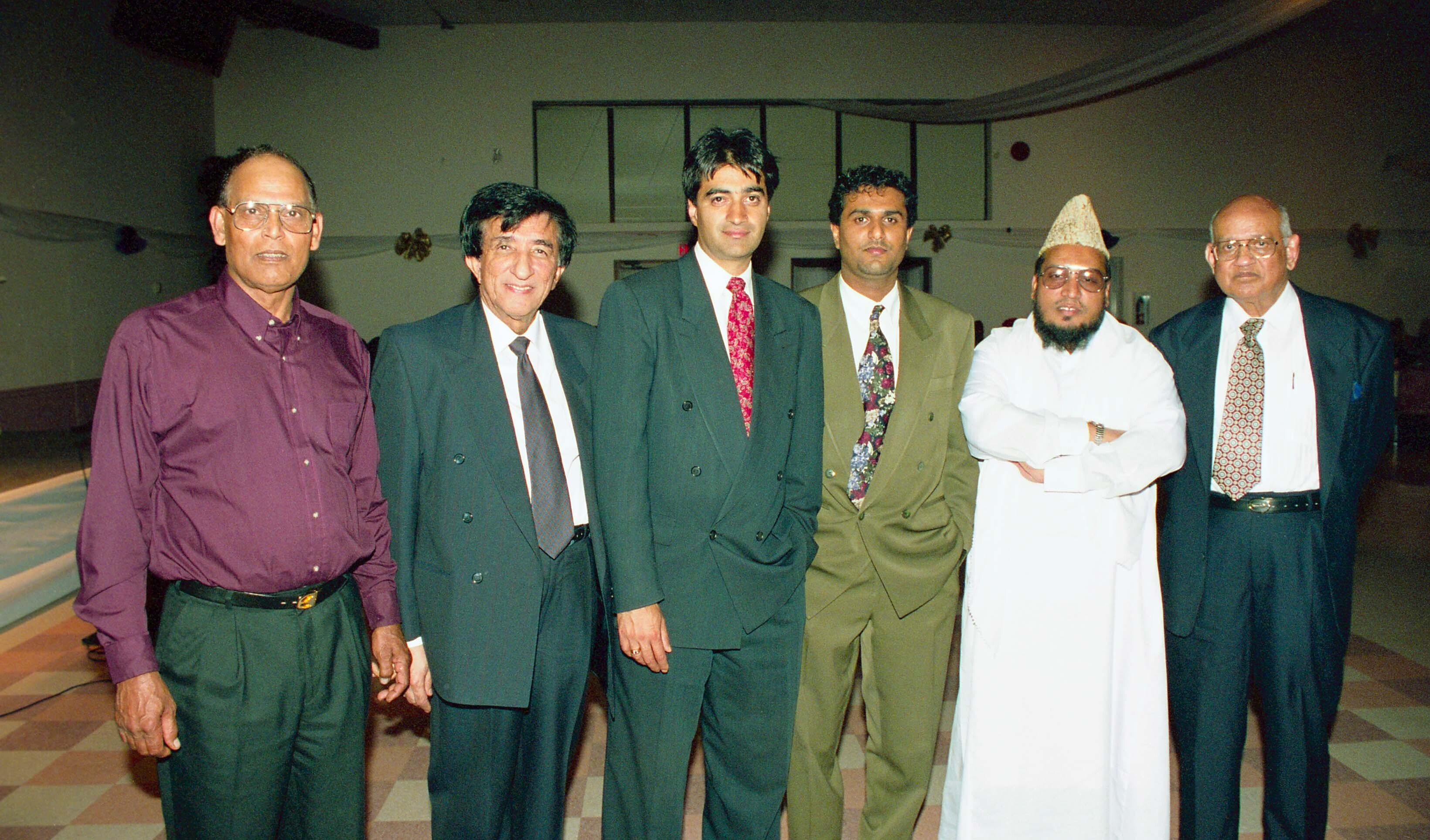
Photograph of Moe Sihota and Aziz Khaki standing with several other attendees at a cultural event organised at Riverside Banquet Hall in Richmond.
Munmohan Singh "Moe" Sihota is a prominent Canadian politician and broadcaster, recognized for his pioneering role as the first Indo-Canadian elected to a legislative assembly in Canada and the Western world in 1986. Born in Duncan, British Columbia, Sihota served as a member of the New Democratic Party (NDP) and held various cabinet positions in the British Columbia provincial government, making significant contributions to policy, including the creation of new provincial parks and the expansion of workers' compensation coverage. After retiring from politics in 2001, he transitioned to broadcasting and business ventures, and later served as president of the BC NDP. Sihota's contributions to Canadian society have been widely recognized, earning him the Queen's Diamond Jubilee Medal and the Lifetime Achievement Award from the Parvasi Awards.
Dr. Abdulaziz 'Aziz' Khaki was an activist and leader in the Canadian Muslim community. He served as vice-president of the Canadian Muslim Federation and the Council of Muslim Communities of Canada. Dr. Khaki was a strong advocate for human rights, interfaith dialogue, and the integration of Muslim communities into Canadian society.
Munmohan Singh "Moe" Sihota is a prominent Canadian politician and broadcaster, recognized for his pioneering role as the first Indo-Canadian elected to a legislative assembly in Canada and the Western world in 1986. Born in Duncan, British Columbia, Sihota served as a member of the New Democratic Party (NDP) and held various cabinet positions in the British Columbia provincial government, making significant contributions to policy, including the creation of new provincial parks and the expansion of workers' compensation coverage. After retiring from politics in 2001, he transitioned to broadcasting and business ventures, and later served as president of the BC NDP. Sihota's contributions to Canadian society have been widely recognized, earning him the Queen's Diamond Jubilee Medal and the Lifetime Achievement Award from the Parvasi Awards.
Dr. Abdulaziz 'Aziz' Khaki was an activist and leader in the Canadian Muslim community. He served as vice-president of the Canadian Muslim Federation and the Council of Muslim Communities of Canada. Dr. Khaki was a strong advocate for human rights, interfaith dialogue, and the integration of Muslim communities into Canadian society.