
Politicians
Authority Sources
Creator:
Description
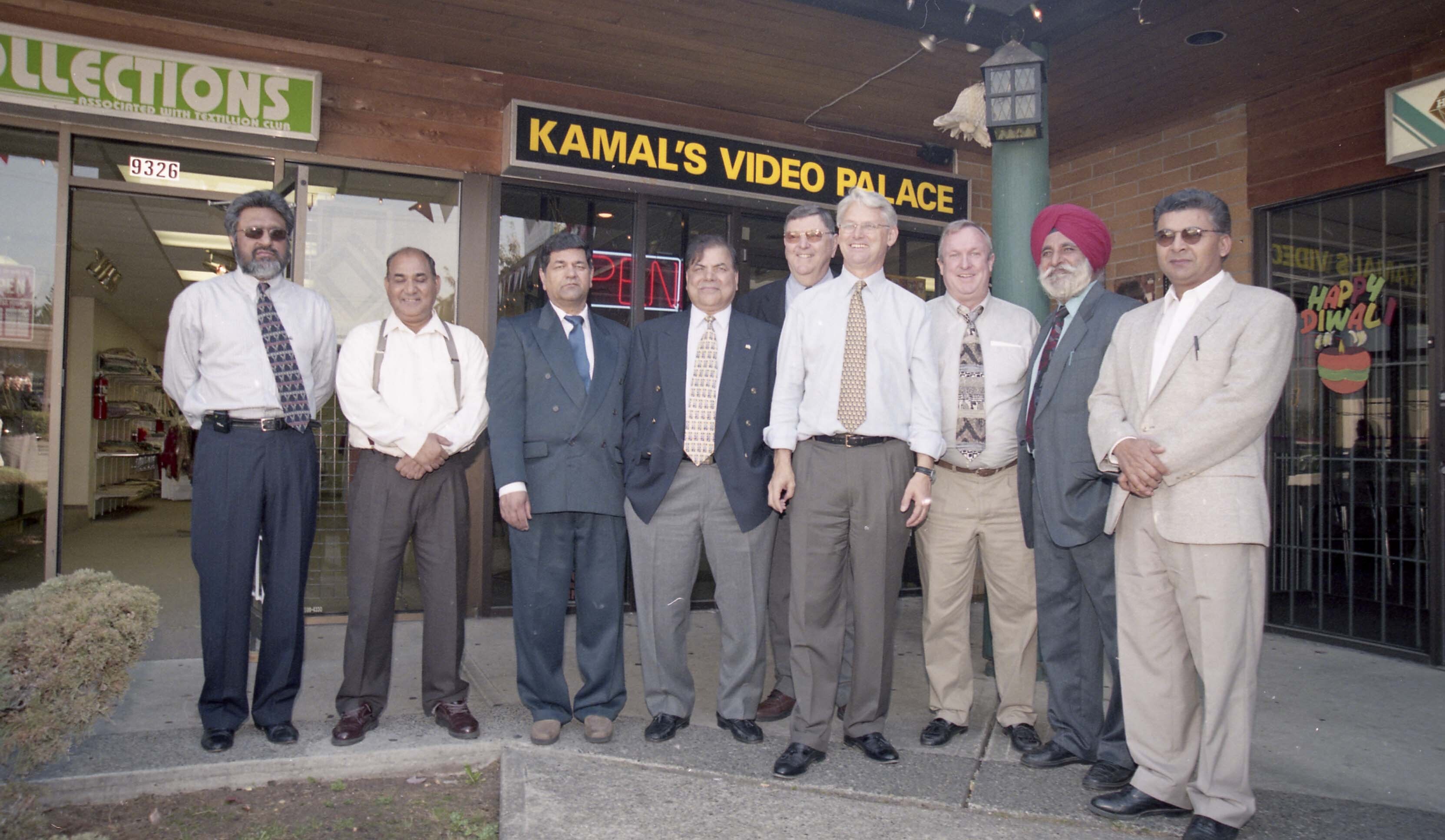
Photograph of Gordon Campbell with a group of unidentified individuals, including Dr. Raghbir Singh Bains and Dr. Gulzar Singh Cheema at a commercial plaza located in Surrey, British Columbia (B.C.). Campbell was in Surrey for a community meet-and-greet pertaining to the B.C. Liberal Party.
Gordon Campbell was sworn in as British Columbia's 34th Premier on June 5, 2001. Campbell was elected leader of the B.C. Liberal Party in September 1993. He was elected to the B.C. Legislature in 1994 in a by-election to represent the riding of Vancouver-Quilchena and was re-elected in 1996 and 2001 for Vancouver-Point Grey. Campbell attended public school in Vancouver. After graduating he received a scholarship to Dartmouth College in New Hampshire. He worked his way through university in the dining hall and as the associate to the secretary of the college, and received his bachelor of arts degree. He later received a master's of business administration from Simon Fraser University. He was a secondary school teacher, basketball and track coach in Yola, Nigeria, working under the auspices of CUSO. He then became an assistant to former Vancouver mayor Art Phillips. From 1976 to 1981, he worked with Marathon Realty, where he became general manager of development. In 1981, he founded Citycore Development Corporation. In 1984, Campbell was elected to Vancouver City Council. From 1986 to 1993, he served as Mayor of Vancouver for three successive terms. From 2001 to 2011, Campbell served as Premier of British Columbia, and High Commissioner to the United Kingdom from 2011 to 2016. During his tenure as Premier, Campbell reduced taxes, restrained spending, revolutionized the measurement and management of regulations, and markedly improved the economy of the province. Among his recognitions and awards, Campbell received the Order of British Columbia as well as the Order of Canada. In 2014, he was presented an Honorary Doctorate of Laws from Thompson Rivers University. He was awarded both the Queen Elizabeth II Golden Jubilee Medal (2002) and the Diamond Jubilee Medal (2012) for his contributions to the province and country.
Dr. Raghbir Singh Bains (1936-2016) was born in India, in a village called Dagana Kalan, near Hoshiarpur. He earned a Bachelor of Arts, Bachelor of Education and Master of Arts from Punjab University, India. Bains immigrated to Canada in 1990, where he worked as a volunteer, community activist and educator for many organizations to promote cultural understanding and mutual respect between Indo-Canadian and other communities in B.C. He earned drug-counseling certifications from different institutions in Canada and USA. Bains presented at seminars and conferences worldwide on the subjects of AIDS awareness, drugs and youth, environmental issues, multiculturalism and world peace. He is the author of the Encyclopedia of Sikhism, an educational reference that covers Sikh religion, history, culture and heritage, which was released in 1996. Bains also produced and programmed the Multimedia Sikh Museum in India, the first of its kind in the world. He is the recipient of multiple awards, local, national and international. These include the Scholar of the 20th Century by the Government of Panjab, the Order of Khalsa, the Bhai Gurdas International Award, the Wisdom of Age Mentorship Award, the Good Citizen of the Year Award from the City of Surrey, and the Queen's Golden Jubilee Medal for outstanding community service. He was also honored with the Order of British Columbia, Prime Minister Award, and Governor General Caring Award by the Canadian government.
Dr. Gulzar Singh Cheema is a family physician in Surrey, British Columbia, and a former member of the Legislative Assembly in Manitoba, 1988-1993. Cheema immigrated to Canada in December, 1979, and was the first Indian-born Canadian doctor to be elected to a legislative assembly in Canada in 1988. Cheema was elected in B.C. in May 2001 to represent the riding of Surrey-Panorama Ridge. On June 05, 2001 Cheema was appointed as a member of the Executive Council for the Government of B.C. as Minister of State for Mental Health. On January 26, 2004, he was appointed as a member of the Executive Council for the Government of B.C. as Minister of State for Immigration and Multicultural Services. He also served as a critic for health. He received his Bachelor of Medicine and surgery from India's Punjab University, interned at the University of Newfoundland and was a resident at Saskatoon's University Hospital. In 1992 he was awarded the Canada 125 Medal for community service. In 2014, Cheema was recognized by the Doctors of British Columbia Medical Association, for an Individual Award of Excellence in Health Promotion for his outstanding and continuing work educating the Indo-Canadian population about disease prevention and promotion.
Gordon Campbell was sworn in as British Columbia's 34th Premier on June 5, 2001. Campbell was elected leader of the B.C. Liberal Party in September 1993. He was elected to the B.C. Legislature in 1994 in a by-election to represent the riding of Vancouver-Quilchena and was re-elected in 1996 and 2001 for Vancouver-Point Grey. Campbell attended public school in Vancouver. After graduating he received a scholarship to Dartmouth College in New Hampshire. He worked his way through university in the dining hall and as the associate to the secretary of the college, and received his bachelor of arts degree. He later received a master's of business administration from Simon Fraser University. He was a secondary school teacher, basketball and track coach in Yola, Nigeria, working under the auspices of CUSO. He then became an assistant to former Vancouver mayor Art Phillips. From 1976 to 1981, he worked with Marathon Realty, where he became general manager of development. In 1981, he founded Citycore Development Corporation. In 1984, Campbell was elected to Vancouver City Council. From 1986 to 1993, he served as Mayor of Vancouver for three successive terms. From 2001 to 2011, Campbell served as Premier of British Columbia, and High Commissioner to the United Kingdom from 2011 to 2016. During his tenure as Premier, Campbell reduced taxes, restrained spending, revolutionized the measurement and management of regulations, and markedly improved the economy of the province. Among his recognitions and awards, Campbell received the Order of British Columbia as well as the Order of Canada. In 2014, he was presented an Honorary Doctorate of Laws from Thompson Rivers University. He was awarded both the Queen Elizabeth II Golden Jubilee Medal (2002) and the Diamond Jubilee Medal (2012) for his contributions to the province and country.
Dr. Raghbir Singh Bains (1936-2016) was born in India, in a village called Dagana Kalan, near Hoshiarpur. He earned a Bachelor of Arts, Bachelor of Education and Master of Arts from Punjab University, India. Bains immigrated to Canada in 1990, where he worked as a volunteer, community activist and educator for many organizations to promote cultural understanding and mutual respect between Indo-Canadian and other communities in B.C. He earned drug-counseling certifications from different institutions in Canada and USA. Bains presented at seminars and conferences worldwide on the subjects of AIDS awareness, drugs and youth, environmental issues, multiculturalism and world peace. He is the author of the Encyclopedia of Sikhism, an educational reference that covers Sikh religion, history, culture and heritage, which was released in 1996. Bains also produced and programmed the Multimedia Sikh Museum in India, the first of its kind in the world. He is the recipient of multiple awards, local, national and international. These include the Scholar of the 20th Century by the Government of Panjab, the Order of Khalsa, the Bhai Gurdas International Award, the Wisdom of Age Mentorship Award, the Good Citizen of the Year Award from the City of Surrey, and the Queen's Golden Jubilee Medal for outstanding community service. He was also honored with the Order of British Columbia, Prime Minister Award, and Governor General Caring Award by the Canadian government.
Dr. Gulzar Singh Cheema is a family physician in Surrey, British Columbia, and a former member of the Legislative Assembly in Manitoba, 1988-1993. Cheema immigrated to Canada in December, 1979, and was the first Indian-born Canadian doctor to be elected to a legislative assembly in Canada in 1988. Cheema was elected in B.C. in May 2001 to represent the riding of Surrey-Panorama Ridge. On June 05, 2001 Cheema was appointed as a member of the Executive Council for the Government of B.C. as Minister of State for Mental Health. On January 26, 2004, he was appointed as a member of the Executive Council for the Government of B.C. as Minister of State for Immigration and Multicultural Services. He also served as a critic for health. He received his Bachelor of Medicine and surgery from India's Punjab University, interned at the University of Newfoundland and was a resident at Saskatoon's University Hospital. In 1992 he was awarded the Canada 125 Medal for community service. In 2014, Cheema was recognized by the Doctors of British Columbia Medical Association, for an Individual Award of Excellence in Health Promotion for his outstanding and continuing work educating the Indo-Canadian population about disease prevention and promotion.
Creator:
Description
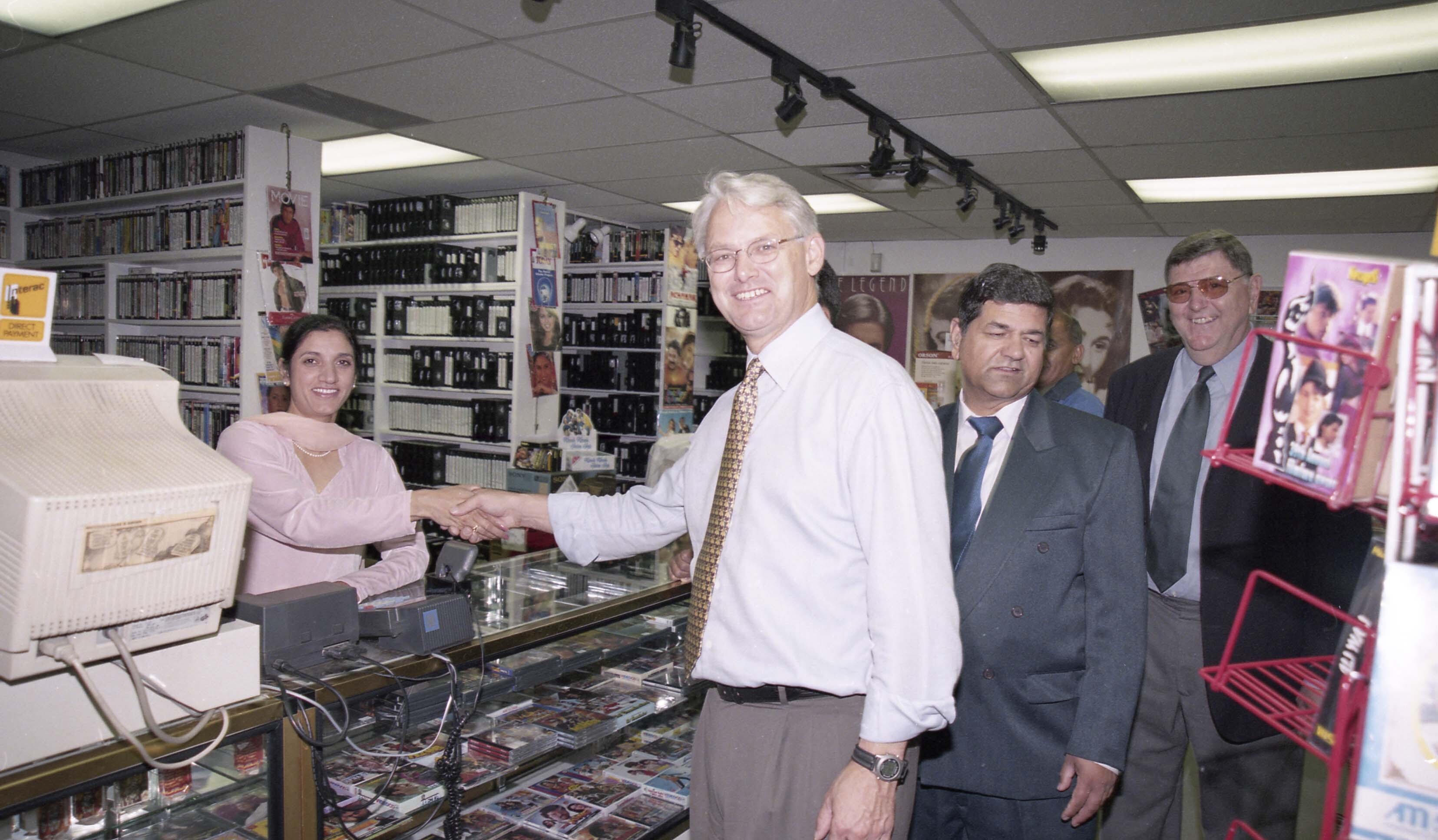
Photograph of Gordon Campbell shaking hands with an unidentified individual in a video store located in Surrey, British Columbia (B.C.). Campbell was in Surrey for a community meet-and-greet pertaining to the B.C. Liberal Party.
Gordon Campbell was sworn in as British Columbia's 34th Premier on June 5, 2001. Campbell was elected leader of the B.C. Liberal Party in September 1993. He was elected to the B.C. Legislature in 1994 in a by-election to represent the riding of Vancouver-Quilchena and was re-elected in 1996 and 2001 for Vancouver-Point Grey. Campbell attended public school in Vancouver. After graduating he received a scholarship to Dartmouth College in New Hampshire. He worked his way through university in the dining hall and as the associate to the secretary of the college, and received his bachelor of arts degree. He later received a master's of business administration from Simon Fraser University. He was a secondary school teacher, basketball and track coach in Yola, Nigeria, working under the auspices of CUSO. He then became an assistant to former Vancouver mayor Art Phillips. From 1976 to 1981, he worked with Marathon Realty, where he became general manager of development. In 1981, he founded Citycore Development Corporation. In 1984, Campbell was elected to Vancouver City Council. From 1986 to 1993, he served as Mayor of Vancouver for three successive terms. From 2001 to 2011, Campbell served as Premier of British Columbia, and High Commissioner to the United Kingdom from 2011 to 2016. During his tenure as Premier, Campbell reduced taxes, restrained spending, revolutionized the measurement and management of regulations, and markedly improved the economy of the province. Among his recognitions and awards, Campbell received the Order of British Columbia as well as the Order of Canada. In 2014, he was presented an Honorary Doctorate of Laws from Thompson Rivers University. He was awarded both the Queen Elizabeth II Golden Jubilee Medal (2002) and the Diamond Jubilee Medal (2012) for his contributions to the province and country.
Gordon Campbell was sworn in as British Columbia's 34th Premier on June 5, 2001. Campbell was elected leader of the B.C. Liberal Party in September 1993. He was elected to the B.C. Legislature in 1994 in a by-election to represent the riding of Vancouver-Quilchena and was re-elected in 1996 and 2001 for Vancouver-Point Grey. Campbell attended public school in Vancouver. After graduating he received a scholarship to Dartmouth College in New Hampshire. He worked his way through university in the dining hall and as the associate to the secretary of the college, and received his bachelor of arts degree. He later received a master's of business administration from Simon Fraser University. He was a secondary school teacher, basketball and track coach in Yola, Nigeria, working under the auspices of CUSO. He then became an assistant to former Vancouver mayor Art Phillips. From 1976 to 1981, he worked with Marathon Realty, where he became general manager of development. In 1981, he founded Citycore Development Corporation. In 1984, Campbell was elected to Vancouver City Council. From 1986 to 1993, he served as Mayor of Vancouver for three successive terms. From 2001 to 2011, Campbell served as Premier of British Columbia, and High Commissioner to the United Kingdom from 2011 to 2016. During his tenure as Premier, Campbell reduced taxes, restrained spending, revolutionized the measurement and management of regulations, and markedly improved the economy of the province. Among his recognitions and awards, Campbell received the Order of British Columbia as well as the Order of Canada. In 2014, he was presented an Honorary Doctorate of Laws from Thompson Rivers University. He was awarded both the Queen Elizabeth II Golden Jubilee Medal (2002) and the Diamond Jubilee Medal (2012) for his contributions to the province and country.
Creator:
Description
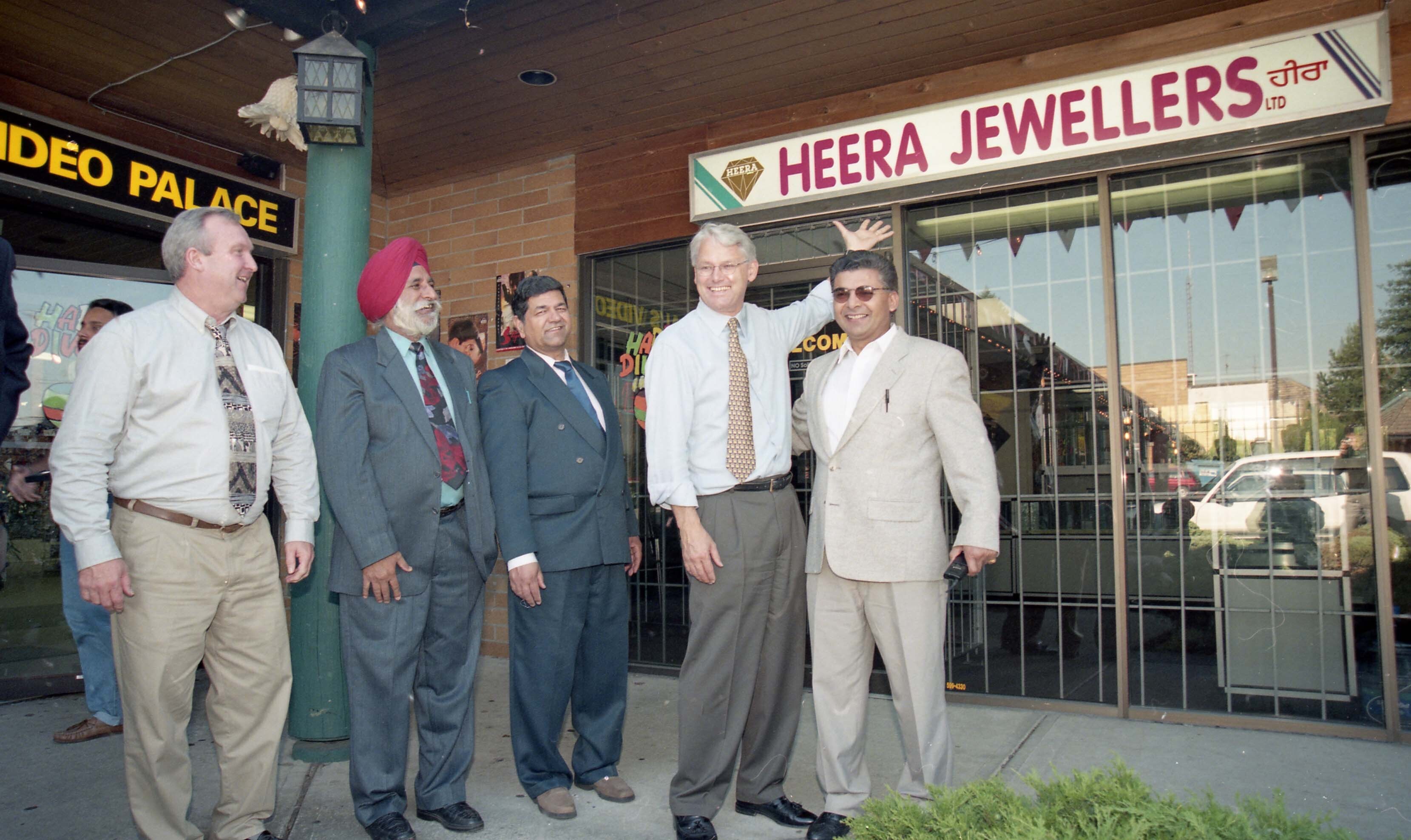
Photograph of Gordon Campbell with a group of unidentified individuals, including Dr. Raghbir Singh Bains at a storefront in Surrey, British Columbia (B.C.). Campbell was in Surrey for a community meet-and-greet pertaining to the B.C. Liberal Party.
Gordon Campbell was sworn in as British Columbia's 34th Premier on June 5, 2001. Campbell was elected leader of the B.C. Liberal Party in September 1993. He was elected to the B.C. Legislature in 1994 in a by-election to represent the riding of Vancouver-Quilchena and was re-elected in 1996 and 2001 for Vancouver-Point Grey. Campbell attended public school in Vancouver. After graduating he received a scholarship to Dartmouth College in New Hampshire. He worked his way through university in the dining hall and as the associate to the secretary of the college, and received his bachelor of arts degree. He later received a master's of business administration from Simon Fraser University. He was a secondary school teacher, basketball and track coach in Yola, Nigeria, working under the auspices of CUSO. He then became an assistant to former Vancouver mayor Art Phillips. From 1976 to 1981, he worked with Marathon Realty, where he became general manager of development. In 1981, he founded Citycore Development Corporation. In 1984, Campbell was elected to Vancouver City Council. From 1986 to 1993, he served as Mayor of Vancouver for three successive terms. From 2001 to 2011, Campbell served as Premier of British Columbia, and High Commissioner to the United Kingdom from 2011 to 2016. During his tenure as Premier, Campbell reduced taxes, restrained spending, revolutionized the measurement and management of regulations, and markedly improved the economy of the province. Among his recognitions and awards, Campbell received the Order of British Columbia as well as the Order of Canada. In 2014, he was presented an Honorary Doctorate of Laws from Thompson Rivers University. He was awarded both the Queen Elizabeth II Golden Jubilee Medal (2002) and the Diamond Jubilee Medal (2012) for his contributions to the province and country.
Dr. Raghbir Singh Bains (1936-2016) was born in India, in a village called Dagana Kalan, near Hoshiarpur. He earned a Bachelor of Arts, Bachelor of Education and Master of Arts from Punjab University, India. Bains immigrated to Canada in 1990, where he worked as a volunteer, community activist and educator for many organizations to promote cultural understanding and mutual respect between Indo-Canadian and other communities in B.C. He earned drug-counseling certifications from different institutions in Canada and USA. Bains presented at seminars and conferences worldwide on the subjects of AIDS awareness, drugs and youth, environmental issues, multiculturalism and world peace. He is the author of the Encyclopedia of Sikhism, an educational reference that covers Sikh religion, history, culture and heritage, which was released in 1996. Bains also produced and programmed the Multimedia Sikh Museum in India, the first of its kind in the world. He is the recipient of multiple awards, local, national and international. These include the Scholar of the 20th Century by the Government of Panjab, the Order of Khalsa, the Bhai Gurdas International Award, the Wisdom of Age Mentorship Award, the Good Citizen of the Year Award from the City of Surrey, and the Queen's Golden Jubilee Medal for outstanding community service. He was also honored with the Order of British Columbia, Prime Minister Award, and Governor General Caring Award by the Canadian government.
Gordon Campbell was sworn in as British Columbia's 34th Premier on June 5, 2001. Campbell was elected leader of the B.C. Liberal Party in September 1993. He was elected to the B.C. Legislature in 1994 in a by-election to represent the riding of Vancouver-Quilchena and was re-elected in 1996 and 2001 for Vancouver-Point Grey. Campbell attended public school in Vancouver. After graduating he received a scholarship to Dartmouth College in New Hampshire. He worked his way through university in the dining hall and as the associate to the secretary of the college, and received his bachelor of arts degree. He later received a master's of business administration from Simon Fraser University. He was a secondary school teacher, basketball and track coach in Yola, Nigeria, working under the auspices of CUSO. He then became an assistant to former Vancouver mayor Art Phillips. From 1976 to 1981, he worked with Marathon Realty, where he became general manager of development. In 1981, he founded Citycore Development Corporation. In 1984, Campbell was elected to Vancouver City Council. From 1986 to 1993, he served as Mayor of Vancouver for three successive terms. From 2001 to 2011, Campbell served as Premier of British Columbia, and High Commissioner to the United Kingdom from 2011 to 2016. During his tenure as Premier, Campbell reduced taxes, restrained spending, revolutionized the measurement and management of regulations, and markedly improved the economy of the province. Among his recognitions and awards, Campbell received the Order of British Columbia as well as the Order of Canada. In 2014, he was presented an Honorary Doctorate of Laws from Thompson Rivers University. He was awarded both the Queen Elizabeth II Golden Jubilee Medal (2002) and the Diamond Jubilee Medal (2012) for his contributions to the province and country.
Dr. Raghbir Singh Bains (1936-2016) was born in India, in a village called Dagana Kalan, near Hoshiarpur. He earned a Bachelor of Arts, Bachelor of Education and Master of Arts from Punjab University, India. Bains immigrated to Canada in 1990, where he worked as a volunteer, community activist and educator for many organizations to promote cultural understanding and mutual respect between Indo-Canadian and other communities in B.C. He earned drug-counseling certifications from different institutions in Canada and USA. Bains presented at seminars and conferences worldwide on the subjects of AIDS awareness, drugs and youth, environmental issues, multiculturalism and world peace. He is the author of the Encyclopedia of Sikhism, an educational reference that covers Sikh religion, history, culture and heritage, which was released in 1996. Bains also produced and programmed the Multimedia Sikh Museum in India, the first of its kind in the world. He is the recipient of multiple awards, local, national and international. These include the Scholar of the 20th Century by the Government of Panjab, the Order of Khalsa, the Bhai Gurdas International Award, the Wisdom of Age Mentorship Award, the Good Citizen of the Year Award from the City of Surrey, and the Queen's Golden Jubilee Medal for outstanding community service. He was also honored with the Order of British Columbia, Prime Minister Award, and Governor General Caring Award by the Canadian government.
Creator:
Description
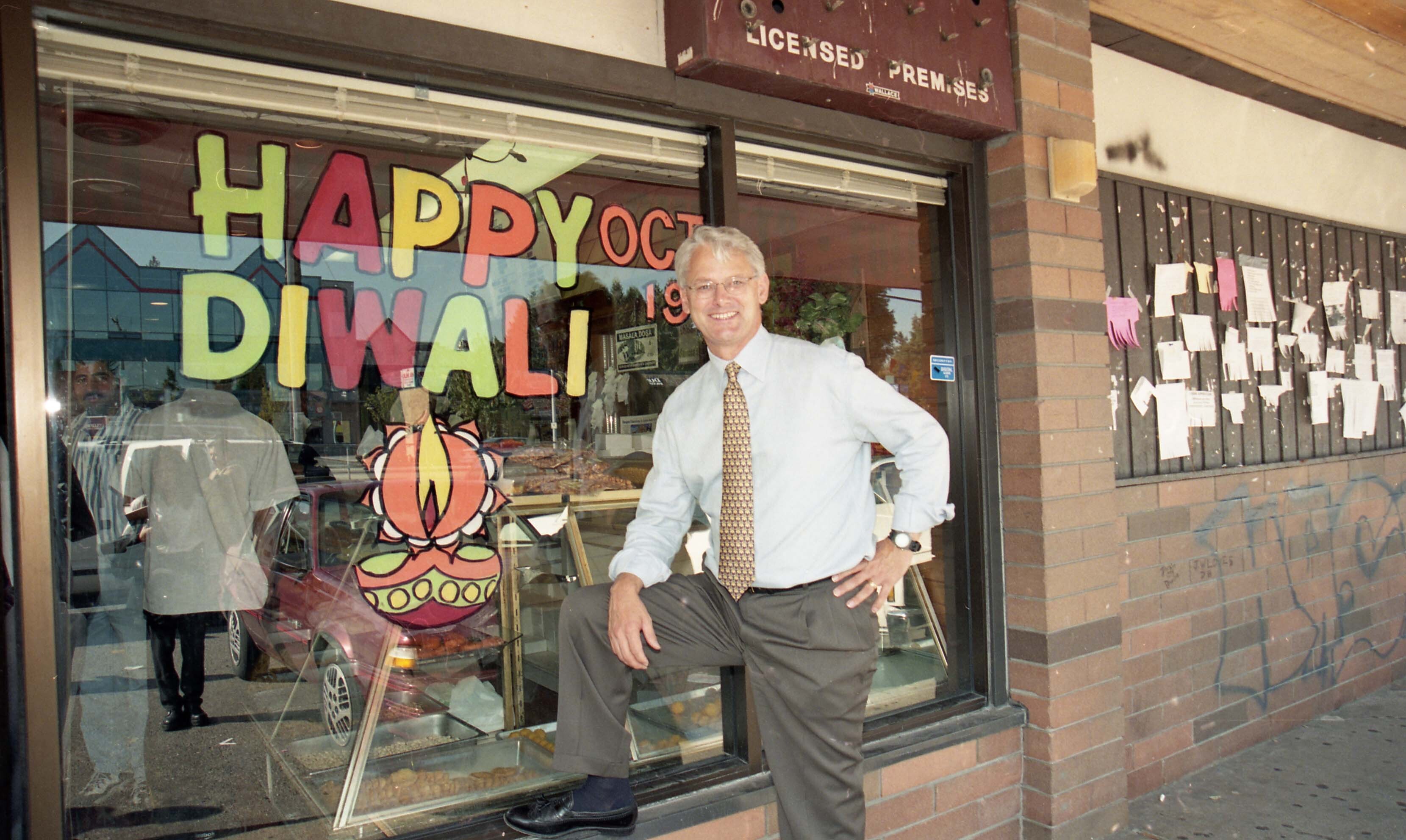
Photograph of Gordon Campbell at a storefront in Surrey, British Columbia (B.C.). Campbell was in Surrey for a community meet-and-greet pertaining to the B.C. Liberal Party.
Gordon Campbell was sworn in as British Columbia's 34th Premier on June 5, 2001. Campbell was elected leader of the B.C. Liberal Party in September 1993. He was elected to the B.C. Legislature in 1994 in a by-election to represent the riding of Vancouver-Quilchena and was re-elected in 1996 and 2001 for Vancouver-Point Grey. Campbell attended public school in Vancouver. After graduating he received a scholarship to Dartmouth College in New Hampshire. He worked his way through university in the dining hall and as the associate to the secretary of the college, and received his bachelor of arts degree. He later received a master's of business administration from Simon Fraser University. He was a secondary school teacher, basketball and track coach in Yola, Nigeria, working under the auspices of CUSO. He then became an assistant to former Vancouver mayor Art Phillips. From 1976 to 1981, he worked with Marathon Realty, where he became general manager of development. In 1981, he founded Citycore Development Corporation. In 1984, Campbell was elected to Vancouver City Council. From 1986 to 1993, he served as Mayor of Vancouver for three successive terms. From 2001 to 2011, Campbell served as Premier of British Columbia, and High Commissioner to the United Kingdom from 2011 to 2016. During his tenure as Premier, Campbell reduced taxes, restrained spending, revolutionized the measurement and management of regulations, and markedly improved the economy of the province. Among his recognitions and awards, Campbell received the Order of British Columbia as well as the Order of Canada. In 2014, he was presented an Honorary Doctorate of Laws from Thompson Rivers University. He was awarded both the Queen Elizabeth II Golden Jubilee Medal (2002) and the Diamond Jubilee Medal (2012) for his contributions to the province and country.
Gordon Campbell was sworn in as British Columbia's 34th Premier on June 5, 2001. Campbell was elected leader of the B.C. Liberal Party in September 1993. He was elected to the B.C. Legislature in 1994 in a by-election to represent the riding of Vancouver-Quilchena and was re-elected in 1996 and 2001 for Vancouver-Point Grey. Campbell attended public school in Vancouver. After graduating he received a scholarship to Dartmouth College in New Hampshire. He worked his way through university in the dining hall and as the associate to the secretary of the college, and received his bachelor of arts degree. He later received a master's of business administration from Simon Fraser University. He was a secondary school teacher, basketball and track coach in Yola, Nigeria, working under the auspices of CUSO. He then became an assistant to former Vancouver mayor Art Phillips. From 1976 to 1981, he worked with Marathon Realty, where he became general manager of development. In 1981, he founded Citycore Development Corporation. In 1984, Campbell was elected to Vancouver City Council. From 1986 to 1993, he served as Mayor of Vancouver for three successive terms. From 2001 to 2011, Campbell served as Premier of British Columbia, and High Commissioner to the United Kingdom from 2011 to 2016. During his tenure as Premier, Campbell reduced taxes, restrained spending, revolutionized the measurement and management of regulations, and markedly improved the economy of the province. Among his recognitions and awards, Campbell received the Order of British Columbia as well as the Order of Canada. In 2014, he was presented an Honorary Doctorate of Laws from Thompson Rivers University. He was awarded both the Queen Elizabeth II Golden Jubilee Medal (2002) and the Diamond Jubilee Medal (2012) for his contributions to the province and country.
Creator:
Description
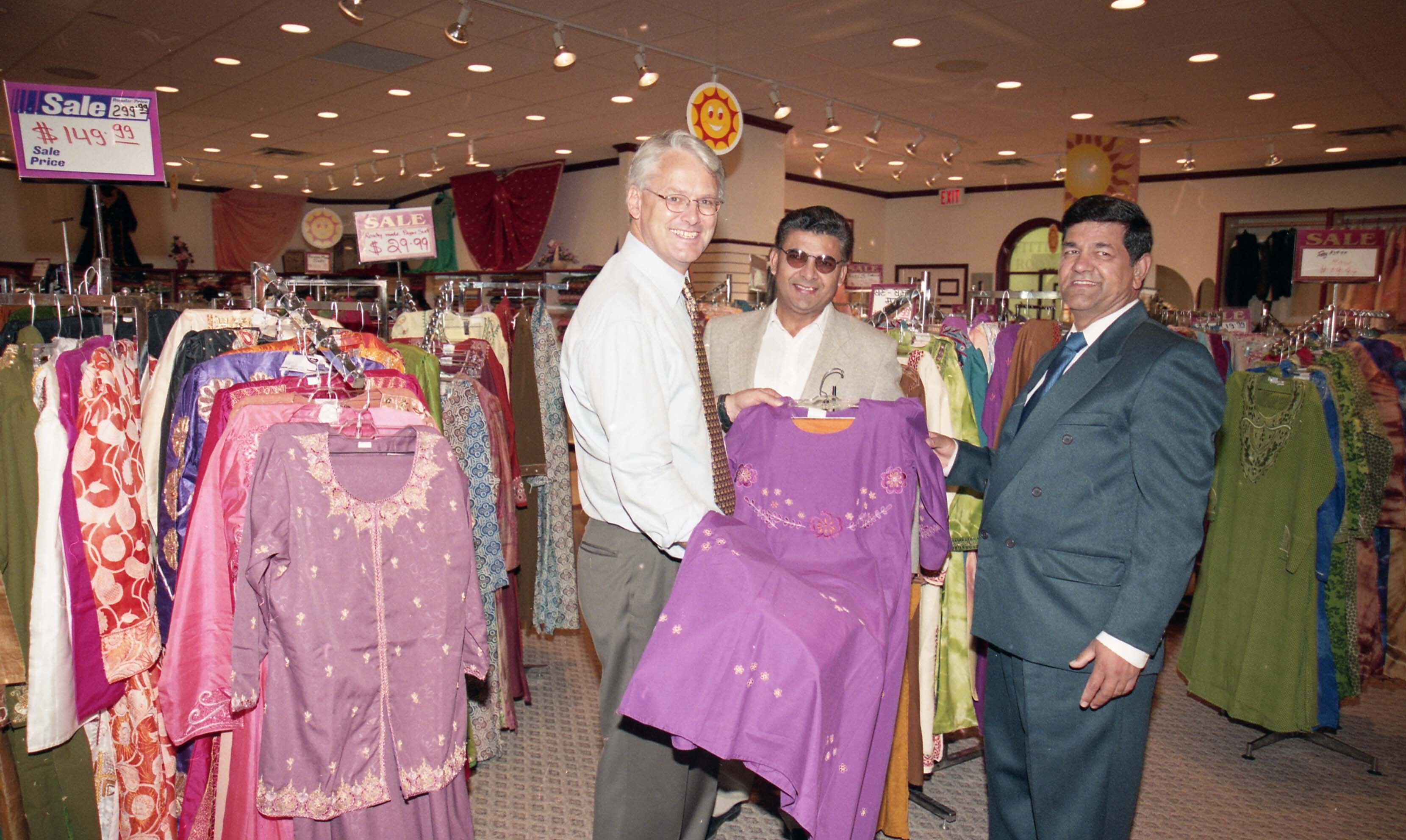
Photograph of Gordon Campbell, holding a South Asian garment, with unidentified individuals in a clothing store in Surrey, British Columbia (B.C.). Campbell was in Surrey for a community meet-and-greet pertaining to the B.C. Liberal Party.
Gordon Campbell was sworn in as British Columbia's 34th Premier on June 5, 2001. Campbell was elected leader of the B.C. Liberal Party in September 1993. He was elected to the B.C. Legislature in 1994 in a by-election to represent the riding of Vancouver-Quilchena and was re-elected in 1996 and 2001 for Vancouver-Point Grey. Campbell attended public school in Vancouver. After graduating he received a scholarship to Dartmouth College in New Hampshire. He worked his way through university in the dining hall and as the associate to the secretary of the college, and received his bachelor of arts degree. He later received a master's of business administration from Simon Fraser University. He was a secondary school teacher, basketball and track coach in Yola, Nigeria, working under the auspices of CUSO. He then became an assistant to former Vancouver mayor Art Phillips. From 1976 to 1981, he worked with Marathon Realty, where he became general manager of development. In 1981, he founded Citycore Development Corporation. In 1984, Campbell was elected to Vancouver City Council. From 1986 to 1993, he served as Mayor of Vancouver for three successive terms. From 2001 to 2011, Campbell served as Premier of British Columbia, and High Commissioner to the United Kingdom from 2011 to 2016. During his tenure as Premier, Campbell reduced taxes, restrained spending, revolutionized the measurement and management of regulations, and markedly improved the economy of the province. Among his recognitions and awards, Campbell received the Order of British Columbia as well as the Order of Canada. In 2014, he was presented an Honorary Doctorate of Laws from Thompson Rivers University. He was awarded both the Queen Elizabeth II Golden Jubilee Medal (2002) and the Diamond Jubilee Medal (2012) for his contributions to the province and country.
Gordon Campbell was sworn in as British Columbia's 34th Premier on June 5, 2001. Campbell was elected leader of the B.C. Liberal Party in September 1993. He was elected to the B.C. Legislature in 1994 in a by-election to represent the riding of Vancouver-Quilchena and was re-elected in 1996 and 2001 for Vancouver-Point Grey. Campbell attended public school in Vancouver. After graduating he received a scholarship to Dartmouth College in New Hampshire. He worked his way through university in the dining hall and as the associate to the secretary of the college, and received his bachelor of arts degree. He later received a master's of business administration from Simon Fraser University. He was a secondary school teacher, basketball and track coach in Yola, Nigeria, working under the auspices of CUSO. He then became an assistant to former Vancouver mayor Art Phillips. From 1976 to 1981, he worked with Marathon Realty, where he became general manager of development. In 1981, he founded Citycore Development Corporation. In 1984, Campbell was elected to Vancouver City Council. From 1986 to 1993, he served as Mayor of Vancouver for three successive terms. From 2001 to 2011, Campbell served as Premier of British Columbia, and High Commissioner to the United Kingdom from 2011 to 2016. During his tenure as Premier, Campbell reduced taxes, restrained spending, revolutionized the measurement and management of regulations, and markedly improved the economy of the province. Among his recognitions and awards, Campbell received the Order of British Columbia as well as the Order of Canada. In 2014, he was presented an Honorary Doctorate of Laws from Thompson Rivers University. He was awarded both the Queen Elizabeth II Golden Jubilee Medal (2002) and the Diamond Jubilee Medal (2012) for his contributions to the province and country.
Creator: Bodalia, Chandra
Description
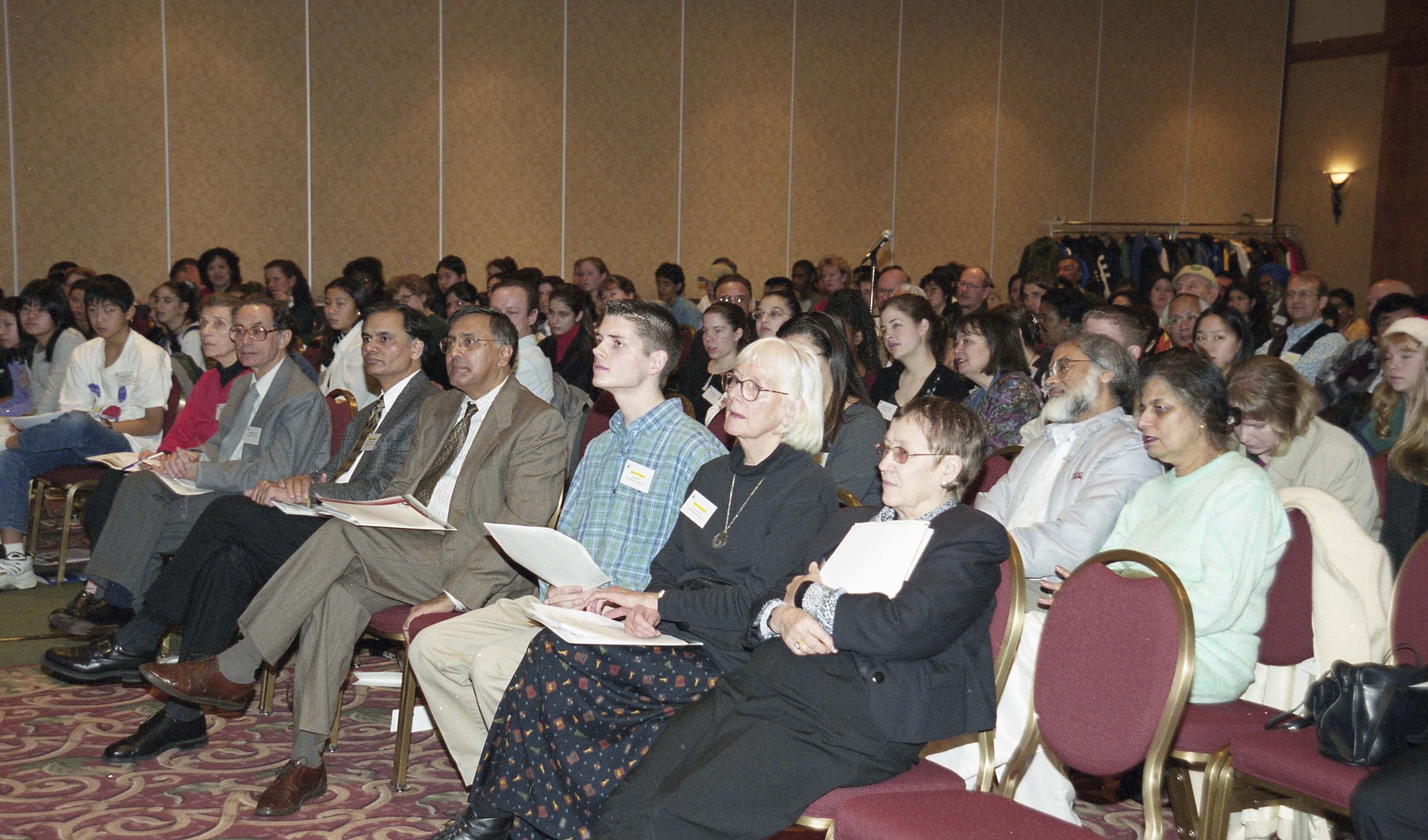
Photograph of a group of unidentified individuals at the Learning Together event in Vancouver, British Columbia (B.C.). The event was hosted at the Hilton Hotel by the B.C. Human Rights Commission. Ujjal Dosanjh can be seen sitting among the audience.
Ujjal Dosanjh is a Canadian lawyer, civil rights activist, and politician. Born in Panjab, India in 1947, Dosanjh emigrated to England at the age of 17 and came to Canada four years later, in 1968. He started off at a Vancouver sawmill, but when a back injury hindered his career at the mill, he enrolled at Langara College and completed a degree in political science at Simon Fraser University. He earned a law degree at the University of British Columbia and established a law practice in Vancouver in 1979. First elected as MLA for Vancouver-Kensington in 1991, Dosanjh twice served as Caucus Chair and also chaired the Select Standing Committee on Parliamentary Reform, Ethical Conduct, Standing Orders and Private Bills. Dosanjh was sworn in as British Columbia's 33rd Premier and Canada's first Indo-Canadian Premier on February 24, 2000, serving until 2001. He had previously served as Minister of Government Services and Minister Responsible for Multiculturalism, Human Rights, Sports and Immigration in 1995, and served as Attorney General from August 1995 to February 2000. He was also the leader of the provincial New Democratic Party (NDP) and later served as a Member of Parliament with the Liberal Party. A long time human rights activist, his past community involvements include: South Vancouver Neighbourhood House, MOSAIC, the B.C. Multicultural Society and the B.C. Civil Liberties Association. In 1977 he helped set up the first farm workers' legal information services while he was chair of the Labour Advocacy Research Association. Throughout his career, Dosanjh has been a strong advocate for social justice, healthcare, and public policy issues.
On August 4, 2017 Premier John Horgan along with Attorney General David Eby announced that British Columbia (B.C.) will re-establish the B.C. Human Rights Commission to address inequality and discrimination. In 2018, changes to B.C.'s Human Rights Code established the Office of the Human Rights Commissioner as an independent office of the Legislature and the Commissioner as the first independent Human Rights Commissioner in B.C.'s history. Under the Code, the Commissioner is responsible for promoting and protecting human rights in British Columbia. BC's Office of the Human Rights Commissioner exists to address the root causes of inequality, discrimination, and injustice in B.C. by shifting laws, policies, practices and cultures. They do this work through education, research, advocacy, inquiry and monitoring.
Ujjal Dosanjh is a Canadian lawyer, civil rights activist, and politician. Born in Panjab, India in 1947, Dosanjh emigrated to England at the age of 17 and came to Canada four years later, in 1968. He started off at a Vancouver sawmill, but when a back injury hindered his career at the mill, he enrolled at Langara College and completed a degree in political science at Simon Fraser University. He earned a law degree at the University of British Columbia and established a law practice in Vancouver in 1979. First elected as MLA for Vancouver-Kensington in 1991, Dosanjh twice served as Caucus Chair and also chaired the Select Standing Committee on Parliamentary Reform, Ethical Conduct, Standing Orders and Private Bills. Dosanjh was sworn in as British Columbia's 33rd Premier and Canada's first Indo-Canadian Premier on February 24, 2000, serving until 2001. He had previously served as Minister of Government Services and Minister Responsible for Multiculturalism, Human Rights, Sports and Immigration in 1995, and served as Attorney General from August 1995 to February 2000. He was also the leader of the provincial New Democratic Party (NDP) and later served as a Member of Parliament with the Liberal Party. A long time human rights activist, his past community involvements include: South Vancouver Neighbourhood House, MOSAIC, the B.C. Multicultural Society and the B.C. Civil Liberties Association. In 1977 he helped set up the first farm workers' legal information services while he was chair of the Labour Advocacy Research Association. Throughout his career, Dosanjh has been a strong advocate for social justice, healthcare, and public policy issues.
On August 4, 2017 Premier John Horgan along with Attorney General David Eby announced that British Columbia (B.C.) will re-establish the B.C. Human Rights Commission to address inequality and discrimination. In 2018, changes to B.C.'s Human Rights Code established the Office of the Human Rights Commissioner as an independent office of the Legislature and the Commissioner as the first independent Human Rights Commissioner in B.C.'s history. Under the Code, the Commissioner is responsible for promoting and protecting human rights in British Columbia. BC's Office of the Human Rights Commissioner exists to address the root causes of inequality, discrimination, and injustice in B.C. by shifting laws, policies, practices and cultures. They do this work through education, research, advocacy, inquiry and monitoring.
Creator: Bodalia, Chandra
Description
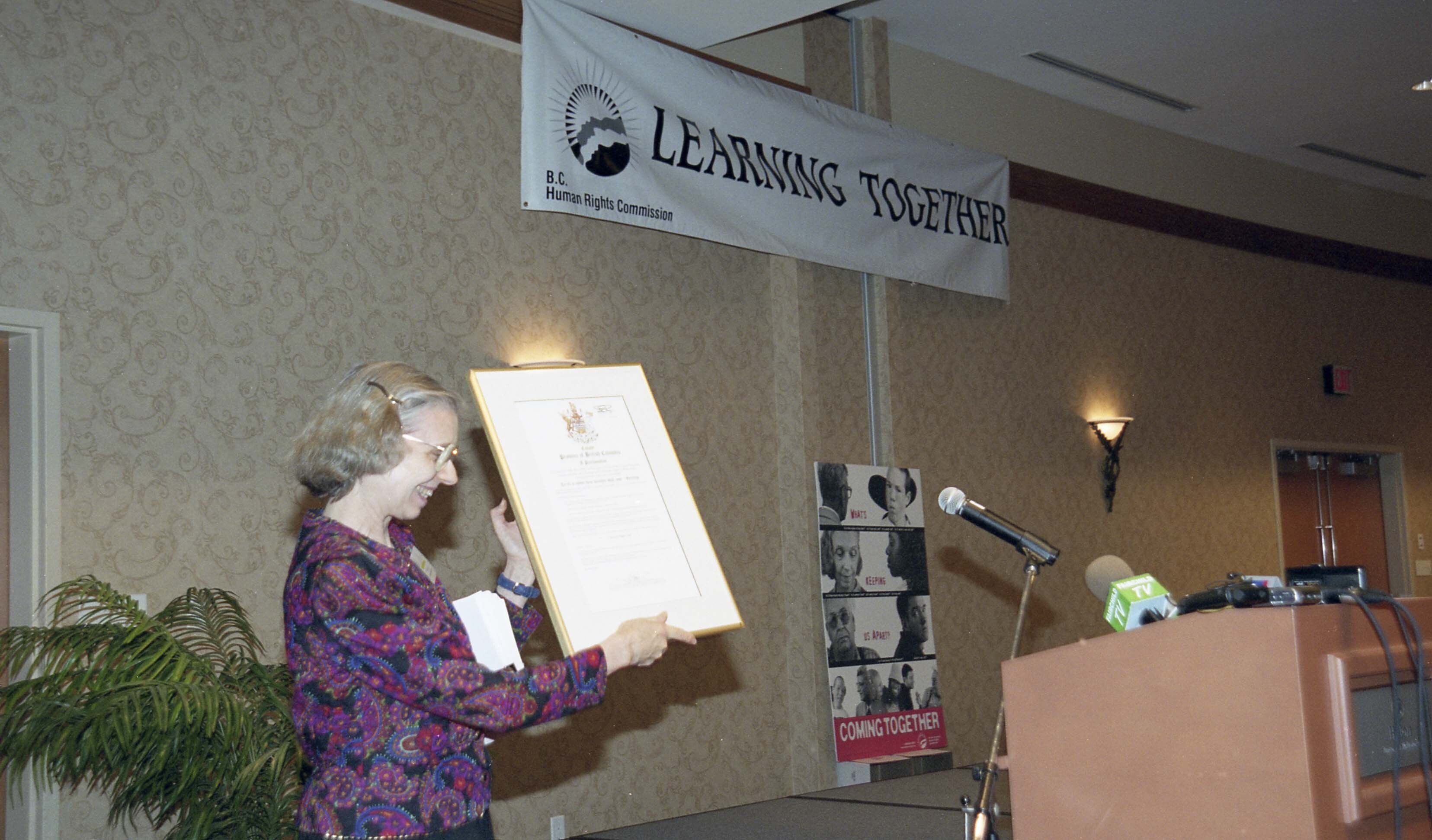
Photograph of an unidentified individual holding a framed document[?] at the Learning Together event in Vancouver, British Columbia (B.C.). The event was hosted at the Hilton Hotel by the B.C. Human Rights Commission.
On August 4, 2017 Premier John Horgan along with Attorney General David Eby announced that British Columbia (B.C.) will re-establish the B.C. Human Rights Commission to address inequality and discrimination. In 2018, changes to B.C.'s Human Rights Code established the Office of the Human Rights Commissioner as an independent office of the Legislature and the Commissioner as the first independent Human Rights Commissioner in B.C.'s history. Under the Code, the Commissioner is responsible for promoting and protecting human rights in British Columbia. BC's Office of the Human Rights Commissioner exists to address the root causes of inequality, discrimination, and injustice in B.C. by shifting laws, policies, practices and cultures. They do this work through education, research, advocacy, inquiry and monitoring.
On August 4, 2017 Premier John Horgan along with Attorney General David Eby announced that British Columbia (B.C.) will re-establish the B.C. Human Rights Commission to address inequality and discrimination. In 2018, changes to B.C.'s Human Rights Code established the Office of the Human Rights Commissioner as an independent office of the Legislature and the Commissioner as the first independent Human Rights Commissioner in B.C.'s history. Under the Code, the Commissioner is responsible for promoting and protecting human rights in British Columbia. BC's Office of the Human Rights Commissioner exists to address the root causes of inequality, discrimination, and injustice in B.C. by shifting laws, policies, practices and cultures. They do this work through education, research, advocacy, inquiry and monitoring.
Creator: Bodalia, Chandra
Description
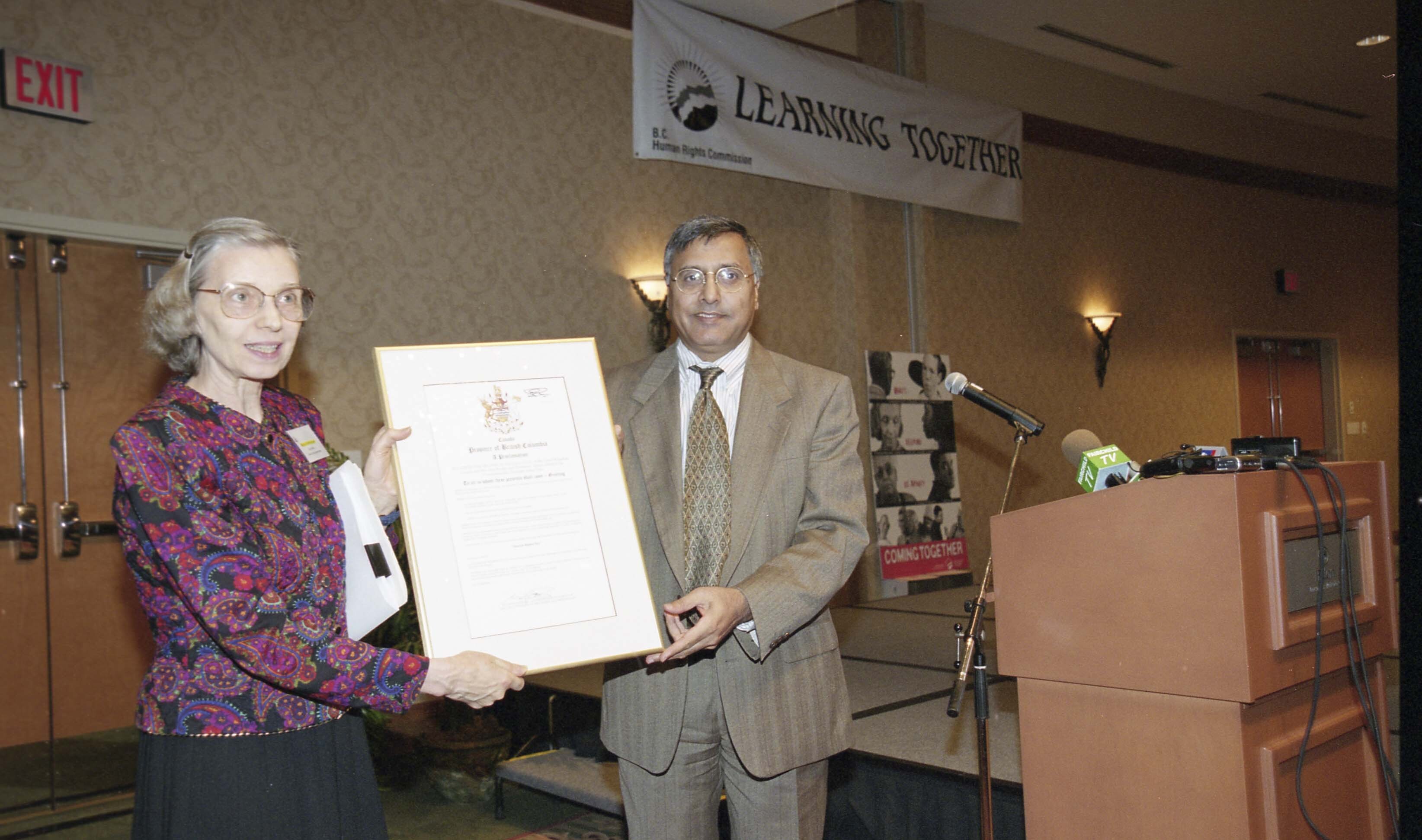
Photograph of Ujjal Dosanjh with an unidentified individual, holding a framed document[?], at the Learning Together event in Vancouver, British Columbia (B.C.). The event was hosted at the Hilton Hotel by the B.C. Human Rights Commission.
Ujjal Dosanjh is a Canadian lawyer, civil rights activist, and politician. Born in Panjab, India in 1947, Dosanjh emigrated to England at the age of 17 and came to Canada four years later, in 1968. He started off at a Vancouver sawmill, but when a back injury hindered his career at the mill, he enrolled at Langara College and completed a degree in political science at Simon Fraser University. He earned a law degree at the University of British Columbia and established a law practice in Vancouver in 1979. First elected as MLA for Vancouver-Kensington in 1991, Dosanjh twice served as Caucus Chair and also chaired the Select Standing Committee on Parliamentary Reform, Ethical Conduct, Standing Orders and Private Bills. Dosanjh was sworn in as British Columbia's 33rd Premier and Canada's first Indo-Canadian Premier on February 24, 2000, serving until 2001. He had previously served as Minister of Government Services and Minister Responsible for Multiculturalism, Human Rights, Sports and Immigration in 1995, and served as Attorney General from August 1995 to February 2000. He was also the leader of the provincial New Democratic Party (NDP) and later served as a Member of Parliament with the Liberal Party. A long time human rights activist, his past community involvements include: South Vancouver Neighbourhood House, MOSAIC, the B.C. Multicultural Society and the B.C. Civil Liberties Association. In 1977 he helped set up the first farm workers' legal information services while he was chair of the Labour Advocacy Research Association. Throughout his career, Dosanjh has been a strong advocate for social justice, healthcare, and public policy issues.
On August 4, 2017 Premier John Horgan along with Attorney General David Eby announced that British Columbia (B.C.) will re-establish the B.C. Human Rights Commission to address inequality and discrimination. In 2018, changes to B.C.'s Human Rights Code established the Office of the Human Rights Commissioner as an independent office of the Legislature and the Commissioner as the first independent Human Rights Commissioner in B.C.'s history. Under the Code, the Commissioner is responsible for promoting and protecting human rights in British Columbia. BC's Office of the Human Rights Commissioner exists to address the root causes of inequality, discrimination, and injustice in B.C. by shifting laws, policies, practices and cultures. They do this work through education, research, advocacy, inquiry and monitoring.
Ujjal Dosanjh is a Canadian lawyer, civil rights activist, and politician. Born in Panjab, India in 1947, Dosanjh emigrated to England at the age of 17 and came to Canada four years later, in 1968. He started off at a Vancouver sawmill, but when a back injury hindered his career at the mill, he enrolled at Langara College and completed a degree in political science at Simon Fraser University. He earned a law degree at the University of British Columbia and established a law practice in Vancouver in 1979. First elected as MLA for Vancouver-Kensington in 1991, Dosanjh twice served as Caucus Chair and also chaired the Select Standing Committee on Parliamentary Reform, Ethical Conduct, Standing Orders and Private Bills. Dosanjh was sworn in as British Columbia's 33rd Premier and Canada's first Indo-Canadian Premier on February 24, 2000, serving until 2001. He had previously served as Minister of Government Services and Minister Responsible for Multiculturalism, Human Rights, Sports and Immigration in 1995, and served as Attorney General from August 1995 to February 2000. He was also the leader of the provincial New Democratic Party (NDP) and later served as a Member of Parliament with the Liberal Party. A long time human rights activist, his past community involvements include: South Vancouver Neighbourhood House, MOSAIC, the B.C. Multicultural Society and the B.C. Civil Liberties Association. In 1977 he helped set up the first farm workers' legal information services while he was chair of the Labour Advocacy Research Association. Throughout his career, Dosanjh has been a strong advocate for social justice, healthcare, and public policy issues.
On August 4, 2017 Premier John Horgan along with Attorney General David Eby announced that British Columbia (B.C.) will re-establish the B.C. Human Rights Commission to address inequality and discrimination. In 2018, changes to B.C.'s Human Rights Code established the Office of the Human Rights Commissioner as an independent office of the Legislature and the Commissioner as the first independent Human Rights Commissioner in B.C.'s history. Under the Code, the Commissioner is responsible for promoting and protecting human rights in British Columbia. BC's Office of the Human Rights Commissioner exists to address the root causes of inequality, discrimination, and injustice in B.C. by shifting laws, policies, practices and cultures. They do this work through education, research, advocacy, inquiry and monitoring.
Creator: Bodalia, Chandra
Description
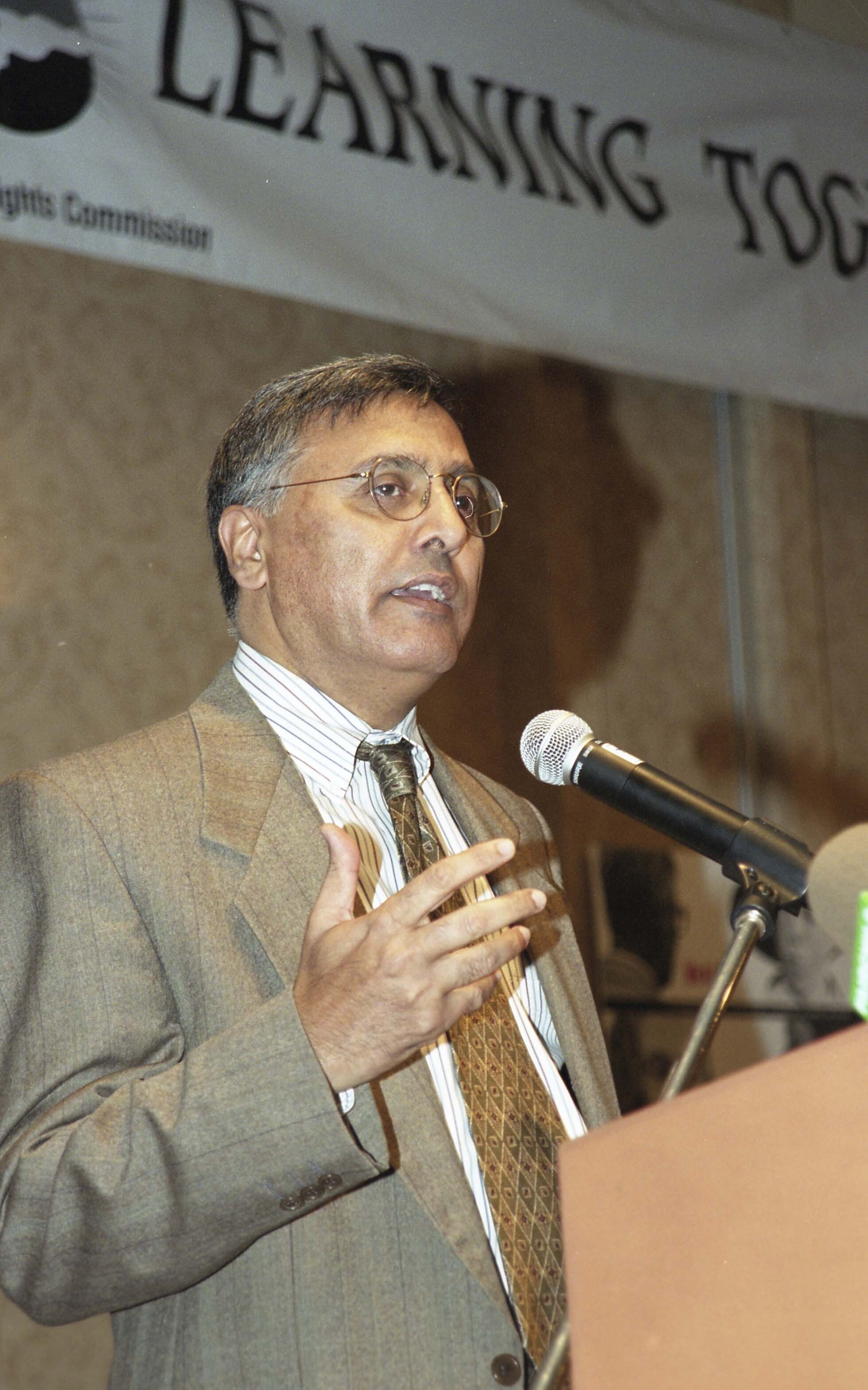
Photograph of Ujjal Dosanjh addressing the audience at the Learning Together event in Vancouver, British Columbia (B.C.). The event was hosted at the Hilton Hotel by the B.C. Human Rights Commission.
Ujjal Dosanjh is a Canadian lawyer, civil rights activist, and politician. Born in Panjab, India in 1947, Dosanjh emigrated to England at the age of 17 and came to Canada four years later, in 1968. He started off at a Vancouver sawmill, but when a back injury hindered his career at the mill, he enrolled at Langara College and completed a degree in political science at Simon Fraser University. He earned a law degree at the University of British Columbia and established a law practice in Vancouver in 1979. First elected as MLA for Vancouver-Kensington in 1991, Dosanjh twice served as Caucus Chair and also chaired the Select Standing Committee on Parliamentary Reform, Ethical Conduct, Standing Orders and Private Bills. Dosanjh was sworn in as British Columbia's 33rd Premier and Canada's first Indo-Canadian Premier on February 24, 2000, serving until 2001. He had previously served as Minister of Government Services and Minister Responsible for Multiculturalism, Human Rights, Sports and Immigration in 1995, and served as Attorney General from August 1995 to February 2000. He was also the leader of the provincial New Democratic Party (NDP) and later served as a Member of Parliament with the Liberal Party. A long time human rights activist, his past community involvements include: South Vancouver Neighbourhood House, MOSAIC, the B.C. Multicultural Society and the B.C. Civil Liberties Association. In 1977 he helped set up the first farm workers' legal information services while he was chair of the Labour Advocacy Research Association. Throughout his career, Dosanjh has been a strong advocate for social justice, healthcare, and public policy issues.
On August 4, 2017 Premier John Horgan along with Attorney General David Eby announced that British Columbia (B.C.) will re-establish the B.C. Human Rights Commission to address inequality and discrimination. In 2018, changes to B.C.'s Human Rights Code established the Office of the Human Rights Commissioner as an independent office of the Legislature and the Commissioner as the first independent Human Rights Commissioner in B.C.'s history. Under the Code, the Commissioner is responsible for promoting and protecting human rights in British Columbia. BC's Office of the Human Rights Commissioner exists to address the root causes of inequality, discrimination, and injustice in B.C. by shifting laws, policies, practices and cultures. They do this work through education, research, advocacy, inquiry and monitoring.
Ujjal Dosanjh is a Canadian lawyer, civil rights activist, and politician. Born in Panjab, India in 1947, Dosanjh emigrated to England at the age of 17 and came to Canada four years later, in 1968. He started off at a Vancouver sawmill, but when a back injury hindered his career at the mill, he enrolled at Langara College and completed a degree in political science at Simon Fraser University. He earned a law degree at the University of British Columbia and established a law practice in Vancouver in 1979. First elected as MLA for Vancouver-Kensington in 1991, Dosanjh twice served as Caucus Chair and also chaired the Select Standing Committee on Parliamentary Reform, Ethical Conduct, Standing Orders and Private Bills. Dosanjh was sworn in as British Columbia's 33rd Premier and Canada's first Indo-Canadian Premier on February 24, 2000, serving until 2001. He had previously served as Minister of Government Services and Minister Responsible for Multiculturalism, Human Rights, Sports and Immigration in 1995, and served as Attorney General from August 1995 to February 2000. He was also the leader of the provincial New Democratic Party (NDP) and later served as a Member of Parliament with the Liberal Party. A long time human rights activist, his past community involvements include: South Vancouver Neighbourhood House, MOSAIC, the B.C. Multicultural Society and the B.C. Civil Liberties Association. In 1977 he helped set up the first farm workers' legal information services while he was chair of the Labour Advocacy Research Association. Throughout his career, Dosanjh has been a strong advocate for social justice, healthcare, and public policy issues.
On August 4, 2017 Premier John Horgan along with Attorney General David Eby announced that British Columbia (B.C.) will re-establish the B.C. Human Rights Commission to address inequality and discrimination. In 2018, changes to B.C.'s Human Rights Code established the Office of the Human Rights Commissioner as an independent office of the Legislature and the Commissioner as the first independent Human Rights Commissioner in B.C.'s history. Under the Code, the Commissioner is responsible for promoting and protecting human rights in British Columbia. BC's Office of the Human Rights Commissioner exists to address the root causes of inequality, discrimination, and injustice in B.C. by shifting laws, policies, practices and cultures. They do this work through education, research, advocacy, inquiry and monitoring.
Creator: Bodalia, Chandra
Description
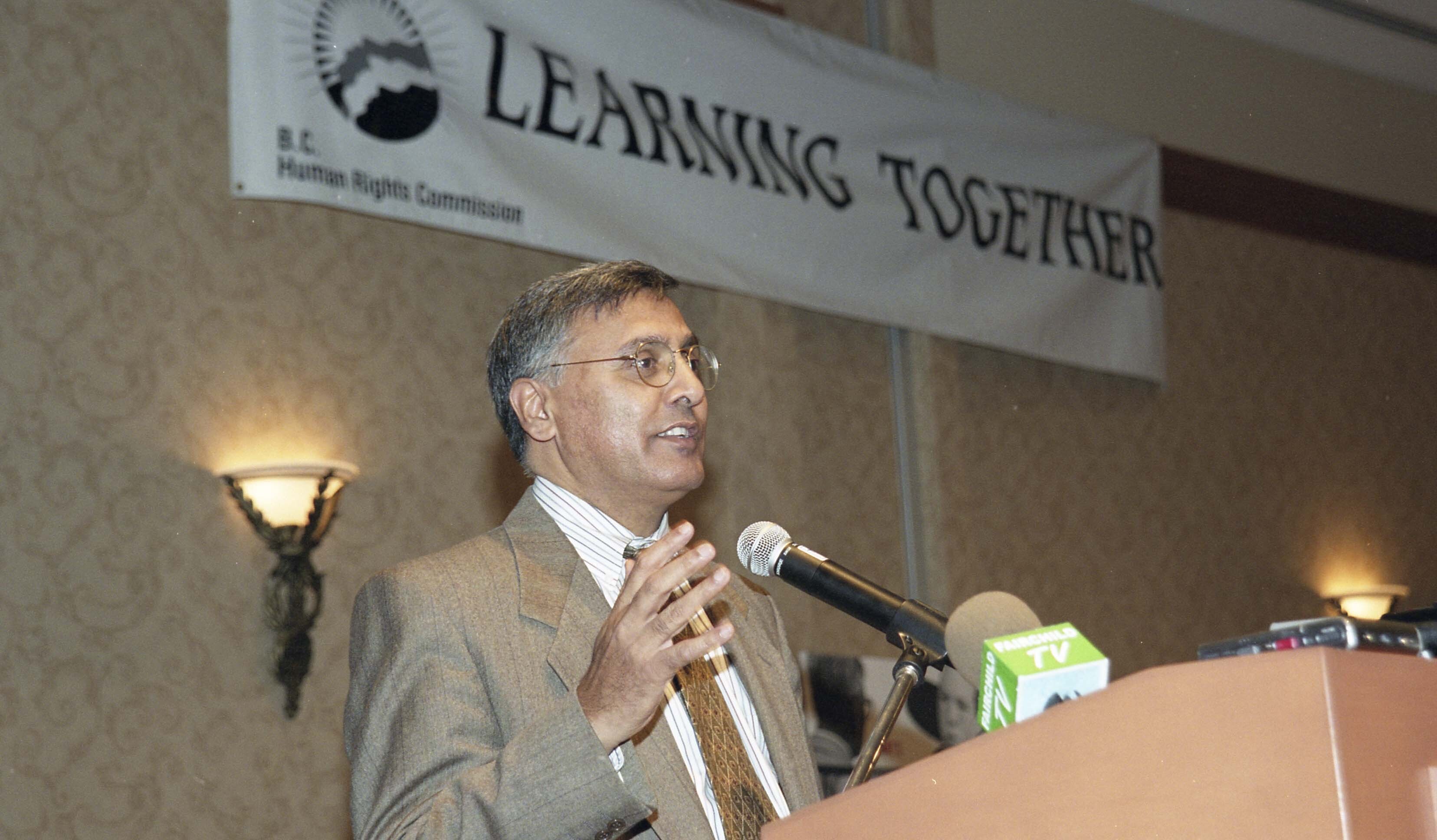
Photograph of Ujjal Dosanjh addressing the audience at the Learning Together event in Vancouver, British Columbia (B.C.). The event was hosted at the Hilton Hotel by the B.C. Human Rights Commission.
Ujjal Dosanjh is a Canadian lawyer, civil rights activist, and politician. Born in Panjab, India in 1947, Dosanjh emigrated to England at the age of 17 and came to Canada four years later, in 1968. He started off at a Vancouver sawmill, but when a back injury hindered his career at the mill, he enrolled at Langara College and completed a degree in political science at Simon Fraser University. He earned a law degree at the University of British Columbia and established a law practice in Vancouver in 1979. First elected as MLA for Vancouver-Kensington in 1991, Dosanjh twice served as Caucus Chair and also chaired the Select Standing Committee on Parliamentary Reform, Ethical Conduct, Standing Orders and Private Bills. Dosanjh was sworn in as British Columbia's 33rd Premier and Canada's first Indo-Canadian Premier on February 24, 2000, serving until 2001. He had previously served as Minister of Government Services and Minister Responsible for Multiculturalism, Human Rights, Sports and Immigration in 1995, and served as Attorney General from August 1995 to February 2000. He was also the leader of the provincial New Democratic Party (NDP) and later served as a Member of Parliament with the Liberal Party. A long time human rights activist, his past community involvements include: South Vancouver Neighbourhood House, MOSAIC, the B.C. Multicultural Society and the B.C. Civil Liberties Association. In 1977 he helped set up the first farm workers' legal information services while he was chair of the Labour Advocacy Research Association. Throughout his career, Dosanjh has been a strong advocate for social justice, healthcare, and public policy issues.
On August 4, 2017 Premier John Horgan along with Attorney General David Eby announced that British Columbia (B.C.) will re-establish the B.C. Human Rights Commission to address inequality and discrimination. In 2018, changes to B.C.'s Human Rights Code established the Office of the Human Rights Commissioner as an independent office of the Legislature and the Commissioner as the first independent Human Rights Commissioner in B.C.'s history. Under the Code, the Commissioner is responsible for promoting and protecting human rights in British Columbia. BC's Office of the Human Rights Commissioner exists to address the root causes of inequality, discrimination, and injustice in B.C. by shifting laws, policies, practices and cultures. They do this work through education, research, advocacy, inquiry and monitoring.
Ujjal Dosanjh is a Canadian lawyer, civil rights activist, and politician. Born in Panjab, India in 1947, Dosanjh emigrated to England at the age of 17 and came to Canada four years later, in 1968. He started off at a Vancouver sawmill, but when a back injury hindered his career at the mill, he enrolled at Langara College and completed a degree in political science at Simon Fraser University. He earned a law degree at the University of British Columbia and established a law practice in Vancouver in 1979. First elected as MLA for Vancouver-Kensington in 1991, Dosanjh twice served as Caucus Chair and also chaired the Select Standing Committee on Parliamentary Reform, Ethical Conduct, Standing Orders and Private Bills. Dosanjh was sworn in as British Columbia's 33rd Premier and Canada's first Indo-Canadian Premier on February 24, 2000, serving until 2001. He had previously served as Minister of Government Services and Minister Responsible for Multiculturalism, Human Rights, Sports and Immigration in 1995, and served as Attorney General from August 1995 to February 2000. He was also the leader of the provincial New Democratic Party (NDP) and later served as a Member of Parliament with the Liberal Party. A long time human rights activist, his past community involvements include: South Vancouver Neighbourhood House, MOSAIC, the B.C. Multicultural Society and the B.C. Civil Liberties Association. In 1977 he helped set up the first farm workers' legal information services while he was chair of the Labour Advocacy Research Association. Throughout his career, Dosanjh has been a strong advocate for social justice, healthcare, and public policy issues.
On August 4, 2017 Premier John Horgan along with Attorney General David Eby announced that British Columbia (B.C.) will re-establish the B.C. Human Rights Commission to address inequality and discrimination. In 2018, changes to B.C.'s Human Rights Code established the Office of the Human Rights Commissioner as an independent office of the Legislature and the Commissioner as the first independent Human Rights Commissioner in B.C.'s history. Under the Code, the Commissioner is responsible for promoting and protecting human rights in British Columbia. BC's Office of the Human Rights Commissioner exists to address the root causes of inequality, discrimination, and injustice in B.C. by shifting laws, policies, practices and cultures. They do this work through education, research, advocacy, inquiry and monitoring.