
Fund raising
Authority Sources
Creator: Bodalia, Chandra
Description
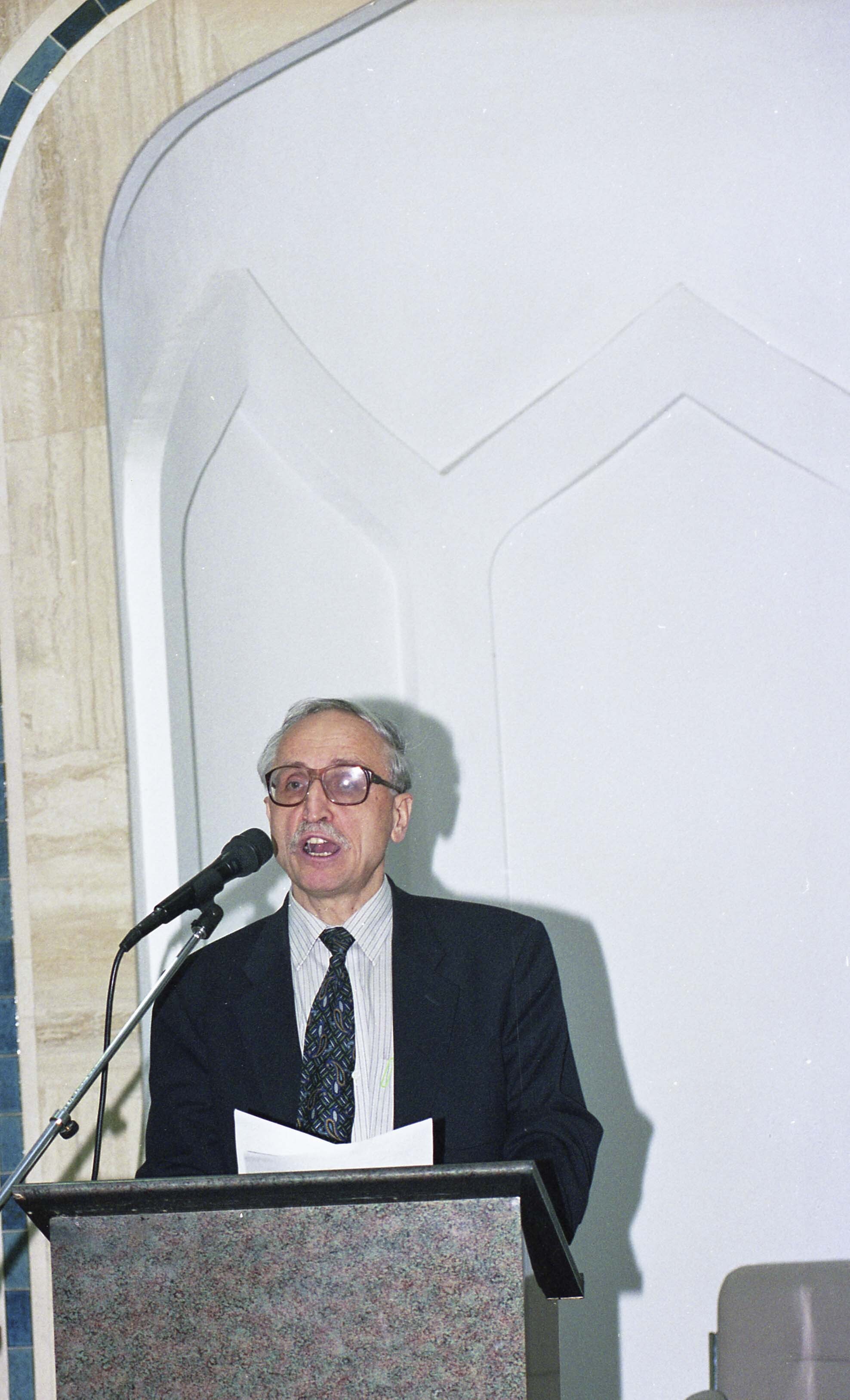
Photograph of an unidentified man speaking at a fund raising dinner for refugees fleeing Kosovo, hosted by the British Columbia Muslim Association (BCMA) in Richmond, B.C.
The Kosovo War was an armed conflict between the the Muslim Albanians and the Serbians in the province Kosovo of Serbia, that lasted from 28 February 1998 until 11 June 1999. The Kosovo Liberation Army (KLA) emerged in 1996 in response to the discrimination against the ethnic Albanians, which was met with a genocidal campaign by the Yugaslav and Serbian forces. Hundreds of thousands ethnic Albanians were displaced as the North Atlantic Treaty Organization (NATO) initiated a bombing campaign against the Serbian military, in order to defend the Muslim Albanians in Kosovo.
The British Columbia Muslim Association (BCMA) is a non-profit Sunni Muslim organization incorporated under the Societies Act on November 17, 1966, corresponding to 4 Sha-ban 1386. The BCMA owns and operates several Islamic centers all across British Columbia, The BCMA operates the B.C. Muslim School (BCMS) Richmond and Surrey Muslim School encompassing a preschool as well as an elementary and secondary school. Other community services include Hajj, dawah work, dealing with media and issues affecting Muslims, marriage and counseling services, youth services and halal certification program. The BCMA is dedicated to developing and maintaining religious, cultural and educational facilities for the Muslim community and future generations.
The Kosovo War was an armed conflict between the the Muslim Albanians and the Serbians in the province Kosovo of Serbia, that lasted from 28 February 1998 until 11 June 1999. The Kosovo Liberation Army (KLA) emerged in 1996 in response to the discrimination against the ethnic Albanians, which was met with a genocidal campaign by the Yugaslav and Serbian forces. Hundreds of thousands ethnic Albanians were displaced as the North Atlantic Treaty Organization (NATO) initiated a bombing campaign against the Serbian military, in order to defend the Muslim Albanians in Kosovo.
The British Columbia Muslim Association (BCMA) is a non-profit Sunni Muslim organization incorporated under the Societies Act on November 17, 1966, corresponding to 4 Sha-ban 1386. The BCMA owns and operates several Islamic centers all across British Columbia, The BCMA operates the B.C. Muslim School (BCMS) Richmond and Surrey Muslim School encompassing a preschool as well as an elementary and secondary school. Other community services include Hajj, dawah work, dealing with media and issues affecting Muslims, marriage and counseling services, youth services and halal certification program. The BCMA is dedicated to developing and maintaining religious, cultural and educational facilities for the Muslim community and future generations.
Member of
Creator: Bodalia, Chandra
Description
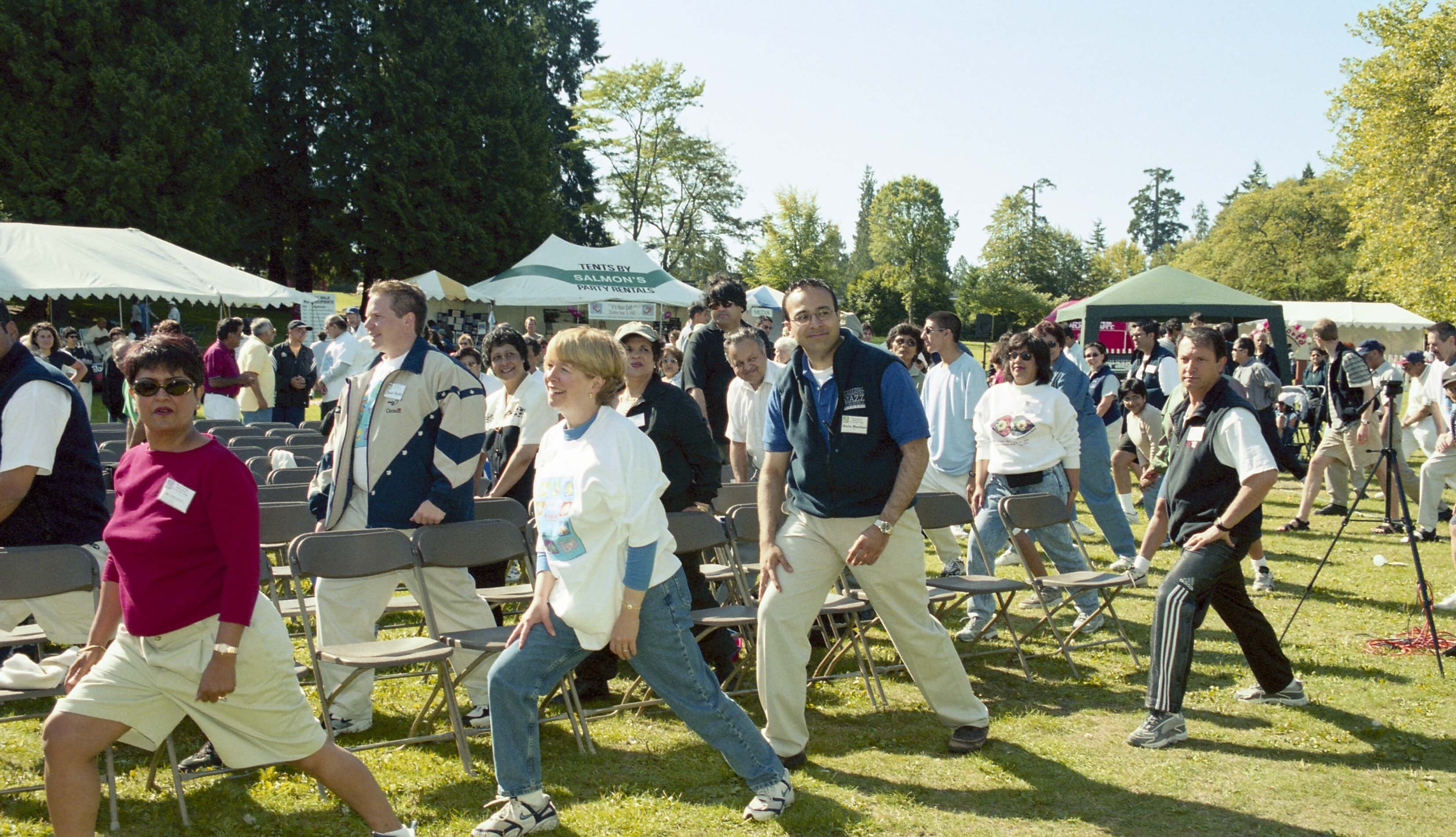
Photograph of a group of unidentified individuals, part of the audience, performing an activity at the 10th Annual Ismaili Walk for the Crisis Center of Greater Vancouver, held at Stanley Park in Vancouver, British Columbia.
The Ismaili Walk is an annual community fundraising event organized by the Ismaili Muslim Community of British Columbia to improve the quality of life for British Columbians. Since its inception, the event has raised over $4.25 million in support of local community organizations including hospitals, food banks, the Vancouver Public Library, Simon Fraser University, Habitat for Humanity, the Crisis Center of Greater Vancouver, United Way, the Women's health Research Institute (WHRI) at BC Women's Hospital and Health Centre Foundation, the Heart and Stroke Foundation, and the YWCA Metro Vancouver's Cause We Care House.
In 1979, the first Ismaili congregation was established in Burnaby, Canada, to meet the religious and social needs of the Ismaili community. Since its opening, the Ismaili Centre has hosted a wide range of events, opening its doors to government officials, prominent academics, leaders of many communities, and the wider public. The Centre has also provided a dignified space for the Greater Vancouver Regional District.
The Ismaili Walk is an annual community fundraising event organized by the Ismaili Muslim Community of British Columbia to improve the quality of life for British Columbians. Since its inception, the event has raised over $4.25 million in support of local community organizations including hospitals, food banks, the Vancouver Public Library, Simon Fraser University, Habitat for Humanity, the Crisis Center of Greater Vancouver, United Way, the Women's health Research Institute (WHRI) at BC Women's Hospital and Health Centre Foundation, the Heart and Stroke Foundation, and the YWCA Metro Vancouver's Cause We Care House.
In 1979, the first Ismaili congregation was established in Burnaby, Canada, to meet the religious and social needs of the Ismaili community. Since its opening, the Ismaili Centre has hosted a wide range of events, opening its doors to government officials, prominent academics, leaders of many communities, and the wider public. The Centre has also provided a dignified space for the Greater Vancouver Regional District.
Member of
Creator: Bodalia, Chandra
Description
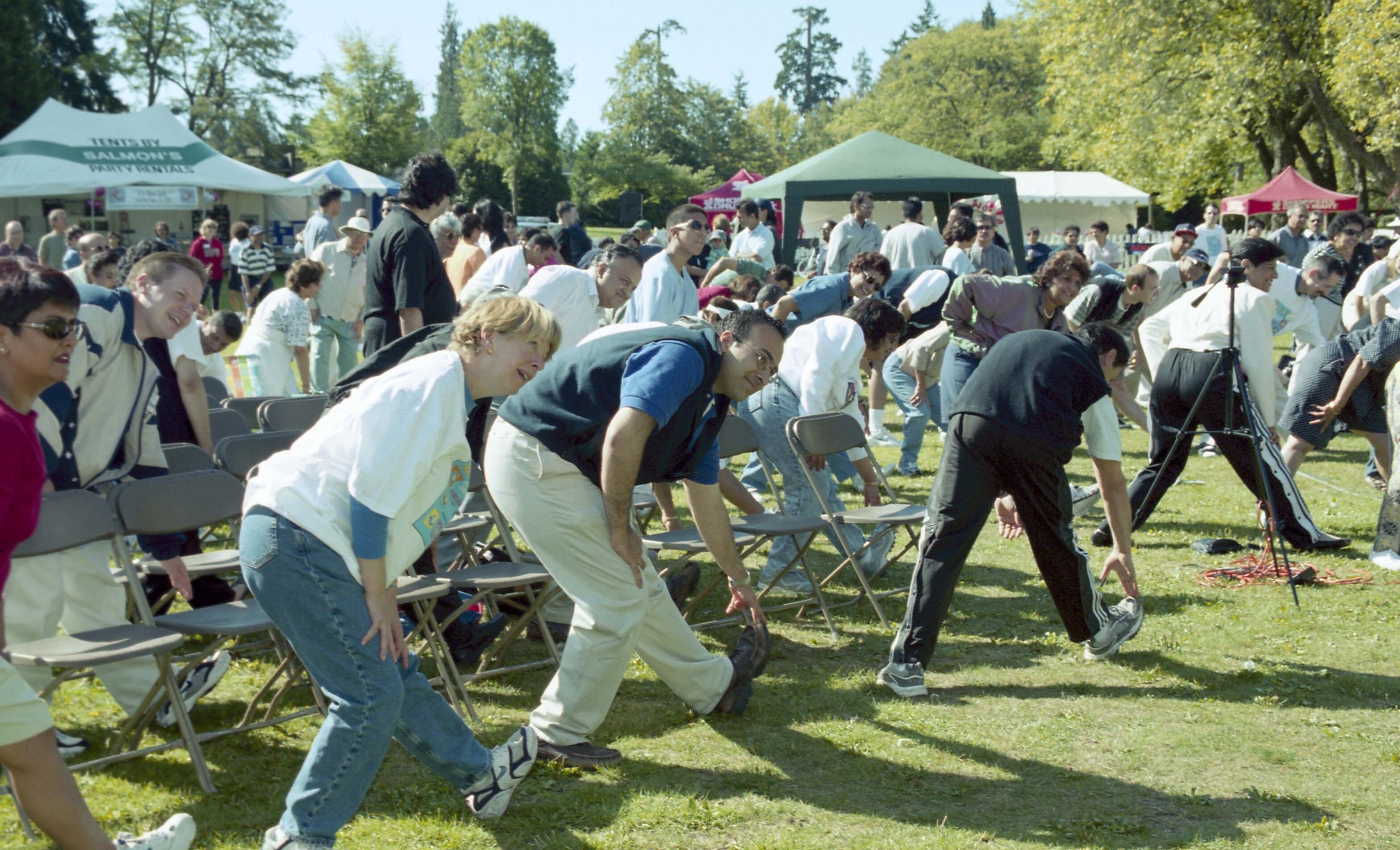
Photograph of a group of unidentified individuals, part of the audience, performing an activity at the 10th Annual Ismaili Walk for the Crisis Center of Greater Vancouver, held at Stanley Park in Vancouver, British Columbia.
The Ismaili Walk is an annual community fundraising event organized by the Ismaili Muslim Community of British Columbia to improve the quality of life for British Columbians. Since its inception, the event has raised over $4.25 million in support of local community organizations including hospitals, food banks, the Vancouver Public Library, Simon Fraser University, Habitat for Humanity, the Crisis Center of Greater Vancouver, United Way, the Women's health Research Institute (WHRI) at BC Women's Hospital and Health Centre Foundation, the Heart and Stroke Foundation, and the YWCA Metro Vancouver's Cause We Care House.
In 1979, the first Ismaili congregation was established in Burnaby, Canada, to meet the religious and social needs of the Ismaili community. Since its opening, the Ismaili Centre has hosted a wide range of events, opening its doors to government officials, prominent academics, leaders of many communities, and the wider public. The Centre has also provided a dignified space for the Greater Vancouver Regional District.
The Ismaili Walk is an annual community fundraising event organized by the Ismaili Muslim Community of British Columbia to improve the quality of life for British Columbians. Since its inception, the event has raised over $4.25 million in support of local community organizations including hospitals, food banks, the Vancouver Public Library, Simon Fraser University, Habitat for Humanity, the Crisis Center of Greater Vancouver, United Way, the Women's health Research Institute (WHRI) at BC Women's Hospital and Health Centre Foundation, the Heart and Stroke Foundation, and the YWCA Metro Vancouver's Cause We Care House.
In 1979, the first Ismaili congregation was established in Burnaby, Canada, to meet the religious and social needs of the Ismaili community. Since its opening, the Ismaili Centre has hosted a wide range of events, opening its doors to government officials, prominent academics, leaders of many communities, and the wider public. The Centre has also provided a dignified space for the Greater Vancouver Regional District.
Member of
Creator: Bodalia, Chandra
Description
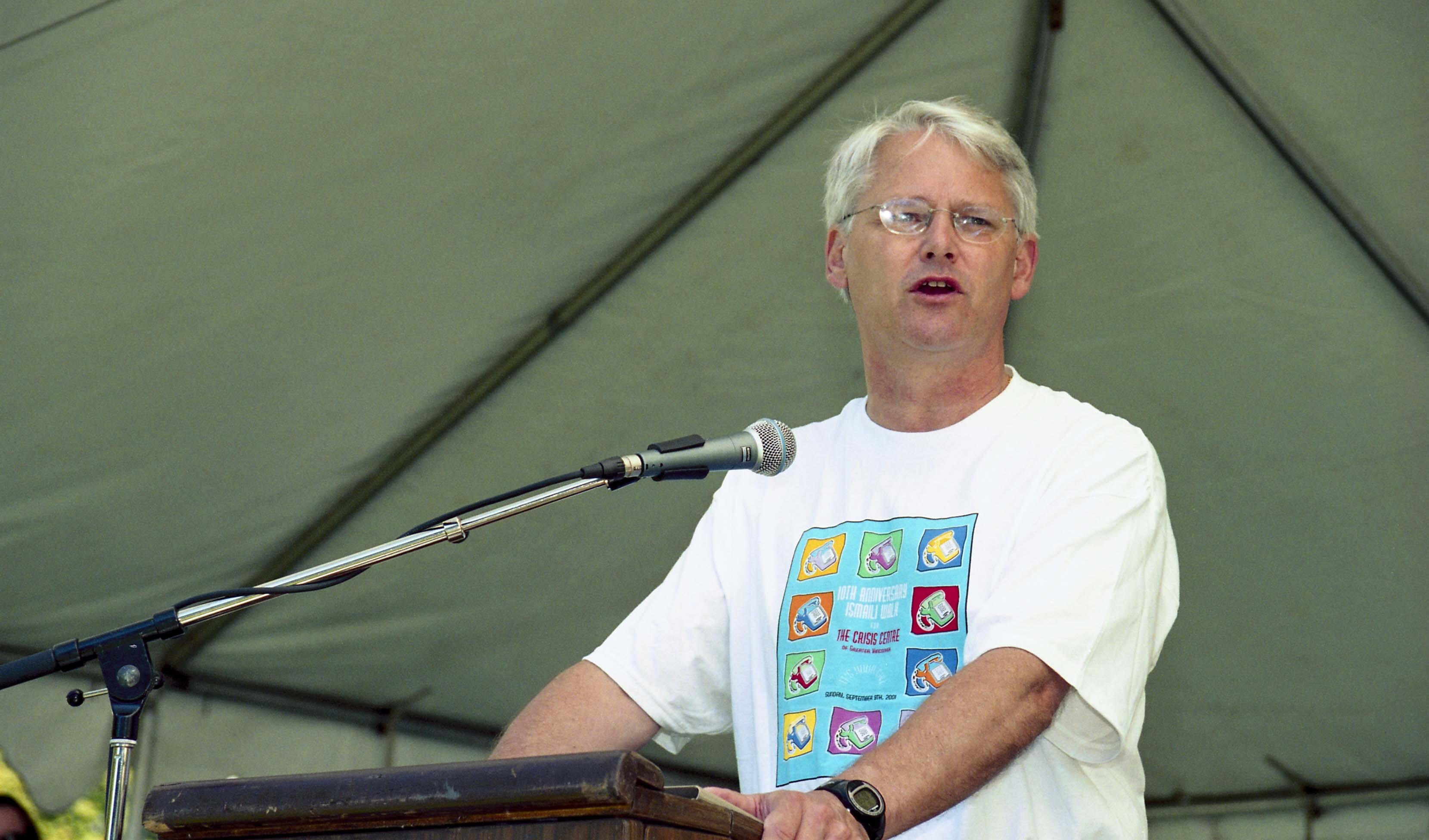
Photograph of Gordon Campbell addressing the audience at the 10th Annual Ismaili Walk for the Crisis Center of Greater Vancouver, held at Stanley Park in Vancouver, British Columbia.
Gordon Campbell was sworn in as British Columbia's 34th Premier on June 5, 2001. Campbell was elected leader of the B.C. Liberal Party in September 1993. He was elected to the B.C. Legislature in 1994 in a by-election to represent the riding of Vancouver-Quilchena and was re-elected in 1996 and 2001 for Vancouver-Point Grey. Campbell attended public school in Vancouver. After graduating he received a scholarship to Dartmouth College in New Hampshire. He worked his way through university in the dining hall and as the associate to the secretary of the college, and received his bachelor of arts degree. He later received a master's of business administration from Simon Fraser University. He was a secondary school teacher, basketball and track coach in Yola, Nigeria, working under the auspices of CUSO. He then became an assistant to former Vancouver mayor Art Phillips. From 1976 to 1981, he worked with Marathon Realty, where he became general manager of development. In 1981, he founded City Core Development Corporation. In 1984, Campbell was elected to Vancouver City Council. From 1986 to 1993, he served as Mayor of Vancouver for three successive terms. From 2001 to 2011, Campbell served as Premier of British Columbia, and High Commissioner to the United Kingdom from 2011 to 2016. During his tenure as Premier, Campbell reduced taxes, restrained spending, revolutionized the measurement and management of regulations, and markedly improved the economy of the province. Among his recognitions and awards, Campbell received the Order of British Columbia as well as the Order of Canada. In 2014, he was presented an Honorary Doctorate of Laws from Thompson Rivers University. He was awarded both the Queen Elizabeth II Golden Jubilee Medal (2002) and the Diamond Jubilee Medal (2012) for his contributions to the province and country.
The Ismaili Walk is an annual community fundraising event organized by the Ismaili Muslim Community of British Columbia to improve the quality of life for British Columbians. Since its inception, the event has raised over $4.25 million in support of local community organizations including hospitals, food banks, the Vancouver Public Library, Simon Fraser University, Habitat for Humanity, the Crisis Center of Greater Vancouver, United Way, the Women's health Research Institute (WHRI) at BC Women's Hospital and Health Centre Foundation, the Heart and Stroke Foundation, and the YWCA Metro Vancouver's Cause We Care House.
In 1979, the first Ismaili congregation was established in Burnaby, Canada, to meet the religious and social needs of the Ismaili community. Since its opening, the Ismaili Centre has hosted a wide range of events, opening its doors to government officials, prominent academics, leaders of many communities, and the wider public. The Centre has also provided a dignified space for the Greater Vancouver Regional District.
Gordon Campbell was sworn in as British Columbia's 34th Premier on June 5, 2001. Campbell was elected leader of the B.C. Liberal Party in September 1993. He was elected to the B.C. Legislature in 1994 in a by-election to represent the riding of Vancouver-Quilchena and was re-elected in 1996 and 2001 for Vancouver-Point Grey. Campbell attended public school in Vancouver. After graduating he received a scholarship to Dartmouth College in New Hampshire. He worked his way through university in the dining hall and as the associate to the secretary of the college, and received his bachelor of arts degree. He later received a master's of business administration from Simon Fraser University. He was a secondary school teacher, basketball and track coach in Yola, Nigeria, working under the auspices of CUSO. He then became an assistant to former Vancouver mayor Art Phillips. From 1976 to 1981, he worked with Marathon Realty, where he became general manager of development. In 1981, he founded City Core Development Corporation. In 1984, Campbell was elected to Vancouver City Council. From 1986 to 1993, he served as Mayor of Vancouver for three successive terms. From 2001 to 2011, Campbell served as Premier of British Columbia, and High Commissioner to the United Kingdom from 2011 to 2016. During his tenure as Premier, Campbell reduced taxes, restrained spending, revolutionized the measurement and management of regulations, and markedly improved the economy of the province. Among his recognitions and awards, Campbell received the Order of British Columbia as well as the Order of Canada. In 2014, he was presented an Honorary Doctorate of Laws from Thompson Rivers University. He was awarded both the Queen Elizabeth II Golden Jubilee Medal (2002) and the Diamond Jubilee Medal (2012) for his contributions to the province and country.
The Ismaili Walk is an annual community fundraising event organized by the Ismaili Muslim Community of British Columbia to improve the quality of life for British Columbians. Since its inception, the event has raised over $4.25 million in support of local community organizations including hospitals, food banks, the Vancouver Public Library, Simon Fraser University, Habitat for Humanity, the Crisis Center of Greater Vancouver, United Way, the Women's health Research Institute (WHRI) at BC Women's Hospital and Health Centre Foundation, the Heart and Stroke Foundation, and the YWCA Metro Vancouver's Cause We Care House.
In 1979, the first Ismaili congregation was established in Burnaby, Canada, to meet the religious and social needs of the Ismaili community. Since its opening, the Ismaili Centre has hosted a wide range of events, opening its doors to government officials, prominent academics, leaders of many communities, and the wider public. The Centre has also provided a dignified space for the Greater Vancouver Regional District.
Member of
Creator: Bodalia, Chandra
Description
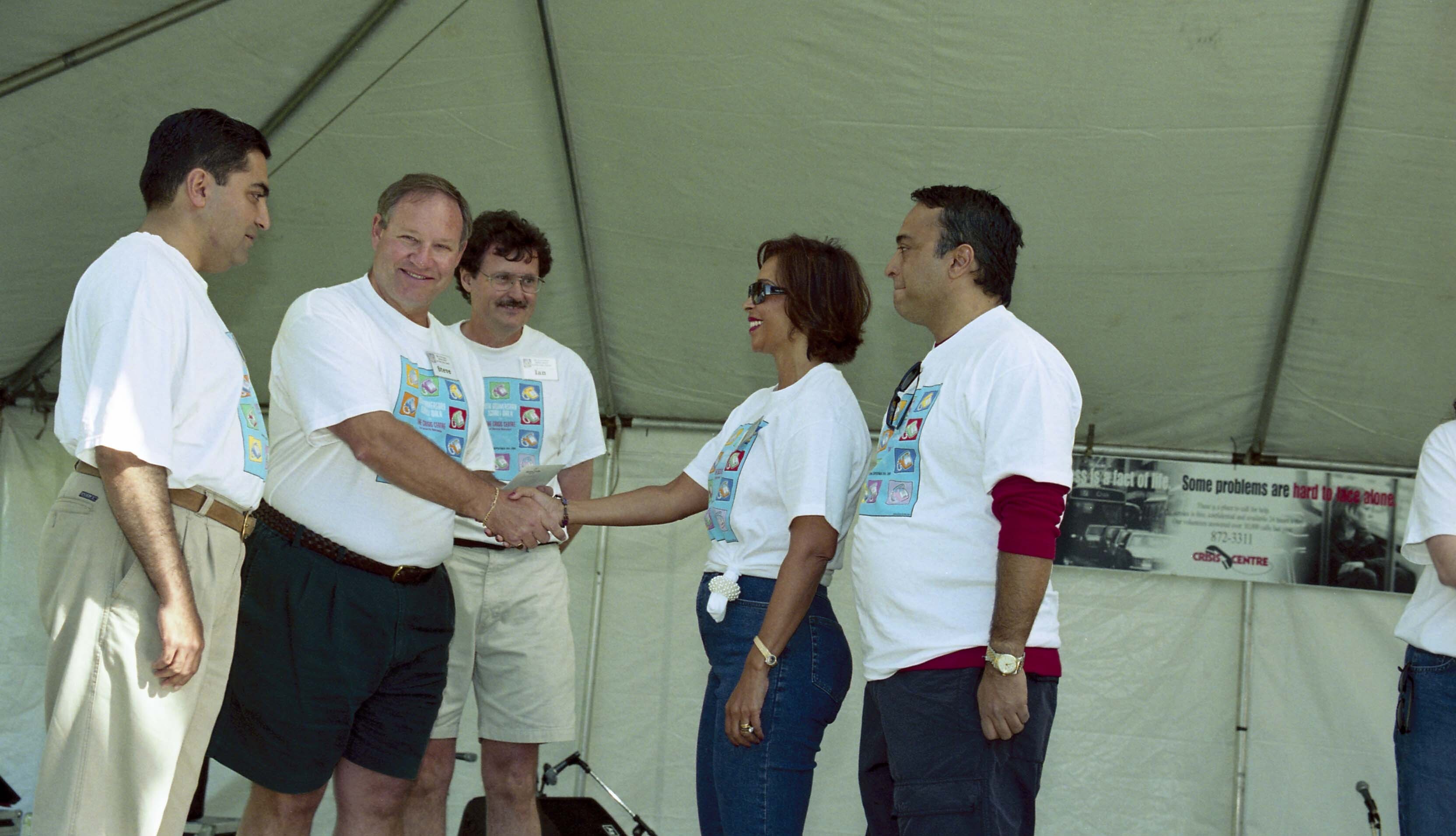
Photograph of two unidentified individuals shaking hands at the 10th Annual Ismaili Walk for the Crisis Center of Greater Vancouver, held at Stanley Park in Vancouver, British Columbia.
The Ismaili Walk is an annual community fundraising event organized by the Ismaili Muslim Community of British Columbia to improve the quality of life for British Columbians. Since its inception, the event has raised over $4.25 million in support of local community organizations including hospitals, food banks, the Vancouver Public Library, Simon Fraser University, Habitat for Humanity, the Crisis Center of Greater Vancouver, United Way, the Women's health Research Institute (WHRI) at BC Women's Hospital and Health Centre Foundation, the Heart and Stroke Foundation, and the YWCA Metro Vancouver's Cause We Care House.
In 1979, the first Ismaili congregation was established in Burnaby, Canada, to meet the religious and social needs of the Ismaili community. Since its opening, the Ismaili Centre has hosted a wide range of events, opening its doors to government officials, prominent academics, leaders of many communities, and the wider public. The Centre has also provided a dignified space for the Greater Vancouver Regional District.
The Ismaili Walk is an annual community fundraising event organized by the Ismaili Muslim Community of British Columbia to improve the quality of life for British Columbians. Since its inception, the event has raised over $4.25 million in support of local community organizations including hospitals, food banks, the Vancouver Public Library, Simon Fraser University, Habitat for Humanity, the Crisis Center of Greater Vancouver, United Way, the Women's health Research Institute (WHRI) at BC Women's Hospital and Health Centre Foundation, the Heart and Stroke Foundation, and the YWCA Metro Vancouver's Cause We Care House.
In 1979, the first Ismaili congregation was established in Burnaby, Canada, to meet the religious and social needs of the Ismaili community. Since its opening, the Ismaili Centre has hosted a wide range of events, opening its doors to government officials, prominent academics, leaders of many communities, and the wider public. The Centre has also provided a dignified space for the Greater Vancouver Regional District.
Member of
Creator: Bodalia, Chandra
Description
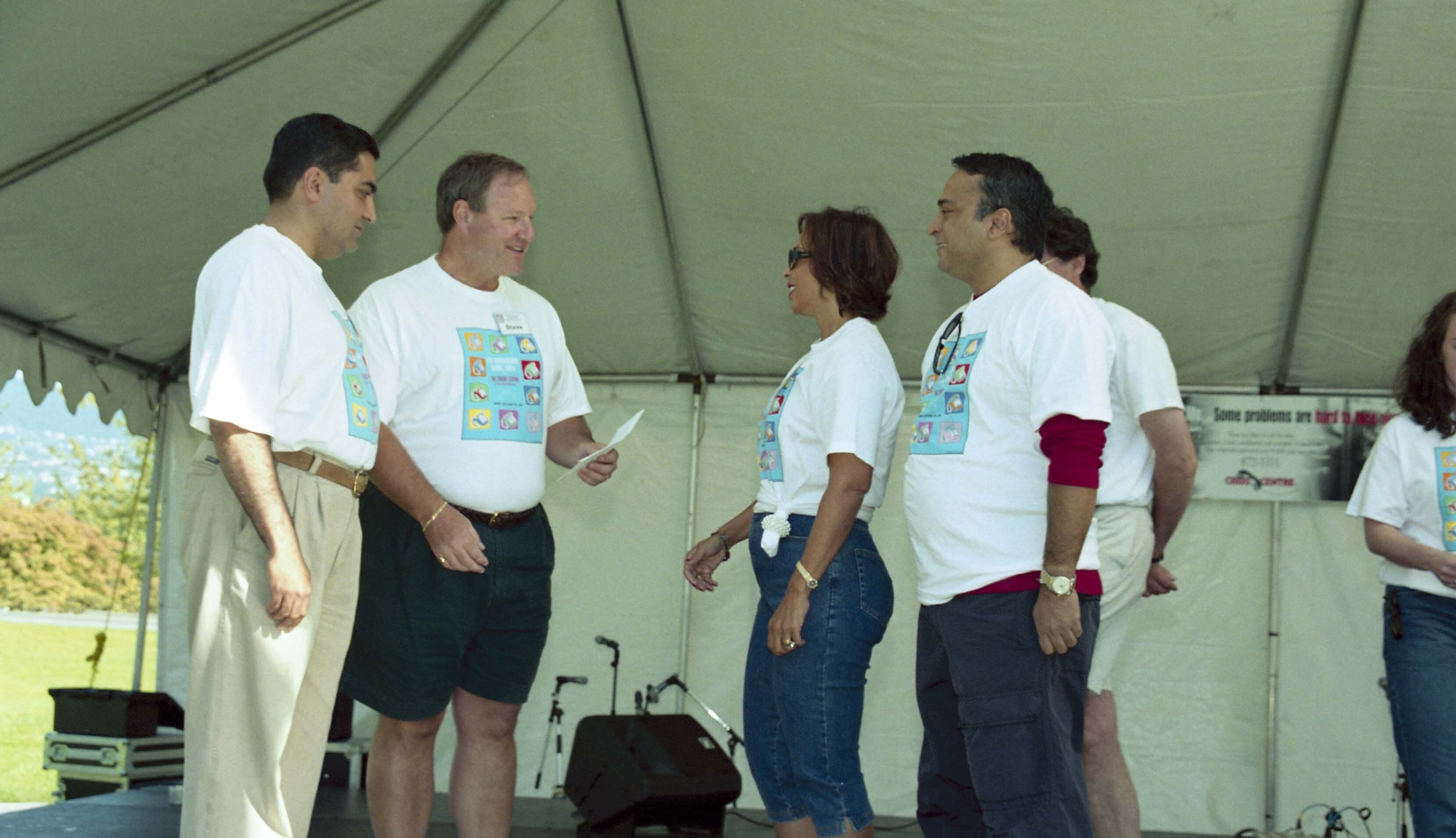
Photograph of a group of unidentified individuals at the 10th Annual Ismaili Walk for the Crisis Center of Greater Vancouver, held at Stanley Park in Vancouver, British Columbia.
The Ismaili Walk is an annual community fundraising event organized by the Ismaili Muslim Community of British Columbia to improve the quality of life for British Columbians. Since its inception, the event has raised over $4.25 million in support of local community organizations including hospitals, food banks, the Vancouver Public Library, Simon Fraser University, Habitat for Humanity, the Crisis Center of Greater Vancouver, United Way, the Women's health Research Institute (WHRI) at BC Women's Hospital and Health Centre Foundation, the Heart and Stroke Foundation, and the YWCA Metro Vancouver's Cause We Care House.
In 1979, the first Ismaili congregation was established in Burnaby, Canada, to meet the religious and social needs of the Ismaili community. Since its opening, the Ismaili Centre has hosted a wide range of events, opening its doors to government officials, prominent academics, leaders of many communities, and the wider public. The Centre has also provided a dignified space for the Greater Vancouver Regional District.
The Ismaili Walk is an annual community fundraising event organized by the Ismaili Muslim Community of British Columbia to improve the quality of life for British Columbians. Since its inception, the event has raised over $4.25 million in support of local community organizations including hospitals, food banks, the Vancouver Public Library, Simon Fraser University, Habitat for Humanity, the Crisis Center of Greater Vancouver, United Way, the Women's health Research Institute (WHRI) at BC Women's Hospital and Health Centre Foundation, the Heart and Stroke Foundation, and the YWCA Metro Vancouver's Cause We Care House.
In 1979, the first Ismaili congregation was established in Burnaby, Canada, to meet the religious and social needs of the Ismaili community. Since its opening, the Ismaili Centre has hosted a wide range of events, opening its doors to government officials, prominent academics, leaders of many communities, and the wider public. The Centre has also provided a dignified space for the Greater Vancouver Regional District.
Member of
Creator: Bodalia, Chandra
Description
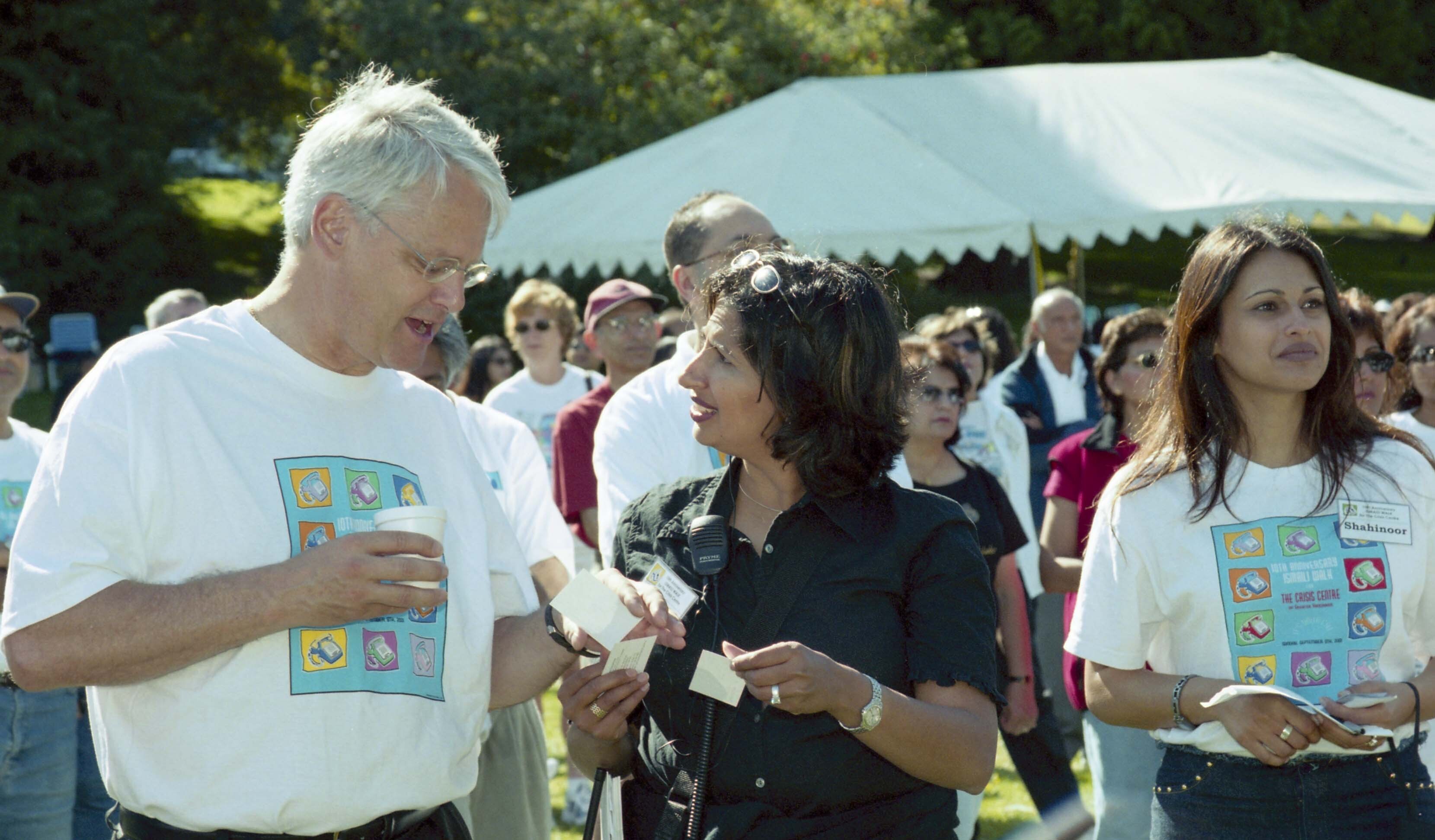
Photograph of unidentified individuals, including Gordon Campbell, at the 10th Annual Ismaili Walk for the Crisis Center of Greater Vancouver, held at Stanley Park in Vancouver, British Columbia.
Gordon Campbell was sworn in as British Columbia's 34th Premier on June 5, 2001. Campbell was elected leader of the B.C. Liberal Party in September 1993. He was elected to the B.C. Legislature in 1994 in a by-election to represent the riding of Vancouver-Quilchena and was re-elected in 1996 and 2001 for Vancouver-Point Grey. Campbell attended public school in Vancouver. After graduating he received a scholarship to Dartmouth College in New Hampshire. He worked his way through university in the dining hall and as the associate to the secretary of the college, and received his bachelor of arts degree. He later received a master's of business administration from Simon Fraser University. He was a secondary school teacher, basketball and track coach in Yola, Nigeria, working under the auspices of CUSO. He then became an assistant to former Vancouver mayor Art Phillips. From 1976 to 1981, he worked with Marathon Realty, where he became general manager of development. In 1981, he founded City Core Development Corporation. In 1984, Campbell was elected to Vancouver City Council. From 1986 to 1993, he served as Mayor of Vancouver for three successive terms. From 2001 to 2011, Campbell served as Premier of British Columbia, and High Commissioner to the United Kingdom from 2011 to 2016. During his tenure as Premier, Campbell reduced taxes, restrained spending, revolutionized the measurement and management of regulations, and markedly improved the economy of the province. Among his recognitions and awards, Campbell received the Order of British Columbia as well as the Order of Canada. In 2014, he was presented an Honorary Doctorate of Laws from Thompson Rivers University. He was awarded both the Queen Elizabeth II Golden Jubilee Medal (2002) and the Diamond Jubilee Medal (2012) for his contributions to the province and country.
The Ismaili Walk is an annual community fundraising event organized by the Ismaili Muslim Community of British Columbia to improve the quality of life for British Columbians. Since its inception, the event has raised over $4.25 million in support of local community organizations including hospitals, food banks, the Vancouver Public Library, Simon Fraser University, Habitat for Humanity, the Crisis Center of Greater Vancouver, United Way, the Women's health Research Institute (WHRI) at BC Women's Hospital and Health Centre Foundation, the Heart and Stroke Foundation, and the YWCA Metro Vancouver's Cause We Care House.
In 1979, the first Ismaili congregation was established in Burnaby, Canada, to meet the religious and social needs of the Ismaili community. Since its opening, the Ismaili Centre has hosted a wide range of events, opening its doors to government officials, prominent academics, leaders of many communities, and the wider public. The Centre has also provided a dignified space for the Greater Vancouver Regional District.
Gordon Campbell was sworn in as British Columbia's 34th Premier on June 5, 2001. Campbell was elected leader of the B.C. Liberal Party in September 1993. He was elected to the B.C. Legislature in 1994 in a by-election to represent the riding of Vancouver-Quilchena and was re-elected in 1996 and 2001 for Vancouver-Point Grey. Campbell attended public school in Vancouver. After graduating he received a scholarship to Dartmouth College in New Hampshire. He worked his way through university in the dining hall and as the associate to the secretary of the college, and received his bachelor of arts degree. He later received a master's of business administration from Simon Fraser University. He was a secondary school teacher, basketball and track coach in Yola, Nigeria, working under the auspices of CUSO. He then became an assistant to former Vancouver mayor Art Phillips. From 1976 to 1981, he worked with Marathon Realty, where he became general manager of development. In 1981, he founded City Core Development Corporation. In 1984, Campbell was elected to Vancouver City Council. From 1986 to 1993, he served as Mayor of Vancouver for three successive terms. From 2001 to 2011, Campbell served as Premier of British Columbia, and High Commissioner to the United Kingdom from 2011 to 2016. During his tenure as Premier, Campbell reduced taxes, restrained spending, revolutionized the measurement and management of regulations, and markedly improved the economy of the province. Among his recognitions and awards, Campbell received the Order of British Columbia as well as the Order of Canada. In 2014, he was presented an Honorary Doctorate of Laws from Thompson Rivers University. He was awarded both the Queen Elizabeth II Golden Jubilee Medal (2002) and the Diamond Jubilee Medal (2012) for his contributions to the province and country.
The Ismaili Walk is an annual community fundraising event organized by the Ismaili Muslim Community of British Columbia to improve the quality of life for British Columbians. Since its inception, the event has raised over $4.25 million in support of local community organizations including hospitals, food banks, the Vancouver Public Library, Simon Fraser University, Habitat for Humanity, the Crisis Center of Greater Vancouver, United Way, the Women's health Research Institute (WHRI) at BC Women's Hospital and Health Centre Foundation, the Heart and Stroke Foundation, and the YWCA Metro Vancouver's Cause We Care House.
In 1979, the first Ismaili congregation was established in Burnaby, Canada, to meet the religious and social needs of the Ismaili community. Since its opening, the Ismaili Centre has hosted a wide range of events, opening its doors to government officials, prominent academics, leaders of many communities, and the wider public. The Centre has also provided a dignified space for the Greater Vancouver Regional District.
Member of
Creator: Bodalia, Chandra
Description
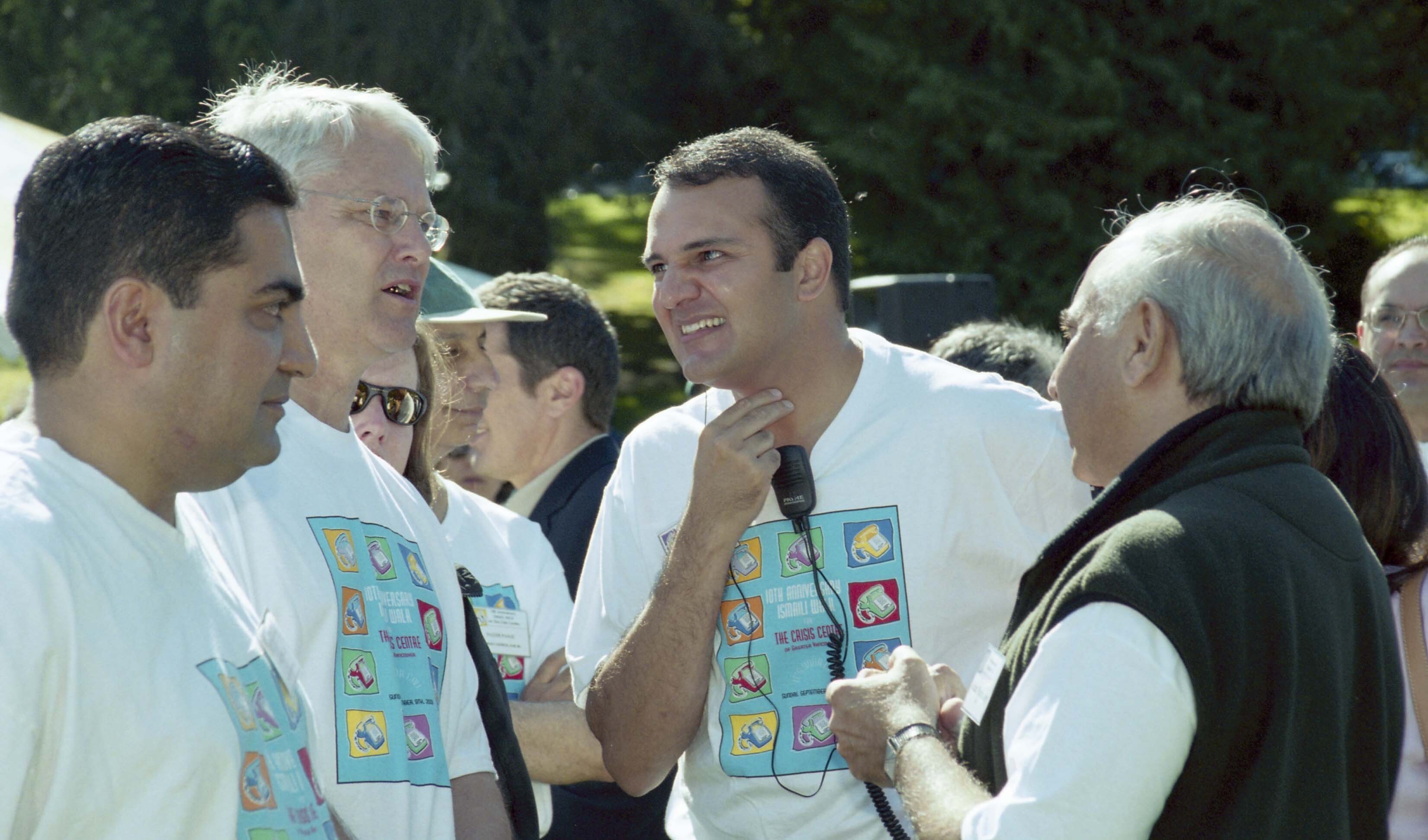
Photograph of unidentified individuals, including Gordon Campbell, at the 10th Annual Ismaili Walk for the Crisis Center of Greater Vancouver, held at Stanley Park in Vancouver, British Columbia.
Gordon Campbell was sworn in as British Columbia's 34th Premier on June 5, 2001. Campbell was elected leader of the B.C. Liberal Party in September 1993. He was elected to the B.C. Legislature in 1994 in a by-election to represent the riding of Vancouver-Quilchena and was re-elected in 1996 and 2001 for Vancouver-Point Grey. Campbell attended public school in Vancouver. After graduating he received a scholarship to Dartmouth College in New Hampshire. He worked his way through university in the dining hall and as the associate to the secretary of the college, and received his bachelor of arts degree. He later received a master's of business administration from Simon Fraser University. He was a secondary school teacher, basketball and track coach in Yola, Nigeria, working under the auspices of CUSO. He then became an assistant to former Vancouver mayor Art Phillips. From 1976 to 1981, he worked with Marathon Realty, where he became general manager of development. In 1981, he founded City Core Development Corporation. In 1984, Campbell was elected to Vancouver City Council. From 1986 to 1993, he served as Mayor of Vancouver for three successive terms. From 2001 to 2011, Campbell served as Premier of British Columbia, and High Commissioner to the United Kingdom from 2011 to 2016. During his tenure as Premier, Campbell reduced taxes, restrained spending, revolutionized the measurement and management of regulations, and markedly improved the economy of the province. Among his recognitions and awards, Campbell received the Order of British Columbia as well as the Order of Canada. In 2014, he was presented an Honorary Doctorate of Laws from Thompson Rivers University. He was awarded both the Queen Elizabeth II Golden Jubilee Medal (2002) and the Diamond Jubilee Medal (2012) for his contributions to the province and country.
The Ismaili Walk is an annual community fundraising event organized by the Ismaili Muslim Community of British Columbia to improve the quality of life for British Columbians. Since its inception, the event has raised over $4.25 million in support of local community organizations including hospitals, food banks, the Vancouver Public Library, Simon Fraser University, Habitat for Humanity, the Crisis Center of Greater Vancouver, United Way, the Women's health Research Institute (WHRI) at BC Women's Hospital and Health Centre Foundation, the Heart and Stroke Foundation, and the YWCA Metro Vancouver's Cause We Care House.
In 1979, the first Ismaili congregation was established in Burnaby, Canada, to meet the religious and social needs of the Ismaili community. Since its opening, the Ismaili Centre has hosted a wide range of events, opening its doors to government officials, prominent academics, leaders of many communities, and the wider public. The Centre has also provided a dignified space for the Greater Vancouver Regional District.
Gordon Campbell was sworn in as British Columbia's 34th Premier on June 5, 2001. Campbell was elected leader of the B.C. Liberal Party in September 1993. He was elected to the B.C. Legislature in 1994 in a by-election to represent the riding of Vancouver-Quilchena and was re-elected in 1996 and 2001 for Vancouver-Point Grey. Campbell attended public school in Vancouver. After graduating he received a scholarship to Dartmouth College in New Hampshire. He worked his way through university in the dining hall and as the associate to the secretary of the college, and received his bachelor of arts degree. He later received a master's of business administration from Simon Fraser University. He was a secondary school teacher, basketball and track coach in Yola, Nigeria, working under the auspices of CUSO. He then became an assistant to former Vancouver mayor Art Phillips. From 1976 to 1981, he worked with Marathon Realty, where he became general manager of development. In 1981, he founded City Core Development Corporation. In 1984, Campbell was elected to Vancouver City Council. From 1986 to 1993, he served as Mayor of Vancouver for three successive terms. From 2001 to 2011, Campbell served as Premier of British Columbia, and High Commissioner to the United Kingdom from 2011 to 2016. During his tenure as Premier, Campbell reduced taxes, restrained spending, revolutionized the measurement and management of regulations, and markedly improved the economy of the province. Among his recognitions and awards, Campbell received the Order of British Columbia as well as the Order of Canada. In 2014, he was presented an Honorary Doctorate of Laws from Thompson Rivers University. He was awarded both the Queen Elizabeth II Golden Jubilee Medal (2002) and the Diamond Jubilee Medal (2012) for his contributions to the province and country.
The Ismaili Walk is an annual community fundraising event organized by the Ismaili Muslim Community of British Columbia to improve the quality of life for British Columbians. Since its inception, the event has raised over $4.25 million in support of local community organizations including hospitals, food banks, the Vancouver Public Library, Simon Fraser University, Habitat for Humanity, the Crisis Center of Greater Vancouver, United Way, the Women's health Research Institute (WHRI) at BC Women's Hospital and Health Centre Foundation, the Heart and Stroke Foundation, and the YWCA Metro Vancouver's Cause We Care House.
In 1979, the first Ismaili congregation was established in Burnaby, Canada, to meet the religious and social needs of the Ismaili community. Since its opening, the Ismaili Centre has hosted a wide range of events, opening its doors to government officials, prominent academics, leaders of many communities, and the wider public. The Centre has also provided a dignified space for the Greater Vancouver Regional District.
Member of
Creator: Bodalia, Chandra
Description
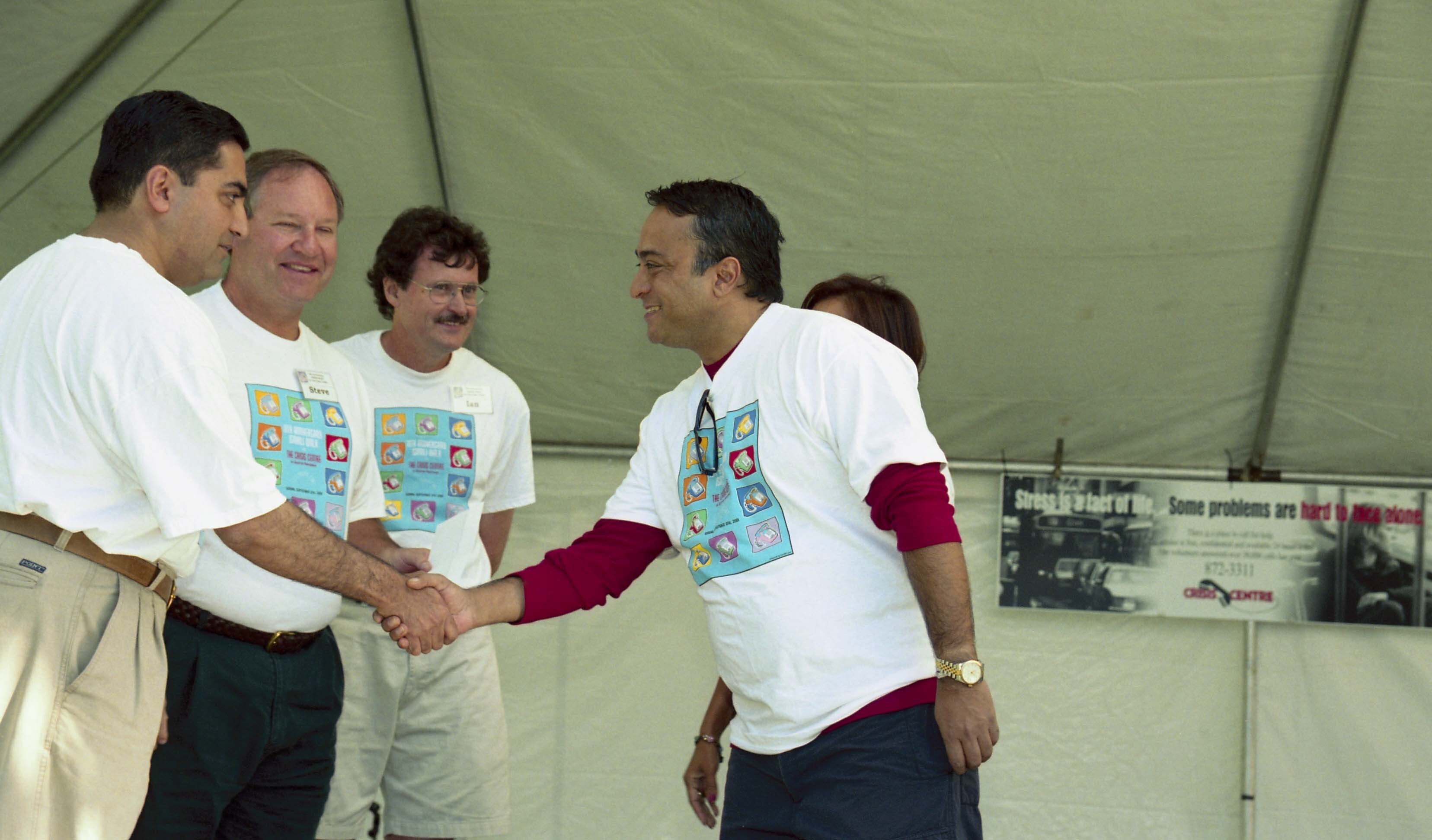
Photograph of two unidentified individuals shaking hands at the 10th Annual Ismaili Walk for the Crisis Center of Greater Vancouver, held at Stanley Park in Vancouver, British Columbia.
The Ismaili Walk is an annual community fundraising event organized by the Ismaili Muslim Community of British Columbia to improve the quality of life for British Columbians. Since its inception, the event has raised over $4.25 million in support of local community organizations including hospitals, food banks, the Vancouver Public Library, Simon Fraser University, Habitat for Humanity, the Crisis Center of Greater Vancouver, United Way, the Women's health Research Institute (WHRI) at BC Women's Hospital and Health Centre Foundation, the Heart and Stroke Foundation, and the YWCA Metro Vancouver's Cause We Care House.
In 1979, the first Ismaili congregation was established in Burnaby, Canada, to meet the religious and social needs of the Ismaili community. Since its opening, the Ismaili Centre has hosted a wide range of events, opening its doors to government officials, prominent academics, leaders of many communities, and the wider public. The Centre has also provided a dignified space for the Greater Vancouver Regional District.
The Ismaili Walk is an annual community fundraising event organized by the Ismaili Muslim Community of British Columbia to improve the quality of life for British Columbians. Since its inception, the event has raised over $4.25 million in support of local community organizations including hospitals, food banks, the Vancouver Public Library, Simon Fraser University, Habitat for Humanity, the Crisis Center of Greater Vancouver, United Way, the Women's health Research Institute (WHRI) at BC Women's Hospital and Health Centre Foundation, the Heart and Stroke Foundation, and the YWCA Metro Vancouver's Cause We Care House.
In 1979, the first Ismaili congregation was established in Burnaby, Canada, to meet the religious and social needs of the Ismaili community. Since its opening, the Ismaili Centre has hosted a wide range of events, opening its doors to government officials, prominent academics, leaders of many communities, and the wider public. The Centre has also provided a dignified space for the Greater Vancouver Regional District.
Member of
Creator: Bodalia, Chandra
Description
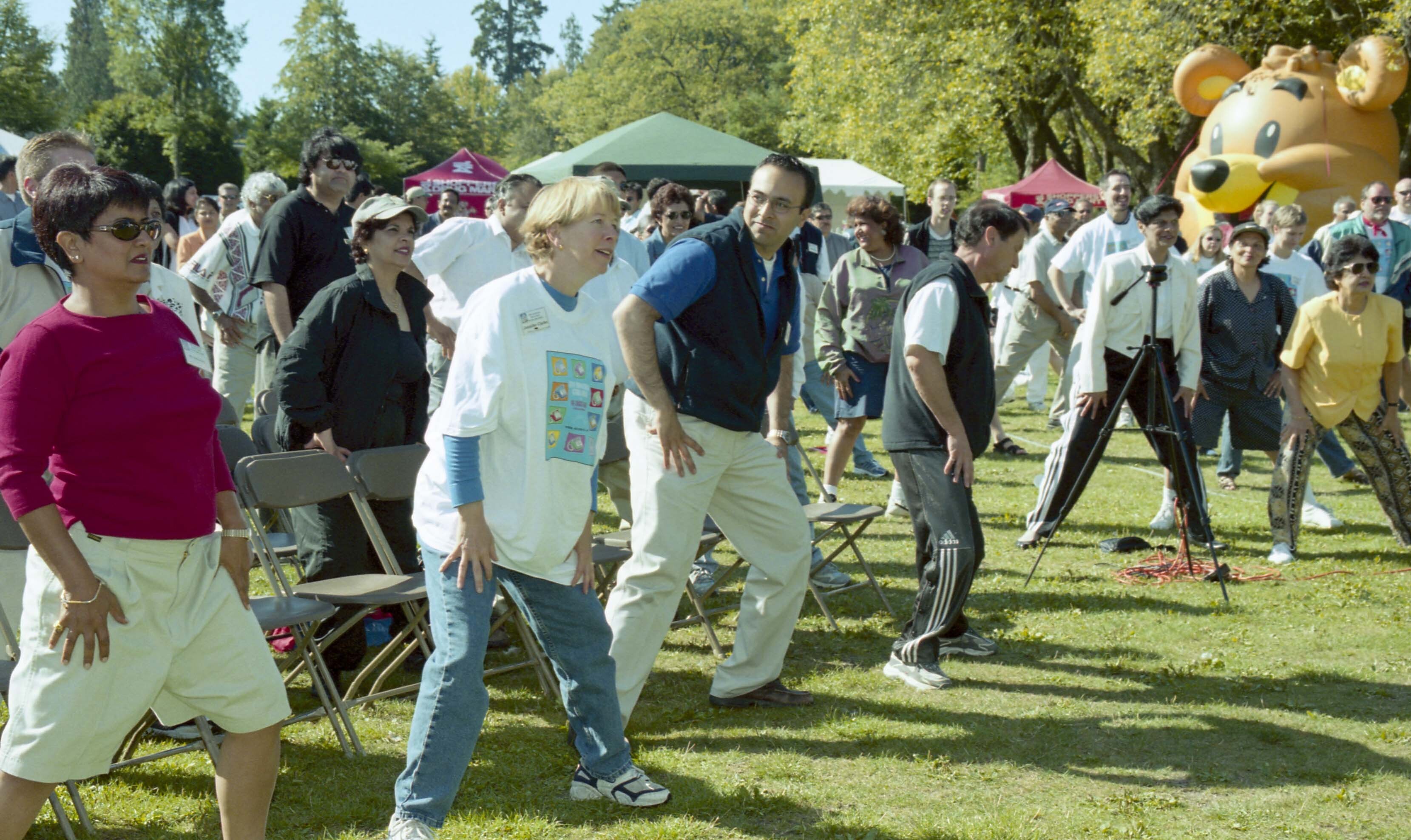
Photograph of a group of unidentified individuals, part of the audience, performing an activity at the 10th Annual Ismaili Walk for the Crisis Center of Greater Vancouver, held at Stanley Park in Vancouver, British Columbia.
The Ismaili Walk is an annual community fundraising event organized by the Ismaili Muslim Community of British Columbia to improve the quality of life for British Columbians. Since its inception, the event has raised over $4.25 million in support of local community organizations including hospitals, food banks, the Vancouver Public Library, Simon Fraser University, Habitat for Humanity, the Crisis Center of Greater Vancouver, United Way, the Women's health Research Institute (WHRI) at BC Women's Hospital and Health Centre Foundation, the Heart and Stroke Foundation, and the YWCA Metro Vancouver's Cause We Care House.
In 1979, the first Ismaili congregation was established in Burnaby, Canada, to meet the religious and social needs of the Ismaili community. Since its opening, the Ismaili Centre has hosted a wide range of events, opening its doors to government officials, prominent academics, leaders of many communities, and the wider public. The Centre has also provided a dignified space for the Greater Vancouver Regional District.
The Ismaili Walk is an annual community fundraising event organized by the Ismaili Muslim Community of British Columbia to improve the quality of life for British Columbians. Since its inception, the event has raised over $4.25 million in support of local community organizations including hospitals, food banks, the Vancouver Public Library, Simon Fraser University, Habitat for Humanity, the Crisis Center of Greater Vancouver, United Way, the Women's health Research Institute (WHRI) at BC Women's Hospital and Health Centre Foundation, the Heart and Stroke Foundation, and the YWCA Metro Vancouver's Cause We Care House.
In 1979, the first Ismaili congregation was established in Burnaby, Canada, to meet the religious and social needs of the Ismaili community. Since its opening, the Ismaili Centre has hosted a wide range of events, opening its doors to government officials, prominent academics, leaders of many communities, and the wider public. The Centre has also provided a dignified space for the Greater Vancouver Regional District.