
Committee for Racial Justice
Creator: Bodalia, Chandra
Description
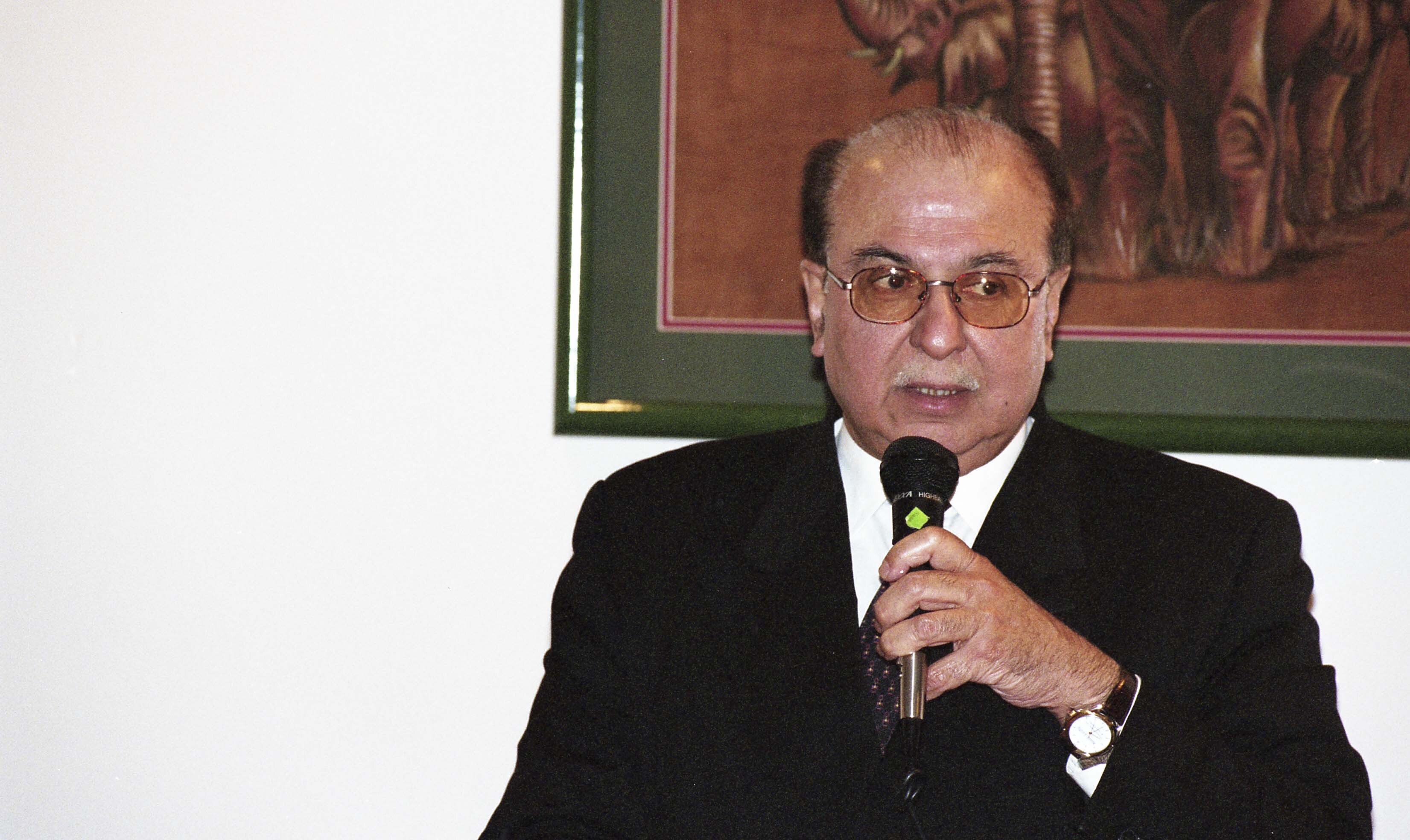
Photograph of John Halani speaking at an honorary event organized by the Committee for Racial Justice in coordination with Greater Vancouver Citizenship Council, held at the Samosa Garden in Vancouver, B.C.
John Halani was a hotelier in Vancouver, British Columbia (B.C.) born in Masaka, Uganda. Halani came to B.C. in 1972 after escaping the persecution of the Idi Amin regime in Uganda. Halani, a 35-year-old business owner, had his assets confiscated by the Amin regime as he was leaving Uganda. His first job in Vancouver was with a glass company, from there he was able to lease out the Robsontrasse hotel in downtown Vancouver. By 1975, Halani was running the Tropicana Hotel across the street. Halani had an active political career, including being named honorary consul for Uganda in B.C., and was involved with the Immigrant Services Society of B.C. and other advocacy groups. He also served on multiple community boards, including as chair of the Ethno Business Council.
Samosa Garden was an Ismaili-owned restaurant located on Kingsway in East Vancouver, B.C.
John Halani was a hotelier in Vancouver, British Columbia (B.C.) born in Masaka, Uganda. Halani came to B.C. in 1972 after escaping the persecution of the Idi Amin regime in Uganda. Halani, a 35-year-old business owner, had his assets confiscated by the Amin regime as he was leaving Uganda. His first job in Vancouver was with a glass company, from there he was able to lease out the Robsontrasse hotel in downtown Vancouver. By 1975, Halani was running the Tropicana Hotel across the street. Halani had an active political career, including being named honorary consul for Uganda in B.C., and was involved with the Immigrant Services Society of B.C. and other advocacy groups. He also served on multiple community boards, including as chair of the Ethno Business Council.
Samosa Garden was an Ismaili-owned restaurant located on Kingsway in East Vancouver, B.C.
Creator: Bodalia, Chandra
Description
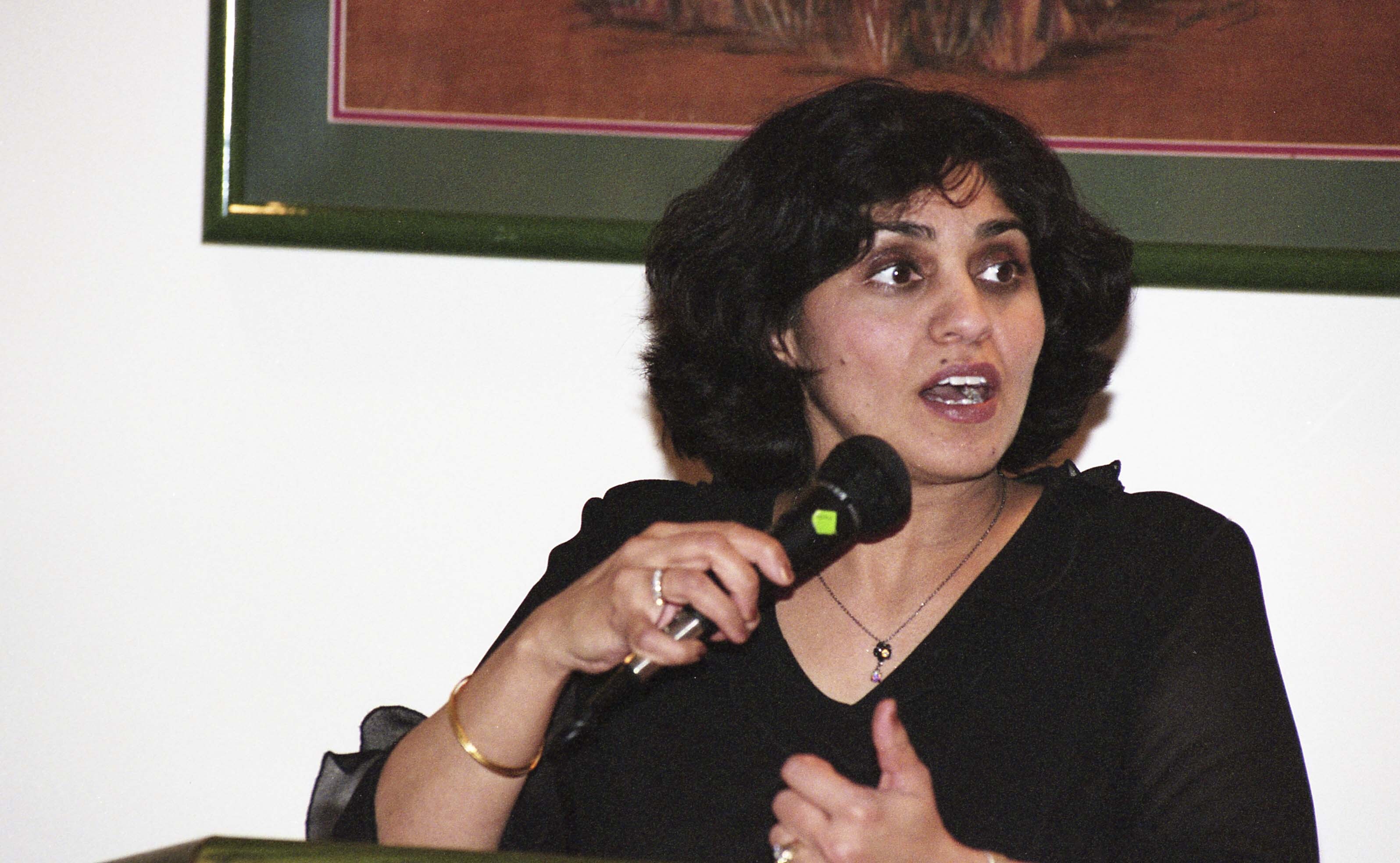
Photograph of an unidentified woman speaking at an honorary event organized by the Committee for Racial Justice in coordination with Greater Vancouver Citizenship Council, held at the Samosa Garden in Vancouver, B.C.
Samosa Garden was an Ismaili-owned restaurant located on Kingsway in East Vancouver, B.C.
Samosa Garden was an Ismaili-owned restaurant located on Kingsway in East Vancouver, B.C.
Creator: Bodalia, Chandra
Description
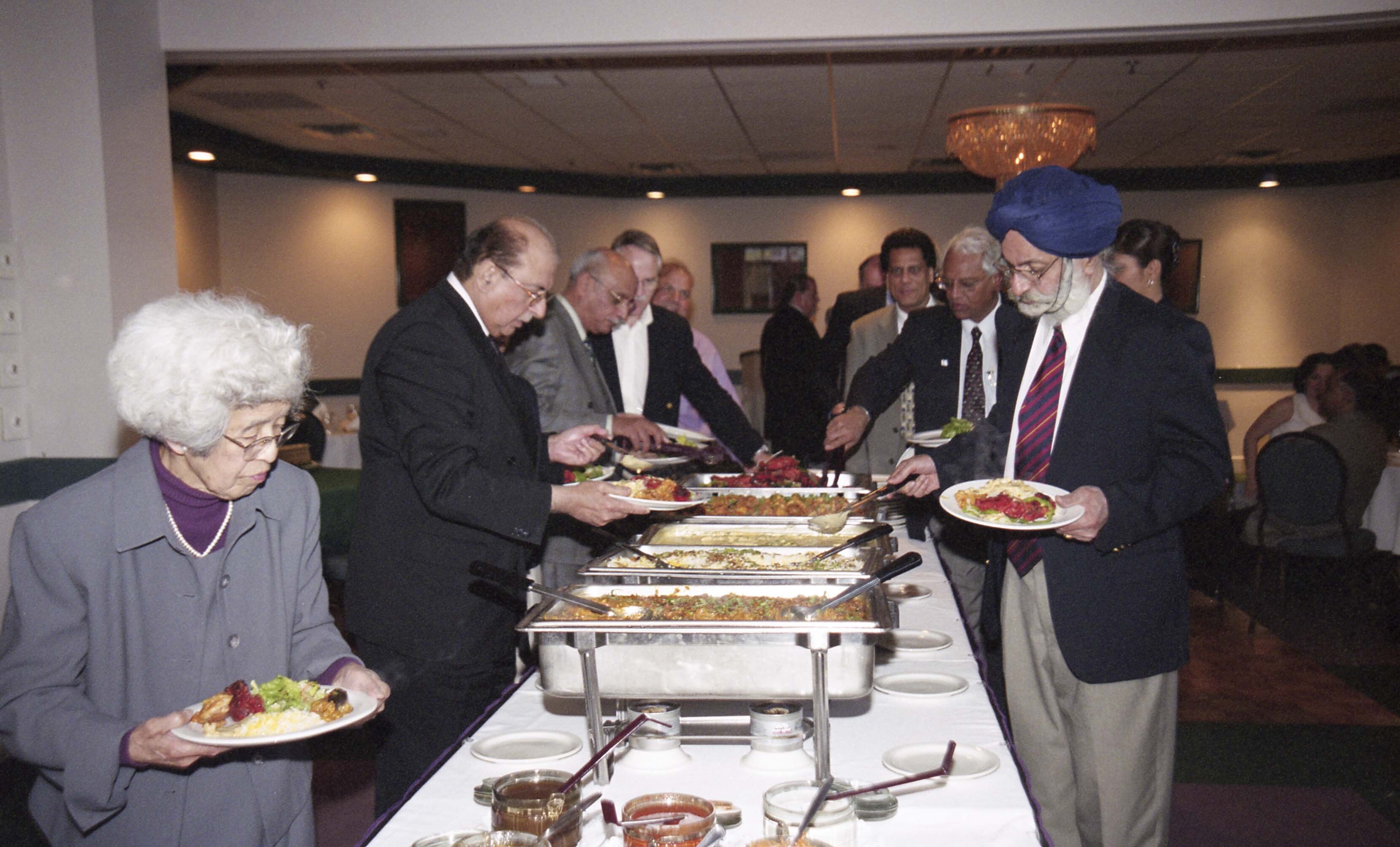
Photograph of people at a buffet at an honorary event organized by the Committee for Racial Justice in coordination with Greater Vancouver Citizenship Council, held at the Samosa Garden in Vancouver, B.C.
Samosa Garden was an Ismaili-owned restaurant located on Kingsway in East Vancouver, B.C.
Samosa Garden was an Ismaili-owned restaurant located on Kingsway in East Vancouver, B.C.
Member of
Creator:
Description
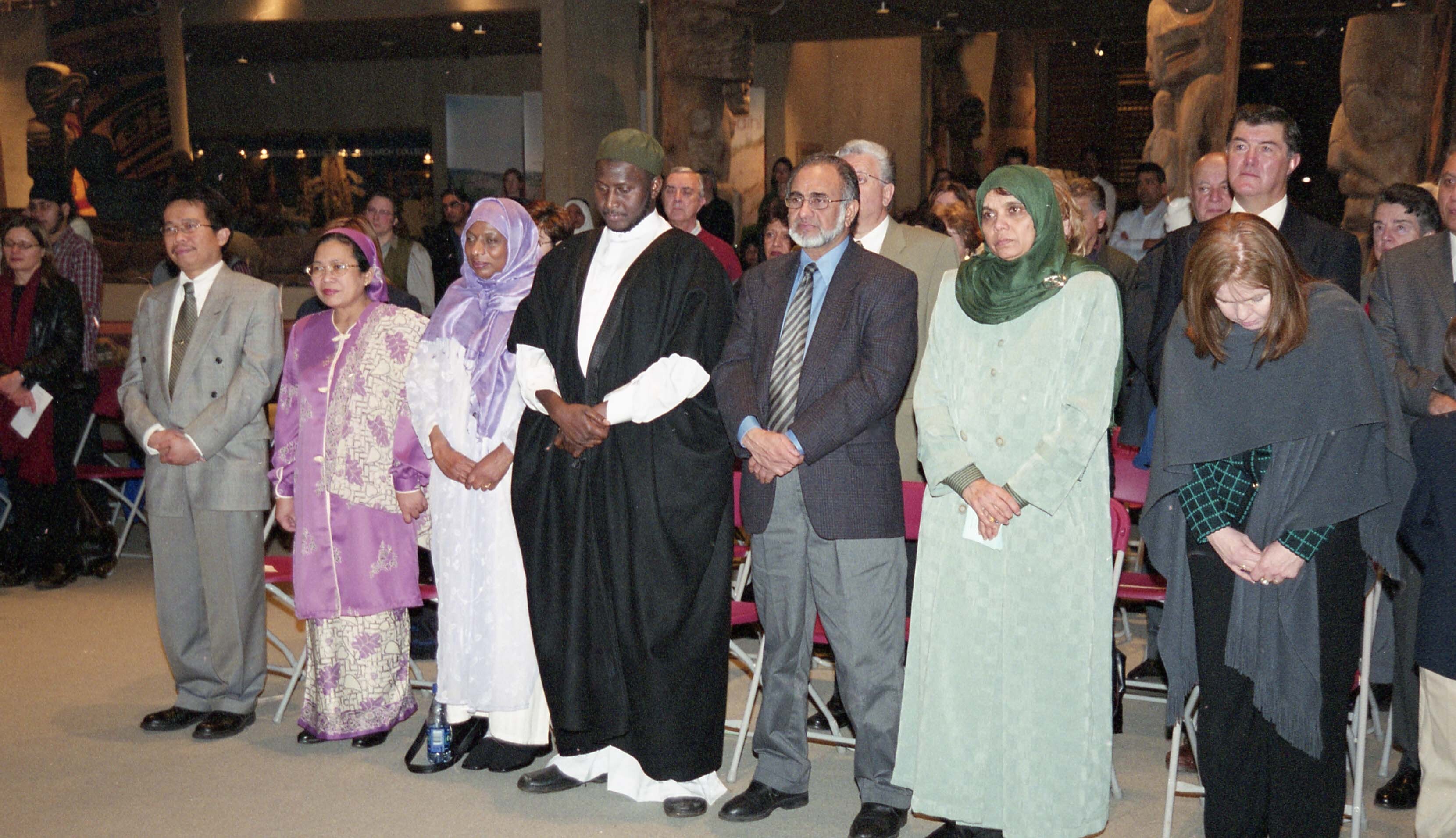
Photograph of the attendees standing at the public celebration of Eid-ul-Adha on February 19, 2004, co-hosted by UBC Museum of Anthropology and the Committee for Racial Justice (CRJ) in Vancouver, British Columbia.
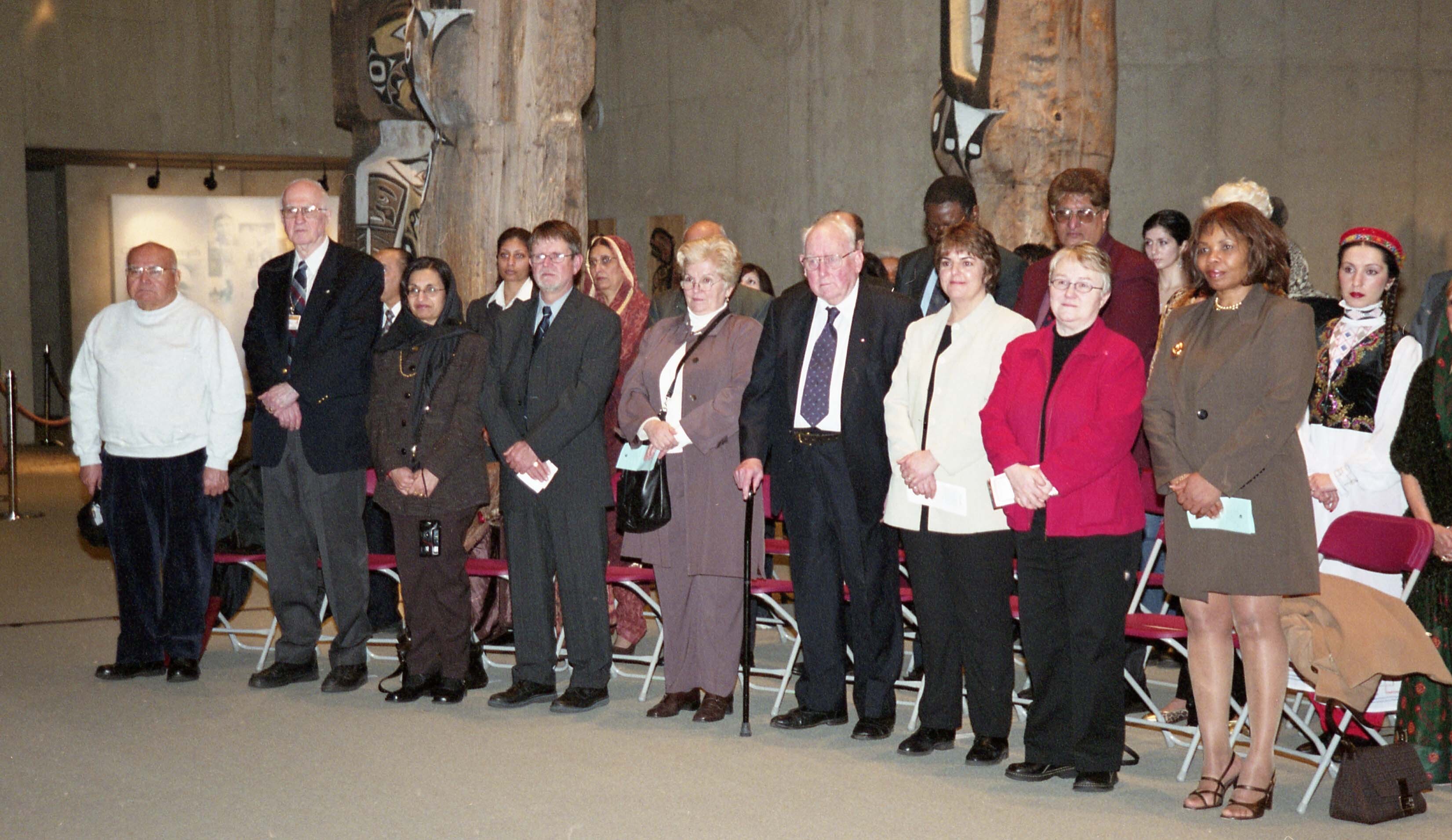
Eid al-Adha is the second most important celebration of Islam, (the first being Eid-ul-Fitr). It takes place on the tenth day of the twelfth and last month (Zulhijjah) of the Islamic calendar. In 2004, this celebration began on the morning of the 1st of February. Eid-ul-Adha celebrates the occasion when Abraham was willing to sacrifice his son to show his obedience to Allah (God). Muslims all around the world celebrate this day, although it has particular significance for pilgrims who complete a pilgrimage (Hajj) to Mecca.
The Museum of Anthropology (MOA) at the University of British Columbia is committed to promoting awareness and understanding of culturally diverse ways of knowing the world through challenging and innovative programs and partnerships with Indigenous, local and global communities.
The MOA and the CRJ first co-hosted an event in December 2003. Following its success, they created a year-long series of public events that offer cultural communities opportunities to share their cultural practices with a wider public. The idea is to create opportunities for people to come together in common purpose to share and celebrate their differences.
Eid al-Adha is the second most important celebration of Islam, (the first being Eid-ul-Fitr). It takes place on the tenth day of the twelfth and last month (Zulhijjah) of the Islamic calendar. In 2004, this celebration began on the morning of the 1st of February. Eid-ul-Adha celebrates the occasion when Abraham was willing to sacrifice his son to show his obedience to Allah (God). Muslims all around the world celebrate this day, although it has particular significance for pilgrims who complete a pilgrimage (Hajj) to Mecca.
The Museum of Anthropology (MOA) at the University of British Columbia is committed to promoting awareness and understanding of culturally diverse ways of knowing the world through challenging and innovative programs and partnerships with Indigenous, local and global communities.
The MOA and the CRJ first co-hosted an event in December 2003. Following its success, they created a year-long series of public events that offer cultural communities opportunities to share their cultural practices with a wider public. The idea is to create opportunities for people to come together in common purpose to share and celebrate their differences.
Member of
Creator:
Description
Photograph of the attendees standing at the public celebration of Eid-ul-Adha on February 19, 2004, co-hosted by UBC Museum of Anthropology and the Committee for Racial Justice (CRJ) in Vancouver, British Columbia.
Eid al-Adha is the second most important celebration of Islam, (the first being Eid-ul-Fitr). It takes place on the tenth day of the twelfth and last month (Zulhijjah) of the Islamic calendar. In 2004, this celebration began on the morning of the 1st of February. Eid-ul-Adha celebrates the occasion when Abraham was willing to sacrifice his son to show his obedience to Allah (God). Muslims all around the world celebrate this day, although it has particular significance for pilgrims who complete a pilgrimage (Hajj) to Mecca.
The Museum of Anthropology (MOA) at the University of British Columbia is committed to promoting awareness and understanding of culturally diverse ways of knowing the world through challenging and innovative programs and partnerships with Indigenous, local and global communities.
The MOA and the CRJ first co-hosted an event in December 2003. Following its success, they created a year-long series of public events that offer cultural communities opportunities to share their cultural practices with a wider public. The idea is to create opportunities for people to come together in common purpose to share and celebrate their differences.
Eid al-Adha is the second most important celebration of Islam, (the first being Eid-ul-Fitr). It takes place on the tenth day of the twelfth and last month (Zulhijjah) of the Islamic calendar. In 2004, this celebration began on the morning of the 1st of February. Eid-ul-Adha celebrates the occasion when Abraham was willing to sacrifice his son to show his obedience to Allah (God). Muslims all around the world celebrate this day, although it has particular significance for pilgrims who complete a pilgrimage (Hajj) to Mecca.
The Museum of Anthropology (MOA) at the University of British Columbia is committed to promoting awareness and understanding of culturally diverse ways of knowing the world through challenging and innovative programs and partnerships with Indigenous, local and global communities.
The MOA and the CRJ first co-hosted an event in December 2003. Following its success, they created a year-long series of public events that offer cultural communities opportunities to share their cultural practices with a wider public. The idea is to create opportunities for people to come together in common purpose to share and celebrate their differences.
Member of
Creator:
Description
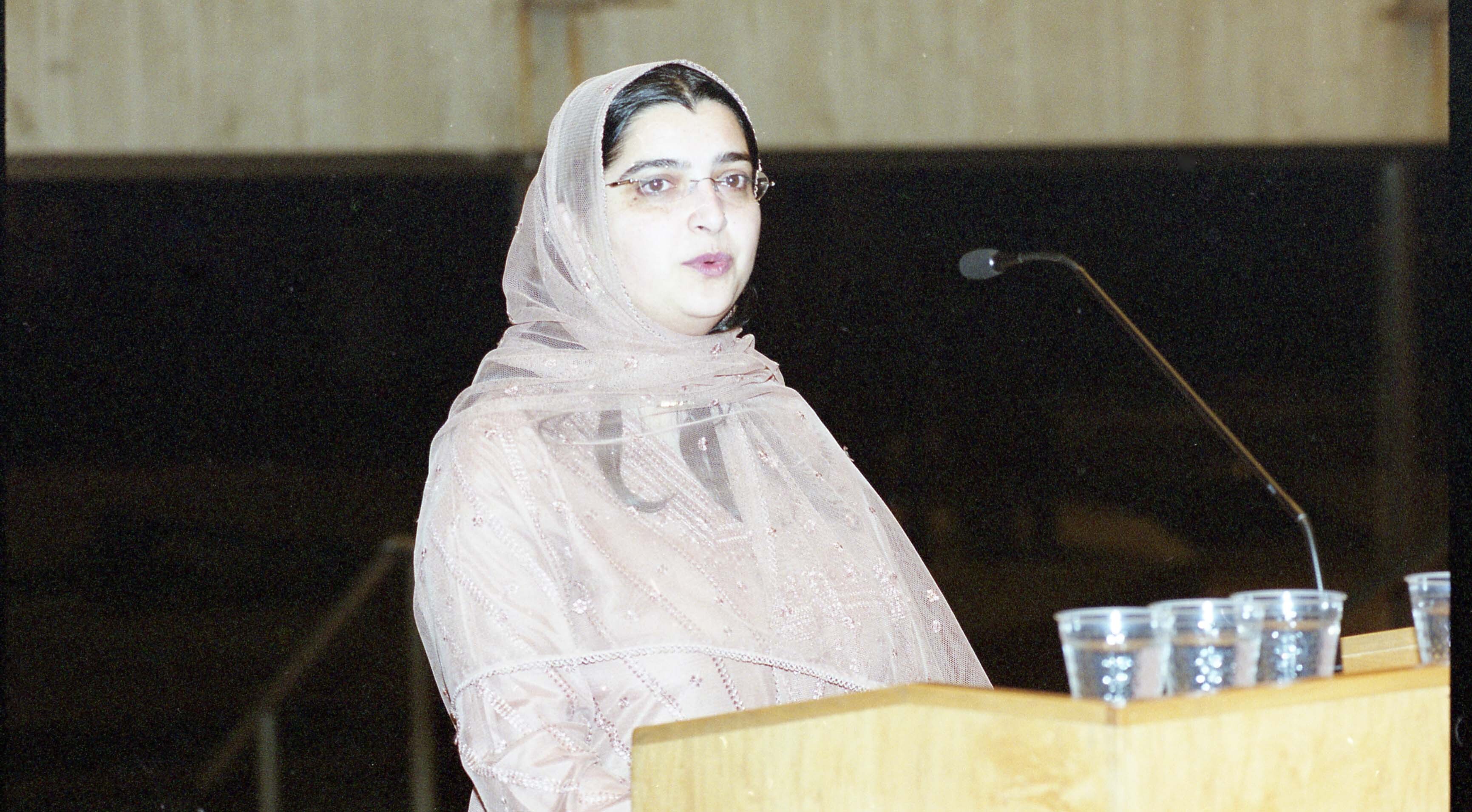
Photograph of Seemi Ghazi addressing the audience at the public celebration of Eid-ul-Adha on February 19, 2004, co-hosted by UBC Museum of Anthropology and the Committee for Racial Justice (CRJ) in Vancouver, British Columbia.
Seemi Bushra Ghazi is a lecturer in Classical Arabic at the University of British Columbia in Vancouver, Canada. She has a special interest in Islamic literature, culture, and spirituality, as well as Islam and Gender.
Eid al-Adha is the second most important celebration of Islam, (the first being Eid-ul-Fitr). It takes place on the tenth day of the twelfth and last month (Zulhijjah) of the Islamic calendar. In 2004, this celebration began on the morning of the 1st of February. Eid-ul-Adha celebrates the occasion when Abraham was willing to sacrifice his son to show his obedience to Allah (God). Muslims all around the world celebrate this day, although it has particular significance for pilgrims who complete a pilgrimage (Hajj) to Mecca.
The Museum of Anthropology (MOA) at the University of British Columbia is committed to promoting awareness and understanding of culturally diverse ways of knowing the world through challenging and innovative programs and partnerships with Indigenous, local and global communities.
The MOA and the CRJ first co-hosted an event in December 2003. Following its success, they created a year-long series of public events that offer cultural communities opportunities to share their cultural practices with a wider public. The idea is to create opportunities for people to come together in common purpose to share and celebrate their differences.
Seemi Bushra Ghazi is a lecturer in Classical Arabic at the University of British Columbia in Vancouver, Canada. She has a special interest in Islamic literature, culture, and spirituality, as well as Islam and Gender.
Eid al-Adha is the second most important celebration of Islam, (the first being Eid-ul-Fitr). It takes place on the tenth day of the twelfth and last month (Zulhijjah) of the Islamic calendar. In 2004, this celebration began on the morning of the 1st of February. Eid-ul-Adha celebrates the occasion when Abraham was willing to sacrifice his son to show his obedience to Allah (God). Muslims all around the world celebrate this day, although it has particular significance for pilgrims who complete a pilgrimage (Hajj) to Mecca.
The Museum of Anthropology (MOA) at the University of British Columbia is committed to promoting awareness and understanding of culturally diverse ways of knowing the world through challenging and innovative programs and partnerships with Indigenous, local and global communities.
The MOA and the CRJ first co-hosted an event in December 2003. Following its success, they created a year-long series of public events that offer cultural communities opportunities to share their cultural practices with a wider public. The idea is to create opportunities for people to come together in common purpose to share and celebrate their differences.
Member of
Creator:
Description
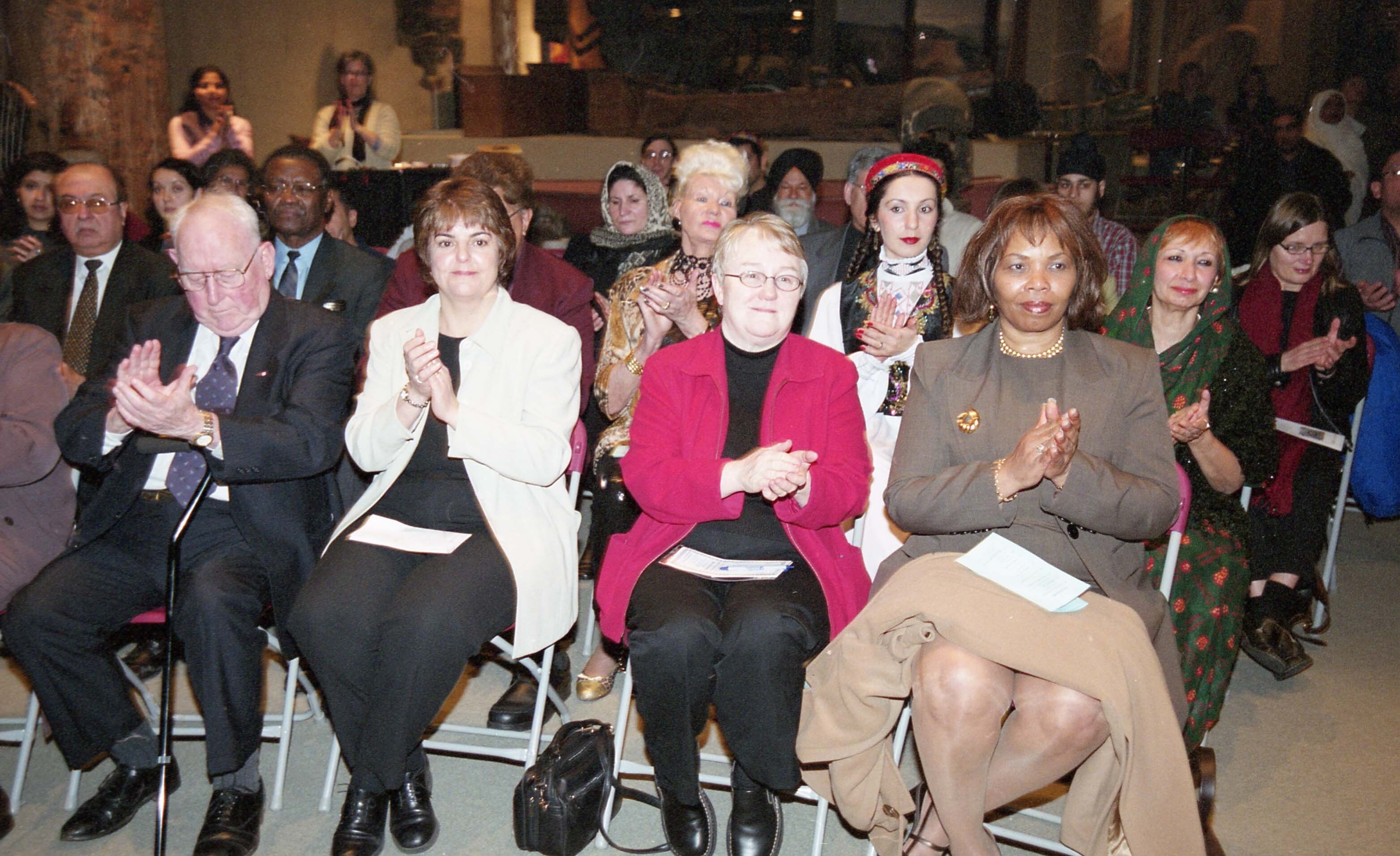
Photograph of the attendees applauding at the public celebration of Eid-ul-Adha on February 19, 2004, co-hosted by UBC Museum of Anthropology and the Committee for Racial Justice (CRJ) in Vancouver, British Columbia.
Eid al-Adha is the second most important celebration of Islam, (the first being Eid-ul-Fitr). It takes place on the tenth day of the twelfth and last month (Zulhijjah) of the Islamic calendar. In 2004, this celebration began on the morning of the 1st of February. Eid-ul-Adha celebrates the occasion when Abraham was willing to sacrifice his son to show his obedience to Allah (God). Muslims all around the world celebrate this day, although it has particular significance for pilgrims who complete a pilgrimage (Hajj) to Mecca.
The Museum of Anthropology (MOA) at the University of British Columbia is committed to promoting awareness and understanding of culturally diverse ways of knowing the world through challenging and innovative programs and partnerships with Indigenous, local and global communities.
The MOA and the CRJ first co-hosted an event in December 2003. Following its success, they created a year-long series of public events that offer cultural communities opportunities to share their cultural practices with a wider public. The idea is to create opportunities for people to come together in common purpose to share and celebrate their differences.
Eid al-Adha is the second most important celebration of Islam, (the first being Eid-ul-Fitr). It takes place on the tenth day of the twelfth and last month (Zulhijjah) of the Islamic calendar. In 2004, this celebration began on the morning of the 1st of February. Eid-ul-Adha celebrates the occasion when Abraham was willing to sacrifice his son to show his obedience to Allah (God). Muslims all around the world celebrate this day, although it has particular significance for pilgrims who complete a pilgrimage (Hajj) to Mecca.
The Museum of Anthropology (MOA) at the University of British Columbia is committed to promoting awareness and understanding of culturally diverse ways of knowing the world through challenging and innovative programs and partnerships with Indigenous, local and global communities.
The MOA and the CRJ first co-hosted an event in December 2003. Following its success, they created a year-long series of public events that offer cultural communities opportunities to share their cultural practices with a wider public. The idea is to create opportunities for people to come together in common purpose to share and celebrate their differences.
Member of
Creator:
Description
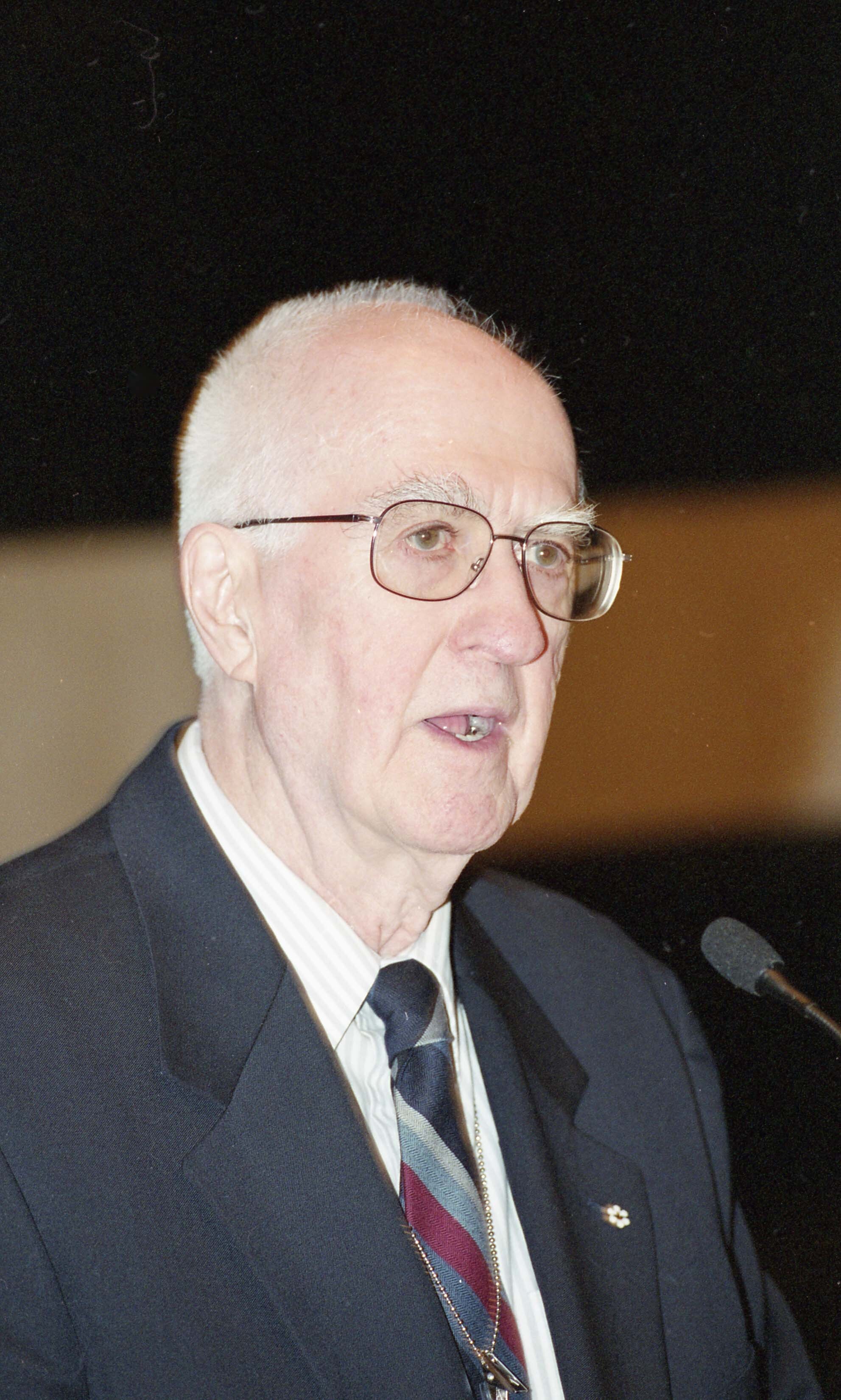
Photograph of an unidentified man addressing the audience at the public celebration of Eid-ul-Adha on February 19, 2004, co-hosted by UBC Museum of Anthropology and the Committee for Racial Justice (CRJ) in Vancouver, British Columbia.
Eid al-Adha is the second most important celebration of Islam, (the first being Eid-ul-Fitr). It takes place on the tenth day of the twelfth and last month (Zulhijjah) of the Islamic calendar. In 2004, this celebration began on the morning of the 1st of February. Eid-ul-Adha celebrates the occasion when Abraham was willing to sacrifice his son to show his obedience to Allah (God). Muslims all around the world celebrate this day, although it has particular significance for pilgrims who complete a pilgrimage (Hajj) to Mecca.
The Museum of Anthropology (MOA) at the University of British Columbia is committed to promoting awareness and understanding of culturally diverse ways of knowing the world through challenging and innovative programs and partnerships with Indigenous, local and global communities.
The MOA and the CRJ first co-hosted an event in December 2003. Following its success, they created a year-long series of public events that offer cultural communities opportunities to share their cultural practices with a wider public. The idea is to create opportunities for people to come together in common purpose to share and celebrate their differences.
Eid al-Adha is the second most important celebration of Islam, (the first being Eid-ul-Fitr). It takes place on the tenth day of the twelfth and last month (Zulhijjah) of the Islamic calendar. In 2004, this celebration began on the morning of the 1st of February. Eid-ul-Adha celebrates the occasion when Abraham was willing to sacrifice his son to show his obedience to Allah (God). Muslims all around the world celebrate this day, although it has particular significance for pilgrims who complete a pilgrimage (Hajj) to Mecca.
The Museum of Anthropology (MOA) at the University of British Columbia is committed to promoting awareness and understanding of culturally diverse ways of knowing the world through challenging and innovative programs and partnerships with Indigenous, local and global communities.
The MOA and the CRJ first co-hosted an event in December 2003. Following its success, they created a year-long series of public events that offer cultural communities opportunities to share their cultural practices with a wider public. The idea is to create opportunities for people to come together in common purpose to share and celebrate their differences.
Member of
Creator:
Description
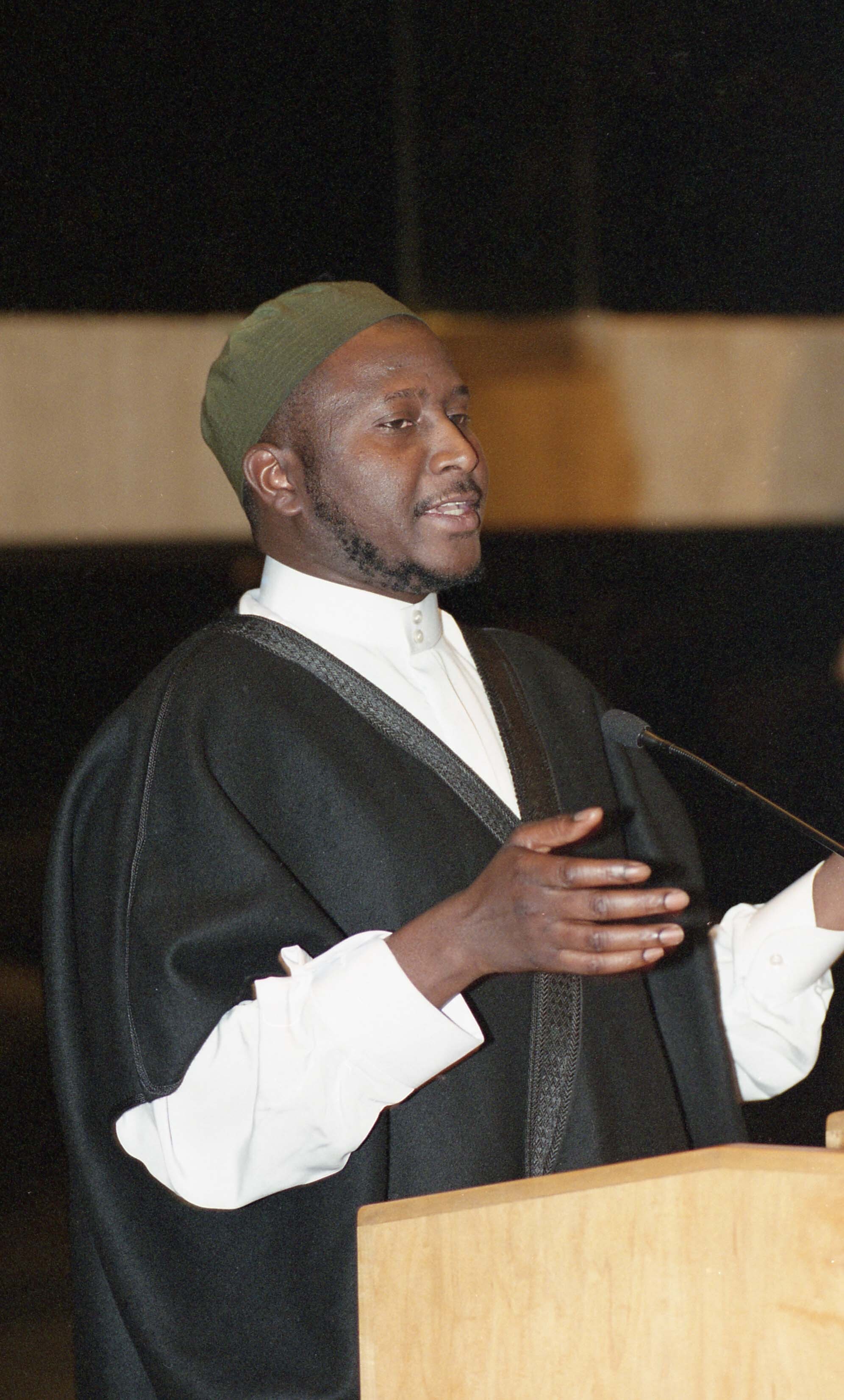
Photograph of Imam Fode Drame addressing the audience at the public celebration of Eid-ul-Adha on February 19, 2004, co-hosted by UBC Museum of Anthropology and the Committee for Racial Justice (CRJ) in Vancouver, British Columbia.
Imam Fode Drame is a Gambian-born teacher, author, linguist, and Quranic exegete. He founded the Zawiyah Foundation, a non-profit organization based in Vancouver, British Columbia, in 2005. Drame has written multiple books, including the Expansions series and Anwar ul-Quran, a translation of the Quran. His work focuses on religious education and community initiatives.
Eid al-Adha is the second most important celebration of Islam, (the first being Eid-ul-Fitr). It takes place on the tenth day of the twelfth and last month (Zulhijjah) of the Islamic calendar. In 2004, this celebration began on the morning of the 1st of February. Eid-ul-Adha celebrates the occasion when Abraham was willing to sacrifice his son to show his obedience to Allah (God). Muslims all around the world celebrate this day, although it has particular significance for pilgrims who complete a pilgrimage (Hajj) to Mecca.
The Museum of Anthropology (MOA) at the University of British Columbia is committed to promoting awareness and understanding of culturally diverse ways of knowing the world through challenging and innovative programs and partnerships with Indigenous, local and global communities.
The MOA and the CRJ first co-hosted an event in December 2003. Following its success, they created a year-long series of public events that offer cultural communities opportunities to share their cultural practices with a wider public. The idea is to create opportunities for people to come together in common purpose to share and celebrate their differences.
Imam Fode Drame is a Gambian-born teacher, author, linguist, and Quranic exegete. He founded the Zawiyah Foundation, a non-profit organization based in Vancouver, British Columbia, in 2005. Drame has written multiple books, including the Expansions series and Anwar ul-Quran, a translation of the Quran. His work focuses on religious education and community initiatives.
Eid al-Adha is the second most important celebration of Islam, (the first being Eid-ul-Fitr). It takes place on the tenth day of the twelfth and last month (Zulhijjah) of the Islamic calendar. In 2004, this celebration began on the morning of the 1st of February. Eid-ul-Adha celebrates the occasion when Abraham was willing to sacrifice his son to show his obedience to Allah (God). Muslims all around the world celebrate this day, although it has particular significance for pilgrims who complete a pilgrimage (Hajj) to Mecca.
The Museum of Anthropology (MOA) at the University of British Columbia is committed to promoting awareness and understanding of culturally diverse ways of knowing the world through challenging and innovative programs and partnerships with Indigenous, local and global communities.
The MOA and the CRJ first co-hosted an event in December 2003. Following its success, they created a year-long series of public events that offer cultural communities opportunities to share their cultural practices with a wider public. The idea is to create opportunities for people to come together in common purpose to share and celebrate their differences.
Member of
Creator:
Description
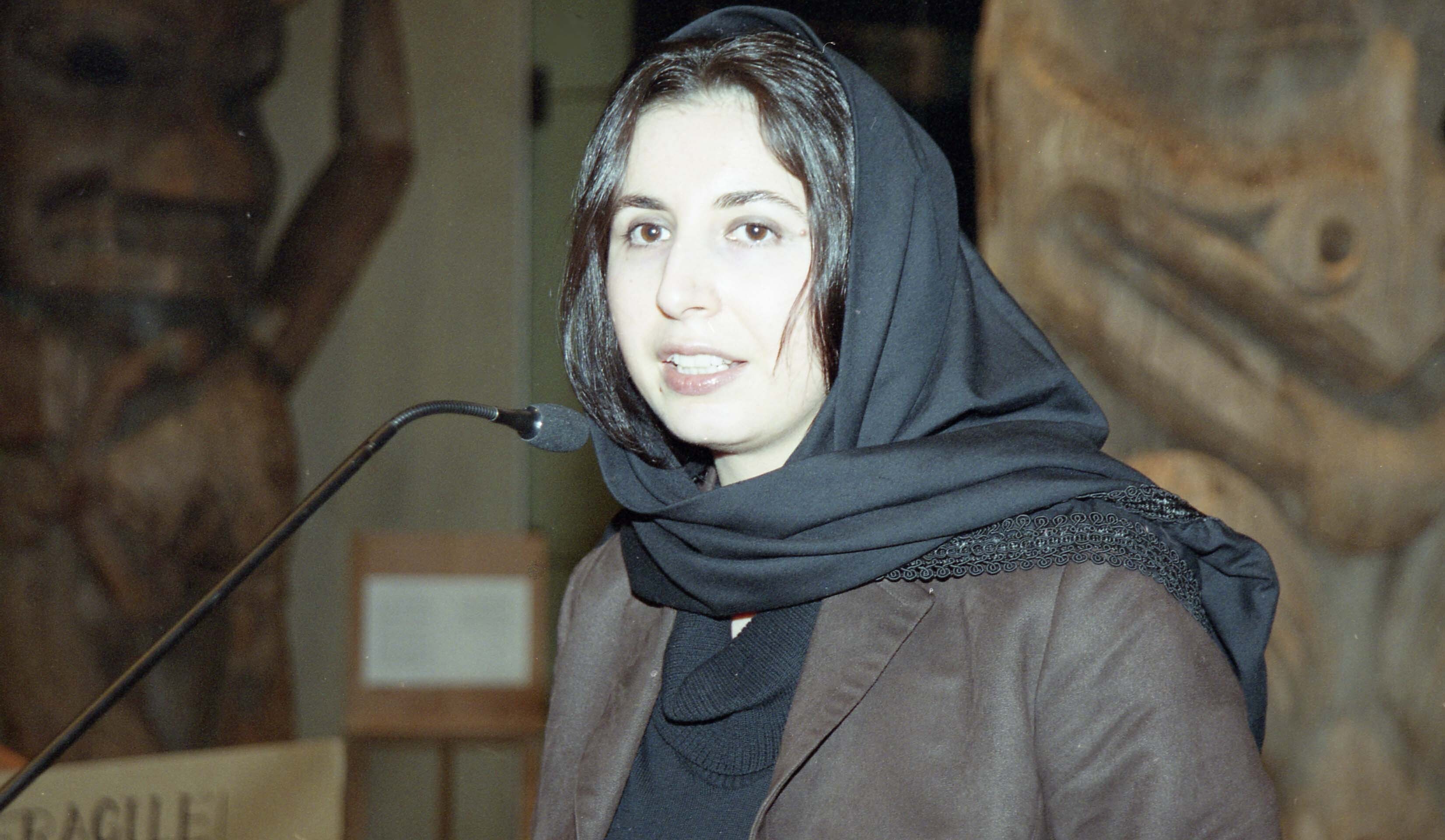
Photograph of an unidentified woman addressing the audience at the public celebration of Eid-ul-Adha on February 19, 2004, co-hosted by UBC Museum of Anthropology and the Committee for Racial Justice (CRJ) in Vancouver, British Columbia.
Eid al-Adha is the second most important celebration of Islam, (the first being Eid-ul-Fitr). It takes place on the tenth day of the twelfth and last month (Zulhijjah) of the Islamic calendar. In 2004, this celebration began on the morning of the 1st of February. Eid-ul-Adha celebrates the occasion when Abraham was willing to sacrifice his son to show his obedience to Allah (God). Muslims all around the world celebrate this day, although it has particular significance for pilgrims who complete a pilgrimage (Hajj) to Mecca.
The Museum of Anthropology (MOA) at the University of British Columbia is committed to promoting awareness and understanding of culturally diverse ways of knowing the world through challenging and innovative programs and partnerships with Indigenous, local and global communities.
The MOA and the CRJ first co-hosted an event in December 2003. Following its success, they created a year-long series of public events that offer cultural communities opportunities to share their cultural practices with a wider public. The idea is to create opportunities for people to come together in common purpose to share and celebrate their differences.
Eid al-Adha is the second most important celebration of Islam, (the first being Eid-ul-Fitr). It takes place on the tenth day of the twelfth and last month (Zulhijjah) of the Islamic calendar. In 2004, this celebration began on the morning of the 1st of February. Eid-ul-Adha celebrates the occasion when Abraham was willing to sacrifice his son to show his obedience to Allah (God). Muslims all around the world celebrate this day, although it has particular significance for pilgrims who complete a pilgrimage (Hajj) to Mecca.
The Museum of Anthropology (MOA) at the University of British Columbia is committed to promoting awareness and understanding of culturally diverse ways of knowing the world through challenging and innovative programs and partnerships with Indigenous, local and global communities.
The MOA and the CRJ first co-hosted an event in December 2003. Following its success, they created a year-long series of public events that offer cultural communities opportunities to share their cultural practices with a wider public. The idea is to create opportunities for people to come together in common purpose to share and celebrate their differences.