
Museums
Authority Sources
Member of
Description
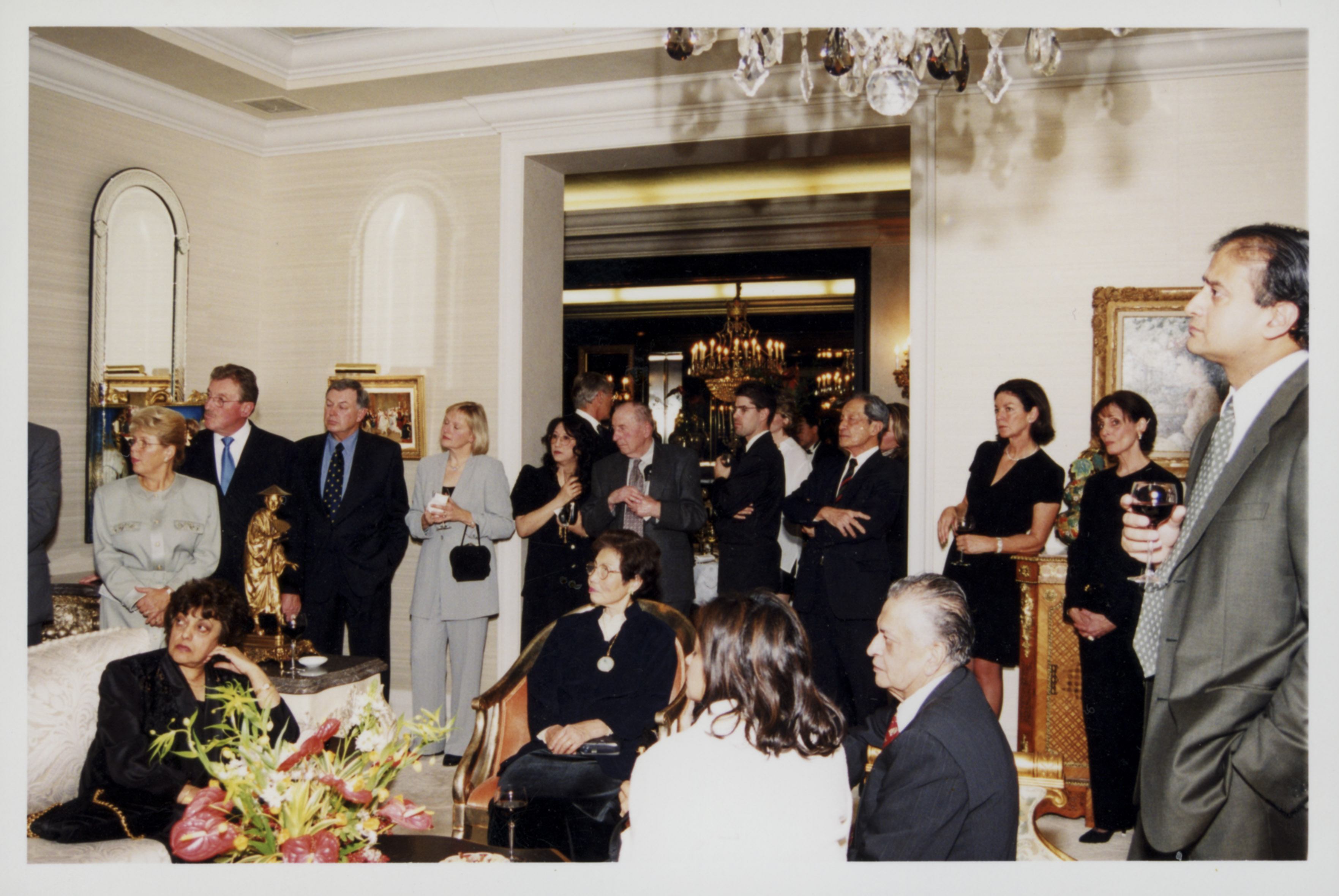
In an unidentified gallery, a large crowd of roughly nineteen people turn their attention to something off-camera. In the foreground, four of the guests are seated around a small table bearing a floral arrangement. The guest seated on the left may be Helen Doman. The guest seated on the right may be Herb Doman. The remaining attendees stand. Paintings and large mirrors are mounted on the walls behind the attendees. Another room can be seen through an archway on the rear wall, with a large mirror on its wall and a chandelier hanging from its ceiling.
Member of
Description
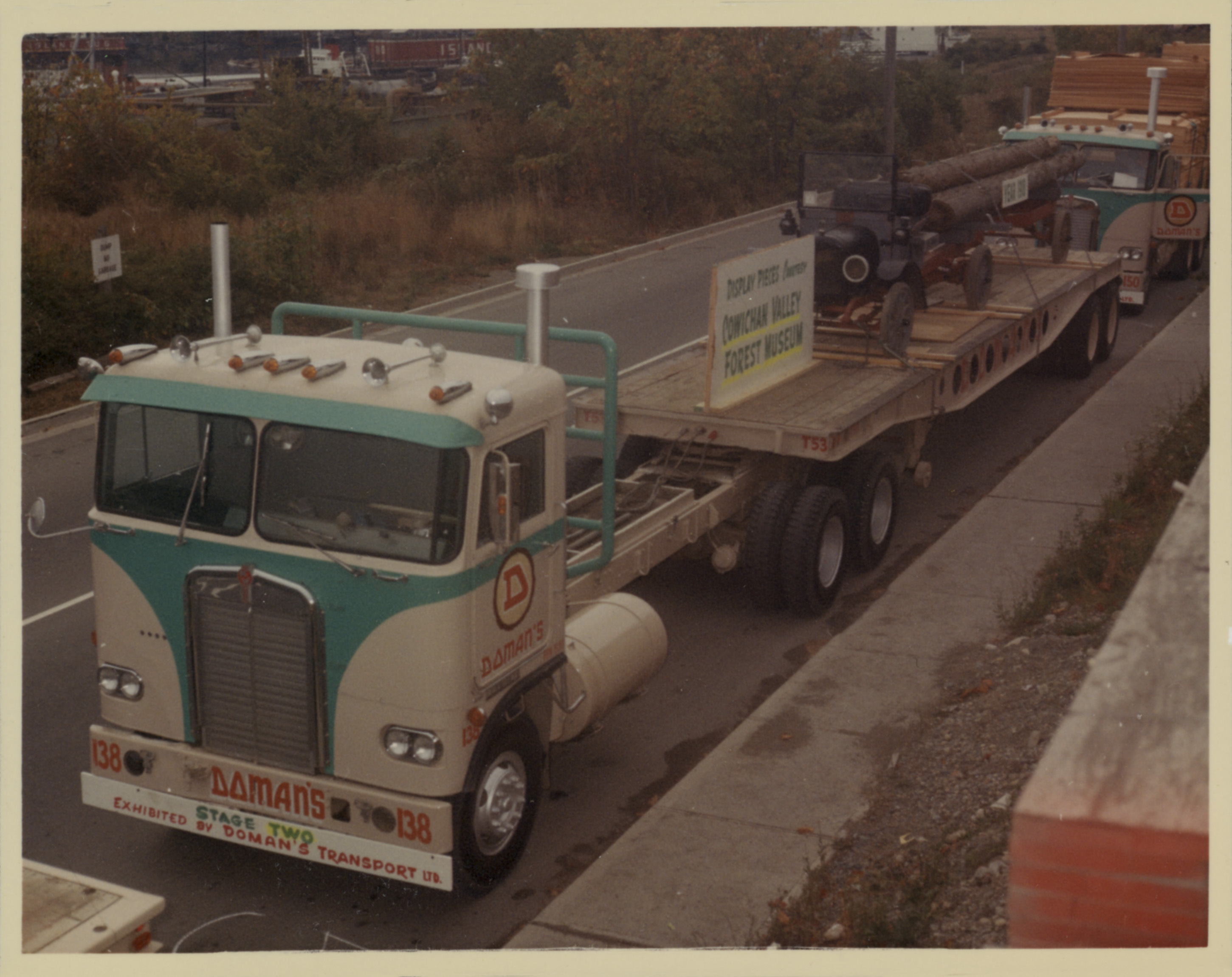
Doman Industries transport truck no. 138 sits parked by the side of a rural roadway near a body of water. The truck bed is loaded with a smaller antique hauling truck serving as a display piece from the Cowichan Valley Forest Museum. The bed of the antique hauling truck is loaded with a small bundle of logs. A signboard on no. 138's bumper advertises it as "stage two" of an exhibition. Transport truck no. 150 sits parked behind no. 138, its bed loaded with bales of thin, flat wooden boards. A signboard on the truck's bumper advertises it as "stage three" of an exhibition. Shipping containers and loading docks at the edge of the water can be seen behind a stand of trees at the side of the road. The BC Forest Discovery Centre was opened in 1965 as the Cowichan Valley Forest Museum. It was later known for a time as the BC Forest Museum.
Creator: Bodalia, Chandra
Description
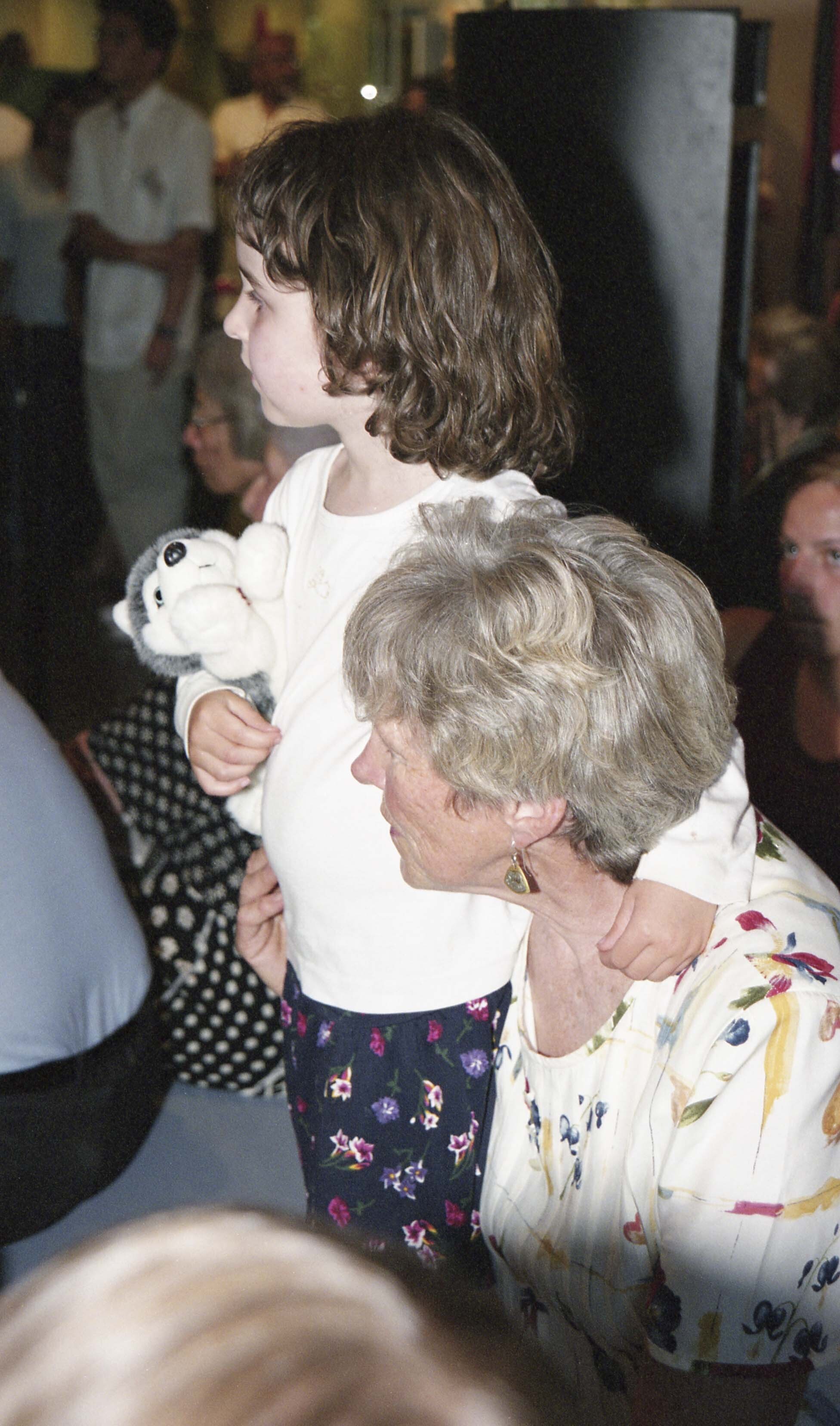
Photograph of an unidentified woman and a child at an art exhibit entitled, "Through the Eye of the Needle: Stories From an Indian Desert" organized by Maiwa and Kutch Mahila Vikas Sangathan. The exhibit was hosted at the Museum of Vancouver, in Vancouver, B.C.
Founded in 1986 by Charlotte Kwon, Maiwa (previously known as Maiwa Handprints) has evolved from being a retail store located on Granville Island into a School of Textiles, a Foundation, and an online presence. Their three guiding principles are: natural dyes, as they work directly with farmers and run a full-time natural dye studio; slow clothes, as they include hand spinners, hand weavers, embroiderers, and block printers in their workflow to counter fashion fashion; and finally, artisans, as they build relationships with them and recognize how everyone in the process of making clothing are connected.
Kutch Mahila Vikas Sangathan (KMVS) centres the experience of the women of second largest district of India, Kutch, which comprises of ten administrative regions. The area struggles with water scarcity and threats of drought due to its fragile ecosystem. The district is said to be home to 1.5 million people, according to the 2001 census, and the majority resides in rural areas. MKVS' mission is "total empowerment," which consists of economic, political, and social empowerment of the rural women in the Kutch district. They intend to do so through awareness-raising, organizing, mobilizing, building confidence to address problems, developing critical analysis skills, working as a collective, and many other empowering endeavours.
Located within the unceded, ancestral territories of the xʷməθkʷəy̓əm (Musqueam), Sḵwx̱wú7mesh (Squamish), and səlilwətaɬ (Tsleil-Waututh) Nations, the Museum of Vancouver's vision is to inspire and foster a more socially connected, resilient, and publicly engaged city. They do so by becoming a gathering space intent on fostering connection, learning, and new experiences of Vancouver's diverse communities and histories.They are committed to four pillars: redress and decolonization, immigration and diversity, environment and sustainability, and urban and contemporary issues.
Founded in 1986 by Charlotte Kwon, Maiwa (previously known as Maiwa Handprints) has evolved from being a retail store located on Granville Island into a School of Textiles, a Foundation, and an online presence. Their three guiding principles are: natural dyes, as they work directly with farmers and run a full-time natural dye studio; slow clothes, as they include hand spinners, hand weavers, embroiderers, and block printers in their workflow to counter fashion fashion; and finally, artisans, as they build relationships with them and recognize how everyone in the process of making clothing are connected.
Kutch Mahila Vikas Sangathan (KMVS) centres the experience of the women of second largest district of India, Kutch, which comprises of ten administrative regions. The area struggles with water scarcity and threats of drought due to its fragile ecosystem. The district is said to be home to 1.5 million people, according to the 2001 census, and the majority resides in rural areas. MKVS' mission is "total empowerment," which consists of economic, political, and social empowerment of the rural women in the Kutch district. They intend to do so through awareness-raising, organizing, mobilizing, building confidence to address problems, developing critical analysis skills, working as a collective, and many other empowering endeavours.
Located within the unceded, ancestral territories of the xʷməθkʷəy̓əm (Musqueam), Sḵwx̱wú7mesh (Squamish), and səlilwətaɬ (Tsleil-Waututh) Nations, the Museum of Vancouver's vision is to inspire and foster a more socially connected, resilient, and publicly engaged city. They do so by becoming a gathering space intent on fostering connection, learning, and new experiences of Vancouver's diverse communities and histories.They are committed to four pillars: redress and decolonization, immigration and diversity, environment and sustainability, and urban and contemporary issues.
Creator: Bodalia, Chandra
Description
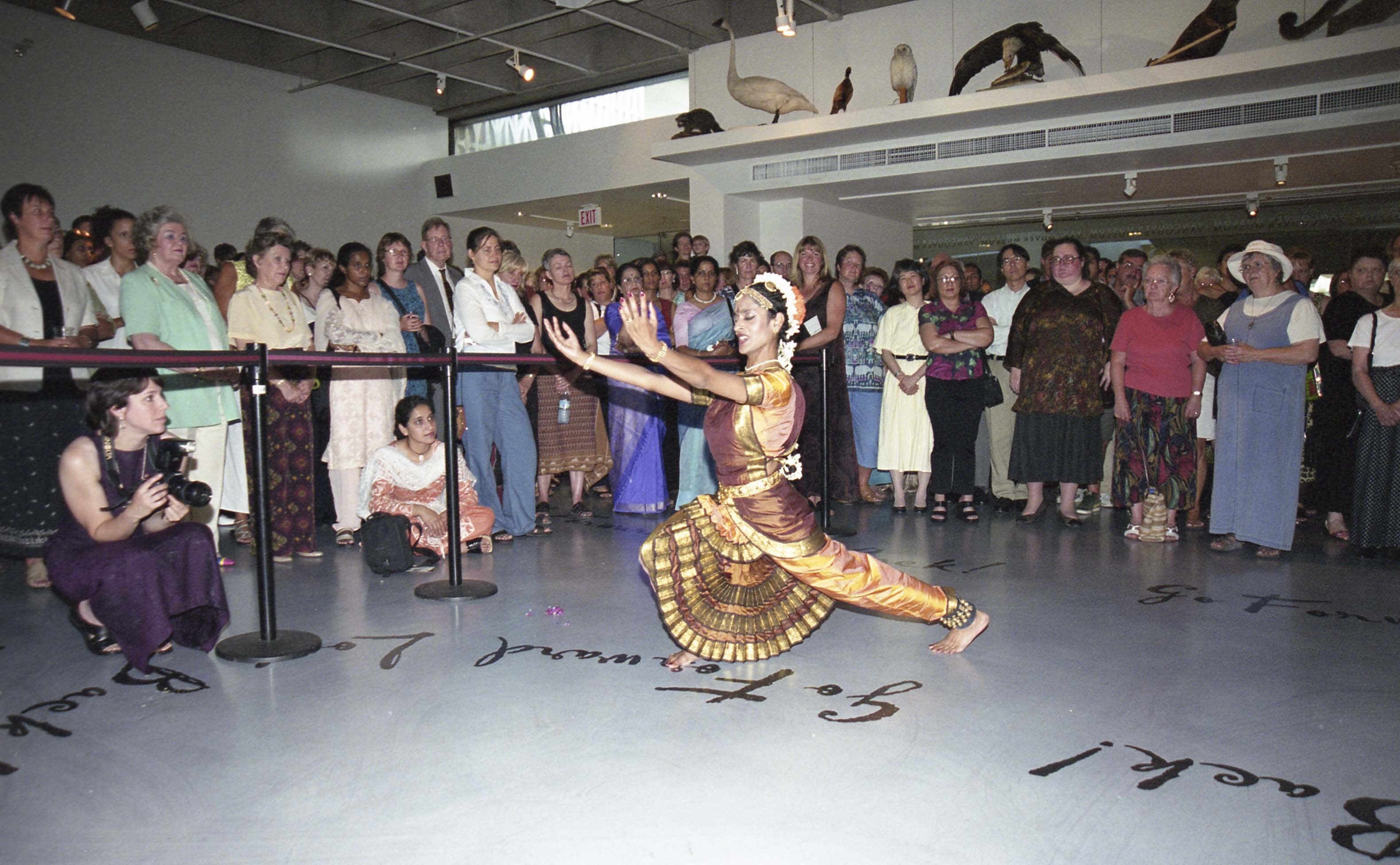
Photograph of a dance performance at an art exhibit entitled, "Through the Eye of the Needle: Stories From an Indian Desert" organized by Maiwa and Kutch Mahila Vikas Sangathan. The exhibit was hosted at the Museum of Vancouver, in Vancouver, B.C.
Founded in 1986 by Charlotte Kwon, Maiwa (previously known as Maiwa Handprints) has evolved from being a retail store located on Granville Island into a School of Textiles, a Foundation, and an online presence. Their three guiding principles are: natural dyes, as they work directly with farmers and run a full-time natural dye studio; slow clothes, as they include hand spinners, hand weavers, embroiderers, and block printers in their workflow to counter fashion fashion; and finally, artisans, as they build relationships with them and recognize how everyone in the process of making clothing are connected.
Kutch Mahila Vikas Sangathan (KMVS) centres the experience of the women of second largest district of India, Kutch, which comprises of ten administrative regions. The area struggles with water scarcity and threats of drought due to its fragile ecosystem. The district is said to be home to 1.5 million people, according to the 2001 census, and the majority resides in rural areas. MKVS' mission is "total empowerment," which consists of economic, political, and social empowerment of the rural women in the Kutch district. They intend to do so through awareness-raising, organizing, mobilizing, building confidence to address problems, developing critical analysis skills, working as a collective, and many other empowering endeavours.
Located within the unceded, ancestral territories of the xʷməθkʷəy̓əm (Musqueam), Sḵwx̱wú7mesh (Squamish), and səlilwətaɬ (Tsleil-Waututh) Nations, the Museum of Vancouver's vision is to inspire and foster a more socially connected, resilient, and publicly engaged city. They do so by becoming a gathering space intent on fostering connection, learning, and new experiences of Vancouver's diverse communities and histories.They are committed to four pillars: redress and decolonization, immigration and diversity, environment and sustainability, and urban and contemporary issues.
Founded in 1986 by Charlotte Kwon, Maiwa (previously known as Maiwa Handprints) has evolved from being a retail store located on Granville Island into a School of Textiles, a Foundation, and an online presence. Their three guiding principles are: natural dyes, as they work directly with farmers and run a full-time natural dye studio; slow clothes, as they include hand spinners, hand weavers, embroiderers, and block printers in their workflow to counter fashion fashion; and finally, artisans, as they build relationships with them and recognize how everyone in the process of making clothing are connected.
Kutch Mahila Vikas Sangathan (KMVS) centres the experience of the women of second largest district of India, Kutch, which comprises of ten administrative regions. The area struggles with water scarcity and threats of drought due to its fragile ecosystem. The district is said to be home to 1.5 million people, according to the 2001 census, and the majority resides in rural areas. MKVS' mission is "total empowerment," which consists of economic, political, and social empowerment of the rural women in the Kutch district. They intend to do so through awareness-raising, organizing, mobilizing, building confidence to address problems, developing critical analysis skills, working as a collective, and many other empowering endeavours.
Located within the unceded, ancestral territories of the xʷməθkʷəy̓əm (Musqueam), Sḵwx̱wú7mesh (Squamish), and səlilwətaɬ (Tsleil-Waututh) Nations, the Museum of Vancouver's vision is to inspire and foster a more socially connected, resilient, and publicly engaged city. They do so by becoming a gathering space intent on fostering connection, learning, and new experiences of Vancouver's diverse communities and histories.They are committed to four pillars: redress and decolonization, immigration and diversity, environment and sustainability, and urban and contemporary issues.
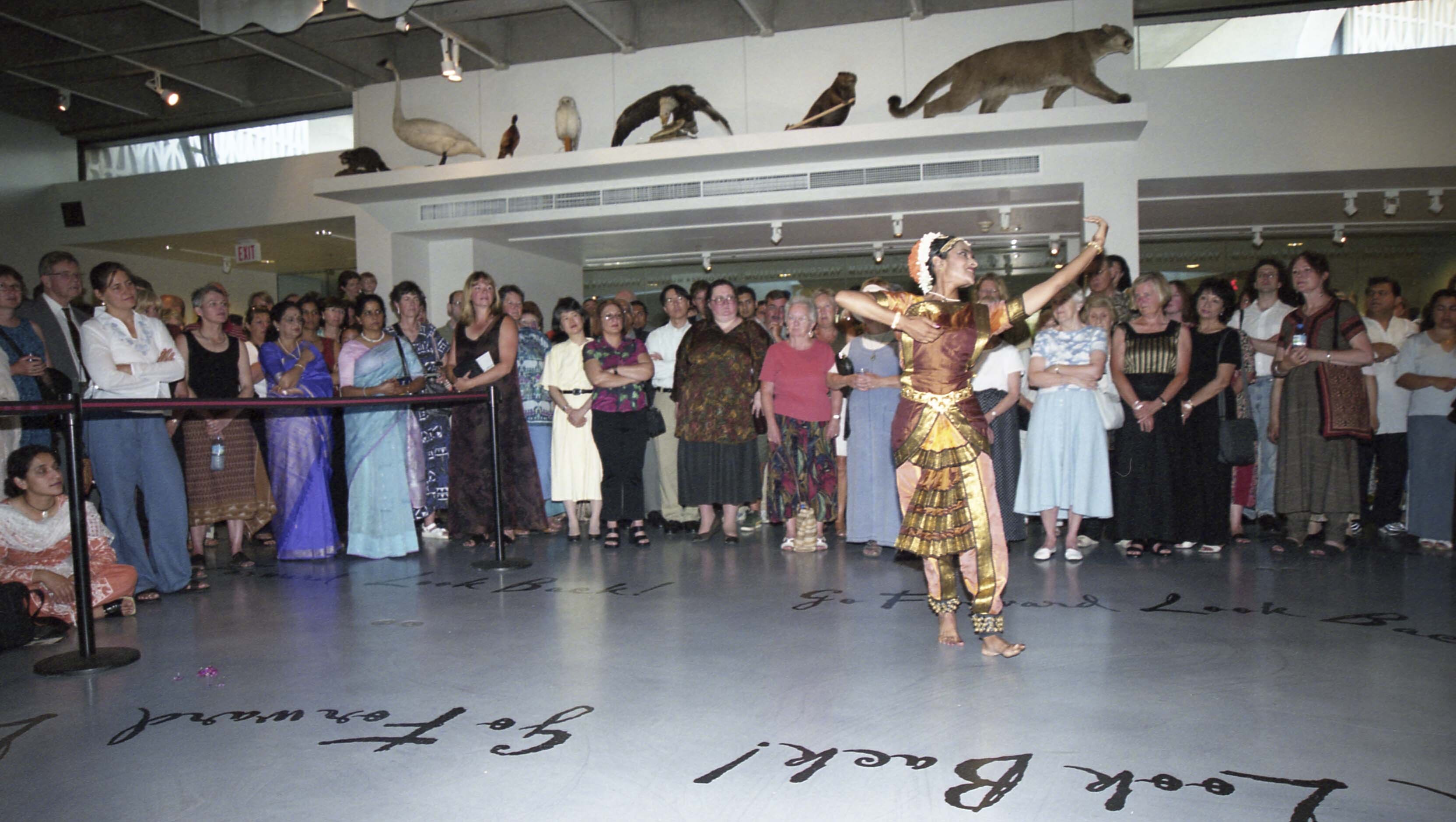
Creator: Bodalia, Chandra
Description
Photograph of a dance performance at an art exhibit entitled, "Through the Eye of the Needle: Stories From an Indian Desert" organized by Maiwa and Kutch Mahila Vikas Sangathan. The exhibit was hosted at the Museum of Vancouver, in Vancouver, B.C.
Founded in 1986 by Charlotte Kwon, Maiwa (previously known as Maiwa Handprints) has evolved from being a retail store located on Granville Island into a School of Textiles, a Foundation, and an online presence. Their three guiding principles are: natural dyes, as they work directly with farmers and run a full-time natural dye studio; slow clothes, as they include hand spinners, hand weavers, embroiderers, and block printers in their workflow to counter fashion fashion; and finally, artisans, as they build relationships with them and recognize how everyone in the process of making clothing are connected.
Kutch Mahila Vikas Sangathan (KMVS) centres the experience of the women of second largest district of India, Kutch, which comprises of ten administrative regions. The area struggles with water scarcity and threats of drought due to its fragile ecosystem. The district is said to be home to 1.5 million people, according to the 2001 census, and the majority resides in rural areas. MKVS' mission is "total empowerment," which consists of economic, political, and social empowerment of the rural women in the Kutch district. They intend to do so through awareness-raising, organizing, mobilizing, building confidence to address problems, developing critical analysis skills, working as a collective, and many other empowering endeavours.
Located within the unceded, ancestral territories of the xʷməθkʷəy̓əm (Musqueam), Sḵwx̱wú7mesh (Squamish), and səlilwətaɬ (Tsleil-Waututh) Nations, the Museum of Vancouver's vision is to inspire and foster a more socially connected, resilient, and publicly engaged city. They do so by becoming a gathering space intent on fostering connection, learning, and new experiences of Vancouver's diverse communities and histories.They are committed to four pillars: redress and decolonization, immigration and diversity, environment and sustainability, and urban and contemporary issues.
Founded in 1986 by Charlotte Kwon, Maiwa (previously known as Maiwa Handprints) has evolved from being a retail store located on Granville Island into a School of Textiles, a Foundation, and an online presence. Their three guiding principles are: natural dyes, as they work directly with farmers and run a full-time natural dye studio; slow clothes, as they include hand spinners, hand weavers, embroiderers, and block printers in their workflow to counter fashion fashion; and finally, artisans, as they build relationships with them and recognize how everyone in the process of making clothing are connected.
Kutch Mahila Vikas Sangathan (KMVS) centres the experience of the women of second largest district of India, Kutch, which comprises of ten administrative regions. The area struggles with water scarcity and threats of drought due to its fragile ecosystem. The district is said to be home to 1.5 million people, according to the 2001 census, and the majority resides in rural areas. MKVS' mission is "total empowerment," which consists of economic, political, and social empowerment of the rural women in the Kutch district. They intend to do so through awareness-raising, organizing, mobilizing, building confidence to address problems, developing critical analysis skills, working as a collective, and many other empowering endeavours.
Located within the unceded, ancestral territories of the xʷməθkʷəy̓əm (Musqueam), Sḵwx̱wú7mesh (Squamish), and səlilwətaɬ (Tsleil-Waututh) Nations, the Museum of Vancouver's vision is to inspire and foster a more socially connected, resilient, and publicly engaged city. They do so by becoming a gathering space intent on fostering connection, learning, and new experiences of Vancouver's diverse communities and histories.They are committed to four pillars: redress and decolonization, immigration and diversity, environment and sustainability, and urban and contemporary issues.
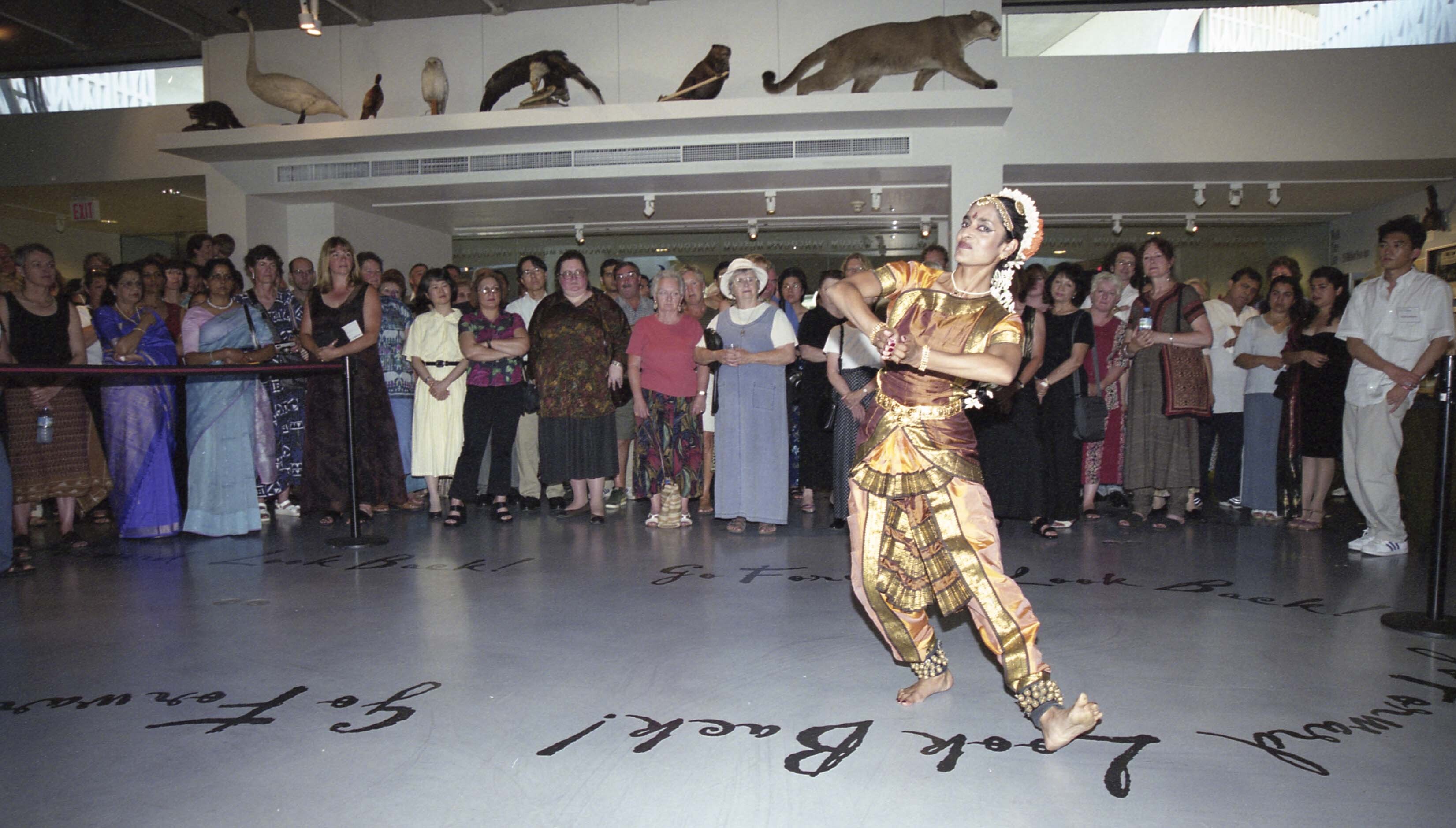
Creator: Bodalia, Chandra
Description
Photograph of a dance performance at an art exhibit entitled, "Through the Eye of the Needle: Stories From an Indian Desert" organized by Maiwa and Kutch Mahila Vikas Sangathan. The exhibit was hosted at the Museum of Vancouver, in Vancouver, B.C.
Founded in 1986 by Charlotte Kwon, Maiwa (previously known as Maiwa Handprints) has evolved from being a retail store located on Granville Island into a School of Textiles, a Foundation, and an online presence. Their three guiding principles are: natural dyes, as they work directly with farmers and run a full-time natural dye studio; slow clothes, as they include hand spinners, hand weavers, embroiderers, and block printers in their workflow to counter fashion fashion; and finally, artisans, as they build relationships with them and recognize how everyone in the process of making clothing are connected.
Kutch Mahila Vikas Sangathan (KMVS) centres the experience of the women of second largest district of India, Kutch, which comprises of ten administrative regions. The area struggles with water scarcity and threats of drought due to its fragile ecosystem. The district is said to be home to 1.5 million people, according to the 2001 census, and the majority resides in rural areas. MKVS' mission is "total empowerment," which consists of economic, political, and social empowerment of the rural women in the Kutch district. They intend to do so through awareness-raising, organizing, mobilizing, building confidence to address problems, developing critical analysis skills, working as a collective, and many other empowering endeavours.
Located within the unceded, ancestral territories of the xʷməθkʷəy̓əm (Musqueam), Sḵwx̱wú7mesh (Squamish), and səlilwətaɬ (Tsleil-Waututh) Nations, the Museum of Vancouver's vision is to inspire and foster a more socially connected, resilient, and publicly engaged city. They do so by becoming a gathering space intent on fostering connection, learning, and new experiences of Vancouver's diverse communities and histories.They are committed to four pillars: redress and decolonization, immigration and diversity, environment and sustainability, and urban and contemporary issues.
Founded in 1986 by Charlotte Kwon, Maiwa (previously known as Maiwa Handprints) has evolved from being a retail store located on Granville Island into a School of Textiles, a Foundation, and an online presence. Their three guiding principles are: natural dyes, as they work directly with farmers and run a full-time natural dye studio; slow clothes, as they include hand spinners, hand weavers, embroiderers, and block printers in their workflow to counter fashion fashion; and finally, artisans, as they build relationships with them and recognize how everyone in the process of making clothing are connected.
Kutch Mahila Vikas Sangathan (KMVS) centres the experience of the women of second largest district of India, Kutch, which comprises of ten administrative regions. The area struggles with water scarcity and threats of drought due to its fragile ecosystem. The district is said to be home to 1.5 million people, according to the 2001 census, and the majority resides in rural areas. MKVS' mission is "total empowerment," which consists of economic, political, and social empowerment of the rural women in the Kutch district. They intend to do so through awareness-raising, organizing, mobilizing, building confidence to address problems, developing critical analysis skills, working as a collective, and many other empowering endeavours.
Located within the unceded, ancestral territories of the xʷməθkʷəy̓əm (Musqueam), Sḵwx̱wú7mesh (Squamish), and səlilwətaɬ (Tsleil-Waututh) Nations, the Museum of Vancouver's vision is to inspire and foster a more socially connected, resilient, and publicly engaged city. They do so by becoming a gathering space intent on fostering connection, learning, and new experiences of Vancouver's diverse communities and histories.They are committed to four pillars: redress and decolonization, immigration and diversity, environment and sustainability, and urban and contemporary issues.
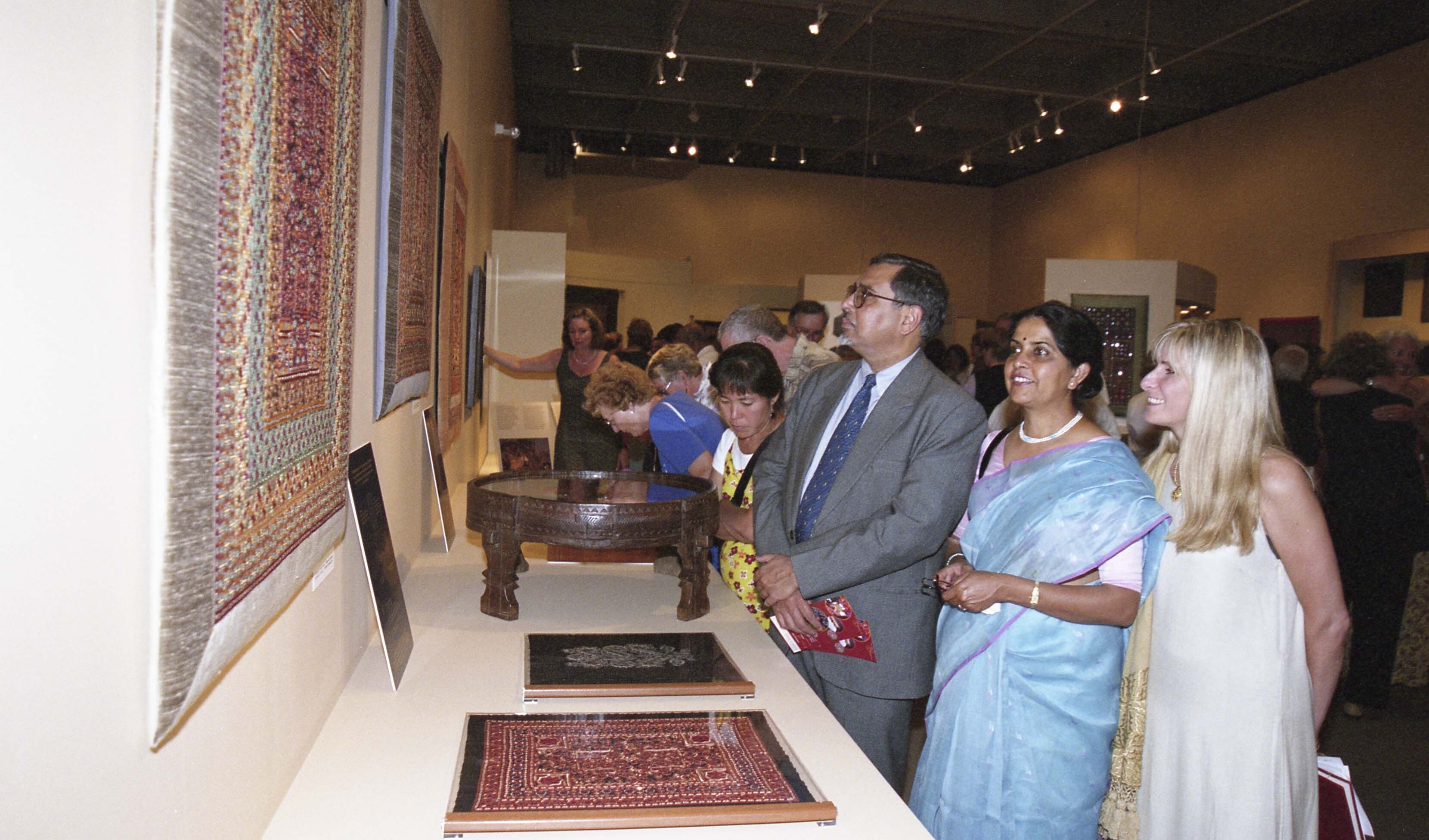
Creator: Bodalia, Chandra
Description
Photograph of people appreciating the textile prints at an art exhibit entitled, "Through the Eye of the Needle: Stories From an Indian Desert" organized by Maiwa and Kutch Mahila Vikas Sangathan. The exhibit was hosted at the Museum of Vancouver, in Vancouver, B.C.
Founded in 1986 by Charlotte Kwon, Maiwa (previously known as Maiwa Handprints) has evolved from being a retail store located on Granville Island into a School of Textiles, a Foundation, and an online presence. Their three guiding principles are: natural dyes, as they work directly with farmers and run a full-time natural dye studio; slow clothes, as they include hand spinners, hand weavers, embroiderers, and block printers in their workflow to counter fashion fashion; and finally, artisans, as they build relationships with them and recognize how everyone in the process of making clothing are connected.
Kutch Mahila Vikas Sangathan (KMVS) centres the experience of the women of second largest district of India, Kutch, which comprises of ten administrative regions. The area struggles with water scarcity and threats of drought due to its fragile ecosystem. The district is said to be home to 1.5 million people, according to the 2001 census, and the majority resides in rural areas. MKVS' mission is "total empowerment," which consists of economic, political, and social empowerment of the rural women in the Kutch district. They intend to do so through awareness-raising, organizing, mobilizing, building confidence to address problems, developing critical analysis skills, working as a collective, and many other empowering endeavours.
Located within the unceded, ancestral territories of the xʷməθkʷəy̓əm (Musqueam), Sḵwx̱wú7mesh (Squamish), and səlilwətaɬ (Tsleil-Waututh) Nations, the Museum of Vancouver's vision is to inspire and foster a more socially connected, resilient, and publicly engaged city. They do so by becoming a gathering space intent on fostering connection, learning, and new experiences of Vancouver's diverse communities and histories.They are committed to four pillars: redress and decolonization, immigration and diversity, environment and sustainability, and urban and contemporary issues.
Founded in 1986 by Charlotte Kwon, Maiwa (previously known as Maiwa Handprints) has evolved from being a retail store located on Granville Island into a School of Textiles, a Foundation, and an online presence. Their three guiding principles are: natural dyes, as they work directly with farmers and run a full-time natural dye studio; slow clothes, as they include hand spinners, hand weavers, embroiderers, and block printers in their workflow to counter fashion fashion; and finally, artisans, as they build relationships with them and recognize how everyone in the process of making clothing are connected.
Kutch Mahila Vikas Sangathan (KMVS) centres the experience of the women of second largest district of India, Kutch, which comprises of ten administrative regions. The area struggles with water scarcity and threats of drought due to its fragile ecosystem. The district is said to be home to 1.5 million people, according to the 2001 census, and the majority resides in rural areas. MKVS' mission is "total empowerment," which consists of economic, political, and social empowerment of the rural women in the Kutch district. They intend to do so through awareness-raising, organizing, mobilizing, building confidence to address problems, developing critical analysis skills, working as a collective, and many other empowering endeavours.
Located within the unceded, ancestral territories of the xʷməθkʷəy̓əm (Musqueam), Sḵwx̱wú7mesh (Squamish), and səlilwətaɬ (Tsleil-Waututh) Nations, the Museum of Vancouver's vision is to inspire and foster a more socially connected, resilient, and publicly engaged city. They do so by becoming a gathering space intent on fostering connection, learning, and new experiences of Vancouver's diverse communities and histories.They are committed to four pillars: redress and decolonization, immigration and diversity, environment and sustainability, and urban and contemporary issues.
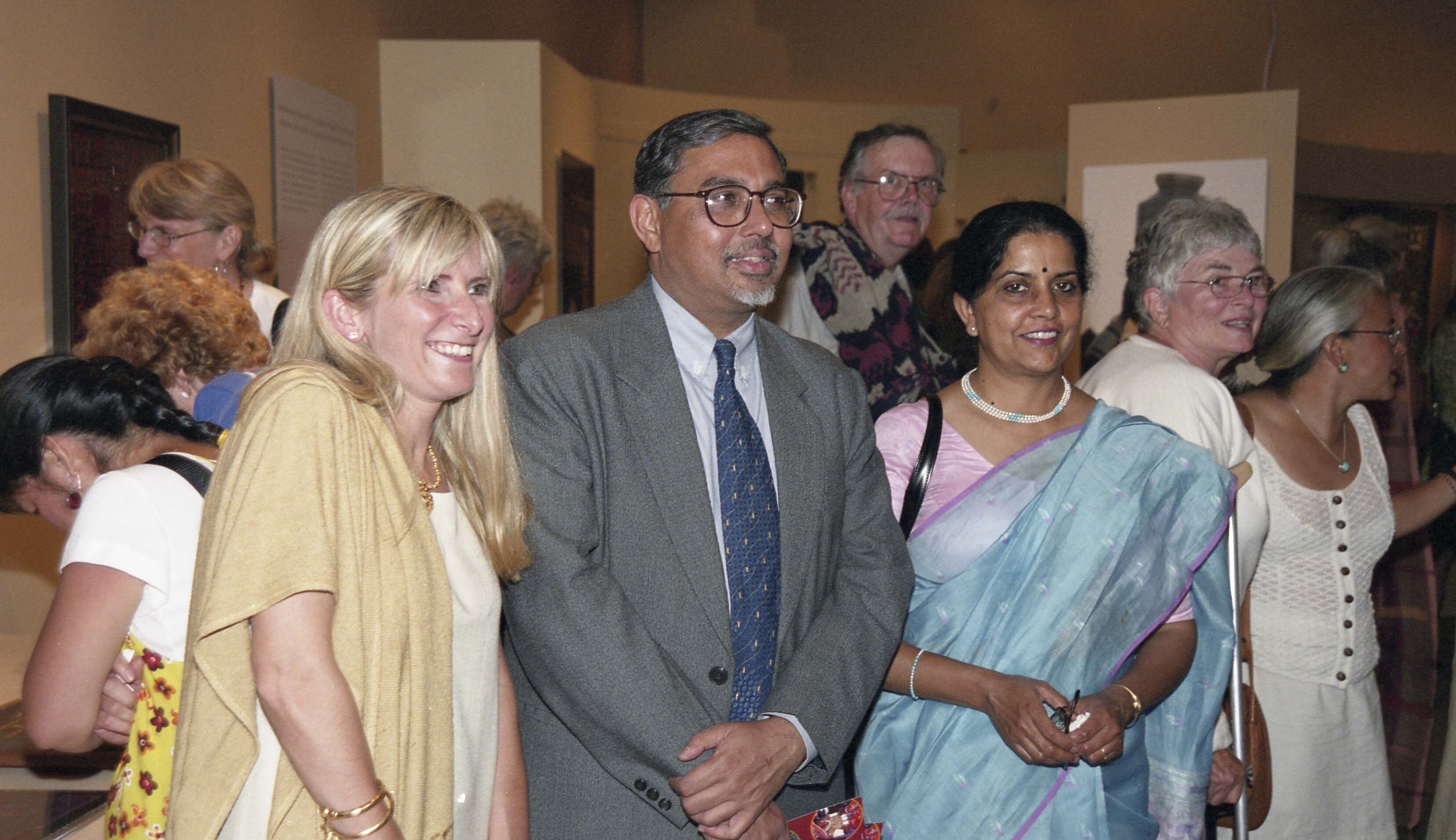
Creator: Bodalia, Chandra
Description
Photograph of attendees at an art exhibit entitled, "Through the Eye of the Needle: Stories From an Indian Desert" organized by Maiwa and Kutch Mahila Vikas Sangathan. The exhibit was hosted at the Museum of Vancouver, in Vancouver, B.C.
Founded in 1986 by Charlotte Kwon, Maiwa (previously known as Maiwa Handprints) has evolved from being a retail store located on Granville Island into a School of Textiles, a Foundation, and an online presence. Their three guiding principles are: natural dyes, as they work directly with farmers and run a full-time natural dye studio; slow clothes, as they include hand spinners, hand weavers, embroiderers, and block printers in their workflow to counter fashion fashion; and finally, artisans, as they build relationships with them and recognize how everyone in the process of making clothing are connected.
Kutch Mahila Vikas Sangathan (KMVS) centres the experience of the women of second largest district of India, Kutch, which comprises of ten administrative regions. The area struggles with water scarcity and threats of drought due to its fragile ecosystem. The district is said to be home to 1.5 million people, according to the 2001 census, and the majority resides in rural areas. MKVS' mission is "total empowerment," which consists of economic, political, and social empowerment of the rural women in the Kutch district. They intend to do so through awareness-raising, organizing, mobilizing, building confidence to address problems, developing critical analysis skills, working as a collective, and many other empowering endeavours.
Located within the unceded, ancestral territories of the xʷməθkʷəy̓əm (Musqueam), Sḵwx̱wú7mesh (Squamish), and səlilwətaɬ (Tsleil-Waututh) Nations, the Museum of Vancouver's vision is to inspire and foster a more socially connected, resilient, and publicly engaged city. They do so by becoming a gathering space intent on fostering connection, learning, and new experiences of Vancouver's diverse communities and histories.They are committed to four pillars: redress and decolonization, immigration and diversity, environment and sustainability, and urban and contemporary issues.
Founded in 1986 by Charlotte Kwon, Maiwa (previously known as Maiwa Handprints) has evolved from being a retail store located on Granville Island into a School of Textiles, a Foundation, and an online presence. Their three guiding principles are: natural dyes, as they work directly with farmers and run a full-time natural dye studio; slow clothes, as they include hand spinners, hand weavers, embroiderers, and block printers in their workflow to counter fashion fashion; and finally, artisans, as they build relationships with them and recognize how everyone in the process of making clothing are connected.
Kutch Mahila Vikas Sangathan (KMVS) centres the experience of the women of second largest district of India, Kutch, which comprises of ten administrative regions. The area struggles with water scarcity and threats of drought due to its fragile ecosystem. The district is said to be home to 1.5 million people, according to the 2001 census, and the majority resides in rural areas. MKVS' mission is "total empowerment," which consists of economic, political, and social empowerment of the rural women in the Kutch district. They intend to do so through awareness-raising, organizing, mobilizing, building confidence to address problems, developing critical analysis skills, working as a collective, and many other empowering endeavours.
Located within the unceded, ancestral territories of the xʷməθkʷəy̓əm (Musqueam), Sḵwx̱wú7mesh (Squamish), and səlilwətaɬ (Tsleil-Waututh) Nations, the Museum of Vancouver's vision is to inspire and foster a more socially connected, resilient, and publicly engaged city. They do so by becoming a gathering space intent on fostering connection, learning, and new experiences of Vancouver's diverse communities and histories.They are committed to four pillars: redress and decolonization, immigration and diversity, environment and sustainability, and urban and contemporary issues.
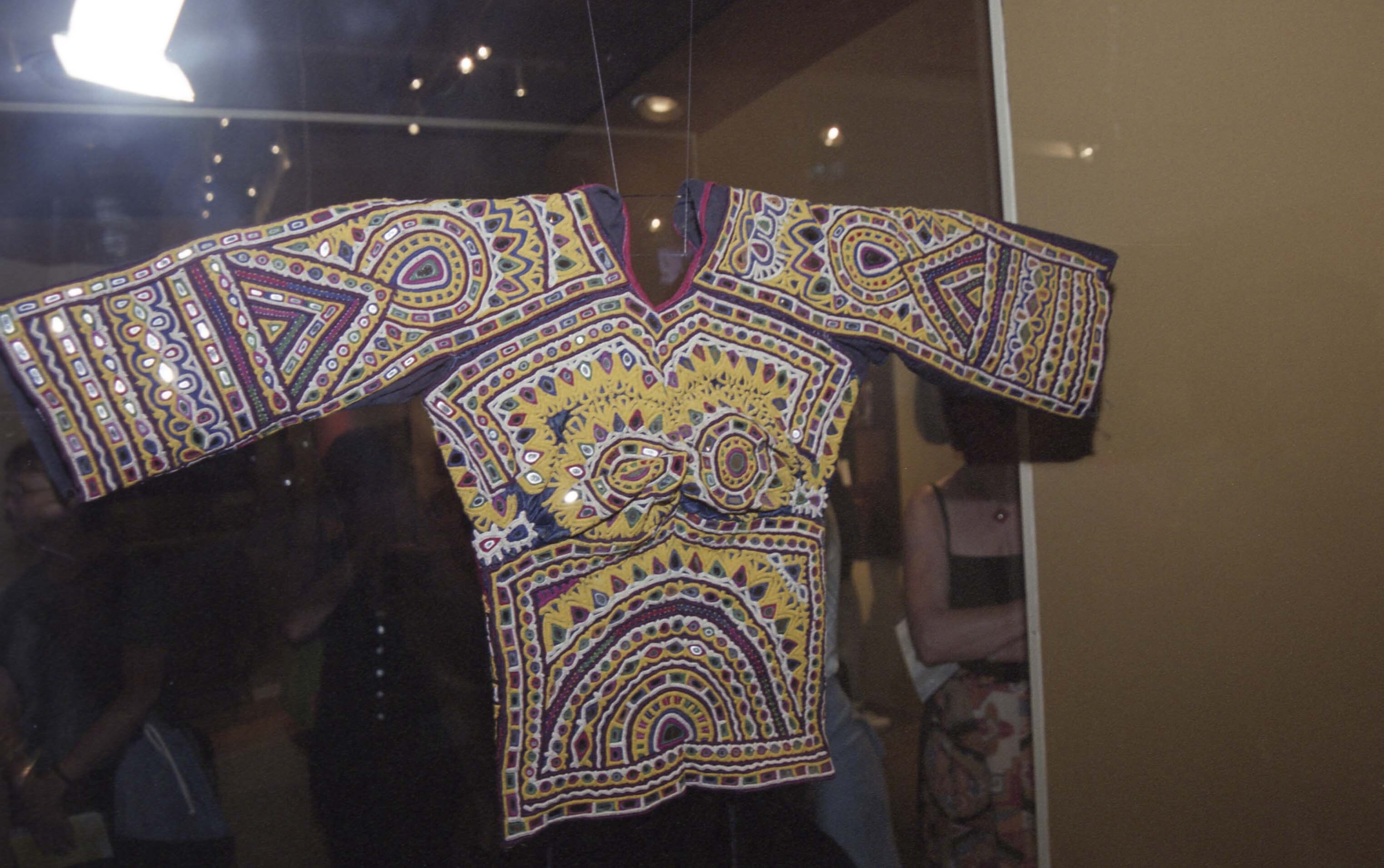
Creator: Bodalia, Chandra
Description
Photograph of a printed blouse at an art exhibit entitled, "Through the Eye of the Needle: Stories From an Indian Desert" organized by Maiwa and Kutch Mahila Vikas Sangathan. The exhibit was hosted at the Museum of Vancouver, in Vancouver, B.C.
Founded in 1986 by Charlotte Kwon, Maiwa (previously known as Maiwa Handprints) has evolved from being a retail store located on Granville Island into a School of Textiles, a Foundation, and an online presence. Their three guiding principles are: natural dyes, as they work directly with farmers and run a full-time natural dye studio; slow clothes, as they include hand spinners, hand weavers, embroiderers, and block printers in their workflow to counter fashion fashion; and finally, artisans, as they build relationships with them and recognize how everyone in the process of making clothing are connected.
Kutch Mahila Vikas Sangathan (KMVS) centres the experience of the women of second largest district of India, Kutch, which comprises of ten administrative regions. The area struggles with water scarcity and threats of drought due to its fragile ecosystem. The district is said to be home to 1.5 million people, according to the 2001 census, and the majority resides in rural areas. MKVS' mission is "total empowerment," which consists of economic, political, and social empowerment of the rural women in the Kutch district. They intend to do so through awareness-raising, organizing, mobilizing, building confidence to address problems, developing critical analysis skills, working as a collective, and many other empowering endeavours.
Located within the unceded, ancestral territories of the xʷməθkʷəy̓əm (Musqueam), Sḵwx̱wú7mesh (Squamish), and səlilwətaɬ (Tsleil-Waututh) Nations, the Museum of Vancouver's vision is to inspire and foster a more socially connected, resilient, and publicly engaged city. They do so by becoming a gathering space intent on fostering connection, learning, and new experiences of Vancouver's diverse communities and histories.They are committed to four pillars: redress and decolonization, immigration and diversity, environment and sustainability, and urban and contemporary issues.
Founded in 1986 by Charlotte Kwon, Maiwa (previously known as Maiwa Handprints) has evolved from being a retail store located on Granville Island into a School of Textiles, a Foundation, and an online presence. Their three guiding principles are: natural dyes, as they work directly with farmers and run a full-time natural dye studio; slow clothes, as they include hand spinners, hand weavers, embroiderers, and block printers in their workflow to counter fashion fashion; and finally, artisans, as they build relationships with them and recognize how everyone in the process of making clothing are connected.
Kutch Mahila Vikas Sangathan (KMVS) centres the experience of the women of second largest district of India, Kutch, which comprises of ten administrative regions. The area struggles with water scarcity and threats of drought due to its fragile ecosystem. The district is said to be home to 1.5 million people, according to the 2001 census, and the majority resides in rural areas. MKVS' mission is "total empowerment," which consists of economic, political, and social empowerment of the rural women in the Kutch district. They intend to do so through awareness-raising, organizing, mobilizing, building confidence to address problems, developing critical analysis skills, working as a collective, and many other empowering endeavours.
Located within the unceded, ancestral territories of the xʷməθkʷəy̓əm (Musqueam), Sḵwx̱wú7mesh (Squamish), and səlilwətaɬ (Tsleil-Waututh) Nations, the Museum of Vancouver's vision is to inspire and foster a more socially connected, resilient, and publicly engaged city. They do so by becoming a gathering space intent on fostering connection, learning, and new experiences of Vancouver's diverse communities and histories.They are committed to four pillars: redress and decolonization, immigration and diversity, environment and sustainability, and urban and contemporary issues.
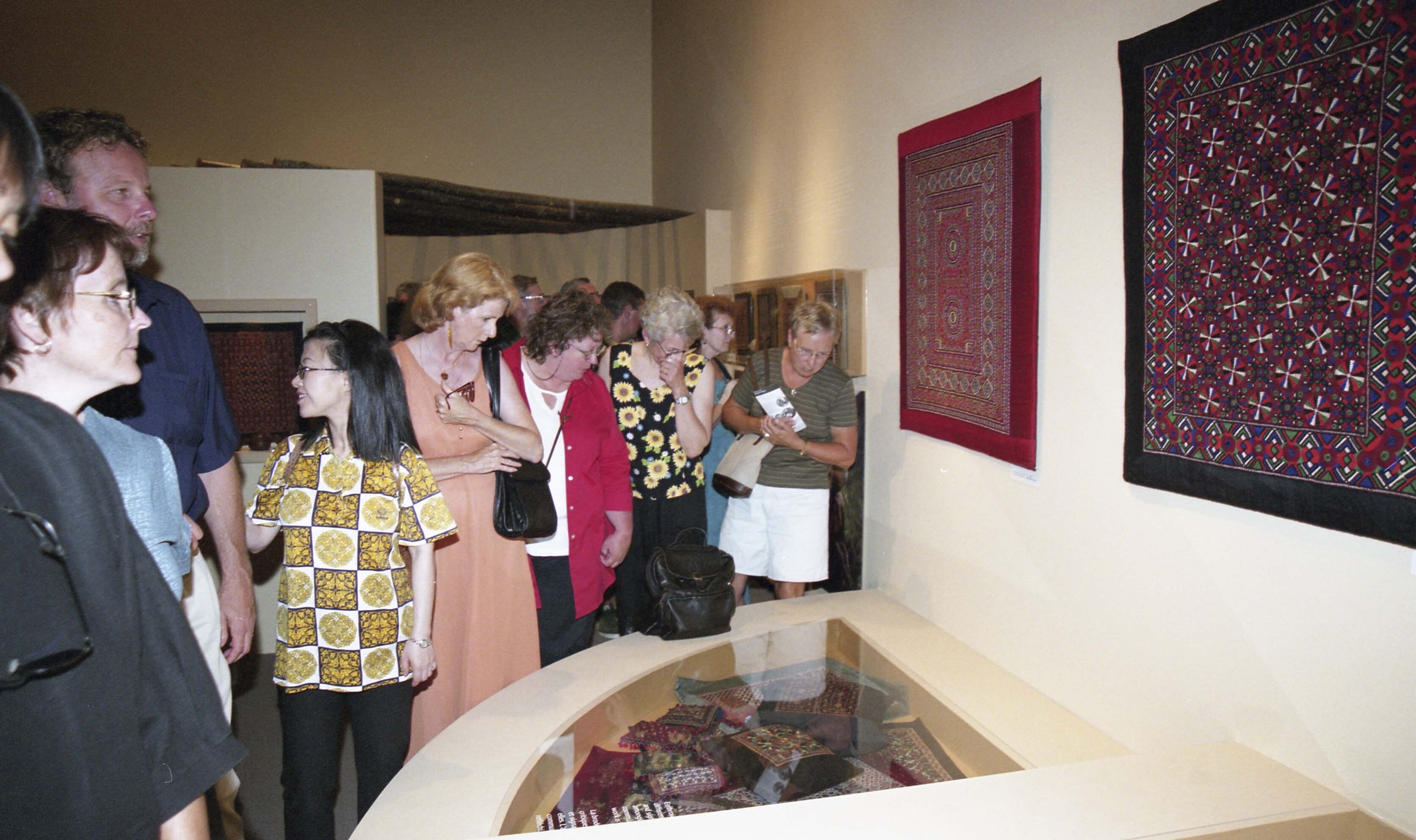
Creator: Bodalia, Chandra
Description
Photograph of people looking at the textile prints at an art exhibit entitled, "Through the Eye of the Needle: Stories From an Indian Desert" organized by Maiwa and Kutch Mahila Vikas Sangathan. The exhibit was hosted at the Museum of Vancouver, in Vancouver, B.C.
Founded in 1986 by Charlotte Kwon, Maiwa (previously known as Maiwa Handprints) has evolved from being a retail store located on Granville Island into a School of Textiles, a Foundation, and an online presence. Their three guiding principles are: natural dyes, as they work directly with farmers and run a full-time natural dye studio; slow clothes, as they include hand spinners, hand weavers, embroiderers, and block printers in their workflow to counter fashion fashion; and finally, artisans, as they build relationships with them and recognize how everyone in the process of making clothing are connected.
Kutch Mahila Vikas Sangathan (KMVS) centres the experience of the women of second largest district of India, Kutch, which comprises of ten administrative regions. The area struggles with water scarcity and threats of drought due to its fragile ecosystem. The district is said to be home to 1.5 million people, according to the 2001 census, and the majority resides in rural areas. MKVS' mission is "total empowerment," which consists of economic, political, and social empowerment of the rural women in the Kutch district. They intend to do so through awareness-raising, organizing, mobilizing, building confidence to address problems, developing critical analysis skills, working as a collective, and many other empowering endeavours.
Located within the unceded, ancestral territories of the xʷməθkʷəy̓əm (Musqueam), Sḵwx̱wú7mesh (Squamish), and səlilwətaɬ (Tsleil-Waututh) Nations, the Museum of Vancouver's vision is to inspire and foster a more socially connected, resilient, and publicly engaged city. They do so by becoming a gathering space intent on fostering connection, learning, and new experiences of Vancouver's diverse communities and histories.They are committed to four pillars: redress and decolonization, immigration and diversity, environment and sustainability, and urban and contemporary issues.
Founded in 1986 by Charlotte Kwon, Maiwa (previously known as Maiwa Handprints) has evolved from being a retail store located on Granville Island into a School of Textiles, a Foundation, and an online presence. Their three guiding principles are: natural dyes, as they work directly with farmers and run a full-time natural dye studio; slow clothes, as they include hand spinners, hand weavers, embroiderers, and block printers in their workflow to counter fashion fashion; and finally, artisans, as they build relationships with them and recognize how everyone in the process of making clothing are connected.
Kutch Mahila Vikas Sangathan (KMVS) centres the experience of the women of second largest district of India, Kutch, which comprises of ten administrative regions. The area struggles with water scarcity and threats of drought due to its fragile ecosystem. The district is said to be home to 1.5 million people, according to the 2001 census, and the majority resides in rural areas. MKVS' mission is "total empowerment," which consists of economic, political, and social empowerment of the rural women in the Kutch district. They intend to do so through awareness-raising, organizing, mobilizing, building confidence to address problems, developing critical analysis skills, working as a collective, and many other empowering endeavours.
Located within the unceded, ancestral territories of the xʷməθkʷəy̓əm (Musqueam), Sḵwx̱wú7mesh (Squamish), and səlilwətaɬ (Tsleil-Waututh) Nations, the Museum of Vancouver's vision is to inspire and foster a more socially connected, resilient, and publicly engaged city. They do so by becoming a gathering space intent on fostering connection, learning, and new experiences of Vancouver's diverse communities and histories.They are committed to four pillars: redress and decolonization, immigration and diversity, environment and sustainability, and urban and contemporary issues.