
South Asian Canadian men political activists
Creator: Bodalia, Chandra
Description
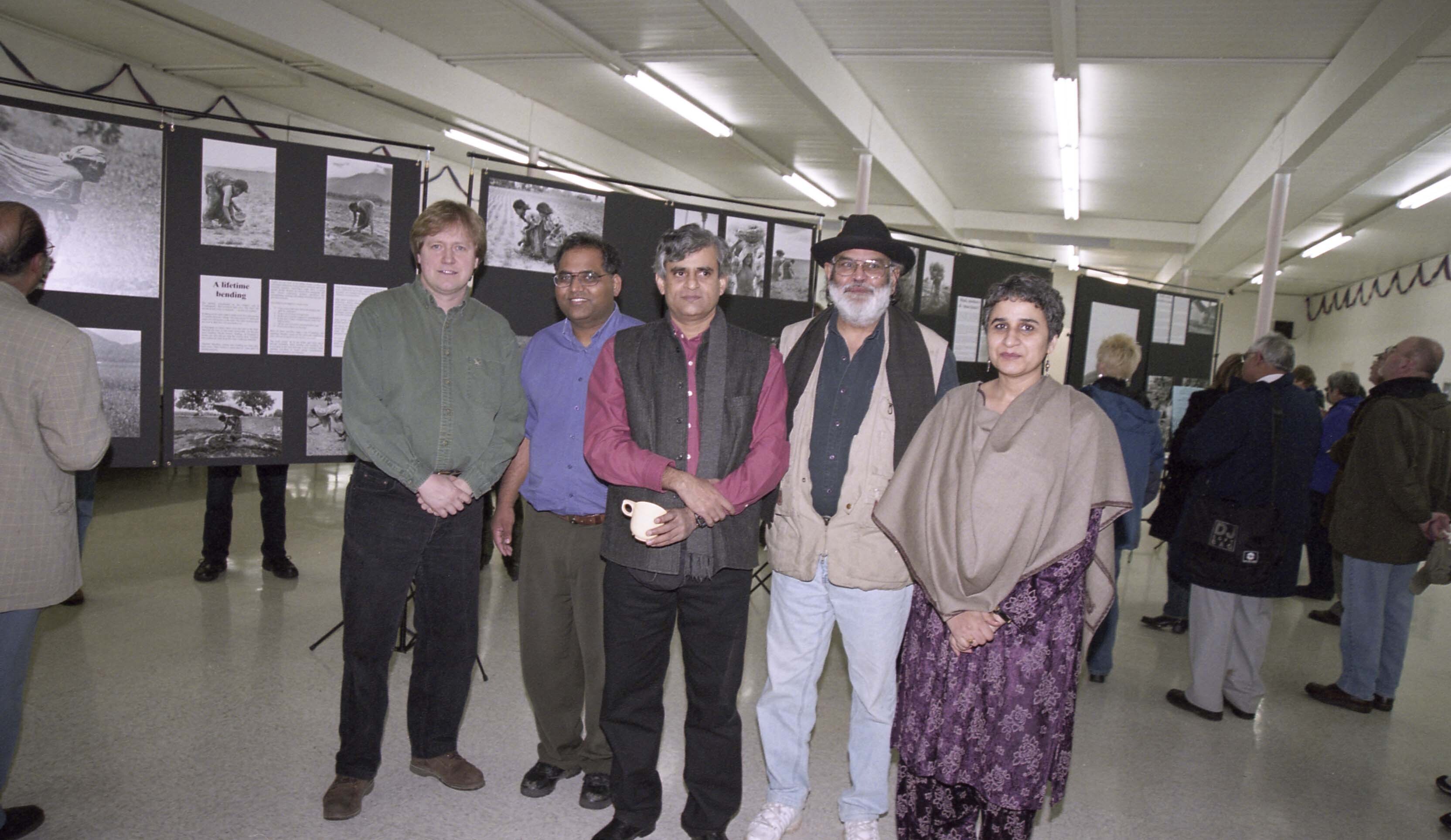
Group portrait of Palagummi Sainath and Hari Prakash Sharma with others at a photography exhibit organized by a photojournalist, Palagummi Sainath, held at the Shri Guru Ravidass Sabha Community Centre in Burnaby, B.C.
Palagummi Sainath is an Indian journalist, author, and photojournalist known for his in-depth reporting on rural India. His work highlights issues such as poverty, inequality, and the impact of globalization. A former Rural Affairs Editor at The Hindu, Sainath is also the founder of the People's Archive of Rural India (PARI), a digital platform documenting the lives of rural communities. He is widely recognized for his book Everybody Loves a Good Drought and has received several awards, including the Ramon Magsaysay Award for Journalism.
Hari Prakash Sharma (1934-2010) was a sociologist and Marxist scholar, who was born at Dadri in Uttar Pradesh, India. Sharma earned his BA from Agra University in 1954, and an MA in Social Work from Delhi University in 1960. In 1963, Sharma moved to the US to further his education. He received an MS in Social Work from Case Western Reserve University in 1964 and a PhD in Rural Sociology from Cornell University in 1968. He taught briefly at the University of California, Los Angeles before accepting a position at Simon Fraser University. Sharma joined the Department of Political Science, Sociology, and Anthropology at Simon Fraser University in 1968 and taught until his retirement in 1999 when he was honoured by the university as Professor Emeritus. During 1971-72, Sharma was a founding member of and contributor to the Georgia Straight Collective, which produced a publication for radical and alternative views. In 1973, he went to Amnesty International in London and the Commission of Jurists in Geneva and made a written representation to the UN Human Rights Commission in an effort to publicize the condition of more than 30,000 political prisoners in Indian jails. In 1974, Sharma and his comrade Gautam Appa of the London School of Economics organized a petition of international scholars to protest the treatment of political prisoners in India, which he handed to the Indian Consulate in Vancouver, BC on August 15 of the same year. Sharma was a founder of the Indian People's Association in North America (IPANA) on June 25, 1975 and British Columbia Organization to Fight Racism (BCOFR). In 1989, Sharma united groups of the South Asian community to form the Komagata Maru Historical Society. The society united the community, and as a result of its activities, the government installed a commemorative plaque in Vancouver in 1989. Following the attack on the Babri Masjid mosque in December 1992, Hari Sharma became the prime mover in the formation of a North American organization dedicated to the defence of minority rights in India, also known as Non-Resident Indians for Secularism and Democracy (NRISAD). Under Sharma's leadership, NRISAD evolved into the South Asian Network for Secularism and Democracy (SANSAD) in 2000. It pursued the same quest as its predecessors for peace and democracy based secularism, human rights, and social justice. In September 1999, Sharma travelled to Montréal to join the founding of the International South Asia Forum (INSAF), a coalition of individuals and organizations dedicated to the promotion of peace and social justice in South Asia. He became its first President and organized the Second Conference in Vancouver in August 2001. In addition to his academic work and political activism, Hari Sharma was an accomplished literary writer and self-taught photographer.
The Shri Guru Ravidass Temple, established in 1982, serves as a gathering place for the local community in Burnaby, British Columbia. Among other social, educational, and recreational activities, the organization also operates a community centre and offers a place of worship in accordance with the teachings of Guru Ravidass, Dr. B.R. Ambedkar, and other gurus and saints whose teachings are enshrined in the holy book, Shri Guru Granth Sahib Ji.
Palagummi Sainath is an Indian journalist, author, and photojournalist known for his in-depth reporting on rural India. His work highlights issues such as poverty, inequality, and the impact of globalization. A former Rural Affairs Editor at The Hindu, Sainath is also the founder of the People's Archive of Rural India (PARI), a digital platform documenting the lives of rural communities. He is widely recognized for his book Everybody Loves a Good Drought and has received several awards, including the Ramon Magsaysay Award for Journalism.
Hari Prakash Sharma (1934-2010) was a sociologist and Marxist scholar, who was born at Dadri in Uttar Pradesh, India. Sharma earned his BA from Agra University in 1954, and an MA in Social Work from Delhi University in 1960. In 1963, Sharma moved to the US to further his education. He received an MS in Social Work from Case Western Reserve University in 1964 and a PhD in Rural Sociology from Cornell University in 1968. He taught briefly at the University of California, Los Angeles before accepting a position at Simon Fraser University. Sharma joined the Department of Political Science, Sociology, and Anthropology at Simon Fraser University in 1968 and taught until his retirement in 1999 when he was honoured by the university as Professor Emeritus. During 1971-72, Sharma was a founding member of and contributor to the Georgia Straight Collective, which produced a publication for radical and alternative views. In 1973, he went to Amnesty International in London and the Commission of Jurists in Geneva and made a written representation to the UN Human Rights Commission in an effort to publicize the condition of more than 30,000 political prisoners in Indian jails. In 1974, Sharma and his comrade Gautam Appa of the London School of Economics organized a petition of international scholars to protest the treatment of political prisoners in India, which he handed to the Indian Consulate in Vancouver, BC on August 15 of the same year. Sharma was a founder of the Indian People's Association in North America (IPANA) on June 25, 1975 and British Columbia Organization to Fight Racism (BCOFR). In 1989, Sharma united groups of the South Asian community to form the Komagata Maru Historical Society. The society united the community, and as a result of its activities, the government installed a commemorative plaque in Vancouver in 1989. Following the attack on the Babri Masjid mosque in December 1992, Hari Sharma became the prime mover in the formation of a North American organization dedicated to the defence of minority rights in India, also known as Non-Resident Indians for Secularism and Democracy (NRISAD). Under Sharma's leadership, NRISAD evolved into the South Asian Network for Secularism and Democracy (SANSAD) in 2000. It pursued the same quest as its predecessors for peace and democracy based secularism, human rights, and social justice. In September 1999, Sharma travelled to Montréal to join the founding of the International South Asia Forum (INSAF), a coalition of individuals and organizations dedicated to the promotion of peace and social justice in South Asia. He became its first President and organized the Second Conference in Vancouver in August 2001. In addition to his academic work and political activism, Hari Sharma was an accomplished literary writer and self-taught photographer.
The Shri Guru Ravidass Temple, established in 1982, serves as a gathering place for the local community in Burnaby, British Columbia. Among other social, educational, and recreational activities, the organization also operates a community centre and offers a place of worship in accordance with the teachings of Guru Ravidass, Dr. B.R. Ambedkar, and other gurus and saints whose teachings are enshrined in the holy book, Shri Guru Granth Sahib Ji.
Creator: Bodalia, Chandra
Description
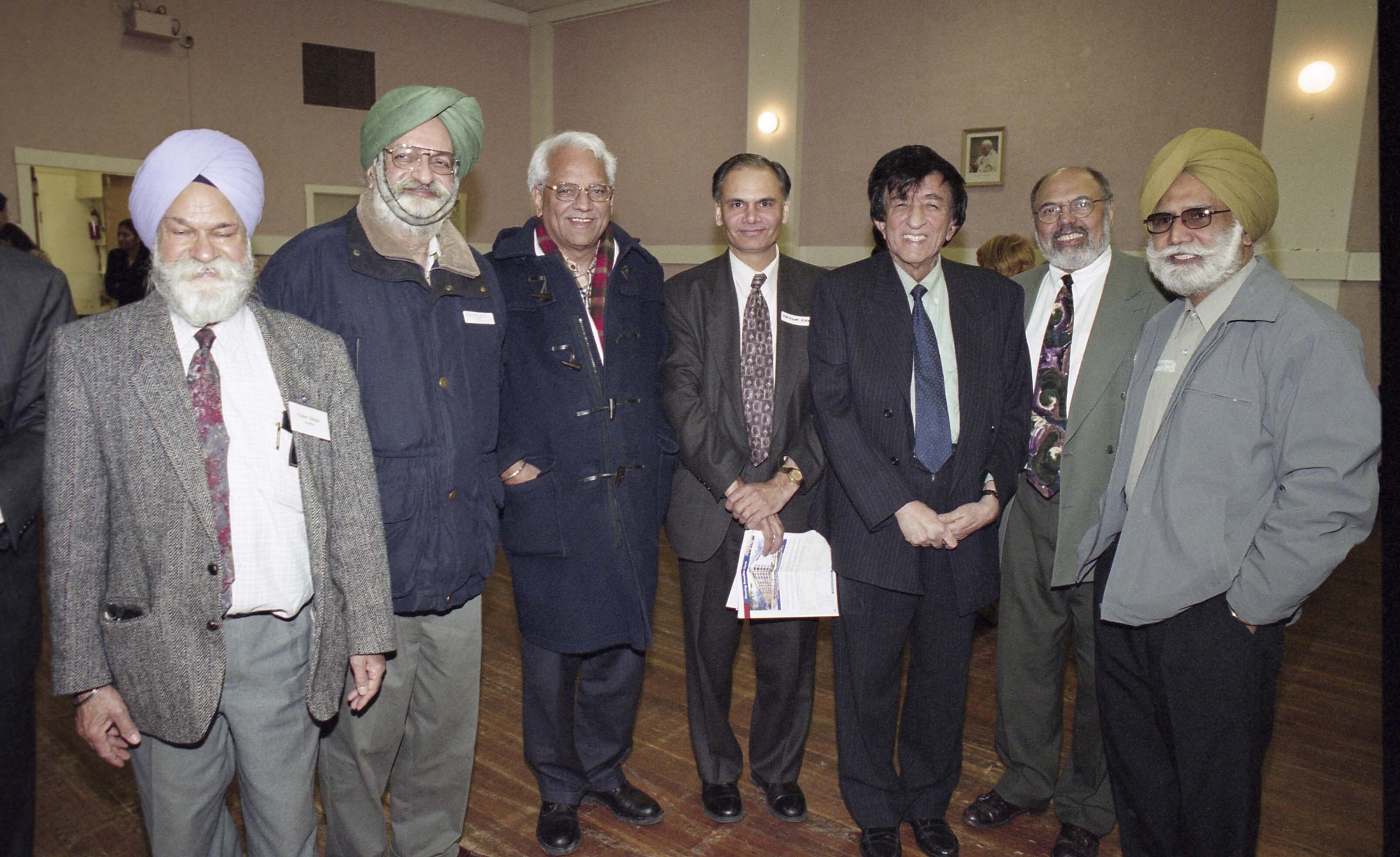
Group portrait of Aziz Khaki and others at an event for the International Day for the Elimination of Racial Discrimination organized by Aziz Khaki.
Dr. Abdulaziz 'Aziz' Khaki was an activist and leader in the Canadian Muslim community. He served as vice-president of the Canadian Muslim Federation and the Council of Muslim Communities of Canada. Dr. Khaki was a strong advocate for human rights, interfaith dialogue, and the integration of Muslim communities into Canadian society.
The International Day for the Elimination of Racial Discrimination is guided by the United Nations International Convention on the Elimination of All Forms of Racial Discrimination and recognizes that the injustices and prejudices fueled by racial discrimination take place every day. Observed annually on March 21, it commemorates the day police in Sharpeville, South Africa, opened fire and killed 69 people at a peaceful demonstration against apartheid "pass laws" in 1960. This day serves as a call to action for individuals, organizations, and all levels of government to actively work to eliminate all forms of racial discrimination, injustice, systemic racism and hate.
Dr. Abdulaziz 'Aziz' Khaki was an activist and leader in the Canadian Muslim community. He served as vice-president of the Canadian Muslim Federation and the Council of Muslim Communities of Canada. Dr. Khaki was a strong advocate for human rights, interfaith dialogue, and the integration of Muslim communities into Canadian society.
The International Day for the Elimination of Racial Discrimination is guided by the United Nations International Convention on the Elimination of All Forms of Racial Discrimination and recognizes that the injustices and prejudices fueled by racial discrimination take place every day. Observed annually on March 21, it commemorates the day police in Sharpeville, South Africa, opened fire and killed 69 people at a peaceful demonstration against apartheid "pass laws" in 1960. This day serves as a call to action for individuals, organizations, and all levels of government to actively work to eliminate all forms of racial discrimination, injustice, systemic racism and hate.
Creator: Bodalia, Chandra
Description
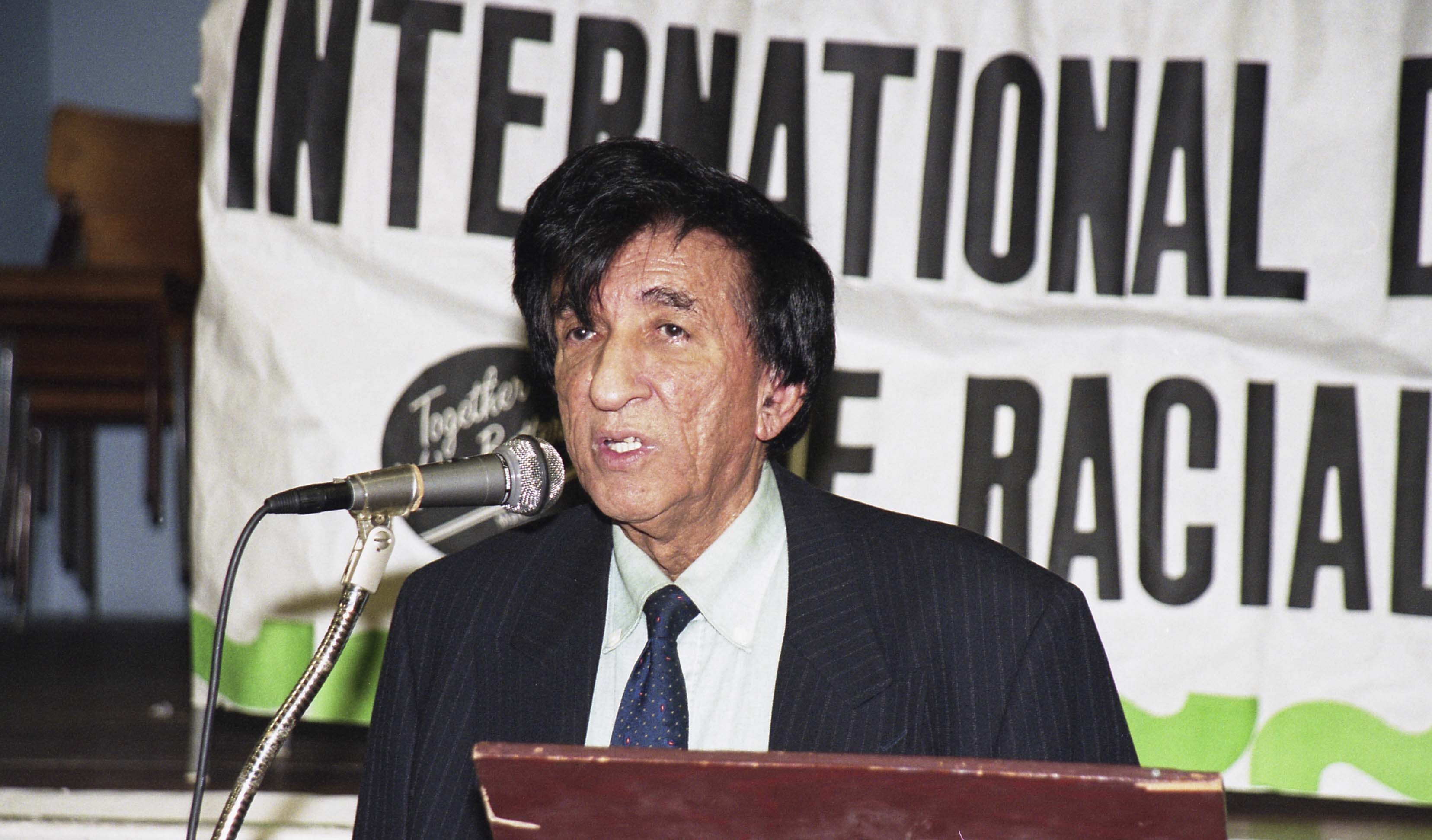
Photograph of Aziz Khaki speaking at an event for the International Day for the Elimination of Racial Discrimination organized by Aziz Khaki.
Dr. Abdulaziz 'Aziz' Khaki was an activist and leader in the Canadian Muslim community. He served as vice-president of the Canadian Muslim Federation and the Council of Muslim Communities of Canada. Dr. Khaki was a strong advocate for human rights, interfaith dialogue, and the integration of Muslim communities into Canadian society.
The International Day for the Elimination of Racial Discrimination is guided by the United Nations International Convention on the Elimination of All Forms of Racial Discrimination and recognizes that the injustices and prejudices fueled by racial discrimination take place every day. Observed annually on March 21, it commemorates the day police in Sharpeville, South Africa, opened fire and killed 69 people at a peaceful demonstration against apartheid "pass laws" in 1960. This day serves as a call to action for individuals, organizations, and all levels of government to actively work to eliminate all forms of racial discrimination, injustice, systemic racism and hate.
Dr. Abdulaziz 'Aziz' Khaki was an activist and leader in the Canadian Muslim community. He served as vice-president of the Canadian Muslim Federation and the Council of Muslim Communities of Canada. Dr. Khaki was a strong advocate for human rights, interfaith dialogue, and the integration of Muslim communities into Canadian society.
The International Day for the Elimination of Racial Discrimination is guided by the United Nations International Convention on the Elimination of All Forms of Racial Discrimination and recognizes that the injustices and prejudices fueled by racial discrimination take place every day. Observed annually on March 21, it commemorates the day police in Sharpeville, South Africa, opened fire and killed 69 people at a peaceful demonstration against apartheid "pass laws" in 1960. This day serves as a call to action for individuals, organizations, and all levels of government to actively work to eliminate all forms of racial discrimination, injustice, systemic racism and hate.
Creator: Bodalia, Chandra
Description
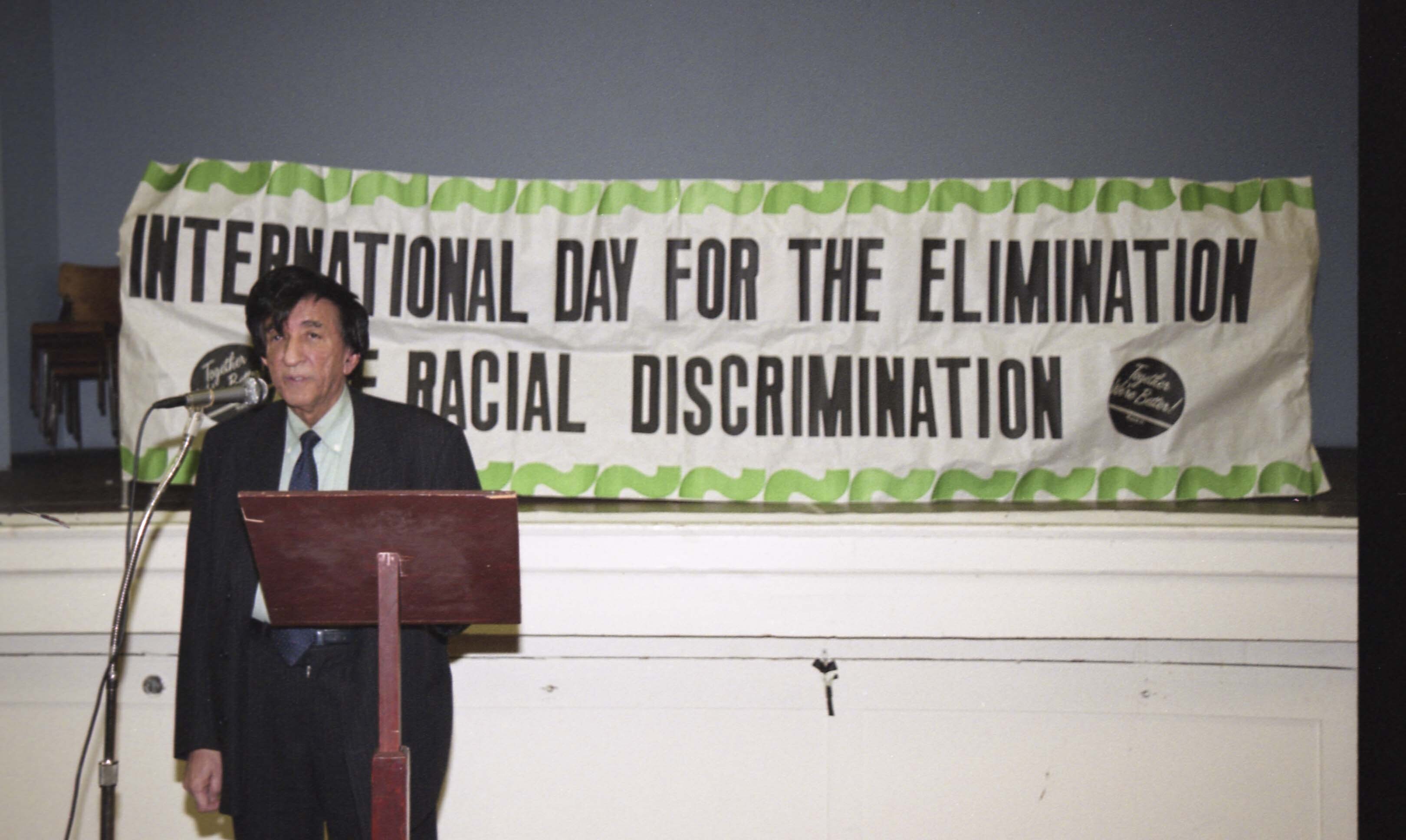
Photograph of Aziz Khaki speaking at an event for the International Day for the Elimination of Racial Discrimination organized by Aziz Khaki.
Dr. Abdulaziz 'Aziz' Khaki was an activist and leader in the Canadian Muslim community. He served as vice-president of the Canadian Muslim Federation and the Council of Muslim Communities of Canada. Dr. Khaki was a strong advocate for human rights, interfaith dialogue, and the integration of Muslim communities into Canadian society.
The International Day for the Elimination of Racial Discrimination is guided by the United Nations International Convention on the Elimination of All Forms of Racial Discrimination and recognizes that the injustices and prejudices fueled by racial discrimination take place every day. Observed annually on March 21, it commemorates the day police in Sharpeville, South Africa, opened fire and killed 69 people at a peaceful demonstration against apartheid "pass laws" in 1960. This day serves as a call to action for individuals, organizations, and all levels of government to actively work to eliminate all forms of racial discrimination, injustice, systemic racism and hate.
Dr. Abdulaziz 'Aziz' Khaki was an activist and leader in the Canadian Muslim community. He served as vice-president of the Canadian Muslim Federation and the Council of Muslim Communities of Canada. Dr. Khaki was a strong advocate for human rights, interfaith dialogue, and the integration of Muslim communities into Canadian society.
The International Day for the Elimination of Racial Discrimination is guided by the United Nations International Convention on the Elimination of All Forms of Racial Discrimination and recognizes that the injustices and prejudices fueled by racial discrimination take place every day. Observed annually on March 21, it commemorates the day police in Sharpeville, South Africa, opened fire and killed 69 people at a peaceful demonstration against apartheid "pass laws" in 1960. This day serves as a call to action for individuals, organizations, and all levels of government to actively work to eliminate all forms of racial discrimination, injustice, systemic racism and hate.
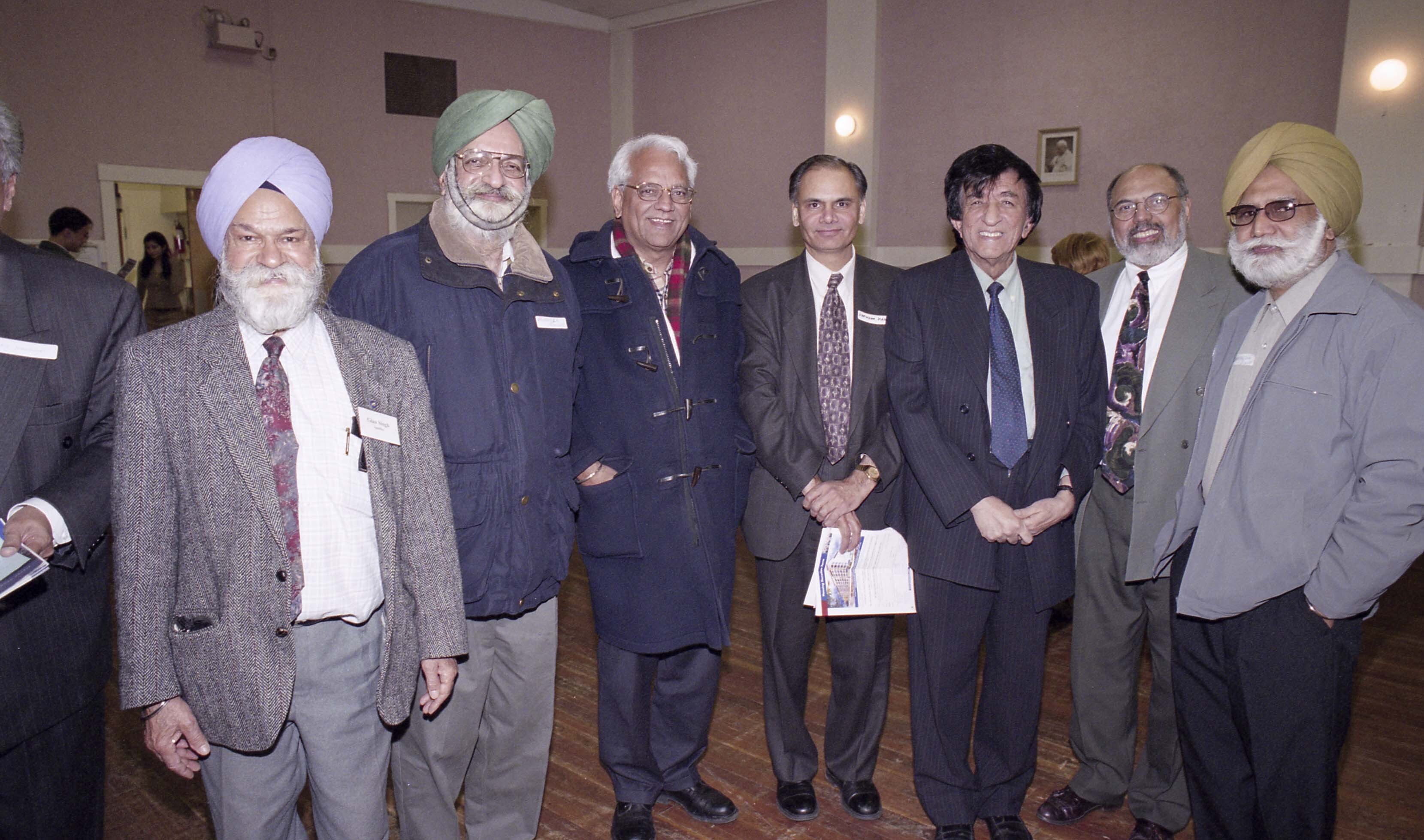
Creator: Bodalia, Chandra
Description
Group portrait of Aziz Khaki with others at an event for the International Day for the Elimination of Racial Discrimination organized by Aziz Khaki.
Dr. Abdulaziz 'Aziz' Khaki was an activist and leader in the Canadian Muslim community. He served as vice-president of the Canadian Muslim Federation and the Council of Muslim Communities of Canada. Dr. Khaki was a strong advocate for human rights, interfaith dialogue, and the integration of Muslim communities into Canadian society.
The International Day for the Elimination of Racial Discrimination is guided by the United Nations International Convention on the Elimination of All Forms of Racial Discrimination and recognizes that the injustices and prejudices fueled by racial discrimination take place every day. Observed annually on March 21, it commemorates the day police in Sharpeville, South Africa, opened fire and killed 69 people at a peaceful demonstration against apartheid "pass laws" in 1960. This day serves as a call to action for individuals, organizations, and all levels of government to actively work to eliminate all forms of racial discrimination, injustice, systemic racism and hate.
Dr. Abdulaziz 'Aziz' Khaki was an activist and leader in the Canadian Muslim community. He served as vice-president of the Canadian Muslim Federation and the Council of Muslim Communities of Canada. Dr. Khaki was a strong advocate for human rights, interfaith dialogue, and the integration of Muslim communities into Canadian society.
The International Day for the Elimination of Racial Discrimination is guided by the United Nations International Convention on the Elimination of All Forms of Racial Discrimination and recognizes that the injustices and prejudices fueled by racial discrimination take place every day. Observed annually on March 21, it commemorates the day police in Sharpeville, South Africa, opened fire and killed 69 people at a peaceful demonstration against apartheid "pass laws" in 1960. This day serves as a call to action for individuals, organizations, and all levels of government to actively work to eliminate all forms of racial discrimination, injustice, systemic racism and hate.
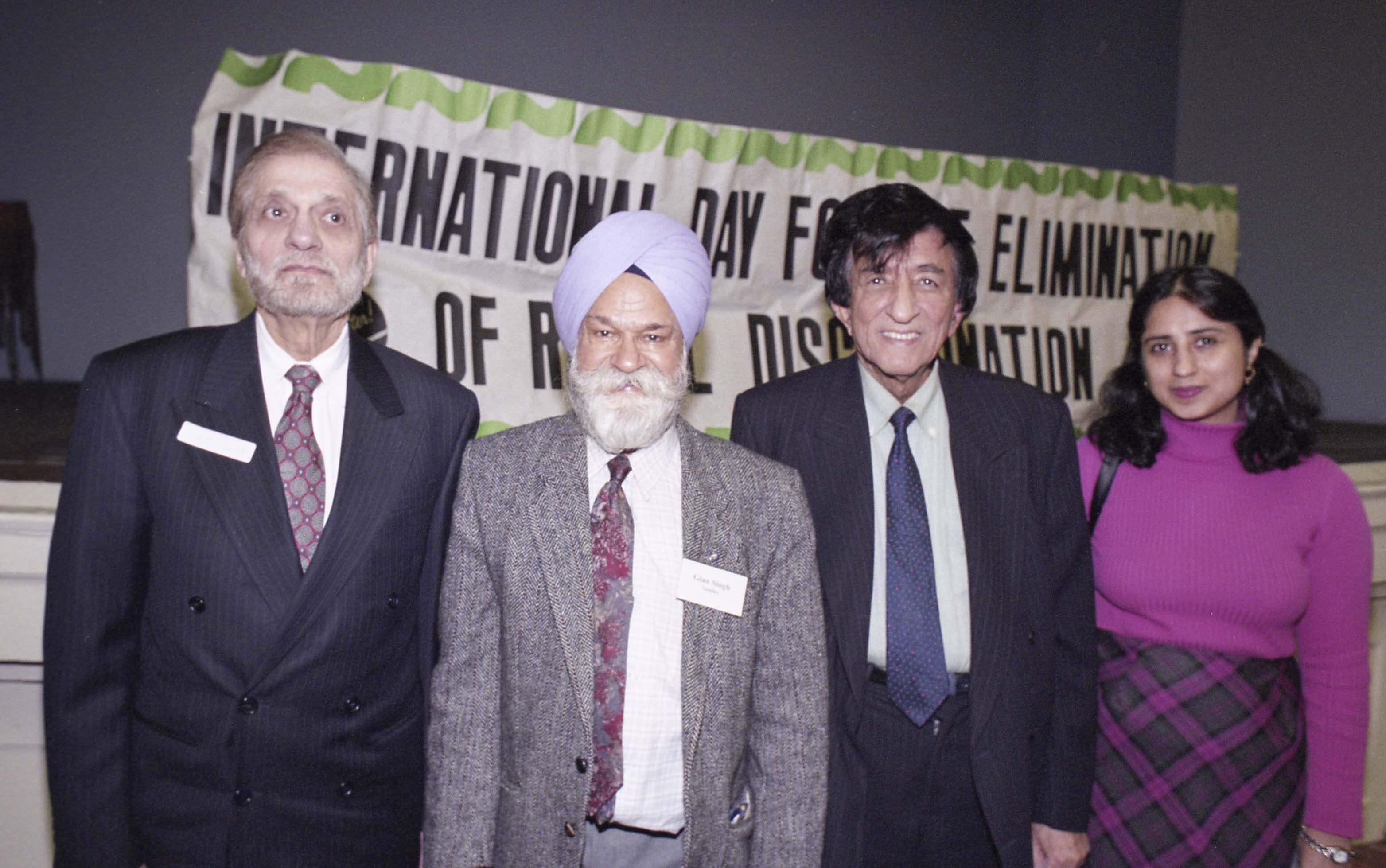
Creator: Bodalia, Chandra
Description
Group portrait of Aziz Khaki with others at an event for the International Day for the Elimination of Racial Discrimination organized by Aziz Khaki.
Dr. Abdulaziz 'Aziz' Khaki was an activist and leader in the Canadian Muslim community. He served as vice-president of the Canadian Muslim Federation and the Council of Muslim Communities of Canada. Dr. Khaki was a strong advocate for human rights, interfaith dialogue, and the integration of Muslim communities into Canadian society.
The International Day for the Elimination of Racial Discrimination is guided by the United Nations International Convention on the Elimination of All Forms of Racial Discrimination and recognizes that the injustices and prejudices fueled by racial discrimination take place every day. Observed annually on March 21, it commemorates the day police in Sharpeville, South Africa, opened fire and killed 69 people at a peaceful demonstration against apartheid "pass laws" in 1960. This day serves as a call to action for individuals, organizations, and all levels of government to actively work to eliminate all forms of racial discrimination, injustice, systemic racism and hate.
Dr. Abdulaziz 'Aziz' Khaki was an activist and leader in the Canadian Muslim community. He served as vice-president of the Canadian Muslim Federation and the Council of Muslim Communities of Canada. Dr. Khaki was a strong advocate for human rights, interfaith dialogue, and the integration of Muslim communities into Canadian society.
The International Day for the Elimination of Racial Discrimination is guided by the United Nations International Convention on the Elimination of All Forms of Racial Discrimination and recognizes that the injustices and prejudices fueled by racial discrimination take place every day. Observed annually on March 21, it commemorates the day police in Sharpeville, South Africa, opened fire and killed 69 people at a peaceful demonstration against apartheid "pass laws" in 1960. This day serves as a call to action for individuals, organizations, and all levels of government to actively work to eliminate all forms of racial discrimination, injustice, systemic racism and hate.
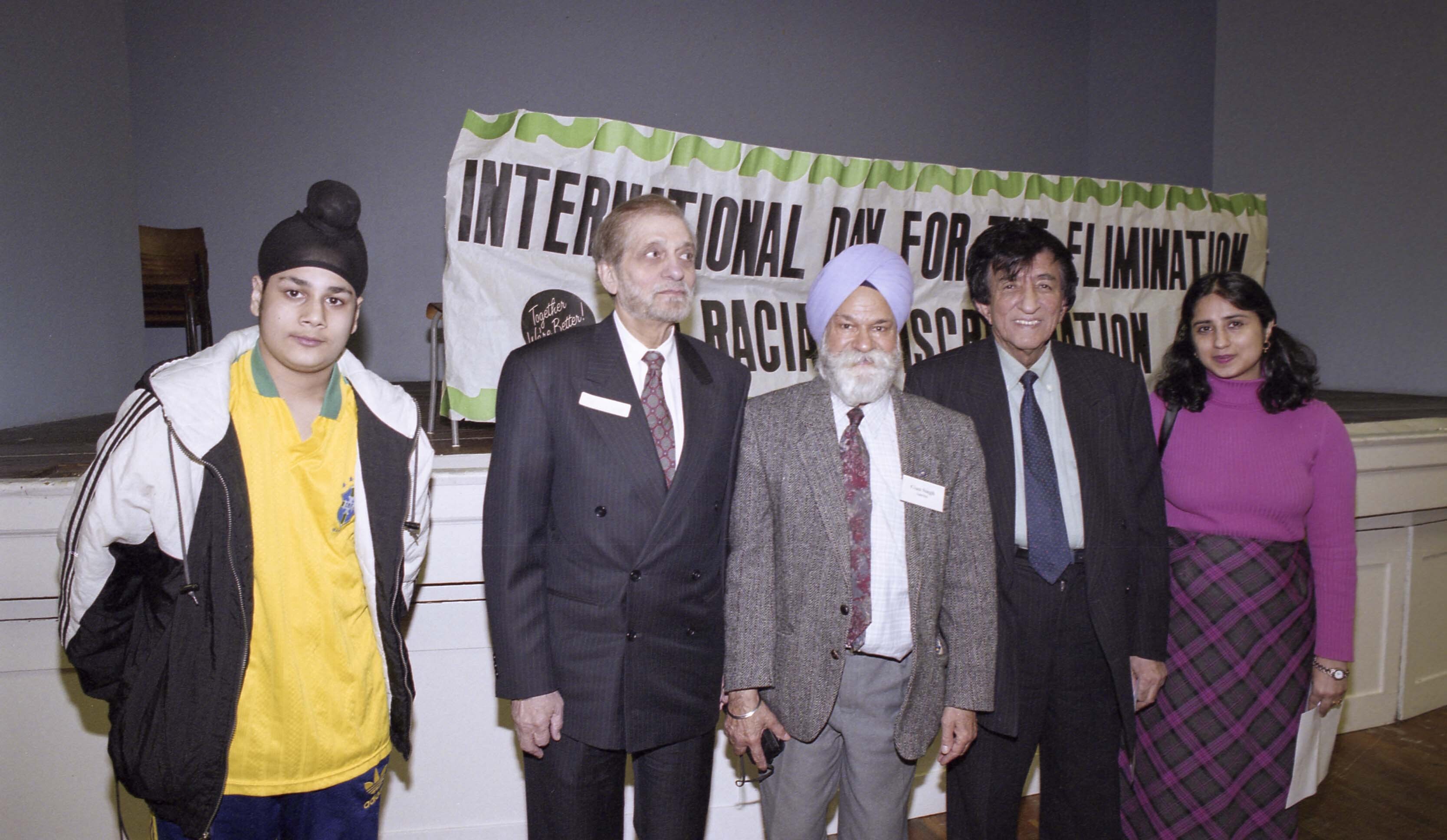
Creator: Bodalia, Chandra
Description
Group portrait of Aziz Khaki with others at an event for the International Day for the Elimination of Racial Discrimination organized by Aziz Khaki.
Dr. Abdulaziz 'Aziz' Khaki was an activist and leader in the Canadian Muslim community. He served as vice-president of the Canadian Muslim Federation and the Council of Muslim Communities of Canada. Dr. Khaki was a strong advocate for human rights, interfaith dialogue, and the integration of Muslim communities into Canadian society.
The International Day for the Elimination of Racial Discrimination is guided by the United Nations International Convention on the Elimination of All Forms of Racial Discrimination and recognizes that the injustices and prejudices fueled by racial discrimination take place every day. Observed annually on March 21, it commemorates the day police in Sharpeville, South Africa, opened fire and killed 69 people at a peaceful demonstration against apartheid "pass laws" in 1960. This day serves as a call to action for individuals, organizations, and all levels of government to actively work to eliminate all forms of racial discrimination, injustice, systemic racism and hate.
Dr. Abdulaziz 'Aziz' Khaki was an activist and leader in the Canadian Muslim community. He served as vice-president of the Canadian Muslim Federation and the Council of Muslim Communities of Canada. Dr. Khaki was a strong advocate for human rights, interfaith dialogue, and the integration of Muslim communities into Canadian society.
The International Day for the Elimination of Racial Discrimination is guided by the United Nations International Convention on the Elimination of All Forms of Racial Discrimination and recognizes that the injustices and prejudices fueled by racial discrimination take place every day. Observed annually on March 21, it commemorates the day police in Sharpeville, South Africa, opened fire and killed 69 people at a peaceful demonstration against apartheid "pass laws" in 1960. This day serves as a call to action for individuals, organizations, and all levels of government to actively work to eliminate all forms of racial discrimination, injustice, systemic racism and hate.
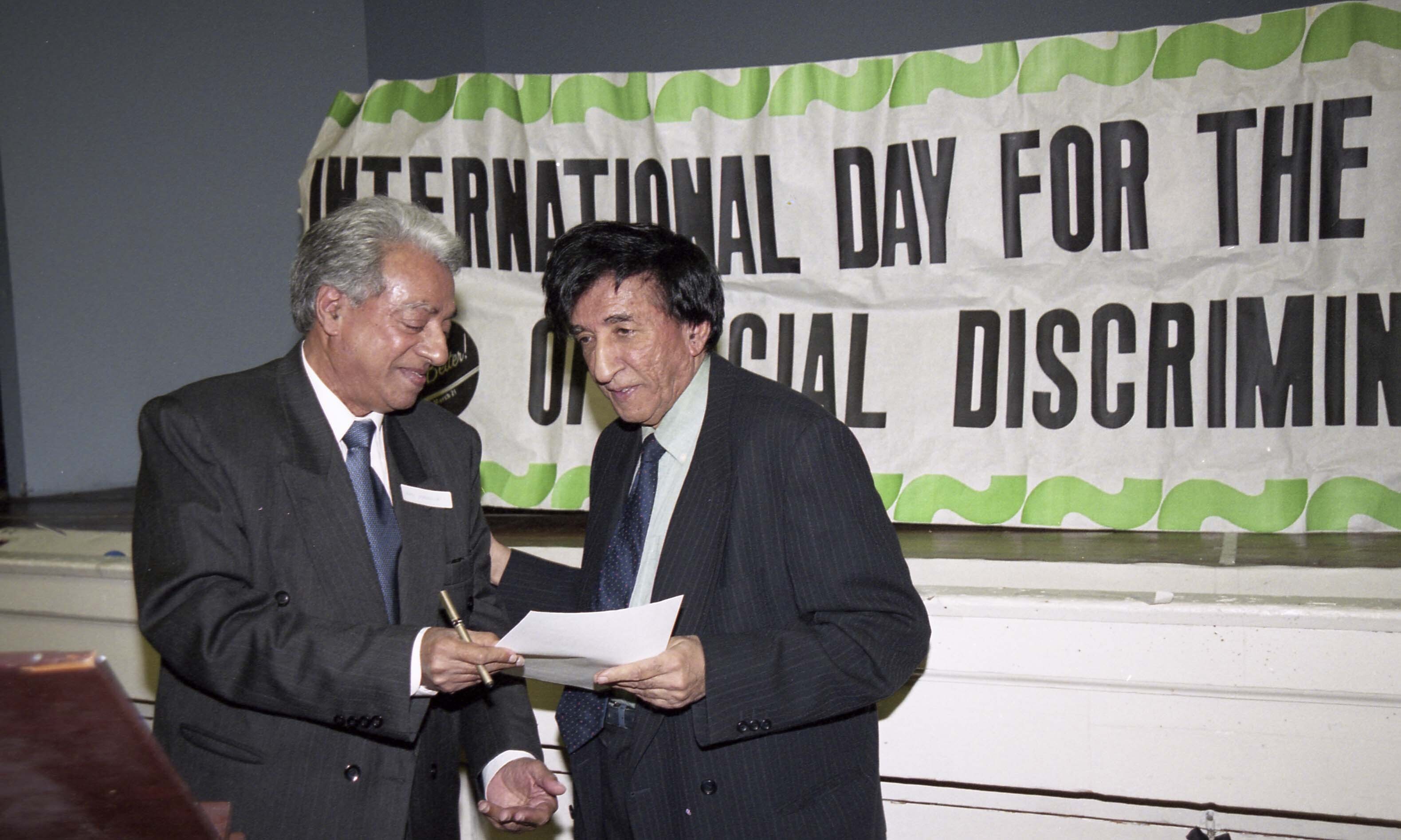
Creator: Bodalia, Chandra
Description
Photograph of Aziz Khaki with an unidentified man at an event for the International Day for the Elimination of Racial Discrimination organized by Aziz Khaki.
Dr. Abdulaziz 'Aziz' Khaki was an activist and leader in the Canadian Muslim community. He served as vice-president of the Canadian Muslim Federation and the Council of Muslim Communities of Canada. Dr. Khaki was a strong advocate for human rights, interfaith dialogue, and the integration of Muslim communities into Canadian society.
The International Day for the Elimination of Racial Discrimination is guided by the United Nations International Convention on the Elimination of All Forms of Racial Discrimination and recognizes that the injustices and prejudices fueled by racial discrimination take place every day. Observed annually on March 21, it commemorates the day police in Sharpeville, South Africa, opened fire and killed 69 people at a peaceful demonstration against apartheid "pass laws" in 1960. This day serves as a call to action for individuals, organizations, and all levels of government to actively work to eliminate all forms of racial discrimination, injustice, systemic racism and hate.
Dr. Abdulaziz 'Aziz' Khaki was an activist and leader in the Canadian Muslim community. He served as vice-president of the Canadian Muslim Federation and the Council of Muslim Communities of Canada. Dr. Khaki was a strong advocate for human rights, interfaith dialogue, and the integration of Muslim communities into Canadian society.
The International Day for the Elimination of Racial Discrimination is guided by the United Nations International Convention on the Elimination of All Forms of Racial Discrimination and recognizes that the injustices and prejudices fueled by racial discrimination take place every day. Observed annually on March 21, it commemorates the day police in Sharpeville, South Africa, opened fire and killed 69 people at a peaceful demonstration against apartheid "pass laws" in 1960. This day serves as a call to action for individuals, organizations, and all levels of government to actively work to eliminate all forms of racial discrimination, injustice, systemic racism and hate.

Creator: Bodalia, Chandra
Description
Photograph of Aziz Khaki speaking to attendees of an honorary event organized by the Committee for Racial Justice in coordination with Greater Vancouver Citizenship Council, held at the Samosa Garden in Vancouver, B.C.
Dr. Abdulaziz 'Aziz' Khaki was an activist and leader in the Canadian Muslim community. He served as vice-president of the Canadian Muslim Federation and the Council of Muslim Communities of Canada. Dr. Khaki was a strong advocate for human rights, interfaith dialogue, and the integration of Muslim communities into Canadian society.
Samosa Garden was an Ismaili-owned restaurant located on Kingsway in East Vancouver, B.C.
Dr. Abdulaziz 'Aziz' Khaki was an activist and leader in the Canadian Muslim community. He served as vice-president of the Canadian Muslim Federation and the Council of Muslim Communities of Canada. Dr. Khaki was a strong advocate for human rights, interfaith dialogue, and the integration of Muslim communities into Canadian society.
Samosa Garden was an Ismaili-owned restaurant located on Kingsway in East Vancouver, B.C.
Creator: Bodalia, Chandra
Description
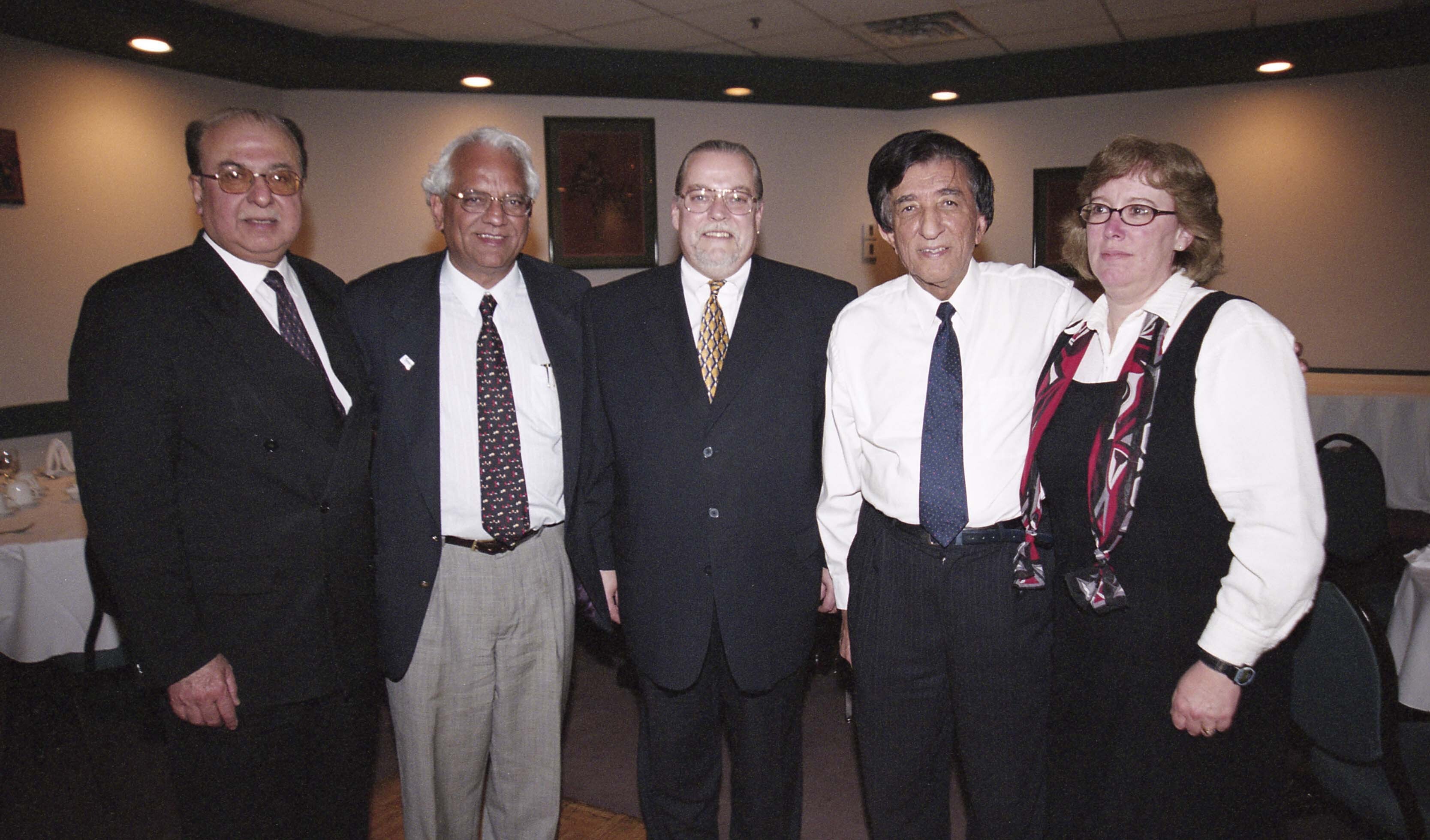
Group portrait of Aziz Khaki, John Halani, and others at an honorary event organized by the Committee for Racial Justice in coordination with Greater Vancouver Citizenship Council, held at the Samosa Garden in Vancouver, B.C.
Dr. Abdulaziz 'Aziz' Khaki was an activist and leader in the Canadian Muslim community. He served as vice-president of the Canadian Muslim Federation and the Council of Muslim Communities of Canada. Dr. Khaki was a strong advocate for human rights, interfaith dialogue, and the integration of Muslim communities into Canadian society.
John Halani was a hotelier in Vancouver, British Columbia (B.C.) born in Masaka, Uganda. Halani came to B.C. in 1972 after escaping the persecution of the Idi Amin regime in Uganda. Halani, a 35-year-old business owner, had his assets confiscated by the Amin regime as he was leaving Uganda. His first job in Vancouver was with a glass company, from there he was able to lease out the Robsontrasse hotel in downtown Vancouver. By 1975, Halani was running the Tropicana Hotel across the street. Halani had an active political career, including being named honorary consul for Uganda in B.C., and was involved with the Immigrant Services Society of B.C. and other advocacy groups. He also served on multiple community boards, including as chair of the Ethno Business Council.
Samosa Garden was an Ismaili-owned restaurant located on Kingsway in East Vancouver, B.C.
Dr. Abdulaziz 'Aziz' Khaki was an activist and leader in the Canadian Muslim community. He served as vice-president of the Canadian Muslim Federation and the Council of Muslim Communities of Canada. Dr. Khaki was a strong advocate for human rights, interfaith dialogue, and the integration of Muslim communities into Canadian society.
John Halani was a hotelier in Vancouver, British Columbia (B.C.) born in Masaka, Uganda. Halani came to B.C. in 1972 after escaping the persecution of the Idi Amin regime in Uganda. Halani, a 35-year-old business owner, had his assets confiscated by the Amin regime as he was leaving Uganda. His first job in Vancouver was with a glass company, from there he was able to lease out the Robsontrasse hotel in downtown Vancouver. By 1975, Halani was running the Tropicana Hotel across the street. Halani had an active political career, including being named honorary consul for Uganda in B.C., and was involved with the Immigrant Services Society of B.C. and other advocacy groups. He also served on multiple community boards, including as chair of the Ethno Business Council.
Samosa Garden was an Ismaili-owned restaurant located on Kingsway in East Vancouver, B.C.