
South Asian Canadian women political activists
Member of
Creator: Bodalia, Chandra
Description
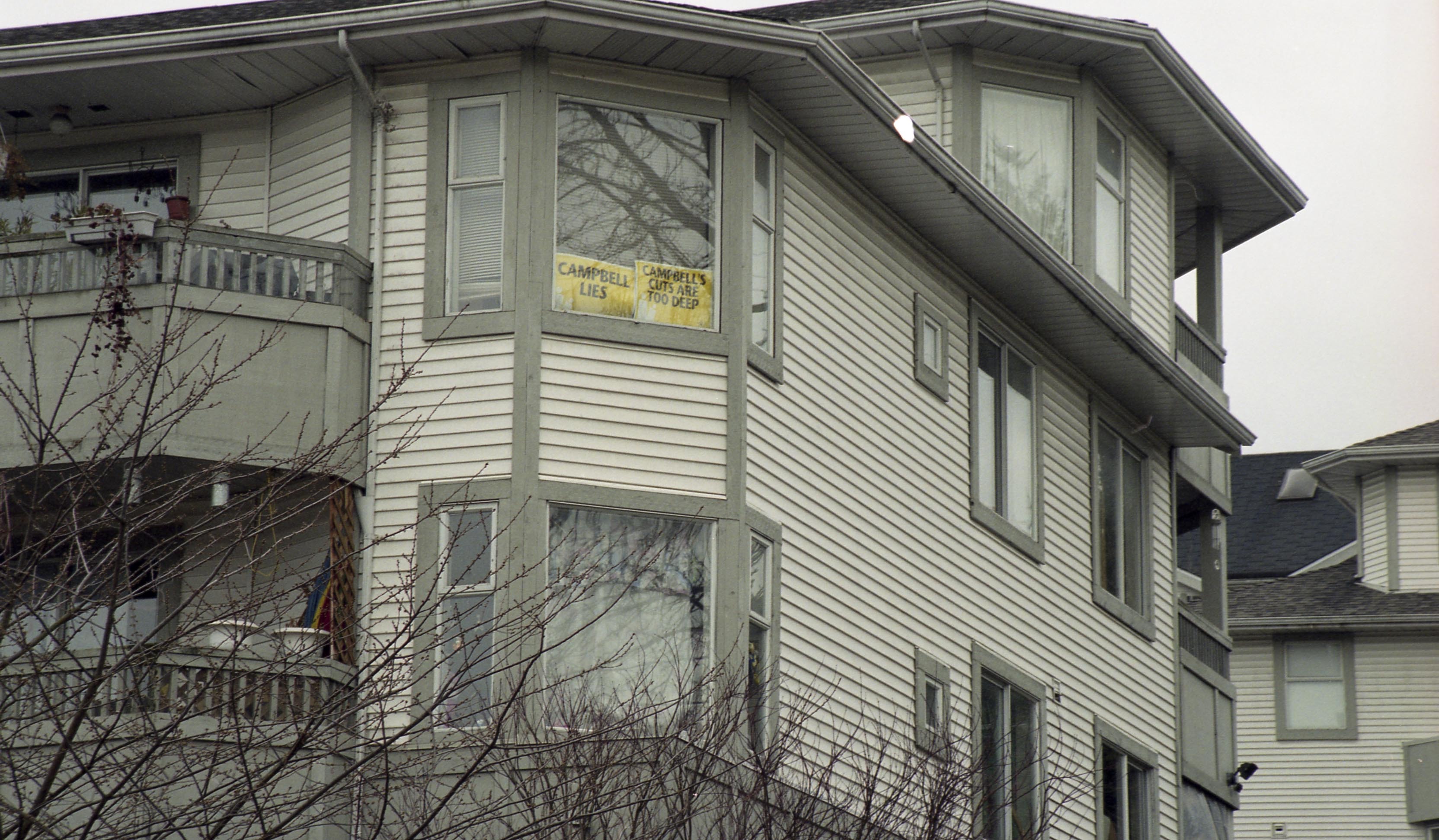
Photograph of two signs in a window at a march held for International Women's Day, held in Vancouver, B.C. The signs read, "CAMPBELL LIES" and "CAMPBELL'S CUTS ARE TOO DEEP."
International Women's Day (IWD) is a specific day dedicated to the advancement of women worldwide; celebrated annually on March 8, to honor the achievements of women across all aspects of life – social, economic, cultural, and political – while also advocating for gender equality. Originating from labor movements in the early 20th century, IWD has evolved into a globally recognized occasion marked by events, discussions, and initiatives advocating for inclusivity and equity. IWD was marked for the first time in 1911 in Austria, Denmark, Germany and Switzerland, on March 19, with more than one million women and men attending rallies.
International Women's Day (IWD) is a specific day dedicated to the advancement of women worldwide; celebrated annually on March 8, to honor the achievements of women across all aspects of life – social, economic, cultural, and political – while also advocating for gender equality. Originating from labor movements in the early 20th century, IWD has evolved into a globally recognized occasion marked by events, discussions, and initiatives advocating for inclusivity and equity. IWD was marked for the first time in 1911 in Austria, Denmark, Germany and Switzerland, on March 19, with more than one million women and men attending rallies.
Member of
Creator: Bodalia, Chandra
Description
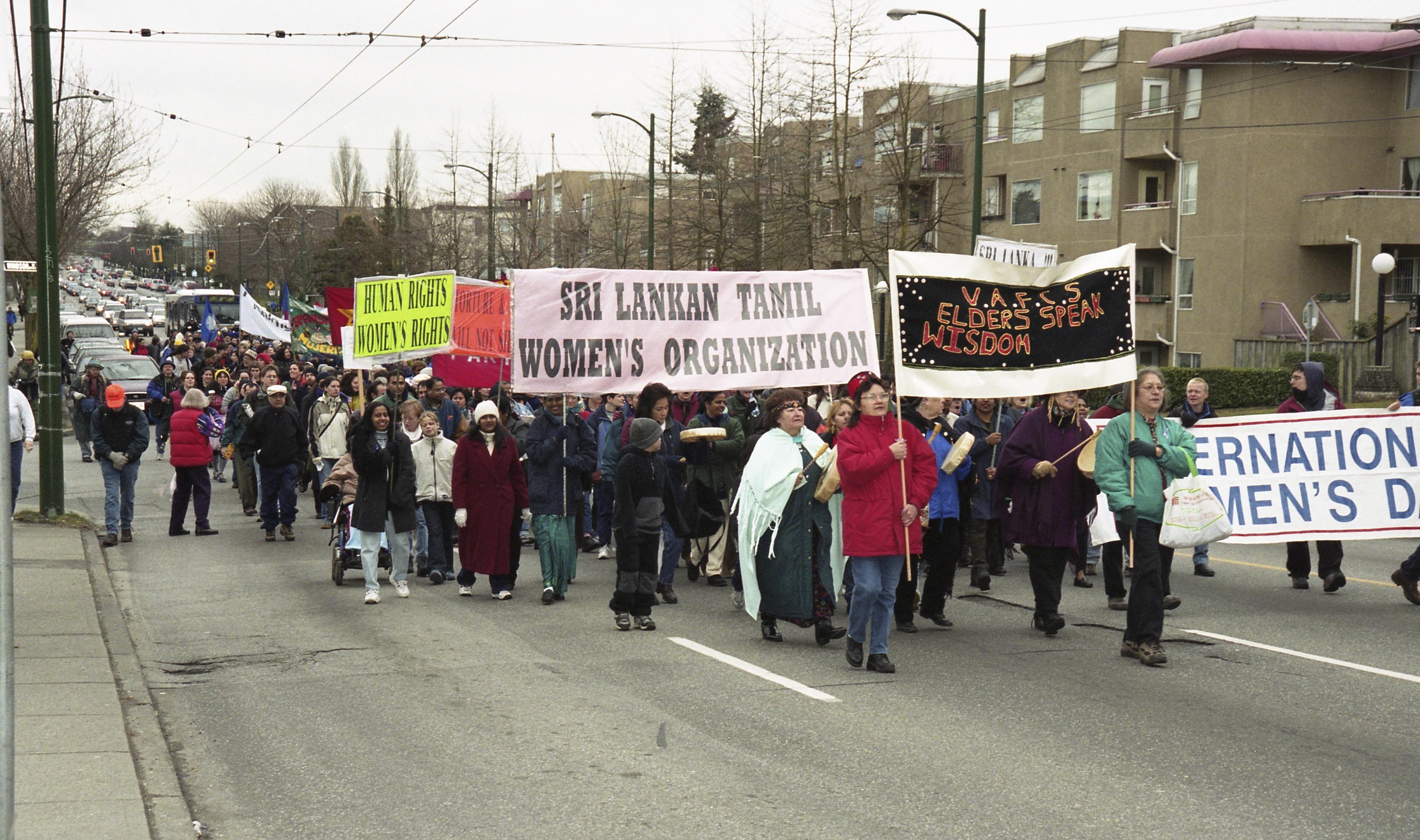
Photograph of the march held for International Women's Day, held in Vancouver, B.C. There are signs from the Vancouver Aboriginal Friendship Centre Society and the Sri Lankan Tamil Women's Organization.
International Women's Day (IWD) is a specific day dedicated to the advancement of women worldwide; celebrated annually on March 8, to honor the achievements of women across all aspects of life – social, economic, cultural, and political – while also advocating for gender equality. Originating from labor movements in the early 20th century, IWD has evolved into a globally recognized occasion marked by events, discussions, and initiatives advocating for inclusivity and equity. IWD was marked for the first time in 1911 in Austria, Denmark, Germany and Switzerland, on March 19, with more than one million women and men attending rallies.
Founded in 1954, the Vancouver Aboriginal Friendship Centre Society (VAFCS) was created to provide support, resources, and practical tools for Indigenous peoples living in Vancouver, British Columbia, through socio-economic programs and services. It was originally established as the Coqualeetza Fellowship Club by Mabel Stanley, Hattie Ferguson, Chief Gertrude Guerin, Judge Alfred Scow, Margaret White, Senator Guy Williams, and Chief Simon Baker, and then was incorporated as the Vancouver Indian Centre Society in 1963. VAFCS relocated to its current location at 1607 East Hastings Street based in response to the concentration of the Indigenous peoples in the area.
International Women's Day (IWD) is a specific day dedicated to the advancement of women worldwide; celebrated annually on March 8, to honor the achievements of women across all aspects of life – social, economic, cultural, and political – while also advocating for gender equality. Originating from labor movements in the early 20th century, IWD has evolved into a globally recognized occasion marked by events, discussions, and initiatives advocating for inclusivity and equity. IWD was marked for the first time in 1911 in Austria, Denmark, Germany and Switzerland, on March 19, with more than one million women and men attending rallies.
Founded in 1954, the Vancouver Aboriginal Friendship Centre Society (VAFCS) was created to provide support, resources, and practical tools for Indigenous peoples living in Vancouver, British Columbia, through socio-economic programs and services. It was originally established as the Coqualeetza Fellowship Club by Mabel Stanley, Hattie Ferguson, Chief Gertrude Guerin, Judge Alfred Scow, Margaret White, Senator Guy Williams, and Chief Simon Baker, and then was incorporated as the Vancouver Indian Centre Society in 1963. VAFCS relocated to its current location at 1607 East Hastings Street based in response to the concentration of the Indigenous peoples in the area.
Member of
Creator: Bodalia, Chandra
Description
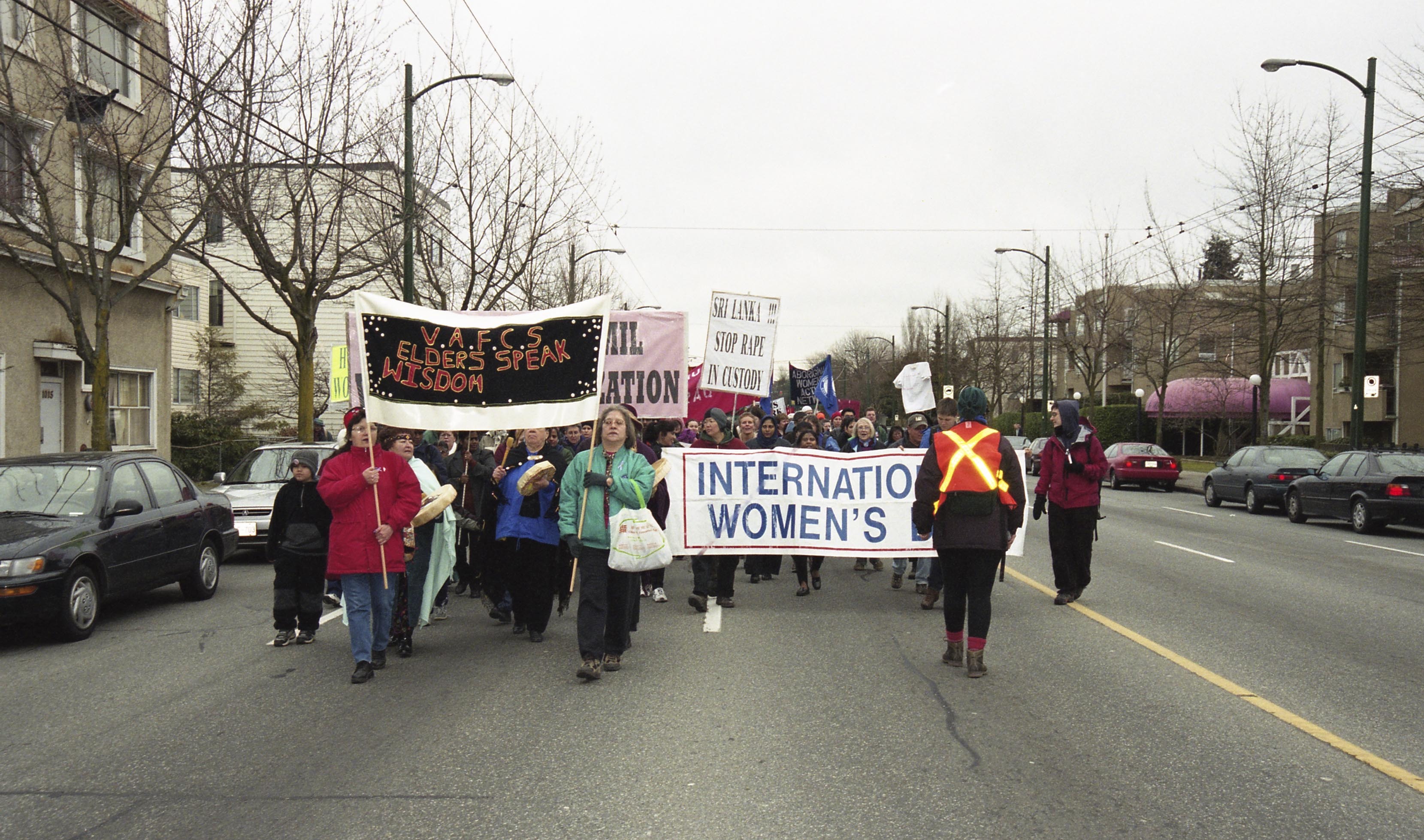
Photograph of the march held for International Women's Day, held in Vancouver, B.C. There are signs from the Vancouver Aboriginal Friendship Centre Society (VAFCS).
International Women's Day (IWD) is a specific day dedicated to the advancement of women worldwide; celebrated annually on March 8, to honor the achievements of women across all aspects of life – social, economic, cultural, and political – while also advocating for gender equality. Originating from labor movements in the early 20th century, IWD has evolved into a globally recognized occasion marked by events, discussions, and initiatives advocating for inclusivity and equity. IWD was marked for the first time in 1911 in Austria, Denmark, Germany and Switzerland, on March 19, with more than one million women and men attending rallies.
Founded in 1954, the Vancouver Aboriginal Friendship Centre Society (VAFCS) was created to provide support, resources, and practical tools for Indigenous peoples living in Vancouver, British Columbia, through socio-economic programs and services. It was originally established as the Coqualeetza Fellowship Club by Mabel Stanley, Hattie Ferguson, Chief Gertrude Guerin, Judge Alfred Scow, Margaret White, Senator Guy Williams, and Chief Simon Baker, and then was incorporated as the Vancouver Indian Centre Society in 1963. VAFCS relocated to its current location at 1607 East Hastings Street based in response to the concentration of the Indigenous peoples in the area.
International Women's Day (IWD) is a specific day dedicated to the advancement of women worldwide; celebrated annually on March 8, to honor the achievements of women across all aspects of life – social, economic, cultural, and political – while also advocating for gender equality. Originating from labor movements in the early 20th century, IWD has evolved into a globally recognized occasion marked by events, discussions, and initiatives advocating for inclusivity and equity. IWD was marked for the first time in 1911 in Austria, Denmark, Germany and Switzerland, on March 19, with more than one million women and men attending rallies.
Founded in 1954, the Vancouver Aboriginal Friendship Centre Society (VAFCS) was created to provide support, resources, and practical tools for Indigenous peoples living in Vancouver, British Columbia, through socio-economic programs and services. It was originally established as the Coqualeetza Fellowship Club by Mabel Stanley, Hattie Ferguson, Chief Gertrude Guerin, Judge Alfred Scow, Margaret White, Senator Guy Williams, and Chief Simon Baker, and then was incorporated as the Vancouver Indian Centre Society in 1963. VAFCS relocated to its current location at 1607 East Hastings Street based in response to the concentration of the Indigenous peoples in the area.
Member of
Creator: Bodalia, Chandra
Description
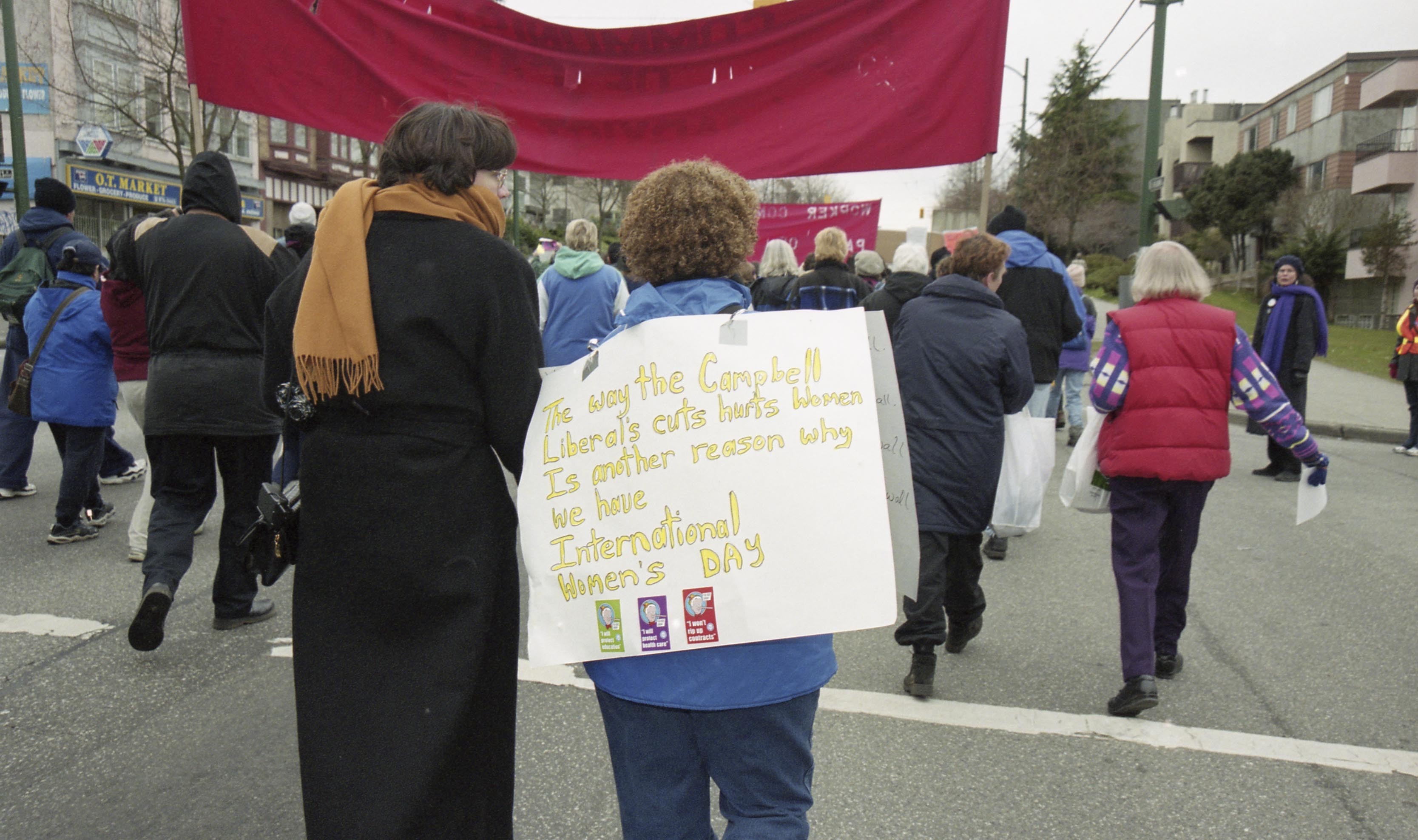
Photograph of the march held for International Women's Day, held in Vancouver, B.C.
International Women's Day (IWD) is a specific day dedicated to the advancement of women worldwide; celebrated annually on March 8, to honor the achievements of women across all aspects of life – social, economic, cultural, and political – while also advocating for gender equality. Originating from labor movements in the early 20th century, IWD has evolved into a globally recognized occasion marked by events, discussions, and initiatives advocating for inclusivity and equity. IWD was marked for the first time in 1911 in Austria, Denmark, Germany and Switzerland, on March 19, with more than one million women and men attending rallies.
International Women's Day (IWD) is a specific day dedicated to the advancement of women worldwide; celebrated annually on March 8, to honor the achievements of women across all aspects of life – social, economic, cultural, and political – while also advocating for gender equality. Originating from labor movements in the early 20th century, IWD has evolved into a globally recognized occasion marked by events, discussions, and initiatives advocating for inclusivity and equity. IWD was marked for the first time in 1911 in Austria, Denmark, Germany and Switzerland, on March 19, with more than one million women and men attending rallies.
Member of
Creator: Bodalia, Chandra
Description
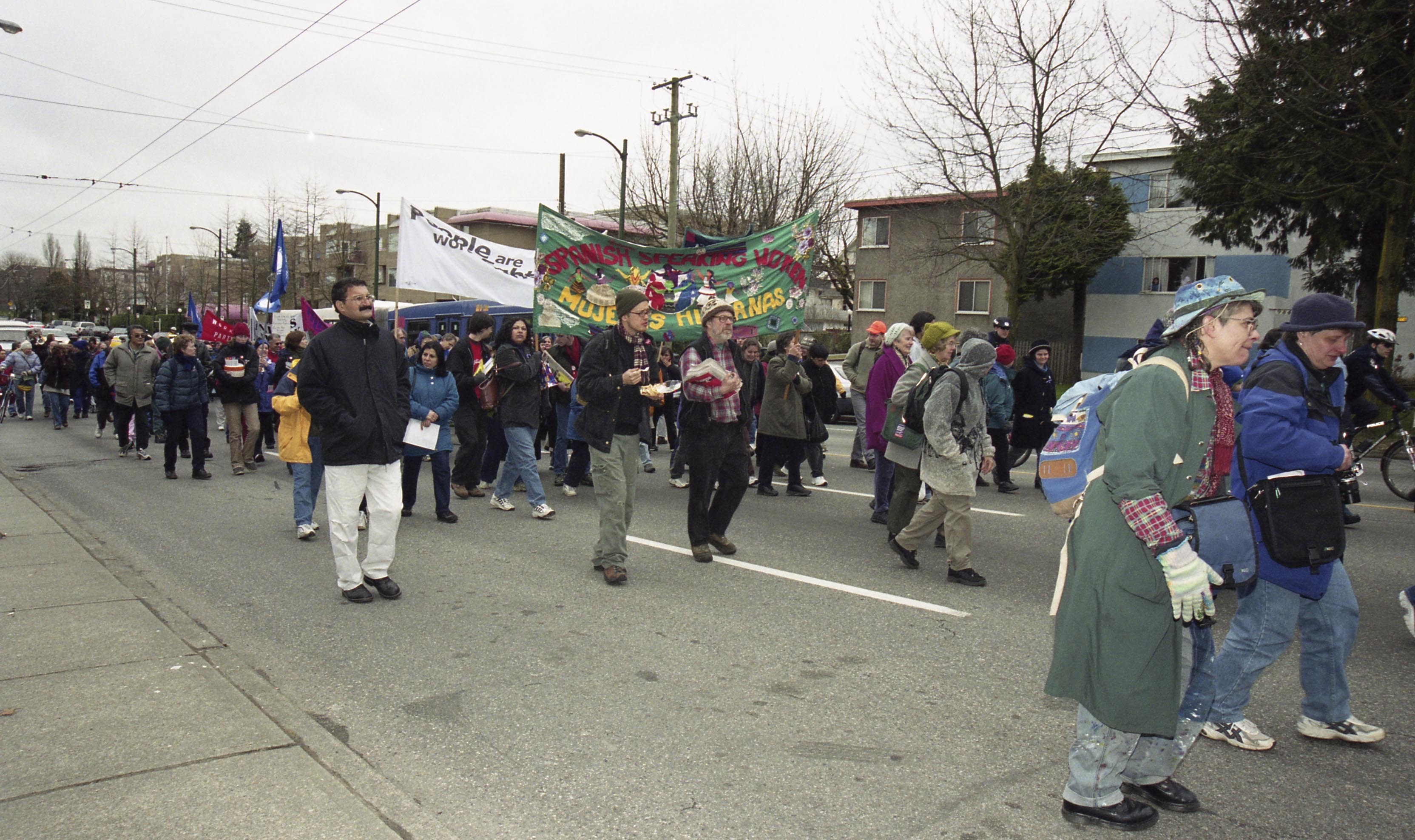
Photograph of the march held for International Women's Day, held in Vancouver, B.C.
International Women's Day (IWD) is a specific day dedicated to the advancement of women worldwide; celebrated annually on March 8, to honor the achievements of women across all aspects of life – social, economic, cultural, and political – while also advocating for gender equality. Originating from labor movements in the early 20th century, IWD has evolved into a globally recognized occasion marked by events, discussions, and initiatives advocating for inclusivity and equity. IWD was marked for the first time in 1911 in Austria, Denmark, Germany and Switzerland, on March 19, with more than one million women and men attending rallies.
International Women's Day (IWD) is a specific day dedicated to the advancement of women worldwide; celebrated annually on March 8, to honor the achievements of women across all aspects of life – social, economic, cultural, and political – while also advocating for gender equality. Originating from labor movements in the early 20th century, IWD has evolved into a globally recognized occasion marked by events, discussions, and initiatives advocating for inclusivity and equity. IWD was marked for the first time in 1911 in Austria, Denmark, Germany and Switzerland, on March 19, with more than one million women and men attending rallies.
Member of
Creator: Bodalia, Chandra
Description
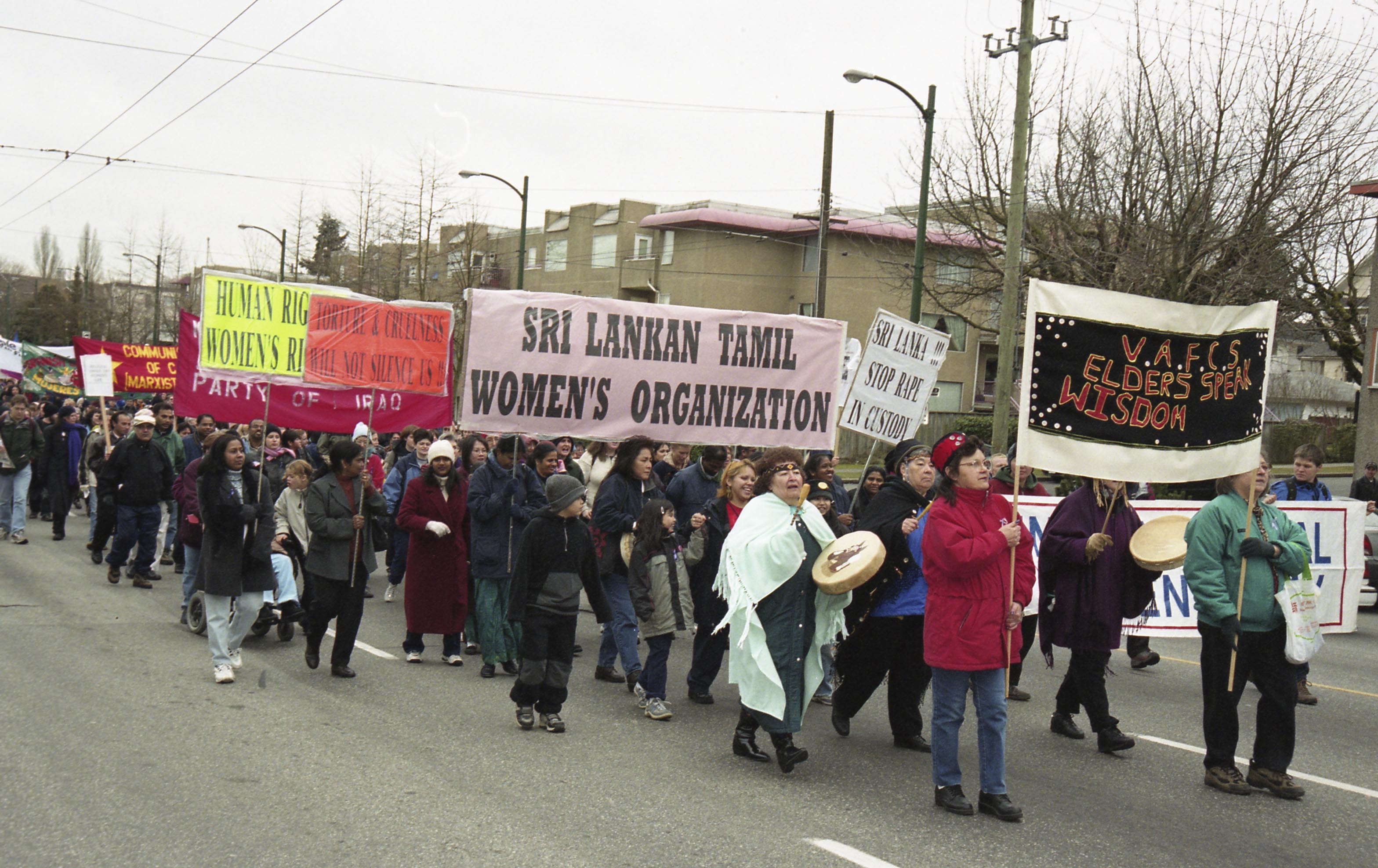
Photograph of the march held for International Women's Day, held in Vancouver, B.C. There are signs from the Vancouver Aboriginal Friendship Centre Society and the Sri Lankan Tamil Women's Organization.
International Women's Day (IWD) is a specific day dedicated to the advancement of women worldwide; celebrated annually on March 8, to honor the achievements of women across all aspects of life – social, economic, cultural, and political – while also advocating for gender equality. Originating from labor movements in the early 20th century, IWD has evolved into a globally recognized occasion marked by events, discussions, and initiatives advocating for inclusivity and equity. IWD was marked for the first time in 1911 in Austria, Denmark, Germany and Switzerland, on March 19, with more than one million women and men attending rallies.
Founded in 1954, the Vancouver Aboriginal Friendship Centre Society (VAFCS) was created to provide support, resources, and practical tools for Indigenous peoples living in Vancouver, British Columbia, through socio-economic programs and services. It was originally established as the Coqualeetza Fellowship Club by Mabel Stanley, Hattie Ferguson, Chief Gertrude Guerin, Judge Alfred Scow, Margaret White, Senator Guy Williams, and Chief Simon Baker, and then was incorporated as the Vancouver Indian Centre Society in 1963. VAFCS relocated to its current location at 1607 East Hastings Street based in response to the concentration of the Indigenous peoples in the area.
International Women's Day (IWD) is a specific day dedicated to the advancement of women worldwide; celebrated annually on March 8, to honor the achievements of women across all aspects of life – social, economic, cultural, and political – while also advocating for gender equality. Originating from labor movements in the early 20th century, IWD has evolved into a globally recognized occasion marked by events, discussions, and initiatives advocating for inclusivity and equity. IWD was marked for the first time in 1911 in Austria, Denmark, Germany and Switzerland, on March 19, with more than one million women and men attending rallies.
Founded in 1954, the Vancouver Aboriginal Friendship Centre Society (VAFCS) was created to provide support, resources, and practical tools for Indigenous peoples living in Vancouver, British Columbia, through socio-economic programs and services. It was originally established as the Coqualeetza Fellowship Club by Mabel Stanley, Hattie Ferguson, Chief Gertrude Guerin, Judge Alfred Scow, Margaret White, Senator Guy Williams, and Chief Simon Baker, and then was incorporated as the Vancouver Indian Centre Society in 1963. VAFCS relocated to its current location at 1607 East Hastings Street based in response to the concentration of the Indigenous peoples in the area.
Member of
Creator: Bodalia, Chandra
Description
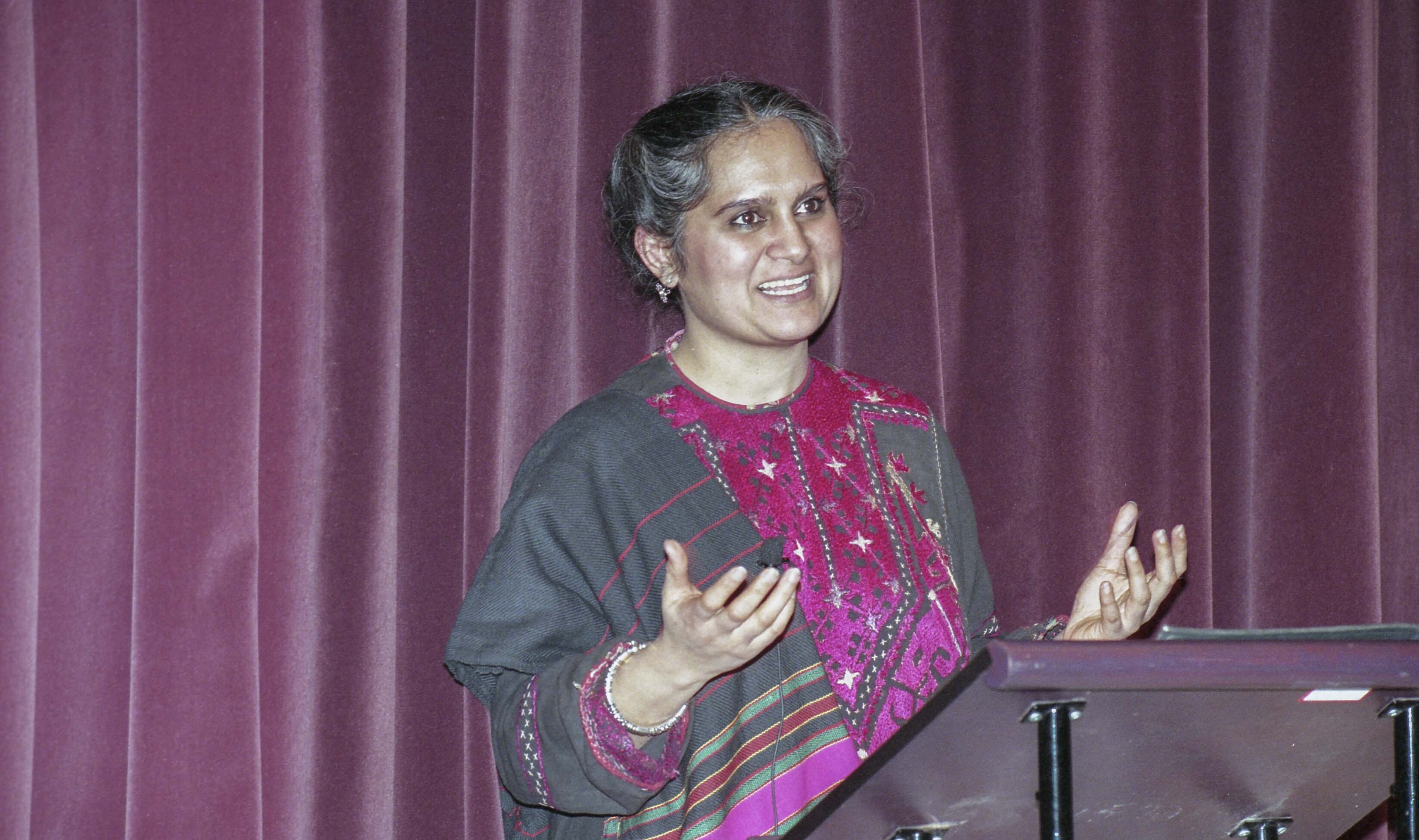
Photograph of Sunera Thobani speaking at an event.
Sunera Thobani is an activist and scholar. As an activist, Thobani has served as the former President of the National Action Committee on the Status of Woman, Canada's then largest feminist organization. During her tenure she sought to make anti-racism central to feminist struggles. As a scholar, Thobani has developed critical race theory to cast new light on the dynamics around globalization, violence against women, reproductive technologies, social programmes, immigration and nation-building, and colonialism and war. She is also a founding member of the Canada-wide alliance, Researchers and Academics of Colour for Equity. Thobani is a Professor in the Department of Asian Studies at the University of British Columbia (UBC). She has been the recipient of multiple awards, including, the Hands Against Racism Community Award from Spice Radio, The Sarah Shorten Award from the Canadian Association of University Teachers, The Dean's Award for Academic Excellence from UBC, and the Lifetime Achievement Award from the Dr. Hari Sharma Foundation for the Advancement of South Asians.
Sunera Thobani is an activist and scholar. As an activist, Thobani has served as the former President of the National Action Committee on the Status of Woman, Canada's then largest feminist organization. During her tenure she sought to make anti-racism central to feminist struggles. As a scholar, Thobani has developed critical race theory to cast new light on the dynamics around globalization, violence against women, reproductive technologies, social programmes, immigration and nation-building, and colonialism and war. She is also a founding member of the Canada-wide alliance, Researchers and Academics of Colour for Equity. Thobani is a Professor in the Department of Asian Studies at the University of British Columbia (UBC). She has been the recipient of multiple awards, including, the Hands Against Racism Community Award from Spice Radio, The Sarah Shorten Award from the Canadian Association of University Teachers, The Dean's Award for Academic Excellence from UBC, and the Lifetime Achievement Award from the Dr. Hari Sharma Foundation for the Advancement of South Asians.
Member of
Creator: Bodalia, Chandra
Description
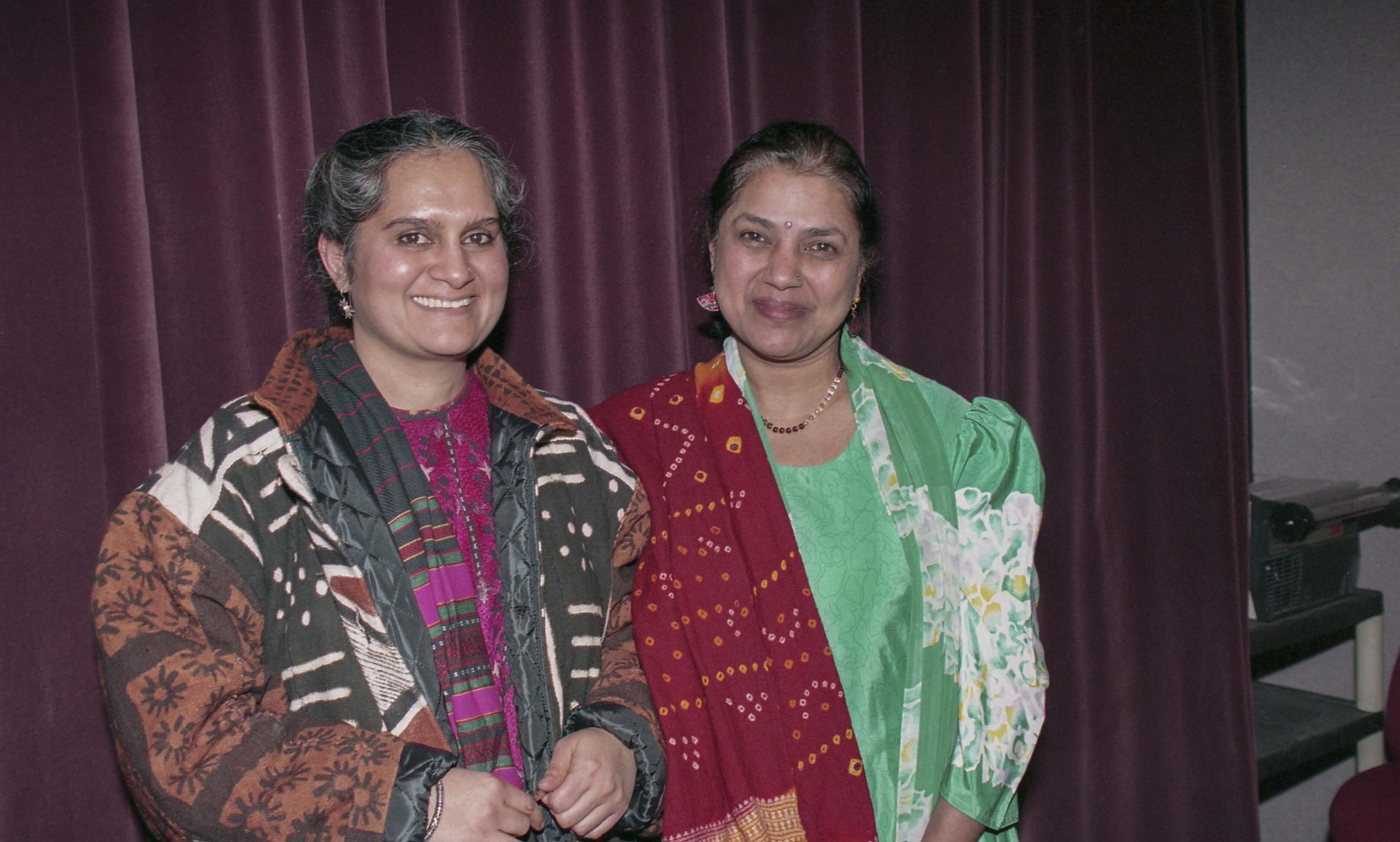
Photograph of Sunera Thobani with an unidentified woman.
Sunera Thobani is an activist and scholar. As an activist, Thobani has served as the former President of the National Action Committee on the Status of Woman, Canada's then largest feminist organization. During her tenure she sought to make anti-racism central to feminist struggles. As a scholar, Thobani has developed critical race theory to cast new light on the dynamics around globalization, violence against women, reproductive technologies, social programmes, immigration and nation-building, and colonialism and war. She is also a founding member of the Canada-wide alliance, Researchers and Academics of Colour for Equity. Thobani is a Professor in the Department of Asian Studies at the University of British Columbia (UBC). She has been the recipient of multiple awards, including, the Hands Against Racism Community Award from Spice Radio, The Sarah Shorten Award from the Canadian Association of University Teachers, The Dean's Award for Academic Excellence from UBC, and the Lifetime Achievement Award from the Dr. Hari Sharma Foundation for the Advancement of South Asians.
Sunera Thobani is an activist and scholar. As an activist, Thobani has served as the former President of the National Action Committee on the Status of Woman, Canada's then largest feminist organization. During her tenure she sought to make anti-racism central to feminist struggles. As a scholar, Thobani has developed critical race theory to cast new light on the dynamics around globalization, violence against women, reproductive technologies, social programmes, immigration and nation-building, and colonialism and war. She is also a founding member of the Canada-wide alliance, Researchers and Academics of Colour for Equity. Thobani is a Professor in the Department of Asian Studies at the University of British Columbia (UBC). She has been the recipient of multiple awards, including, the Hands Against Racism Community Award from Spice Radio, The Sarah Shorten Award from the Canadian Association of University Teachers, The Dean's Award for Academic Excellence from UBC, and the Lifetime Achievement Award from the Dr. Hari Sharma Foundation for the Advancement of South Asians.
Creator: Bodalia, Chandra
Description
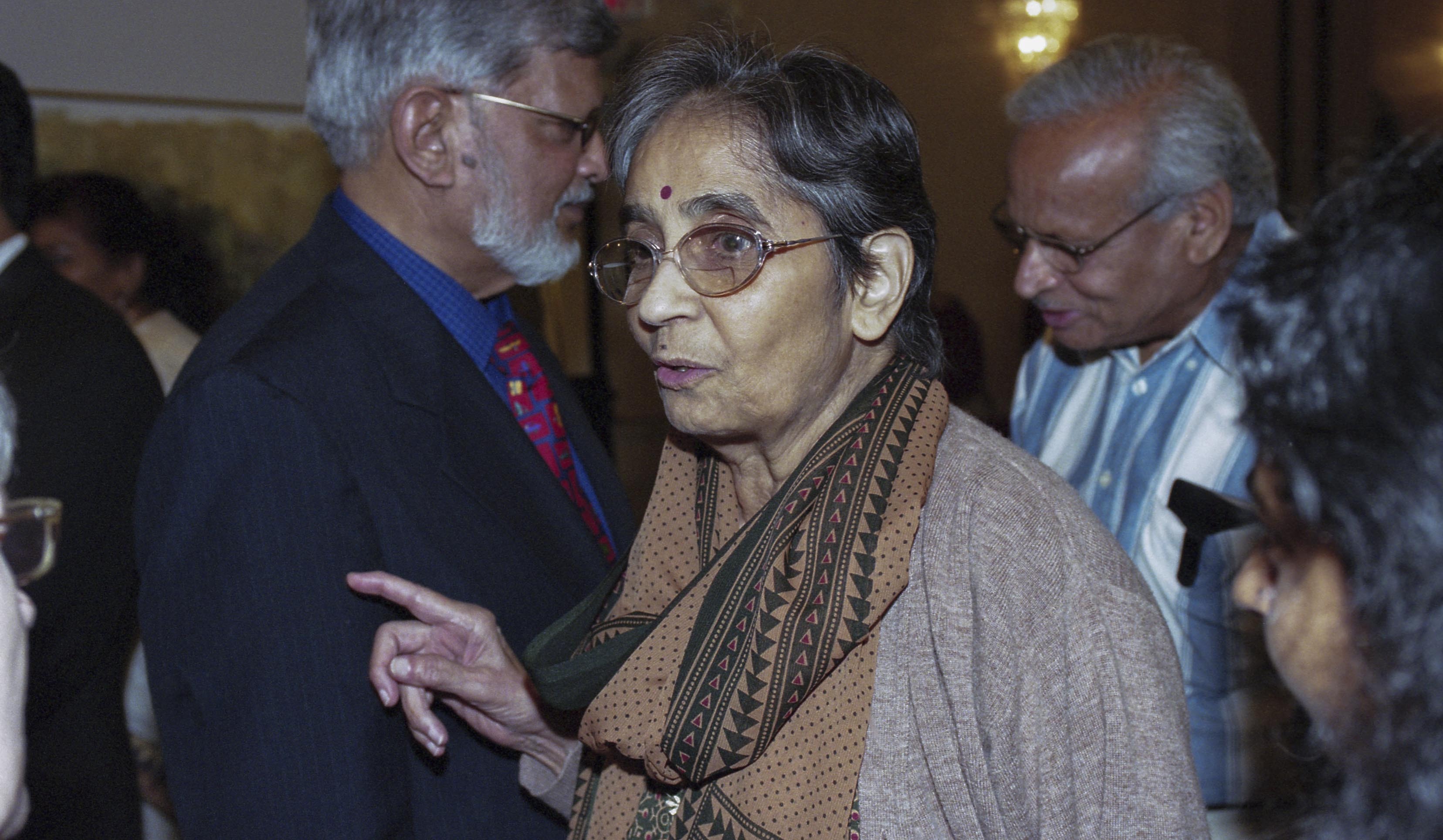
Photograph of Sunanda and Arun Gandhi at his lecture and book signing event, which was organized by the International Network on Personal Meaning in Richmond, B.C.
Born in the Gujarat, India, Sunanda Gandhi was an Indian-American nurse, researcher, author, women's rights advocate, and socio-political activist. She served on the Maharashtra State Women's Council and worked for prison reform, the end of domestic violence, the abolition of the caste system and in support of orphans.
Born in 1934 in Durban, South Africa, Arun Manilal Gandhi was the fifth grandson of Mohandas K. "Mahatma" Gandhi and was a socio-political activist, author, lecturer, and journalist. Having grown up under the apartheid laws of South Asian, both his parents and his grandfather taught him the importance of justice through love, suffering, understanding, and nonviolence.
Arun and Sunanda lived in India for thirty years, and then in 1987, they moved to the United States. The couple was extremely involved in activism, which included rescuing orphan children from the street, social and economic uplifting programs, starting the M. K. Gandhi Institute for Nonviolence, establishing residential-school in poorest rural India, and founding the Gandhi Worldwide Education Institute, among other contributions..
International Network on Personal Meaning (INPM) follows the vision of Dr. Viktor Frankl, an Austrian neurologist and psychiatrist, and Dr. Paul T. P. Wong, a Canadian clinical psychologist. They advocate for research on meaning, by extending logotherapy and integrating it with the positive psychology. They engage in meaning research, meaning-centred practice, meaningful living group, as well as websites, publications, education, meaningful living groups, and meaning-centered counseling, coaching, and consultation.
Born in the Gujarat, India, Sunanda Gandhi was an Indian-American nurse, researcher, author, women's rights advocate, and socio-political activist. She served on the Maharashtra State Women's Council and worked for prison reform, the end of domestic violence, the abolition of the caste system and in support of orphans.
Born in 1934 in Durban, South Africa, Arun Manilal Gandhi was the fifth grandson of Mohandas K. "Mahatma" Gandhi and was a socio-political activist, author, lecturer, and journalist. Having grown up under the apartheid laws of South Asian, both his parents and his grandfather taught him the importance of justice through love, suffering, understanding, and nonviolence.
Arun and Sunanda lived in India for thirty years, and then in 1987, they moved to the United States. The couple was extremely involved in activism, which included rescuing orphan children from the street, social and economic uplifting programs, starting the M. K. Gandhi Institute for Nonviolence, establishing residential-school in poorest rural India, and founding the Gandhi Worldwide Education Institute, among other contributions..
International Network on Personal Meaning (INPM) follows the vision of Dr. Viktor Frankl, an Austrian neurologist and psychiatrist, and Dr. Paul T. P. Wong, a Canadian clinical psychologist. They advocate for research on meaning, by extending logotherapy and integrating it with the positive psychology. They engage in meaning research, meaning-centred practice, meaningful living group, as well as websites, publications, education, meaningful living groups, and meaning-centered counseling, coaching, and consultation.
Creator: Bodalia, Chandra
Description
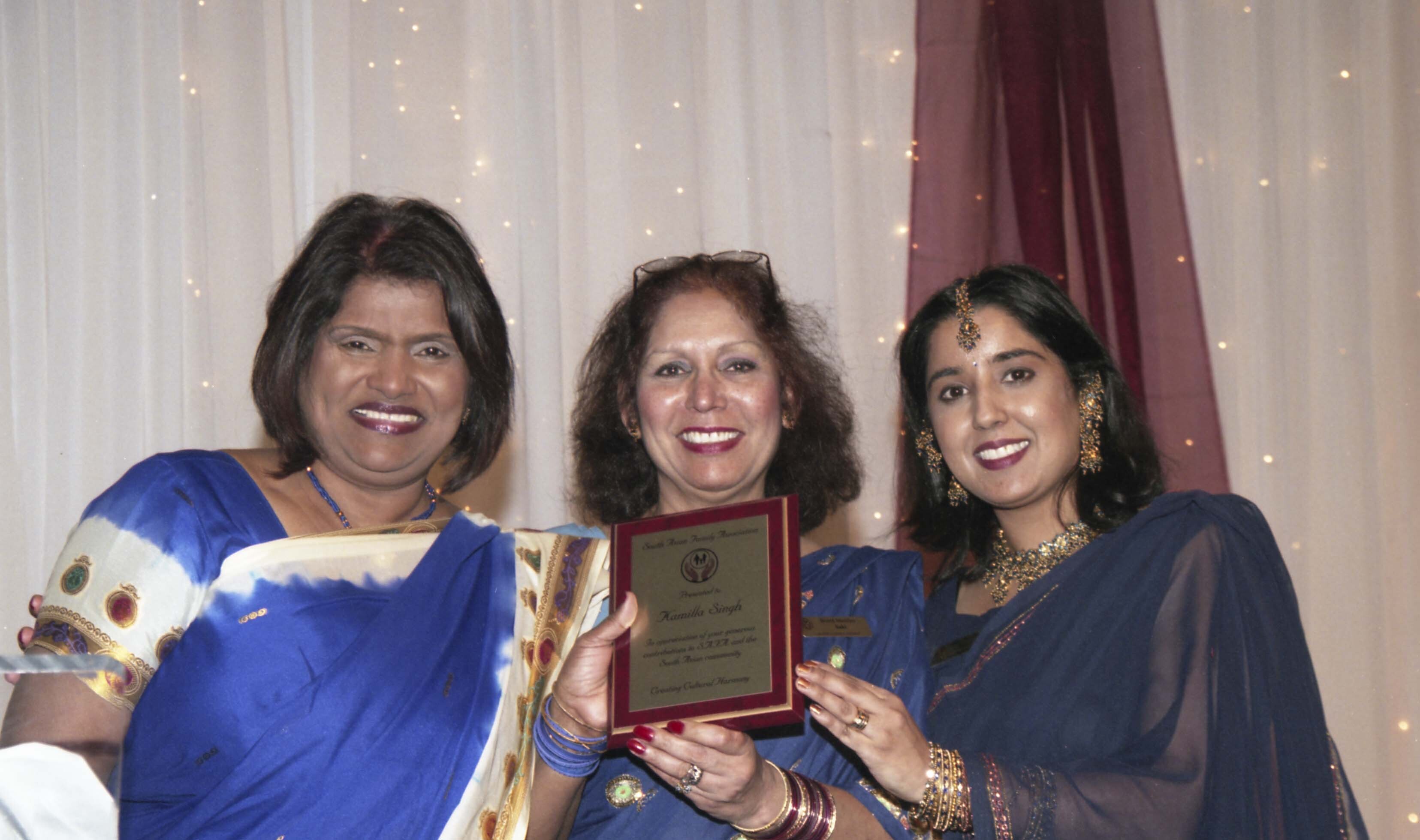
Group portrait of Kamilla Singh receiving a plaque at a fashion show held by the South Asian Family Association at Fraserview Hall in Vancouver, B.C.
Kamilla Singh is an activist and media personality in the Fijian community, who is known as the producer and director of Asian Pulse TV, which has been on air for 22 years. She founded the Fiji Professional Women's Network, and has worked as a counsellor, vitim support worker, advocate, and human rights defender for the past 25 years. Some of her initiatives include organizing anti-racism events. providing support for women and children fleeing domestic violence, and partnering with the Fiji Disaster Relief Society. In 2006, the Vancouver Sun named has a one of the 100 most influential people in British Columbia.
The South Asian Family Association (SAFA) is a non-profit organization that aims to highlight the South Asian community and culture. SAFA was formed in 2002 with goals to promote positive images of the South Asian community, enhance cross-cultural understanding, and empower families to maintain their heritage while embracing Canadian culture.
Located on Fraser Street, Fraserview Hall has been a staple venue for various South Asian Canadian community events in Vancouver, B.C. over the past two decades.
Kamilla Singh is an activist and media personality in the Fijian community, who is known as the producer and director of Asian Pulse TV, which has been on air for 22 years. She founded the Fiji Professional Women's Network, and has worked as a counsellor, vitim support worker, advocate, and human rights defender for the past 25 years. Some of her initiatives include organizing anti-racism events. providing support for women and children fleeing domestic violence, and partnering with the Fiji Disaster Relief Society. In 2006, the Vancouver Sun named has a one of the 100 most influential people in British Columbia.
The South Asian Family Association (SAFA) is a non-profit organization that aims to highlight the South Asian community and culture. SAFA was formed in 2002 with goals to promote positive images of the South Asian community, enhance cross-cultural understanding, and empower families to maintain their heritage while embracing Canadian culture.
Located on Fraser Street, Fraserview Hall has been a staple venue for various South Asian Canadian community events in Vancouver, B.C. over the past two decades.