
Sharma, Ashok
Creator: Bodalia, Chandra
Description
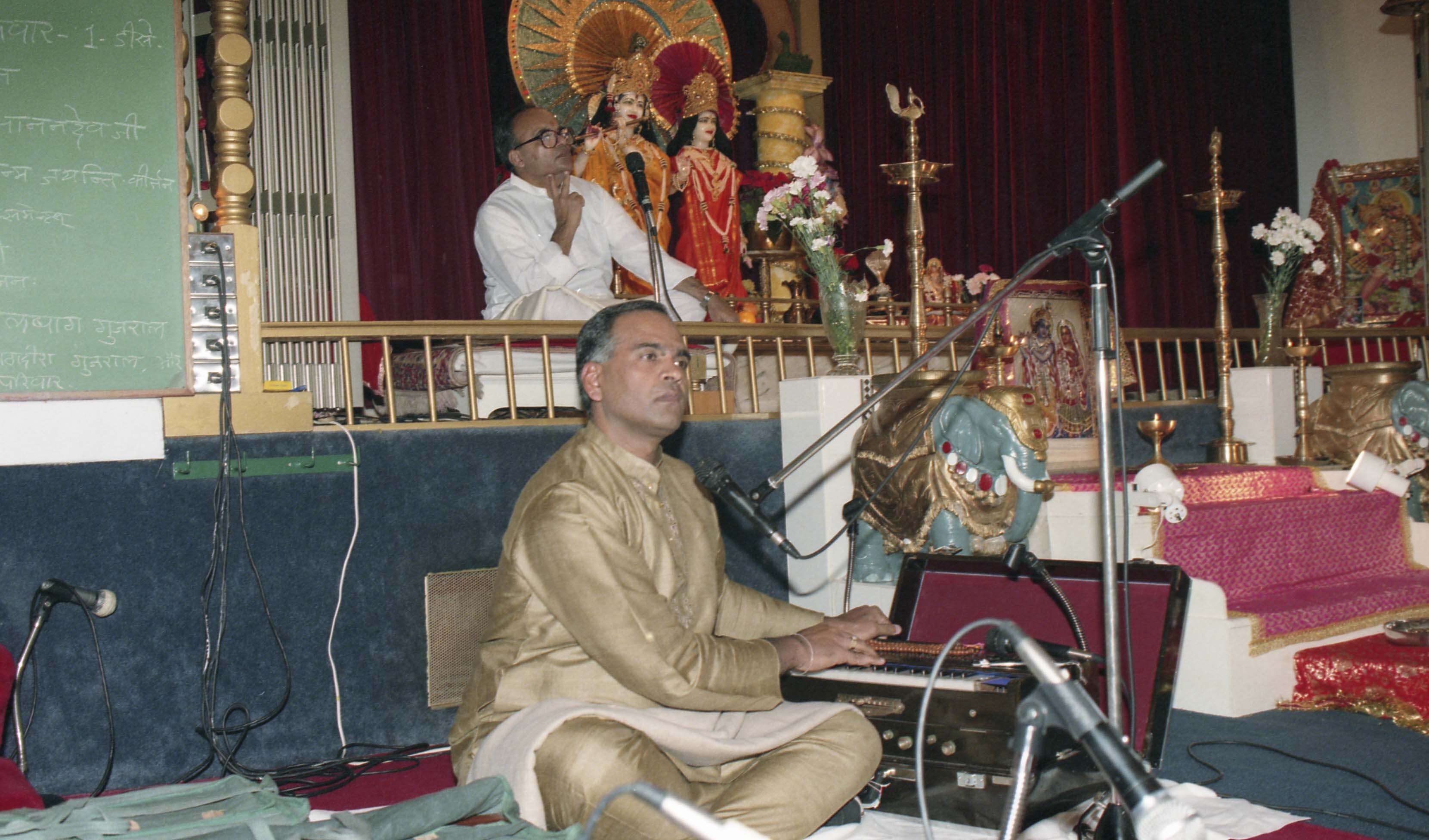
Photograph of Ashok Sharma playing a musical instrument, a harmonium, at the Hindu Temple of Burnaby in British Columbia (B.C.). Individuals had gathered at the mandir (temple) for bhajan.
Bhajan is a form of worship to show respect and reverence to the Gods and Goddesses. Bhajan refers to devotional hymns, usually sung in small groups or by the entire congregation. Common instruments are drums, (such as tablas and mridangas), hand-cymbals and the harmonium. In Hinduism, Bhajans play an essential role. Most people sing Bhajans during their prayers. Bhajan comes from the Sanskrit word, Bhajanam, which means reverence. The root word of Bhajan is Bhaj, which means "to belong." Throughout the years, Bhajans have become an integral part of Hindu traditions and culture. Apart from Hinduism, Jainism and Sikhism also conduct Bhajans.
Officially registered as the Hindu Cultural Society and Community Centre of B.C., the Hindu Temple of Burnaby, previously known as Vishva Hindu Parishad temple, stands as one of Canada's oldest and largest Hindu temples. It was founded on May 15, 1972 as a small prayer hall in North Burnaby, dedicated to preserving and promoting Hindu culture and traditions.
Bhajan is a form of worship to show respect and reverence to the Gods and Goddesses. Bhajan refers to devotional hymns, usually sung in small groups or by the entire congregation. Common instruments are drums, (such as tablas and mridangas), hand-cymbals and the harmonium. In Hinduism, Bhajans play an essential role. Most people sing Bhajans during their prayers. Bhajan comes from the Sanskrit word, Bhajanam, which means reverence. The root word of Bhajan is Bhaj, which means "to belong." Throughout the years, Bhajans have become an integral part of Hindu traditions and culture. Apart from Hinduism, Jainism and Sikhism also conduct Bhajans.
Officially registered as the Hindu Cultural Society and Community Centre of B.C., the Hindu Temple of Burnaby, previously known as Vishva Hindu Parishad temple, stands as one of Canada's oldest and largest Hindu temples. It was founded on May 15, 1972 as a small prayer hall in North Burnaby, dedicated to preserving and promoting Hindu culture and traditions.
Creator: Bodalia, Chandra
Description
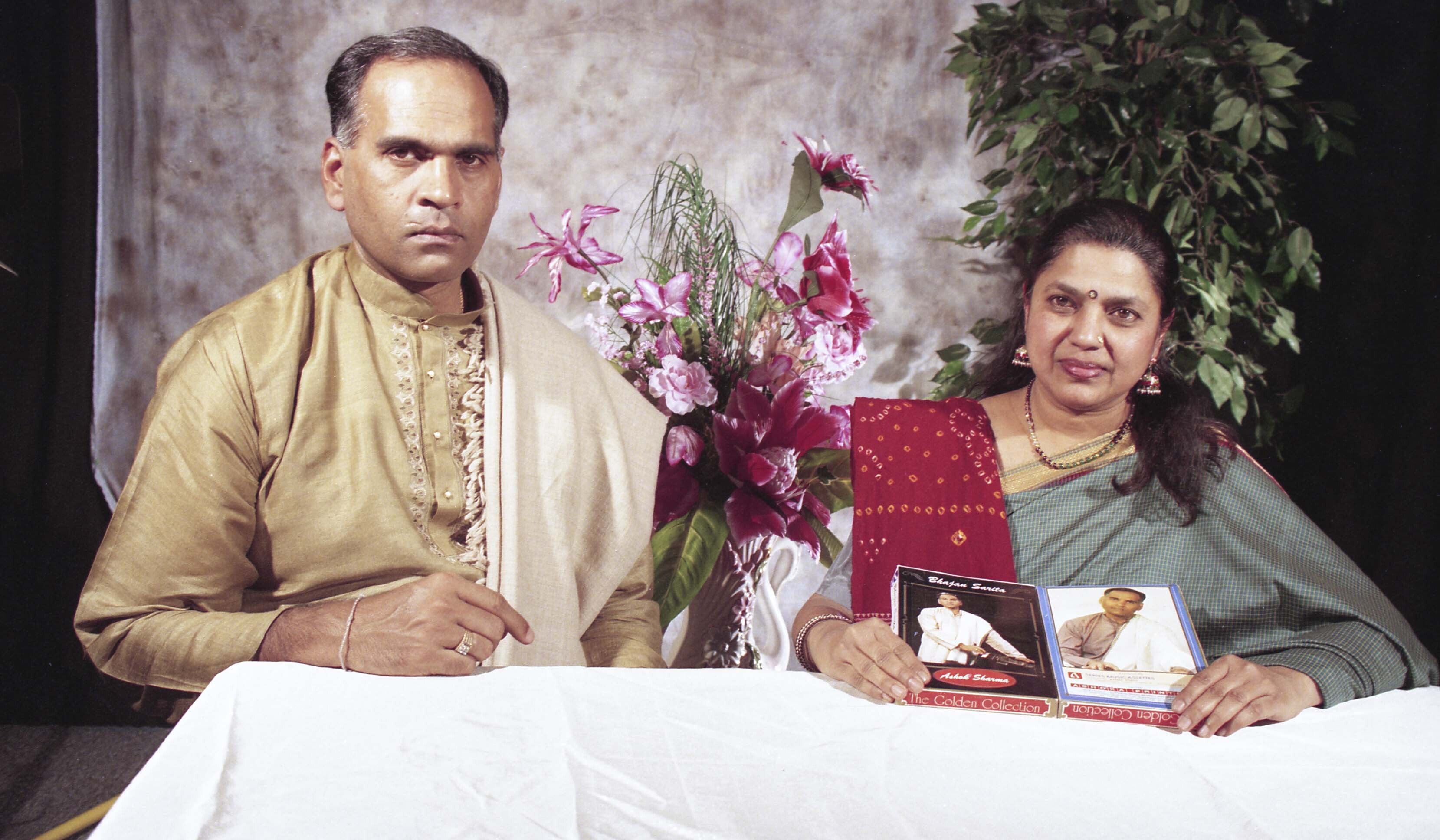
Photograph of Ashok Sharma with an unidentified individual at the Hindu Temple of Burnaby[?] in British Columbia (B.C.). Individuals had gathered at the mandir (temple) for bhajan.
Bhajan is a form of worship to show respect and reverence to the Gods and Goddesses. Bhajan refers to devotional hymns, usually sung in small groups or by the entire congregation. Common instruments are drums, (such as tablas and mridangas), hand-cymbals and the harmonium. In Hinduism, Bhajans play an essential role. Most people sing Bhajans during their prayers. Bhajan comes from the Sanskrit word, Bhajanam, which means reverence. The root word of Bhajan is Bhaj, which means "to belong." Throughout the years, Bhajans have become an integral part of Hindu traditions and culture. Apart from Hinduism, Jainism and Sikhism also conduct Bhajans.
Officially registered as the Hindu Cultural Society and Community Centre of B.C., the Hindu Temple of Burnaby, previously known as Vishva Hindu Parishad temple, stands as one of Canada's oldest and largest Hindu temples. It was founded on May 15, 1972 as a small prayer hall in North Burnaby, dedicated to preserving and promoting Hindu culture and traditions.
Bhajan is a form of worship to show respect and reverence to the Gods and Goddesses. Bhajan refers to devotional hymns, usually sung in small groups or by the entire congregation. Common instruments are drums, (such as tablas and mridangas), hand-cymbals and the harmonium. In Hinduism, Bhajans play an essential role. Most people sing Bhajans during their prayers. Bhajan comes from the Sanskrit word, Bhajanam, which means reverence. The root word of Bhajan is Bhaj, which means "to belong." Throughout the years, Bhajans have become an integral part of Hindu traditions and culture. Apart from Hinduism, Jainism and Sikhism also conduct Bhajans.
Officially registered as the Hindu Cultural Society and Community Centre of B.C., the Hindu Temple of Burnaby, previously known as Vishva Hindu Parishad temple, stands as one of Canada's oldest and largest Hindu temples. It was founded on May 15, 1972 as a small prayer hall in North Burnaby, dedicated to preserving and promoting Hindu culture and traditions.
Creator: Bodalia, Chandra
Description
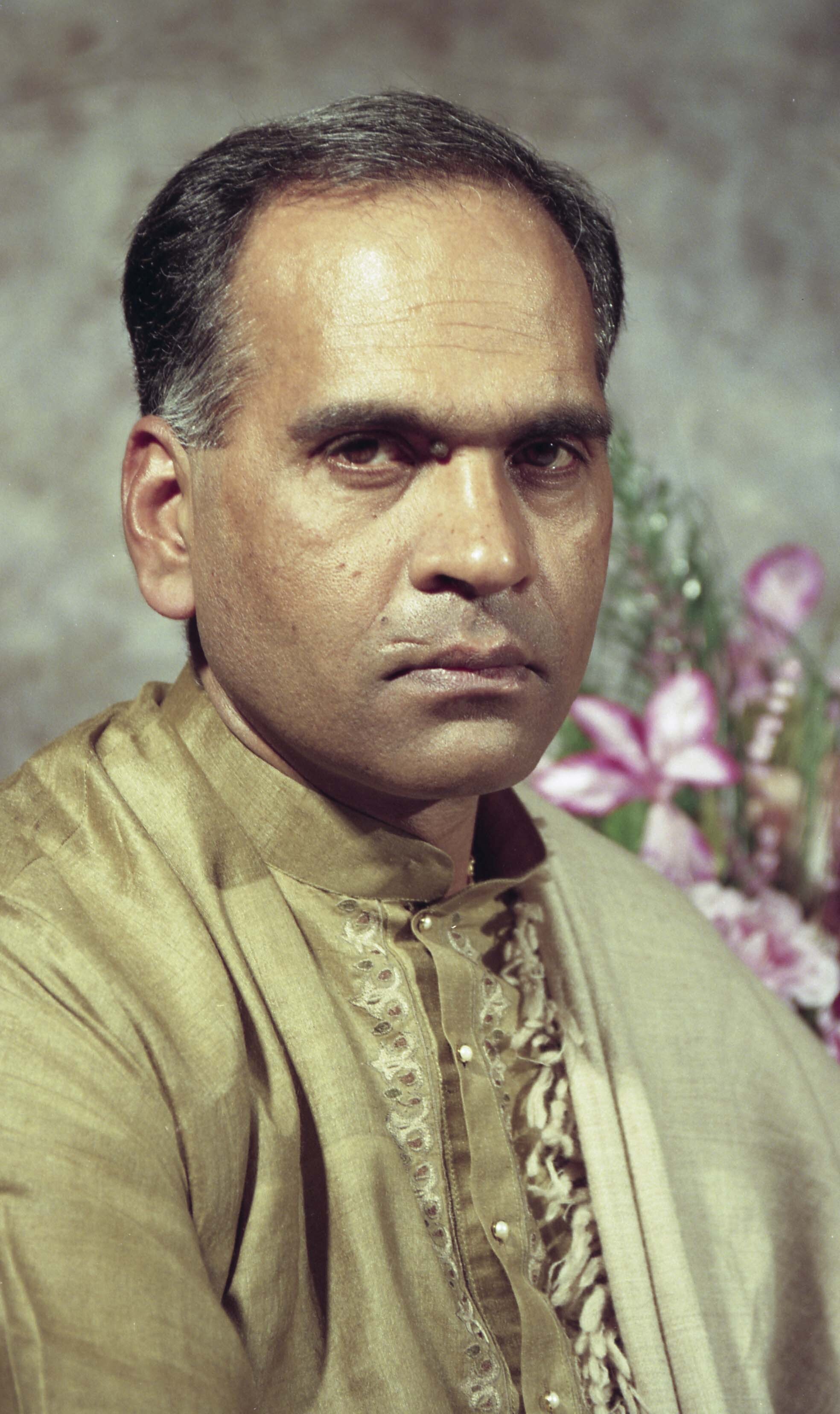
Photograph of Ashok Sharma at the Hindu Temple of Burnaby[?] in British Columbia (B.C.). Individuals had gathered at the mandir (temple) for bhajan.
Bhajan is a form of worship to show respect and reverence to the Gods and Goddesses. Bhajan refers to devotional hymns, usually sung in small groups or by the entire congregation. Common instruments are drums, (such as tablas and mridangas), hand-cymbals and the harmonium. In Hinduism, Bhajans play an essential role. Most people sing Bhajans during their prayers. Bhajan comes from the Sanskrit word, Bhajanam, which means reverence. The root word of Bhajan is Bhaj, which means "to belong." Throughout the years, Bhajans have become an integral part of Hindu traditions and culture. Apart from Hinduism, Jainism and Sikhism also conduct Bhajans.
Officially registered as the Hindu Cultural Society and Community Centre of B.C., the Hindu Temple of Burnaby, previously known as Vishva Hindu Parishad temple, stands as one of Canada's oldest and largest Hindu temples. It was founded on May 15, 1972 as a small prayer hall in North Burnaby, dedicated to preserving and promoting Hindu culture and traditions.
Bhajan is a form of worship to show respect and reverence to the Gods and Goddesses. Bhajan refers to devotional hymns, usually sung in small groups or by the entire congregation. Common instruments are drums, (such as tablas and mridangas), hand-cymbals and the harmonium. In Hinduism, Bhajans play an essential role. Most people sing Bhajans during their prayers. Bhajan comes from the Sanskrit word, Bhajanam, which means reverence. The root word of Bhajan is Bhaj, which means "to belong." Throughout the years, Bhajans have become an integral part of Hindu traditions and culture. Apart from Hinduism, Jainism and Sikhism also conduct Bhajans.
Officially registered as the Hindu Cultural Society and Community Centre of B.C., the Hindu Temple of Burnaby, previously known as Vishva Hindu Parishad temple, stands as one of Canada's oldest and largest Hindu temples. It was founded on May 15, 1972 as a small prayer hall in North Burnaby, dedicated to preserving and promoting Hindu culture and traditions.
Creator: Bodalia, Chandra
Description
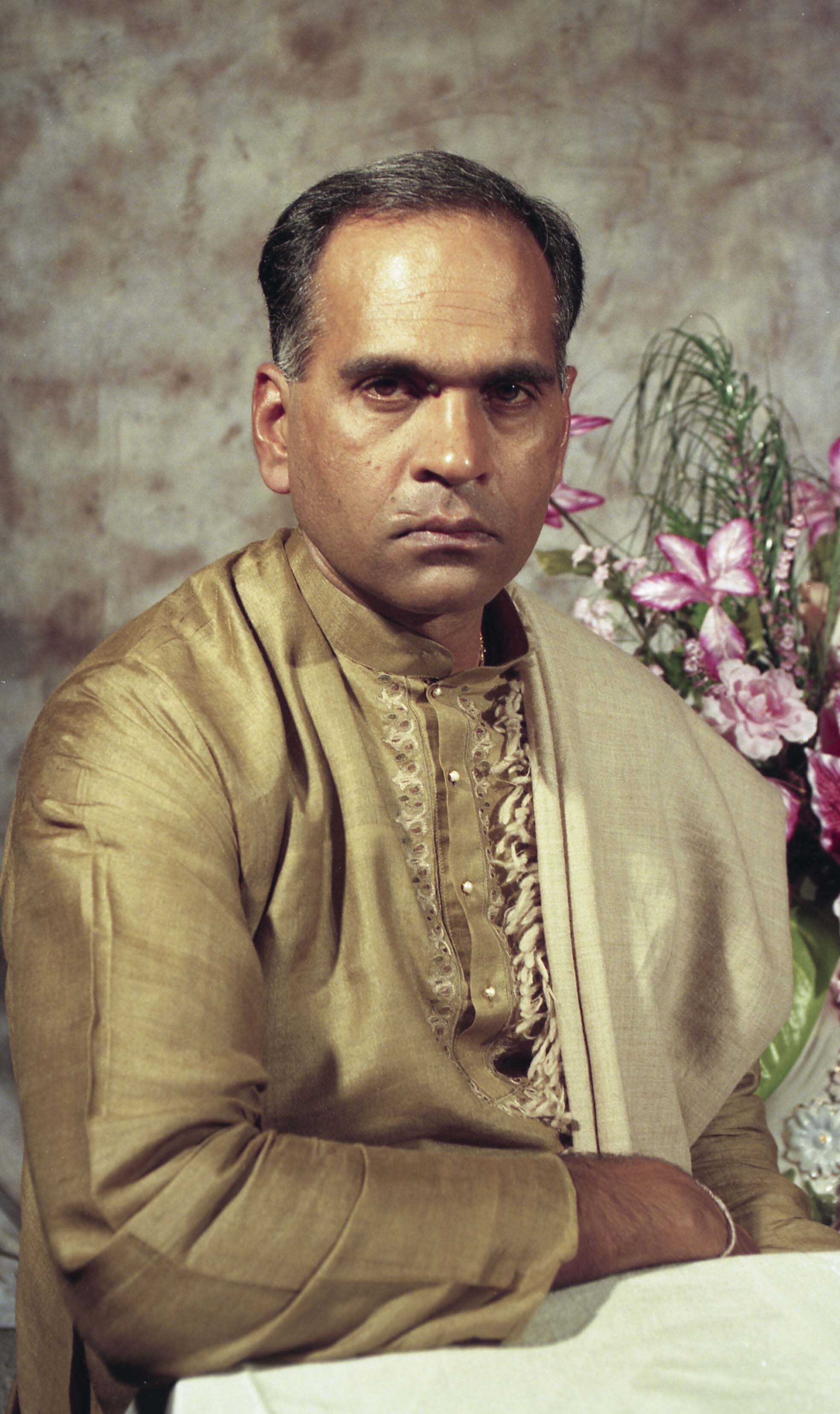
Photograph of Ashok Sharma at the Hindu Temple of Burnaby[?] in British Columbia (B.C.). Individuals had gathered at the mandir (temple) for bhajan.
Bhajan is a form of worship to show respect and reverence to the Gods and Goddesses. Bhajan refers to devotional hymns, usually sung in small groups or by the entire congregation. Common instruments are drums, (such as tablas and mridangas), hand-cymbals and the harmonium. In Hinduism, Bhajans play an essential role. Most people sing Bhajans during their prayers. Bhajan comes from the Sanskrit word, Bhajanam, which means reverence. The root word of Bhajan is Bhaj, which means "to belong." Throughout the years, Bhajans have become an integral part of Hindu traditions and culture. Apart from Hinduism, Jainism and Sikhism also conduct Bhajans.
Officially registered as the Hindu Cultural Society and Community Centre of B.C., the Hindu Temple of Burnaby, previously known as Vishva Hindu Parishad temple, stands as one of Canada's oldest and largest Hindu temples. It was founded on May 15, 1972 as a small prayer hall in North Burnaby, dedicated to preserving and promoting Hindu culture and traditions.
Bhajan is a form of worship to show respect and reverence to the Gods and Goddesses. Bhajan refers to devotional hymns, usually sung in small groups or by the entire congregation. Common instruments are drums, (such as tablas and mridangas), hand-cymbals and the harmonium. In Hinduism, Bhajans play an essential role. Most people sing Bhajans during their prayers. Bhajan comes from the Sanskrit word, Bhajanam, which means reverence. The root word of Bhajan is Bhaj, which means "to belong." Throughout the years, Bhajans have become an integral part of Hindu traditions and culture. Apart from Hinduism, Jainism and Sikhism also conduct Bhajans.
Officially registered as the Hindu Cultural Society and Community Centre of B.C., the Hindu Temple of Burnaby, previously known as Vishva Hindu Parishad temple, stands as one of Canada's oldest and largest Hindu temples. It was founded on May 15, 1972 as a small prayer hall in North Burnaby, dedicated to preserving and promoting Hindu culture and traditions.