
South Asian diaspora
Authority Sources
2022_01_01_06_001.pdf
(4.24 MB)
Member of
Description
Newspaper clipping titled, 'An Era of Influence: 100 Indo-Canadians who are making a difference in British Columbia," edited by Stephen Snelgrove and published in the Vancouver Sun on March 29, 2008. The article highlights 100 South Asian Candians from British Columbia and their accomplishments in various fields such as arts, media, politics, education as well as their contributions towards the community.
2022_15_02_022.pdf
(85.25 KB)
Description
Letter from Stockwell Day, the Regional Minister of British Columbia to Dr. Gurdev Singh Gill. Day states that he had read about Dr. Gill and his work in the article published by the Vancouver Sun , "An Era of Influence: 100 Indo-Canadians who are making a difference in British Columbia." Day emphasizes Dr. Gill's contributions to the community and congratulates him on his accomplishments.
2022_02_03_002.pdf
(471.91 KB)
Member of
Description
A biographical note written by Harinder Jit Sunga detailing her family history.
2022_02_03_001.pdf
(479.21 KB)
Member of
Description
A biographical note written by Harinder Jit Sunga detailing her family history.
2022_02_02_005.pdf
(894.21 KB)
Description
A flyer about a National Film Board documenting the migration of the Sunga family and two other families from India to Canada. The flyer also lists numerous books, pamphlets, articles, films and videotapes that are related to the documentary's themes surrounding the history of the South Asian community in Canada.
Creator: Bodalia, Chandra
Description
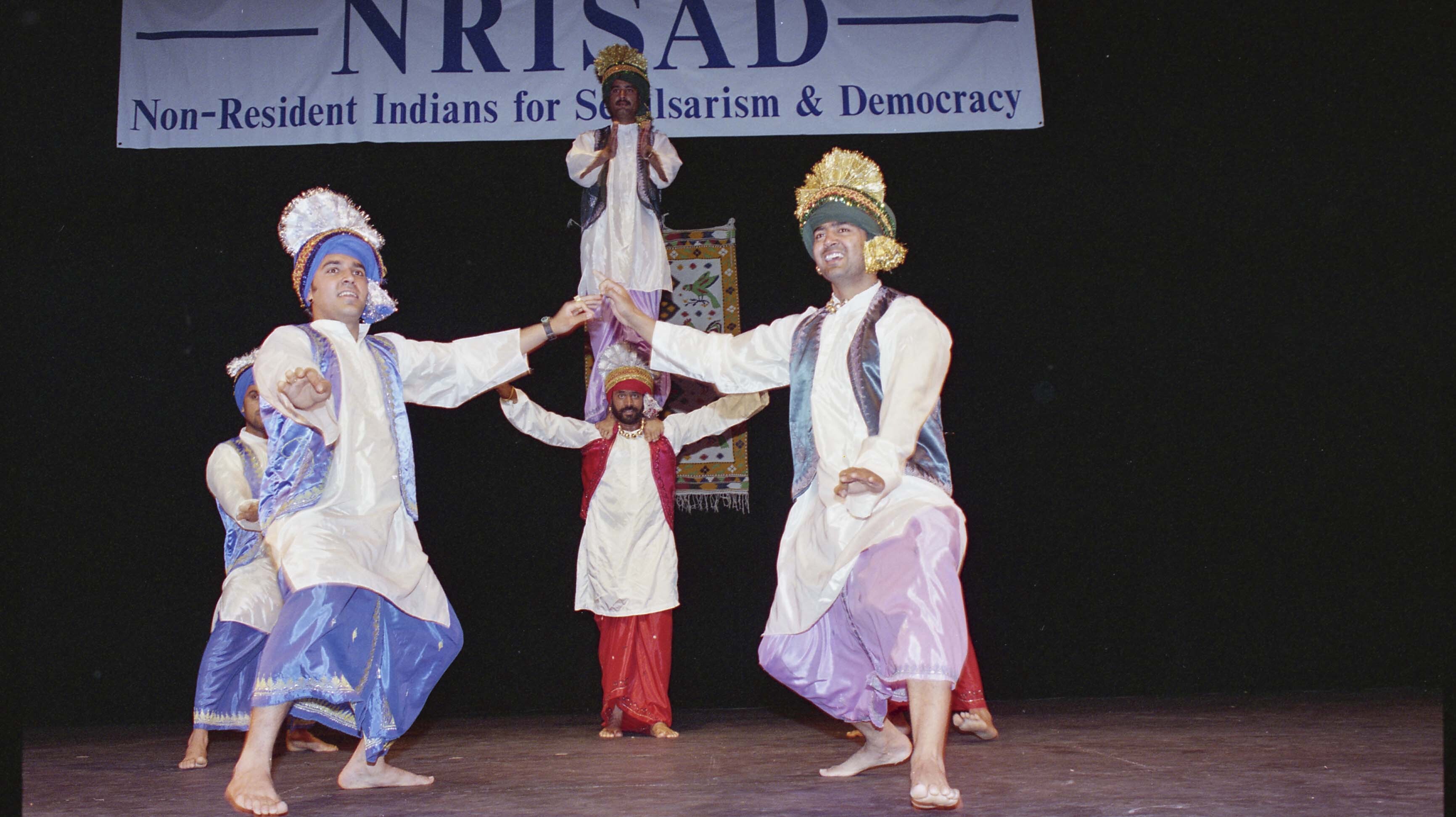
Photograph of a group of unidentified individuals performing bhangra at an event organized by the South Asian Network for Secularism and Democracy (SANSAD).
Bhangra is a folk dance and music form that originated from Punjab, India. It originated as a folk dance celebrated during the time of the harvest. It's traditionally danced to the dhol instrument, a large drum, accompanied by boliyan, short sets of lyrics that describe scenes or stories from Punjab.
The South Asian Network for Secularism and Democracy (SANSAD) is an organization of the South Asian diaspora based in British Columbia, Canada. It comprises people with origin in Bangladesh, India, Nepal, Pakistan, and Sri Lanka. The mission of SANSAD is to develop a secular democratic South Asian diaspora in Canada. SANSAD has grown out of a North American organization, called Non-Resident Indians for Secularism and Democracy (NRISAD) that was established in 1993. The Vancouver branch of the organization recognized through its practice that the concerns of NRISAD in regard to minorities and human rights were not specifically Indian but South Asian and had to be reformulated for the South Asian diaspora as a whole. This was realized with the formation of SANSAD in Vancouver in 2000.
Bhangra is a folk dance and music form that originated from Punjab, India. It originated as a folk dance celebrated during the time of the harvest. It's traditionally danced to the dhol instrument, a large drum, accompanied by boliyan, short sets of lyrics that describe scenes or stories from Punjab.
The South Asian Network for Secularism and Democracy (SANSAD) is an organization of the South Asian diaspora based in British Columbia, Canada. It comprises people with origin in Bangladesh, India, Nepal, Pakistan, and Sri Lanka. The mission of SANSAD is to develop a secular democratic South Asian diaspora in Canada. SANSAD has grown out of a North American organization, called Non-Resident Indians for Secularism and Democracy (NRISAD) that was established in 1993. The Vancouver branch of the organization recognized through its practice that the concerns of NRISAD in regard to minorities and human rights were not specifically Indian but South Asian and had to be reformulated for the South Asian diaspora as a whole. This was realized with the formation of SANSAD in Vancouver in 2000.
Creator: Bodalia, Chandra
Description
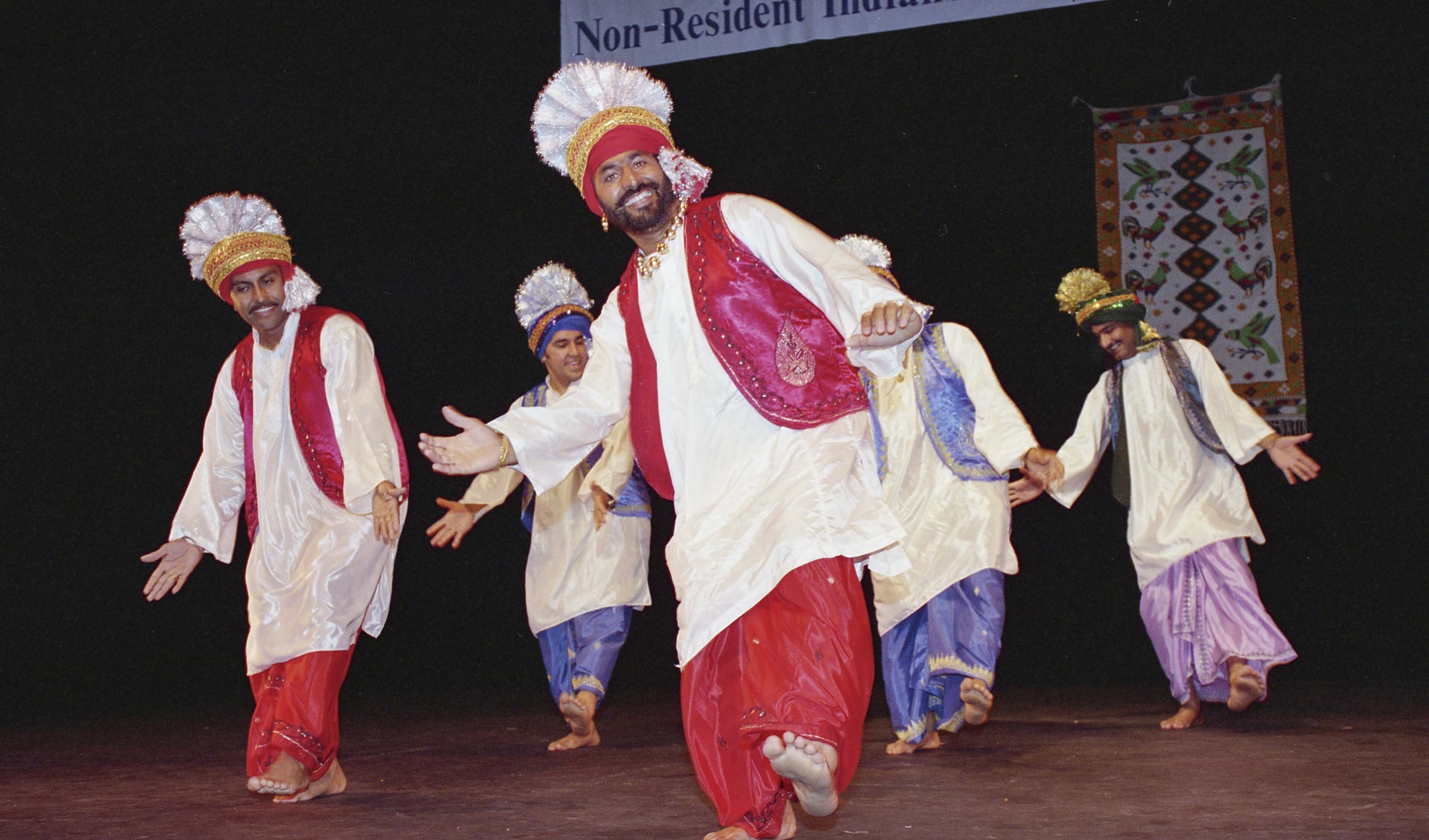
Photograph of a group of unidentified individuals performing bhangra at an event organized by the South Asian Network for Secularism and Democracy (SANSAD).
Bhangra is a folk dance and music form that originated from Punjab, India. It originated as a folk dance celebrated during the time of the harvest. It's traditionally danced to the dhol instrument, a large drum, accompanied by boliyan, short sets of lyrics that describe scenes or stories from Punjab.
The South Asian Network for Secularism and Democracy (SANSAD) is an organization of the South Asian diaspora based in British Columbia, Canada. It comprises people with origin in Bangladesh, India, Nepal, Pakistan, and Sri Lanka. The mission of SANSAD is to develop a secular democratic South Asian diaspora in Canada. SANSAD has grown out of a North American organization, called Non-Resident Indians for Secularism and Democracy (NRISAD) that was established in 1993. The Vancouver branch of the organization recognized through its practice that the concerns of NRISAD in regard to minorities and human rights were not specifically Indian but South Asian and had to be reformulated for the South Asian diaspora as a whole. This was realized with the formation of SANSAD in Vancouver in 2000.
Bhangra is a folk dance and music form that originated from Punjab, India. It originated as a folk dance celebrated during the time of the harvest. It's traditionally danced to the dhol instrument, a large drum, accompanied by boliyan, short sets of lyrics that describe scenes or stories from Punjab.
The South Asian Network for Secularism and Democracy (SANSAD) is an organization of the South Asian diaspora based in British Columbia, Canada. It comprises people with origin in Bangladesh, India, Nepal, Pakistan, and Sri Lanka. The mission of SANSAD is to develop a secular democratic South Asian diaspora in Canada. SANSAD has grown out of a North American organization, called Non-Resident Indians for Secularism and Democracy (NRISAD) that was established in 1993. The Vancouver branch of the organization recognized through its practice that the concerns of NRISAD in regard to minorities and human rights were not specifically Indian but South Asian and had to be reformulated for the South Asian diaspora as a whole. This was realized with the formation of SANSAD in Vancouver in 2000.
Creator: Bodalia, Chandra
Description
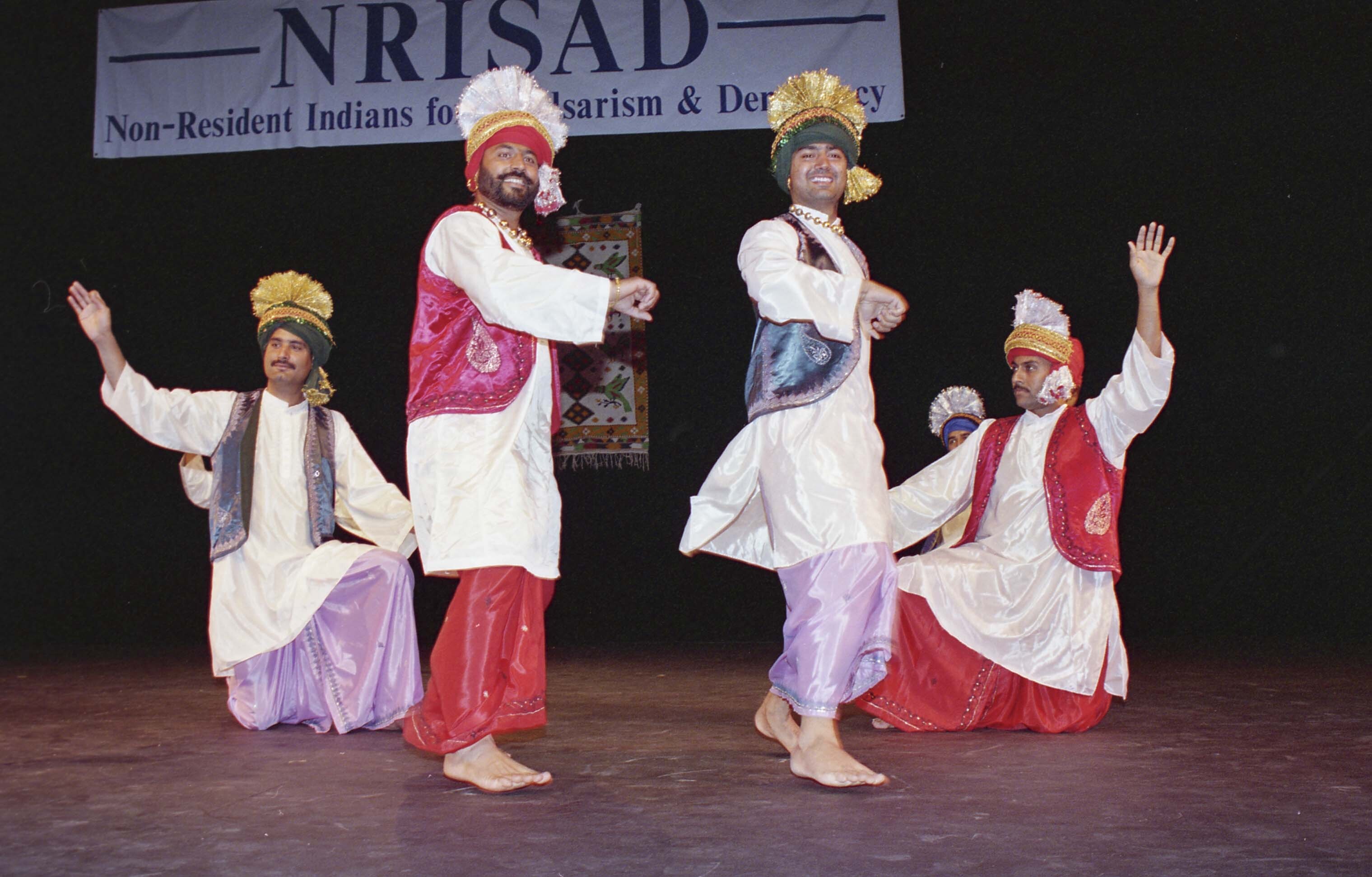
Photograph of a group of unidentified individuals performing bhangra at an event organized by the South Asian Network for Secularism and Democracy (SANSAD).
Bhangra is a folk dance and music form that originated from Punjab, India. It originated as a folk dance celebrated during the time of the harvest. It's traditionally danced to the dhol instrument, a large drum, accompanied by boliyan, short sets of lyrics that describe scenes or stories from Punjab.
The South Asian Network for Secularism and Democracy (SANSAD) is an organization of the South Asian diaspora based in British Columbia, Canada. It comprises people with origin in Bangladesh, India, Nepal, Pakistan, and Sri Lanka. The mission of SANSAD is to develop a secular democratic South Asian diaspora in Canada. SANSAD has grown out of a North American organization, called Non-Resident Indians for Secularism and Democracy (NRISAD) that was established in 1993. The Vancouver branch of the organization recognized through its practice that the concerns of NRISAD in regard to minorities and human rights were not specifically Indian but South Asian and had to be reformulated for the South Asian diaspora as a whole. This was realized with the formation of SANSAD in Vancouver in 2000.
Bhangra is a folk dance and music form that originated from Punjab, India. It originated as a folk dance celebrated during the time of the harvest. It's traditionally danced to the dhol instrument, a large drum, accompanied by boliyan, short sets of lyrics that describe scenes or stories from Punjab.
The South Asian Network for Secularism and Democracy (SANSAD) is an organization of the South Asian diaspora based in British Columbia, Canada. It comprises people with origin in Bangladesh, India, Nepal, Pakistan, and Sri Lanka. The mission of SANSAD is to develop a secular democratic South Asian diaspora in Canada. SANSAD has grown out of a North American organization, called Non-Resident Indians for Secularism and Democracy (NRISAD) that was established in 1993. The Vancouver branch of the organization recognized through its practice that the concerns of NRISAD in regard to minorities and human rights were not specifically Indian but South Asian and had to be reformulated for the South Asian diaspora as a whole. This was realized with the formation of SANSAD in Vancouver in 2000.
Creator: Bodalia, Chandra
Description
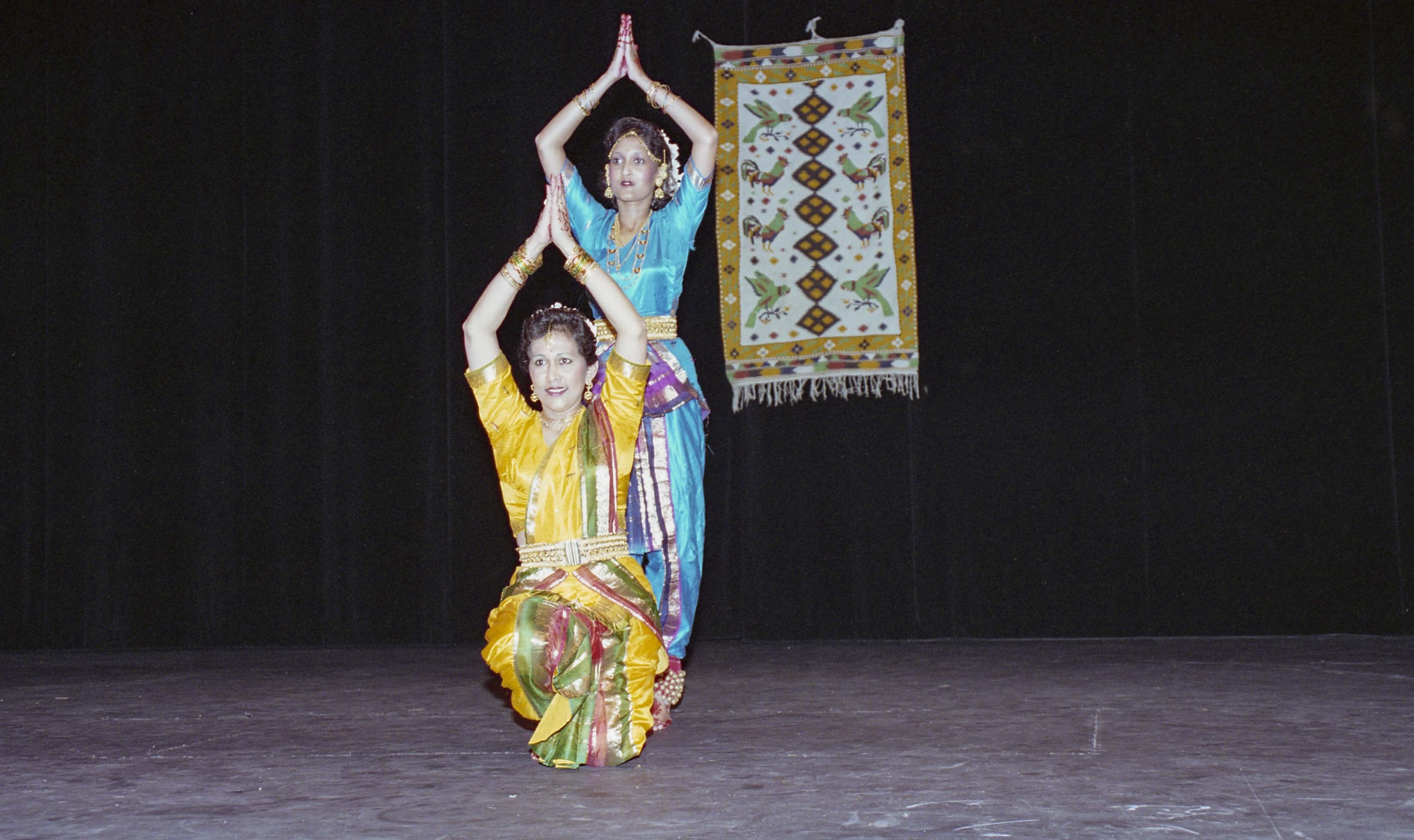
Photograph of unidentified individuals performing at an event organized by the South Asian Network for Secularism and Democracy (SANSAD).
The South Asian Network for Secularism and Democracy (SANSAD) is an organization of the South Asian diaspora based in British Columbia, Canada. It comprises people with origin in Bangladesh, India, Nepal, Pakistan, and Sri Lanka. The mission of SANSAD is to develop a secular democratic South Asian diaspora in Canada. SANSAD has grown out of a North American organization, called Non-Resident Indians for Secularism and Democracy (NRISAD) that was established in 1993. The Vancouver branch of the organization recognized through its practice that the concerns of NRISAD in regard to minorities and human rights were not specifically Indian but South Asian and had to be reformulated for the South Asian diaspora as a whole. This was realized with the formation of SANSAD in Vancouver in 2000.
The South Asian Network for Secularism and Democracy (SANSAD) is an organization of the South Asian diaspora based in British Columbia, Canada. It comprises people with origin in Bangladesh, India, Nepal, Pakistan, and Sri Lanka. The mission of SANSAD is to develop a secular democratic South Asian diaspora in Canada. SANSAD has grown out of a North American organization, called Non-Resident Indians for Secularism and Democracy (NRISAD) that was established in 1993. The Vancouver branch of the organization recognized through its practice that the concerns of NRISAD in regard to minorities and human rights were not specifically Indian but South Asian and had to be reformulated for the South Asian diaspora as a whole. This was realized with the formation of SANSAD in Vancouver in 2000.
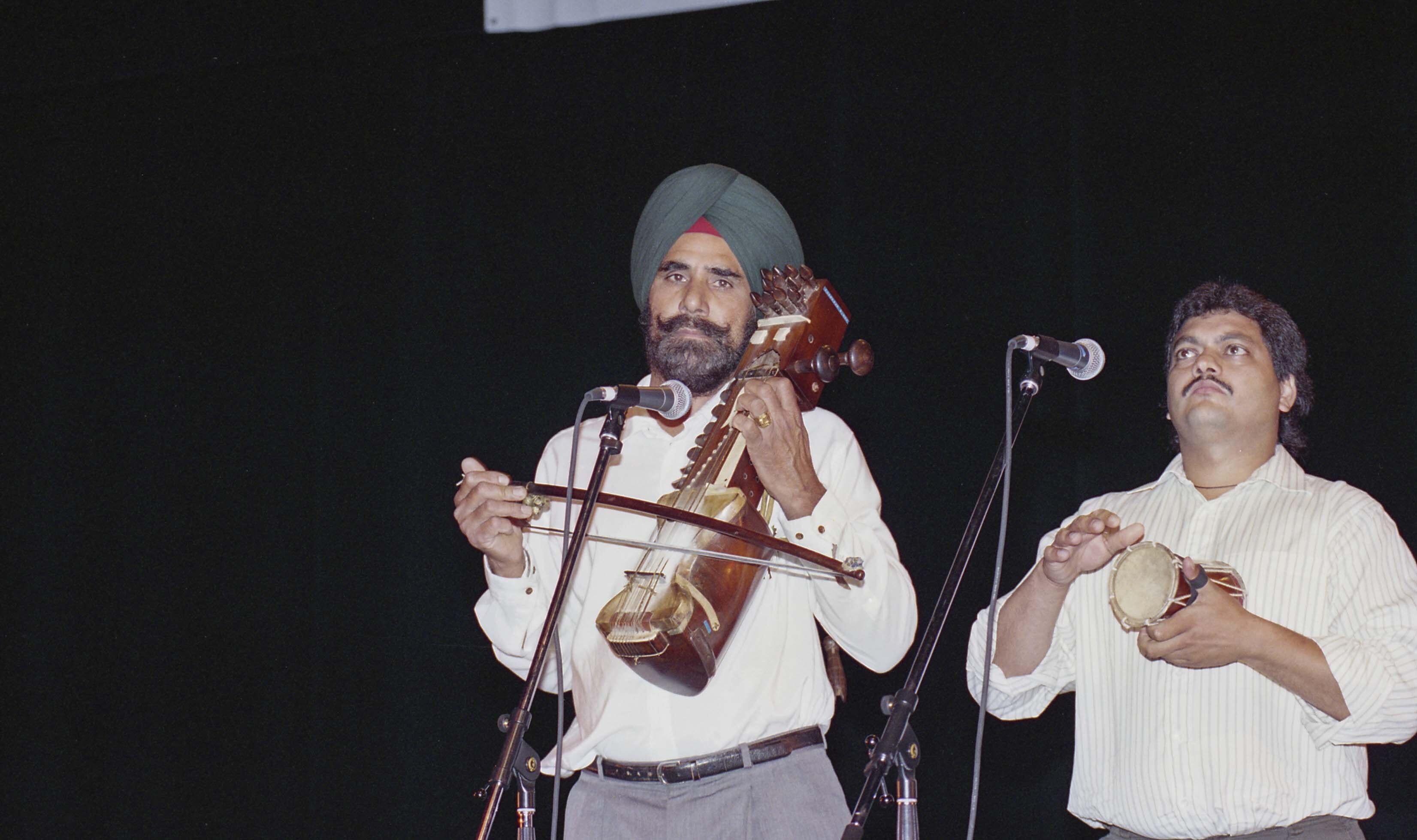
Creator: Bodalia, Chandra
Description
Photograph of unidentified individuals playing musical instruments, a sarangi[?] and damru, at an event organized by the South Asian Network for Secularism and Democracy (SANSAD).
The South Asian Network for Secularism and Democracy (SANSAD) is an organization of the South Asian diaspora based in British Columbia, Canada. It comprises people with origin in Bangladesh, India, Nepal, Pakistan, and Sri Lanka. The mission of SANSAD is to develop a secular democratic South Asian diaspora in Canada. SANSAD has grown out of a North American organization, called Non-Resident Indians for Secularism and Democracy (NRISAD) that was established in 1993. The Vancouver branch of the organization recognized through its practice that the concerns of NRISAD in regard to minorities and human rights were not specifically Indian but South Asian and had to be reformulated for the South Asian diaspora as a whole. This was realized with the formation of SANSAD in Vancouver in 2000.
The South Asian Network for Secularism and Democracy (SANSAD) is an organization of the South Asian diaspora based in British Columbia, Canada. It comprises people with origin in Bangladesh, India, Nepal, Pakistan, and Sri Lanka. The mission of SANSAD is to develop a secular democratic South Asian diaspora in Canada. SANSAD has grown out of a North American organization, called Non-Resident Indians for Secularism and Democracy (NRISAD) that was established in 1993. The Vancouver branch of the organization recognized through its practice that the concerns of NRISAD in regard to minorities and human rights were not specifically Indian but South Asian and had to be reformulated for the South Asian diaspora as a whole. This was realized with the formation of SANSAD in Vancouver in 2000.