
Social participation
Member of
Creator: Bodalia, Chandra
Description
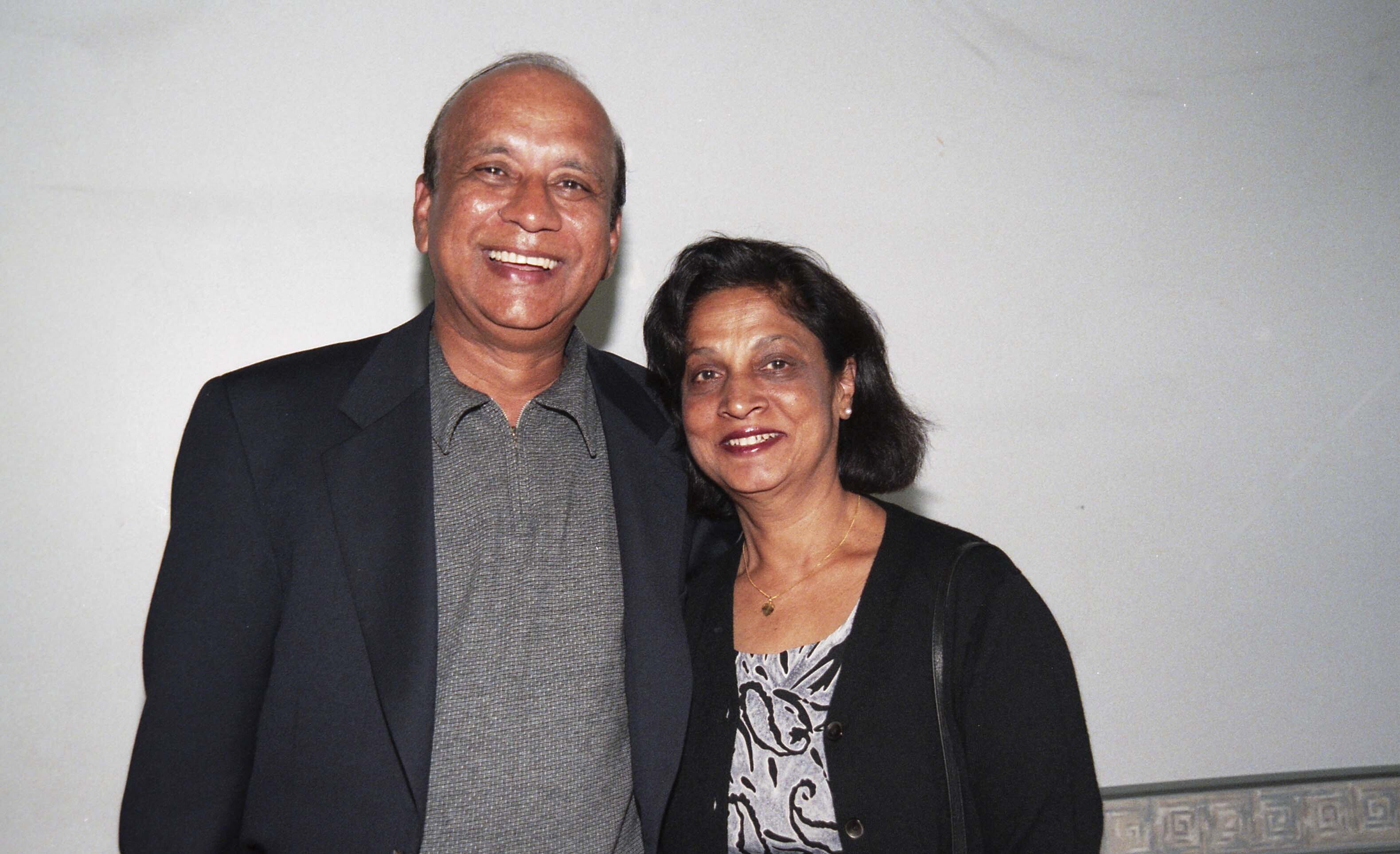
Photograph of unidentified individuals at an indoor venue.
Member of
Creator: Bodalia, Chandra
Description
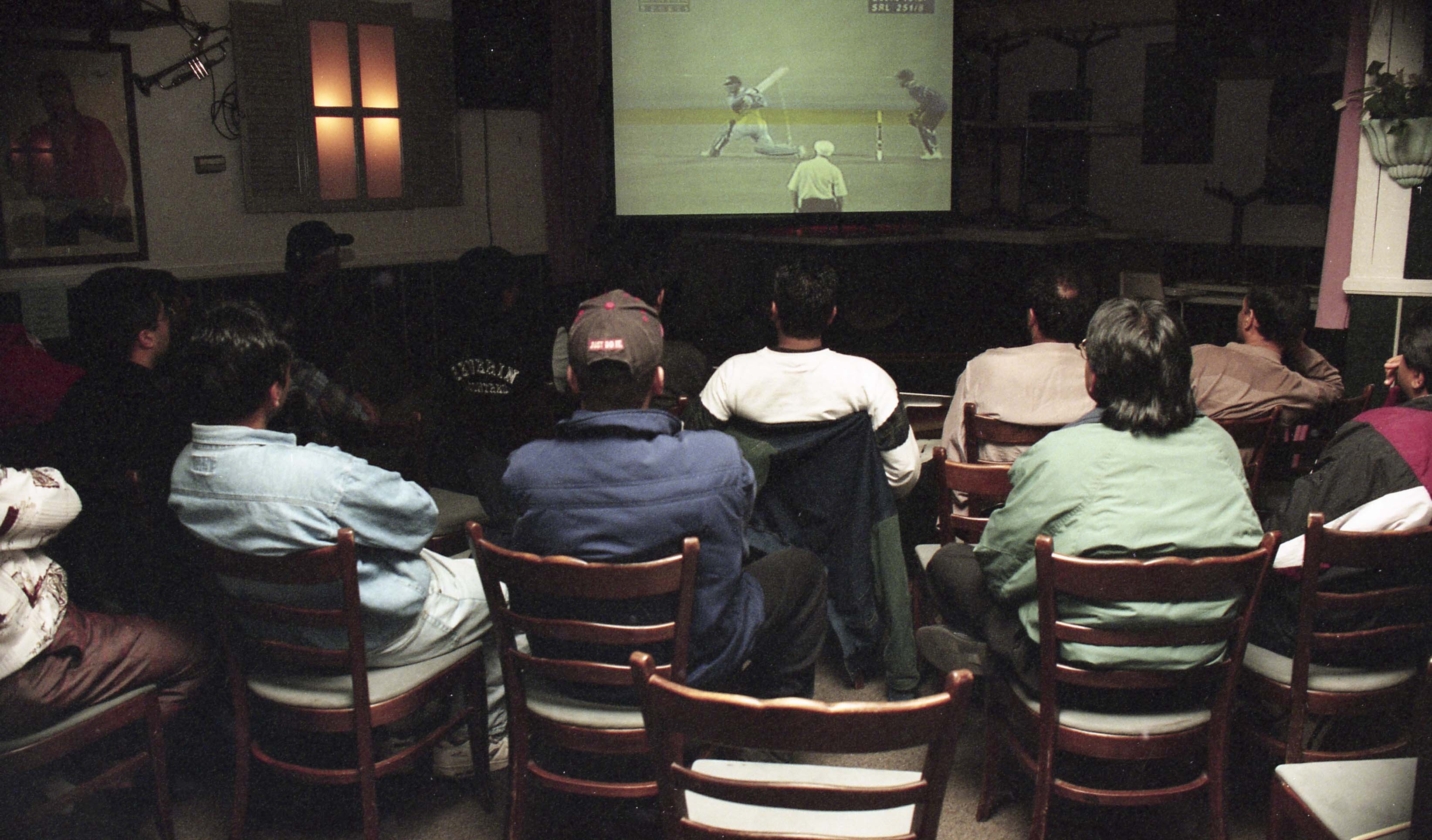
Photograph of a group of unidentified individuals watching cricket at an indoor venue.
Cricket is a bat-and-ball team sport where the batting side tries to score as many runs as possible while the bowling side attempts to get batters out, also known as taking wickets, and restrict the flow or runs. The team with the highest number of runs wins a match. Should both teams be unable to complete their number of turns before the time allotted, the match is declared a draw. The bats used in cricket are constructed from high-grade willow and the balls are made of leather stitched onto a cork core.
Cricket is a bat-and-ball team sport where the batting side tries to score as many runs as possible while the bowling side attempts to get batters out, also known as taking wickets, and restrict the flow or runs. The team with the highest number of runs wins a match. Should both teams be unable to complete their number of turns before the time allotted, the match is declared a draw. The bats used in cricket are constructed from high-grade willow and the balls are made of leather stitched onto a cork core.
Member of
Creator: Bodalia, Chandra
Description
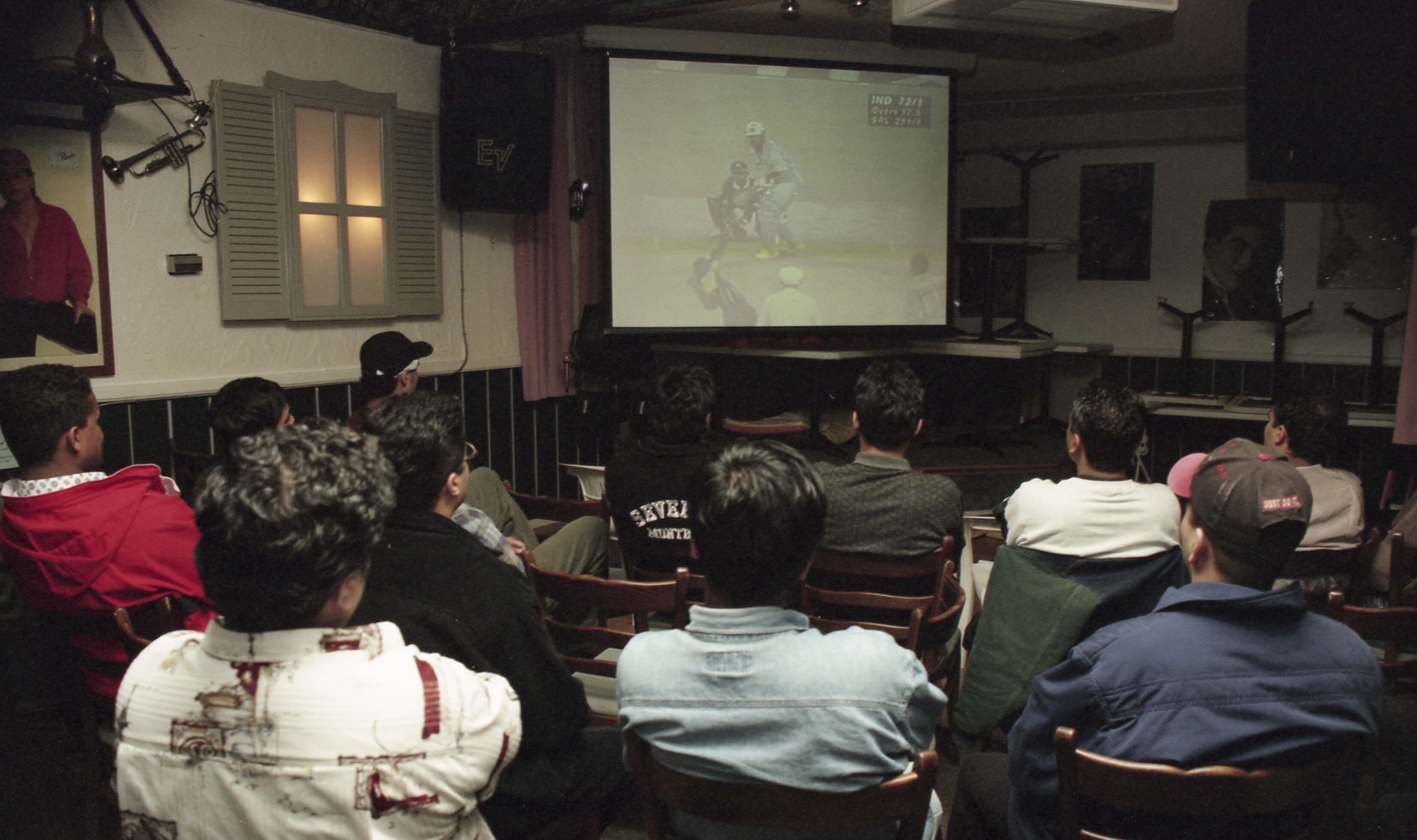
Photograph of a group of unidentified individuals watching cricket at an indoor venue.
Cricket is a bat-and-ball team sport where the batting side tries to score as many runs as possible while the bowling side attempts to get batters out, also known as taking wickets, and restrict the flow or runs. The team with the highest number of runs wins a match. Should both teams be unable to complete their number of turns before the time allotted, the match is declared a draw. The bats used in cricket are constructed from high-grade willow and the balls are made of leather stitched onto a cork core.
Cricket is a bat-and-ball team sport where the batting side tries to score as many runs as possible while the bowling side attempts to get batters out, also known as taking wickets, and restrict the flow or runs. The team with the highest number of runs wins a match. Should both teams be unable to complete their number of turns before the time allotted, the match is declared a draw. The bats used in cricket are constructed from high-grade willow and the balls are made of leather stitched onto a cork core.
Member of
Creator: Bodalia, Chandra
Description
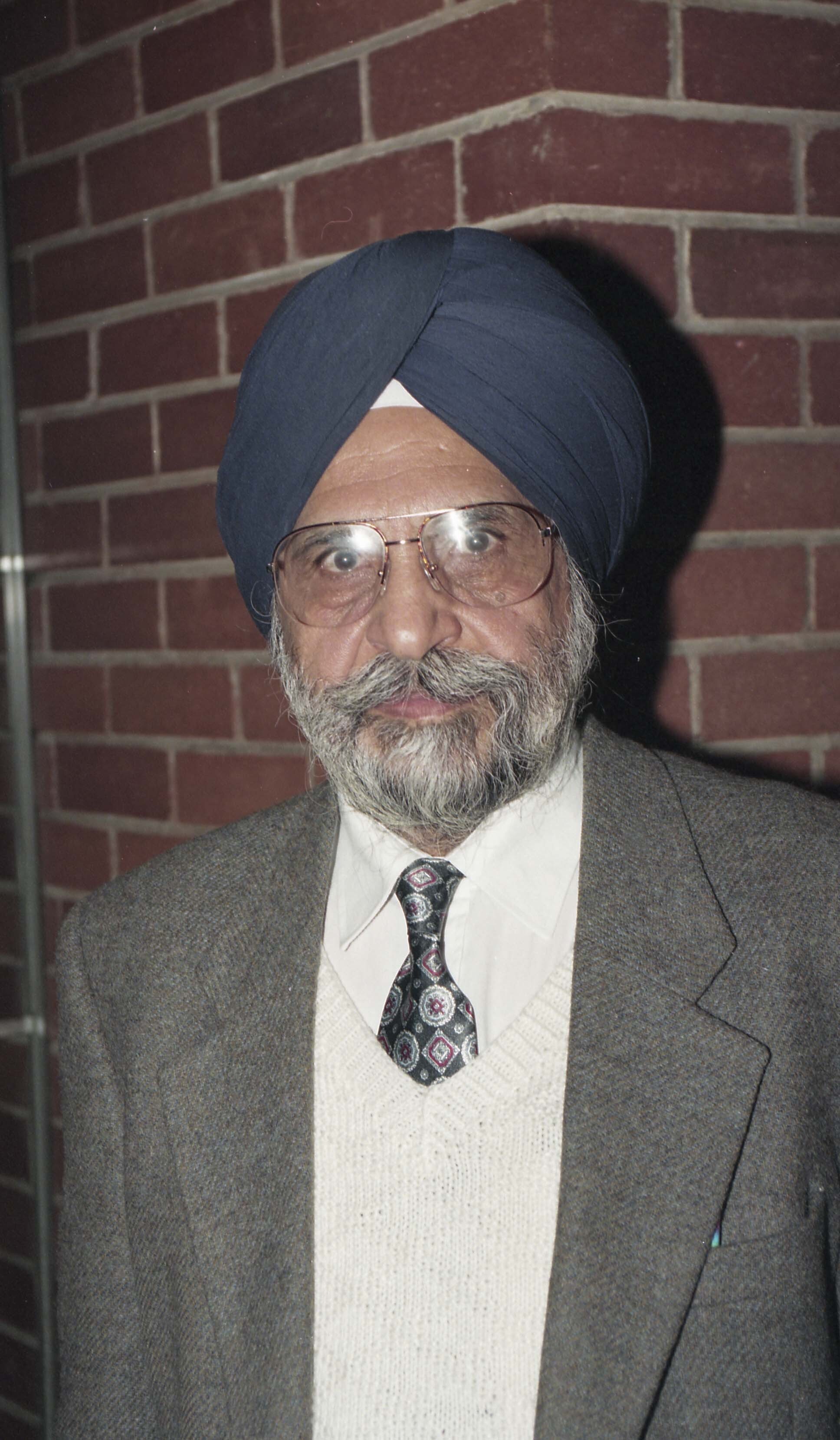
Photograph of an unidentified individual standing at a venue.
Member of
Creator: Bodalia, Chandra
Description
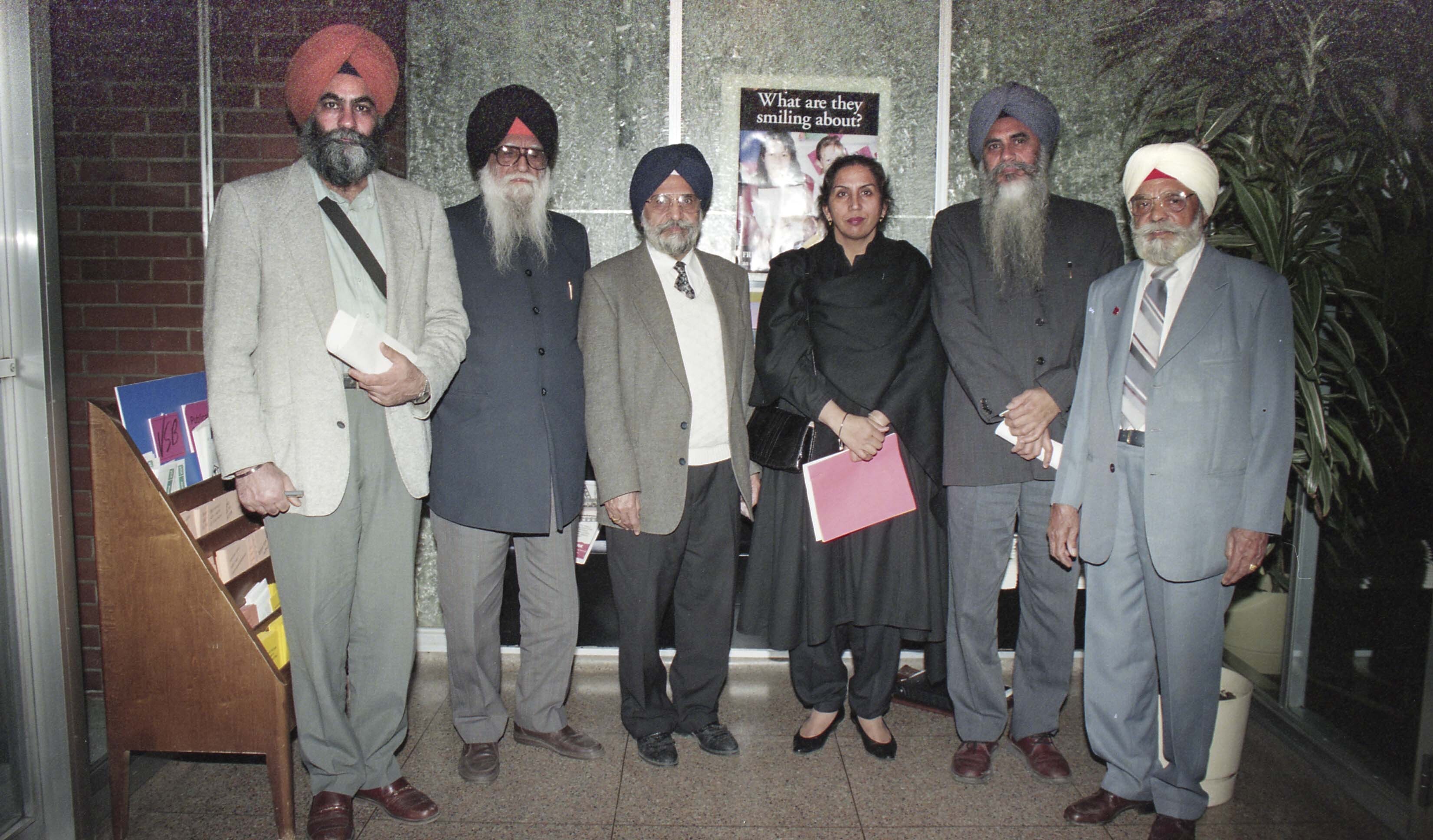
Photograph of a group of unidentified individuals standing at a venue. Among the group of individuals is Charanjit Hundal and Kuljeet Kaur.
Kuljeet Kaur is a media personality, a talk show host on Radio Panjab. Kaur is the former vice president of the Punjabi Press Club of B.C. and vice president of the Oriental Languages Services Society. She is also a local realtor in Surrey and was recognized by the provincial government for her assistance translating the BC Health Guide.
Kuljeet Kaur is a media personality, a talk show host on Radio Panjab. Kaur is the former vice president of the Punjabi Press Club of B.C. and vice president of the Oriental Languages Services Society. She is also a local realtor in Surrey and was recognized by the provincial government for her assistance translating the BC Health Guide.
Creator:
Description
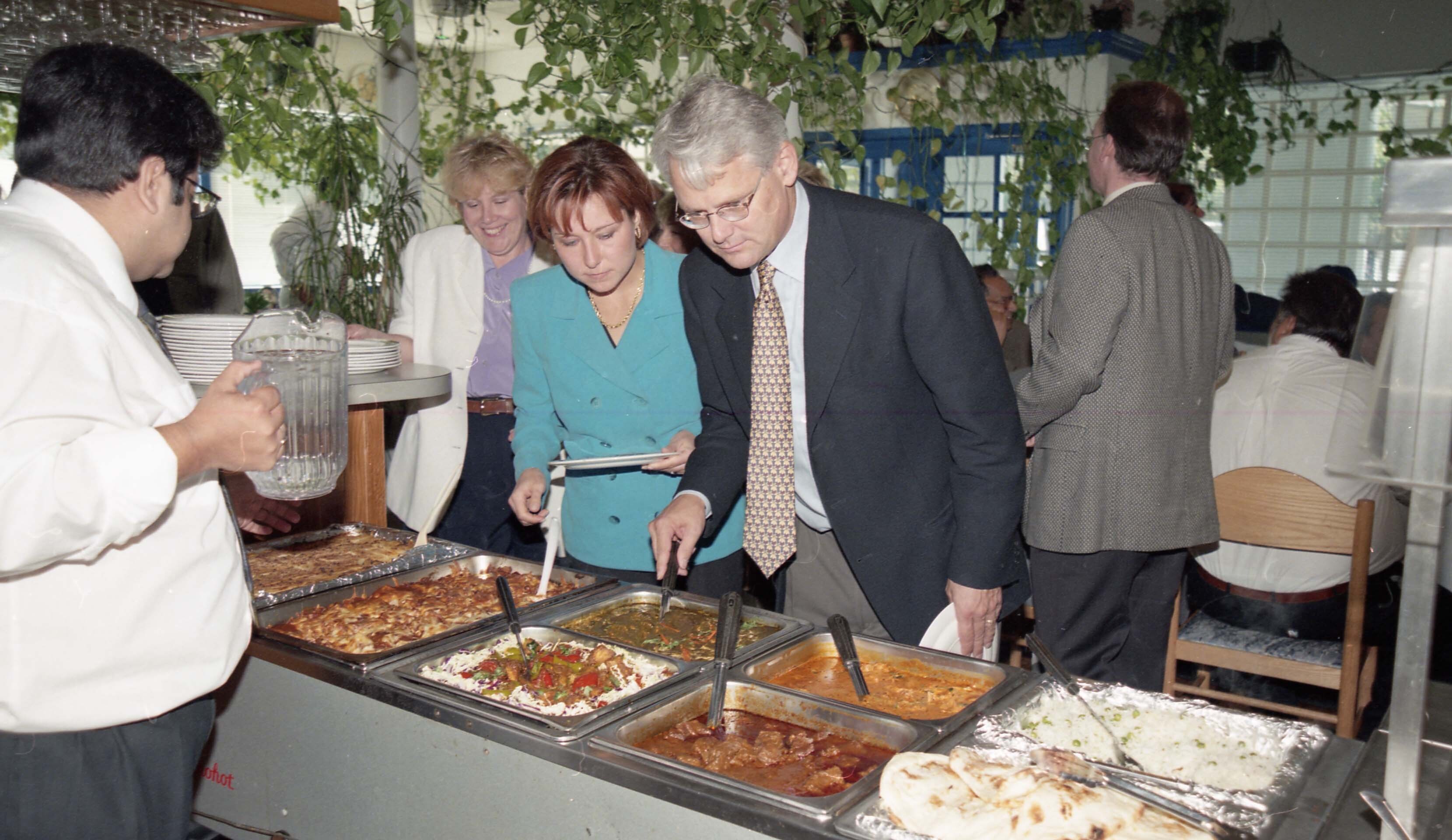
Photograph of Gordon Campbell and Christy Clark at a dining establishment in Surrey, British Columbia (B.C.). Campbell was in Surrey for a community meet-and-greet regarding the B.C. Liberal Party.
Gordon Campbell was sworn in as British Columbia's 34th Premier on June 5, 2001. Campbell was elected leader of the B.C. Liberal Party in September 1993. He was elected to the B.C. Legislature in 1994 in a by-election to represent the riding of Vancouver-Quilchena and was re-elected in 1996 and 2001 for Vancouver-Point Grey. Campbell attended public school in Vancouver. After graduating he received a scholarship to Dartmouth College in New Hampshire. He worked his way through university in the dining hall and as the associate to the secretary of the college, and received his bachelor of arts degree. He later received a master's of business administration from Simon Fraser University. He was a secondary school teacher, basketball and track coach in Yola, Nigeria, working under the auspices of CUSO. He then became an assistant to former Vancouver mayor Art Phillips. From 1976 to 1981, he worked with Marathon Realty, where he became general manager of development. In 1981, he founded Citycore Development Corporation. In 1984, Campbell was elected to Vancouver City Council. From 1986 to 1993, he served as Mayor of Vancouver for three successive terms. From 2001 to 2011, Campbell served as Premier of British Columbia, and High Commissioner to the United Kingdom from 2011 to 2016. During his tenure as Premier, Campbell reduced taxes, restrained spending, revolutionized the measurement and management of regulations, and markedly improved the economy of the province. Among his recognitions and awards, Campbell received the Order of British Columbia as well as the Order of Canada. In 2014, he was presented an Honorary Doctorate of Laws from Thompson Rivers University. He was awarded both the Queen Elizabeth II Golden Jubilee Medal (2002) and the Diamond Jubilee Medal (2012) for his contributions to the province and country.
Christy Clark was born and raised in Burnaby, B.C., where she later attended Simon Fraser University. Clark's educational pursuits also took her to the University of Edinburgh and the Sorbonne. She ran successfully as the B.C. Liberal Party candidate in the riding of Port Moody-Burnaby Mountain in the 1996 provincial general election and was re-elected to the Legislative Assembly to represent Port Moody-Westwood in 2001. Clark served as Deputy Premier, Minister of Education, Minister of Children and Family Development and Vice-Chair of Treasury Board. In 2005, she stepped back from public life to spend more time with family. In the ensuing years, Clark worked in media as a columnist, commentator and as host of the "Christy Clark Show" on Vancouver radio station CKNW. In 2011, she returned to provincial politics, winning the leadership of the governing B.C. Liberal Party and thereby becoming Premier of British Columbia. In a subsequent by-election, Clark was elected to represent the riding of Vancouver-Point Grey in the Legislative Assembly. Through her re-election in 2013, this time in the riding of Westside-Kelowna, Clark became the first woman elected as Premier in British Columbia. Among her initiatives as Premier, Clark brought the anti-bullying "Pink Shirt Campaign" to British Columbia to raise awareness of issues related to bullying in schools, workplaces and communities. She was re-elected in the 2017 provincial general election, becoming the first woman to be re-elected as Premier in British Columbia. Following the change of government in British Columbia in July 2017, Clark became the Leader of the Official Opposition. She resigned as leader of the BC Liberal Party and the member for Kelowna West in August 2017. Clark is a recipient of many awards, including the YWCA Woman of Distinction Award in 2009.
Gordon Campbell was sworn in as British Columbia's 34th Premier on June 5, 2001. Campbell was elected leader of the B.C. Liberal Party in September 1993. He was elected to the B.C. Legislature in 1994 in a by-election to represent the riding of Vancouver-Quilchena and was re-elected in 1996 and 2001 for Vancouver-Point Grey. Campbell attended public school in Vancouver. After graduating he received a scholarship to Dartmouth College in New Hampshire. He worked his way through university in the dining hall and as the associate to the secretary of the college, and received his bachelor of arts degree. He later received a master's of business administration from Simon Fraser University. He was a secondary school teacher, basketball and track coach in Yola, Nigeria, working under the auspices of CUSO. He then became an assistant to former Vancouver mayor Art Phillips. From 1976 to 1981, he worked with Marathon Realty, where he became general manager of development. In 1981, he founded Citycore Development Corporation. In 1984, Campbell was elected to Vancouver City Council. From 1986 to 1993, he served as Mayor of Vancouver for three successive terms. From 2001 to 2011, Campbell served as Premier of British Columbia, and High Commissioner to the United Kingdom from 2011 to 2016. During his tenure as Premier, Campbell reduced taxes, restrained spending, revolutionized the measurement and management of regulations, and markedly improved the economy of the province. Among his recognitions and awards, Campbell received the Order of British Columbia as well as the Order of Canada. In 2014, he was presented an Honorary Doctorate of Laws from Thompson Rivers University. He was awarded both the Queen Elizabeth II Golden Jubilee Medal (2002) and the Diamond Jubilee Medal (2012) for his contributions to the province and country.
Christy Clark was born and raised in Burnaby, B.C., where she later attended Simon Fraser University. Clark's educational pursuits also took her to the University of Edinburgh and the Sorbonne. She ran successfully as the B.C. Liberal Party candidate in the riding of Port Moody-Burnaby Mountain in the 1996 provincial general election and was re-elected to the Legislative Assembly to represent Port Moody-Westwood in 2001. Clark served as Deputy Premier, Minister of Education, Minister of Children and Family Development and Vice-Chair of Treasury Board. In 2005, she stepped back from public life to spend more time with family. In the ensuing years, Clark worked in media as a columnist, commentator and as host of the "Christy Clark Show" on Vancouver radio station CKNW. In 2011, she returned to provincial politics, winning the leadership of the governing B.C. Liberal Party and thereby becoming Premier of British Columbia. In a subsequent by-election, Clark was elected to represent the riding of Vancouver-Point Grey in the Legislative Assembly. Through her re-election in 2013, this time in the riding of Westside-Kelowna, Clark became the first woman elected as Premier in British Columbia. Among her initiatives as Premier, Clark brought the anti-bullying "Pink Shirt Campaign" to British Columbia to raise awareness of issues related to bullying in schools, workplaces and communities. She was re-elected in the 2017 provincial general election, becoming the first woman to be re-elected as Premier in British Columbia. Following the change of government in British Columbia in July 2017, Clark became the Leader of the Official Opposition. She resigned as leader of the BC Liberal Party and the member for Kelowna West in August 2017. Clark is a recipient of many awards, including the YWCA Woman of Distinction Award in 2009.
Creator:
Description
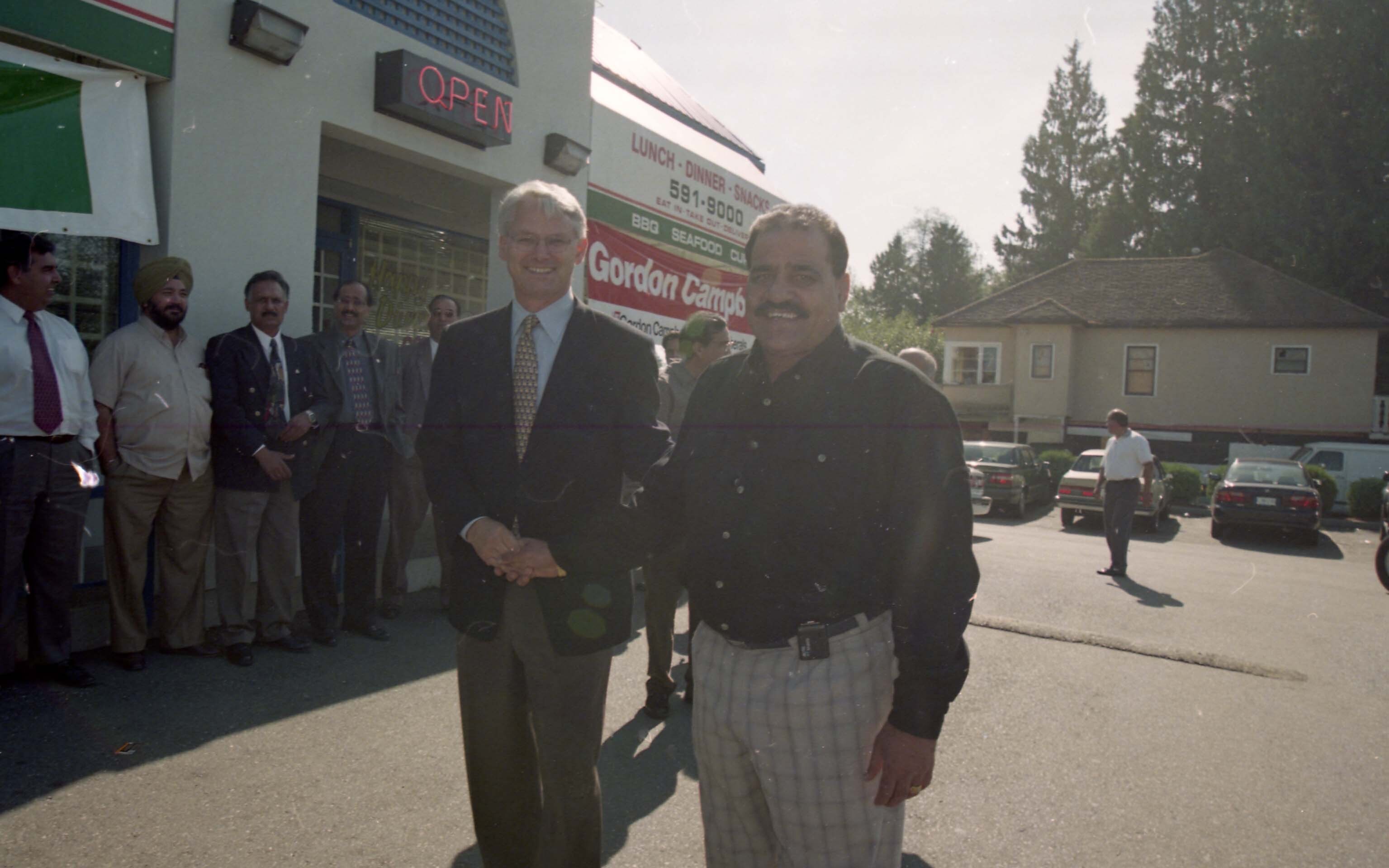
Photograph of Gordon Campbell shaking hands with an unidentified individual at a community meet-and-greet regarding the B.C. Liberal Party, in Surrey, British Columbia (B.C.).
Gordon Campbell was sworn in as British Columbia's 34th Premier on June 5, 2001. Campbell was elected leader of the B.C. Liberal Party in September 1993. He was elected to the B.C. Legislature in 1994 in a by-election to represent the riding of Vancouver-Quilchena and was re-elected in 1996 and 2001 for Vancouver-Point Grey. Campbell attended public school in Vancouver. After graduating he received a scholarship to Dartmouth College in New Hampshire. He worked his way through university in the dining hall and as the associate to the secretary of the college, and received his bachelor of arts degree. He later received a master's of business administration from Simon Fraser University. He was a secondary school teacher, basketball and track coach in Yola, Nigeria, working under the auspices of CUSO. He then became an assistant to former Vancouver mayor Art Phillips. From 1976 to 1981, he worked with Marathon Realty, where he became general manager of development. In 1981, he founded Citycore Development Corporation. In 1984, Campbell was elected to Vancouver City Council. From 1986 to 1993, he served as Mayor of Vancouver for three successive terms. From 2001 to 2011, Campbell served as Premier of British Columbia, and High Commissioner to the United Kingdom from 2011 to 2016. During his tenure as Premier, Campbell reduced taxes, restrained spending, revolutionized the measurement and management of regulations, and markedly improved the economy of the province. Among his recognitions and awards, Campbell received the Order of British Columbia as well as the Order of Canada. In 2014, he was presented an Honorary Doctorate of Laws from Thompson Rivers University. He was awarded both the Queen Elizabeth II Golden Jubilee Medal (2002) and the Diamond Jubilee Medal (2012) for his contributions to the province and country.
Gordon Campbell was sworn in as British Columbia's 34th Premier on June 5, 2001. Campbell was elected leader of the B.C. Liberal Party in September 1993. He was elected to the B.C. Legislature in 1994 in a by-election to represent the riding of Vancouver-Quilchena and was re-elected in 1996 and 2001 for Vancouver-Point Grey. Campbell attended public school in Vancouver. After graduating he received a scholarship to Dartmouth College in New Hampshire. He worked his way through university in the dining hall and as the associate to the secretary of the college, and received his bachelor of arts degree. He later received a master's of business administration from Simon Fraser University. He was a secondary school teacher, basketball and track coach in Yola, Nigeria, working under the auspices of CUSO. He then became an assistant to former Vancouver mayor Art Phillips. From 1976 to 1981, he worked with Marathon Realty, where he became general manager of development. In 1981, he founded Citycore Development Corporation. In 1984, Campbell was elected to Vancouver City Council. From 1986 to 1993, he served as Mayor of Vancouver for three successive terms. From 2001 to 2011, Campbell served as Premier of British Columbia, and High Commissioner to the United Kingdom from 2011 to 2016. During his tenure as Premier, Campbell reduced taxes, restrained spending, revolutionized the measurement and management of regulations, and markedly improved the economy of the province. Among his recognitions and awards, Campbell received the Order of British Columbia as well as the Order of Canada. In 2014, he was presented an Honorary Doctorate of Laws from Thompson Rivers University. He was awarded both the Queen Elizabeth II Golden Jubilee Medal (2002) and the Diamond Jubilee Medal (2012) for his contributions to the province and country.
Creator:
Description
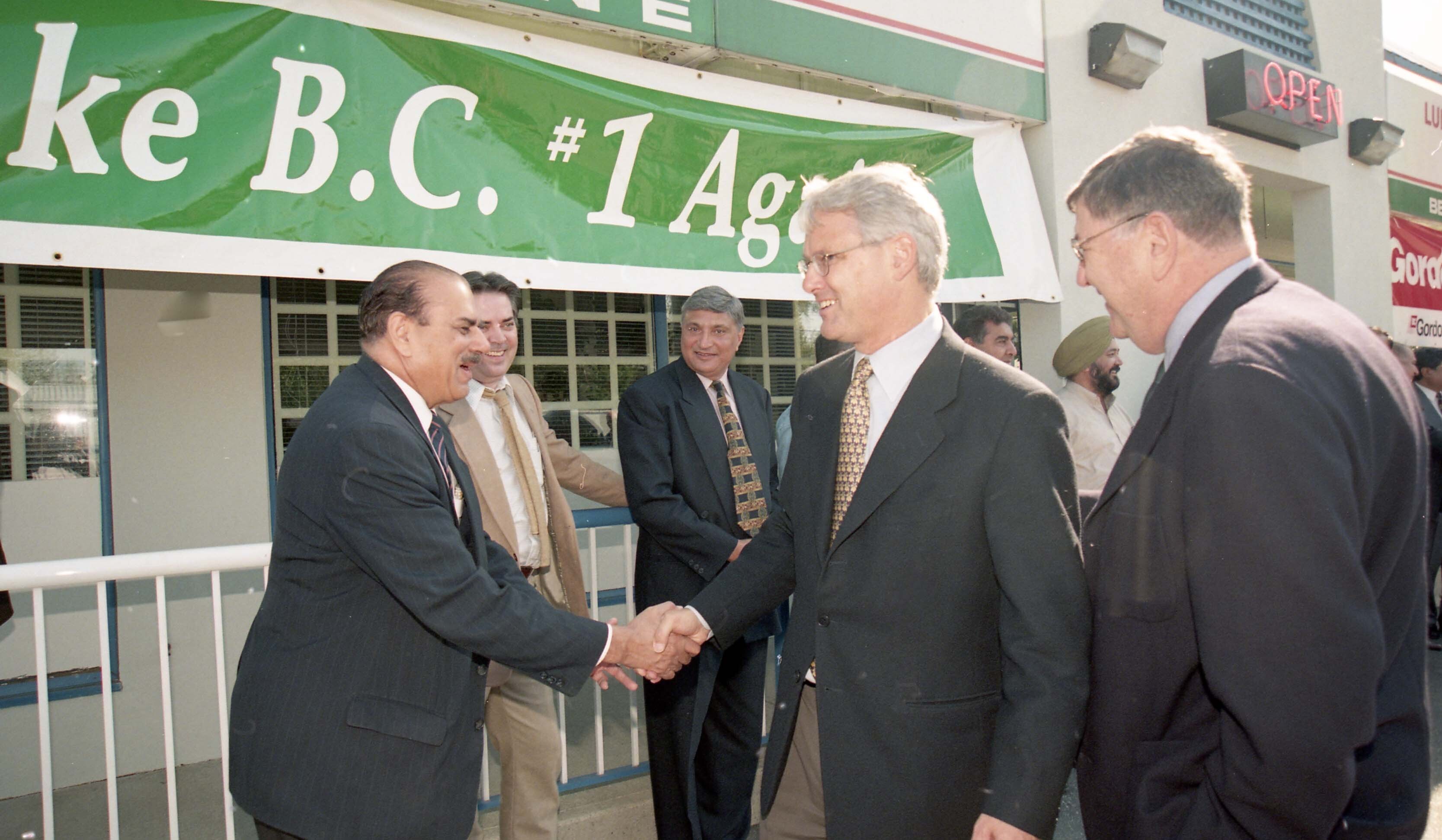
Photograph of Gordon Campbell shaking hands with Riasat Ali Khan at a community meet-and-greet regarding the B.C. Liberal Party, in Surrey, British Columbia (B.C.). Balwant Sanghera can be seen in the background.
Gordon Campbell was sworn in as British Columbia's 34th Premier on June 5, 2001. Campbell was elected leader of the B.C. Liberal Party in September 1993. He was elected to the B.C. Legislature in 1994 in a by-election to represent the riding of Vancouver-Quilchena and was re-elected in 1996 and 2001 for Vancouver-Point Grey. Campbell attended public school in Vancouver. After graduating he received a scholarship to Dartmouth College in New Hampshire. He worked his way through university in the dining hall and as the associate to the secretary of the college, and received his bachelor of arts degree. He later received a master's of business administration from Simon Fraser University. He was a secondary school teacher, basketball and track coach in Yola, Nigeria, working under the auspices of CUSO. He then became an assistant to former Vancouver mayor Art Phillips. From 1976 to 1981, he worked with Marathon Realty, where he became general manager of development. In 1981, he founded Citycore Development Corporation. In 1984, Campbell was elected to Vancouver City Council. From 1986 to 1993, he served as Mayor of Vancouver for three successive terms. From 2001 to 2011, Campbell served as Premier of British Columbia, and High Commissioner to the United Kingdom from 2011 to 2016. During his tenure as Premier, Campbell reduced taxes, restrained spending, revolutionized the measurement and management of regulations, and markedly improved the economy of the province. Among his recognitions and awards, Campbell received the Order of British Columbia as well as the Order of Canada. In 2014, he was presented an Honorary Doctorate of Laws from Thompson Rivers University. He was awarded both the Queen Elizabeth II Golden Jubilee Medal (2002) and the Diamond Jubilee Medal (2012) for his contributions to the province and country.
Riasat Ali Khan was born in India, but his family shifted to Pakistan after independence. Khan immigrated to Canada in 1959, working in the correctional services. Khan was a prominent leader of the Pakistani-Canadian community in Vancouver, British Columbia (B.C.). Khan was the founder of the Pakistan-Canada Association, which opened the first mosque in 1963, the Al Jamia Masjid in Vancouver, B.C. He served as the head of the B.C. Immigrant Services Society. Khan was also a board member of the B.C. Cancer Society and a delegate to the Committee for Racial Justice.
Balwant Sanghera immigrated to Canada in 1966, starting his teaching career in Northern B.C. before earning a Master of Education from the University of British Columbia and becoming a school psychologist. He developed innovative programs for youth with mental health challenges and played a key role in mentoring and expanding similar initiatives across the province. He has held leadership positions in Richmond's multicultural and community organizations, including being president of the Richmond Multicultural Concerns Society and the Punjabi Language Education Association of British Columbia, chair of Richmond's Intercultural Advisory Committee, President of the East Richmond Community Association and an organizer of Multi-Fest, a summer festival to celebrate Richmond's diversity. His contributions to education and public service have earned him the Order of British Columbia and multiple Jubilee Medals, including the Queen's Golden, Diamond and Platinum Jubilee Medals.
Gordon Campbell was sworn in as British Columbia's 34th Premier on June 5, 2001. Campbell was elected leader of the B.C. Liberal Party in September 1993. He was elected to the B.C. Legislature in 1994 in a by-election to represent the riding of Vancouver-Quilchena and was re-elected in 1996 and 2001 for Vancouver-Point Grey. Campbell attended public school in Vancouver. After graduating he received a scholarship to Dartmouth College in New Hampshire. He worked his way through university in the dining hall and as the associate to the secretary of the college, and received his bachelor of arts degree. He later received a master's of business administration from Simon Fraser University. He was a secondary school teacher, basketball and track coach in Yola, Nigeria, working under the auspices of CUSO. He then became an assistant to former Vancouver mayor Art Phillips. From 1976 to 1981, he worked with Marathon Realty, where he became general manager of development. In 1981, he founded Citycore Development Corporation. In 1984, Campbell was elected to Vancouver City Council. From 1986 to 1993, he served as Mayor of Vancouver for three successive terms. From 2001 to 2011, Campbell served as Premier of British Columbia, and High Commissioner to the United Kingdom from 2011 to 2016. During his tenure as Premier, Campbell reduced taxes, restrained spending, revolutionized the measurement and management of regulations, and markedly improved the economy of the province. Among his recognitions and awards, Campbell received the Order of British Columbia as well as the Order of Canada. In 2014, he was presented an Honorary Doctorate of Laws from Thompson Rivers University. He was awarded both the Queen Elizabeth II Golden Jubilee Medal (2002) and the Diamond Jubilee Medal (2012) for his contributions to the province and country.
Riasat Ali Khan was born in India, but his family shifted to Pakistan after independence. Khan immigrated to Canada in 1959, working in the correctional services. Khan was a prominent leader of the Pakistani-Canadian community in Vancouver, British Columbia (B.C.). Khan was the founder of the Pakistan-Canada Association, which opened the first mosque in 1963, the Al Jamia Masjid in Vancouver, B.C. He served as the head of the B.C. Immigrant Services Society. Khan was also a board member of the B.C. Cancer Society and a delegate to the Committee for Racial Justice.
Balwant Sanghera immigrated to Canada in 1966, starting his teaching career in Northern B.C. before earning a Master of Education from the University of British Columbia and becoming a school psychologist. He developed innovative programs for youth with mental health challenges and played a key role in mentoring and expanding similar initiatives across the province. He has held leadership positions in Richmond's multicultural and community organizations, including being president of the Richmond Multicultural Concerns Society and the Punjabi Language Education Association of British Columbia, chair of Richmond's Intercultural Advisory Committee, President of the East Richmond Community Association and an organizer of Multi-Fest, a summer festival to celebrate Richmond's diversity. His contributions to education and public service have earned him the Order of British Columbia and multiple Jubilee Medals, including the Queen's Golden, Diamond and Platinum Jubilee Medals.
Creator:
Description
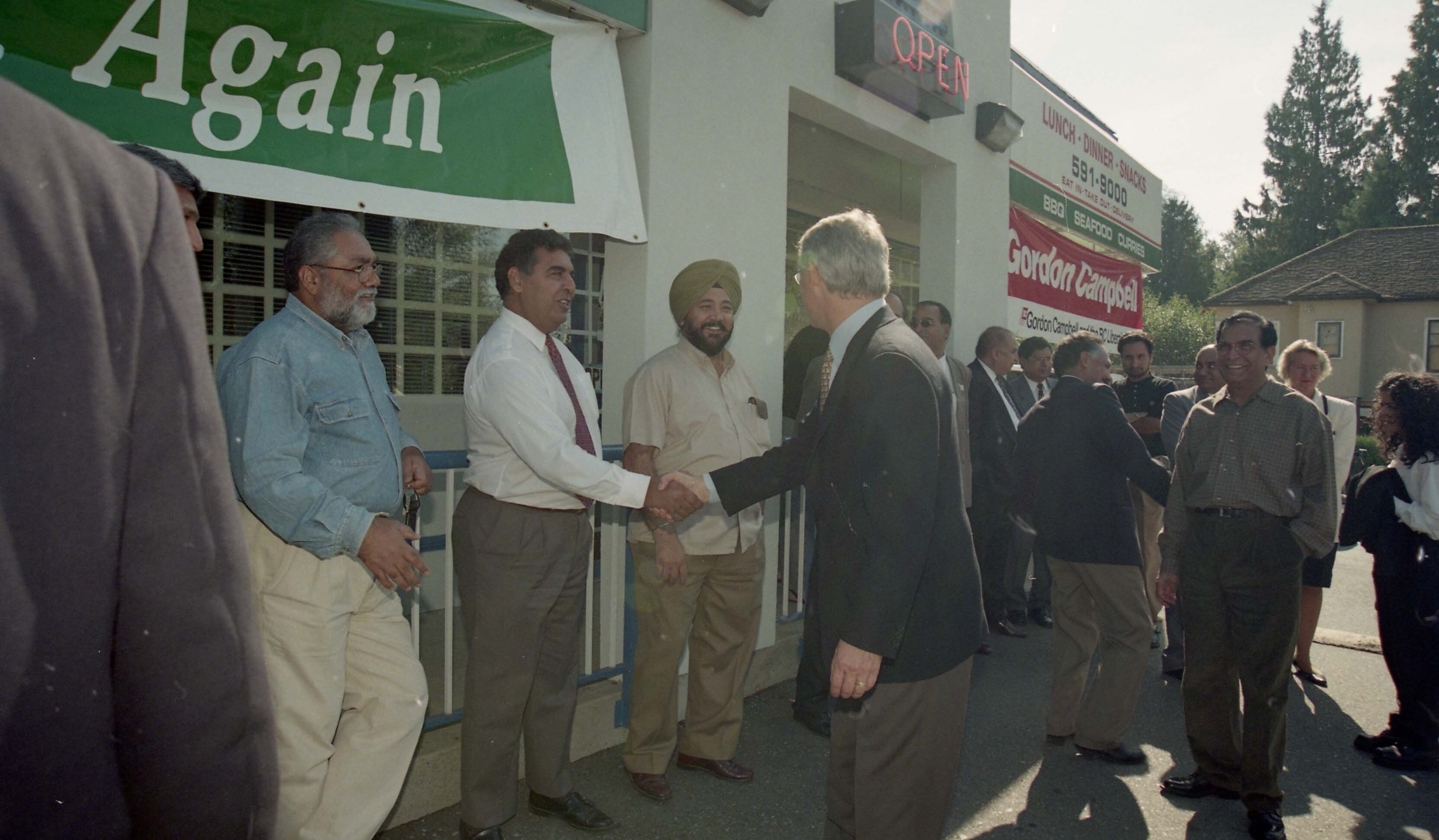
Photograph of Gordon Campbell shaking hands with an unidentified individual at a community meet-and-greet regarding the B.C. Liberal Party, in Surrey, British Columbia (B.C.).
Gordon Campbell was sworn in as British Columbia's 34th Premier on June 5, 2001. Campbell was elected leader of the B.C. Liberal Party in September 1993. He was elected to the B.C. Legislature in 1994 in a by-election to represent the riding of Vancouver-Quilchena and was re-elected in 1996 and 2001 for Vancouver-Point Grey. Campbell attended public school in Vancouver. After graduating he received a scholarship to Dartmouth College in New Hampshire. He worked his way through university in the dining hall and as the associate to the secretary of the college, and received his bachelor of arts degree. He later received a master's of business administration from Simon Fraser University. He was a secondary school teacher, basketball and track coach in Yola, Nigeria, working under the auspices of CUSO. He then became an assistant to former Vancouver mayor Art Phillips. From 1976 to 1981, he worked with Marathon Realty, where he became general manager of development. In 1981, he founded Citycore Development Corporation. In 1984, Campbell was elected to Vancouver City Council. From 1986 to 1993, he served as Mayor of Vancouver for three successive terms. From 2001 to 2011, Campbell served as Premier of British Columbia, and High Commissioner to the United Kingdom from 2011 to 2016. During his tenure as Premier, Campbell reduced taxes, restrained spending, revolutionized the measurement and management of regulations, and markedly improved the economy of the province. Among his recognitions and awards, Campbell received the Order of British Columbia as well as the Order of Canada. In 2014, he was presented an Honorary Doctorate of Laws from Thompson Rivers University. He was awarded both the Queen Elizabeth II Golden Jubilee Medal (2002) and the Diamond Jubilee Medal (2012) for his contributions to the province and country.
Gordon Campbell was sworn in as British Columbia's 34th Premier on June 5, 2001. Campbell was elected leader of the B.C. Liberal Party in September 1993. He was elected to the B.C. Legislature in 1994 in a by-election to represent the riding of Vancouver-Quilchena and was re-elected in 1996 and 2001 for Vancouver-Point Grey. Campbell attended public school in Vancouver. After graduating he received a scholarship to Dartmouth College in New Hampshire. He worked his way through university in the dining hall and as the associate to the secretary of the college, and received his bachelor of arts degree. He later received a master's of business administration from Simon Fraser University. He was a secondary school teacher, basketball and track coach in Yola, Nigeria, working under the auspices of CUSO. He then became an assistant to former Vancouver mayor Art Phillips. From 1976 to 1981, he worked with Marathon Realty, where he became general manager of development. In 1981, he founded Citycore Development Corporation. In 1984, Campbell was elected to Vancouver City Council. From 1986 to 1993, he served as Mayor of Vancouver for three successive terms. From 2001 to 2011, Campbell served as Premier of British Columbia, and High Commissioner to the United Kingdom from 2011 to 2016. During his tenure as Premier, Campbell reduced taxes, restrained spending, revolutionized the measurement and management of regulations, and markedly improved the economy of the province. Among his recognitions and awards, Campbell received the Order of British Columbia as well as the Order of Canada. In 2014, he was presented an Honorary Doctorate of Laws from Thompson Rivers University. He was awarded both the Queen Elizabeth II Golden Jubilee Medal (2002) and the Diamond Jubilee Medal (2012) for his contributions to the province and country.
Creator:
Description
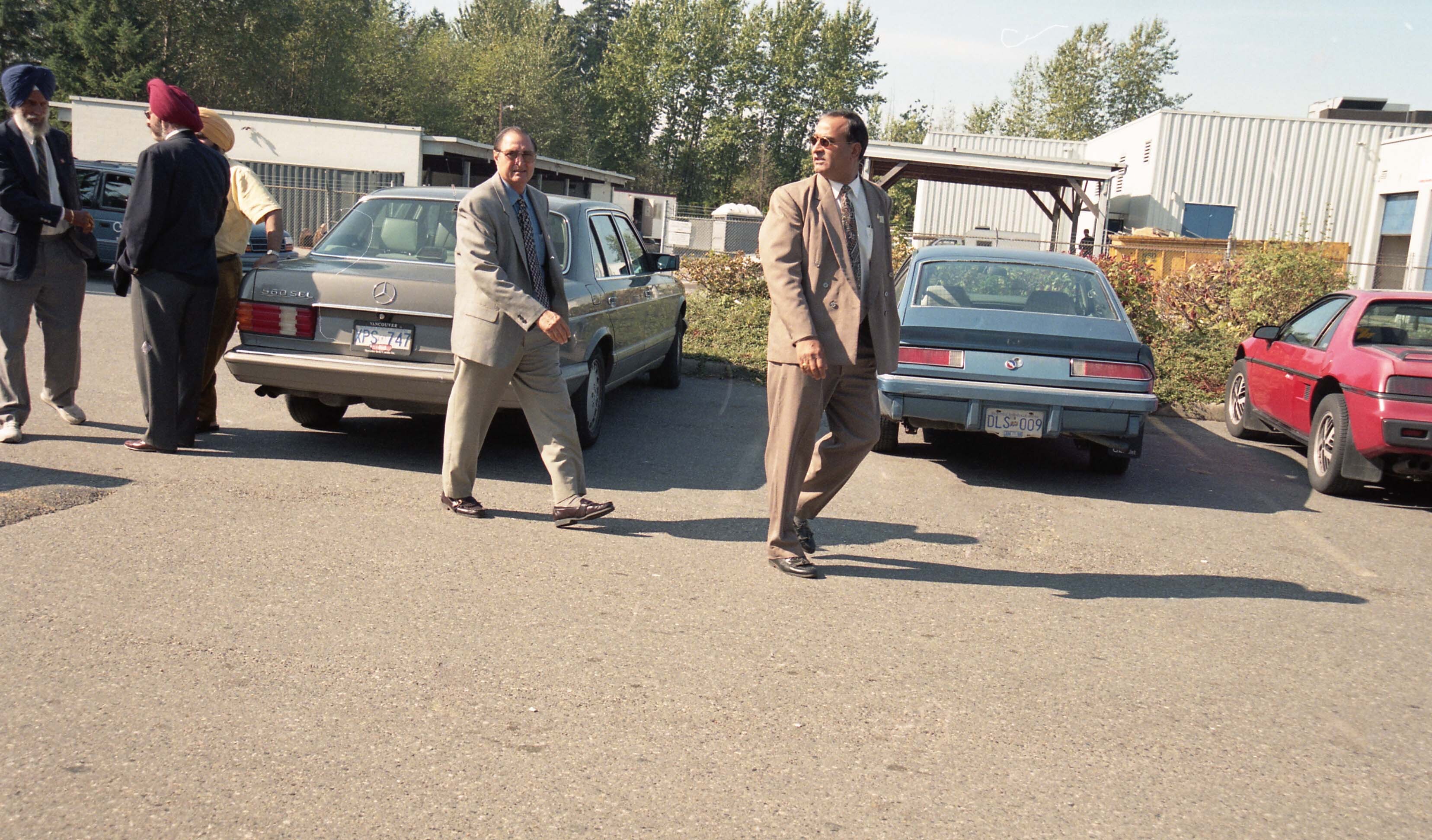
Photograph of a group of unidentified individuals at a community meet-and-greet regarding the B.C. Liberal Party, in Surrey, British Columbia (B.C.). Gordon Campbell, as a representative of the B.C. Liberal Party, was in Surrey for the meet-and-greet.
Gordon Campbell was sworn in as British Columbia's 34th Premier on June 5, 2001. Campbell was elected leader of the B.C. Liberal Party in September 1993. He was elected to the B.C. Legislature in 1994 in a by-election to represent the riding of Vancouver-Quilchena and was re-elected in 1996 and 2001 for Vancouver-Point Grey. Campbell attended public school in Vancouver. After graduating he received a scholarship to Dartmouth College in New Hampshire. He worked his way through university in the dining hall and as the associate to the secretary of the college, and received his bachelor of arts degree. He later received a master's of business administration from Simon Fraser University. He was a secondary school teacher, basketball and track coach in Yola, Nigeria, working under the auspices of CUSO. He then became an assistant to former Vancouver mayor Art Phillips. From 1976 to 1981, he worked with Marathon Realty, where he became general manager of development. In 1981, he founded Citycore Development Corporation. In 1984, Campbell was elected to Vancouver City Council. From 1986 to 1993, he served as Mayor of Vancouver for three successive terms. From 2001 to 2011, Campbell served as Premier of British Columbia, and High Commissioner to the United Kingdom from 2011 to 2016. During his tenure as Premier, Campbell reduced taxes, restrained spending, revolutionized the measurement and management of regulations, and markedly improved the economy of the province. Among his recognitions and awards, Campbell received the Order of British Columbia as well as the Order of Canada. In 2014, he was presented an Honorary Doctorate of Laws from Thompson Rivers University. He was awarded both the Queen Elizabeth II Golden Jubilee Medal (2002) and the Diamond Jubilee Medal (2012) for his contributions to the province and country.
Gordon Campbell was sworn in as British Columbia's 34th Premier on June 5, 2001. Campbell was elected leader of the B.C. Liberal Party in September 1993. He was elected to the B.C. Legislature in 1994 in a by-election to represent the riding of Vancouver-Quilchena and was re-elected in 1996 and 2001 for Vancouver-Point Grey. Campbell attended public school in Vancouver. After graduating he received a scholarship to Dartmouth College in New Hampshire. He worked his way through university in the dining hall and as the associate to the secretary of the college, and received his bachelor of arts degree. He later received a master's of business administration from Simon Fraser University. He was a secondary school teacher, basketball and track coach in Yola, Nigeria, working under the auspices of CUSO. He then became an assistant to former Vancouver mayor Art Phillips. From 1976 to 1981, he worked with Marathon Realty, where he became general manager of development. In 1981, he founded Citycore Development Corporation. In 1984, Campbell was elected to Vancouver City Council. From 1986 to 1993, he served as Mayor of Vancouver for three successive terms. From 2001 to 2011, Campbell served as Premier of British Columbia, and High Commissioner to the United Kingdom from 2011 to 2016. During his tenure as Premier, Campbell reduced taxes, restrained spending, revolutionized the measurement and management of regulations, and markedly improved the economy of the province. Among his recognitions and awards, Campbell received the Order of British Columbia as well as the Order of Canada. In 2014, he was presented an Honorary Doctorate of Laws from Thompson Rivers University. He was awarded both the Queen Elizabeth II Golden Jubilee Medal (2002) and the Diamond Jubilee Medal (2012) for his contributions to the province and country.