
Performing arts
Authority Sources
2024_19_786_015-Service File.jpg
Download
Member of
Creator: Bodalia, Chandra
Description
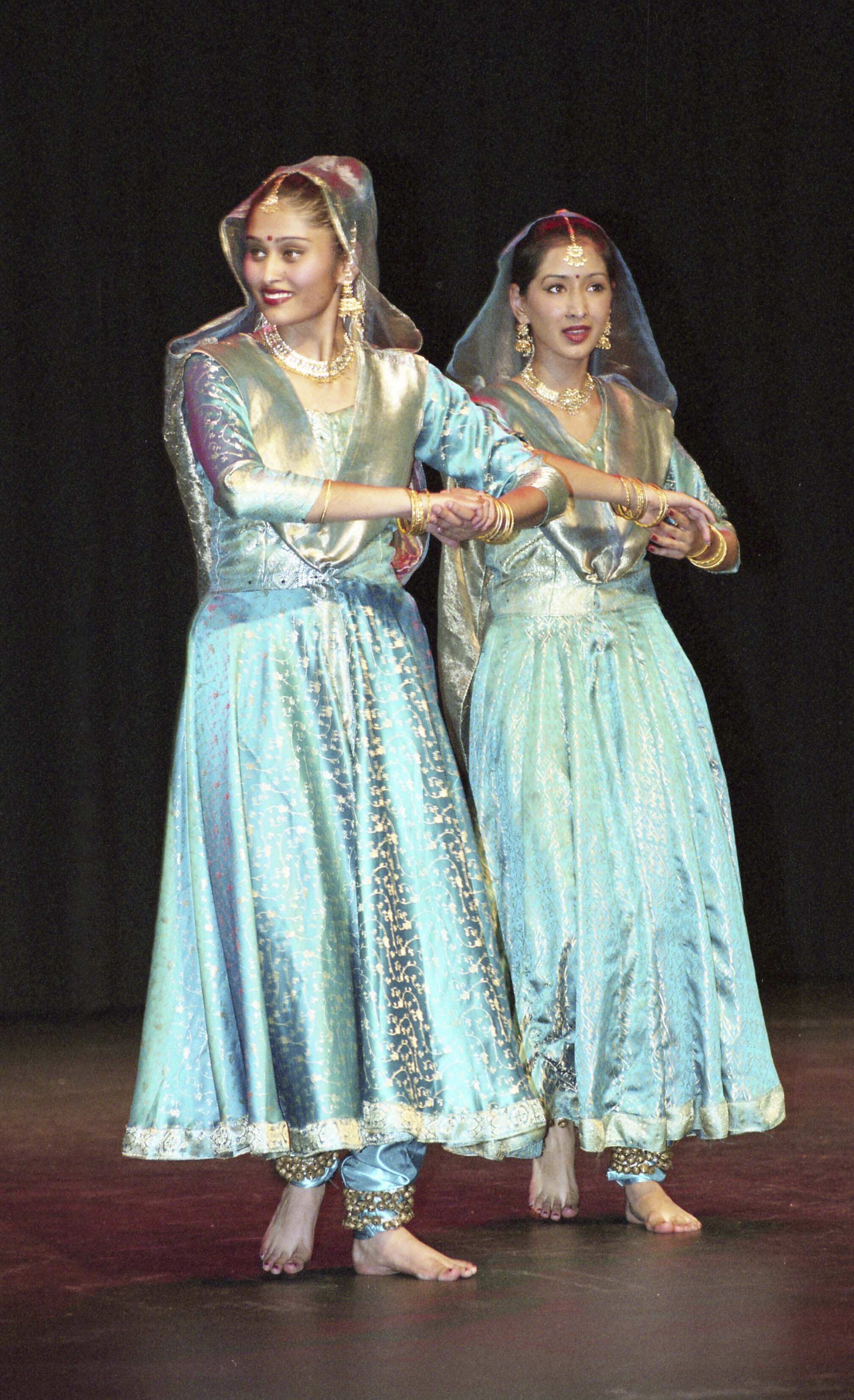
Photograph of unidentified individuals performing kathak dance at a variety show organized by the Pandit Jasraj School of Music Foundation. The show featured students from the Pandit Jasraj School of Music and other performing artists of Vancouver. The individuals performing kathak were from the Nritya Manjaree School of Kathak.
Kathak is one of the eight major forms of Indian classical dance. Derived from the Sanskrit word kathakar, meaning "storyteller," it refers to the nomadic performers who narrated the tales of Mahabharata and the Ramayana through dance, music, and gestures. It is characterized by its extensive footwork, precise hand and body movements, flexibility, and facial expressions, which all comes together to tell a story.
Nritya Manjaree School of Kathak was established in 1978 by Madhu Khare. Khare is a gifted dancer and obtained her Bachelor in Kathak in 1965 from the University of Bhat Khande, Lucknow, India. She also received higher training from various Gurus in India, such as Shambhu Maharaj, and has performed in cities in India and Canada. The Nritya Manjaree School of Kathak is located in Delta, British Columbia (B.C.).
The Pandit Jasraj School of Music Foundation was incorporated in 1994 as a Society in the Province of British Columbia, dedicated to promoting vocal music in the Mewati Gharana within the Lower Mainland of Vancouver. Their Mission is to promote classical Indian music through instruction and performance.
2024_19_786_014-Service File.jpg
Download
Member of
Creator: Bodalia, Chandra
Description
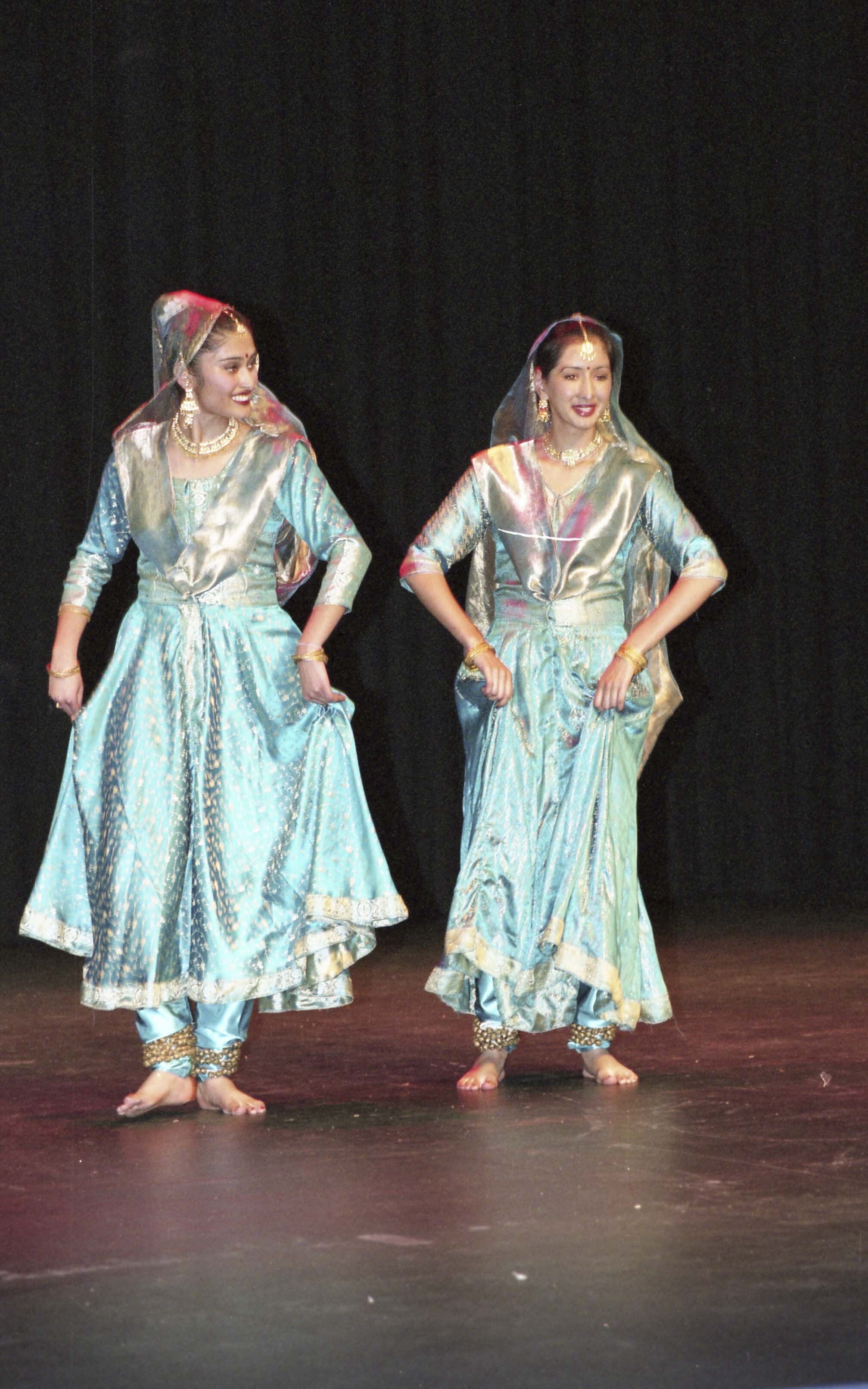
Photograph of unidentified individuals performing kathak dance at a variety show organized by the Pandit Jasraj School of Music Foundation. The show featured students from the Pandit Jasraj School of Music and other performing artists of Vancouver. The individuals performing kathak were from the Nritya Manjaree School of Kathak.
Kathak is one of the eight major forms of Indian classical dance. Derived from the Sanskrit word kathakar, meaning "storyteller," it refers to the nomadic performers who narrated the tales of Mahabharata and the Ramayana through dance, music, and gestures. It is characterized by its extensive footwork, precise hand and body movements, flexibility, and facial expressions, which all comes together to tell a story.
Nritya Manjaree School of Kathak was established in 1978 by Madhu Khare. Khare is a gifted dancer and obtained her Bachelor in Kathak in 1965 from the University of Bhat Khande, Lucknow, India. She also received higher training from various Gurus in India, such as Shambhu Maharaj, and has performed in cities in India and Canada. The Nritya Manjaree School of Kathak is located in Delta, British Columbia (B.C.).
The Pandit Jasraj School of Music Foundation was incorporated in 1994 as a Society in the Province of British Columbia, dedicated to promoting vocal music in the Mewati Gharana within the Lower Mainland of Vancouver. Their Mission is to promote classical Indian music through instruction and performance.
Kathak is one of the eight major forms of Indian classical dance. Derived from the Sanskrit word kathakar, meaning "storyteller," it refers to the nomadic performers who narrated the tales of Mahabharata and the Ramayana through dance, music, and gestures. It is characterized by its extensive footwork, precise hand and body movements, flexibility, and facial expressions, which all comes together to tell a story.
Nritya Manjaree School of Kathak was established in 1978 by Madhu Khare. Khare is a gifted dancer and obtained her Bachelor in Kathak in 1965 from the University of Bhat Khande, Lucknow, India. She also received higher training from various Gurus in India, such as Shambhu Maharaj, and has performed in cities in India and Canada. The Nritya Manjaree School of Kathak is located in Delta, British Columbia (B.C.).
The Pandit Jasraj School of Music Foundation was incorporated in 1994 as a Society in the Province of British Columbia, dedicated to promoting vocal music in the Mewati Gharana within the Lower Mainland of Vancouver. Their Mission is to promote classical Indian music through instruction and performance.
2024_19_786_011-Service File.jpg
Download
Member of
Creator: Bodalia, Chandra
Description
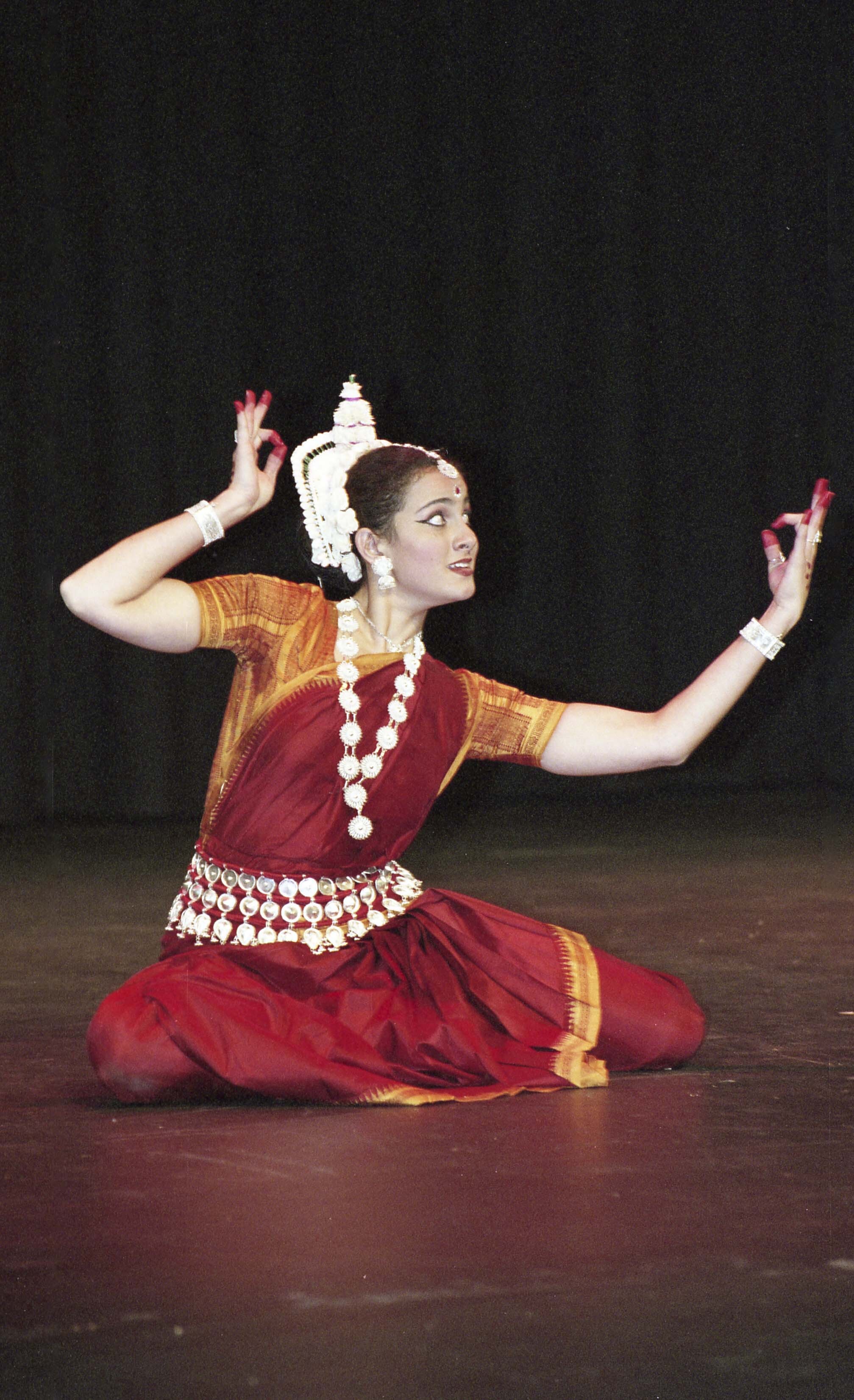
Photograph of Sitara Thobani performing odissi dance at a variety show organized by the Pandit Jasraj School of Music Foundation. The show featured students from the Pandit Jasraj School of Music and other performing artists of Vancouver.
Sitara Thobani first began dancing at the age of 8 under the direction of Lata Pada in the Bharatanatyam tradition. She began her training in the Odissi tradition under Dr. Ratna Roy in 1997. She has undertaken intensive training in India at the esteemed Nrityagram dance school as well as in Bhubaneswar in Orissa, the heart of Odissi dance tradition. Thobani has performed at many cultural and art events in Canada and the United States, including at the International Odissi Conference in Washington, D.C. in August 2003. She has also performed at the Diamond Jubilee Hall in Dar-es-Salaam, the Zanzibar International Film Festival in Tanzania, as well as in Calcutta and Delhi, India. Thobani has dedicated herself to continuing the Odissi dance tradition of Guru Pankaj Charan Das as transmitted to her by her Guru, Dr. Ratna Roy. Thobani has a PhD in Social and Cultural Anthropology from the University of Oxford, an MA in Sociology and Equity Studies from the University of Toronto, and a BA in Anthropology and Asian Studies from the University of British Columbia. An Assistant Professor in Residential College in the Arts and Humanities, she is also affiliated with the Asian Studies Program and the Muslim Studies Program at Michigan State University.
Odissi is a classical Indian dance style which originates from the eastern state of Odisha, India. It is one of eight classical dance forms in India. Since the 12th century, odissi has been danced by maharis (people devoted to the dance) in temples. Odissi expresses traditional poetry and songs through movements. Many of the poems performed through Odissi come from the Sanskrit collection of romantic poetry, Gita Govinda, written by Jayadeva Goswami.
The Pandit Jasraj School of Music Foundation was incorporated in 1994 as a Society in the Province of British Columbia, dedicated to promoting vocal music in the Mewati Gharana within the Lower Mainland of Vancouver. Their Mission is to promote classical Indian music through instruction and performance.
2024_19_786_009-Service File.jpg
Download
Member of
Creator: Bodalia, Chandra
Description
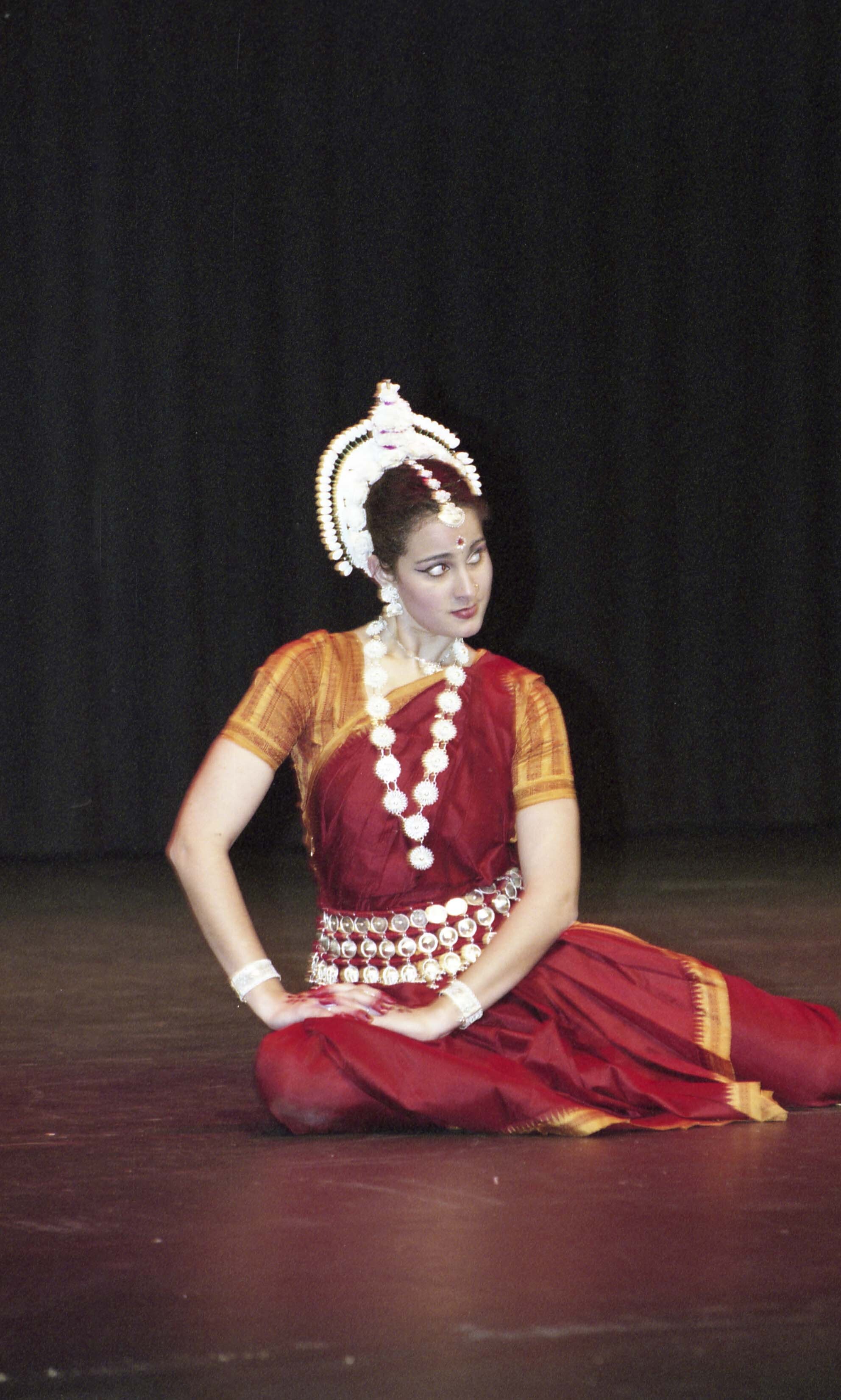
Photograph of Sitara Thobani performing odissi dance at a variety show organized by the Pandit Jasraj School of Music Foundation. The show featured students from the Pandit Jasraj School of Music and other performing artists of Vancouver.
Sitara Thobani first began dancing at the age of 8 under the direction of Lata Pada in the Bharatanatyam tradition. She began her training in the Odissi tradition under Dr. Ratna Roy in 1997. She has undertaken intensive training in India at the esteemed Nrityagram dance school as well as in Bhubaneswar in Orissa, the heart of Odissi dance tradition. Thobani has performed at many cultural and art events in Canada and the United States, including at the International Odissi Conference in Washington, D.C. in August 2003. She has also performed at the Diamond Jubilee Hall in Dar-es-Salaam, the Zanzibar International Film Festival in Tanzania, as well as in Calcutta and Delhi, India. Thobani has dedicated herself to continuing the Odissi dance tradition of Guru Pankaj Charan Das as transmitted to her by her Guru, Dr. Ratna Roy. Thobani has a PhD in Social and Cultural Anthropology from the University of Oxford, an MA in Sociology and Equity Studies from the University of Toronto, and a BA in Anthropology and Asian Studies from the University of British Columbia. An Assistant Professor in Residential College in the Arts and Humanities, she is also affiliated with the Asian Studies Program and the Muslim Studies Program at Michigan State University.
Odissi is a classical Indian dance style which originates from the eastern state of Odisha, India. It is one of eight classical dance forms in India. Since the 12th century, odissi has been danced by maharis (people devoted to the dance) in temples. Odissi expresses traditional poetry and songs through movements. Many of the poems performed through Odissi come from the Sanskrit collection of romantic poetry, Gita Govinda, written by Jayadeva Goswami.
The Pandit Jasraj School of Music Foundation was incorporated in 1994 as a Society in the Province of British Columbia, dedicated to promoting vocal music in the Mewati Gharana within the Lower Mainland of Vancouver. Their Mission is to promote classical Indian music through instruction and performance.
Sitara Thobani first began dancing at the age of 8 under the direction of Lata Pada in the Bharatanatyam tradition. She began her training in the Odissi tradition under Dr. Ratna Roy in 1997. She has undertaken intensive training in India at the esteemed Nrityagram dance school as well as in Bhubaneswar in Orissa, the heart of Odissi dance tradition. Thobani has performed at many cultural and art events in Canada and the United States, including at the International Odissi Conference in Washington, D.C. in August 2003. She has also performed at the Diamond Jubilee Hall in Dar-es-Salaam, the Zanzibar International Film Festival in Tanzania, as well as in Calcutta and Delhi, India. Thobani has dedicated herself to continuing the Odissi dance tradition of Guru Pankaj Charan Das as transmitted to her by her Guru, Dr. Ratna Roy. Thobani has a PhD in Social and Cultural Anthropology from the University of Oxford, an MA in Sociology and Equity Studies from the University of Toronto, and a BA in Anthropology and Asian Studies from the University of British Columbia. An Assistant Professor in Residential College in the Arts and Humanities, she is also affiliated with the Asian Studies Program and the Muslim Studies Program at Michigan State University.
Odissi is a classical Indian dance style which originates from the eastern state of Odisha, India. It is one of eight classical dance forms in India. Since the 12th century, odissi has been danced by maharis (people devoted to the dance) in temples. Odissi expresses traditional poetry and songs through movements. Many of the poems performed through Odissi come from the Sanskrit collection of romantic poetry, Gita Govinda, written by Jayadeva Goswami.
The Pandit Jasraj School of Music Foundation was incorporated in 1994 as a Society in the Province of British Columbia, dedicated to promoting vocal music in the Mewati Gharana within the Lower Mainland of Vancouver. Their Mission is to promote classical Indian music through instruction and performance.
2024_19_786_007-Service File.jpg
Download
Member of
Creator: Bodalia, Chandra
Description
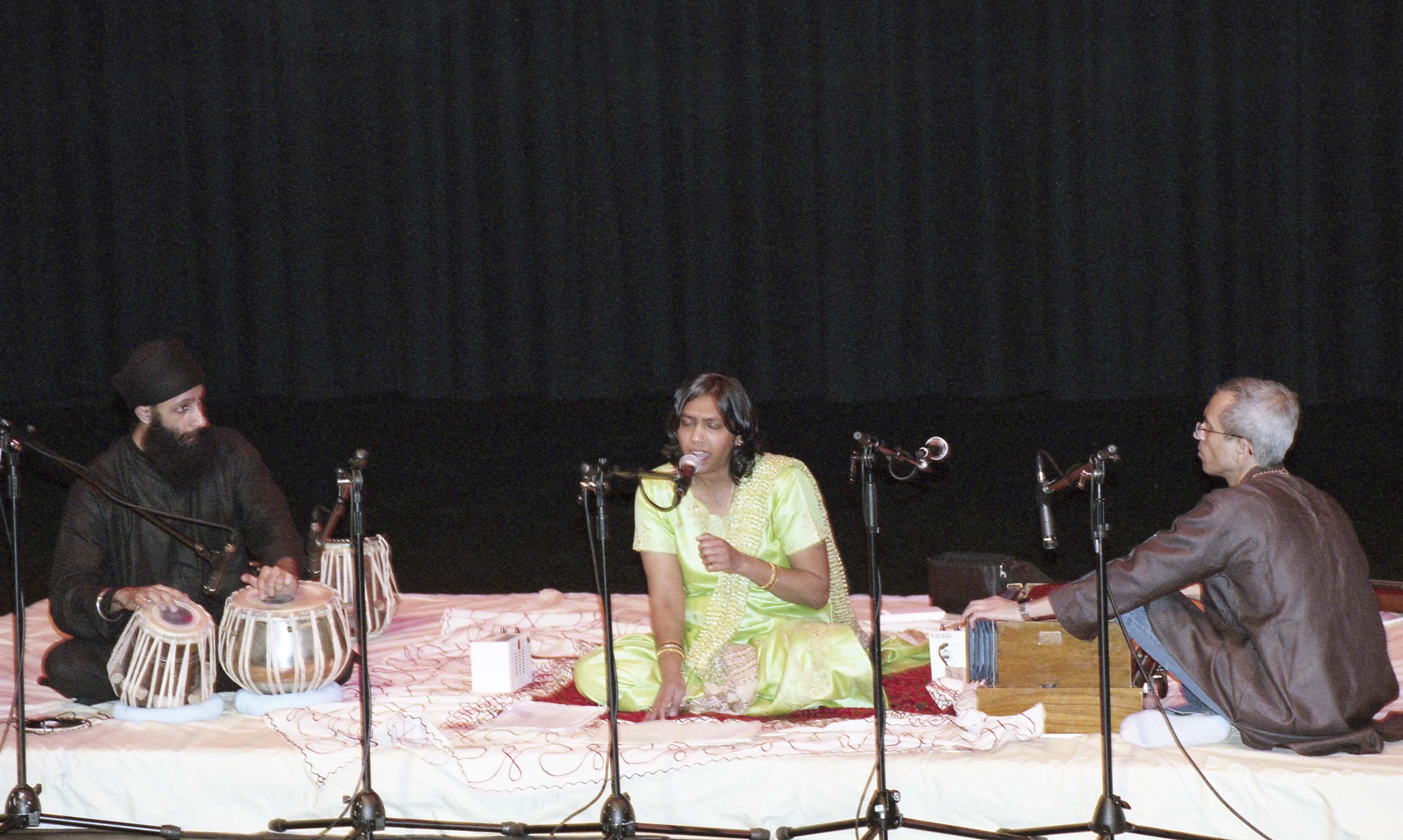
Photograph of an unidentified individual performing at a variety show organized by the Pandit Jasraj School of Music Foundation. The individual is accompanied by Neelamjit Dhillon on tabla (hand drums) and Mohan Bhide on harmonium. The show featured students from the Pandit Jasraj School of Music and other performing artists of Vancouver.
Neelamjit Dhillon is a professional musician equally versed in both Eastern and Western traditions. He is an award-winning multi-instrumentalist and composer based in Los Angeles. Born and raised in Vancouver, Canada, Dhillon is skilled in both North Indian classical and American jazz music. He has obtained a Bachelor of Music degree in Jazz Studies (majoring in saxophone performance) from Capilano College and has also completed a Bachelor of Education degree in Secondary Music Education from the University of British Columbia. The tabla is Dhillon's first instrument, an instrument he has played since the age of 10, and he studies under the tutelage of Ustad Zakir Hussain. His primary instruments also include the saxophone and bansuri. Dhillon has had the distinction of working with some of India's finest, such as Louiz Banks, Fazal Qureshi, Rakesh Chaurasia and Taufiq Qureshi. He has performed around the world at events and festivals in locales such as Somalia, India, Brazil, Europe, the United States, and Canada.
Mohan Bhide learnt Indian music from the age of 6 and took advanced music courses under the tutelage of Balasaheb Mate and Govindrao Patwardhan – both accomplished harmonium players and versatile musicians. Bhide has played with many well-known artists, including Chota Gandharva, Sudhir Datar, Shaila Datar, Ashwini Bhide-Deshpande, Shubha Mudgal, and Sanjeev Abhyankar to name a few.
The Pandit Jasraj School of Music Foundation was incorporated in 1994 as a Society in the Province of British Columbia, dedicated to promoting vocal music in the Mewati Gharana within the Lower Mainland of Vancouver. Their Mission is to promote classical Indian music through instruction and performance.
2024_19_786_004-Service File.jpg
Download
Member of
Creator: Bodalia, Chandra
Description
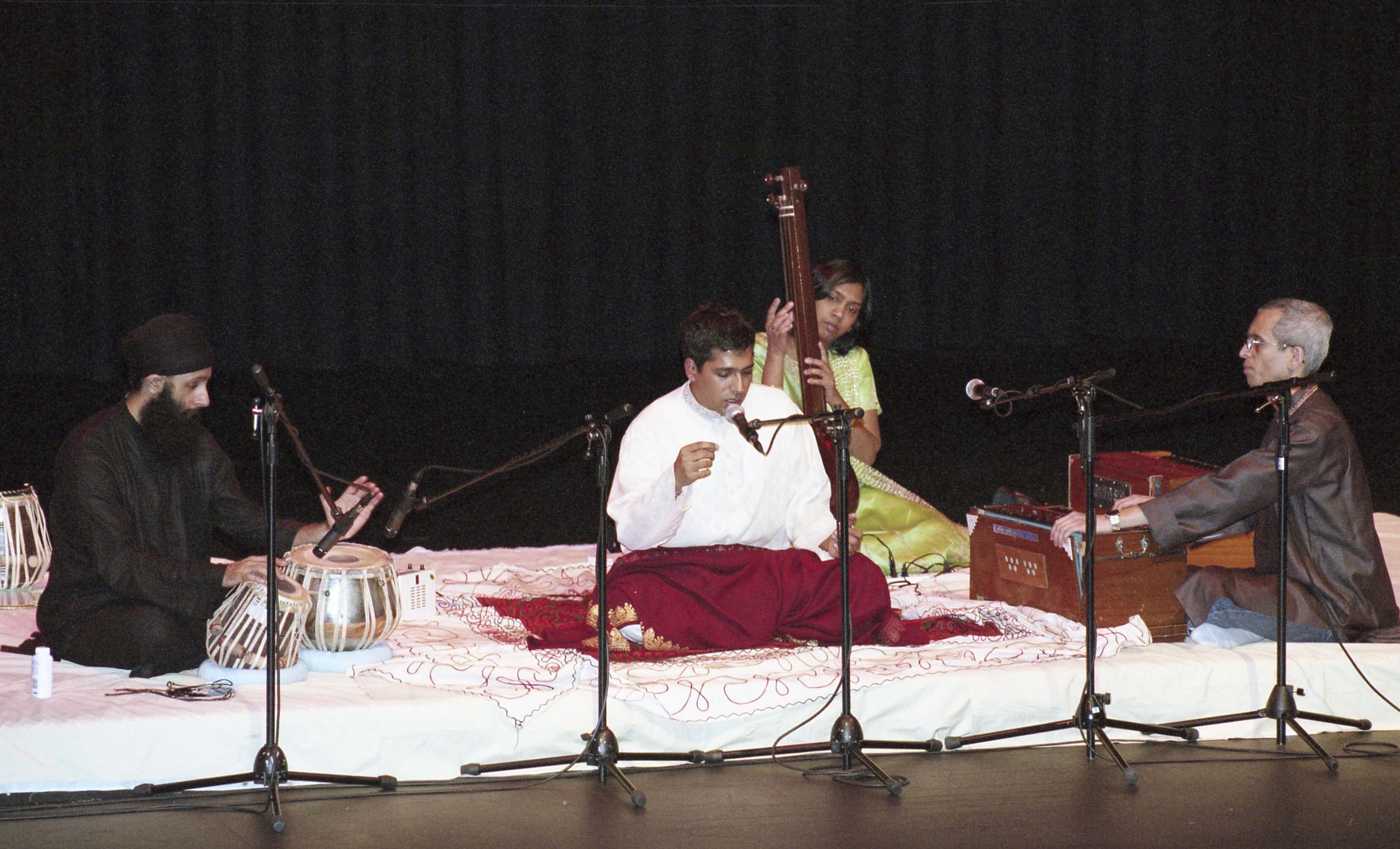
Photograph of unidentified individuals performing at a variety show organized by the Pandit Jasraj School of Music Foundation. The individuals are accompanied by Neelamjit Dhillon on tabla (hand drums) and Mohan Bhide on harmonium. The show featured students from the Pandit Jasraj School of Music and other performing artists of Vancouver.
Neelamjit Dhillon is a professional musician equally versed in both Eastern and Western traditions. He is an award-winning multi-instrumentalist and composer based in Los Angeles. Born and raised in Vancouver, Canada, Dhillon is skilled in both North Indian classical and American jazz music. He has obtained a Bachelor of Music degree in Jazz Studies (majoring in saxophone performance) from Capilano College and has also completed a Bachelor of Education degree in Secondary Music Education from the University of British Columbia. The tabla is Dhillon's first instrument, an instrument he has played since the age of 10, and he studies under the tutelage of Ustad Zakir Hussain. His primary instruments also include the saxophone and bansuri. Dhillon has had the distinction of working with some of India's finest, such as Louiz Banks, Fazal Qureshi, Rakesh Chaurasia and Taufiq Qureshi. He has performed around the world at events and festivals in locales such as Somalia, India, Brazil, Europe, the United States, and Canada.
Mohan Bhide learnt Indian music from the age of 6 and took advanced music courses under the tutelage of Balasaheb Mate and Govindrao Patwardhan – both accomplished harmonium players and versatile musicians. Bhide has played with many well-known artists, including Chota Gandharva, Sudhir Datar, Shaila Datar, Ashwini Bhide-Deshpande, Shubha Mudgal, and Sanjeev Abhyankar to name a few.
The Pandit Jasraj School of Music Foundation was incorporated in 1994 as a Society in the Province of British Columbia, dedicated to promoting vocal music in the Mewati Gharana within the Lower Mainland of Vancouver. Their Mission is to promote classical Indian music through instruction and performance.
2024_19_786_002-Service File.jpg
Download
Member of
Creator: Bodalia, Chandra
Description
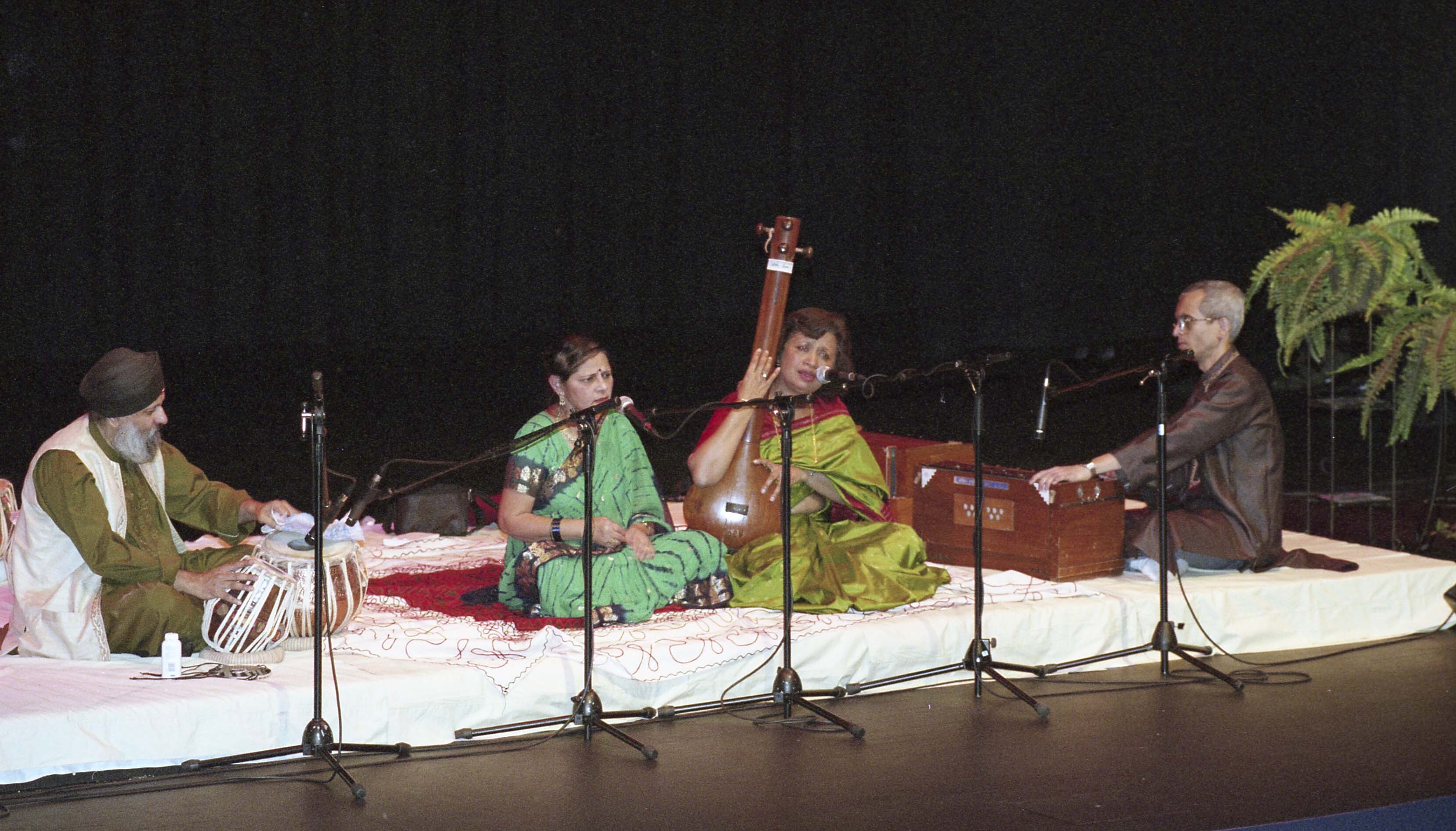
Photograph of unidentified individuals performing at a variety show organized by the Pandit Jasraj School of Music Foundation. The individuals are accompanied by Amritpal Jabbal on tabla (hand drums) and Mohan Bhide on harmonium. The show featured students from the Pandit Jasraj School of Music and other performing artists of Vancouver.
Amritpal Jabbal is a tabla player who is a disciple of Ustad Zakir Hussain. He has accompanied many of India's great artists, including Padmavibhushan Pandit Jasraj, Pandit Jitendra Abisheki, Rattan Mohan Sharma and Hemang Mehta. Jabbal also served on the board of the Pandit Jasraj School of Music Foundation.
Mohan Bhide learnt Indian music from the age of 6 and took advanced music courses under the tutelage of Balasaheb Mate and Govindrao Patwardhan – both accomplished harmonium players and versatile musicians. Bhide has played with many well-known artists, including Chota Gandharva, Sudhir Datar, Shaila Datar, Ashwini Bhide-Deshpande, Shubha Mudgal, and Sanjeev Abhyankar to name a few.
The Pandit Jasraj School of Music Foundation was incorporated in 1994 as a Society in the Province of British Columbia, dedicated to promoting vocal music in the Mewati Gharana within the Lower Mainland of Vancouver. Their Mission is to promote classical Indian music through instruction and performance.
2024_19_657_023-Service File.jpg
Download
Member of
Creator: Bodalia, Chandra
Description
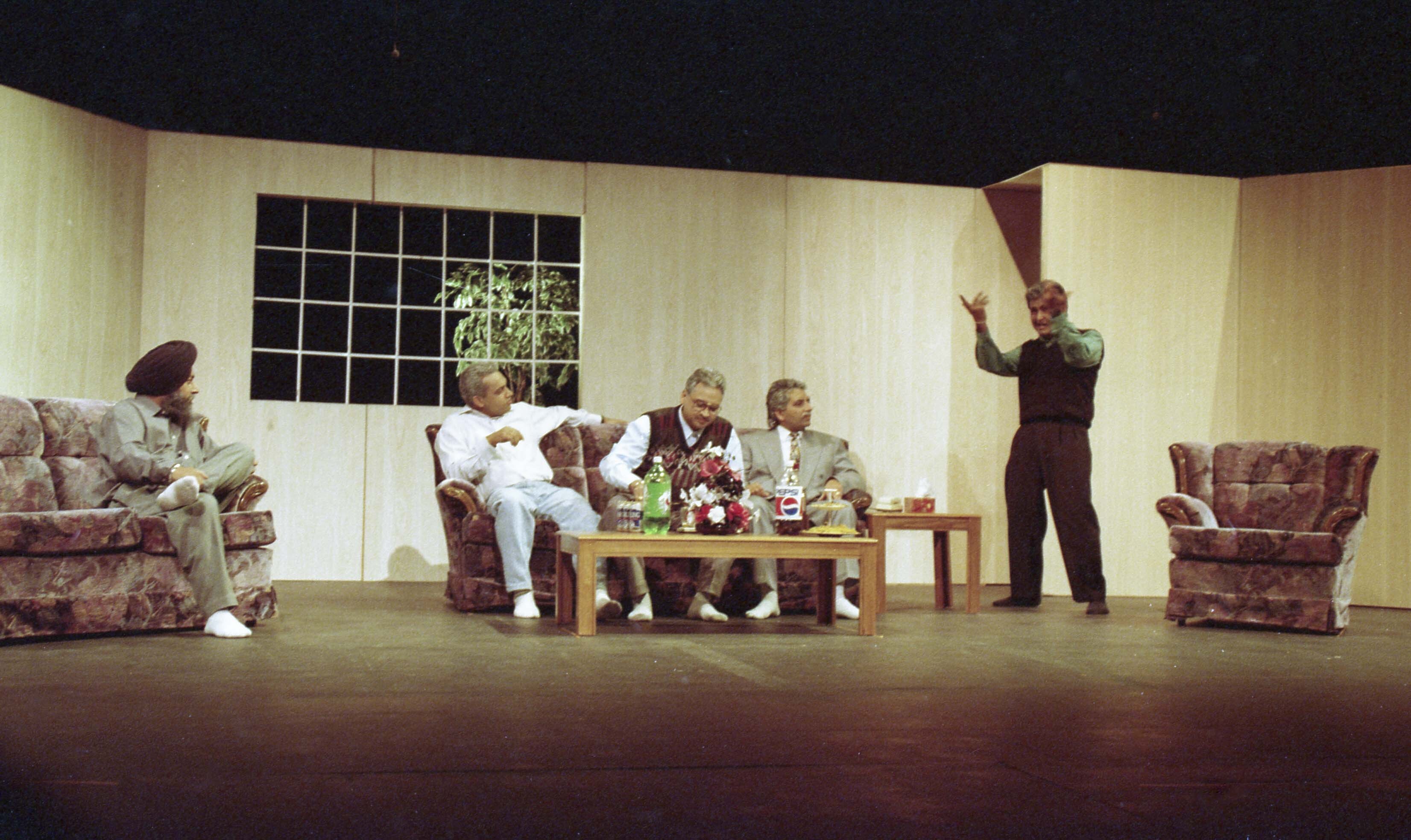
Photograph of a group of unidentified individuals performing in a Panjabi play organized at the Michael J Fox theatre in Burnaby, British Columbia (B.C.).
The Michael J Fox Theatre is located in Burnaby South Secondary School in B.C. Burnaby South Secondary School is one of eight secondary schools within the Burnaby School District, in south central Burnaby. Built as part of the school in 1993, the Michael J Fox Theatre is overseen by an independent, non-profit society. The Michael J Fox Theatre Society Board consists of community volunteers and functions independently of the Burnaby School Board. In November 1995, the Theatre was officially named after Michael J. Fox, in recognition of his achievements in the arts and commitment to the community.
The Michael J Fox Theatre is located in Burnaby South Secondary School in B.C. Burnaby South Secondary School is one of eight secondary schools within the Burnaby School District, in south central Burnaby. Built as part of the school in 1993, the Michael J Fox Theatre is overseen by an independent, non-profit society. The Michael J Fox Theatre Society Board consists of community volunteers and functions independently of the Burnaby School Board. In November 1995, the Theatre was officially named after Michael J. Fox, in recognition of his achievements in the arts and commitment to the community.
2024_19_657_021-Service File.jpg
Download
Member of
Creator: Bodalia, Chandra
Description
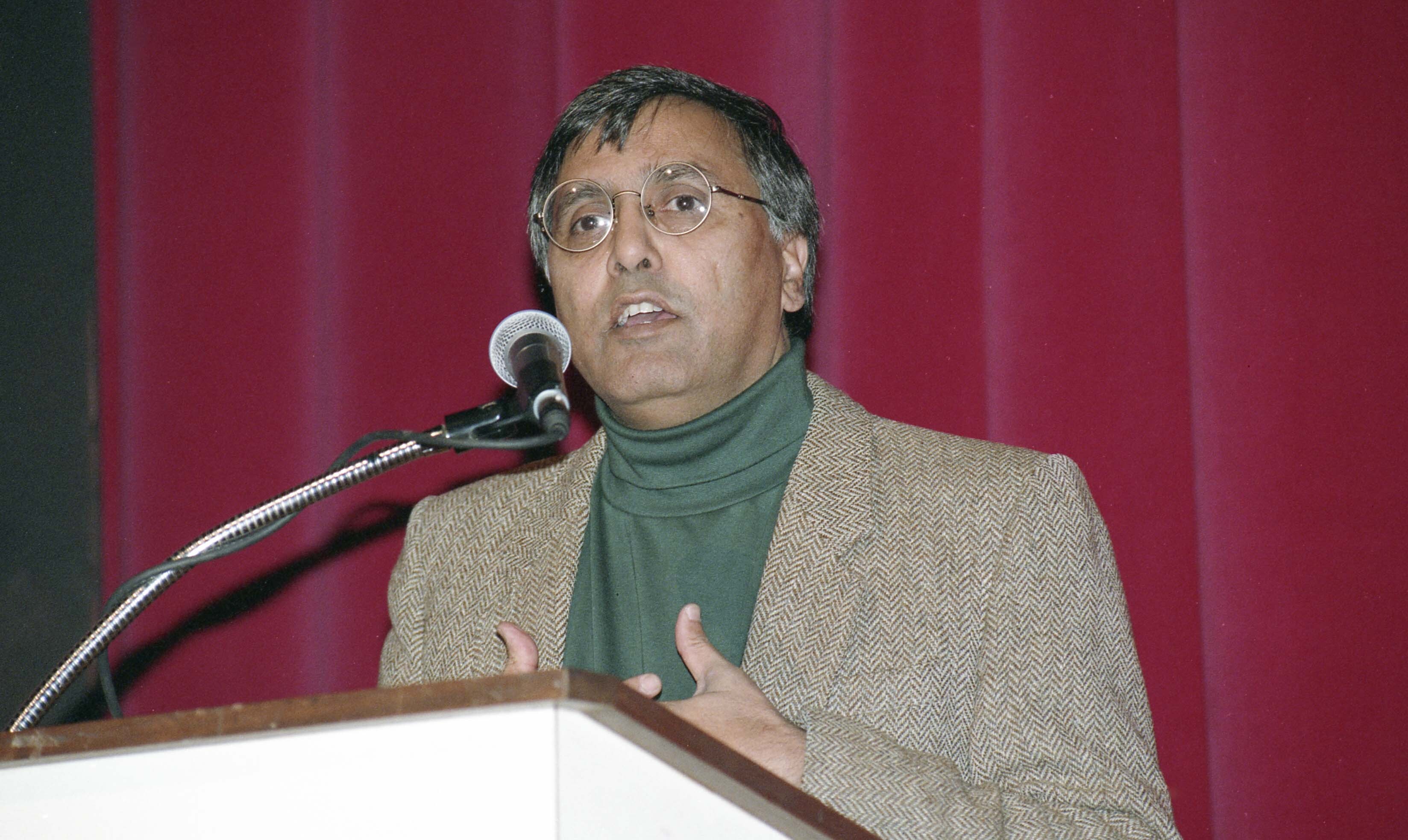
Photograph of Ujjal Dosanjh addressing the audience at Burnaby South Secondary School where a Panjabi play was organized at the Michael J Fox theatre in Burnaby, British Columbia (B.C.).
Ujjal Dosanjh is a Canadian lawyer, civil rights activist, and politician. Born in Panjab, India in 1947, Dosanjh emigrated to England at the age of 17 and came to Canada four years later, in 1968. He started off at a Vancouver sawmill, but when a back injury hindered his career at the mill, he enrolled at Langara College and completed a degree in political science at Simon Fraser University. He earned a law degree at the University of British Columbia and established a law practice in Vancouver in 1979. First elected as MLA for Vancouver-Kensington in 1991, Dosanjh twice served as Caucus Chair and also chaired the Select Standing Committee on Parliamentary Reform, Ethical Conduct, Standing Orders and Private Bills. Dosanjh was sworn in as British Columbia's 33rd Premier and Canada's first Indo-Canadian Premier on February 24, 2000, serving until 2001. He had previously served as Minister of Government Services and Minister Responsible for Multiculturalism, Human Rights, Sports and Immigration in 1995, and served as Attorney General from August 1995 to February 2000. He was also the leader of the provincial New Democratic Party (NDP) and later served as a Member of Parliament with the Liberal Party. A long time human rights activist, his past community involvements include: South Vancouver Neighbourhood House, MOSAIC, the B.C. Multicultural Society and the B.C. Civil Liberties Association. In 1977 he helped set up the first farm workers' legal information services while he was chair of the Labour Advocacy Research Association. Throughout his career, Dosanjh has been a strong advocate for social justice, healthcare, and public policy issues.
The Michael J Fox Theatre is located in Burnaby South Secondary School in B.C. Burnaby South Secondary School is one of eight secondary schools within the Burnaby School District, in south central Burnaby. Built as part of the school in 1993, the Michael J Fox Theatre is overseen by an independent, non-profit society. The Michael J Fox Theatre Society Board consists of community volunteers and functions independently of the Burnaby School Board. In November 1995, the Theatre was officially named after Michael J. Fox, in recognition of his achievements in the arts and commitment to the community.
2024_19_657_020-Service File.jpg
Download
Member of
Creator: Bodalia, Chandra
Description
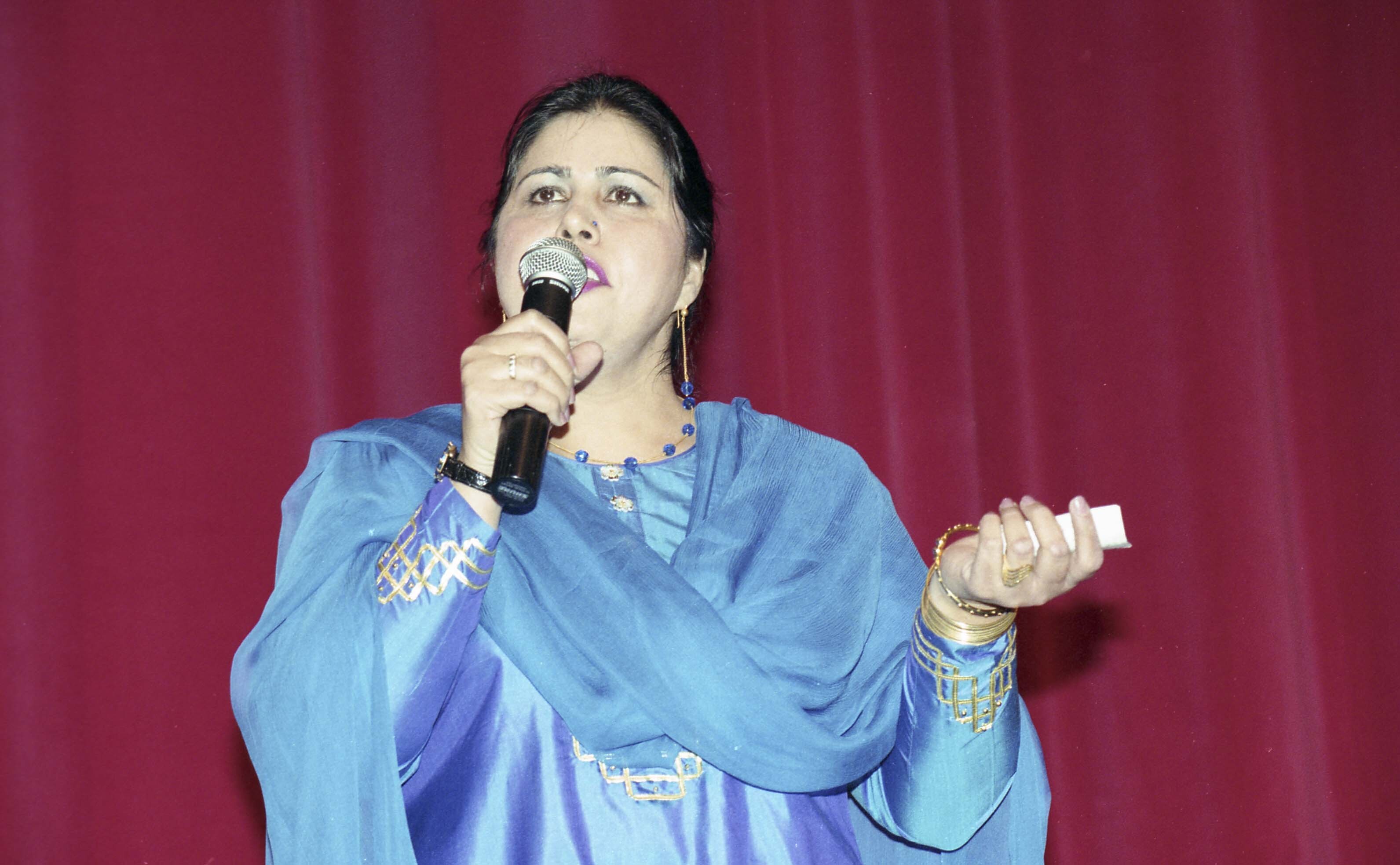
Photograph of an unidentified individual addressing the audience at Burnaby South Secondary School where a Panjabi play was organized at the Michael J Fox theatre in Burnaby, British Columbia (B.C.).
The Michael J Fox Theatre is located in Burnaby South Secondary School in B.C. Burnaby South Secondary School is one of eight secondary schools within the Burnaby School District, in south central Burnaby. Built as part of the school in 1993, the Michael J Fox Theatre is overseen by an independent, non-profit society. The Michael J Fox Theatre Society Board consists of community volunteers and functions independently of the Burnaby School Board. In November 1995, the Theatre was officially named after Michael J. Fox, in recognition of his achievements in the arts and commitment to the community.
The Michael J Fox Theatre is located in Burnaby South Secondary School in B.C. Burnaby South Secondary School is one of eight secondary schools within the Burnaby School District, in south central Burnaby. Built as part of the school in 1993, the Michael J Fox Theatre is overseen by an independent, non-profit society. The Michael J Fox Theatre Society Board consists of community volunteers and functions independently of the Burnaby School Board. In November 1995, the Theatre was officially named after Michael J. Fox, in recognition of his achievements in the arts and commitment to the community.