
Performing arts
Authority Sources
Member of
Creator: Bodalia, Chandra
Description
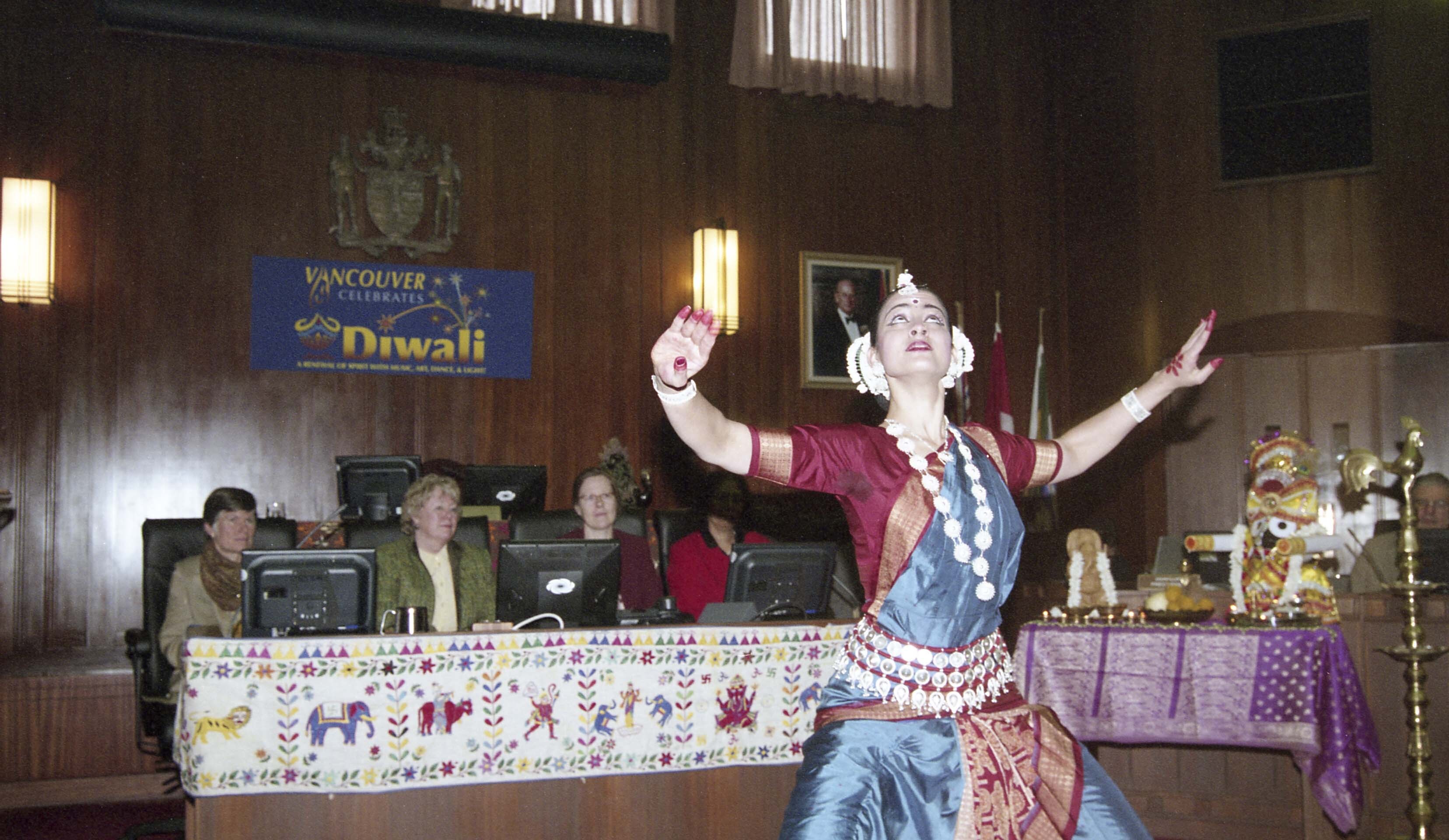
Photograph of Sitara Thobani performing odissi dance at a Diwali celebration held at the Vancouver City Hall in British Columbia (B.C.).
Sitara Thobani first began dancing at the age of 8 under the direction of Lata Pada in the Bharatanatyam tradition. She began her training in the Odissi tradition under Dr. Ratna Roy in 1997. She has undertaken intensive training in India at the esteemed Nrityagram dance school as well as in Bhubaneswar in Orissa, the heart of Odissi dance tradition. Thobani has performed at many cultural and art events in Canada and the United States, including at the International Odissi Conference in Washington, D.C. in August 2003. She has also performed at the Diamond Jubilee Hall in Dar-es-Salaam, the Zanzibar International Film Festival in Tanzania, as well as in Calcutta and Delhi, India. Thobani has dedicated herself to continuing the Odissi dance tradition of Guru Pankaj Charan Das as transmitted to her by her Guru, Dr. Ratna Roy. Thobani has a PhD in Social and Cultural Anthropology from the University of Oxford, an MA in Sociology and Equity Studies from the University of Toronto, and a BA in Anthropology and Asian Studies from the University of British Columbia. An Assistant Professor in Residential College in the Arts and Humanities, she is also affiliated with the Asian Studies Program and the Muslim Studies Program at Michigan State University.
Odissi is a classical Indian dance style which originates from the eastern state of Odisha, India. It is one of eight classical dance forms in India. Since the 12th century, odissi has been danced by maharis (people devoted to the dance) in temples. Odissi expresses traditional poetry and songs through movements. Many of the poems performed through Odissi come from the Sanskrit collection of romantic poetry, Gita Govinda, written by Jayadeva Goswami.
Deepavali, also known as Diwali, is a major religious festival celebrated by Hindus, Jains, and Sikhs, and translates to "the Festival of Lights." The festival lasts five days: the first day is known as Dhanteras; followed by Choti Diwali; Lakshmi Puja, which is the main celebration; Govardhan Puja; and finally Bhai Dooj. The festival is typically marked by the cleaning and decorating of homes, as well as the lighting of diyas and rangoli designs. Each region in India and religion has their own manner of celebrating Deepavali and their own gods to be worshipped.
Sitara Thobani first began dancing at the age of 8 under the direction of Lata Pada in the Bharatanatyam tradition. She began her training in the Odissi tradition under Dr. Ratna Roy in 1997. She has undertaken intensive training in India at the esteemed Nrityagram dance school as well as in Bhubaneswar in Orissa, the heart of Odissi dance tradition. Thobani has performed at many cultural and art events in Canada and the United States, including at the International Odissi Conference in Washington, D.C. in August 2003. She has also performed at the Diamond Jubilee Hall in Dar-es-Salaam, the Zanzibar International Film Festival in Tanzania, as well as in Calcutta and Delhi, India. Thobani has dedicated herself to continuing the Odissi dance tradition of Guru Pankaj Charan Das as transmitted to her by her Guru, Dr. Ratna Roy. Thobani has a PhD in Social and Cultural Anthropology from the University of Oxford, an MA in Sociology and Equity Studies from the University of Toronto, and a BA in Anthropology and Asian Studies from the University of British Columbia. An Assistant Professor in Residential College in the Arts and Humanities, she is also affiliated with the Asian Studies Program and the Muslim Studies Program at Michigan State University.
Odissi is a classical Indian dance style which originates from the eastern state of Odisha, India. It is one of eight classical dance forms in India. Since the 12th century, odissi has been danced by maharis (people devoted to the dance) in temples. Odissi expresses traditional poetry and songs through movements. Many of the poems performed through Odissi come from the Sanskrit collection of romantic poetry, Gita Govinda, written by Jayadeva Goswami.
Deepavali, also known as Diwali, is a major religious festival celebrated by Hindus, Jains, and Sikhs, and translates to "the Festival of Lights." The festival lasts five days: the first day is known as Dhanteras; followed by Choti Diwali; Lakshmi Puja, which is the main celebration; Govardhan Puja; and finally Bhai Dooj. The festival is typically marked by the cleaning and decorating of homes, as well as the lighting of diyas and rangoli designs. Each region in India and religion has their own manner of celebrating Deepavali and their own gods to be worshipped.
Member of
Creator: Bodalia, Chandra
Description
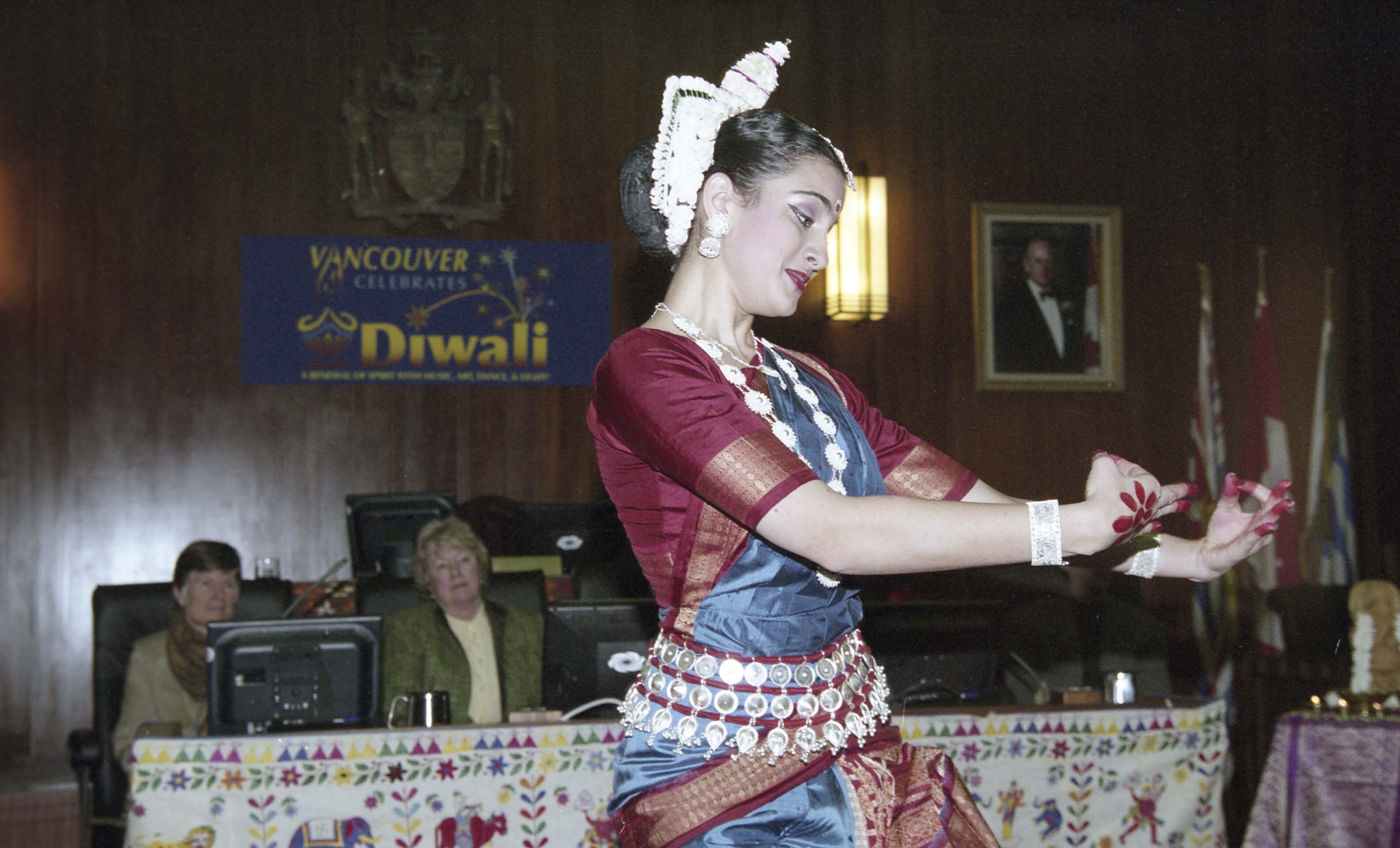
Photograph of Sitara Thobani performing odissi dance at a Diwali celebration held at the Vancouver City Hall in British Columbia (B.C.).
Sitara Thobani first began dancing at the age of 8 under the direction of Lata Pada in the Bharatanatyam tradition. She began her training in the Odissi tradition under Dr. Ratna Roy in 1997. She has undertaken intensive training in India at the esteemed Nrityagram dance school as well as in Bhubaneswar in Orissa, the heart of Odissi dance tradition. Thobani has performed at many cultural and art events in Canada and the United States, including at the International Odissi Conference in Washington, D.C. in August 2003. She has also performed at the Diamond Jubilee Hall in Dar-es-Salaam, the Zanzibar International Film Festival in Tanzania, as well as in Calcutta and Delhi, India. Thobani has dedicated herself to continuing the Odissi dance tradition of Guru Pankaj Charan Das as transmitted to her by her Guru, Dr. Ratna Roy. Thobani has a PhD in Social and Cultural Anthropology from the University of Oxford, an MA in Sociology and Equity Studies from the University of Toronto, and a BA in Anthropology and Asian Studies from the University of British Columbia. An Assistant Professor in Residential College in the Arts and Humanities, she is also affiliated with the Asian Studies Program and the Muslim Studies Program at Michigan State University.
Odissi is a classical Indian dance style which originates from the eastern state of Odisha, India. It is one of eight classical dance forms in India. Since the 12th century, odissi has been danced by maharis (people devoted to the dance) in temples. Odissi expresses traditional poetry and songs through movements. Many of the poems performed through Odissi come from the Sanskrit collection of romantic poetry, Gita Govinda, written by Jayadeva Goswami.
Deepavali, also known as Diwali, is a major religious festival celebrated by Hindus, Jains, and Sikhs, and translates to "the Festival of Lights." The festival lasts five days: the first day is known as Dhanteras; followed by Choti Diwali; Lakshmi Puja, which is the main celebration; Govardhan Puja; and finally Bhai Dooj. The festival is typically marked by the cleaning and decorating of homes, as well as the lighting of diyas and rangoli designs. Each region in India and religion has their own manner of celebrating Deepavali and their own gods to be worshipped.
Sitara Thobani first began dancing at the age of 8 under the direction of Lata Pada in the Bharatanatyam tradition. She began her training in the Odissi tradition under Dr. Ratna Roy in 1997. She has undertaken intensive training in India at the esteemed Nrityagram dance school as well as in Bhubaneswar in Orissa, the heart of Odissi dance tradition. Thobani has performed at many cultural and art events in Canada and the United States, including at the International Odissi Conference in Washington, D.C. in August 2003. She has also performed at the Diamond Jubilee Hall in Dar-es-Salaam, the Zanzibar International Film Festival in Tanzania, as well as in Calcutta and Delhi, India. Thobani has dedicated herself to continuing the Odissi dance tradition of Guru Pankaj Charan Das as transmitted to her by her Guru, Dr. Ratna Roy. Thobani has a PhD in Social and Cultural Anthropology from the University of Oxford, an MA in Sociology and Equity Studies from the University of Toronto, and a BA in Anthropology and Asian Studies from the University of British Columbia. An Assistant Professor in Residential College in the Arts and Humanities, she is also affiliated with the Asian Studies Program and the Muslim Studies Program at Michigan State University.
Odissi is a classical Indian dance style which originates from the eastern state of Odisha, India. It is one of eight classical dance forms in India. Since the 12th century, odissi has been danced by maharis (people devoted to the dance) in temples. Odissi expresses traditional poetry and songs through movements. Many of the poems performed through Odissi come from the Sanskrit collection of romantic poetry, Gita Govinda, written by Jayadeva Goswami.
Deepavali, also known as Diwali, is a major religious festival celebrated by Hindus, Jains, and Sikhs, and translates to "the Festival of Lights." The festival lasts five days: the first day is known as Dhanteras; followed by Choti Diwali; Lakshmi Puja, which is the main celebration; Govardhan Puja; and finally Bhai Dooj. The festival is typically marked by the cleaning and decorating of homes, as well as the lighting of diyas and rangoli designs. Each region in India and religion has their own manner of celebrating Deepavali and their own gods to be worshipped.
Member of
Creator: Bodalia, Chandra
Description
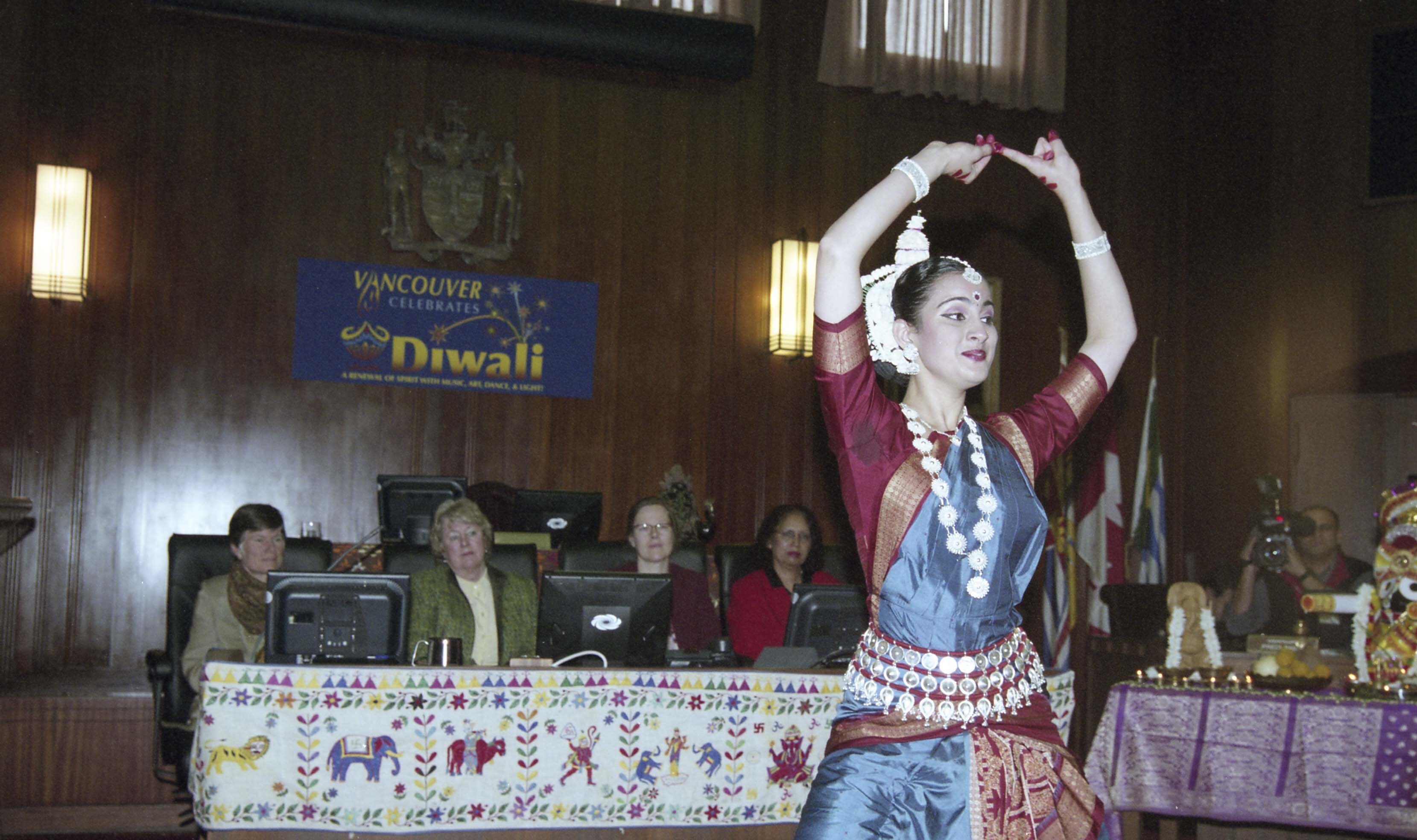
Photograph of Sitara Thobani performing odissi dance at a Diwali celebration held at the Vancouver City Hall in British Columbia (B.C.).
Sitara Thobani first began dancing at the age of 8 under the direction of Lata Pada in the Bharatanatyam tradition. She began her training in the Odissi tradition under Dr. Ratna Roy in 1997. She has undertaken intensive training in India at the esteemed Nrityagram dance school as well as in Bhubaneswar in Orissa, the heart of Odissi dance tradition. Thobani has performed at many cultural and art events in Canada and the United States, including at the International Odissi Conference in Washington, D.C. in August 2003. She has also performed at the Diamond Jubilee Hall in Dar-es-Salaam, the Zanzibar International Film Festival in Tanzania, as well as in Calcutta and Delhi, India. Thobani has dedicated herself to continuing the Odissi dance tradition of Guru Pankaj Charan Das as transmitted to her by her Guru, Dr. Ratna Roy. Thobani has a PhD in Social and Cultural Anthropology from the University of Oxford, an MA in Sociology and Equity Studies from the University of Toronto, and a BA in Anthropology and Asian Studies from the University of British Columbia. An Assistant Professor in Residential College in the Arts and Humanities, she is also affiliated with the Asian Studies Program and the Muslim Studies Program at Michigan State University.
Odissi is a classical Indian dance style which originates from the eastern state of Odisha, India. It is one of eight classical dance forms in India. Since the 12th century, odissi has been danced by maharis (people devoted to the dance) in temples. Odissi expresses traditional poetry and songs through movements. Many of the poems performed through Odissi come from the Sanskrit collection of romantic poetry, Gita Govinda, written by Jayadeva Goswami.
Deepavali, also known as Diwali, is a major religious festival celebrated by Hindus, Jains, and Sikhs, and translates to "the Festival of Lights." The festival lasts five days: the first day is known as Dhanteras; followed by Choti Diwali; Lakshmi Puja, which is the main celebration; Govardhan Puja; and finally Bhai Dooj. The festival is typically marked by the cleaning and decorating of homes, as well as the lighting of diyas and rangoli designs. Each region in India and religion has their own manner of celebrating Deepavali and their own gods to be worshipped.
Sitara Thobani first began dancing at the age of 8 under the direction of Lata Pada in the Bharatanatyam tradition. She began her training in the Odissi tradition under Dr. Ratna Roy in 1997. She has undertaken intensive training in India at the esteemed Nrityagram dance school as well as in Bhubaneswar in Orissa, the heart of Odissi dance tradition. Thobani has performed at many cultural and art events in Canada and the United States, including at the International Odissi Conference in Washington, D.C. in August 2003. She has also performed at the Diamond Jubilee Hall in Dar-es-Salaam, the Zanzibar International Film Festival in Tanzania, as well as in Calcutta and Delhi, India. Thobani has dedicated herself to continuing the Odissi dance tradition of Guru Pankaj Charan Das as transmitted to her by her Guru, Dr. Ratna Roy. Thobani has a PhD in Social and Cultural Anthropology from the University of Oxford, an MA in Sociology and Equity Studies from the University of Toronto, and a BA in Anthropology and Asian Studies from the University of British Columbia. An Assistant Professor in Residential College in the Arts and Humanities, she is also affiliated with the Asian Studies Program and the Muslim Studies Program at Michigan State University.
Odissi is a classical Indian dance style which originates from the eastern state of Odisha, India. It is one of eight classical dance forms in India. Since the 12th century, odissi has been danced by maharis (people devoted to the dance) in temples. Odissi expresses traditional poetry and songs through movements. Many of the poems performed through Odissi come from the Sanskrit collection of romantic poetry, Gita Govinda, written by Jayadeva Goswami.
Deepavali, also known as Diwali, is a major religious festival celebrated by Hindus, Jains, and Sikhs, and translates to "the Festival of Lights." The festival lasts five days: the first day is known as Dhanteras; followed by Choti Diwali; Lakshmi Puja, which is the main celebration; Govardhan Puja; and finally Bhai Dooj. The festival is typically marked by the cleaning and decorating of homes, as well as the lighting of diyas and rangoli designs. Each region in India and religion has their own manner of celebrating Deepavali and their own gods to be worshipped.
Member of
Creator: Bodalia, Chandra
Description
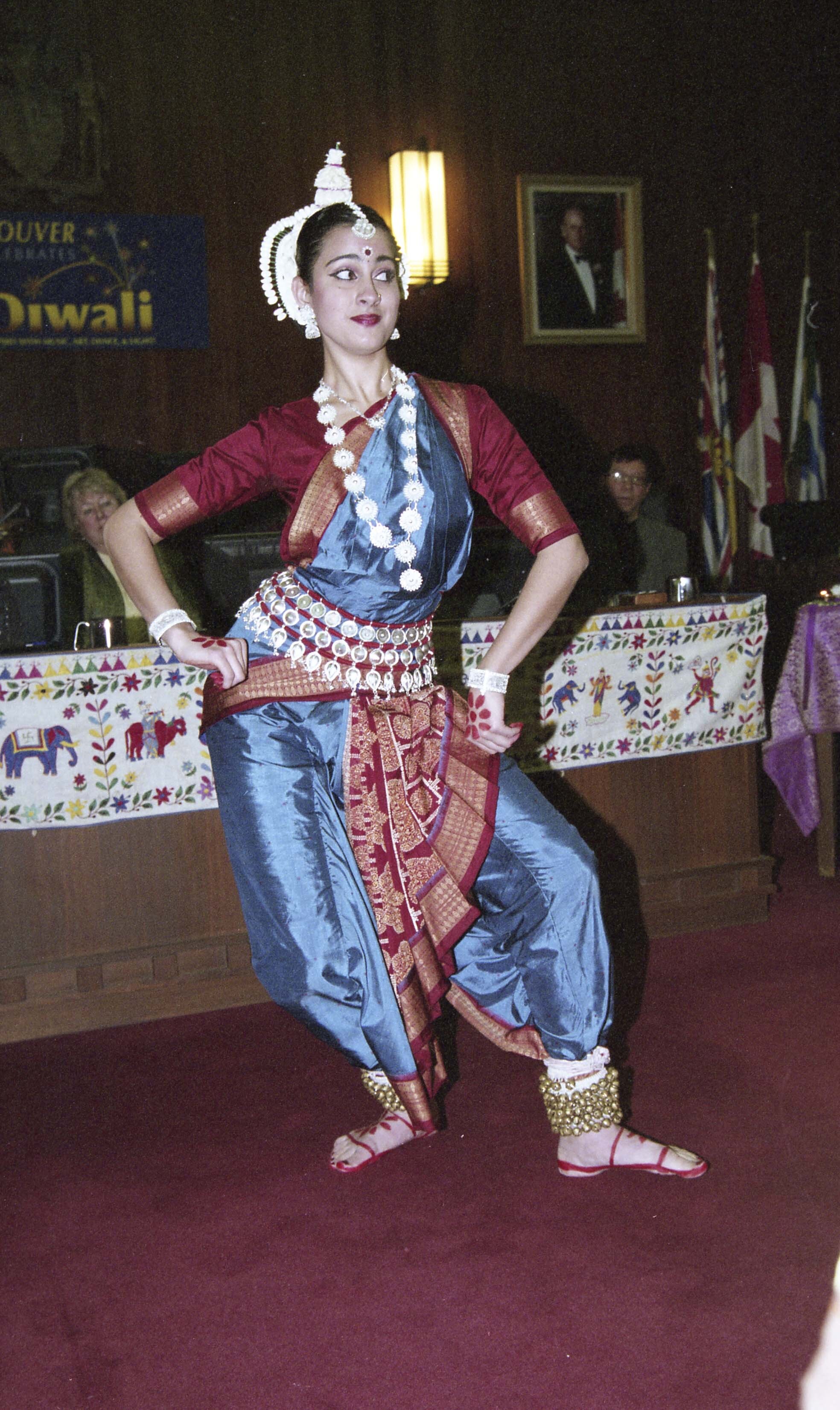
Photograph of Sitara Thobani performing odissi dance at a Diwali celebration held at the Vancouver City Hall in British Columbia (B.C.).
Sitara Thobani first began dancing at the age of 8 under the direction of Lata Pada in the Bharatanatyam tradition. She began her training in the Odissi tradition under Dr. Ratna Roy in 1997. She has undertaken intensive training in India at the esteemed Nrityagram dance school as well as in Bhubaneswar in Orissa, the heart of Odissi dance tradition. Thobani has performed at many cultural and art events in Canada and the United States, including at the International Odissi Conference in Washington, D.C. in August 2003. She has also performed at the Diamond Jubilee Hall in Dar-es-Salaam, the Zanzibar International Film Festival in Tanzania, as well as in Calcutta and Delhi, India. Thobani has dedicated herself to continuing the Odissi dance tradition of Guru Pankaj Charan Das as transmitted to her by her Guru, Dr. Ratna Roy. Thobani has a PhD in Social and Cultural Anthropology from the University of Oxford, an MA in Sociology and Equity Studies from the University of Toronto, and a BA in Anthropology and Asian Studies from the University of British Columbia. An Assistant Professor in Residential College in the Arts and Humanities, she is also affiliated with the Asian Studies Program and the Muslim Studies Program at Michigan State University.
Odissi is a classical Indian dance style which originates from the eastern state of Odisha, India. It is one of eight classical dance forms in India. Since the 12th century, odissi has been danced by maharis (people devoted to the dance) in temples. Odissi expresses traditional poetry and songs through movements. Many of the poems performed through Odissi come from the Sanskrit collection of romantic poetry, Gita Govinda, written by Jayadeva Goswami.
Deepavali, also known as Diwali, is a major religious festival celebrated by Hindus, Jains, and Sikhs, and translates to "the Festival of Lights." The festival lasts five days: the first day is known as Dhanteras; followed by Choti Diwali; Lakshmi Puja, which is the main celebration; Govardhan Puja; and finally Bhai Dooj. The festival is typically marked by the cleaning and decorating of homes, as well as the lighting of diyas and rangoli designs. Each region in India and religion has their own manner of celebrating Deepavali and their own gods to be worshipped.
Sitara Thobani first began dancing at the age of 8 under the direction of Lata Pada in the Bharatanatyam tradition. She began her training in the Odissi tradition under Dr. Ratna Roy in 1997. She has undertaken intensive training in India at the esteemed Nrityagram dance school as well as in Bhubaneswar in Orissa, the heart of Odissi dance tradition. Thobani has performed at many cultural and art events in Canada and the United States, including at the International Odissi Conference in Washington, D.C. in August 2003. She has also performed at the Diamond Jubilee Hall in Dar-es-Salaam, the Zanzibar International Film Festival in Tanzania, as well as in Calcutta and Delhi, India. Thobani has dedicated herself to continuing the Odissi dance tradition of Guru Pankaj Charan Das as transmitted to her by her Guru, Dr. Ratna Roy. Thobani has a PhD in Social and Cultural Anthropology from the University of Oxford, an MA in Sociology and Equity Studies from the University of Toronto, and a BA in Anthropology and Asian Studies from the University of British Columbia. An Assistant Professor in Residential College in the Arts and Humanities, she is also affiliated with the Asian Studies Program and the Muslim Studies Program at Michigan State University.
Odissi is a classical Indian dance style which originates from the eastern state of Odisha, India. It is one of eight classical dance forms in India. Since the 12th century, odissi has been danced by maharis (people devoted to the dance) in temples. Odissi expresses traditional poetry and songs through movements. Many of the poems performed through Odissi come from the Sanskrit collection of romantic poetry, Gita Govinda, written by Jayadeva Goswami.
Deepavali, also known as Diwali, is a major religious festival celebrated by Hindus, Jains, and Sikhs, and translates to "the Festival of Lights." The festival lasts five days: the first day is known as Dhanteras; followed by Choti Diwali; Lakshmi Puja, which is the main celebration; Govardhan Puja; and finally Bhai Dooj. The festival is typically marked by the cleaning and decorating of homes, as well as the lighting of diyas and rangoli designs. Each region in India and religion has their own manner of celebrating Deepavali and their own gods to be worshipped.
Member of
Creator: Bodalia, Chandra
Description
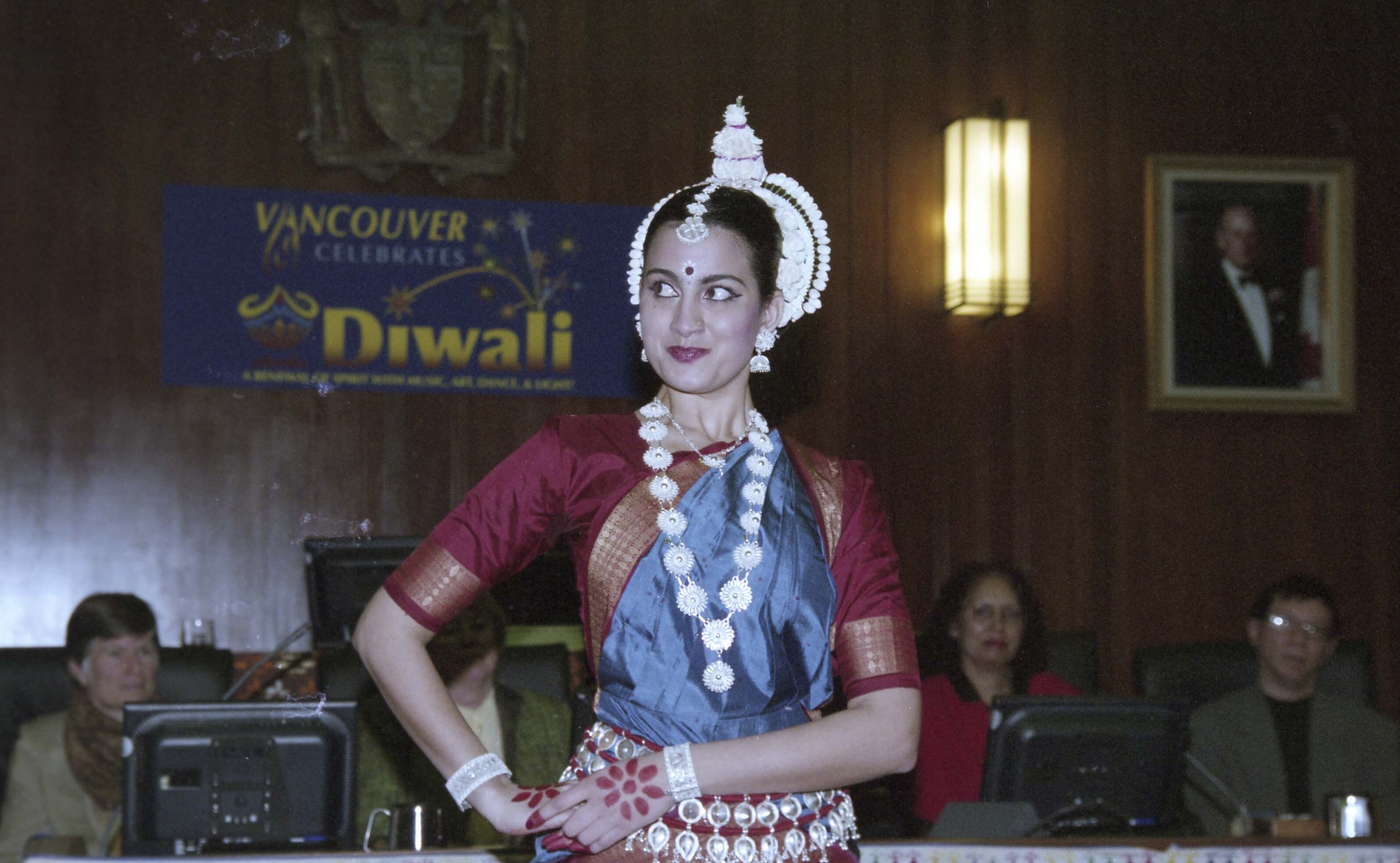
Photograph of Sitara Thobani performing odissi dance at a Diwali celebration held at the Vancouver City Hall in British Columbia (B.C.).
Sitara Thobani first began dancing at the age of 8 under the direction of Lata Pada in the Bharatanatyam tradition. She began her training in the Odissi tradition under Dr. Ratna Roy in 1997. She has undertaken intensive training in India at the esteemed Nrityagram dance school as well as in Bhubaneswar in Orissa, the heart of Odissi dance tradition. Thobani has performed at many cultural and art events in Canada and the United States, including at the International Odissi Conference in Washington, D.C. in August 2003. She has also performed at the Diamond Jubilee Hall in Dar-es-Salaam, the Zanzibar International Film Festival in Tanzania, as well as in Calcutta and Delhi, India. Thobani has dedicated herself to continuing the Odissi dance tradition of Guru Pankaj Charan Das as transmitted to her by her Guru, Dr. Ratna Roy. Thobani has a PhD in Social and Cultural Anthropology from the University of Oxford, an MA in Sociology and Equity Studies from the University of Toronto, and a BA in Anthropology and Asian Studies from the University of British Columbia. An Assistant Professor in Residential College in the Arts and Humanities, she is also affiliated with the Asian Studies Program and the Muslim Studies Program at Michigan State University.
Odissi is a classical Indian dance style which originates from the eastern state of Odisha, India. It is one of eight classical dance forms in India. Since the 12th century, odissi has been danced by maharis (people devoted to the dance) in temples. Odissi expresses traditional poetry and songs through movements. Many of the poems performed through Odissi come from the Sanskrit collection of romantic poetry, Gita Govinda, written by Jayadeva Goswami.
Deepavali, also known as Diwali, is a major religious festival celebrated by Hindus, Jains, and Sikhs, and translates to "the Festival of Lights." The festival lasts five days: the first day is known as Dhanteras; followed by Choti Diwali; Lakshmi Puja, which is the main celebration; Govardhan Puja; and finally Bhai Dooj. The festival is typically marked by the cleaning and decorating of homes, as well as the lighting of diyas and rangoli designs. Each region in India and religion has their own manner of celebrating Deepavali and their own gods to be worshipped.
Sitara Thobani first began dancing at the age of 8 under the direction of Lata Pada in the Bharatanatyam tradition. She began her training in the Odissi tradition under Dr. Ratna Roy in 1997. She has undertaken intensive training in India at the esteemed Nrityagram dance school as well as in Bhubaneswar in Orissa, the heart of Odissi dance tradition. Thobani has performed at many cultural and art events in Canada and the United States, including at the International Odissi Conference in Washington, D.C. in August 2003. She has also performed at the Diamond Jubilee Hall in Dar-es-Salaam, the Zanzibar International Film Festival in Tanzania, as well as in Calcutta and Delhi, India. Thobani has dedicated herself to continuing the Odissi dance tradition of Guru Pankaj Charan Das as transmitted to her by her Guru, Dr. Ratna Roy. Thobani has a PhD in Social and Cultural Anthropology from the University of Oxford, an MA in Sociology and Equity Studies from the University of Toronto, and a BA in Anthropology and Asian Studies from the University of British Columbia. An Assistant Professor in Residential College in the Arts and Humanities, she is also affiliated with the Asian Studies Program and the Muslim Studies Program at Michigan State University.
Odissi is a classical Indian dance style which originates from the eastern state of Odisha, India. It is one of eight classical dance forms in India. Since the 12th century, odissi has been danced by maharis (people devoted to the dance) in temples. Odissi expresses traditional poetry and songs through movements. Many of the poems performed through Odissi come from the Sanskrit collection of romantic poetry, Gita Govinda, written by Jayadeva Goswami.
Deepavali, also known as Diwali, is a major religious festival celebrated by Hindus, Jains, and Sikhs, and translates to "the Festival of Lights." The festival lasts five days: the first day is known as Dhanteras; followed by Choti Diwali; Lakshmi Puja, which is the main celebration; Govardhan Puja; and finally Bhai Dooj. The festival is typically marked by the cleaning and decorating of homes, as well as the lighting of diyas and rangoli designs. Each region in India and religion has their own manner of celebrating Deepavali and their own gods to be worshipped.
Member of
Creator: Bodalia, Chandra
Description
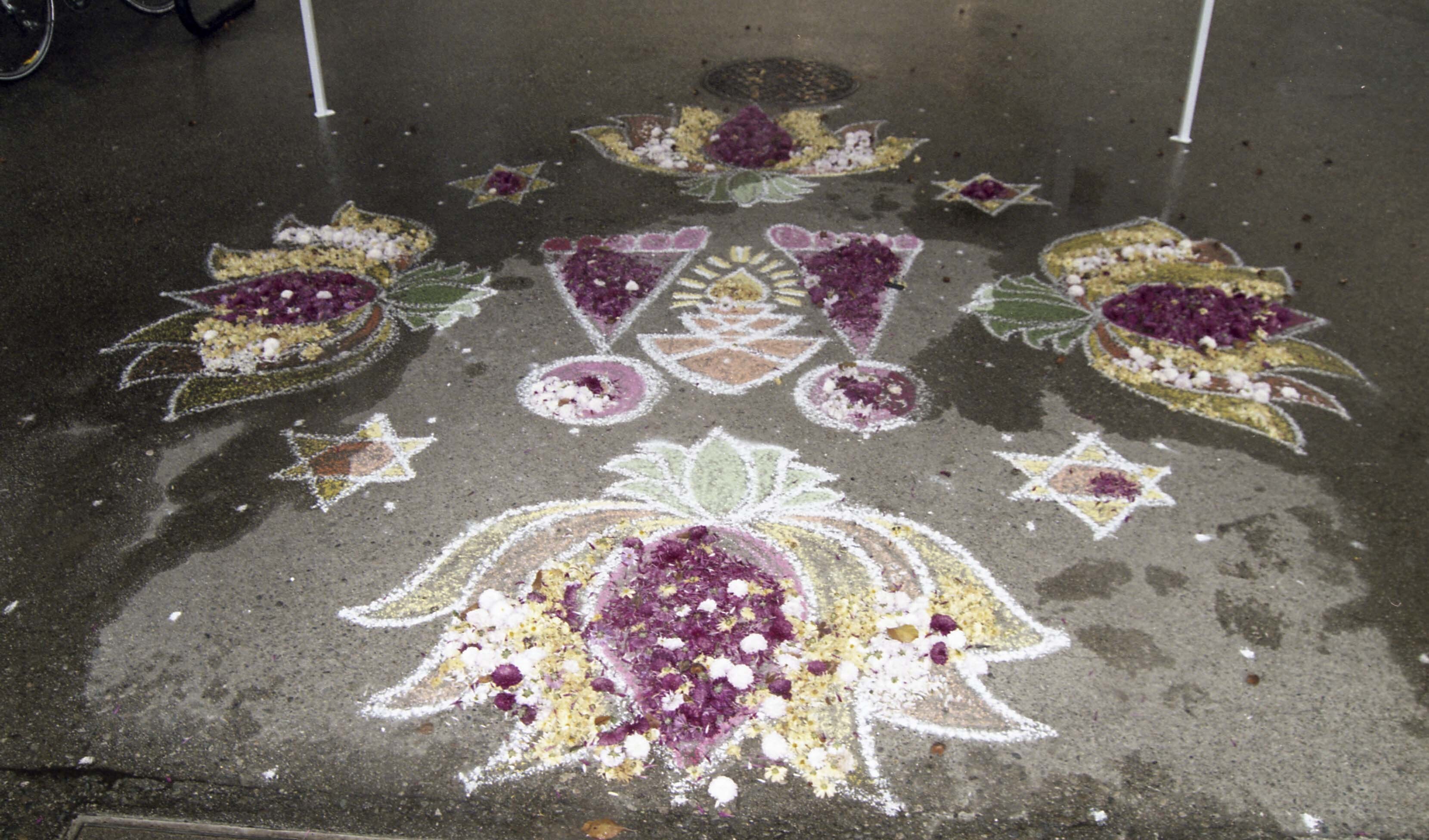
Photograph of artwork at a Diwali celebration held at the Vancouver City Hall in British Columbia (B.C.).
Deepavali, also known as Diwali, is a major religious festival celebrated by Hindus, Jains, and Sikhs, and translates to "the Festival of Lights." The festival lasts five days: the first day is known as Dhanteras; followed by Choti Diwali; Lakshmi Puja, which is the main celebration; Govardhan Puja; and finally Bhai Dooj. The festival is typically marked by the cleaning and decorating of homes, as well as the lighting of diyas and rangoli designs. Each region in India and religion has their own manner of celebrating Deepavali and their own gods to be worshipped.
Deepavali, also known as Diwali, is a major religious festival celebrated by Hindus, Jains, and Sikhs, and translates to "the Festival of Lights." The festival lasts five days: the first day is known as Dhanteras; followed by Choti Diwali; Lakshmi Puja, which is the main celebration; Govardhan Puja; and finally Bhai Dooj. The festival is typically marked by the cleaning and decorating of homes, as well as the lighting of diyas and rangoli designs. Each region in India and religion has their own manner of celebrating Deepavali and their own gods to be worshipped.
Member of
Creator: Bodalia, Chandra
Description
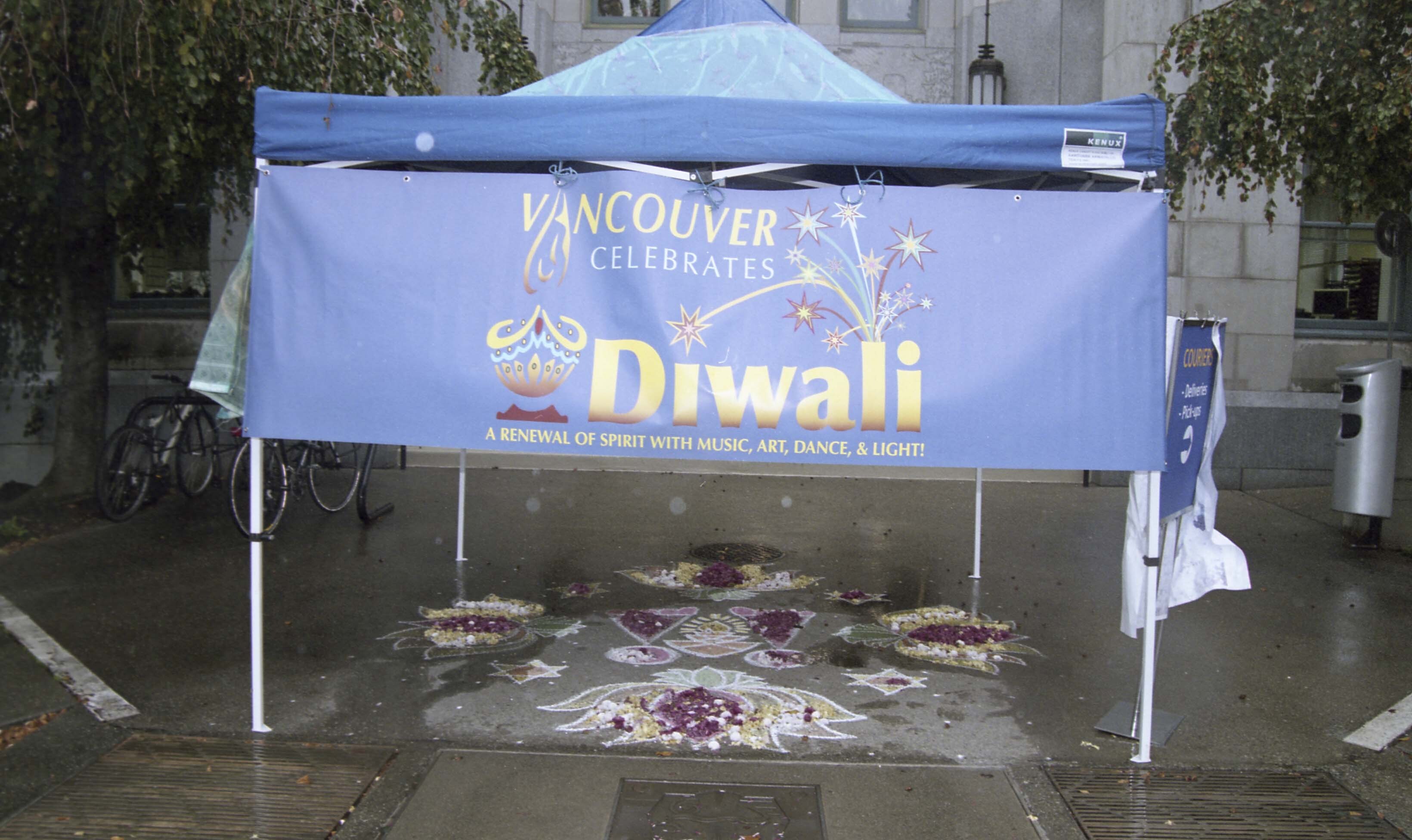
Photograph of a tent at a Diwali celebration held at the Vancouver City Hall in British Columbia (B.C.).
Deepavali, also known as Diwali, is a major religious festival celebrated by Hindus, Jains, and Sikhs, and translates to "the Festival of Lights." The festival lasts five days: the first day is known as Dhanteras; followed by Choti Diwali; Lakshmi Puja, which is the main celebration; Govardhan Puja; and finally Bhai Dooj. The festival is typically marked by the cleaning and decorating of homes, as well as the lighting of diyas and rangoli designs. Each region in India and religion has their own manner of celebrating Deepavali and their own gods to be worshipped.
Deepavali, also known as Diwali, is a major religious festival celebrated by Hindus, Jains, and Sikhs, and translates to "the Festival of Lights." The festival lasts five days: the first day is known as Dhanteras; followed by Choti Diwali; Lakshmi Puja, which is the main celebration; Govardhan Puja; and finally Bhai Dooj. The festival is typically marked by the cleaning and decorating of homes, as well as the lighting of diyas and rangoli designs. Each region in India and religion has their own manner of celebrating Deepavali and their own gods to be worshipped.
Member of
Creator: Bodalia, Chandra
Description
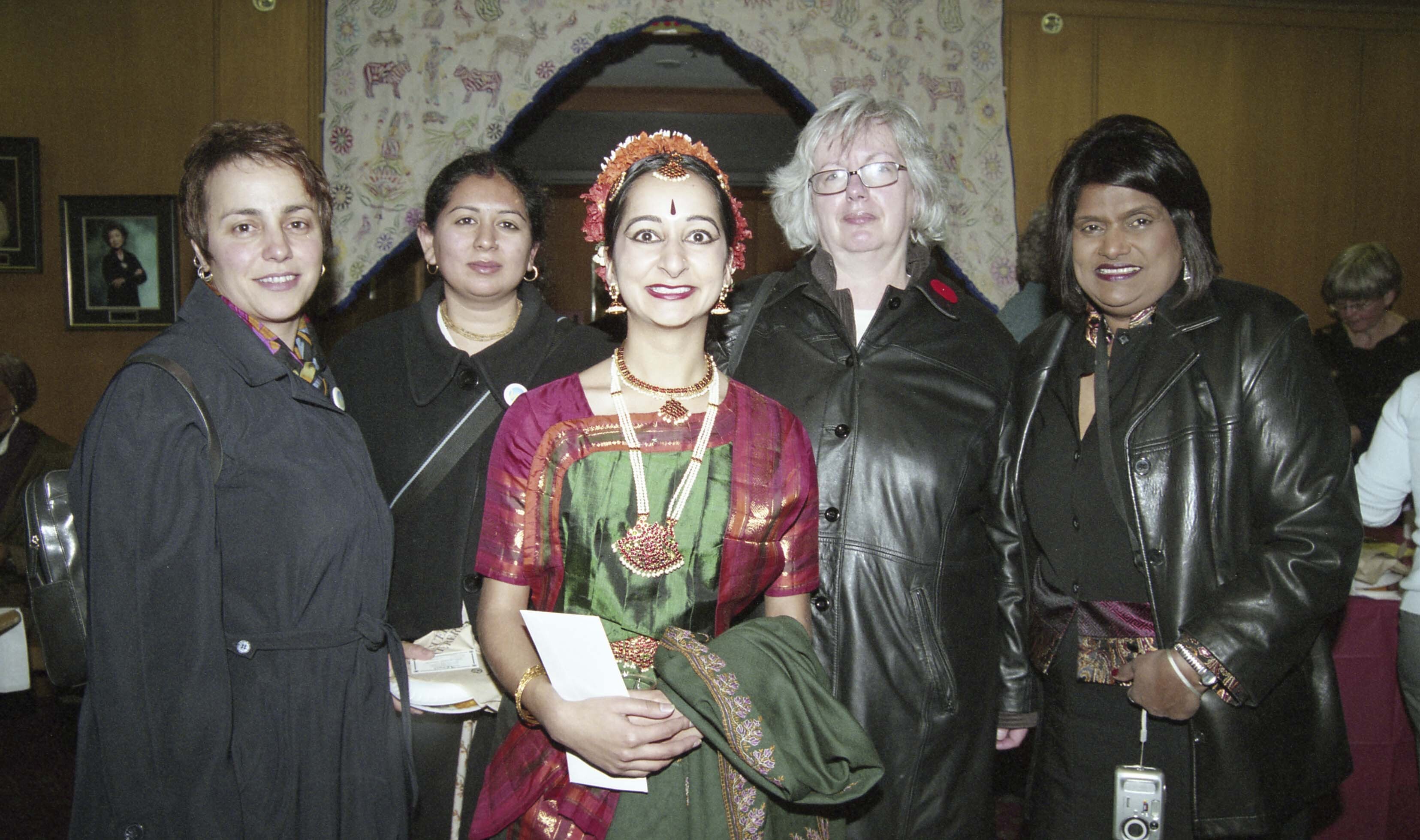
Photograph of a group of unidentified individuals at a Diwali celebration held at the Vancouver City Hall in British Columbia (B.C.).
Deepavali, also known as Diwali, is a major religious festival celebrated by Hindus, Jains, and Sikhs, and translates to "the Festival of Lights." The festival lasts five days: the first day is known as Dhanteras; followed by Choti Diwali; Lakshmi Puja, which is the main celebration; Govardhan Puja; and finally Bhai Dooj. The festival is typically marked by the cleaning and decorating of homes, as well as the lighting of diyas and rangoli designs. Each region in India and religion has their own manner of celebrating Deepavali and their own gods to be worshipped.
Deepavali, also known as Diwali, is a major religious festival celebrated by Hindus, Jains, and Sikhs, and translates to "the Festival of Lights." The festival lasts five days: the first day is known as Dhanteras; followed by Choti Diwali; Lakshmi Puja, which is the main celebration; Govardhan Puja; and finally Bhai Dooj. The festival is typically marked by the cleaning and decorating of homes, as well as the lighting of diyas and rangoli designs. Each region in India and religion has their own manner of celebrating Deepavali and their own gods to be worshipped.
Member of
Creator: Bodalia, Chandra
Description
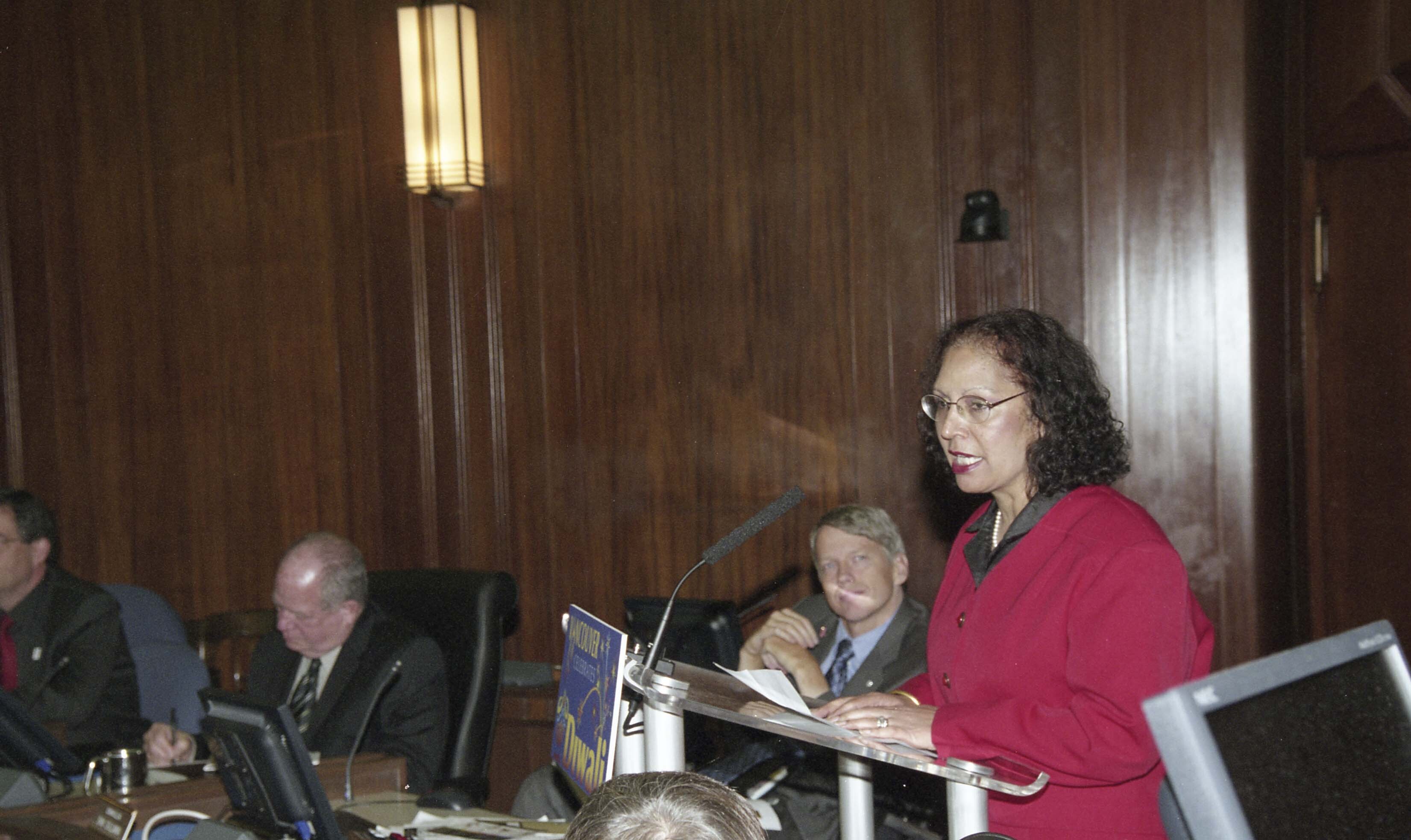
Photograph of Sukhi Grewal addressing the audience at a Diwali celebration held at the Vancouver City Hall in British Columbia (B.C.).
Sukhdev (Sukhi) Grewal completed both Bachelor's and Master's of Sciences in Nursing degrees at the University of British Columbia. Her nursing education roots originated in the United Kingdom where she received her Nursing and Midwifery SRN (State Registered Nurse) Diploma with certification in maternal nursing and postpartum/neonatal care SCM (state-certified Midwife). For her graduate school dissertation Grewal concentrated on addressing the influence of family members on immigrant South Asian women's health. She pioneered the South Asian Pap Test project in Greater Vancouver in the 1990s as she noticed a growing number of South Asian women diagnosed with cervical cancer at more advanced stages. Grewal has implemented platforms and programs for developing cross-cultural community awareness. She was involved with the development of the South Asian Family Association (SAFA), a non-profit organization dedicated to promoting awareness, advocacy, and education for South Asian culture. Grewal has participated in multiple committees and boards, is author and co-author of numerous evidence-based research articles, and a public health leader on community health projects spanning decades. She is the recipient of many awards, including, Vancouver's Cultural Harmony Award from the City of Vancouver for conducting many cultural events and workshops with them, the Times of Canada Excellence Award, and City of Vancouver's award for Honoring Women in the Year of Reconciliation.
Deepavali, also known as Diwali, is a major religious festival celebrated by Hindus, Jains, and Sikhs, and translates to "the Festival of Lights." The festival lasts five days: the first day is known as Dhanteras; followed by Choti Diwali; Lakshmi Puja, which is the main celebration; Govardhan Puja; and finally Bhai Dooj. The festival is typically marked by the cleaning and decorating of homes, as well as the lighting of diyas and rangoli designs. Each region in India and religion has their own manner of celebrating Deepavali and their own gods to be worshipped.
Sukhdev (Sukhi) Grewal completed both Bachelor's and Master's of Sciences in Nursing degrees at the University of British Columbia. Her nursing education roots originated in the United Kingdom where she received her Nursing and Midwifery SRN (State Registered Nurse) Diploma with certification in maternal nursing and postpartum/neonatal care SCM (state-certified Midwife). For her graduate school dissertation Grewal concentrated on addressing the influence of family members on immigrant South Asian women's health. She pioneered the South Asian Pap Test project in Greater Vancouver in the 1990s as she noticed a growing number of South Asian women diagnosed with cervical cancer at more advanced stages. Grewal has implemented platforms and programs for developing cross-cultural community awareness. She was involved with the development of the South Asian Family Association (SAFA), a non-profit organization dedicated to promoting awareness, advocacy, and education for South Asian culture. Grewal has participated in multiple committees and boards, is author and co-author of numerous evidence-based research articles, and a public health leader on community health projects spanning decades. She is the recipient of many awards, including, Vancouver's Cultural Harmony Award from the City of Vancouver for conducting many cultural events and workshops with them, the Times of Canada Excellence Award, and City of Vancouver's award for Honoring Women in the Year of Reconciliation.
Deepavali, also known as Diwali, is a major religious festival celebrated by Hindus, Jains, and Sikhs, and translates to "the Festival of Lights." The festival lasts five days: the first day is known as Dhanteras; followed by Choti Diwali; Lakshmi Puja, which is the main celebration; Govardhan Puja; and finally Bhai Dooj. The festival is typically marked by the cleaning and decorating of homes, as well as the lighting of diyas and rangoli designs. Each region in India and religion has their own manner of celebrating Deepavali and their own gods to be worshipped.
Member of
Creator: Bodalia, Chandra
Description
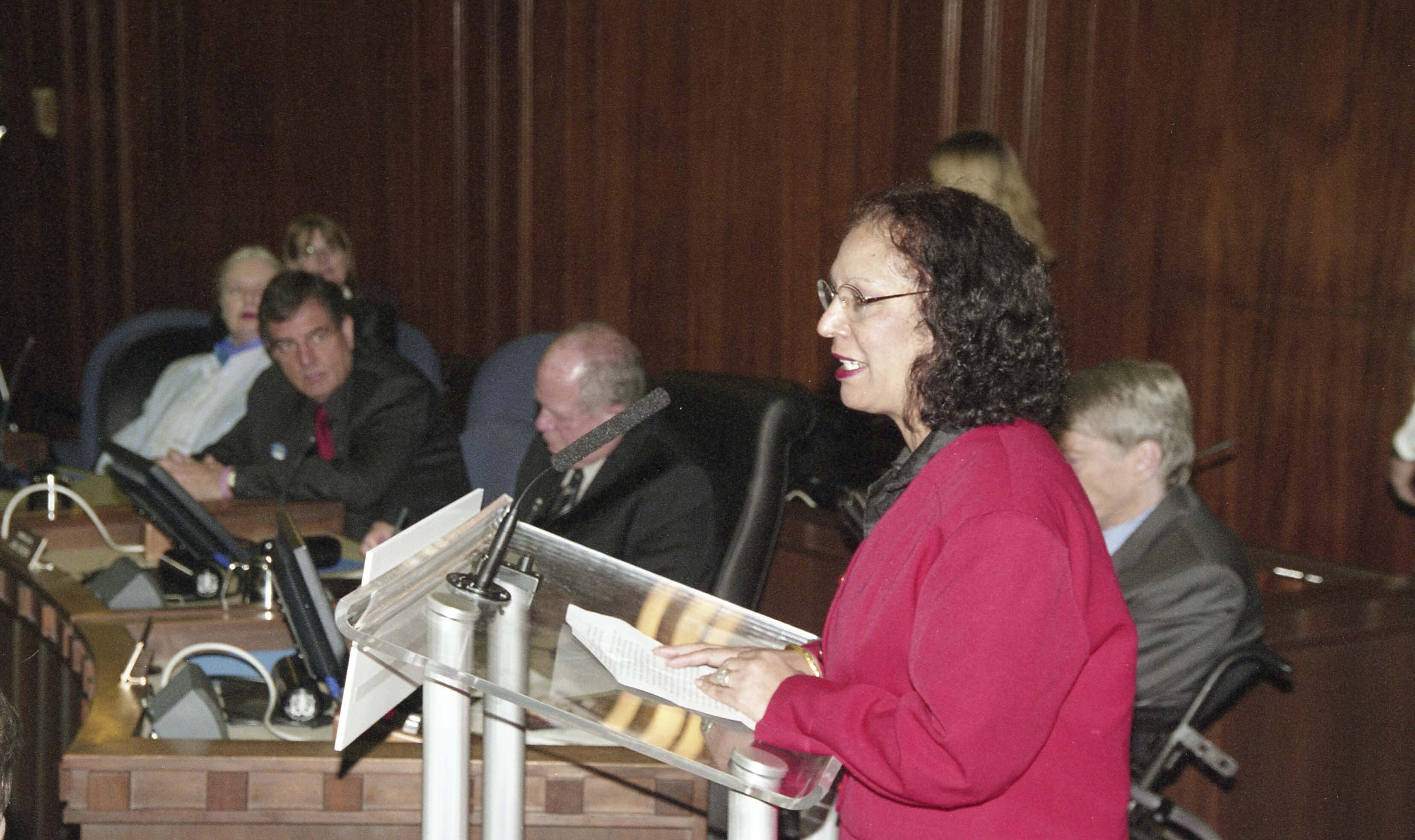
Photograph of Sukhi Grewal addressing the audience at a Diwali celebration held at the Vancouver City Hall in British Columbia (B.C.).
Sukhdev (Sukhi) Grewal completed both Bachelor's and Master's of Sciences in Nursing degrees at the University of British Columbia. Her nursing education roots originated in the United Kingdom where she received her Nursing and Midwifery SRN (State Registered Nurse) Diploma with certification in maternal nursing and postpartum/neonatal care SCM (state-certified Midwife). For her graduate school dissertation Grewal concentrated on addressing the influence of family members on immigrant South Asian women's health. She pioneered the South Asian Pap Test project in Greater Vancouver in the 1990s as she noticed a growing number of South Asian women diagnosed with cervical cancer at more advanced stages. Grewal has implemented platforms and programs for developing cross-cultural community awareness. She was involved with the development of the South Asian Family Association (SAFA), a non-profit organization dedicated to promoting awareness, advocacy, and education for South Asian culture. Grewal has participated in multiple committees and boards, is author and co-author of numerous evidence-based research articles, and a public health leader on community health projects spanning decades. She is the recipient of many awards, including, Vancouver's Cultural Harmony Award from the City of Vancouver for conducting many cultural events and workshops with them, the Times of Canada Excellence Award, and City of Vancouver's award for Honoring Women in the Year of Reconciliation.
Deepavali, also known as Diwali, is a major religious festival celebrated by Hindus, Jains, and Sikhs, and translates to "the Festival of Lights." The festival lasts five days: the first day is known as Dhanteras; followed by Choti Diwali; Lakshmi Puja, which is the main celebration; Govardhan Puja; and finally Bhai Dooj. The festival is typically marked by the cleaning and decorating of homes, as well as the lighting of diyas and rangoli designs. Each region in India and religion has their own manner of celebrating Deepavali and their own gods to be worshipped.
Sukhdev (Sukhi) Grewal completed both Bachelor's and Master's of Sciences in Nursing degrees at the University of British Columbia. Her nursing education roots originated in the United Kingdom where she received her Nursing and Midwifery SRN (State Registered Nurse) Diploma with certification in maternal nursing and postpartum/neonatal care SCM (state-certified Midwife). For her graduate school dissertation Grewal concentrated on addressing the influence of family members on immigrant South Asian women's health. She pioneered the South Asian Pap Test project in Greater Vancouver in the 1990s as she noticed a growing number of South Asian women diagnosed with cervical cancer at more advanced stages. Grewal has implemented platforms and programs for developing cross-cultural community awareness. She was involved with the development of the South Asian Family Association (SAFA), a non-profit organization dedicated to promoting awareness, advocacy, and education for South Asian culture. Grewal has participated in multiple committees and boards, is author and co-author of numerous evidence-based research articles, and a public health leader on community health projects spanning decades. She is the recipient of many awards, including, Vancouver's Cultural Harmony Award from the City of Vancouver for conducting many cultural events and workshops with them, the Times of Canada Excellence Award, and City of Vancouver's award for Honoring Women in the Year of Reconciliation.
Deepavali, also known as Diwali, is a major religious festival celebrated by Hindus, Jains, and Sikhs, and translates to "the Festival of Lights." The festival lasts five days: the first day is known as Dhanteras; followed by Choti Diwali; Lakshmi Puja, which is the main celebration; Govardhan Puja; and finally Bhai Dooj. The festival is typically marked by the cleaning and decorating of homes, as well as the lighting of diyas and rangoli designs. Each region in India and religion has their own manner of celebrating Deepavali and their own gods to be worshipped.