
Hindu shrines
Creator: Bodalia, Chandra
Description
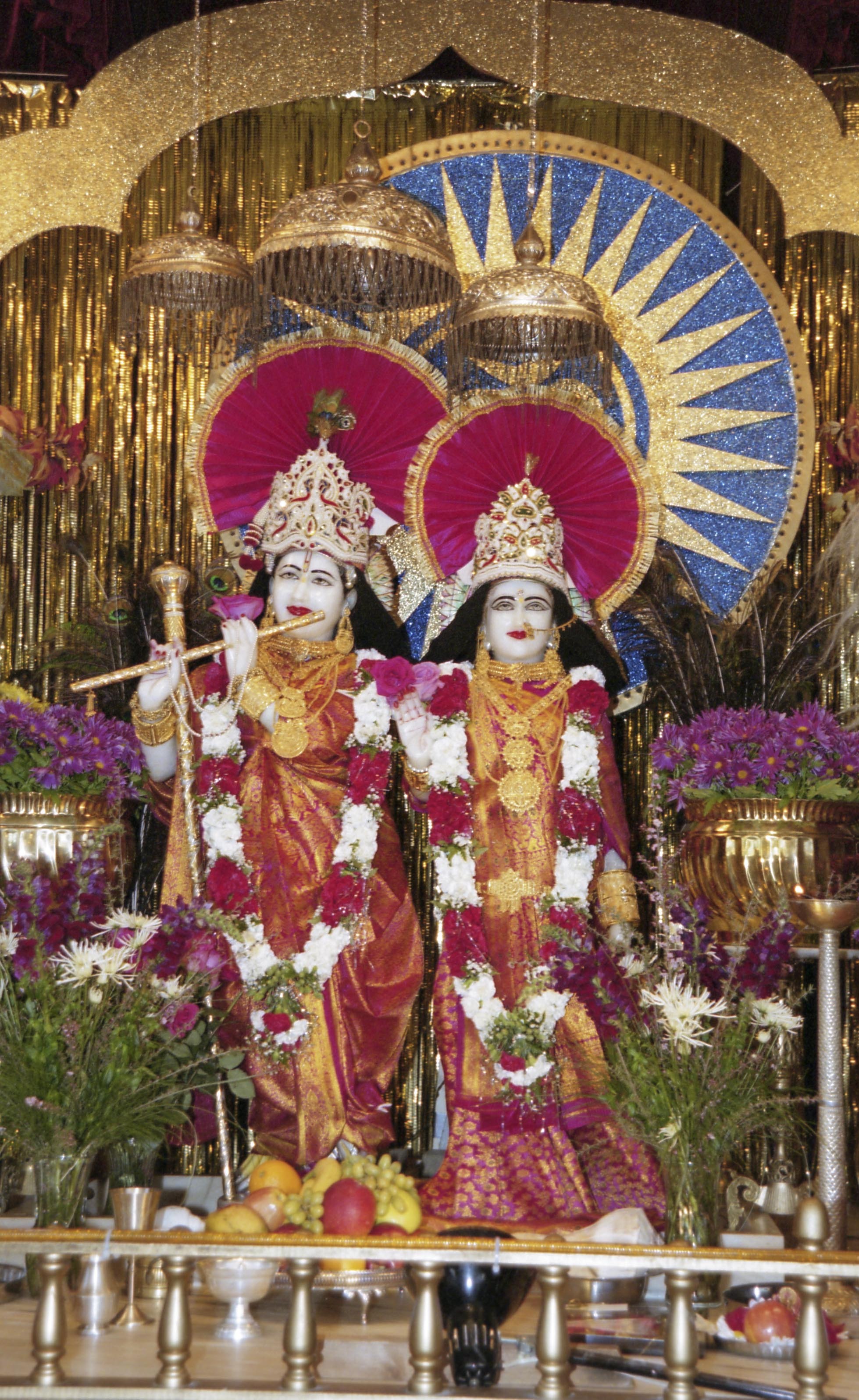
Photograph of a Hindu shrine featuring Lord Krishna and Goddess Radha at an event celebrating Maha Shivaratri, which was held by and at the Hindu Cultural Society and Community Centre of B.C. in Burnaby, B.C.
Maha Shivaratri, translating to "The Great Night of Shiva," is a Hindu festival to worship and celebrate Lord Shiva. It is the most important festival for Shiva's devotees. Maha Shivaratri occurs on the fourteenth day of the lunar month, also known as the waning moon before the new moon, in the month of Magha (January—February) or Phalguna (February—March), and it known as an significant spirtual day as it is thought that there a natural upsurge of energy in the human being. There is no single, definitive reason for celebrating Maha Shivaratri. Some reasons are: to observe Shiva and Parvati's wedding anniversay, to worship lingam (a symbol of Shiva) and receive spiritual rewards, to honour Shiva for protecting the universe by consuming a deadly poison himself, and and to honour Shiva for his triumph of good over evil by destroying the demon-controlled cities of Tarakaksha, Kamalaksha, and Vidyunmali. The day before Maha Shivaratri, devotees observe a fast and hold vigils to worship Shiva. On the day of, there is a feast and and festivities.
Officially registered as the Hindu Cultural Society and Community Centre of B.C., the Hindu Temple of Burnaby, previously known as Vishva Hindu Parishad temple, stands as one of Canada's oldest and largest Hindu temples. It was founded on May 15, 1972 as a small prayer hall in North Burnaby, dedicated to preserving and promoting Hindu culture and traditions.
Maha Shivaratri, translating to "The Great Night of Shiva," is a Hindu festival to worship and celebrate Lord Shiva. It is the most important festival for Shiva's devotees. Maha Shivaratri occurs on the fourteenth day of the lunar month, also known as the waning moon before the new moon, in the month of Magha (January—February) or Phalguna (February—March), and it known as an significant spirtual day as it is thought that there a natural upsurge of energy in the human being. There is no single, definitive reason for celebrating Maha Shivaratri. Some reasons are: to observe Shiva and Parvati's wedding anniversay, to worship lingam (a symbol of Shiva) and receive spiritual rewards, to honour Shiva for protecting the universe by consuming a deadly poison himself, and and to honour Shiva for his triumph of good over evil by destroying the demon-controlled cities of Tarakaksha, Kamalaksha, and Vidyunmali. The day before Maha Shivaratri, devotees observe a fast and hold vigils to worship Shiva. On the day of, there is a feast and and festivities.
Officially registered as the Hindu Cultural Society and Community Centre of B.C., the Hindu Temple of Burnaby, previously known as Vishva Hindu Parishad temple, stands as one of Canada's oldest and largest Hindu temples. It was founded on May 15, 1972 as a small prayer hall in North Burnaby, dedicated to preserving and promoting Hindu culture and traditions.
Creator: Bodalia, Chandra
Description
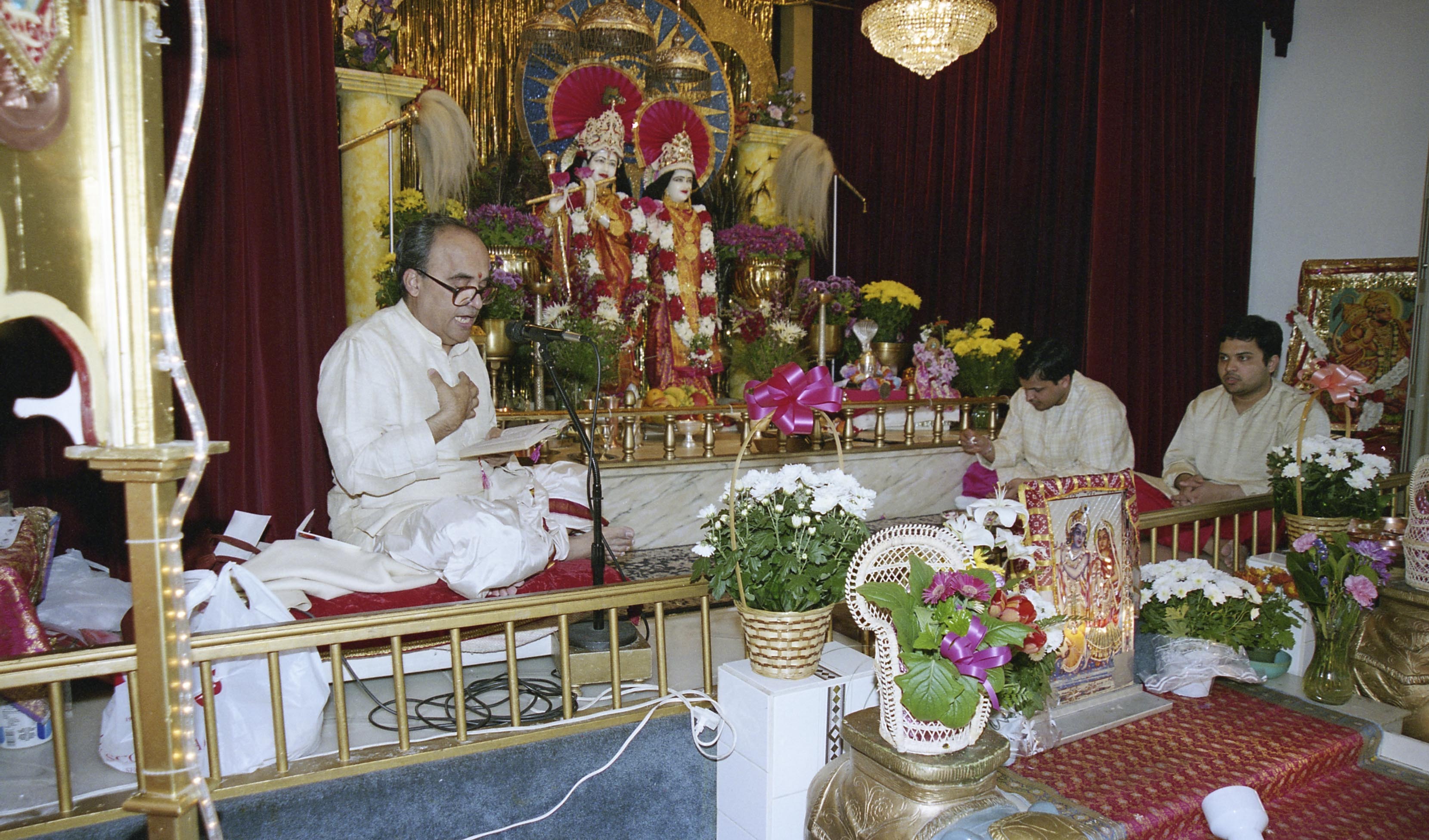
Photograph of Pandit Sharad Chandra Shastri at an event celebrating Maha Shivaratri, which was held by and at the Hindu Cultural Society and Community Centre of B.C. in Burnaby, B.C.
Pandit Sharad Chandra Shastri was the Priest of the Vishva Hindu Parishad (VHP), at least during the 2000-2012 period.
Maha Shivaratri, translating to "The Great Night of Shiva," is a Hindu festival to worship and celebrate Lord Shiva. It is the most important festival for Shiva's devotees. Maha Shivaratri occurs on the fourteenth day of the lunar month, also known as the waning moon before the new moon, in the month of Magha (January—February) or Phalguna (February—March), and it known as an significant spirtual day as it is thought that there a natural upsurge of energy in the human being. There is no single, definitive reason for celebrating Maha Shivaratri. Some reasons are: to observe Shiva and Parvati's wedding anniversay, to worship lingam (a symbol of Shiva) and receive spiritual rewards, to honour Shiva for protecting the universe by consuming a deadly poison himself, and and to honour Shiva for his triumph of good over evil by destroying the demon-controlled cities of Tarakaksha, Kamalaksha, and Vidyunmali. The day before Maha Shivaratri, devotees observe a fast and hold vigils to worship Shiva. On the day of, there is a feast and and festivities.
Officially registered as the Hindu Cultural Society and Community Centre of B.C., the Hindu Temple of Burnaby, previously known as Vishva Hindu Parishad temple, stands as one of Canada's oldest and largest Hindu temples. It was founded on May 15, 1972 as a small prayer hall in North Burnaby, dedicated to preserving and promoting Hindu culture and traditions.
Pandit Sharad Chandra Shastri was the Priest of the Vishva Hindu Parishad (VHP), at least during the 2000-2012 period.
Maha Shivaratri, translating to "The Great Night of Shiva," is a Hindu festival to worship and celebrate Lord Shiva. It is the most important festival for Shiva's devotees. Maha Shivaratri occurs on the fourteenth day of the lunar month, also known as the waning moon before the new moon, in the month of Magha (January—February) or Phalguna (February—March), and it known as an significant spirtual day as it is thought that there a natural upsurge of energy in the human being. There is no single, definitive reason for celebrating Maha Shivaratri. Some reasons are: to observe Shiva and Parvati's wedding anniversay, to worship lingam (a symbol of Shiva) and receive spiritual rewards, to honour Shiva for protecting the universe by consuming a deadly poison himself, and and to honour Shiva for his triumph of good over evil by destroying the demon-controlled cities of Tarakaksha, Kamalaksha, and Vidyunmali. The day before Maha Shivaratri, devotees observe a fast and hold vigils to worship Shiva. On the day of, there is a feast and and festivities.
Officially registered as the Hindu Cultural Society and Community Centre of B.C., the Hindu Temple of Burnaby, previously known as Vishva Hindu Parishad temple, stands as one of Canada's oldest and largest Hindu temples. It was founded on May 15, 1972 as a small prayer hall in North Burnaby, dedicated to preserving and promoting Hindu culture and traditions.
Creator: Bodalia, Chandra
Description
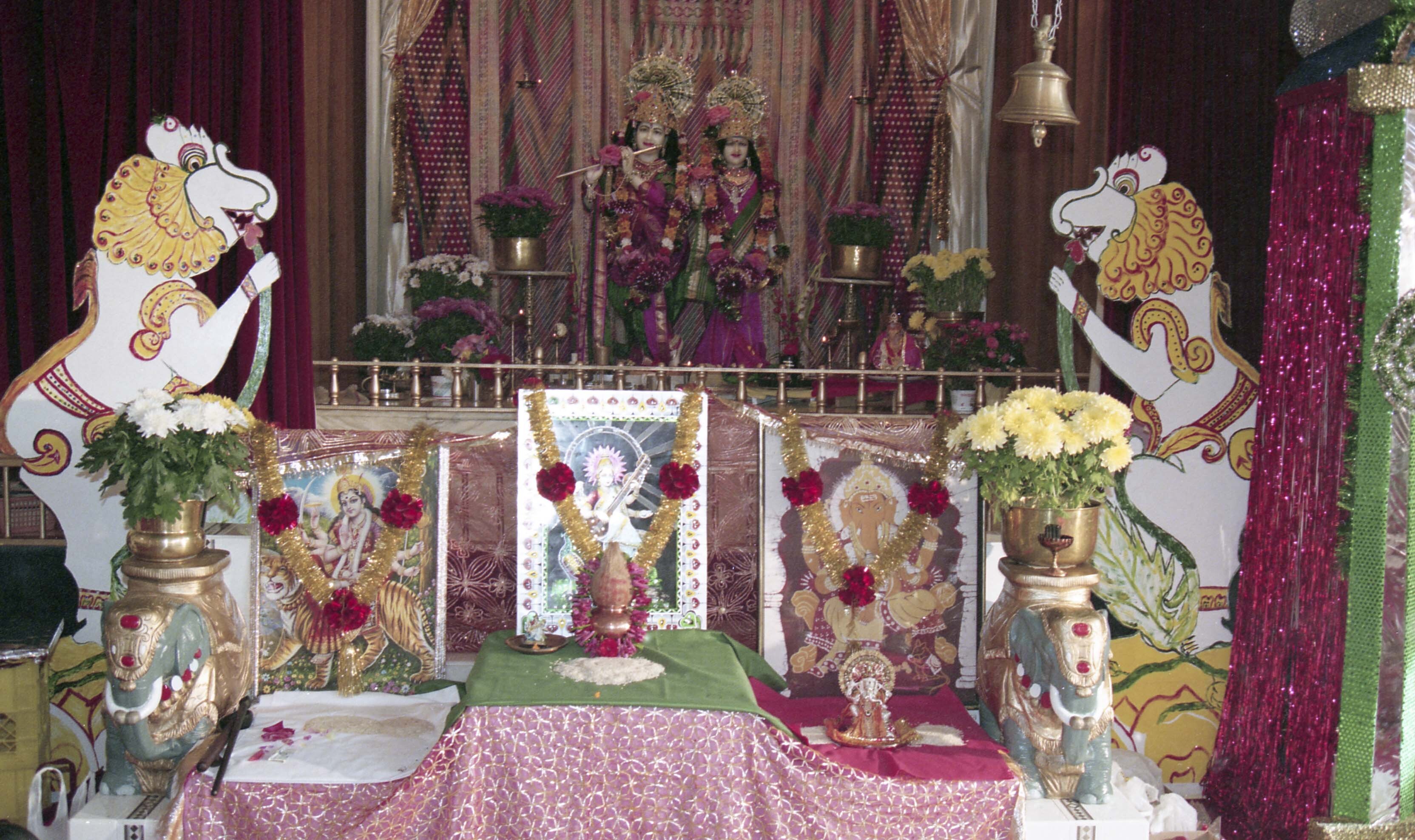
Photograph of Hindu shrine at a Saraswati Puja held at Hindu Cultural Society and Community Centre of B.C. in Burnaby, B.C.
Marked by the arrival of spring, Saraswati Puja celebrates and worships the Hindu goddess Saraswati, the goddess of knowledge, language, music, and all arts.
Officially registered as the Hindu Cultural Society and Community Centre of B.C., the Hindu Temple of Burnaby, previously known as Vishva Hindu Parishad temple, stands as one of Canada's oldest and largest Hindu temples. It was founded on May 15, 1972 as a small prayer hall in North Burnaby, dedicated to preserving and promoting Hindu culture and traditions.
Marked by the arrival of spring, Saraswati Puja celebrates and worships the Hindu goddess Saraswati, the goddess of knowledge, language, music, and all arts.
Officially registered as the Hindu Cultural Society and Community Centre of B.C., the Hindu Temple of Burnaby, previously known as Vishva Hindu Parishad temple, stands as one of Canada's oldest and largest Hindu temples. It was founded on May 15, 1972 as a small prayer hall in North Burnaby, dedicated to preserving and promoting Hindu culture and traditions.
Member of
Creator: Bodalia, Chandra
Description
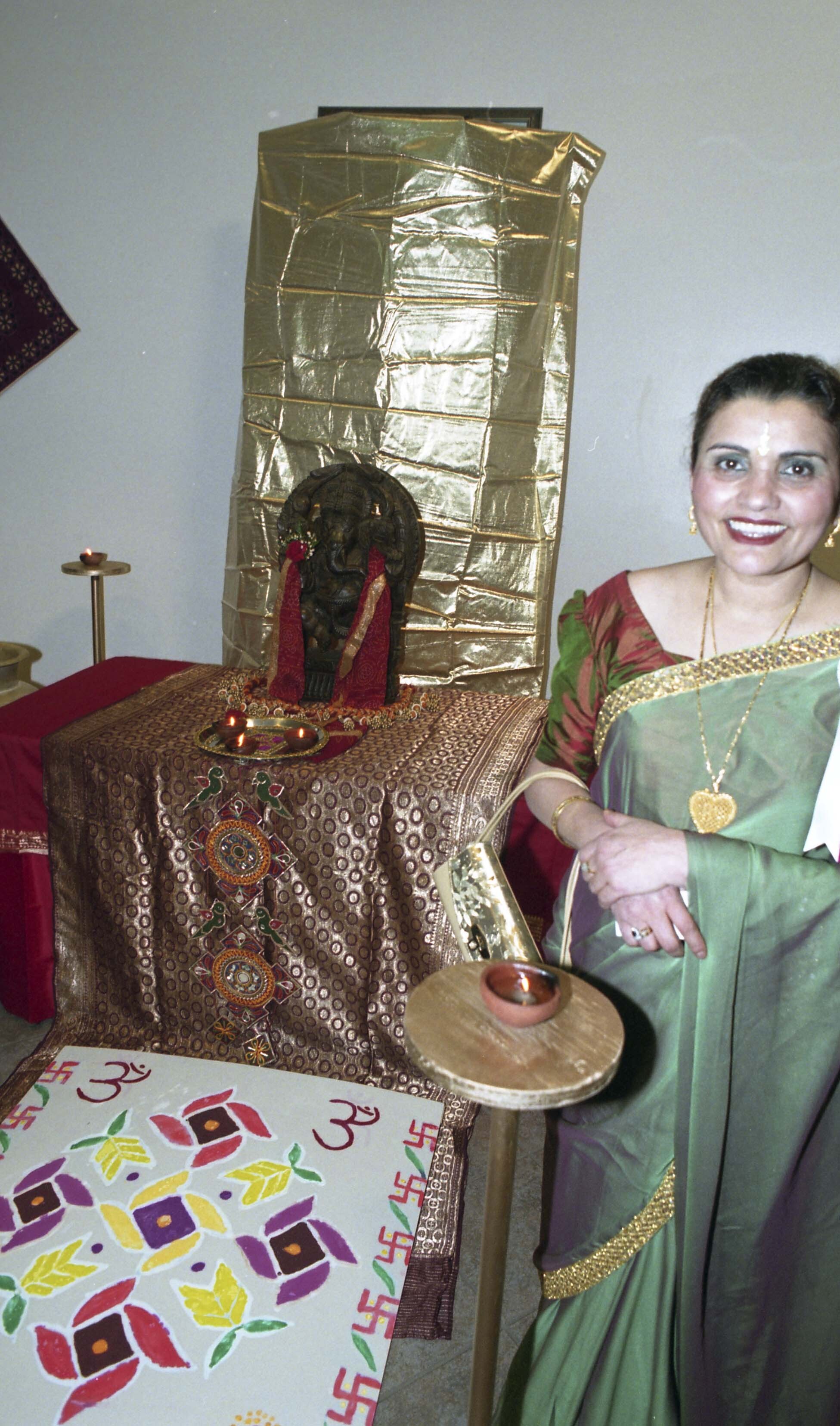
Portrait of an unidentified woman with a shrine at a Holi celebration hosted at the Shree Mahalakshmi Temple in Vancouver, B.C.
Holi, often called the "festival of colors," is a vibrant and joyful Hindu celebration that marks spring's arrival and the triumph of good over evil. This festival, mainly observed in South Asia but also recognized globally, typically spans two days and is rooted in ancient traditions, mythology and community gatherings. Its date changes, as it is based on the full moon in the month of Phalguna, part of the Hindu lunar calendar, usually falling in late February or March. Holi, dating back to the 4th century, stands alongside Diwali, the festival of lights, as one of the most prominent Hindu celebrations and is famous for the playful tossing of colored powders and water.
Established in 1990, by Pandit Pramera Chaitanya, Shree Mahalakshmi Temple is a Hindu temple dedicated to Goddess Mahalakshmi. They offer various services, including workship, chanting, meditations, and ritualistic celebrations of all the Hindu festivals.
Holi, often called the "festival of colors," is a vibrant and joyful Hindu celebration that marks spring's arrival and the triumph of good over evil. This festival, mainly observed in South Asia but also recognized globally, typically spans two days and is rooted in ancient traditions, mythology and community gatherings. Its date changes, as it is based on the full moon in the month of Phalguna, part of the Hindu lunar calendar, usually falling in late February or March. Holi, dating back to the 4th century, stands alongside Diwali, the festival of lights, as one of the most prominent Hindu celebrations and is famous for the playful tossing of colored powders and water.
Established in 1990, by Pandit Pramera Chaitanya, Shree Mahalakshmi Temple is a Hindu temple dedicated to Goddess Mahalakshmi. They offer various services, including workship, chanting, meditations, and ritualistic celebrations of all the Hindu festivals.
Creator: Bodalia, Chandra
Description
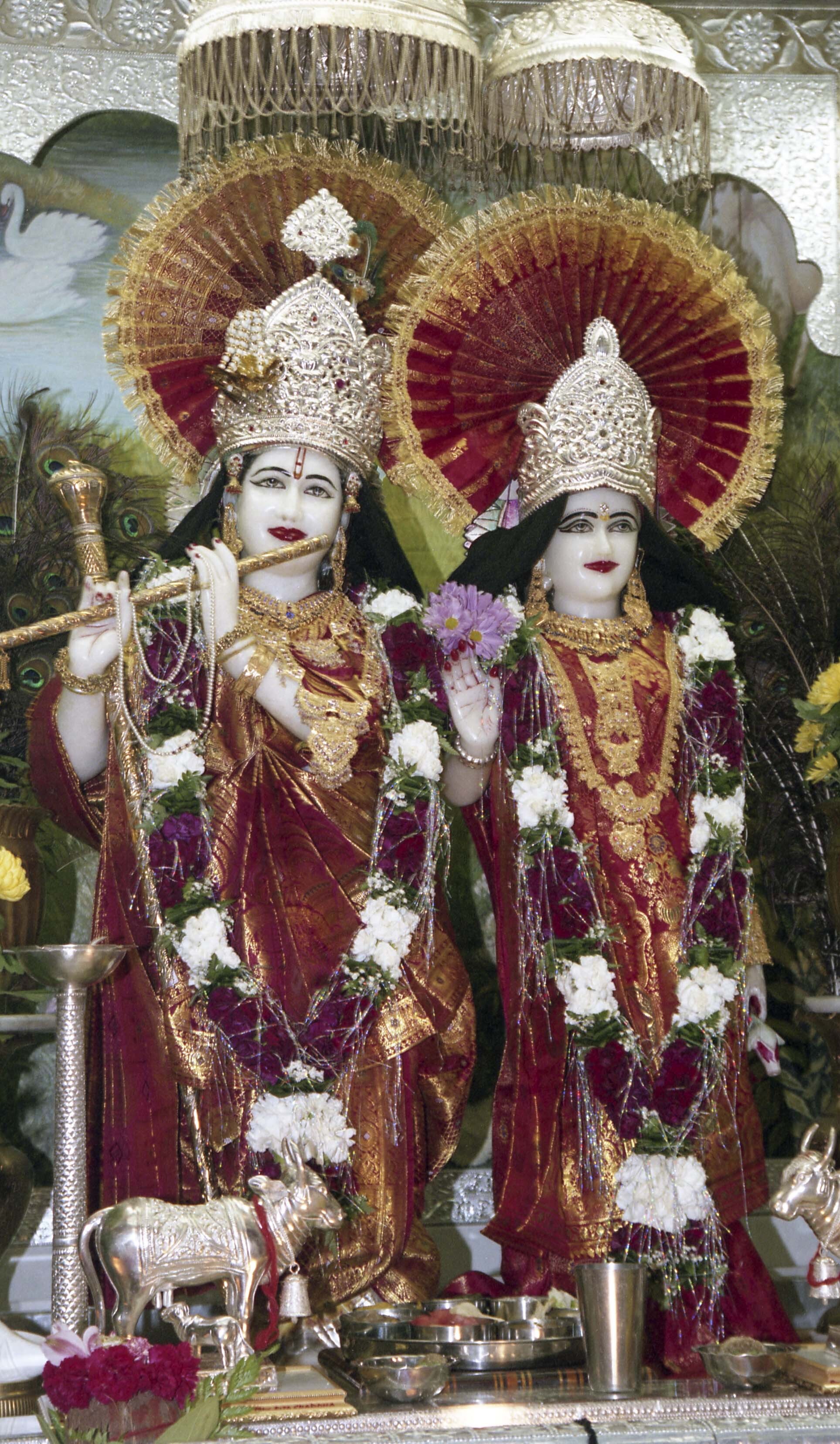
Photograph of a shrine at a an installation ceremony (sthapana) for a Radha-Krishna murti (sacred image) at the Hindu Cultural Society and Community Centre of B.C. in Burnaby, B.C.
Murti Sthapana, meaning "sacred image" and "placing/installation," is a special ceremony where scared images of Hindu gods are installed in temples.
Officially registered as the Hindu Cultural Society and Community Centre of B.C., the Hindu Temple of Burnaby, previously known as Vishva Hindu Parishad temple, stands as one of Canada's oldest and largest Hindu temples. It was founded on May 15, 1972 as a small prayer hall in North Burnaby, dedicated to preserving and promoting Hindu culture and traditions.
Murti Sthapana, meaning "sacred image" and "placing/installation," is a special ceremony where scared images of Hindu gods are installed in temples.
Officially registered as the Hindu Cultural Society and Community Centre of B.C., the Hindu Temple of Burnaby, previously known as Vishva Hindu Parishad temple, stands as one of Canada's oldest and largest Hindu temples. It was founded on May 15, 1972 as a small prayer hall in North Burnaby, dedicated to preserving and promoting Hindu culture and traditions.
Creator: Bodalia, Chandra
Description
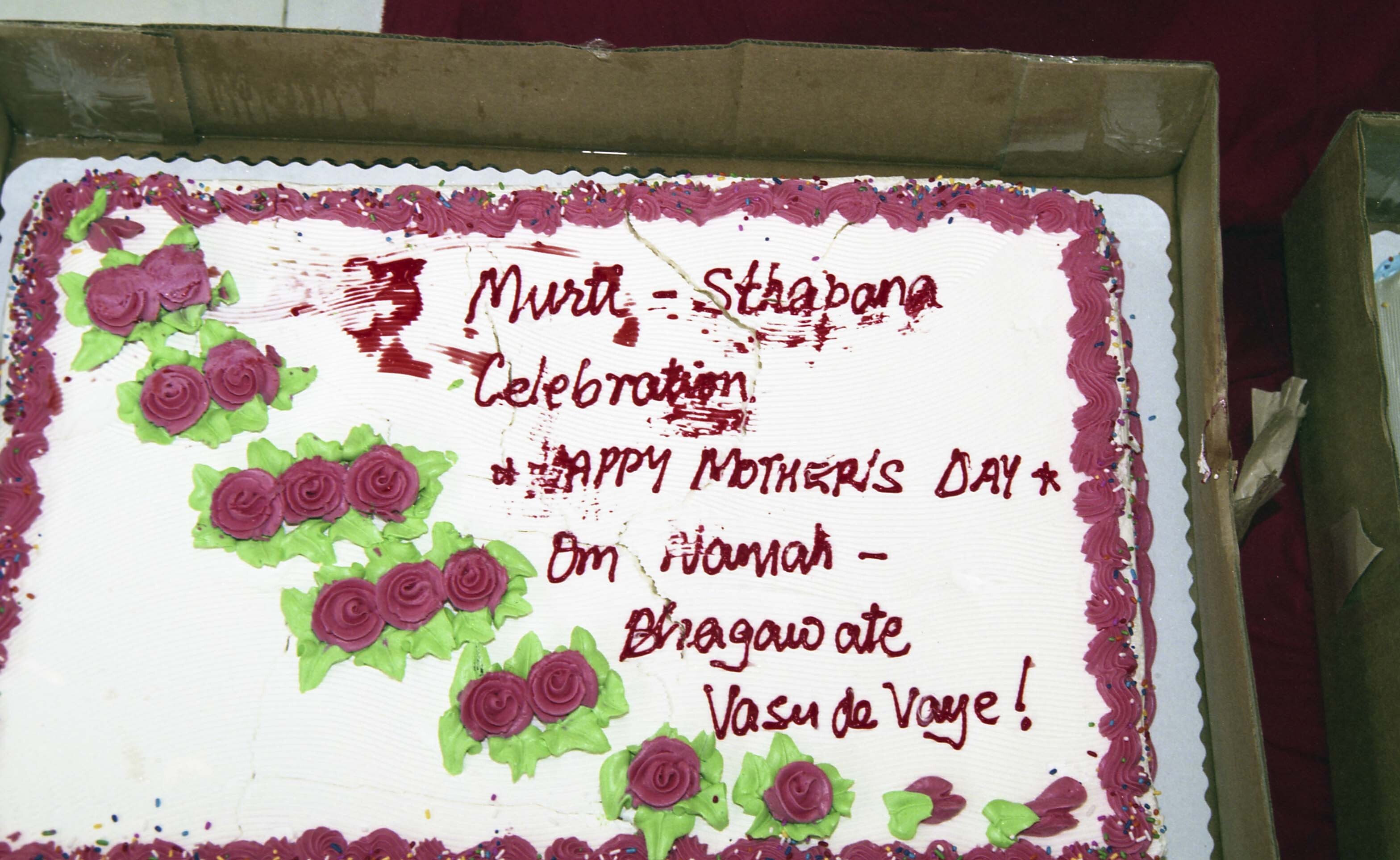
Photograph of a cake at a an installation ceremony (sthapana) for a Radha-Krishna murti (sacred image) at the Hindu Cultural Society and Community Centre of B.C. in Burnaby, B.C.
Murti Sthapana, meaning "sacred image" and "placing/installation," is a special ceremony where scared images of Hindu gods are installed in temples.
Officially registered as the Hindu Cultural Society and Community Centre of B.C., the Hindu Temple of Burnaby, previously known as Vishva Hindu Parishad temple, stands as one of Canada's oldest and largest Hindu temples. It was founded on May 15, 1972 as a small prayer hall in North Burnaby, dedicated to preserving and promoting Hindu culture and traditions.
Murti Sthapana, meaning "sacred image" and "placing/installation," is a special ceremony where scared images of Hindu gods are installed in temples.
Officially registered as the Hindu Cultural Society and Community Centre of B.C., the Hindu Temple of Burnaby, previously known as Vishva Hindu Parishad temple, stands as one of Canada's oldest and largest Hindu temples. It was founded on May 15, 1972 as a small prayer hall in North Burnaby, dedicated to preserving and promoting Hindu culture and traditions.
Creator: Bodalia, Chandra
Description
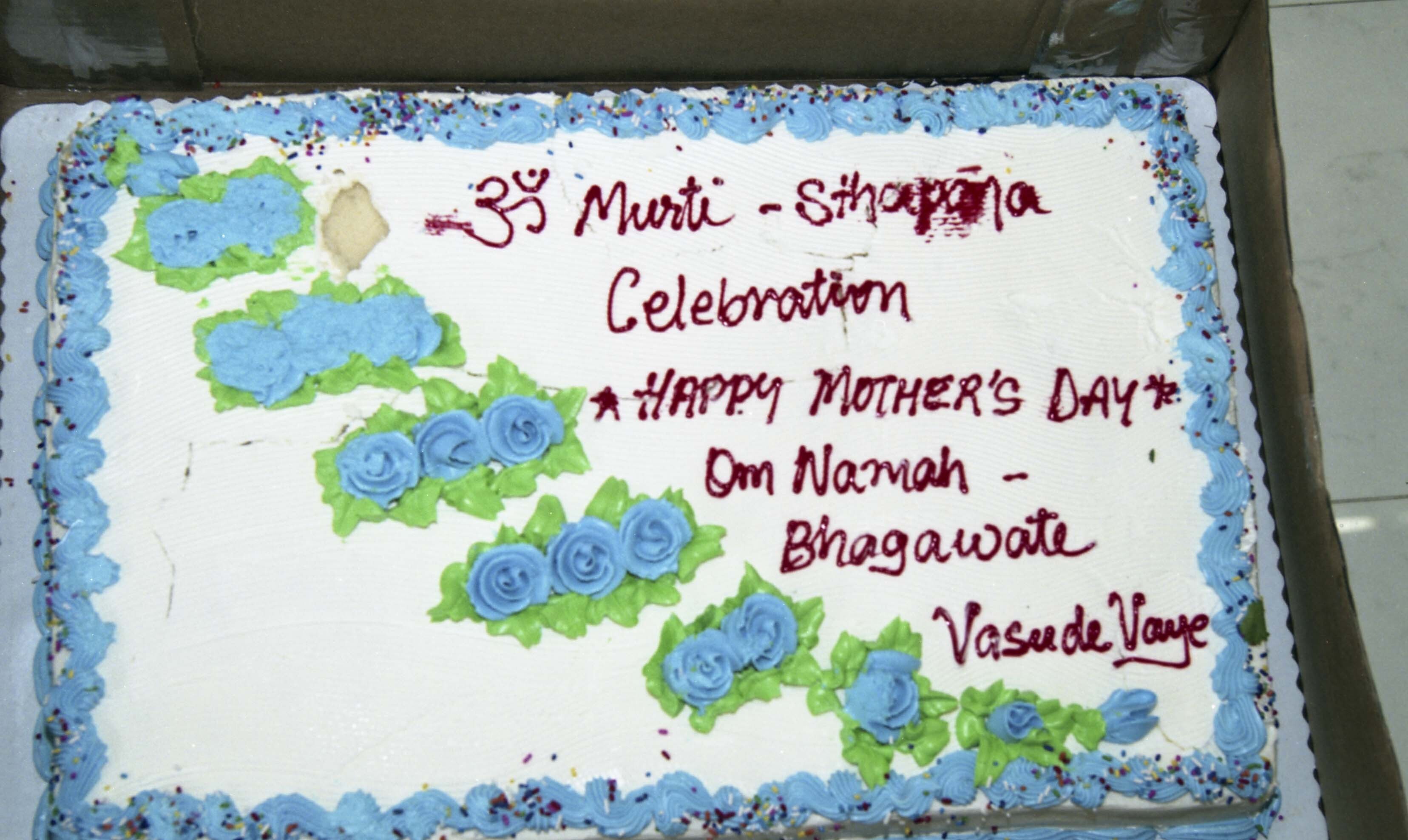
Photograph of a cake at a an installation ceremony (sthapana) for a Radha-Krishna murti (sacred image) at the Hindu Cultural Society and Community Centre of B.C. in Burnaby, B.C.
Murti Sthapana, meaning "sacred image" and "placing/installation," is a special ceremony where scared images of Hindu gods are installed in temples.
Officially registered as the Hindu Cultural Society and Community Centre of B.C., the Hindu Temple of Burnaby, previously known as Vishva Hindu Parishad temple, stands as one of Canada's oldest and largest Hindu temples. It was founded on May 15, 1972 as a small prayer hall in North Burnaby, dedicated to preserving and promoting Hindu culture and traditions.
Murti Sthapana, meaning "sacred image" and "placing/installation," is a special ceremony where scared images of Hindu gods are installed in temples.
Officially registered as the Hindu Cultural Society and Community Centre of B.C., the Hindu Temple of Burnaby, previously known as Vishva Hindu Parishad temple, stands as one of Canada's oldest and largest Hindu temples. It was founded on May 15, 1972 as a small prayer hall in North Burnaby, dedicated to preserving and promoting Hindu culture and traditions.
Creator: Bodalia, Chandra
Description
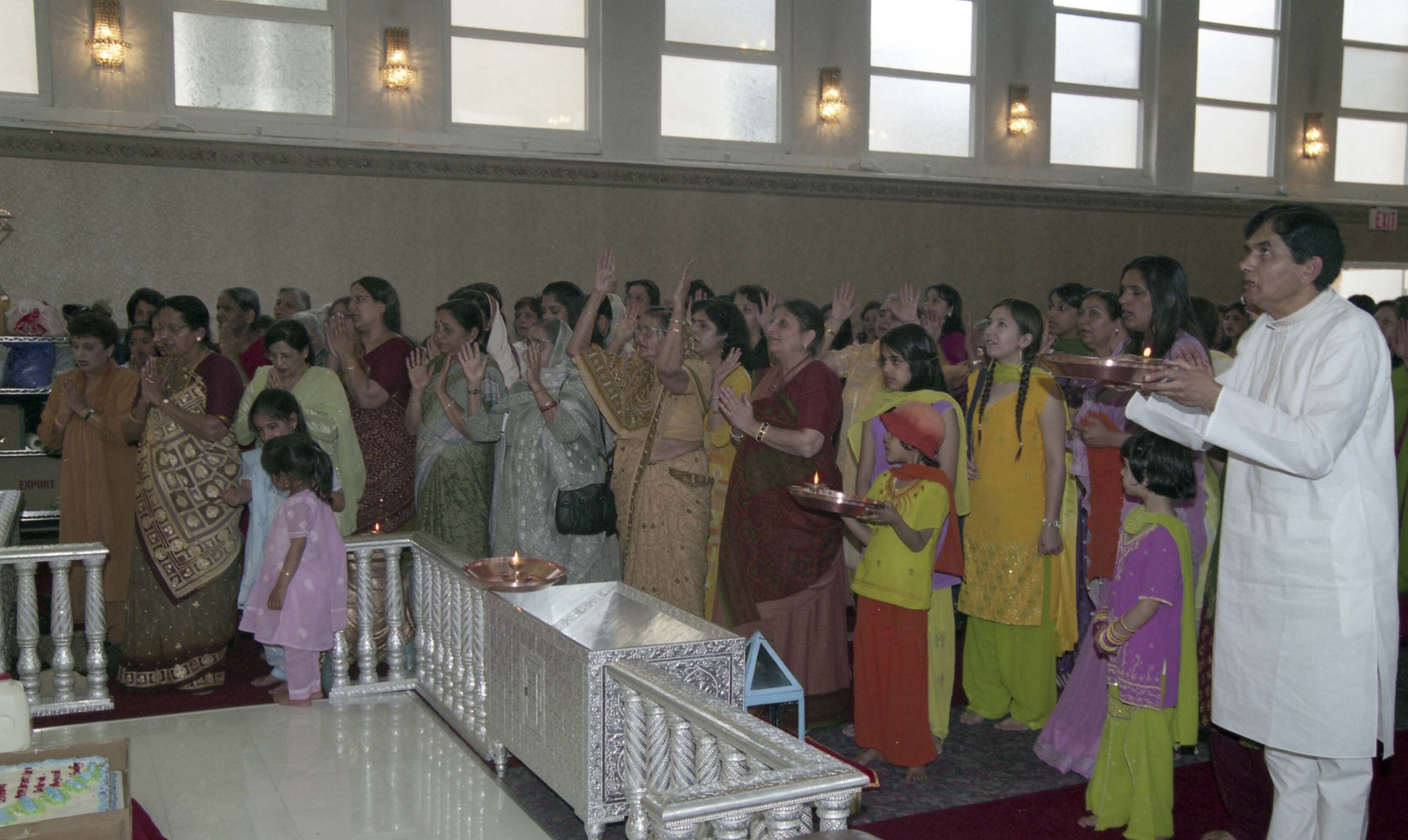
Photograph of an installation ceremony (sthapana) for a Radha-Krishna murti (sacred image) at the Hindu Cultural Society and Community Centre of B.C. in Burnaby, B.C.
Murti Sthapana, meaning "sacred image" and "placing/installation," is a special ceremony where scared images of Hindu gods are installed in temples.
Officially registered as the Hindu Cultural Society and Community Centre of B.C., the Hindu Temple of Burnaby, previously known as Vishva Hindu Parishad temple, stands as one of Canada's oldest and largest Hindu temples. It was founded on May 15, 1972 as a small prayer hall in North Burnaby, dedicated to preserving and promoting Hindu culture and traditions.
Murti Sthapana, meaning "sacred image" and "placing/installation," is a special ceremony where scared images of Hindu gods are installed in temples.
Officially registered as the Hindu Cultural Society and Community Centre of B.C., the Hindu Temple of Burnaby, previously known as Vishva Hindu Parishad temple, stands as one of Canada's oldest and largest Hindu temples. It was founded on May 15, 1972 as a small prayer hall in North Burnaby, dedicated to preserving and promoting Hindu culture and traditions.
Creator: Bodalia, Chandra
Description
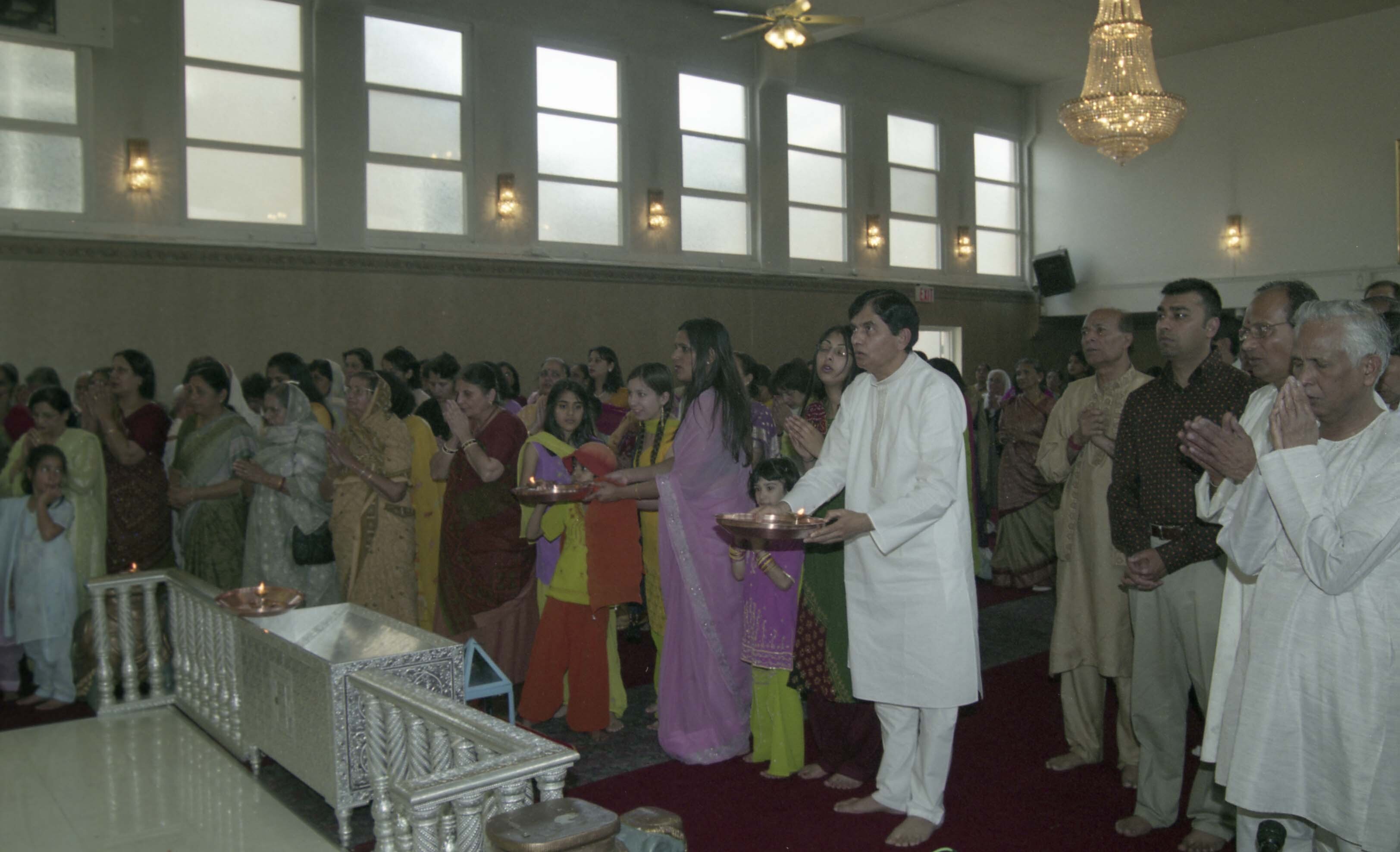
Photograph of an installation ceremony (sthapana) for a Radha-Krishna murti (sacred image) at the Hindu Cultural Society and Community Centre of B.C. in Burnaby, B.C.
Murti Sthapana, meaning "sacred image" and "placing/installation," is a special ceremony where scared images of Hindu gods are installed in temples.
Officially registered as the Hindu Cultural Society and Community Centre of B.C., the Hindu Temple of Burnaby, previously known as Vishva Hindu Parishad temple, stands as one of Canada's oldest and largest Hindu temples. It was founded on May 15, 1972 as a small prayer hall in North Burnaby, dedicated to preserving and promoting Hindu culture and traditions.
Murti Sthapana, meaning "sacred image" and "placing/installation," is a special ceremony where scared images of Hindu gods are installed in temples.
Officially registered as the Hindu Cultural Society and Community Centre of B.C., the Hindu Temple of Burnaby, previously known as Vishva Hindu Parishad temple, stands as one of Canada's oldest and largest Hindu temples. It was founded on May 15, 1972 as a small prayer hall in North Burnaby, dedicated to preserving and promoting Hindu culture and traditions.
Creator: Bodalia, Chandra
Description
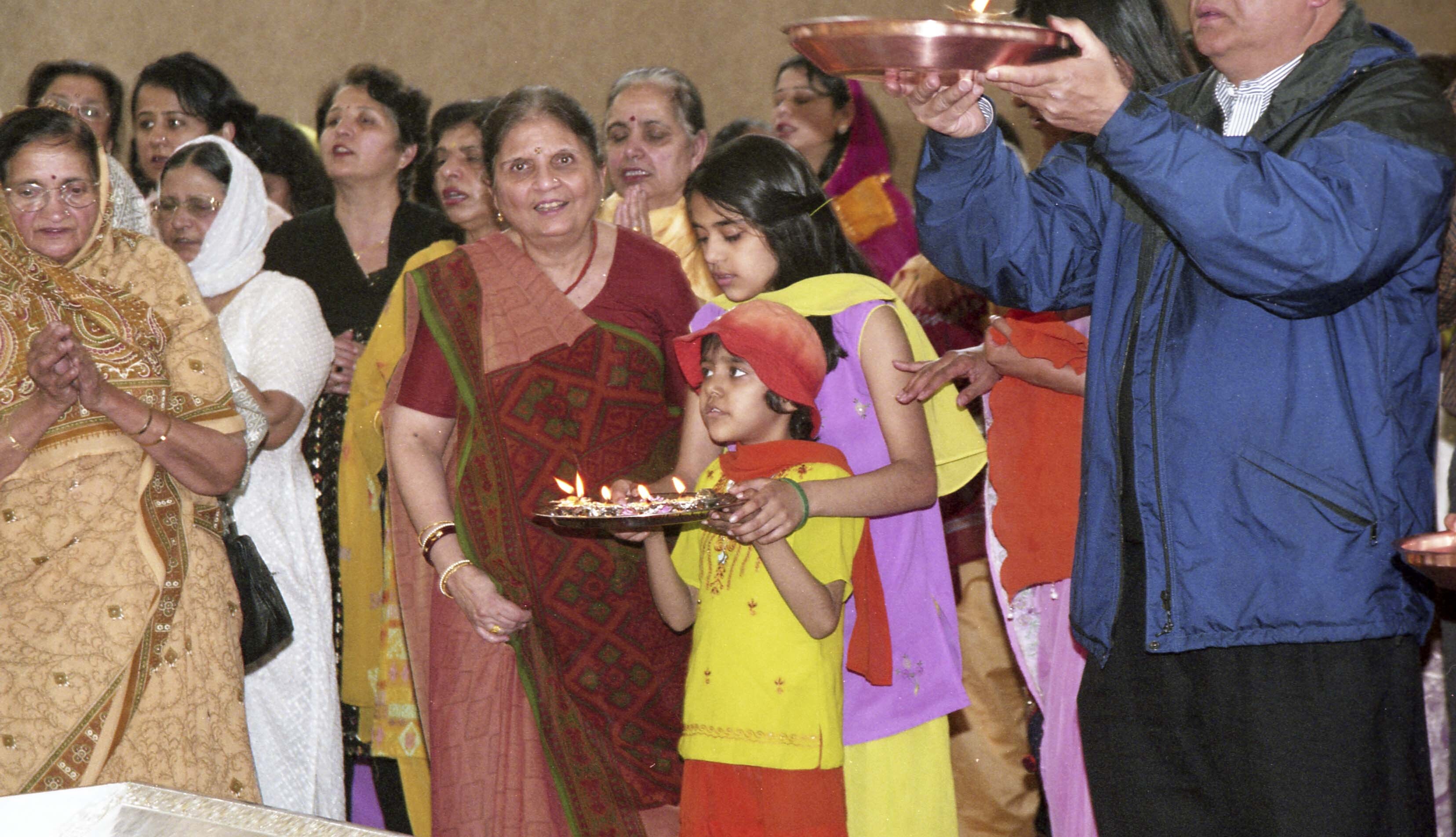
Photograph of an installation ceremony (sthapana) for a Radha-Krishna murti (sacred image) at the Hindu Cultural Society and Community Centre of B.C. in Burnaby, B.C.
Murti Sthapana, meaning "sacred image" and "placing/installation," is a special ceremony where scared images of Hindu gods are installed in temples.
Officially registered as the Hindu Cultural Society and Community Centre of B.C., the Hindu Temple of Burnaby, previously known as Vishva Hindu Parishad temple, stands as one of Canada's oldest and largest Hindu temples. It was founded on May 15, 1972 as a small prayer hall in North Burnaby, dedicated to preserving and promoting Hindu culture and traditions.
Murti Sthapana, meaning "sacred image" and "placing/installation," is a special ceremony where scared images of Hindu gods are installed in temples.
Officially registered as the Hindu Cultural Society and Community Centre of B.C., the Hindu Temple of Burnaby, previously known as Vishva Hindu Parishad temple, stands as one of Canada's oldest and largest Hindu temples. It was founded on May 15, 1972 as a small prayer hall in North Burnaby, dedicated to preserving and promoting Hindu culture and traditions.