
South Asian Canadian women dancers
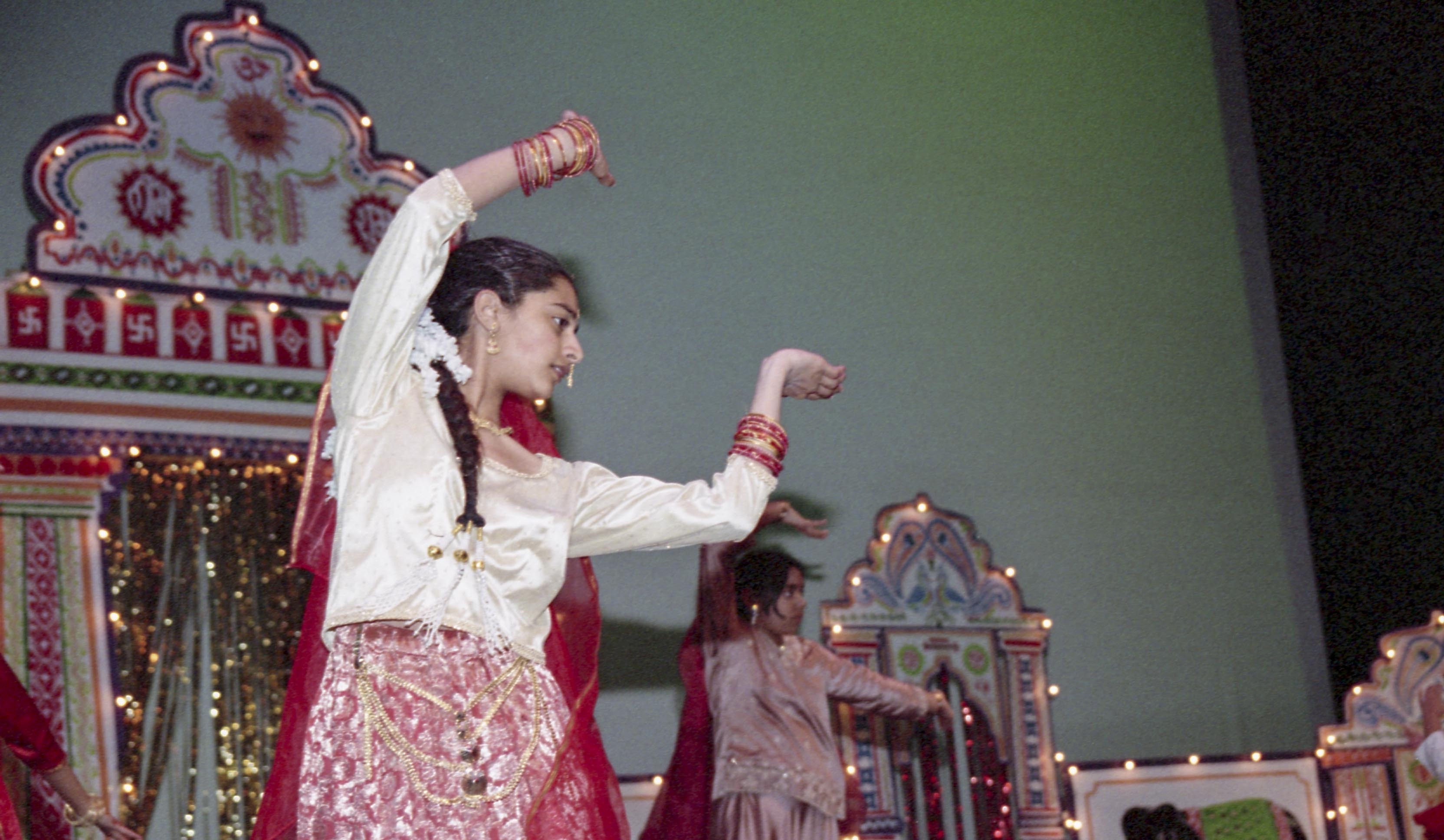
Creator: Bodalia, Chandra
Description
Photograph of a dancer at a Diwali celebration put on by the Hindu Cultural Society and Community Centre of B.C. in Burnaby, B.C.
Deepavali, also known as Diwali, is a major religious festival celebrated by Hindus, Jains, and Sikhs, and translates to "the Festival of Lights." The festival lasts five days: the first day is known as Dhanteras; followed by Choti Diwali; Lakshmi pooja, which is the main celebration; Govardhan pooja; and finally Bhai Dooj. The festival is typically marked by the cleaning and decorating of homes, as well as the lighting of diyas and rangoli designs. Each region in India and religion has their own manner of celebrating Deepavali and their own gods to be worshipped.
Officially registered as the Hindu Cultural Society and Community Centre of B.C., the Hindu Temple of Burnaby, previously known as Vishva Hindu Parishad temple, stands as one of Canada's oldest and largest Hindu temples. It was founded on May 15, 1972 as a small prayer hall in North Burnaby, dedicated to preserving and promoting Hindu culture and traditions.
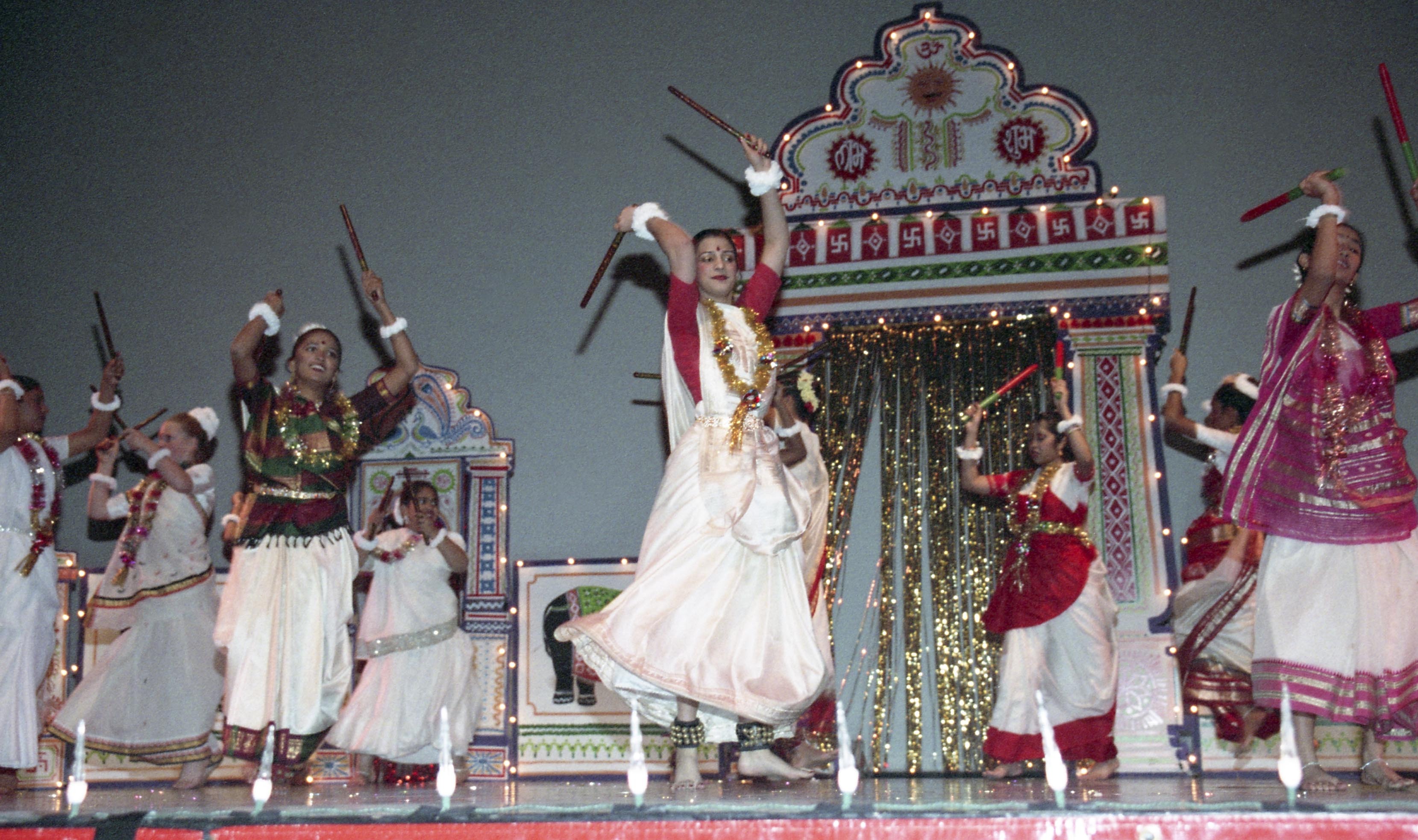
Creator: Bodalia, Chandra
Description
Photograph of a dance performance featuring dandiyas at a Diwali celebration put on by the Hindu Cultural Society and Community Centre of B.C. in Burnaby, B.C.
Deepavali, also known as Diwali, is a major religious festival celebrated by Hindus, Jains, and Sikhs, and translates to "the Festival of Lights." The festival lasts five days: the first day is known as Dhanteras; followed by Choti Diwali; Lakshmi pooja, which is the main celebration; Govardhan pooja; and finally Bhai Dooj. The festival is typically marked by the cleaning and decorating of homes, as well as the lighting of diyas and rangoli designs. Each region in India and religion has their own manner of celebrating Deepavali and their own gods to be worshipped.
Officially registered as the Hindu Cultural Society and Community Centre of B.C., the Hindu Temple of Burnaby, previously known as Vishva Hindu Parishad temple, stands as one of Canada's oldest and largest Hindu temples. It was founded on May 15, 1972 as a small prayer hall in North Burnaby, dedicated to preserving and promoting Hindu culture and traditions.
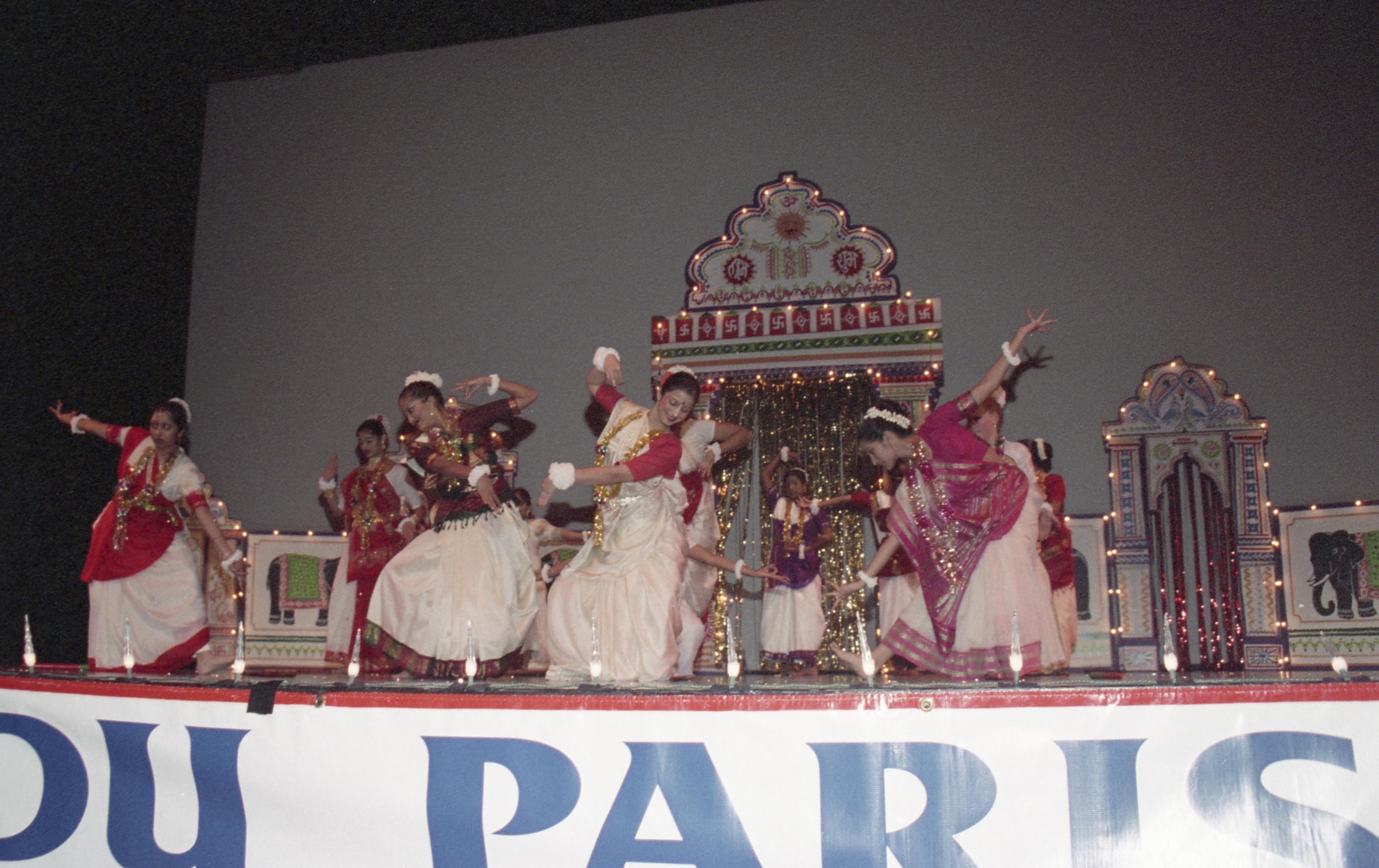
Creator: Bodalia, Chandra
Description
Photograph of a dance performance at a Diwali celebration put on by the Hindu Cultural Society and Community Centre of B.C. in Burnaby, B.C.
Deepavali, also known as Diwali, is a major religious festival celebrated by Hindus, Jains, and Sikhs, and translates to "the Festival of Lights." The festival lasts five days: the first day is known as Dhanteras; followed by Choti Diwali; Lakshmi pooja, which is the main celebration; Govardhan pooja; and finally Bhai Dooj. The festival is typically marked by the cleaning and decorating of homes, as well as the lighting of diyas and rangoli designs. Each region in India and religion has their own manner of celebrating Deepavali and their own gods to be worshipped.
Officially registered as the Hindu Cultural Society and Community Centre of B.C., the Hindu Temple of Burnaby, previously known as Vishva Hindu Parishad temple, stands as one of Canada's oldest and largest Hindu temples. It was founded on May 15, 1972 as a small prayer hall in North Burnaby, dedicated to preserving and promoting Hindu culture and traditions.
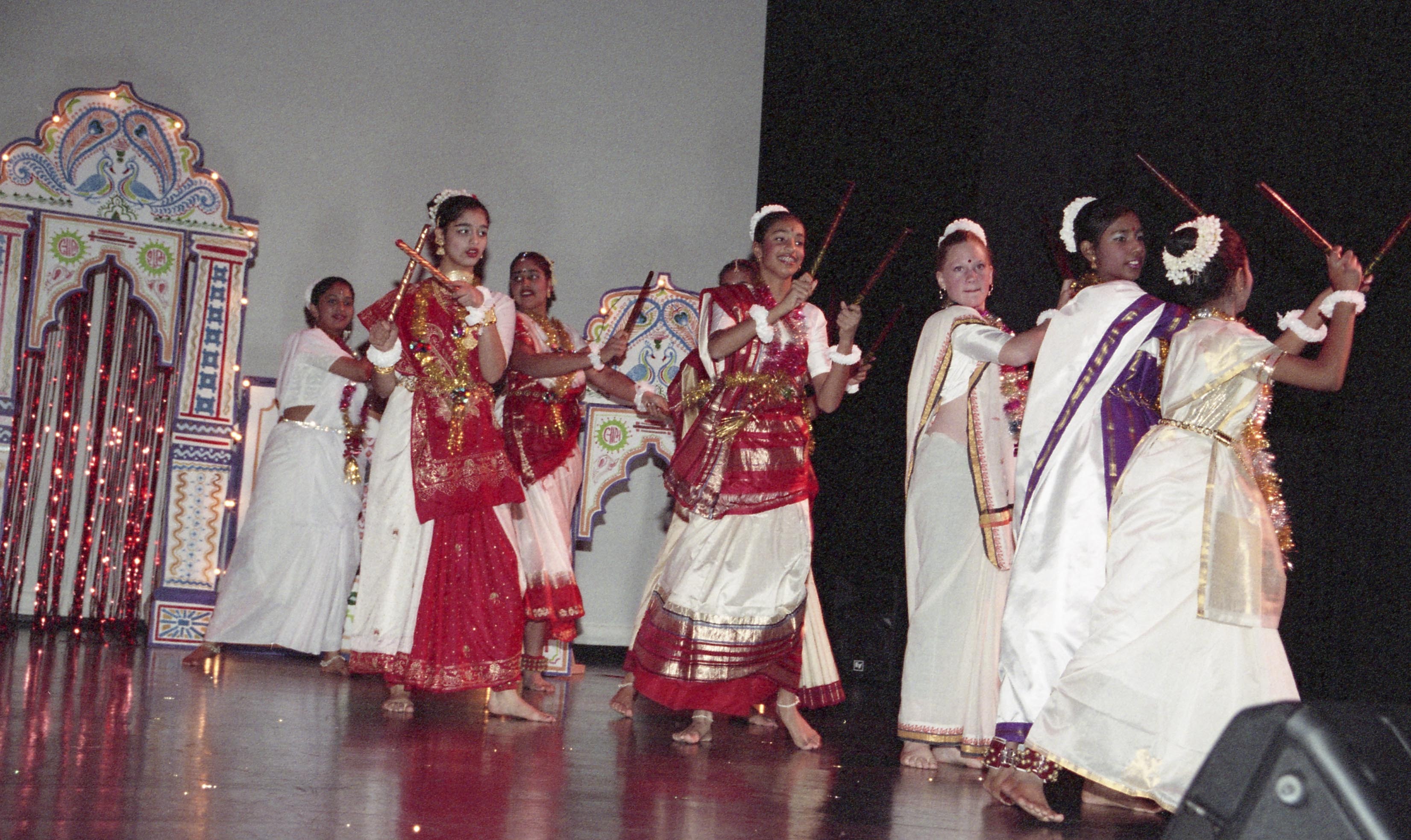
Creator: Bodalia, Chandra
Description
Photograph of dancers performing with dandiyas at a Diwali celebration put on by the Hindu Cultural Society and Community Centre of B.C. in Burnaby, B.C.
Deepavali, also known as Diwali, is a major religious festival celebrated by Hindus, Jains, and Sikhs, and translates to "the Festival of Lights." The festival lasts five days: the first day is known as Dhanteras; followed by Choti Diwali; Lakshmi pooja, which is the main celebration; Govardhan pooja; and finally Bhai Dooj. The festival is typically marked by the cleaning and decorating of homes, as well as the lighting of diyas and rangoli designs. Each region in India and religion has their own manner of celebrating Deepavali and their own gods to be worshipped.
Officially registered as the Hindu Cultural Society and Community Centre of B.C., the Hindu Temple of Burnaby, previously known as Vishva Hindu Parishad temple, stands as one of Canada's oldest and largest Hindu temples. It was founded on May 15, 1972 as a small prayer hall in North Burnaby, dedicated to preserving and promoting Hindu culture and traditions.
Creator: Bodalia, Chandra
Description
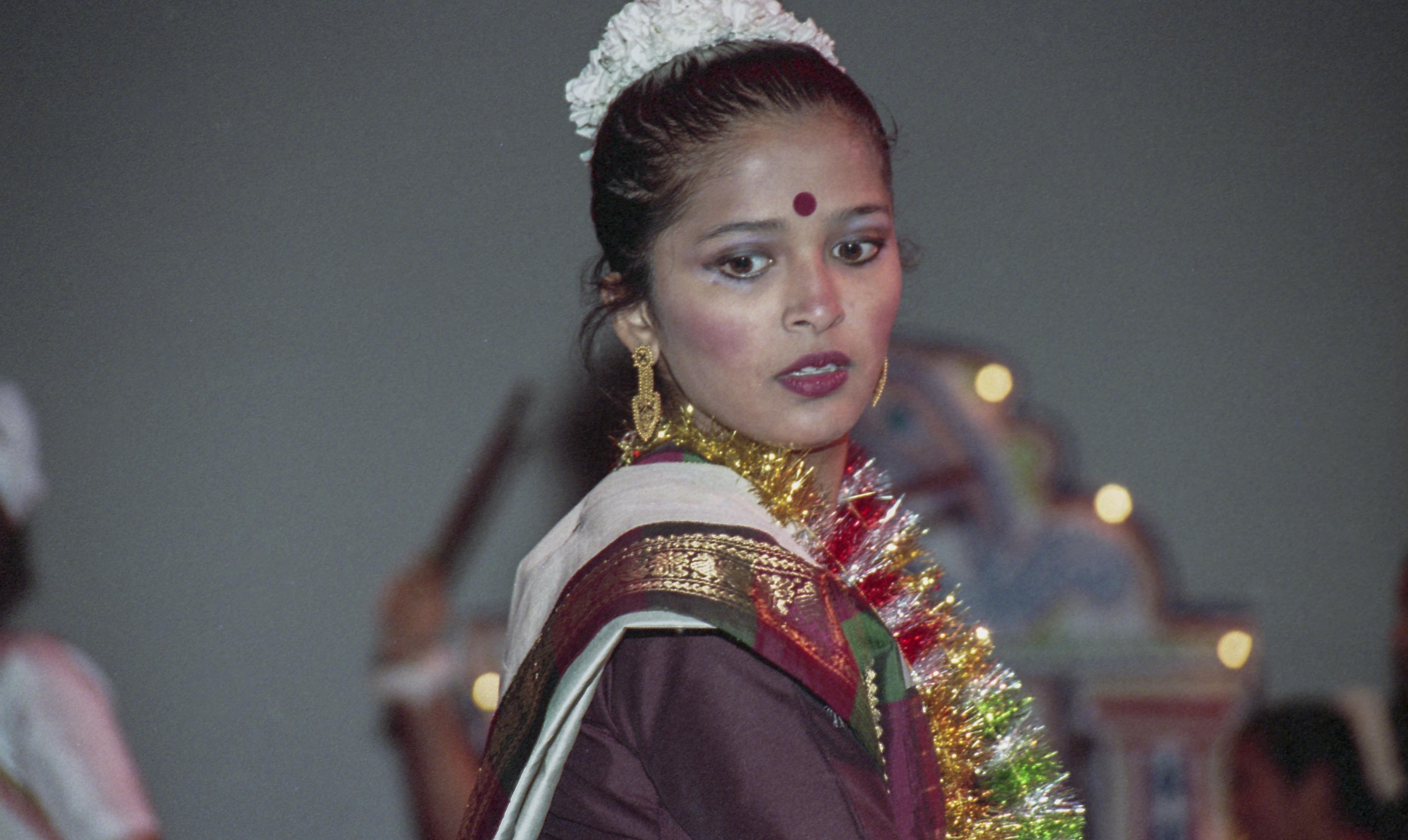
Photograph of a dancer at a Diwali celebration put on by the Hindu Cultural Society and Community Centre of B.C. in Burnaby, B.C.
Deepavali, also known as Diwali, is a major religious festival celebrated by Hindus, Jains, and Sikhs, and translates to "the Festival of Lights." The festival lasts five days: the first day is known as Dhanteras; followed by Choti Diwali; Lakshmi pooja, which is the main celebration; Govardhan pooja; and finally Bhai Dooj. The festival is typically marked by the cleaning and decorating of homes, as well as the lighting of diyas and rangoli designs. Each region in India and religion has their own manner of celebrating Deepavali and their own gods to be worshipped.
Officially registered as the Hindu Cultural Society and Community Centre of B.C., the Hindu Temple of Burnaby, previously known as Vishva Hindu Parishad temple, stands as one of Canada's oldest and largest Hindu temples. It was founded on May 15, 1972 as a small prayer hall in North Burnaby, dedicated to preserving and promoting Hindu culture and traditions.
Deepavali, also known as Diwali, is a major religious festival celebrated by Hindus, Jains, and Sikhs, and translates to "the Festival of Lights." The festival lasts five days: the first day is known as Dhanteras; followed by Choti Diwali; Lakshmi pooja, which is the main celebration; Govardhan pooja; and finally Bhai Dooj. The festival is typically marked by the cleaning and decorating of homes, as well as the lighting of diyas and rangoli designs. Each region in India and religion has their own manner of celebrating Deepavali and their own gods to be worshipped.
Officially registered as the Hindu Cultural Society and Community Centre of B.C., the Hindu Temple of Burnaby, previously known as Vishva Hindu Parishad temple, stands as one of Canada's oldest and largest Hindu temples. It was founded on May 15, 1972 as a small prayer hall in North Burnaby, dedicated to preserving and promoting Hindu culture and traditions.
Creator: Bodalia, Chandra
Description
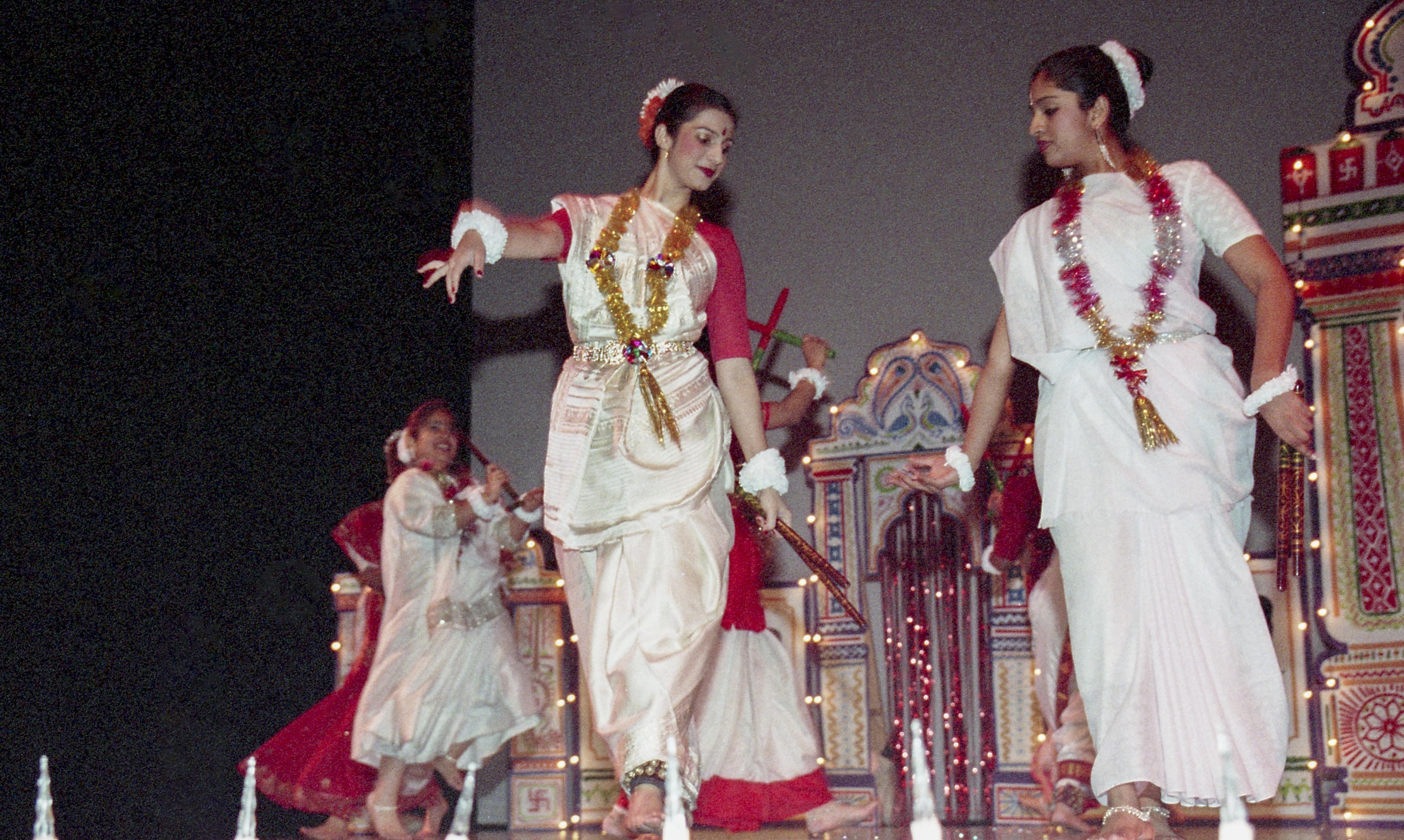
Photograph of a dance performance at a Diwali celebration put on by the Hindu Cultural Society and Community Centre of B.C. in Burnaby, B.C.
Deepavali, also known as Diwali, is a major religious festival celebrated by Hindus, Jains, and Sikhs, and translates to "the Festival of Lights." The festival lasts five days: the first day is known as Dhanteras; followed by Choti Diwali; Lakshmi pooja, which is the main celebration; Govardhan pooja; and finally Bhai Dooj. The festival is typically marked by the cleaning and decorating of homes, as well as the lighting of diyas and rangoli designs. Each region in India and religion has their own manner of celebrating Deepavali and their own gods to be worshipped.
Officially registered as the Hindu Cultural Society and Community Centre of B.C., the Hindu Temple of Burnaby, previously known as Vishva Hindu Parishad temple, stands as one of Canada's oldest and largest Hindu temples. It was founded on May 15, 1972 as a small prayer hall in North Burnaby, dedicated to preserving and promoting Hindu culture and traditions.
Deepavali, also known as Diwali, is a major religious festival celebrated by Hindus, Jains, and Sikhs, and translates to "the Festival of Lights." The festival lasts five days: the first day is known as Dhanteras; followed by Choti Diwali; Lakshmi pooja, which is the main celebration; Govardhan pooja; and finally Bhai Dooj. The festival is typically marked by the cleaning and decorating of homes, as well as the lighting of diyas and rangoli designs. Each region in India and religion has their own manner of celebrating Deepavali and their own gods to be worshipped.
Officially registered as the Hindu Cultural Society and Community Centre of B.C., the Hindu Temple of Burnaby, previously known as Vishva Hindu Parishad temple, stands as one of Canada's oldest and largest Hindu temples. It was founded on May 15, 1972 as a small prayer hall in North Burnaby, dedicated to preserving and promoting Hindu culture and traditions.
Creator: Bodalia, Chandra
Description
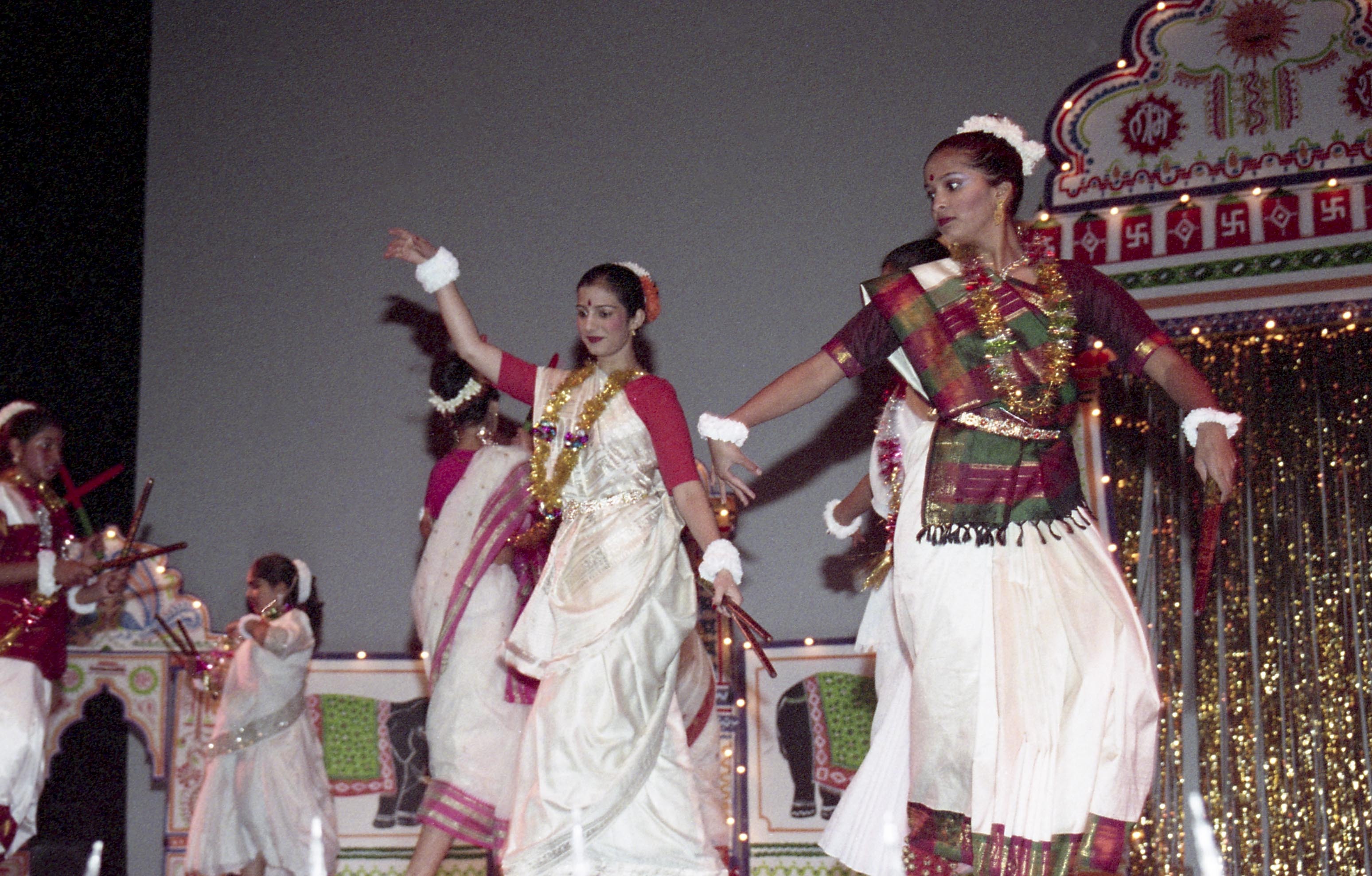
Photograph of a dance performance at a Diwali celebration put on by the Hindu Cultural Society and Community Centre of B.C. in Burnaby, B.C.
Deepavali, also known as Diwali, is a major religious festival celebrated by Hindus, Jains, and Sikhs, and translates to "the Festival of Lights." The festival lasts five days: the first day is known as Dhanteras; followed by Choti Diwali; Lakshmi pooja, which is the main celebration; Govardhan pooja; and finally Bhai Dooj. The festival is typically marked by the cleaning and decorating of homes, as well as the lighting of diyas and rangoli designs. Each region in India and religion has their own manner of celebrating Deepavali and their own gods to be worshipped.
Officially registered as the Hindu Cultural Society and Community Centre of B.C., the Hindu Temple of Burnaby, previously known as Vishva Hindu Parishad temple, stands as one of Canada's oldest and largest Hindu temples. It was founded on May 15, 1972 as a small prayer hall in North Burnaby, dedicated to preserving and promoting Hindu culture and traditions.
Deepavali, also known as Diwali, is a major religious festival celebrated by Hindus, Jains, and Sikhs, and translates to "the Festival of Lights." The festival lasts five days: the first day is known as Dhanteras; followed by Choti Diwali; Lakshmi pooja, which is the main celebration; Govardhan pooja; and finally Bhai Dooj. The festival is typically marked by the cleaning and decorating of homes, as well as the lighting of diyas and rangoli designs. Each region in India and religion has their own manner of celebrating Deepavali and their own gods to be worshipped.
Officially registered as the Hindu Cultural Society and Community Centre of B.C., the Hindu Temple of Burnaby, previously known as Vishva Hindu Parishad temple, stands as one of Canada's oldest and largest Hindu temples. It was founded on May 15, 1972 as a small prayer hall in North Burnaby, dedicated to preserving and promoting Hindu culture and traditions.
Creator: Bodalia, Chandra
Description
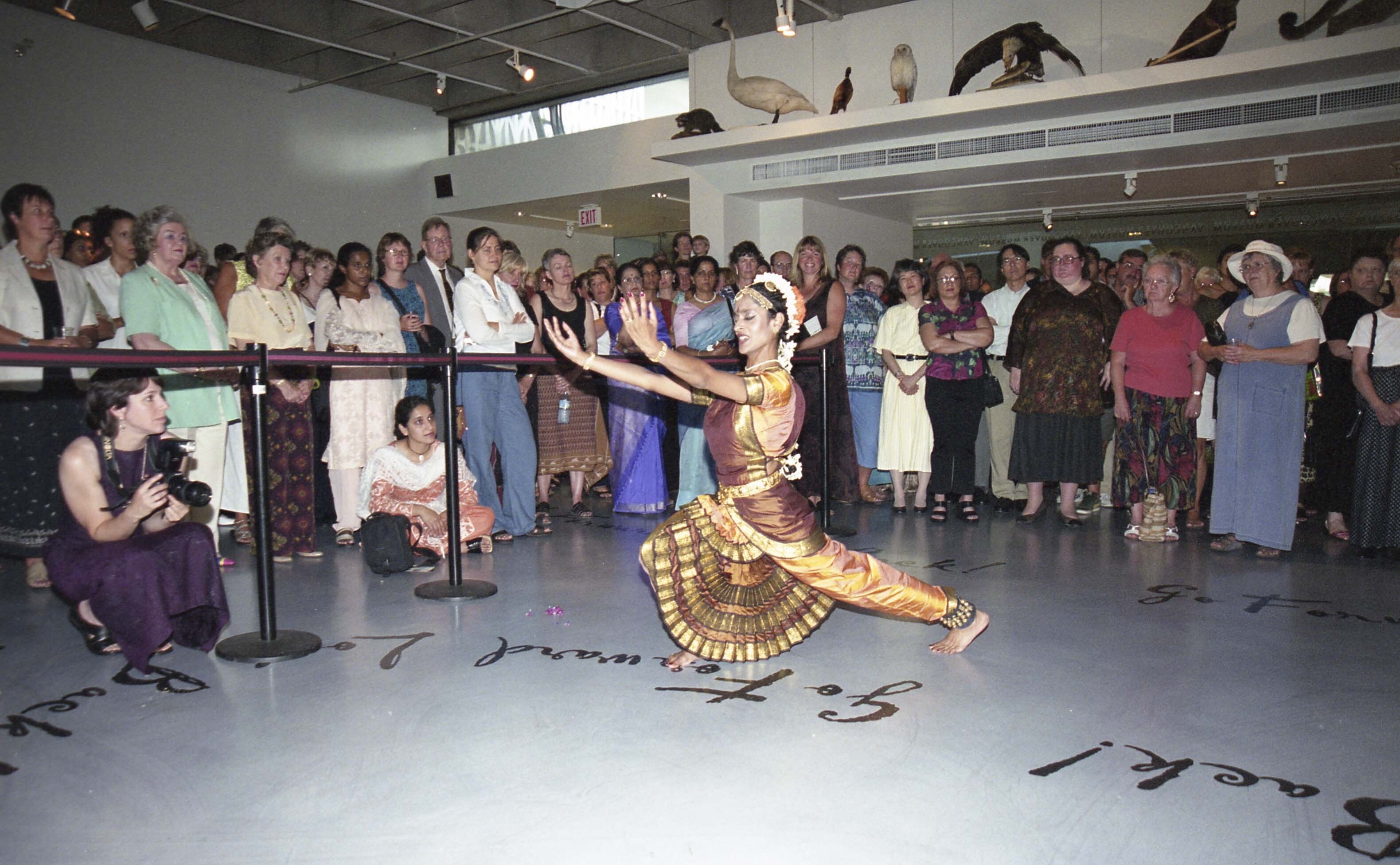
Photograph of a dance performance at an art exhibit entitled, "Through the Eye of the Needle: Stories From an Indian Desert" organized by Maiwa and Kutch Mahila Vikas Sangathan. The exhibit was hosted at the Museum of Vancouver, in Vancouver, B.C.
Founded in 1986 by Charlotte Kwon, Maiwa (previously known as Maiwa Handprints) has evolved from being a retail store located on Granville Island into a School of Textiles, a Foundation, and an online presence. Their three guiding principles are: natural dyes, as they work directly with farmers and run a full-time natural dye studio; slow clothes, as they include hand spinners, hand weavers, embroiderers, and block printers in their workflow to counter fashion fashion; and finally, artisans, as they build relationships with them and recognize how everyone in the process of making clothing are connected.
Kutch Mahila Vikas Sangathan (KMVS) centres the experience of the women of second largest district of India, Kutch, which comprises of ten administrative regions. The area struggles with water scarcity and threats of drought due to its fragile ecosystem. The district is said to be home to 1.5 million people, according to the 2001 census, and the majority resides in rural areas. MKVS' mission is "total empowerment," which consists of economic, political, and social empowerment of the rural women in the Kutch district. They intend to do so through awareness-raising, organizing, mobilizing, building confidence to address problems, developing critical analysis skills, working as a collective, and many other empowering endeavours.
Located within the unceded, ancestral territories of the xʷməθkʷəy̓əm (Musqueam), Sḵwx̱wú7mesh (Squamish), and səlilwətaɬ (Tsleil-Waututh) Nations, the Museum of Vancouver's vision is to inspire and foster a more socially connected, resilient, and publicly engaged city. They do so by becoming a gathering space intent on fostering connection, learning, and new experiences of Vancouver's diverse communities and histories.They are committed to four pillars: redress and decolonization, immigration and diversity, environment and sustainability, and urban and contemporary issues.
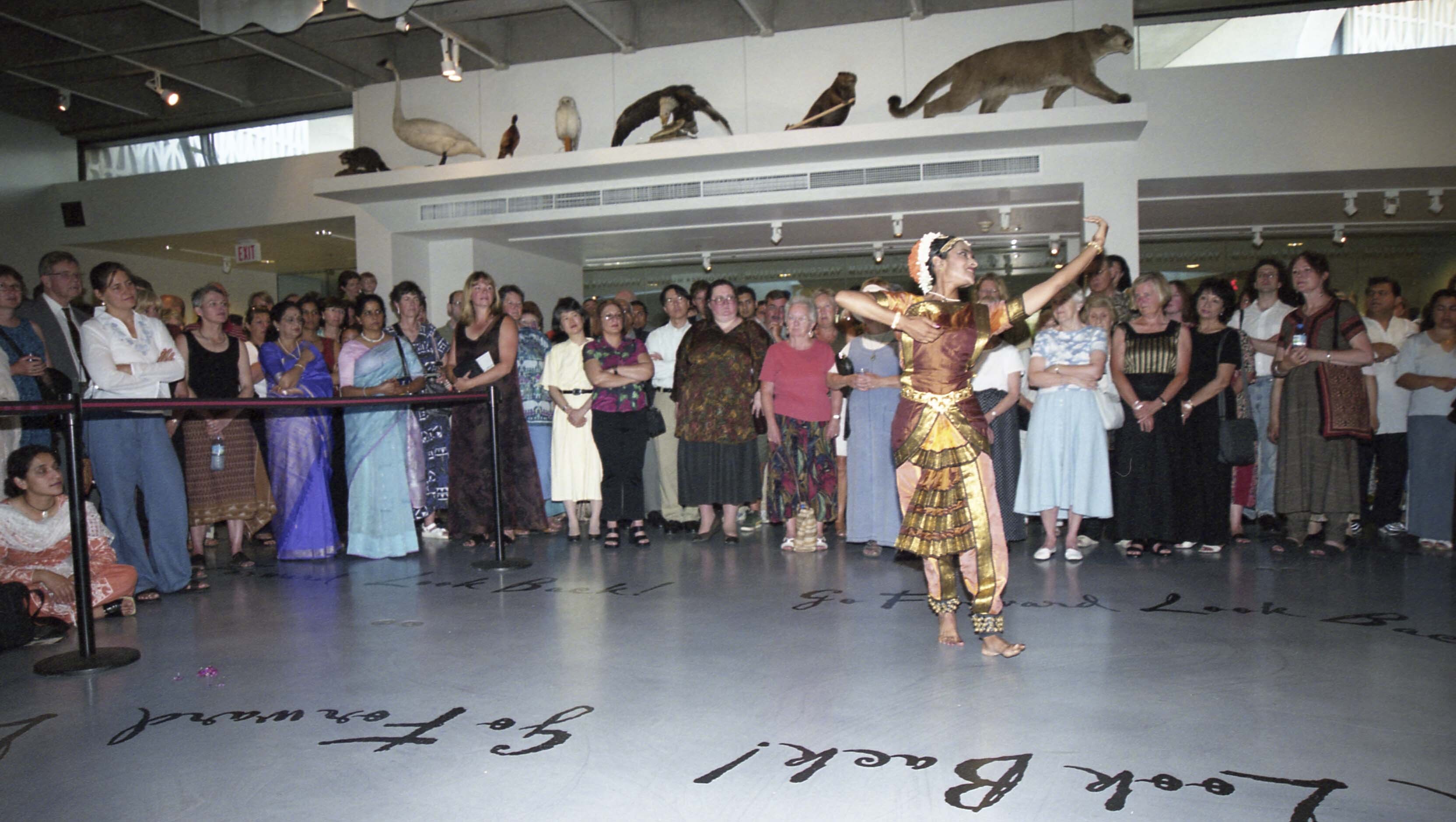
Creator: Bodalia, Chandra
Description
Photograph of a dance performance at an art exhibit entitled, "Through the Eye of the Needle: Stories From an Indian Desert" organized by Maiwa and Kutch Mahila Vikas Sangathan. The exhibit was hosted at the Museum of Vancouver, in Vancouver, B.C.
Founded in 1986 by Charlotte Kwon, Maiwa (previously known as Maiwa Handprints) has evolved from being a retail store located on Granville Island into a School of Textiles, a Foundation, and an online presence. Their three guiding principles are: natural dyes, as they work directly with farmers and run a full-time natural dye studio; slow clothes, as they include hand spinners, hand weavers, embroiderers, and block printers in their workflow to counter fashion fashion; and finally, artisans, as they build relationships with them and recognize how everyone in the process of making clothing are connected.
Kutch Mahila Vikas Sangathan (KMVS) centres the experience of the women of second largest district of India, Kutch, which comprises of ten administrative regions. The area struggles with water scarcity and threats of drought due to its fragile ecosystem. The district is said to be home to 1.5 million people, according to the 2001 census, and the majority resides in rural areas. MKVS' mission is "total empowerment," which consists of economic, political, and social empowerment of the rural women in the Kutch district. They intend to do so through awareness-raising, organizing, mobilizing, building confidence to address problems, developing critical analysis skills, working as a collective, and many other empowering endeavours.
Located within the unceded, ancestral territories of the xʷməθkʷəy̓əm (Musqueam), Sḵwx̱wú7mesh (Squamish), and səlilwətaɬ (Tsleil-Waututh) Nations, the Museum of Vancouver's vision is to inspire and foster a more socially connected, resilient, and publicly engaged city. They do so by becoming a gathering space intent on fostering connection, learning, and new experiences of Vancouver's diverse communities and histories.They are committed to four pillars: redress and decolonization, immigration and diversity, environment and sustainability, and urban and contemporary issues.
Founded in 1986 by Charlotte Kwon, Maiwa (previously known as Maiwa Handprints) has evolved from being a retail store located on Granville Island into a School of Textiles, a Foundation, and an online presence. Their three guiding principles are: natural dyes, as they work directly with farmers and run a full-time natural dye studio; slow clothes, as they include hand spinners, hand weavers, embroiderers, and block printers in their workflow to counter fashion fashion; and finally, artisans, as they build relationships with them and recognize how everyone in the process of making clothing are connected.
Kutch Mahila Vikas Sangathan (KMVS) centres the experience of the women of second largest district of India, Kutch, which comprises of ten administrative regions. The area struggles with water scarcity and threats of drought due to its fragile ecosystem. The district is said to be home to 1.5 million people, according to the 2001 census, and the majority resides in rural areas. MKVS' mission is "total empowerment," which consists of economic, political, and social empowerment of the rural women in the Kutch district. They intend to do so through awareness-raising, organizing, mobilizing, building confidence to address problems, developing critical analysis skills, working as a collective, and many other empowering endeavours.
Located within the unceded, ancestral territories of the xʷməθkʷəy̓əm (Musqueam), Sḵwx̱wú7mesh (Squamish), and səlilwətaɬ (Tsleil-Waututh) Nations, the Museum of Vancouver's vision is to inspire and foster a more socially connected, resilient, and publicly engaged city. They do so by becoming a gathering space intent on fostering connection, learning, and new experiences of Vancouver's diverse communities and histories.They are committed to four pillars: redress and decolonization, immigration and diversity, environment and sustainability, and urban and contemporary issues.
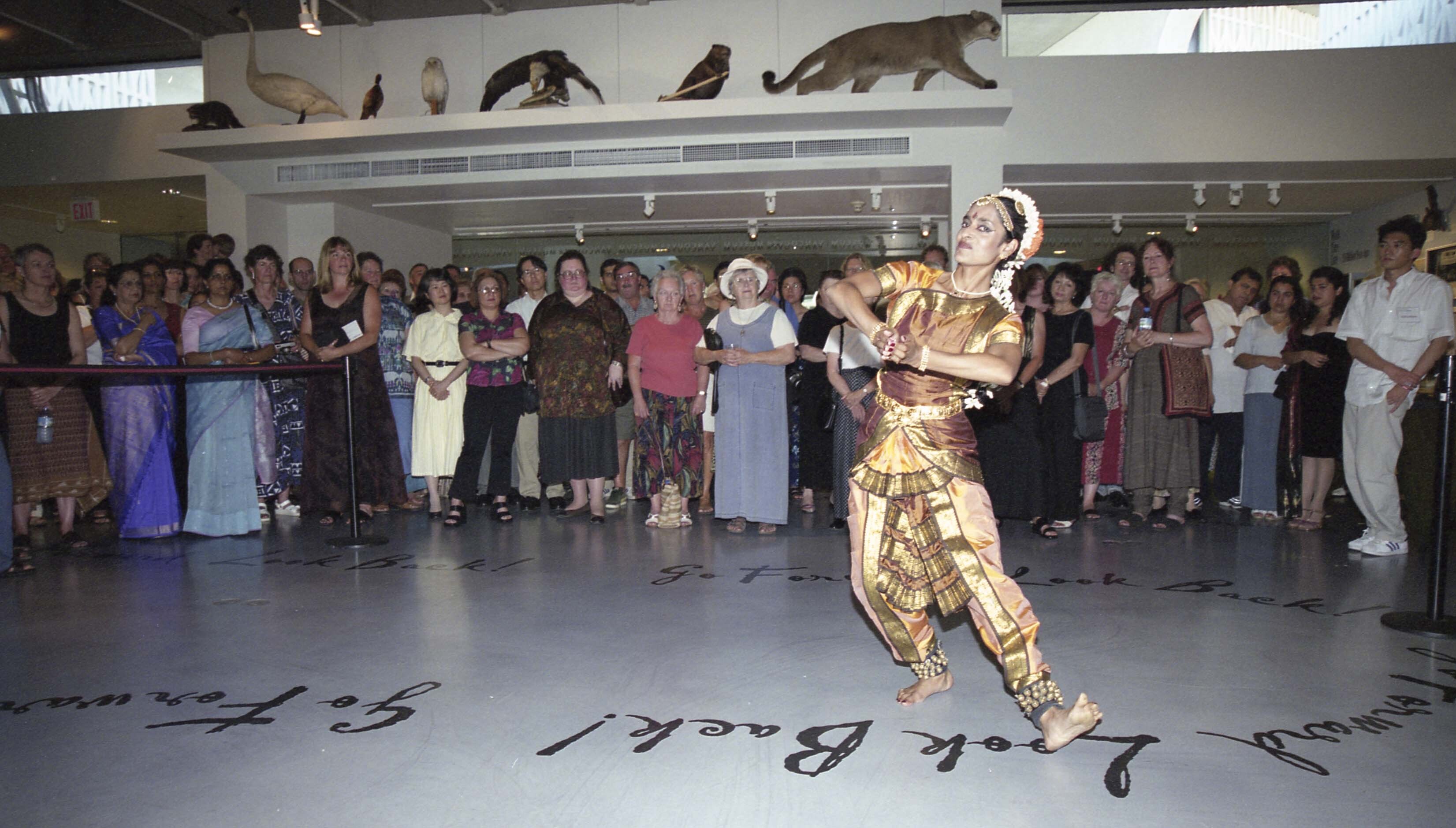
Creator: Bodalia, Chandra
Description
Photograph of a dance performance at an art exhibit entitled, "Through the Eye of the Needle: Stories From an Indian Desert" organized by Maiwa and Kutch Mahila Vikas Sangathan. The exhibit was hosted at the Museum of Vancouver, in Vancouver, B.C.
Founded in 1986 by Charlotte Kwon, Maiwa (previously known as Maiwa Handprints) has evolved from being a retail store located on Granville Island into a School of Textiles, a Foundation, and an online presence. Their three guiding principles are: natural dyes, as they work directly with farmers and run a full-time natural dye studio; slow clothes, as they include hand spinners, hand weavers, embroiderers, and block printers in their workflow to counter fashion fashion; and finally, artisans, as they build relationships with them and recognize how everyone in the process of making clothing are connected.
Kutch Mahila Vikas Sangathan (KMVS) centres the experience of the women of second largest district of India, Kutch, which comprises of ten administrative regions. The area struggles with water scarcity and threats of drought due to its fragile ecosystem. The district is said to be home to 1.5 million people, according to the 2001 census, and the majority resides in rural areas. MKVS' mission is "total empowerment," which consists of economic, political, and social empowerment of the rural women in the Kutch district. They intend to do so through awareness-raising, organizing, mobilizing, building confidence to address problems, developing critical analysis skills, working as a collective, and many other empowering endeavours.
Located within the unceded, ancestral territories of the xʷməθkʷəy̓əm (Musqueam), Sḵwx̱wú7mesh (Squamish), and səlilwətaɬ (Tsleil-Waututh) Nations, the Museum of Vancouver's vision is to inspire and foster a more socially connected, resilient, and publicly engaged city. They do so by becoming a gathering space intent on fostering connection, learning, and new experiences of Vancouver's diverse communities and histories.They are committed to four pillars: redress and decolonization, immigration and diversity, environment and sustainability, and urban and contemporary issues.
Founded in 1986 by Charlotte Kwon, Maiwa (previously known as Maiwa Handprints) has evolved from being a retail store located on Granville Island into a School of Textiles, a Foundation, and an online presence. Their three guiding principles are: natural dyes, as they work directly with farmers and run a full-time natural dye studio; slow clothes, as they include hand spinners, hand weavers, embroiderers, and block printers in their workflow to counter fashion fashion; and finally, artisans, as they build relationships with them and recognize how everyone in the process of making clothing are connected.
Kutch Mahila Vikas Sangathan (KMVS) centres the experience of the women of second largest district of India, Kutch, which comprises of ten administrative regions. The area struggles with water scarcity and threats of drought due to its fragile ecosystem. The district is said to be home to 1.5 million people, according to the 2001 census, and the majority resides in rural areas. MKVS' mission is "total empowerment," which consists of economic, political, and social empowerment of the rural women in the Kutch district. They intend to do so through awareness-raising, organizing, mobilizing, building confidence to address problems, developing critical analysis skills, working as a collective, and many other empowering endeavours.
Located within the unceded, ancestral territories of the xʷməθkʷəy̓əm (Musqueam), Sḵwx̱wú7mesh (Squamish), and səlilwətaɬ (Tsleil-Waututh) Nations, the Museum of Vancouver's vision is to inspire and foster a more socially connected, resilient, and publicly engaged city. They do so by becoming a gathering space intent on fostering connection, learning, and new experiences of Vancouver's diverse communities and histories.They are committed to four pillars: redress and decolonization, immigration and diversity, environment and sustainability, and urban and contemporary issues.