
Nishan Sahib

Member of
Description
On July 31, 2002, Abbotsford's Gur Sikh Temple was declared a National Historic Site of Canada. Indar Singh Gill (front row, second to the left) is outside the Gurdwara wearing a light-blue turban, a formal suit, and a yellow-and-blue "Khalsa Diwan Society VIP" ribbon. Right to Indar Singh is Heritage Minister Sheila Copps, wearing a pink salwar suit with a scarf, called chunni, around her shoulders. Indar Singh was the President of the Sikh temple in 1951 and then again in 1979. There are several South Asian Canadian men crowding around them. In the background, there is a yellow pole called a Nishan Sahib, a yellow Sikh flag that marks all Gurdwaras.
Member of
Description
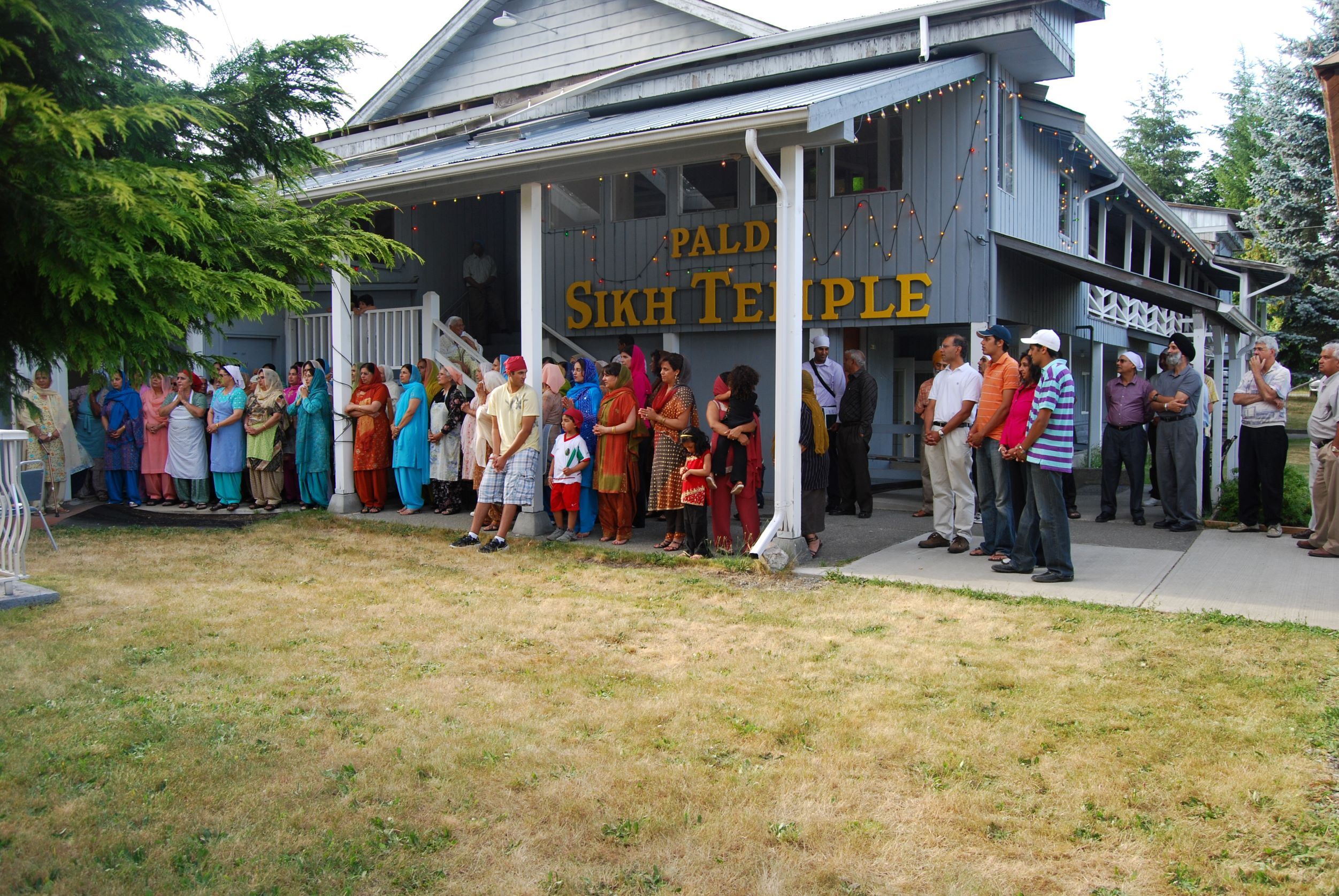
Photograph taken outside the Paldi gurdwara. People can be seen standing outside the gurdwara's entrance, looking towards the Nishan Sahib.
Member of
Description
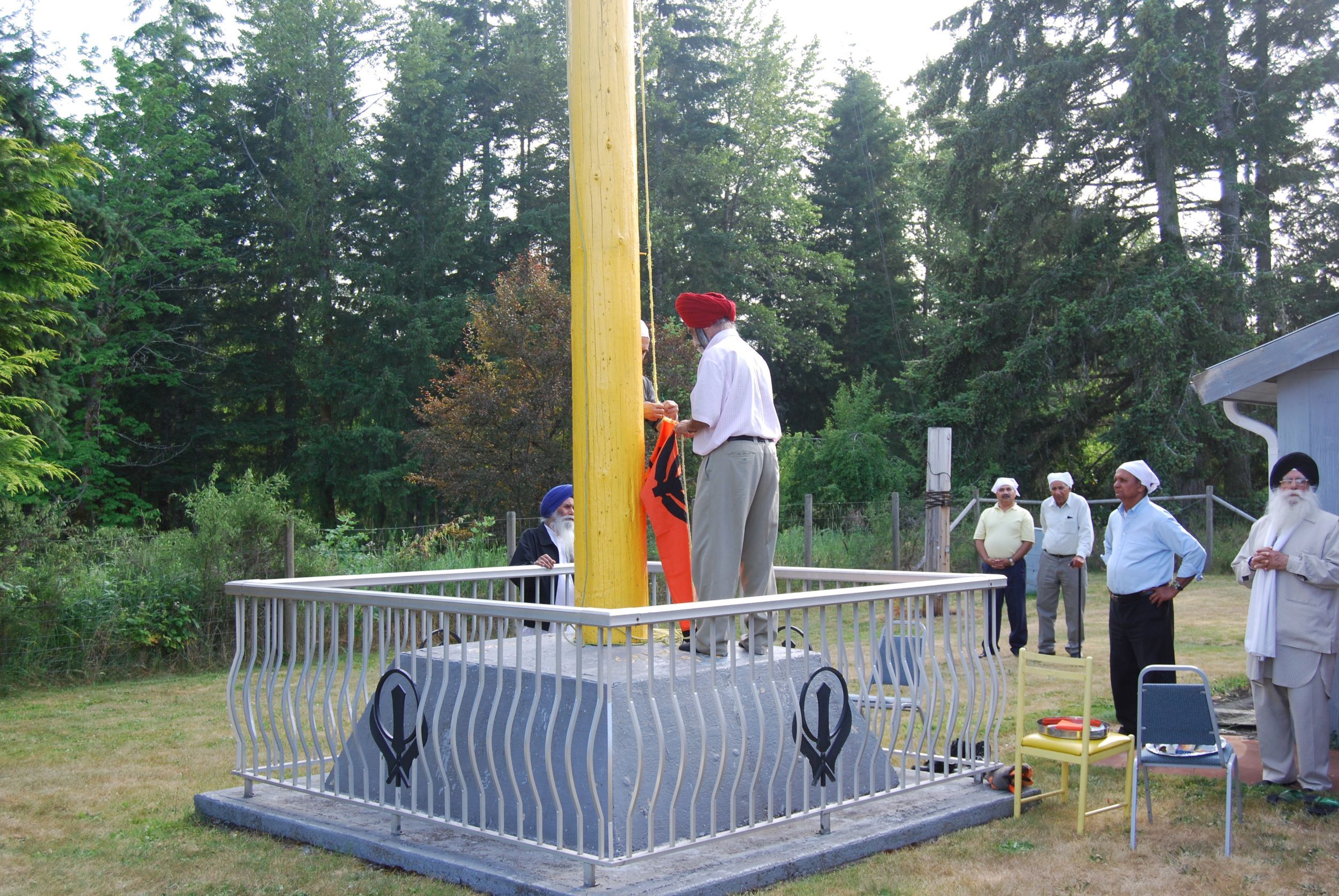
Photograph taken outside the Paldi gurdwara. The Nishan Sahib flag is being raised, and a few people can be seen standing to the side and watching.
Member of
Creator: Bodalia, Chandra
Description
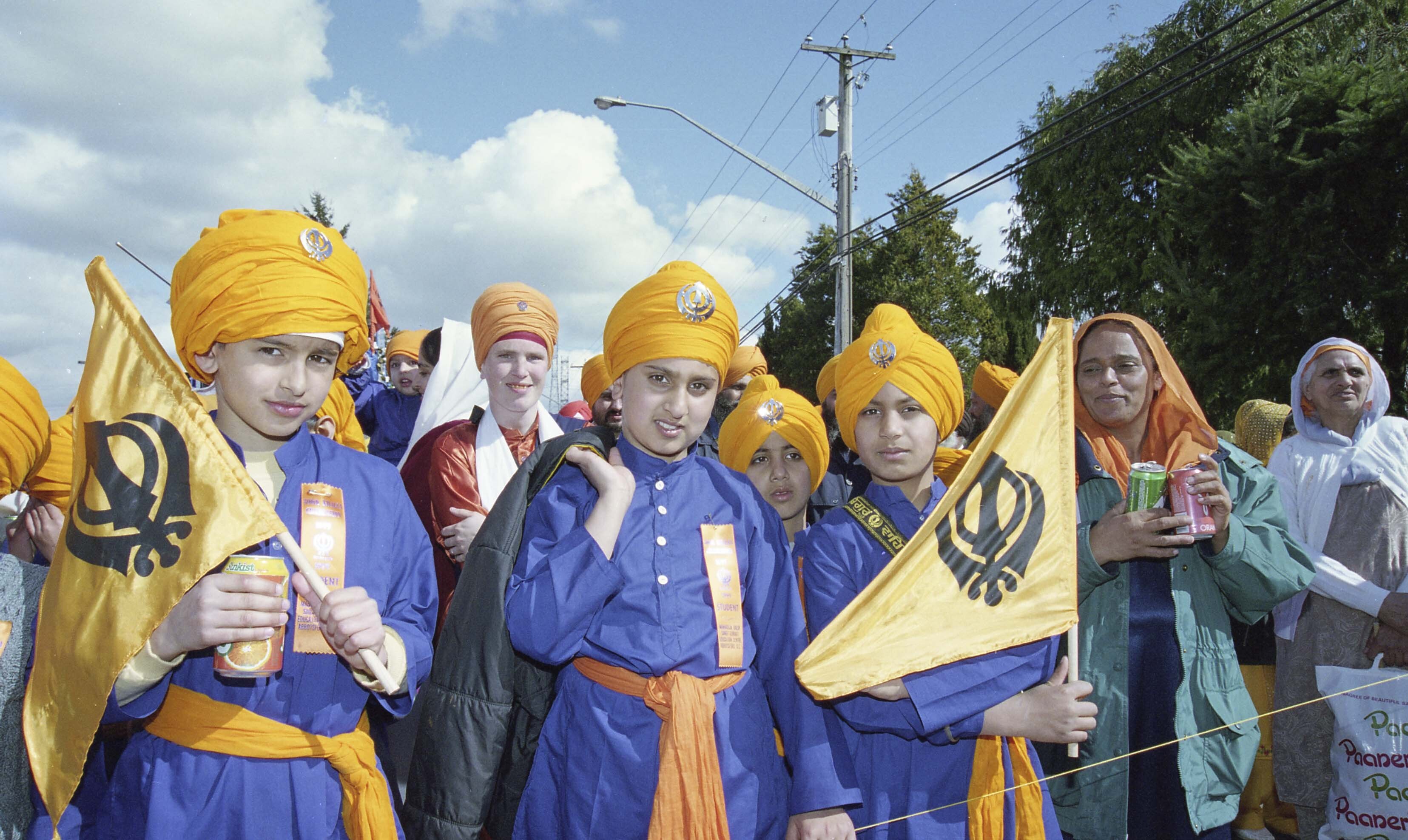
Photograph of a group of unidentified individuals, with a few individuals holding flags, at the Vaisakhi Nagar Kirtan held in Surrey, British Columbia (B.C.).
The Nishan Sahib is a Sikh holy triangular flag made of cotton or silk cloth, with a tassel at its end. The word, Nishan means symbol, and the flag is hoisted on a tall flagpole, outside most Gurdwaras (temples). The flagpole itself is covered with fabric, and ends with a two-edged dagger (khanda) on top. The emblem on the flag, which depicts a double-edged sword called a khanda (☬) in the centre, a chakkar which is circular, and flanked by two single-edged swords, or kirpans. A traditional symbol of the Khalsa Panth, the Nishan Sahib can be seen from far away, signifying the presence of Khalsa in the neighbourhood.
Vaisakhi is one of the most important festivals in Sikhi, marking the formation of the Khalsa in 1699 by the tenth guru, Guru Gobind Singh Ji. It is a time of renewal, gratitude, and unity, celebrated with processions, prayers, and acts of service. Beyond its significance in Sikh history, Vaisakhi is also a harvest festival in Punjab, observed with joy and thanksgiving. Additionally, Vaisakhi holds special significance for Hindus, as it marks the beginning of the solar new year and is celebrated in various regions of India under different names, such as Pohela Boishakh in Bengal and Puthandu in Tamil Nadu.
The Nishan Sahib is a Sikh holy triangular flag made of cotton or silk cloth, with a tassel at its end. The word, Nishan means symbol, and the flag is hoisted on a tall flagpole, outside most Gurdwaras (temples). The flagpole itself is covered with fabric, and ends with a two-edged dagger (khanda) on top. The emblem on the flag, which depicts a double-edged sword called a khanda (☬) in the centre, a chakkar which is circular, and flanked by two single-edged swords, or kirpans. A traditional symbol of the Khalsa Panth, the Nishan Sahib can be seen from far away, signifying the presence of Khalsa in the neighbourhood.
Vaisakhi is one of the most important festivals in Sikhi, marking the formation of the Khalsa in 1699 by the tenth guru, Guru Gobind Singh Ji. It is a time of renewal, gratitude, and unity, celebrated with processions, prayers, and acts of service. Beyond its significance in Sikh history, Vaisakhi is also a harvest festival in Punjab, observed with joy and thanksgiving. Additionally, Vaisakhi holds special significance for Hindus, as it marks the beginning of the solar new year and is celebrated in various regions of India under different names, such as Pohela Boishakh in Bengal and Puthandu in Tamil Nadu.
Member of
Creator: Bodalia, Chandra
Description
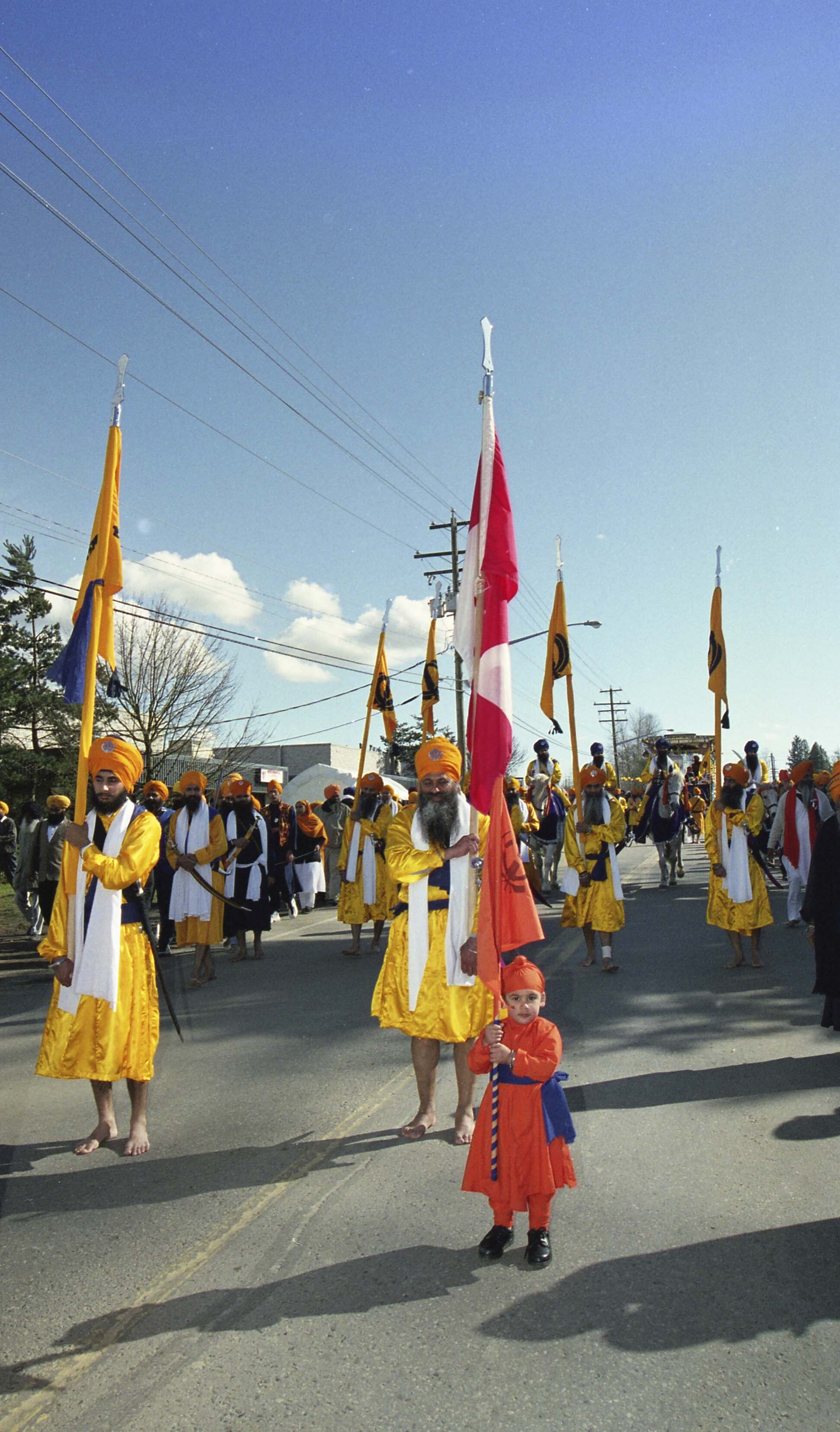
Photograph of a group of unidentified individuals, known as gursikhs, holding flags at the Vaisakhi Nagar Kirtan held in Surrey, British Columbia (B.C.).
Gursikhs, holding the Canadian and nishan sahib flag, are Sikhs devoted to the Guru and the teachings of Sikhi. The Nishan Sahib is a Sikh holy triangular flag made of cotton or silk cloth, with a tassel at its end. The word, Nishan means symbol, and the flag is hoisted on a tall flagpole, outside most Gurdwaras (temples). The flagpole itself is covered with fabric, and ends with a two-edged dagger (khanda) on top. The emblem on the flag, which depicts a double-edged sword called a khanda (☬) in the centre, a chakkar which is circular, and flanked by two single-edged swords, or kirpans. A traditional symbol of the Khalsa Panth, the Nishan Sahib can be seen from far away, signifying the presence of Khalsa in the neighbourhood.
Vaisakhi is one of the most important festivals in Sikhi, marking the formation of the Khalsa in 1699 by the tenth guru, Guru Gobind Singh Ji. It is a time of renewal, gratitude, and unity, celebrated with processions, prayers, and acts of service. Beyond its significance in Sikh history, Vaisakhi is also a harvest festival in Punjab, observed with joy and thanksgiving. Additionally, Vaisakhi holds special significance for Hindus, as it marks the beginning of the solar new year and is celebrated in various regions of India under different names, such as Pohela Boishakh in Bengal and Puthandu in Tamil Nadu.
Gursikhs, holding the Canadian and nishan sahib flag, are Sikhs devoted to the Guru and the teachings of Sikhi. The Nishan Sahib is a Sikh holy triangular flag made of cotton or silk cloth, with a tassel at its end. The word, Nishan means symbol, and the flag is hoisted on a tall flagpole, outside most Gurdwaras (temples). The flagpole itself is covered with fabric, and ends with a two-edged dagger (khanda) on top. The emblem on the flag, which depicts a double-edged sword called a khanda (☬) in the centre, a chakkar which is circular, and flanked by two single-edged swords, or kirpans. A traditional symbol of the Khalsa Panth, the Nishan Sahib can be seen from far away, signifying the presence of Khalsa in the neighbourhood.
Vaisakhi is one of the most important festivals in Sikhi, marking the formation of the Khalsa in 1699 by the tenth guru, Guru Gobind Singh Ji. It is a time of renewal, gratitude, and unity, celebrated with processions, prayers, and acts of service. Beyond its significance in Sikh history, Vaisakhi is also a harvest festival in Punjab, observed with joy and thanksgiving. Additionally, Vaisakhi holds special significance for Hindus, as it marks the beginning of the solar new year and is celebrated in various regions of India under different names, such as Pohela Boishakh in Bengal and Puthandu in Tamil Nadu.
Member of
Creator: Bodalia, Chandra
Description
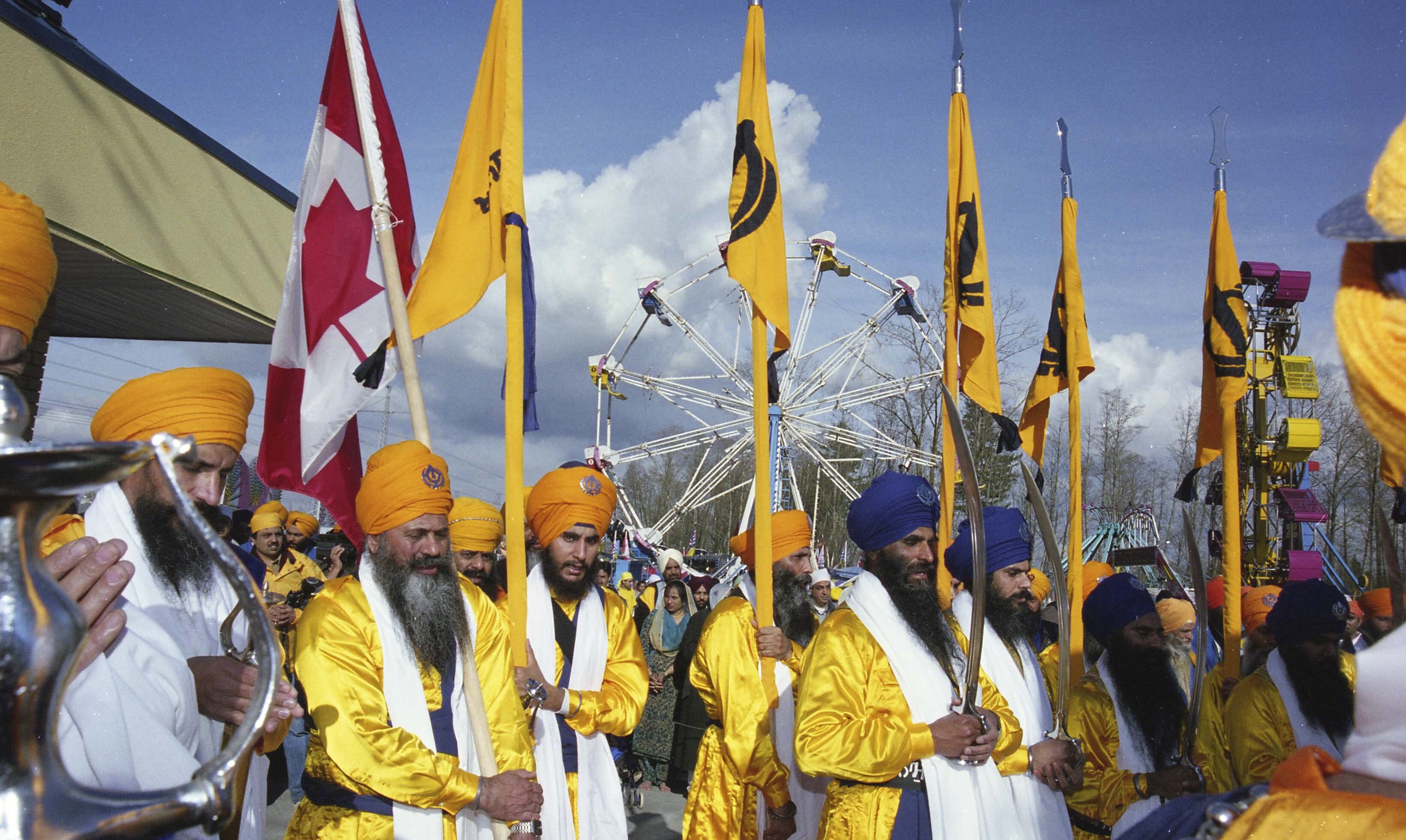
Photograph of a group of unidentified individuals, known as gursikhs, holding flags at Gurdwara Sahib Dasmesh Darbar in Surrey, British Columbia (B.C.). Individuals had gathered at the gurdwara (sikh temple) for the Vaisakhi Nagar Kirtan.
Gursikhs, holding the nishan sahib flag, are Sikhs devoted to the Guru and the teachings of Sikhi. The Nishan Sahib is a Sikh holy triangular flag made of cotton or silk cloth, with a tassel at its end. The word, Nishan means symbol, and the flag is hoisted on a tall flagpole, outside most Gurdwaras (temples). The flagpole itself is covered with fabric, and ends with a two-edged dagger (khanda) on top. The emblem on the flag, which depicts a double-edged sword called a khanda (☬) in the centre, a chakkar which is circular, and flanked by two single-edged swords, or kirpans. A traditional symbol of the Khalsa Panth, the Nishan Sahib can be seen from far away, signifying the presence of Khalsa in the neighbourhood.
Gurdwara Sahib Dasmesh Darbar, located in Surrey, B.C., was formed in 1998 to help combat the growing issues affecting the Sikh community both locally and globally. Since its formation, the Gurdwara Sahib has continuously held programs to benefit and promote the Sikh way of life.
Vaisakhi is one of the most important festivals in Sikhi, marking the formation of the Khalsa in 1699 by the tenth guru, Guru Gobind Singh Ji. It is a time of renewal, gratitude, and unity, celebrated with processions, prayers, and acts of service. Beyond its significance in Sikh history, Vaisakhi is also a harvest festival in Punjab, observed with joy and thanksgiving. Additionally, Vaisakhi holds special significance for Hindus, as it marks the beginning of the solar new year and is celebrated in various regions of India under different names, such as Pohela Boishakh in Bengal and Puthandu in Tamil Nadu.
Gursikhs, holding the nishan sahib flag, are Sikhs devoted to the Guru and the teachings of Sikhi. The Nishan Sahib is a Sikh holy triangular flag made of cotton or silk cloth, with a tassel at its end. The word, Nishan means symbol, and the flag is hoisted on a tall flagpole, outside most Gurdwaras (temples). The flagpole itself is covered with fabric, and ends with a two-edged dagger (khanda) on top. The emblem on the flag, which depicts a double-edged sword called a khanda (☬) in the centre, a chakkar which is circular, and flanked by two single-edged swords, or kirpans. A traditional symbol of the Khalsa Panth, the Nishan Sahib can be seen from far away, signifying the presence of Khalsa in the neighbourhood.
Gurdwara Sahib Dasmesh Darbar, located in Surrey, B.C., was formed in 1998 to help combat the growing issues affecting the Sikh community both locally and globally. Since its formation, the Gurdwara Sahib has continuously held programs to benefit and promote the Sikh way of life.
Vaisakhi is one of the most important festivals in Sikhi, marking the formation of the Khalsa in 1699 by the tenth guru, Guru Gobind Singh Ji. It is a time of renewal, gratitude, and unity, celebrated with processions, prayers, and acts of service. Beyond its significance in Sikh history, Vaisakhi is also a harvest festival in Punjab, observed with joy and thanksgiving. Additionally, Vaisakhi holds special significance for Hindus, as it marks the beginning of the solar new year and is celebrated in various regions of India under different names, such as Pohela Boishakh in Bengal and Puthandu in Tamil Nadu.
Member of
Creator: Bodalia, Chandra
Description
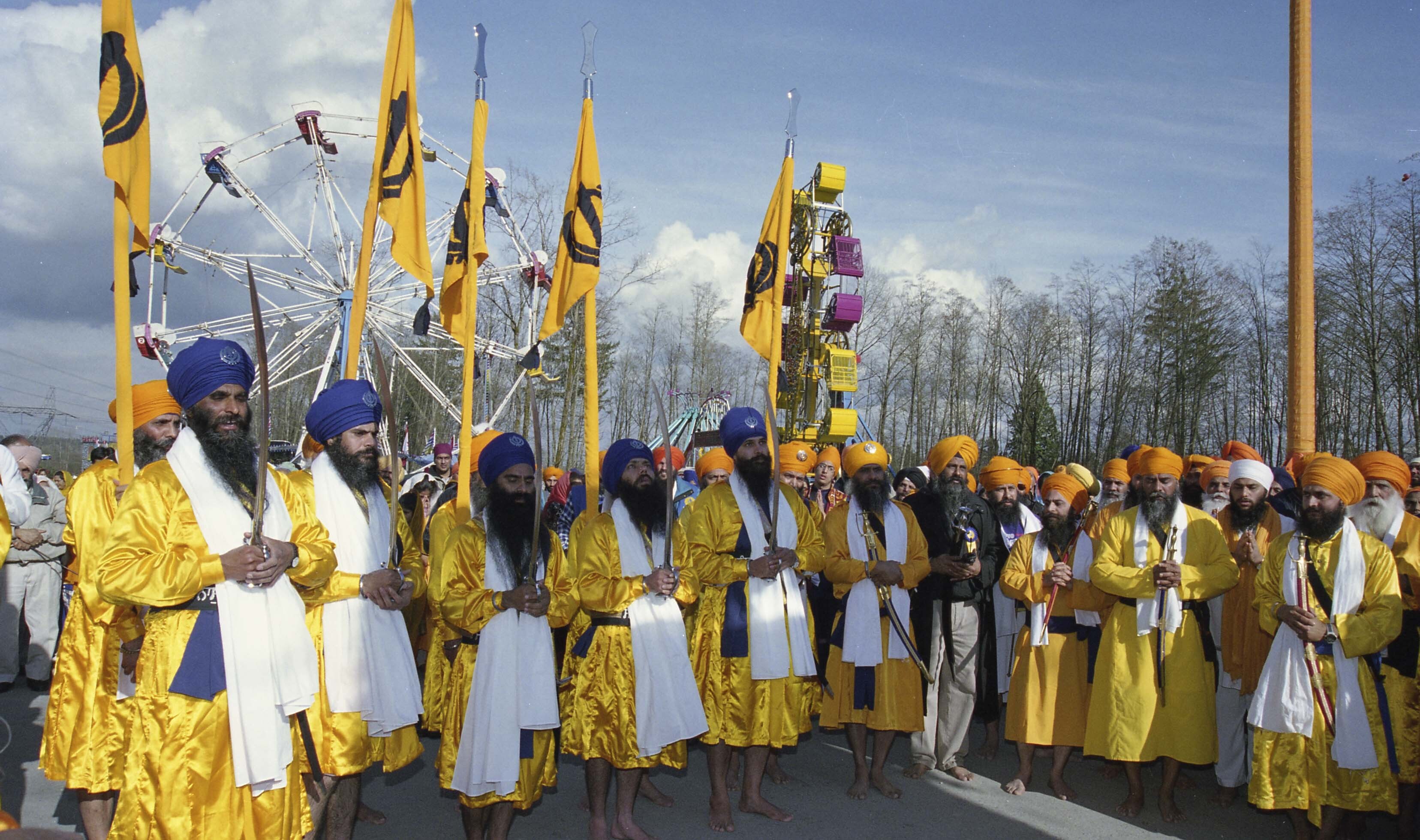
Photograph of a group of unidentified individuals, known as gursikhs, holding flags at Gurdwara Sahib Dasmesh Darbar in Surrey, British Columbia (B.C.). Individuals had gathered at the gurdwara (sikh temple) for the Vaisakhi Nagar Kirtan.
Gursikhs, holding the nishan sahib flag, are Sikhs devoted to the Guru and the teachings of Sikhi. The Nishan Sahib is a Sikh holy triangular flag made of cotton or silk cloth, with a tassel at its end. The word, Nishan means symbol, and the flag is hoisted on a tall flagpole, outside most Gurdwaras (temples). The flagpole itself is covered with fabric, and ends with a two-edged dagger (khanda) on top. The emblem on the flag, which depicts a double-edged sword called a khanda (☬) in the centre, a chakkar which is circular, and flanked by two single-edged swords, or kirpans. A traditional symbol of the Khalsa Panth, the Nishan Sahib can be seen from far away, signifying the presence of Khalsa in the neighbourhood.
Gurdwara Sahib Dasmesh Darbar, located in Surrey, B.C., was formed in 1998 to help combat the growing issues affecting the Sikh community both locally and globally. Since its formation, the Gurdwara Sahib has continuously held programs to benefit and promote the Sikh way of life.
Vaisakhi is one of the most important festivals in Sikhi, marking the formation of the Khalsa in 1699 by the tenth guru, Guru Gobind Singh Ji. It is a time of renewal, gratitude, and unity, celebrated with processions, prayers, and acts of service. Beyond its significance in Sikh history, Vaisakhi is also a harvest festival in Punjab, observed with joy and thanksgiving. Additionally, Vaisakhi holds special significance for Hindus, as it marks the beginning of the solar new year and is celebrated in various regions of India under different names, such as Pohela Boishakh in Bengal and Puthandu in Tamil Nadu.
Gursikhs, holding the nishan sahib flag, are Sikhs devoted to the Guru and the teachings of Sikhi. The Nishan Sahib is a Sikh holy triangular flag made of cotton or silk cloth, with a tassel at its end. The word, Nishan means symbol, and the flag is hoisted on a tall flagpole, outside most Gurdwaras (temples). The flagpole itself is covered with fabric, and ends with a two-edged dagger (khanda) on top. The emblem on the flag, which depicts a double-edged sword called a khanda (☬) in the centre, a chakkar which is circular, and flanked by two single-edged swords, or kirpans. A traditional symbol of the Khalsa Panth, the Nishan Sahib can be seen from far away, signifying the presence of Khalsa in the neighbourhood.
Gurdwara Sahib Dasmesh Darbar, located in Surrey, B.C., was formed in 1998 to help combat the growing issues affecting the Sikh community both locally and globally. Since its formation, the Gurdwara Sahib has continuously held programs to benefit and promote the Sikh way of life.
Vaisakhi is one of the most important festivals in Sikhi, marking the formation of the Khalsa in 1699 by the tenth guru, Guru Gobind Singh Ji. It is a time of renewal, gratitude, and unity, celebrated with processions, prayers, and acts of service. Beyond its significance in Sikh history, Vaisakhi is also a harvest festival in Punjab, observed with joy and thanksgiving. Additionally, Vaisakhi holds special significance for Hindus, as it marks the beginning of the solar new year and is celebrated in various regions of India under different names, such as Pohela Boishakh in Bengal and Puthandu in Tamil Nadu.
Member of
Creator: Bodalia, Chandra
Description
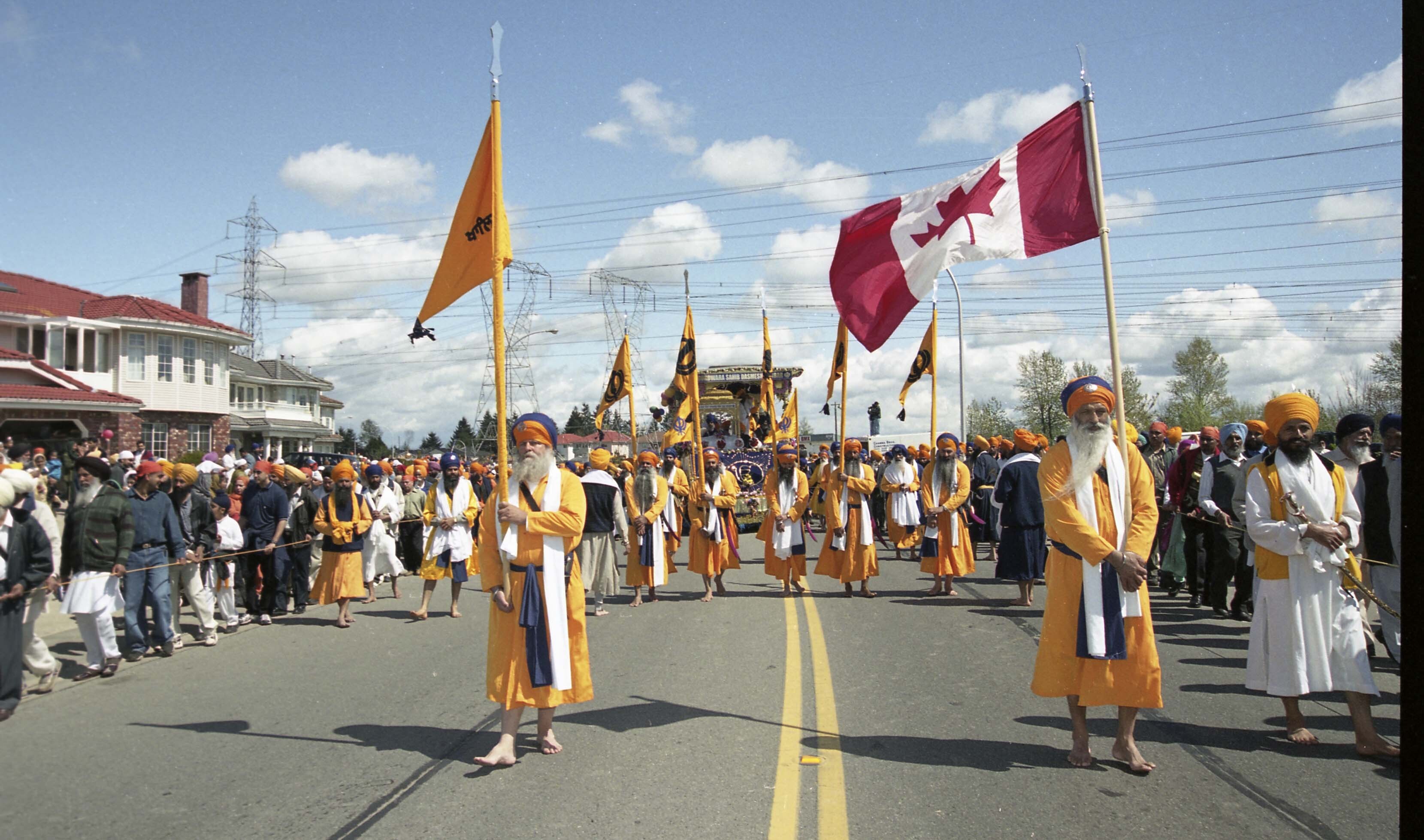
Photograph of a group of unidentified individuals, known as gursikhs, holding flags at the Vaisakhi Nagar Kirtan held in Surrey, British Columbia (B.C.).
Gursikhs, holding the Canadian and nishan sahib flag, are Sikhs devoted to the Guru and the teachings of Sikhi. The Nishan Sahib is a Sikh holy triangular flag made of cotton or silk cloth, with a tassel at its end. The word, Nishan means symbol, and the flag is hoisted on a tall flagpole, outside most Gurdwaras (temples). The flagpole itself is covered with fabric, and ends with a two-edged dagger (khanda) on top. The emblem on the flag, which depicts a double-edged sword called a khanda (☬) in the centre, a chakkar which is circular, and flanked by two single-edged swords, or kirpans. A traditional symbol of the Khalsa Panth, the Nishan Sahib can be seen from far away, signifying the presence of Khalsa in the neighbourhood.
Vaisakhi is one of the most important festivals in Sikhi, marking the formation of the Khalsa in 1699 by the tenth guru, Guru Gobind Singh Ji. It is a time of renewal, gratitude, and unity, celebrated with processions, prayers, and acts of service. Beyond its significance in Sikh history, Vaisakhi is also a harvest festival in Punjab, observed with joy and thanksgiving. Additionally, Vaisakhi holds special significance for Hindus, as it marks the beginning of the solar new year and is celebrated in various regions of India under different names, such as Pohela Boishakh in Bengal and Puthandu in Tamil Nadu.
Gursikhs, holding the Canadian and nishan sahib flag, are Sikhs devoted to the Guru and the teachings of Sikhi. The Nishan Sahib is a Sikh holy triangular flag made of cotton or silk cloth, with a tassel at its end. The word, Nishan means symbol, and the flag is hoisted on a tall flagpole, outside most Gurdwaras (temples). The flagpole itself is covered with fabric, and ends with a two-edged dagger (khanda) on top. The emblem on the flag, which depicts a double-edged sword called a khanda (☬) in the centre, a chakkar which is circular, and flanked by two single-edged swords, or kirpans. A traditional symbol of the Khalsa Panth, the Nishan Sahib can be seen from far away, signifying the presence of Khalsa in the neighbourhood.
Vaisakhi is one of the most important festivals in Sikhi, marking the formation of the Khalsa in 1699 by the tenth guru, Guru Gobind Singh Ji. It is a time of renewal, gratitude, and unity, celebrated with processions, prayers, and acts of service. Beyond its significance in Sikh history, Vaisakhi is also a harvest festival in Punjab, observed with joy and thanksgiving. Additionally, Vaisakhi holds special significance for Hindus, as it marks the beginning of the solar new year and is celebrated in various regions of India under different names, such as Pohela Boishakh in Bengal and Puthandu in Tamil Nadu.
Member of
Creator: Bodalia, Chandra
Description
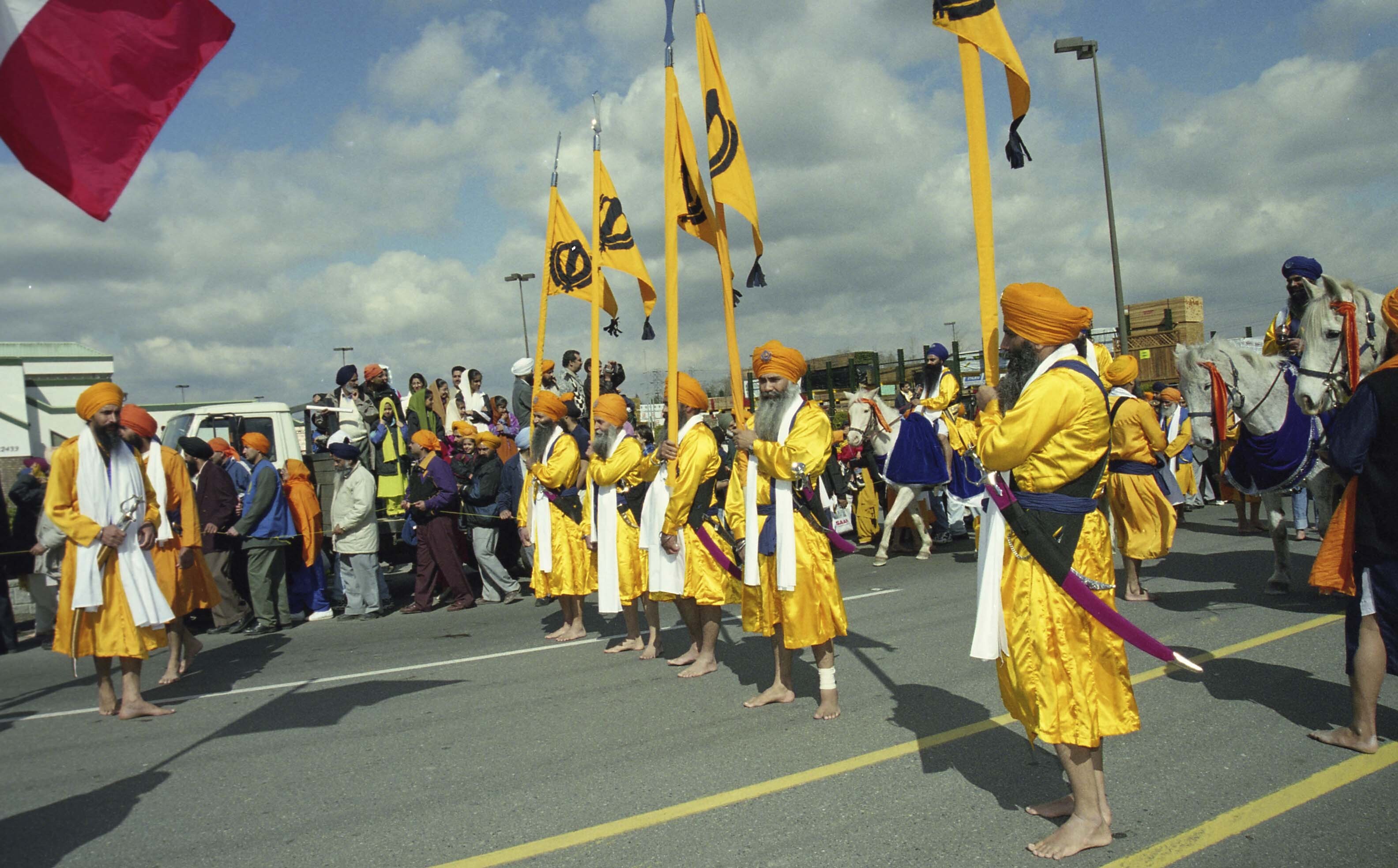
Photograph of a group of unidentified individuals, known as gursikhs, holding flags at the Vaisakhi Nagar Kirtan held in Surrey, British Columbia (B.C.).
Gursikhs, holding the nishan sahib flag, are Sikhs devoted to the Guru and the teachings of Sikhi. The Nishan Sahib is a Sikh holy triangular flag made of cotton or silk cloth, with a tassel at its end. The word, Nishan means symbol, and the flag is hoisted on a tall flagpole, outside most Gurdwaras (temples). The flagpole itself is covered with fabric, and ends with a two-edged dagger (khanda) on top. The emblem on the flag, which depicts a double-edged sword called a khanda (☬) in the centre, a chakkar which is circular, and flanked by two single-edged swords, or kirpans. A traditional symbol of the Khalsa Panth, the Nishan Sahib can be seen from far away, signifying the presence of Khalsa in the neighbourhood.
Vaisakhi is one of the most important festivals in Sikhi, marking the formation of the Khalsa in 1699 by the tenth guru, Guru Gobind Singh Ji. It is a time of renewal, gratitude, and unity, celebrated with processions, prayers, and acts of service. Beyond its significance in Sikh history, Vaisakhi is also a harvest festival in Punjab, observed with joy and thanksgiving. Additionally, Vaisakhi holds special significance for Hindus, as it marks the beginning of the solar new year and is celebrated in various regions of India under different names, such as Pohela Boishakh in Bengal and Puthandu in Tamil Nadu.
Gursikhs, holding the nishan sahib flag, are Sikhs devoted to the Guru and the teachings of Sikhi. The Nishan Sahib is a Sikh holy triangular flag made of cotton or silk cloth, with a tassel at its end. The word, Nishan means symbol, and the flag is hoisted on a tall flagpole, outside most Gurdwaras (temples). The flagpole itself is covered with fabric, and ends with a two-edged dagger (khanda) on top. The emblem on the flag, which depicts a double-edged sword called a khanda (☬) in the centre, a chakkar which is circular, and flanked by two single-edged swords, or kirpans. A traditional symbol of the Khalsa Panth, the Nishan Sahib can be seen from far away, signifying the presence of Khalsa in the neighbourhood.
Vaisakhi is one of the most important festivals in Sikhi, marking the formation of the Khalsa in 1699 by the tenth guru, Guru Gobind Singh Ji. It is a time of renewal, gratitude, and unity, celebrated with processions, prayers, and acts of service. Beyond its significance in Sikh history, Vaisakhi is also a harvest festival in Punjab, observed with joy and thanksgiving. Additionally, Vaisakhi holds special significance for Hindus, as it marks the beginning of the solar new year and is celebrated in various regions of India under different names, such as Pohela Boishakh in Bengal and Puthandu in Tamil Nadu.
Member of
Creator: Bodalia, Chandra
Description
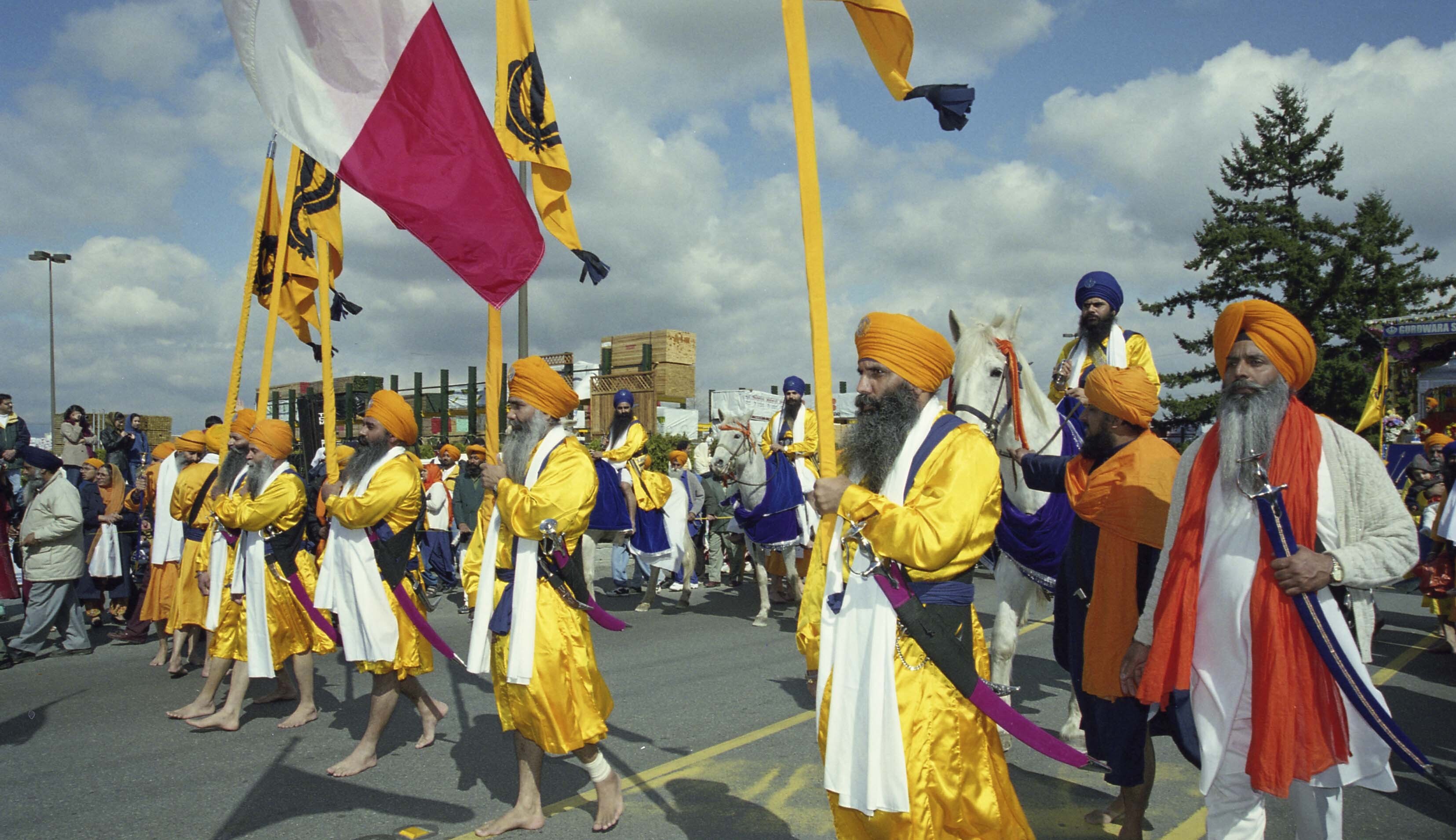
Photograph of a group of unidentified individuals, known as gursikhs, holding flags at the Vaisakhi Nagar Kirtan held in Surrey, British Columbia (B.C.).
Gursikhs, holding the nishan sahib flag, are Sikhs devoted to the Guru and the teachings of Sikhi. The Nishan Sahib is a Sikh holy triangular flag made of cotton or silk cloth, with a tassel at its end. The word, Nishan means symbol, and the flag is hoisted on a tall flagpole, outside most Gurdwaras (temples). The flagpole itself is covered with fabric, and ends with a two-edged dagger (khanda) on top. The emblem on the flag, which depicts a double-edged sword called a khanda (☬) in the centre, a chakkar which is circular, and flanked by two single-edged swords, or kirpans. A traditional symbol of the Khalsa Panth, the Nishan Sahib can be seen from far away, signifying the presence of Khalsa in the neighbourhood.
Vaisakhi is one of the most important festivals in Sikhi, marking the formation of the Khalsa in 1699 by the tenth guru, Guru Gobind Singh Ji. It is a time of renewal, gratitude, and unity, celebrated with processions, prayers, and acts of service. Beyond its significance in Sikh history, Vaisakhi is also a harvest festival in Punjab, observed with joy and thanksgiving. Additionally, Vaisakhi holds special significance for Hindus, as it marks the beginning of the solar new year and is celebrated in various regions of India under different names, such as Pohela Boishakh in Bengal and Puthandu in Tamil Nadu.
Gursikhs, holding the nishan sahib flag, are Sikhs devoted to the Guru and the teachings of Sikhi. The Nishan Sahib is a Sikh holy triangular flag made of cotton or silk cloth, with a tassel at its end. The word, Nishan means symbol, and the flag is hoisted on a tall flagpole, outside most Gurdwaras (temples). The flagpole itself is covered with fabric, and ends with a two-edged dagger (khanda) on top. The emblem on the flag, which depicts a double-edged sword called a khanda (☬) in the centre, a chakkar which is circular, and flanked by two single-edged swords, or kirpans. A traditional symbol of the Khalsa Panth, the Nishan Sahib can be seen from far away, signifying the presence of Khalsa in the neighbourhood.
Vaisakhi is one of the most important festivals in Sikhi, marking the formation of the Khalsa in 1699 by the tenth guru, Guru Gobind Singh Ji. It is a time of renewal, gratitude, and unity, celebrated with processions, prayers, and acts of service. Beyond its significance in Sikh history, Vaisakhi is also a harvest festival in Punjab, observed with joy and thanksgiving. Additionally, Vaisakhi holds special significance for Hindus, as it marks the beginning of the solar new year and is celebrated in various regions of India under different names, such as Pohela Boishakh in Bengal and Puthandu in Tamil Nadu.