
Parades
Authority Sources
2024_19_18_003-Service File.jpg
Download
Creator:
Description
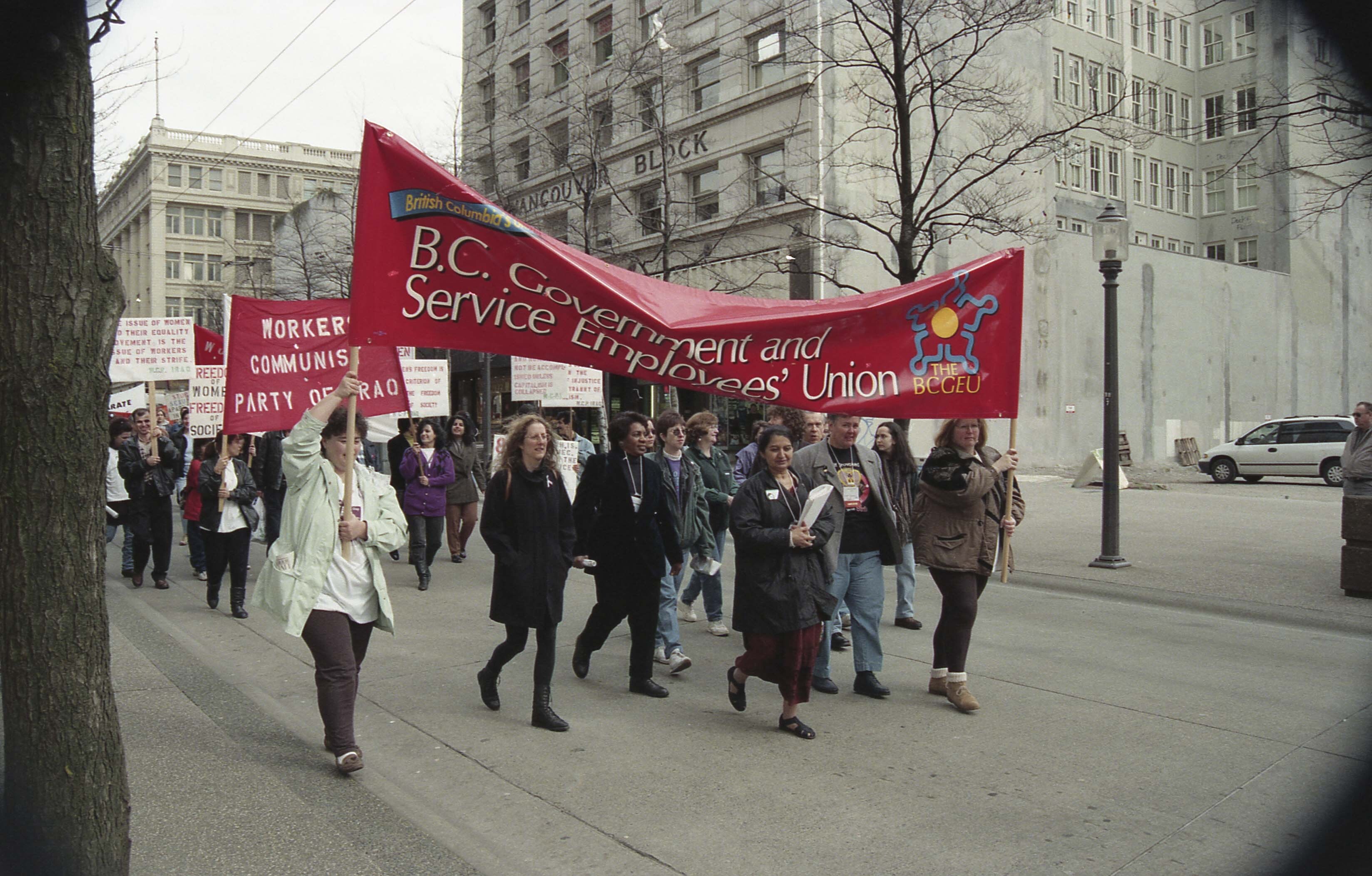
Photograph of the B.C. Government and Service Employees' Union participating in the International Women's Day parade which took place in Vancouver, British Columbia (B.C.).
The B.C. Government and Services Employees' Union is one of the largest and most diverse unions in British Columbia with over 90,000 members in 550 bargaining units in the public and private sector. They trace their beginnings back to the early 1900s when provincial government employees formed an association to address their working conditions. Since then, the union has organized thousands of workers outside the government service. About a third of the B.C. Government and Services Employees' Union membership works in the direct government service. Their jobs include protecting children and families, administering social assistance, managing natural resources, staffing provincial correctional facilities, fighting forest fires and providing the government's technical and clerical services.
International Women's Day (IWD) is a specific day dedicated to the advancement of women worldwide; celebrated annually on March 8, to honor the achievements of women across all aspects of life – social, economic, cultural, and political – while also advocating for gender equality. Originating from labor movements in the early 20th century, IWD has evolved into a globally recognized occasion marked by events, discussions, and initiatives advocating for inclusivity and equity. IWD was marked for the first time in 1911 in Austria, Denmark, Germany and Switzerland, on March 19, with more than one million women and men attending rallies.
2024_19_18_002-Service File.jpg
Download
Creator:
Description
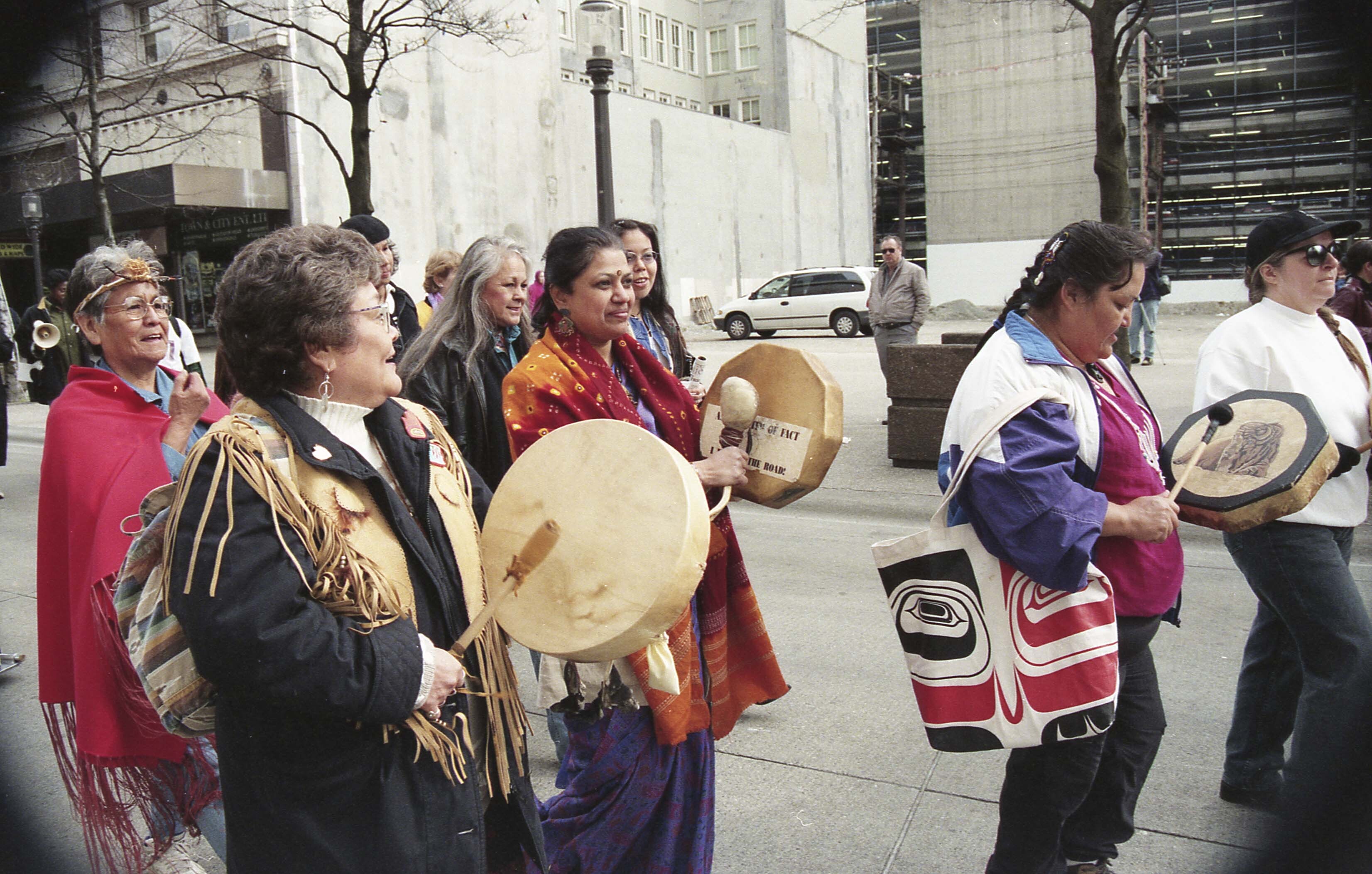
Photograph of a group of unidentified individuals, playing Indigenous drums, participating in the International Women's Day parade which took place in Vancouver, British Columbia (B.C.).
Indigenous drums occupy a central place in the cultures of First Nations, Métis and Inuit peoples in Canada. They are much more than just musical instruments; they are sacred objects, bearers of spirituality, history and cultural identity. Native American drums have been present in indigenous cultures across North America for thousands of years. Their precise origins are difficult to determine, as they are an integral part of oral and spiritual traditions passed down through generations. The materials used to make drums vary by region and nation, but the process of making them is always deeply respected and rooted in cultural practices. For Indigenous peoples in Canada, the drum is often considered the "heartbeat of Mother Earth." It is a sacred link between the physical and spiritual worlds. When the drum resonates, it calls forth the spirits and creates a connection between humans, ancestors, and the Creator. This resonance is believed to align the rhythm of human life with that of the Earth and the universe. Drums are used in a variety of settings, including religious ceremonies, powwows, healings, and community gatherings. Each nation has its own songs and rhythms associated with its spiritual and cultural traditions. Beyond their spiritual and cultural role, Indigenous drums are also powerful symbols of resistance and resilience for Indigenous peoples in Canada. For decades, colonial policies sought to erase Indigenous cultural traditions, including the use of drums, by banning ceremonies and forcing assimilation. However, Indigenous communities resisted these attempts by continuing to practice and pass on their musical and spiritual traditions. Today, drums are used at protests, Indigenous rights marches, and other public events to demand recognition and respect for Indigenous cultures. The beating of the drum is a reminder of the strength and vitality of Indigenous peoples, despite the historical and contemporary challenges they have faced.
International Women's Day (IWD) is a specific day dedicated to the advancement of women worldwide; celebrated annually on March 8, to honor the achievements of women across all aspects of life – social, economic, cultural, and political – while also advocating for gender equality. Originating from labor movements in the early 20th century, IWD has evolved into a globally recognized occasion marked by events, discussions, and initiatives advocating for inclusivity and equity. IWD was marked for the first time in 1911 in Austria, Denmark, Germany and Switzerland, on March 19, with more than one million women and men attending rallies.
2024_19_18_001-Service File.jpg
Download
Creator:
Description
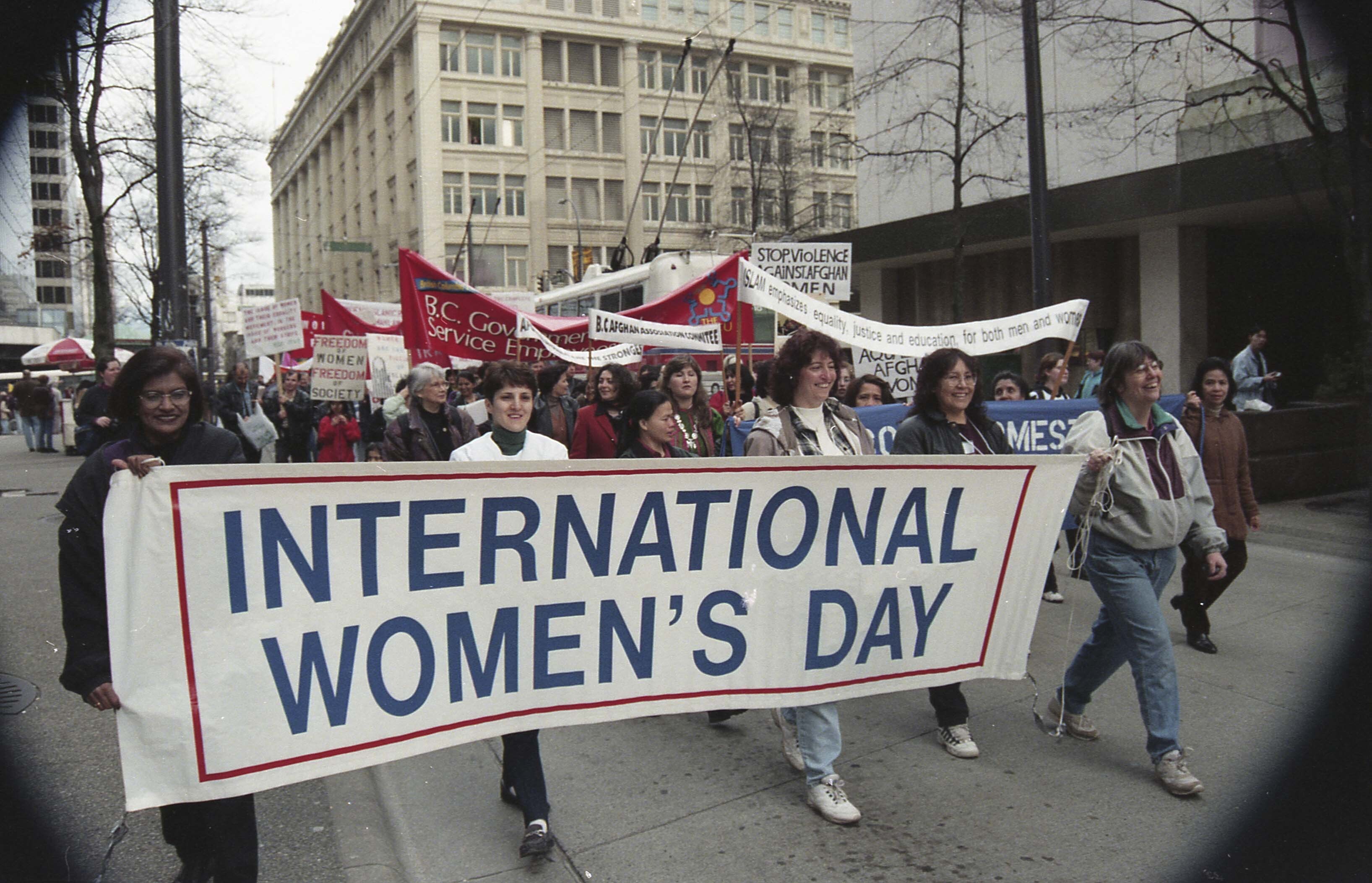
Photograph of a group of unidentified individuals, holding signs and banners, participating in the International Women's day parade which took place in Vancouver, British Columbia (B.C.).
International Women's Day (IWD) is a specific day dedicated to the advancement of women worldwide; celebrated annually on March 8, to honor the achievements of women across all aspects of life – social, economic, cultural, and political – while also advocating for gender equality. Originating from labor movements in the early 20th century, IWD has evolved into a globally recognized occasion marked by events, discussions, and initiatives advocating for inclusivity and equity. IWD was marked for the first time in 1911 in Austria, Denmark, Germany and Switzerland, on March 19, with more than one million women and men attending rallies.
International Women's Day (IWD) is a specific day dedicated to the advancement of women worldwide; celebrated annually on March 8, to honor the achievements of women across all aspects of life – social, economic, cultural, and political – while also advocating for gender equality. Originating from labor movements in the early 20th century, IWD has evolved into a globally recognized occasion marked by events, discussions, and initiatives advocating for inclusivity and equity. IWD was marked for the first time in 1911 in Austria, Denmark, Germany and Switzerland, on March 19, with more than one million women and men attending rallies.
2024_19_485_025-Service File.jpg
Download
Member of
Creator: Bodalia, Chandra
Description
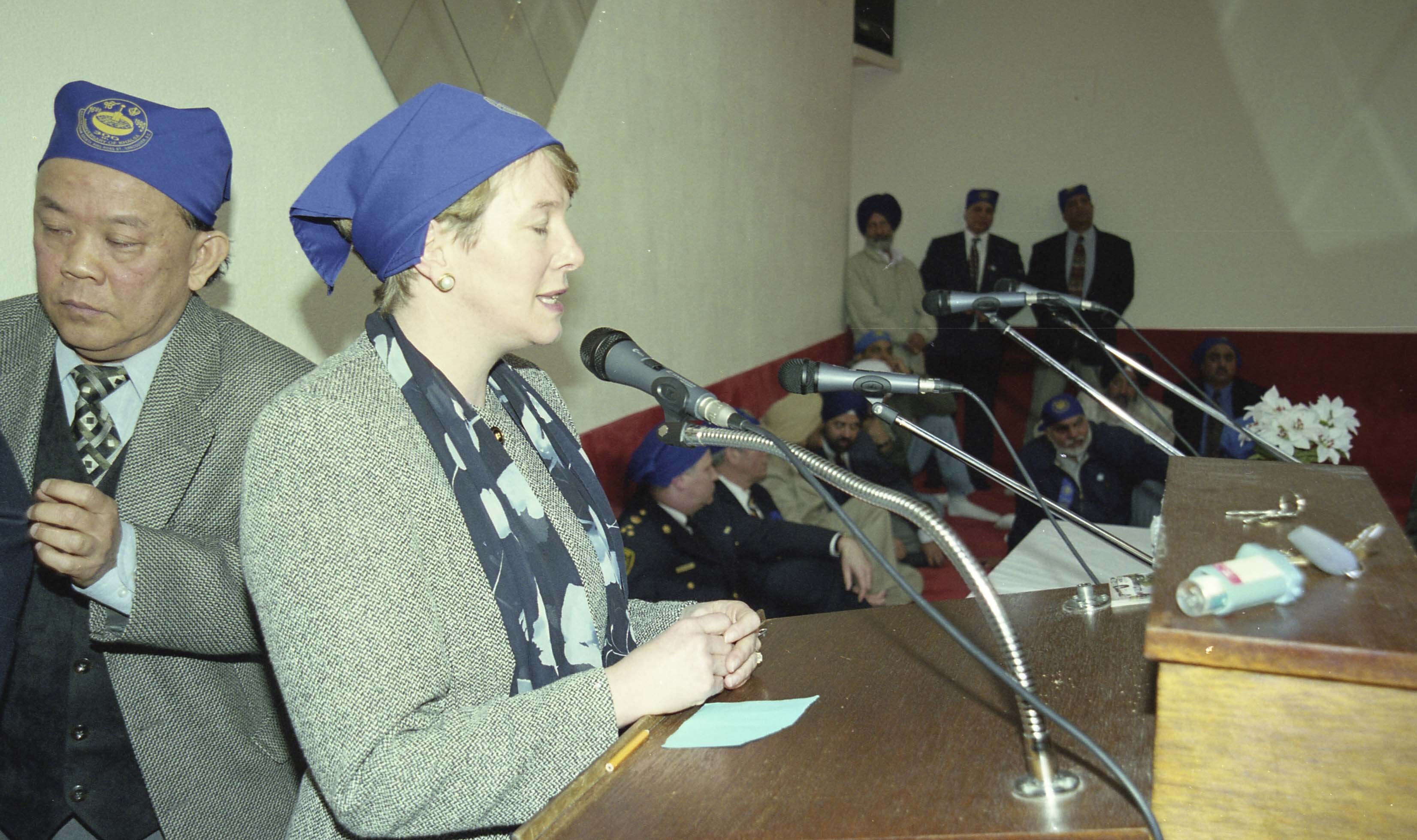
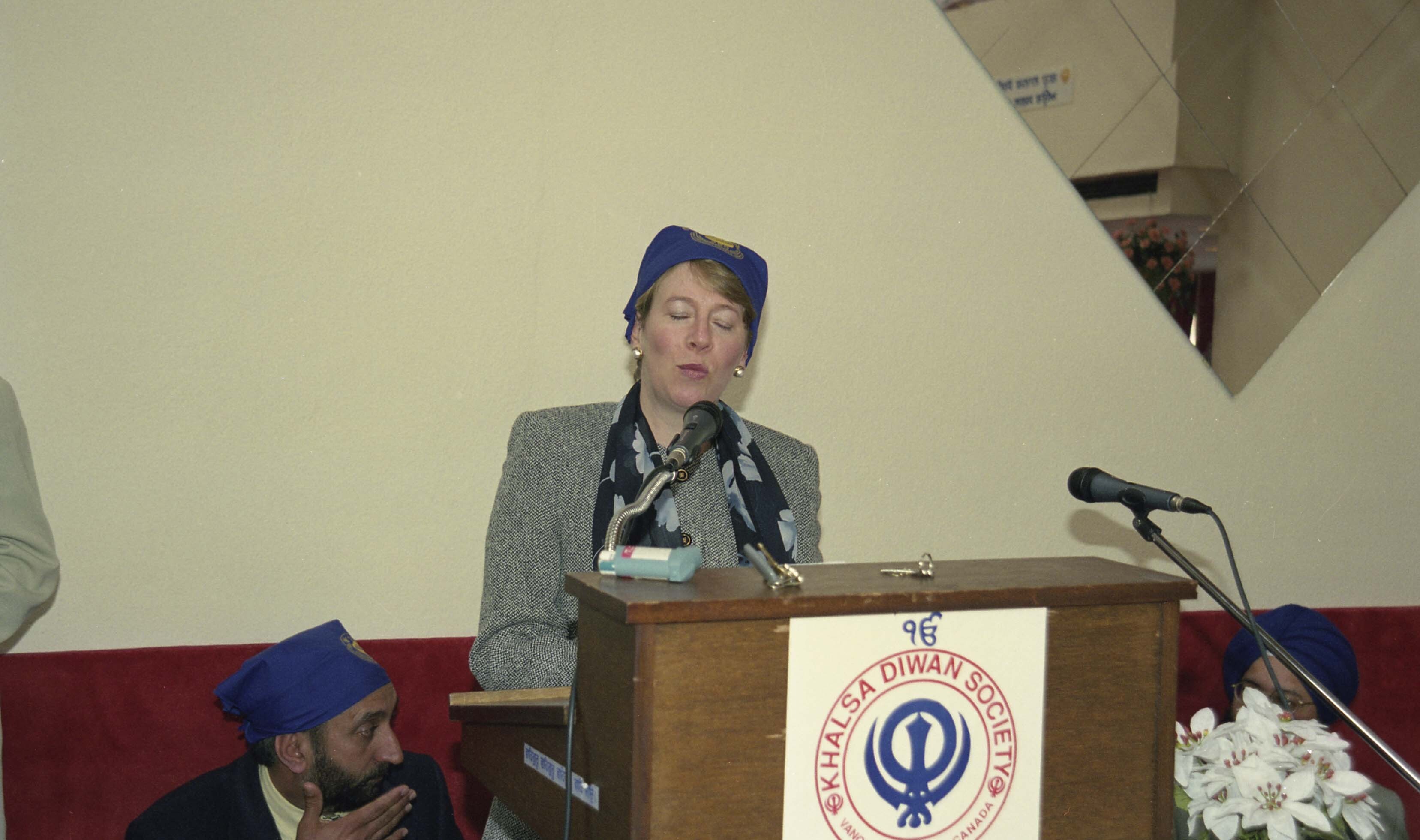
Photograph of an unidentified individual addressing the audience at the Sikh Temple in Vancouver, British Columbia (B.C.). Individuals had gathered at the Sikh Temple for the Vaisakhi Nagar Kirtan, organized by the Khalsa Diwan Society of Vancouver.
Vaisakhi is one of the most important festivals in Sikhi, marking the formation of the Khalsa in 1699 by the tenth guru, Guru Gobind Singh Ji. It is a time of renewal, gratitude, and unity, celebrated with processions, prayers, and acts of service. Beyond its significance in Sikh history, Vaisakhi is also a harvest festival in Punjab, observed with joy and thanksgiving. Additionally, Vaisakhi holds special significance for Hindus, as it marks the beginning of the solar new year and is celebrated in various regions of India under different names, such as Pohela Boishakh in Bengal and Puthandu in Tamil Nadu.
The Khalsa Diwan Society of Vancouver oversees the Vaisakhi celebrations in Vancouver. The Khalsa Diwan Society is a pioneer Sikh society, one of the oldest in Vancouver, formed on July 22, 1902 in British Columbia, Canada, formally established in 1906. In 1908, the Society purchased and built the first Sikh temple in Vancouver, which was located on West 2nd Avenue. This is believed to be the first Sikh temple in the whole of the American continent. This temple served the Sikh community until a new temple was occupied on April 25, 1970. The original temple was sold to build a bigger (present) temple located on Ross Street. The Khalsa Diwan Society has been a pioneer in raising Sikhi related issues and getting recognition for Sikhs in Canada. It continues to build a strong community based on Sikh values and principles. Every year the society organizes sports activities, including soccer and wrestling tournaments.
2024_19_485_024-Service File.jpg
Download
Member of
Creator: Bodalia, Chandra
Description
Photograph of an unidentified individual addressing the audience at the Sikh Temple in Vancouver, British Columbia (B.C.). Individuals had gathered at the Sikh Temple for the Vaisakhi Nagar Kirtan, organized by the Khalsa Diwan Society of Vancouver.
Vaisakhi is one of the most important festivals in Sikhi, marking the formation of the Khalsa in 1699 by the tenth guru, Guru Gobind Singh Ji. It is a time of renewal, gratitude, and unity, celebrated with processions, prayers, and acts of service. Beyond its significance in Sikh history, Vaisakhi is also a harvest festival in Punjab, observed with joy and thanksgiving. Additionally, Vaisakhi holds special significance for Hindus, as it marks the beginning of the solar new year and is celebrated in various regions of India under different names, such as Pohela Boishakh in Bengal and Puthandu in Tamil Nadu.
The Khalsa Diwan Society of Vancouver oversees the Vaisakhi celebrations in Vancouver. The Khalsa Diwan Society is a pioneer Sikh society, one of the oldest in Vancouver, formed on July 22, 1902 in British Columbia, Canada, formally established in 1906. In 1908, the Society purchased and built the first Sikh temple in Vancouver, which was located on West 2nd Avenue. This is believed to be the first Sikh temple in the whole of the American continent. This temple served the Sikh community until a new temple was occupied on April 25, 1970. The original temple was sold to build a bigger (present) temple located on Ross Street. The Khalsa Diwan Society has been a pioneer in raising Sikhi related issues and getting recognition for Sikhs in Canada. It continues to build a strong community based on Sikh values and principles. Every year the society organizes sports activities, including soccer and wrestling tournaments.
Vaisakhi is one of the most important festivals in Sikhi, marking the formation of the Khalsa in 1699 by the tenth guru, Guru Gobind Singh Ji. It is a time of renewal, gratitude, and unity, celebrated with processions, prayers, and acts of service. Beyond its significance in Sikh history, Vaisakhi is also a harvest festival in Punjab, observed with joy and thanksgiving. Additionally, Vaisakhi holds special significance for Hindus, as it marks the beginning of the solar new year and is celebrated in various regions of India under different names, such as Pohela Boishakh in Bengal and Puthandu in Tamil Nadu.
The Khalsa Diwan Society of Vancouver oversees the Vaisakhi celebrations in Vancouver. The Khalsa Diwan Society is a pioneer Sikh society, one of the oldest in Vancouver, formed on July 22, 1902 in British Columbia, Canada, formally established in 1906. In 1908, the Society purchased and built the first Sikh temple in Vancouver, which was located on West 2nd Avenue. This is believed to be the first Sikh temple in the whole of the American continent. This temple served the Sikh community until a new temple was occupied on April 25, 1970. The original temple was sold to build a bigger (present) temple located on Ross Street. The Khalsa Diwan Society has been a pioneer in raising Sikhi related issues and getting recognition for Sikhs in Canada. It continues to build a strong community based on Sikh values and principles. Every year the society organizes sports activities, including soccer and wrestling tournaments.
2024_19_485_022-Service File.jpg
Download
Member of
Creator: Bodalia, Chandra
Description
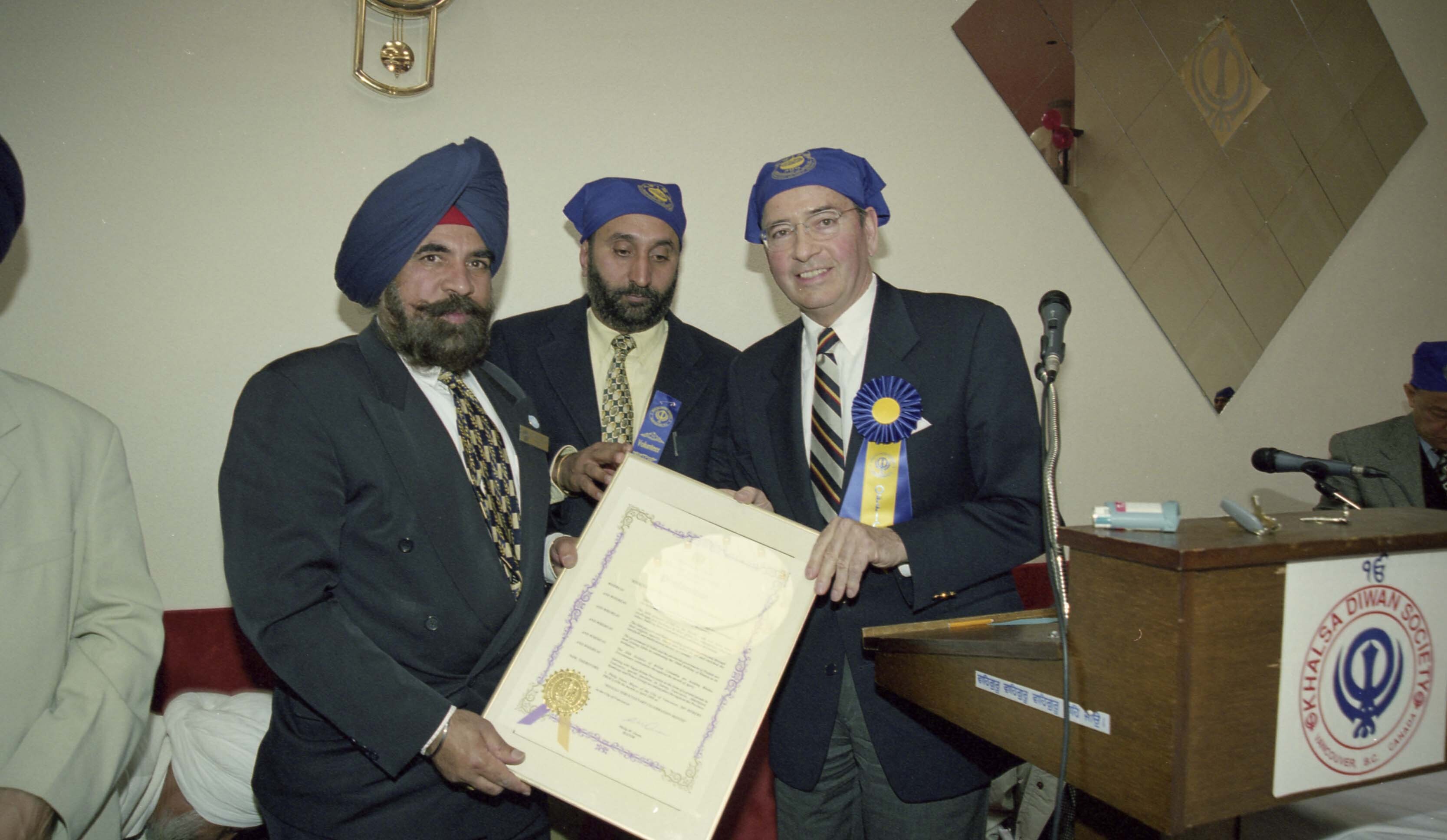
Photograph of Philip Owen and Jarnail Singh Bhandal holding a framed document with unidentified individuals at the Sikh Temple in Vancouver, British Columbia (B.C.). Individuals had gathered at the Sikh Temple for the Vaisakhi Nagar Kirtan, organized by the Khalsa Diwan Society of Vancouver.
Philip Owen (1933 - 2021) was a former City of Vancouver Mayor, City Councillor, Park Board Commissioner, and entrepreneur. Philip Owen was Vancouver's 36th mayor from 1993 to 2002, making him one of the city's longest serving mayors. Born and raised in Vancouver, he completed his education at Prince of Wales Secondary School and later New York University. Before entering Vancouver politics, he was the manager at Eaton's West Vancouver department store in his 20s' and by his 30s' he was an independent entrepreneur with a fabric business in Vancouver, Victoria, and New York. During his tenure as mayor, Owen was most noted for his championing of drug policy reform. Owen led the implementation of the "Four Pillars" drug strategy during the peak of the HIV epidemic and overdose crisis in the 1990s, a novel strategy pioneered in Switzerland representing a tectonic shift from treating substance use as a criminal justice issue towards a public health approach. His efforts helped lead to the establishment of Insite, North America's first sanctioned safe injection site.
Jarnail Singh Bhandal was the President of Khalsa Diwan Society.
Vaisakhi is one of the most important festivals in Sikhi, marking the formation of the Khalsa in 1699 by the tenth guru, Guru Gobind Singh Ji. It is a time of renewal, gratitude, and unity, celebrated with processions, prayers, and acts of service. Beyond its significance in Sikh history, Vaisakhi is also a harvest festival in Punjab, observed with joy and thanksgiving. Additionally, Vaisakhi holds special significance for Hindus, as it marks the beginning of the solar new year and is celebrated in various regions of India under different names, such as Pohela Boishakh in Bengal and Puthandu in Tamil Nadu.
The Khalsa Diwan Society of Vancouver oversees the Vaisakhi celebrations in Vancouver. The Khalsa Diwan Society is a pioneer Sikh society, one of the oldest in Vancouver, formed on July 22, 1902 in British Columbia, Canada, formally established in 1906. In 1908, the Society purchased and built the first Sikh temple in Vancouver, which was located on West 2nd Avenue. This is believed to be the first Sikh temple in the whole of the American continent. This temple served the Sikh community until a new temple was occupied on April 25, 1970. The original temple was sold to build a bigger (present) temple located on Ross Street. The Khalsa Diwan Society has been a pioneer in raising Sikhi related issues and getting recognition for Sikhs in Canada. It continues to build a strong community based on Sikh values and principles. Every year the society organizes sports activities, including soccer and wrestling tournaments.
2024_19_485_021-Service File.jpg
Download
Member of
Creator: Bodalia, Chandra
Description
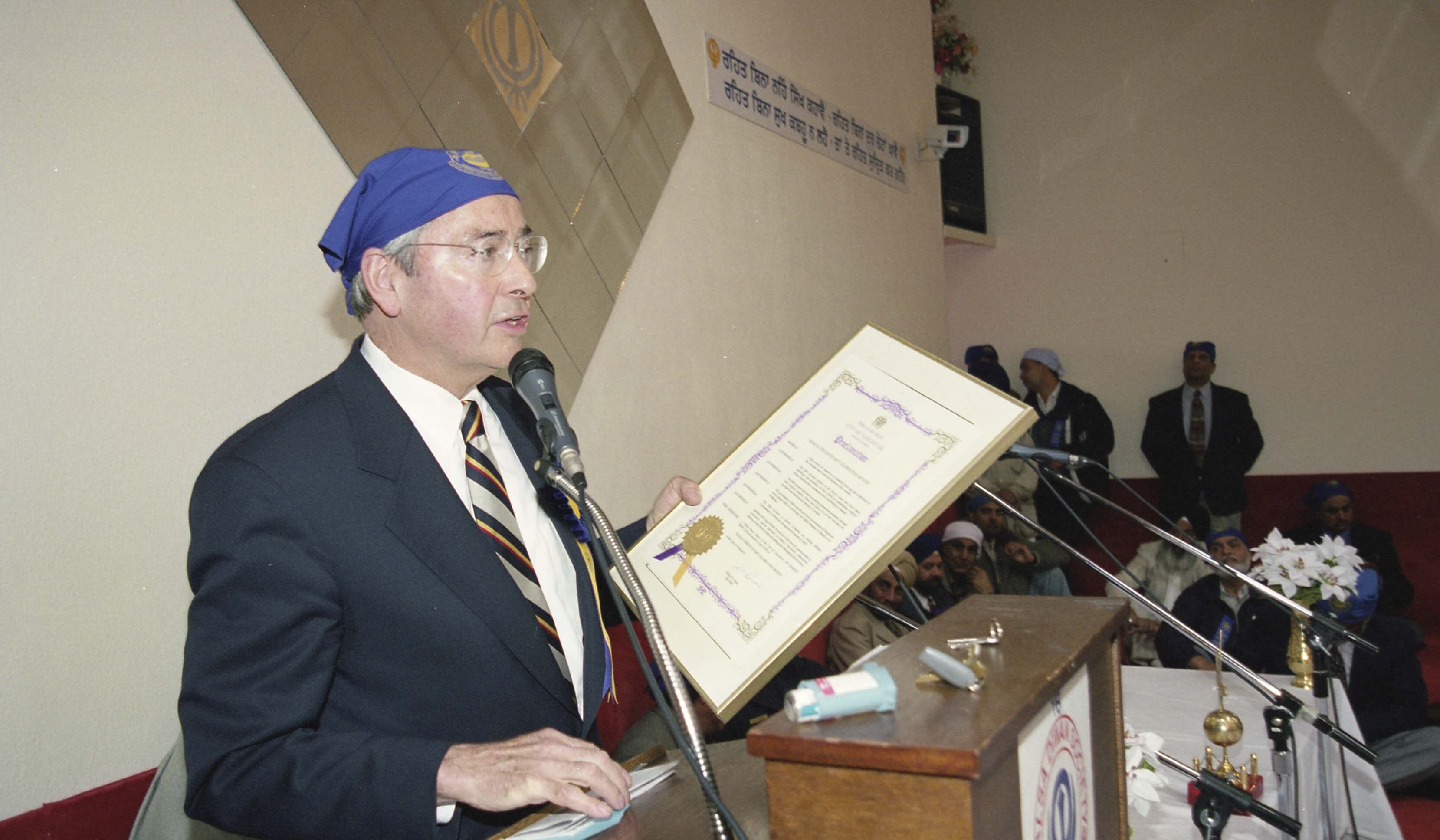
Photograph of Philip Owen addressing the audience at the Sikh Temple in Vancouver, British Columbia (B.C.). Individuals had gathered at the Sikh Temple for the Vaisakhi Nagar Kirtan, organized by the Khalsa Diwan Society of Vancouver.
Philip Owen (1933 - 2021) was a former City of Vancouver Mayor, City Councillor, Park Board Commissioner, and entrepreneur. Philip Owen was Vancouver's 36th mayor from 1993 to 2002, making him one of the city's longest serving mayors. Born and raised in Vancouver, he completed his education at Prince of Wales Secondary School and later New York University. Before entering Vancouver politics, he was the manager at Eaton's West Vancouver department store in his 20s' and by his 30s' he was an independent entrepreneur with a fabric business in Vancouver, Victoria, and New York. During his tenure as mayor, Owen was most noted for his championing of drug policy reform. Owen led the implementation of the "Four Pillars" drug strategy during the peak of the HIV epidemic and overdose crisis in the 1990s, a novel strategy pioneered in Switzerland representing a tectonic shift from treating substance use as a criminal justice issue towards a public health approach. His efforts helped lead to the establishment of Insite, North America's first sanctioned safe injection site.
Vaisakhi is one of the most important festivals in Sikhi, marking the formation of the Khalsa in 1699 by the tenth guru, Guru Gobind Singh Ji. It is a time of renewal, gratitude, and unity, celebrated with processions, prayers, and acts of service. Beyond its significance in Sikh history, Vaisakhi is also a harvest festival in Punjab, observed with joy and thanksgiving. Additionally, Vaisakhi holds special significance for Hindus, as it marks the beginning of the solar new year and is celebrated in various regions of India under different names, such as Pohela Boishakh in Bengal and Puthandu in Tamil Nadu.
The Khalsa Diwan Society of Vancouver oversees the Vaisakhi celebrations in Vancouver. The Khalsa Diwan Society is a pioneer Sikh society, one of the oldest in Vancouver, formed on July 22, 1902 in British Columbia, Canada, formally established in 1906. In 1908, the Society purchased and built the first Sikh temple in Vancouver, which was located on West 2nd Avenue. This is believed to be the first Sikh temple in the whole of the American continent. This temple served the Sikh community until a new temple was occupied on April 25, 1970. The original temple was sold to build a bigger (present) temple located on Ross Street. The Khalsa Diwan Society has been a pioneer in raising Sikhi related issues and getting recognition for Sikhs in Canada. It continues to build a strong community based on Sikh values and principles. Every year the society organizes sports activities, including soccer and wrestling tournaments.
2024_19_485_020-Service File.jpg
Download
Member of
Creator: Bodalia, Chandra
Description
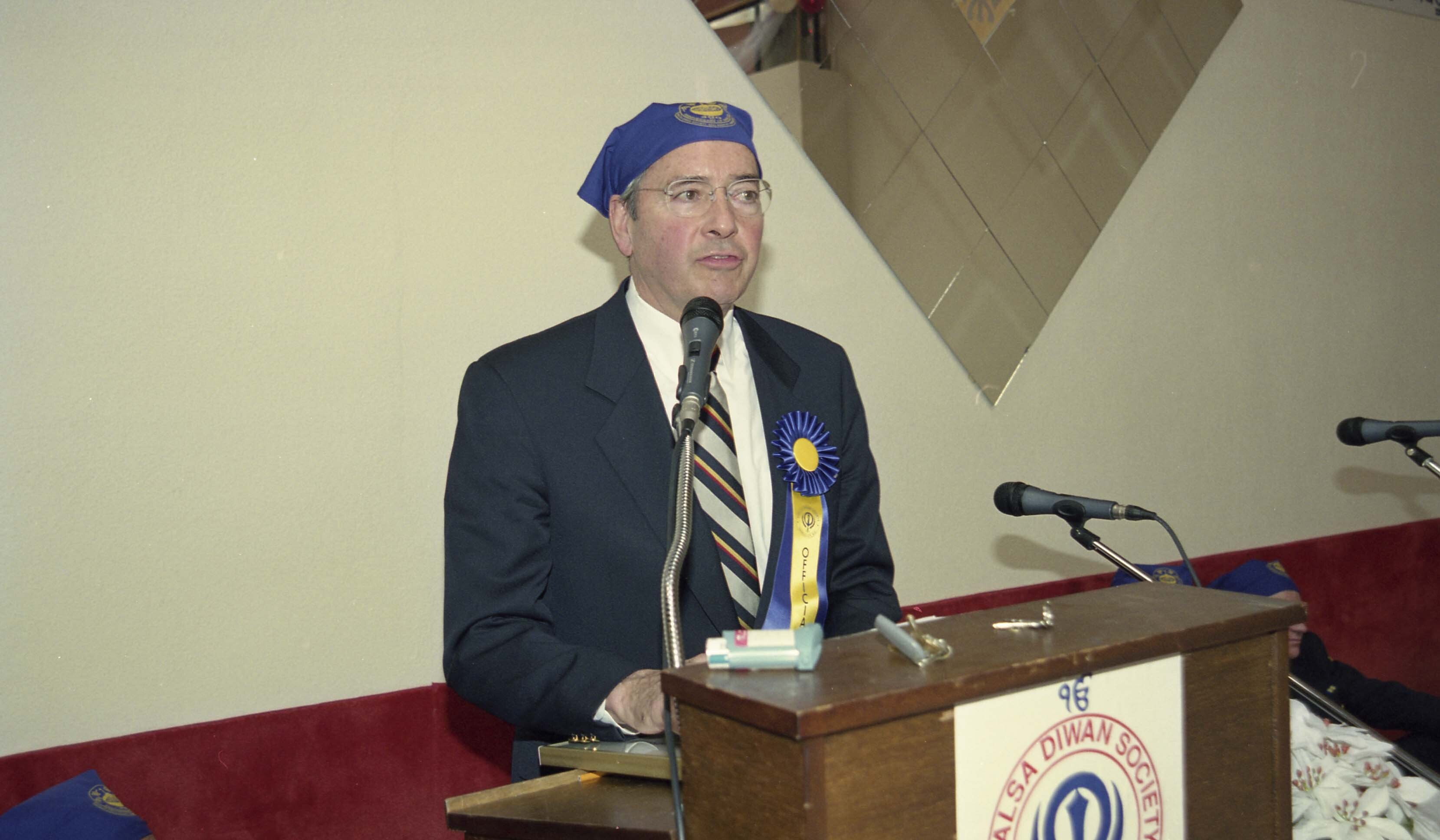
Photograph of Philip Owen addressing the audience at the Sikh Temple in Vancouver, British Columbia (B.C.). Individuals had gathered at the Sikh Temple for the Vaisakhi Nagar Kirtan, organized by the Khalsa Diwan Society of Vancouver.
Philip Owen (1933 - 2021) was a former City of Vancouver Mayor, City Councillor, Park Board Commissioner, and entrepreneur. Philip Owen was Vancouver's 36th mayor from 1993 to 2002, making him one of the city's longest serving mayors. Born and raised in Vancouver, he completed his education at Prince of Wales Secondary School and later New York University. Before entering Vancouver politics, he was the manager at Eaton's West Vancouver department store in his 20s' and by his 30s' he was an independent entrepreneur with a fabric business in Vancouver, Victoria, and New York. During his tenure as mayor, Owen was most noted for his championing of drug policy reform. Owen led the implementation of the "Four Pillars" drug strategy during the peak of the HIV epidemic and overdose crisis in the 1990s, a novel strategy pioneered in Switzerland representing a tectonic shift from treating substance use as a criminal justice issue towards a public health approach. His efforts helped lead to the establishment of Insite, North America's first sanctioned safe injection site.
Vaisakhi is one of the most important festivals in Sikhi, marking the formation of the Khalsa in 1699 by the tenth guru, Guru Gobind Singh Ji. It is a time of renewal, gratitude, and unity, celebrated with processions, prayers, and acts of service. Beyond its significance in Sikh history, Vaisakhi is also a harvest festival in Punjab, observed with joy and thanksgiving. Additionally, Vaisakhi holds special significance for Hindus, as it marks the beginning of the solar new year and is celebrated in various regions of India under different names, such as Pohela Boishakh in Bengal and Puthandu in Tamil Nadu.
The Khalsa Diwan Society of Vancouver oversees the Vaisakhi celebrations in Vancouver. The Khalsa Diwan Society is a pioneer Sikh society, one of the oldest in Vancouver, formed on July 22, 1902 in British Columbia, Canada, formally established in 1906. In 1908, the Society purchased and built the first Sikh temple in Vancouver, which was located on West 2nd Avenue. This is believed to be the first Sikh temple in the whole of the American continent. This temple served the Sikh community until a new temple was occupied on April 25, 1970. The original temple was sold to build a bigger (present) temple located on Ross Street. The Khalsa Diwan Society has been a pioneer in raising Sikhi related issues and getting recognition for Sikhs in Canada. It continues to build a strong community based on Sikh values and principles. Every year the society organizes sports activities, including soccer and wrestling tournaments.
Philip Owen (1933 - 2021) was a former City of Vancouver Mayor, City Councillor, Park Board Commissioner, and entrepreneur. Philip Owen was Vancouver's 36th mayor from 1993 to 2002, making him one of the city's longest serving mayors. Born and raised in Vancouver, he completed his education at Prince of Wales Secondary School and later New York University. Before entering Vancouver politics, he was the manager at Eaton's West Vancouver department store in his 20s' and by his 30s' he was an independent entrepreneur with a fabric business in Vancouver, Victoria, and New York. During his tenure as mayor, Owen was most noted for his championing of drug policy reform. Owen led the implementation of the "Four Pillars" drug strategy during the peak of the HIV epidemic and overdose crisis in the 1990s, a novel strategy pioneered in Switzerland representing a tectonic shift from treating substance use as a criminal justice issue towards a public health approach. His efforts helped lead to the establishment of Insite, North America's first sanctioned safe injection site.
Vaisakhi is one of the most important festivals in Sikhi, marking the formation of the Khalsa in 1699 by the tenth guru, Guru Gobind Singh Ji. It is a time of renewal, gratitude, and unity, celebrated with processions, prayers, and acts of service. Beyond its significance in Sikh history, Vaisakhi is also a harvest festival in Punjab, observed with joy and thanksgiving. Additionally, Vaisakhi holds special significance for Hindus, as it marks the beginning of the solar new year and is celebrated in various regions of India under different names, such as Pohela Boishakh in Bengal and Puthandu in Tamil Nadu.
The Khalsa Diwan Society of Vancouver oversees the Vaisakhi celebrations in Vancouver. The Khalsa Diwan Society is a pioneer Sikh society, one of the oldest in Vancouver, formed on July 22, 1902 in British Columbia, Canada, formally established in 1906. In 1908, the Society purchased and built the first Sikh temple in Vancouver, which was located on West 2nd Avenue. This is believed to be the first Sikh temple in the whole of the American continent. This temple served the Sikh community until a new temple was occupied on April 25, 1970. The original temple was sold to build a bigger (present) temple located on Ross Street. The Khalsa Diwan Society has been a pioneer in raising Sikhi related issues and getting recognition for Sikhs in Canada. It continues to build a strong community based on Sikh values and principles. Every year the society organizes sports activities, including soccer and wrestling tournaments.
2024_19_485_019-Service File.jpg
Download
Member of
Creator: Bodalia, Chandra
Description
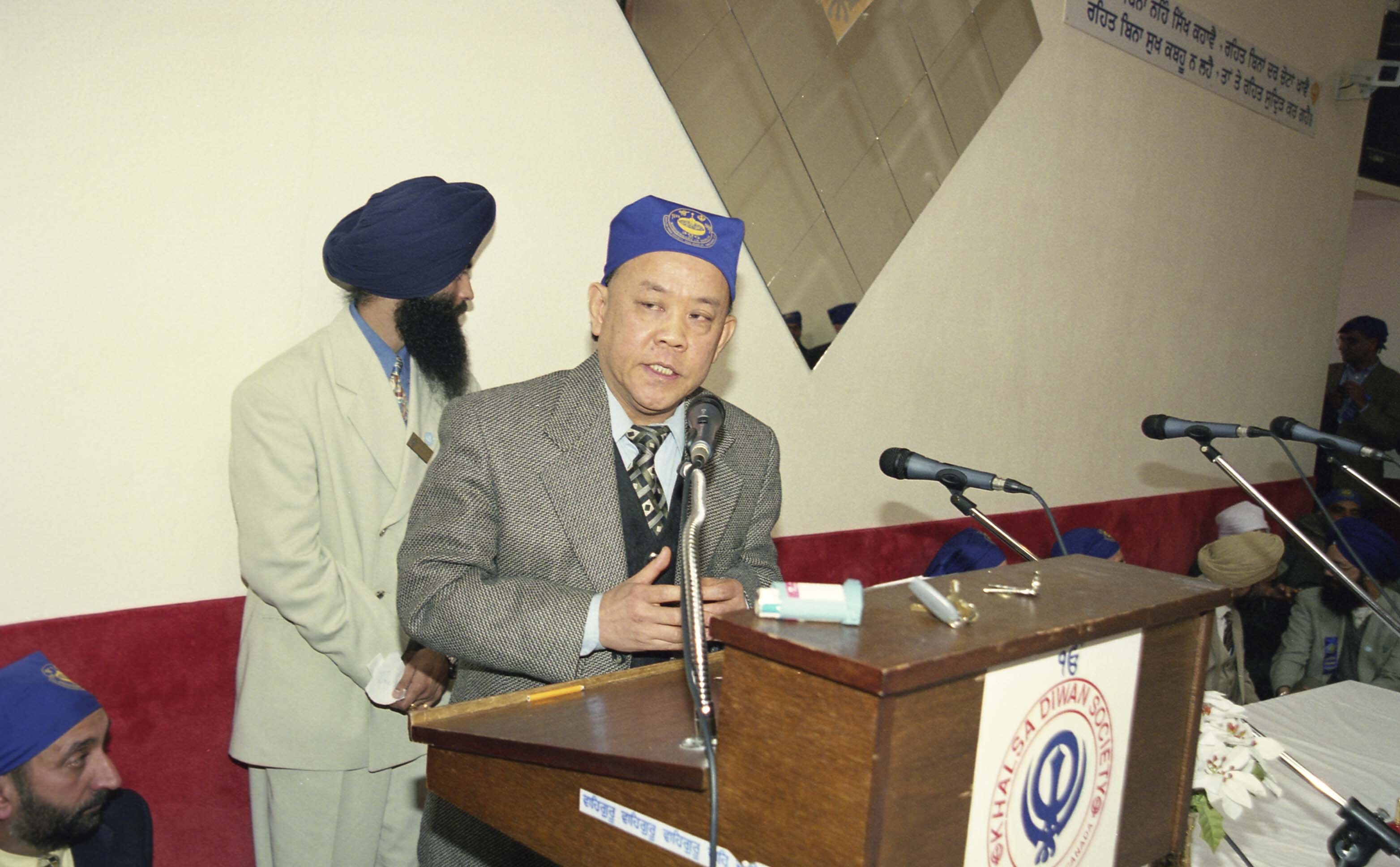
Photograph of an unidentified individual addressing the audience at the Sikh Temple in Vancouver, British Columbia (B.C.). Individuals had gathered at the Sikh Temple for the Vaisakhi Nagar Kirtan, organized by the Khalsa Diwan Society of Vancouver.
Vaisakhi is one of the most important festivals in Sikhi, marking the formation of the Khalsa in 1699 by the tenth guru, Guru Gobind Singh Ji. It is a time of renewal, gratitude, and unity, celebrated with processions, prayers, and acts of service. Beyond its significance in Sikh history, Vaisakhi is also a harvest festival in Punjab, observed with joy and thanksgiving. Additionally, Vaisakhi holds special significance for Hindus, as it marks the beginning of the solar new year and is celebrated in various regions of India under different names, such as Pohela Boishakh in Bengal and Puthandu in Tamil Nadu.
The Khalsa Diwan Society of Vancouver oversees the Vaisakhi celebrations in Vancouver. The Khalsa Diwan Society is a pioneer Sikh society, one of the oldest in Vancouver, formed on July 22, 1902 in British Columbia, Canada, formally established in 1906. In 1908, the Society purchased and built the first Sikh temple in Vancouver, which was located on West 2nd Avenue. This is believed to be the first Sikh temple in the whole of the American continent. This temple served the Sikh community until a new temple was occupied on April 25, 1970. The original temple was sold to build a bigger (present) temple located on Ross Street. The Khalsa Diwan Society has been a pioneer in raising Sikhi related issues and getting recognition for Sikhs in Canada. It continues to build a strong community based on Sikh values and principles. Every year the society organizes sports activities, including soccer and wrestling tournaments.
Vaisakhi is one of the most important festivals in Sikhi, marking the formation of the Khalsa in 1699 by the tenth guru, Guru Gobind Singh Ji. It is a time of renewal, gratitude, and unity, celebrated with processions, prayers, and acts of service. Beyond its significance in Sikh history, Vaisakhi is also a harvest festival in Punjab, observed with joy and thanksgiving. Additionally, Vaisakhi holds special significance for Hindus, as it marks the beginning of the solar new year and is celebrated in various regions of India under different names, such as Pohela Boishakh in Bengal and Puthandu in Tamil Nadu.
The Khalsa Diwan Society of Vancouver oversees the Vaisakhi celebrations in Vancouver. The Khalsa Diwan Society is a pioneer Sikh society, one of the oldest in Vancouver, formed on July 22, 1902 in British Columbia, Canada, formally established in 1906. In 1908, the Society purchased and built the first Sikh temple in Vancouver, which was located on West 2nd Avenue. This is believed to be the first Sikh temple in the whole of the American continent. This temple served the Sikh community until a new temple was occupied on April 25, 1970. The original temple was sold to build a bigger (present) temple located on Ross Street. The Khalsa Diwan Society has been a pioneer in raising Sikhi related issues and getting recognition for Sikhs in Canada. It continues to build a strong community based on Sikh values and principles. Every year the society organizes sports activities, including soccer and wrestling tournaments.
2024_19_485_017-Service File.jpg
Download
Member of
Creator: Bodalia, Chandra
Description
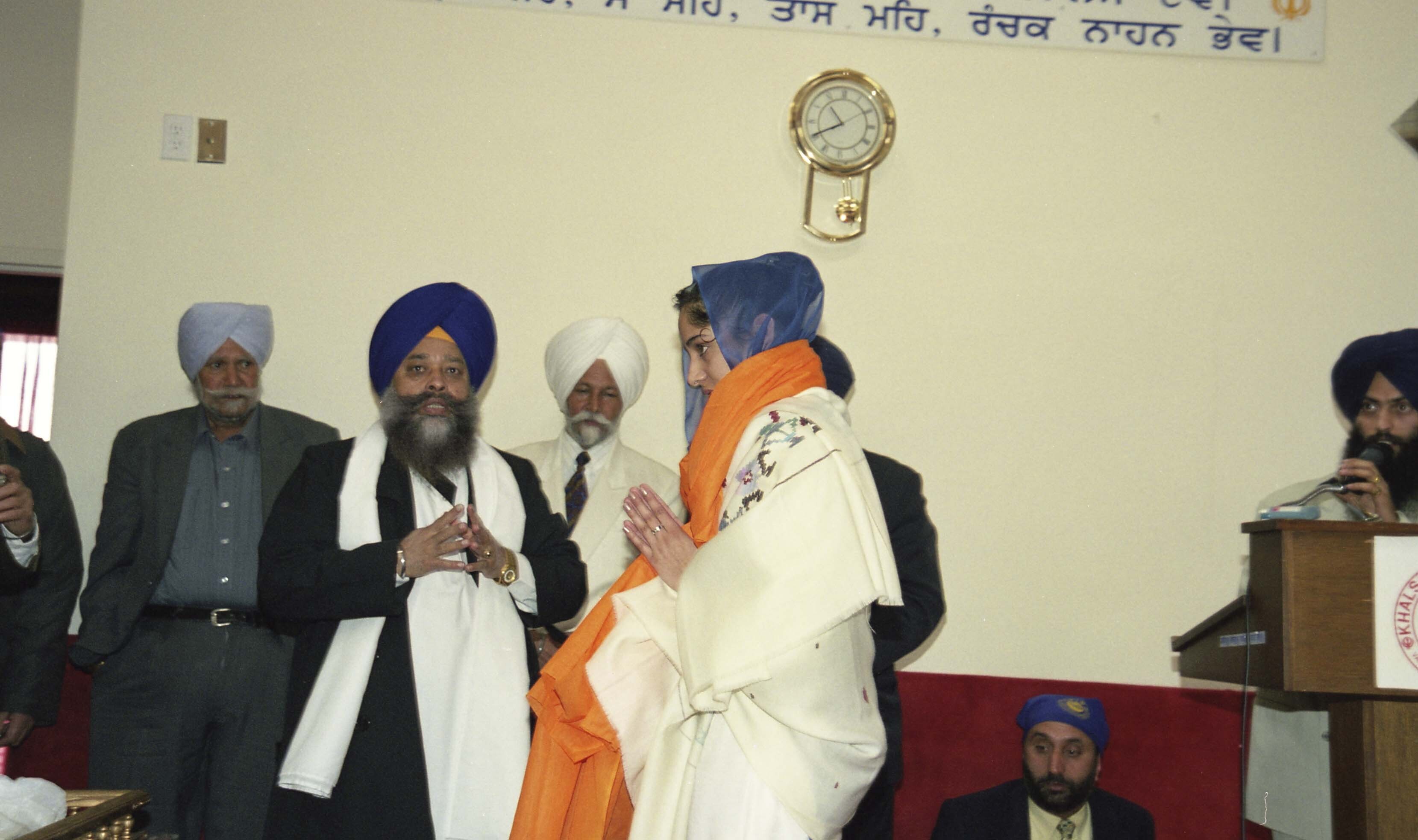
Photograph of a group of unidentified individuals at the Sikh Temple in Vancouver, British Columbia (B.C.). Individuals had gathered at the Sikh Temple for the Vaisakhi Nagar Kirtan, organized by the Khalsa Diwan Society of Vancouver.
Vaisakhi is one of the most important festivals in Sikhi, marking the formation of the Khalsa in 1699 by the tenth guru, Guru Gobind Singh Ji. It is a time of renewal, gratitude, and unity, celebrated with processions, prayers, and acts of service. Beyond its significance in Sikh history, Vaisakhi is also a harvest festival in Punjab, observed with joy and thanksgiving. Additionally, Vaisakhi holds special significance for Hindus, as it marks the beginning of the solar new year and is celebrated in various regions of India under different names, such as Pohela Boishakh in Bengal and Puthandu in Tamil Nadu.
The Khalsa Diwan Society of Vancouver oversees the Vaisakhi celebrations in Vancouver. The Khalsa Diwan Society is a pioneer Sikh society, one of the oldest in Vancouver, formed on July 22, 1902 in British Columbia, Canada, formally established in 1906. In 1908, the Society purchased and built the first Sikh temple in Vancouver, which was located on West 2nd Avenue. This is believed to be the first Sikh temple in the whole of the American continent. This temple served the Sikh community until a new temple was occupied on April 25, 1970. The original temple was sold to build a bigger (present) temple located on Ross Street. The Khalsa Diwan Society has been a pioneer in raising Sikhi related issues and getting recognition for Sikhs in Canada. It continues to build a strong community based on Sikh values and principles. Every year the society organizes sports activities, including soccer and wrestling tournaments.