
Sikhism
Authority Sources
2022_01_01_04_020.pdf
(471.39 KB)
Member of
Description
Newspaper clipping titled, "Sikh name change supports hated caste system" published on 29th July, 2007 in The Province. The article includes opinion pieces written by readers. One piece notes that the Canadian policy asking applicants for immigration to Canada to add a family name or surname to the existing name that ends with Singh or Kaur, does not intend to hurt Sikh sentiments, however, it raises the issue of adding a caste-based surname and forces a person to change his or her name in order to be considered eligible to immigrate to Canada, therefore, perpetuating the hated caste system. In another opinion piece, a reader writes in about potential issues that might arise with citizens having the same names. A third piece writing on the topic details how the policy was created not from concern, but from a place of government ignorance.
2023_03_01_009.pdf
(32.34 KB)
Description
Exhibit card for The Langar Project, a project done at the University of the Fraser Valley that was created from a partnership between the South Asian Studies Institute and the University of the Fraser Valley Library. The title of the card reads, "Langar as an Anti-Casteist Institution." The page explains the history of caste supremacy in India and how it often plays out in society. It further provides an overview of how Langar symbolizes the Sikh belief that all humans are equal and how it demonstrates the anti-caste values of Sikhism. The logo for the South Asian Studies Institute is visible in the top right corner of the page, and the bottom left. On the bottom right corner of the page is the logo for the University of the Fraser Valley Library.
Description
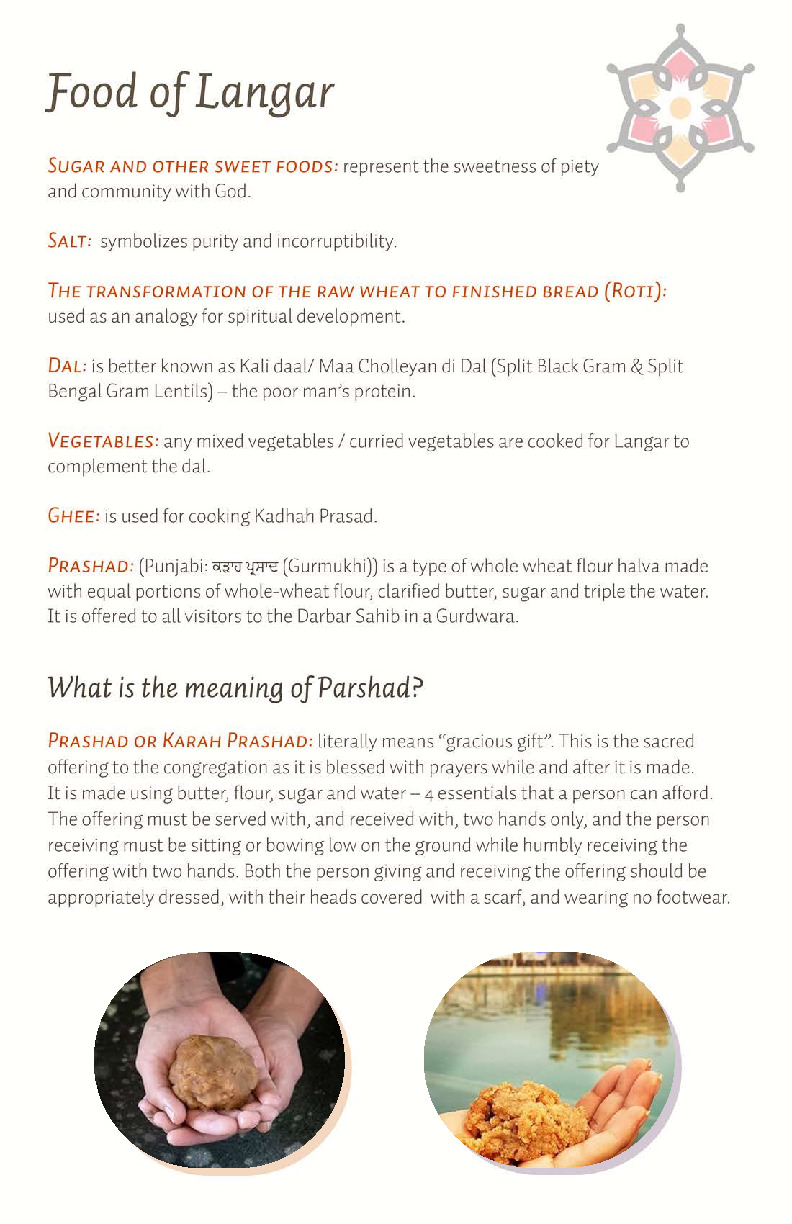
Exhibit card for The Langar Project, a project done at the University of the Fraser Valley that was created from a partnership between the South Asian Studies Institute and the University of the Fraser Valley Library. The page outlines the types of food prepared and ingredients used in Langar, including, sweet foods, salt, roti, dal, vegetables, ghee, and prashad. It explains the importance of each foodstuff and the deeper meaning behind the use of each. It further goes on to explain the meaning behind Parshad. At the bottom of the page are two images, both depicting hands cupping an individual portion of parshad. The logo for the South Asian Studies Institute is also visible in the top right corner of the page.
Description
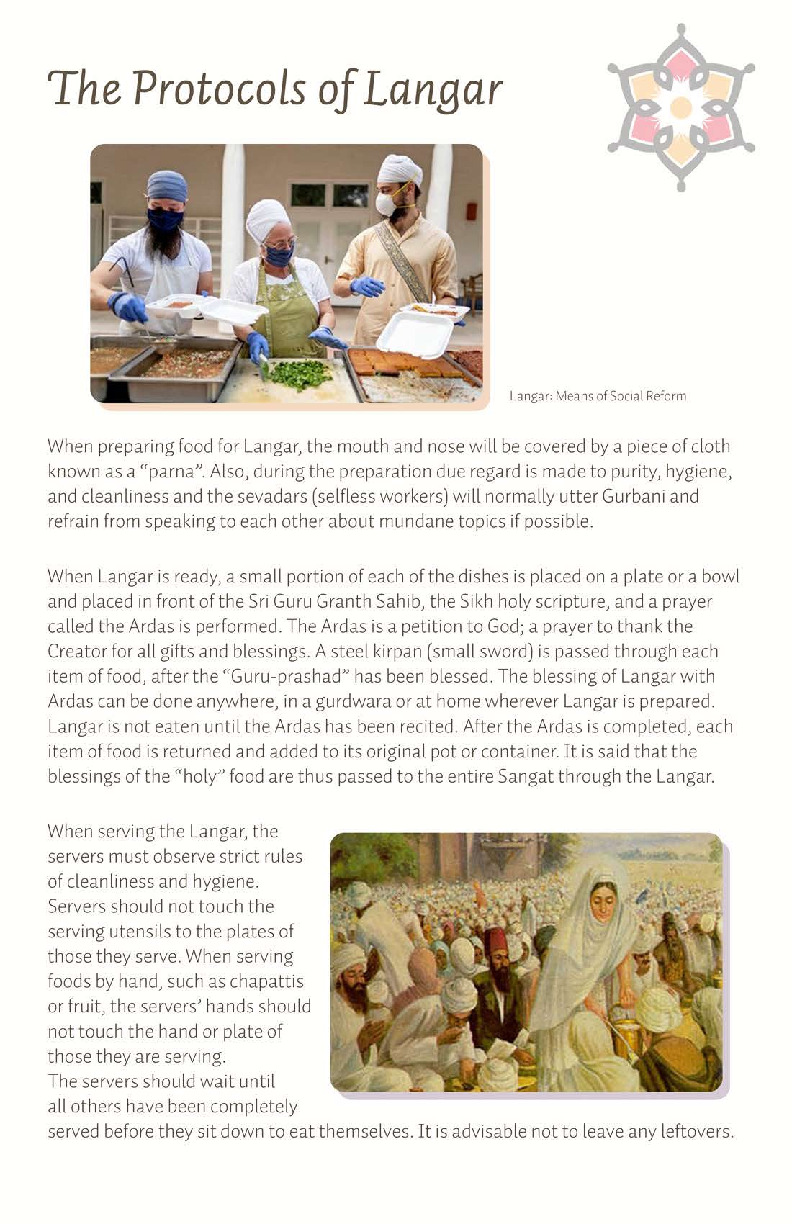
Exhibit card for The Langar Project, a project done at the University of the Fraser Valley that was created from a partnership between the South Asian Studies Institute and the University of the Fraser Valley Library. The title of the card reads, "The Protocols of Langar," and it outlines some of the customs surrounding Langar being served in Sikh Gurdwaras. This includes protocols surrounding cleanliness and hygiene, prayers that are recited to bless the food, and the practice of seva (selfless service). The logo for the South Asian Studies Institute is also visible in the top right corner of the page.
Description
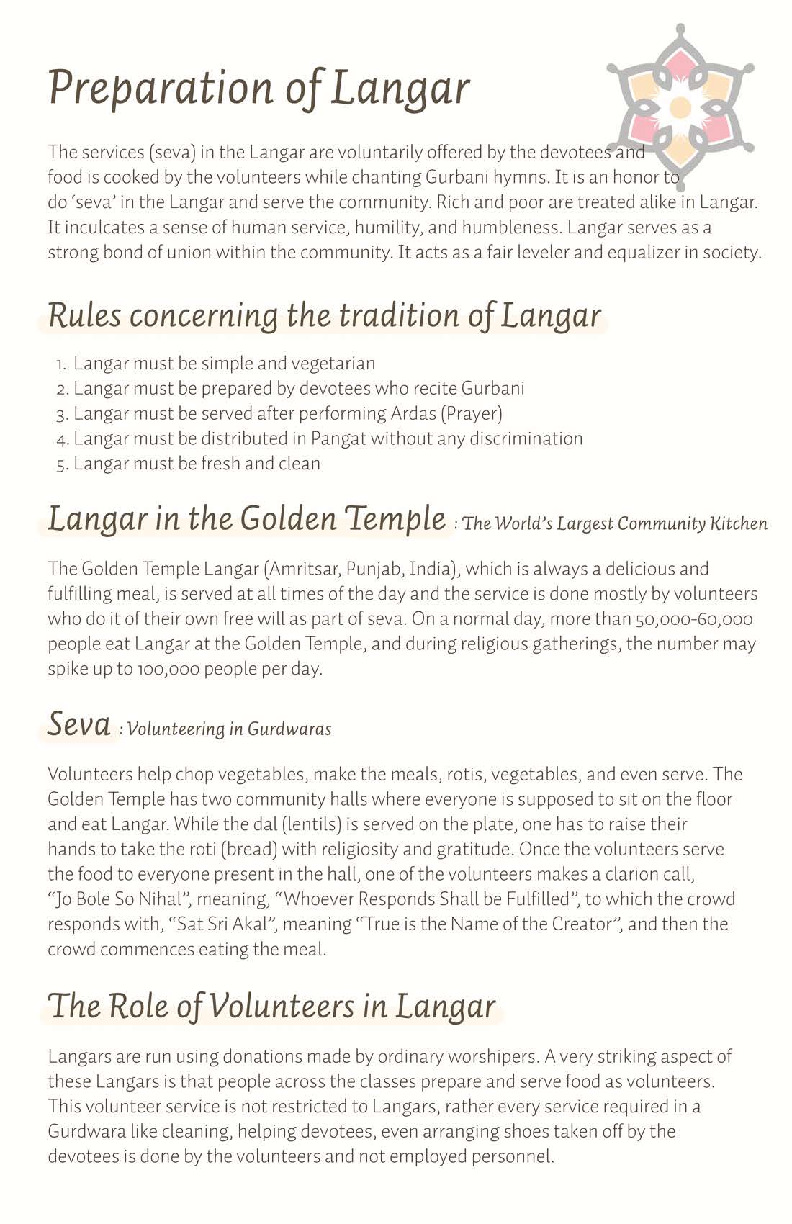
Exhibit card for The Langar Project, a project done at the University of the Fraser Valley that was created from a partnership between the South Asian Studies Institute and the University of the Fraser Valley Library. The title of the card reads, "Preparation of Langar." The page details rules surrounding the practice of Langar. It explains how the Golden Temple in Amritsar, Punjab, serves thousands of people daily in its Langar hall. It also details how every service required in a Gurdwara, including Langar, is run exclusively by volunteers. This act of selfless service is called seva and is a way to reinforce Sikh beliefs of equality and community. The logo for the South Asian Studies Institute is visible in the top right corner of the page.
Description
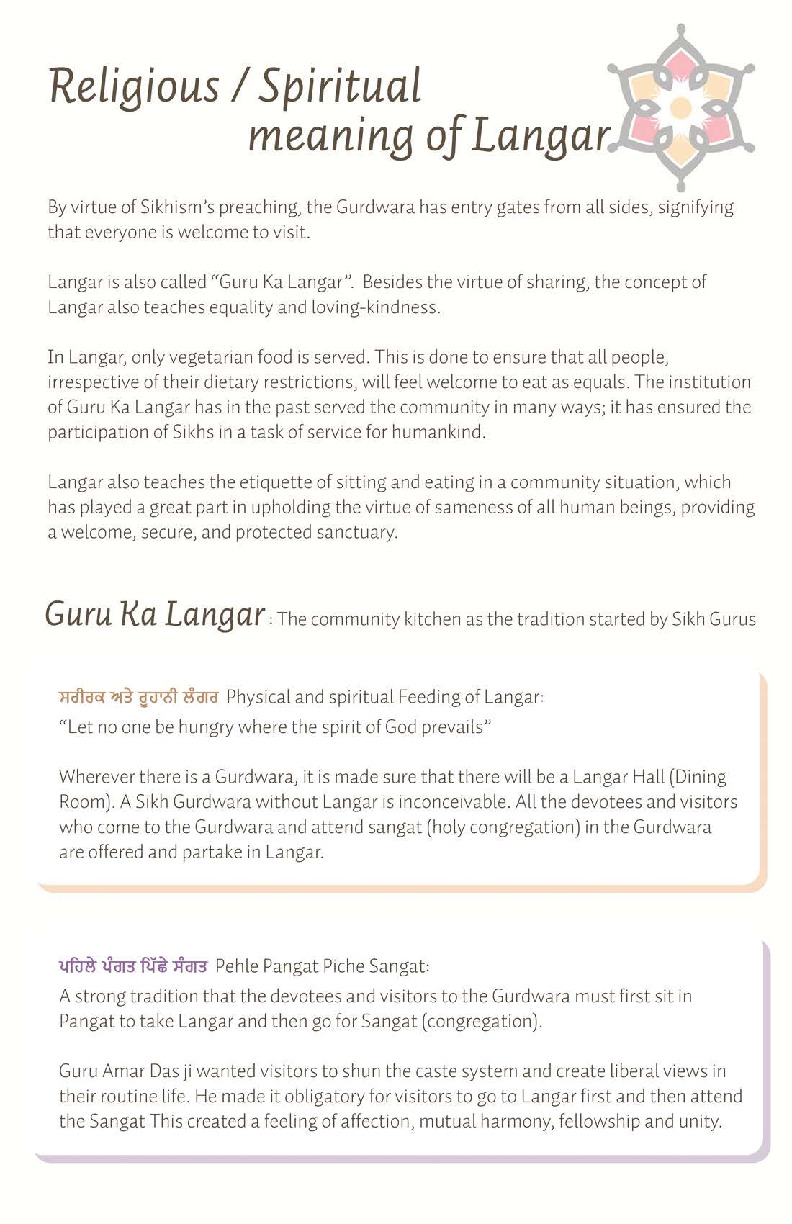
Exhibit card for The Langar Project, a project done at the University of the Fraser Valley that was created from a partnership between the South Asian Studies Institute and the University of the Fraser Valley Library. The title of the card reads, "Religious/Spiritual meaning of Langar." The page provides an overview about the deeper religious meaning of Langar, or "Guru Ka Langar," in Sikhism. It explains the importance of serving only vegetarian foods and the significance of creating a sense of equality through communal eating. It further explains how this is particularly important in the context of the caste system for it enables a sense of sameness among all those who participate in the practice. Although the page is written in mainly English there are some titles that have been written in Gurmukhi. The logo for the South Asian Studies Institute is also visible in the top right corner of the page.
Description
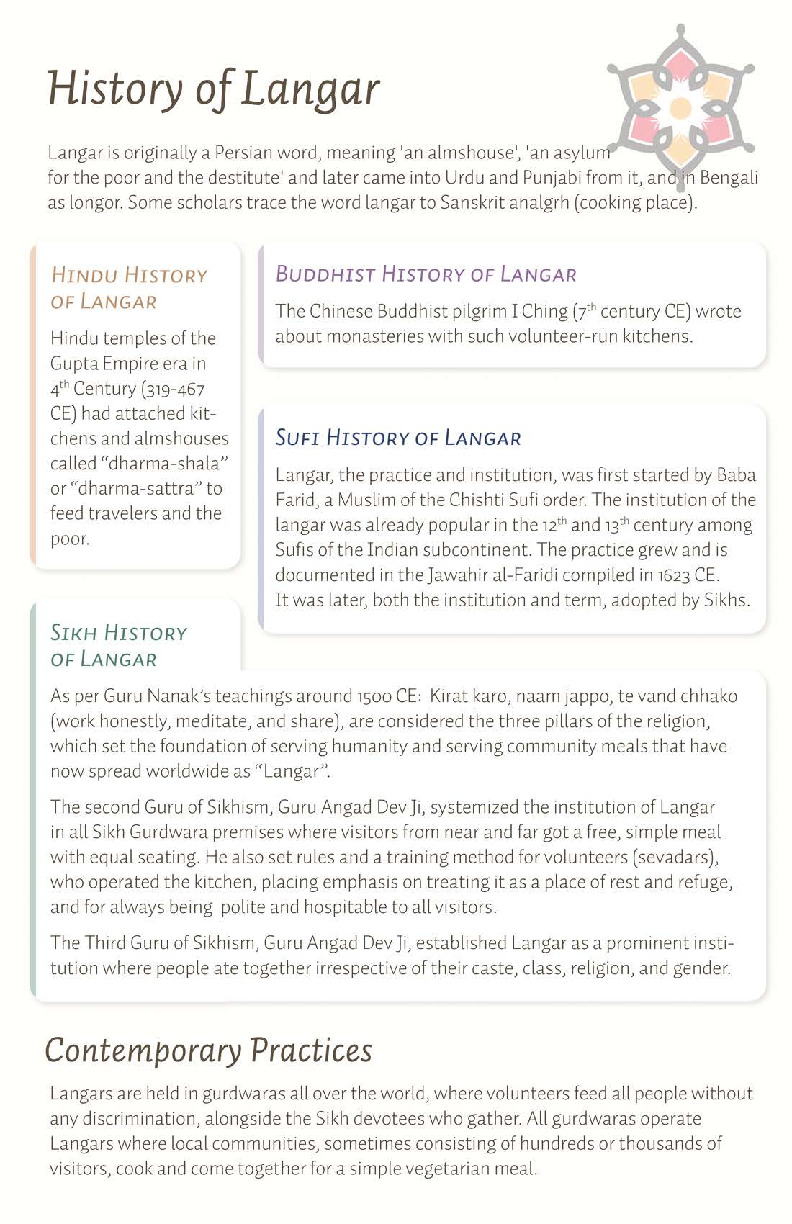
Exhibit card for The Langar Project, a project done at the University of the Fraser Valley that was created from a partnership between the South Asian Studies Institute and the University of the Fraser Valley Library. The title of the card reads, "History of Langar." The page provides a historical overview of Langar in various religious and cultural practices including Hinduism, Buddhism, Sufism, and Sikhism. It also connects this historical legacy to the contemporary practices of Langar in Sikh Gurdwaras globally. The logo for the South Asian Studies Institute is visible in the top right corner of the page.
Description
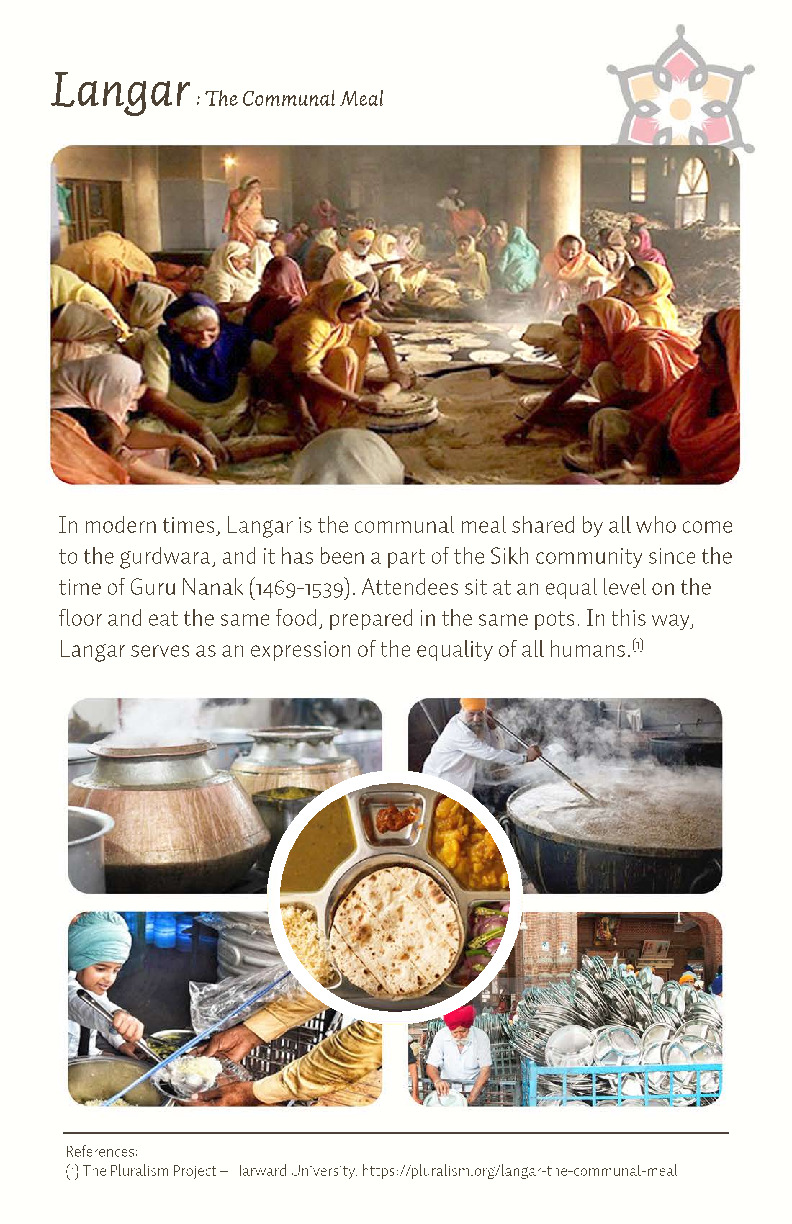
Exhibit card for The Langar Project, a project done at the University of the Fraser Valley that was created from a partnership between the South Asian Studies Institute and the University of the Fraser Valley Library. The title of the card reads, "Langar: The Communal Meal," and the page continues by explaining how Langar is the communal meal served in Sikh Gurdwaras and fosters a sense of equality among those who partake in it. It emphasizes that the practice has been around since the time of Guru Nanak (1469-1539), the founder of the Sikh religion. At the top of the page is an image of Sikh woman and some Sikh men gathered together in a kitchen making rotis. At the bottom of the page is a collage with five photographs depicting images from Sikh Langar halls. One shows steaming pots, the next depicts a Sikh man stirring a large pot of food, the third photograph shows a tray with food, the fourth photograph shows a young Sikh boy serving food in a Langar hall, and the final photograph shows an older Sikh man standing next to a large pile of trays, washing plates. The logo for the South Asian Studies Institute is visible in the top right corner of the page.

Member of
Description
Photo of a of a vase, peacock feathers, a clock and a Guru Nanak Dev Ji portrait. The vase and peacock feathers are placed in a windowsill. The clock and photo of Guru Nanak Dev Ji are both hanging on on the wall.
Member of
Description
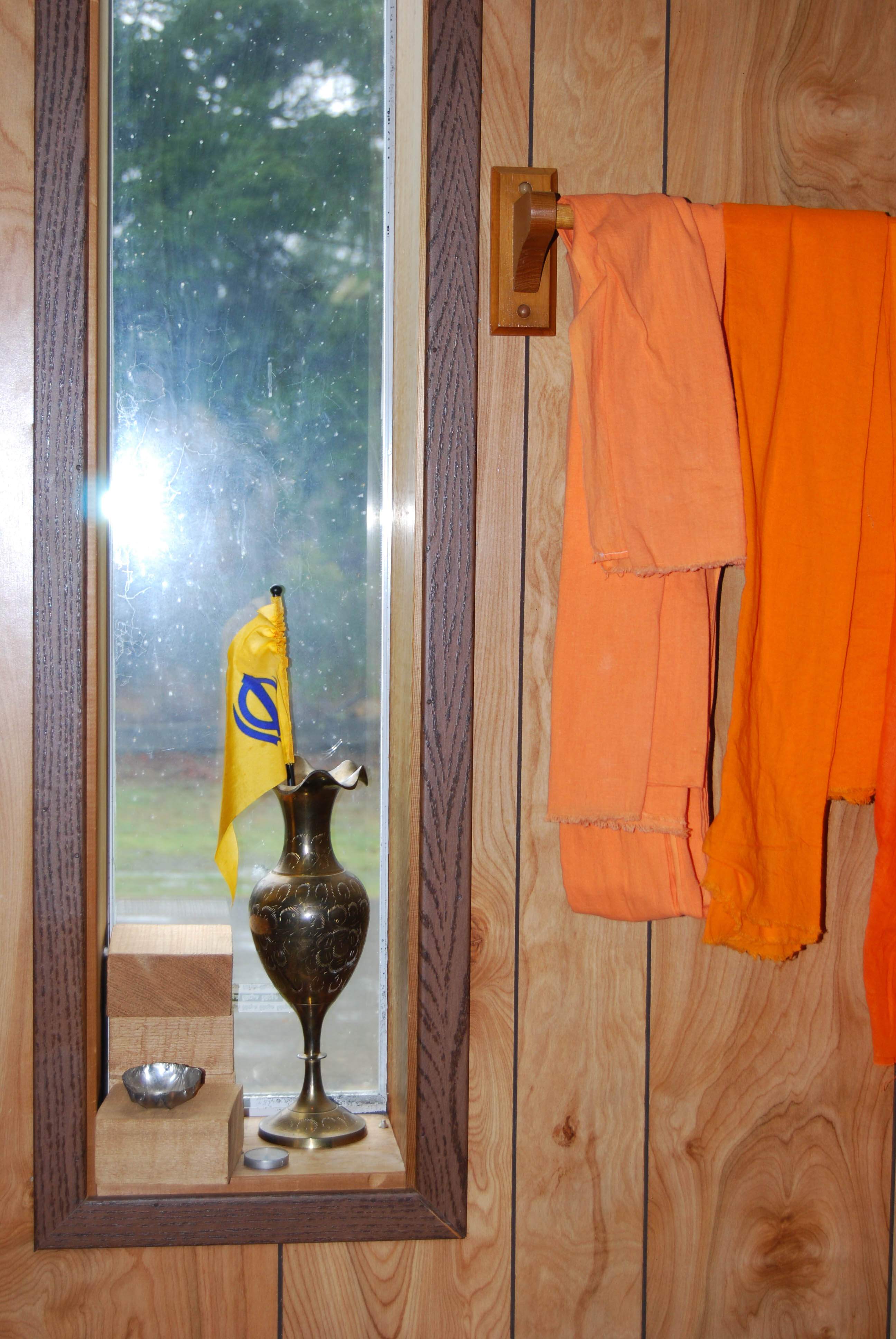
Photo of a yellow flag with a blue khanda inside a vase. The vase is placed in a window sill. There is also an orange siropa hanging on the wall.