
South Asian Women dancers
2023_01_05_005.pdf
(1.23 MB)
Member of
Creator: Kabir Cultural Centre
Description
Brochure advertising Abhinava Dance Company's performance of Ojhas at Oscar Peterson Concert Hall, Montreal, Quebec. Features choreography by Nirupama and Rajendra, associate choreography by Guru Kumudini Lakhia, and music by Praveen Rao and Pravin Ghodkindi. Features dances in both Kathak and Bharatanatyam styles. Abhinava Dance Company is a dance troupe from Bangalore, South India that was founded in 1994 by Kathak dancers Nirupama and Rajendra. Nirupama and Rajendra are a husband and wife duo of Kathak dancers. They were both students of Guru Maya Rao. In 1994 they founded the Abhinava Dance Company. Guru Kumudini Lakhia is a Kathak dancer and choreographer based in the city of Ahmedabad in Gujarat, India. She was born on May 17, 1930 in India. In 1967 she founded the Kadamb School of Dance and Music. Praveen Rao is a musician, music director and a lyricist for Kannada language songs based in Bangalore, India. Pravin Ghodkindi is a classical Hindustani bansuri player. He was born on October 28, 1973 in the city of Dharwad in Karnataka, India. He is the son and pupil of Pandit Venkatesh Godkhindi and was a student under Guru Vidwan Anoor Ananth Krishna Sharma.
2023_01_04_004.pdf
(200.71 KB)
Member of
Creator: Kabir Cultural Centre
Description
Poster advertising Geeta Chandran's recital of Satyam Shivam Sundaram – In search of Eternity! at the D.B.Clarke Theatre, Montreal, Quebec. Geeta Chandran is a Bharatanatyam dancer and vocalist from India. She is a student of Swarna Saraswathy among others. She is the founder and president of Natya-Vriksha, an organization devoted to promoting Bharatanatyam dance.
2023_01_03_008.pdf
(102.68 KB)
Member of
Creator: Kabir Cultural Centre
Description
Poster advertising Anjani's Kathak Dance of India's performance of Kathak Dance: Rhythms and movements from North India at D.B.Clarke Theater, Montreal, Quebec. Anjani Ambegaokar is an Indian dancer, choreographer, and educator specializing in the Kathak form of North Indian dance. She studied under Pandit Sundarlaljee Gangani in India and holds an M.A. degree in Kathak dance from the M.S. University of Baroda, India. Amrapali Ambegaokar is the daughter and pupil of Anjani Ambegaokar. She is the principal dancer of Anjani's Kathak Dance of India, has also danced for Cirque du Solei, and acted in numerous programs on American television. Anjani's Kathak Dance of India is a dance troupe founded by Anjani Ambegaokar.
2023_01_01_002.pdf
(79.9 KB)
Member of
Creator: Kabir Cultural Centre
Description
Poster advertising Kiran Segal And Troupe's performance of Odissi – Classical Dance of India at D.B. Clarke Theatre in Montreal, Quebec. Kiran Segal is an Odissi dancer, choreographer, and guru. She has performed in 42 countries and was the recipient of the Padmashri & Sangeet Natak Akademi Award.
Creator: Bodalia, Chandra
Description
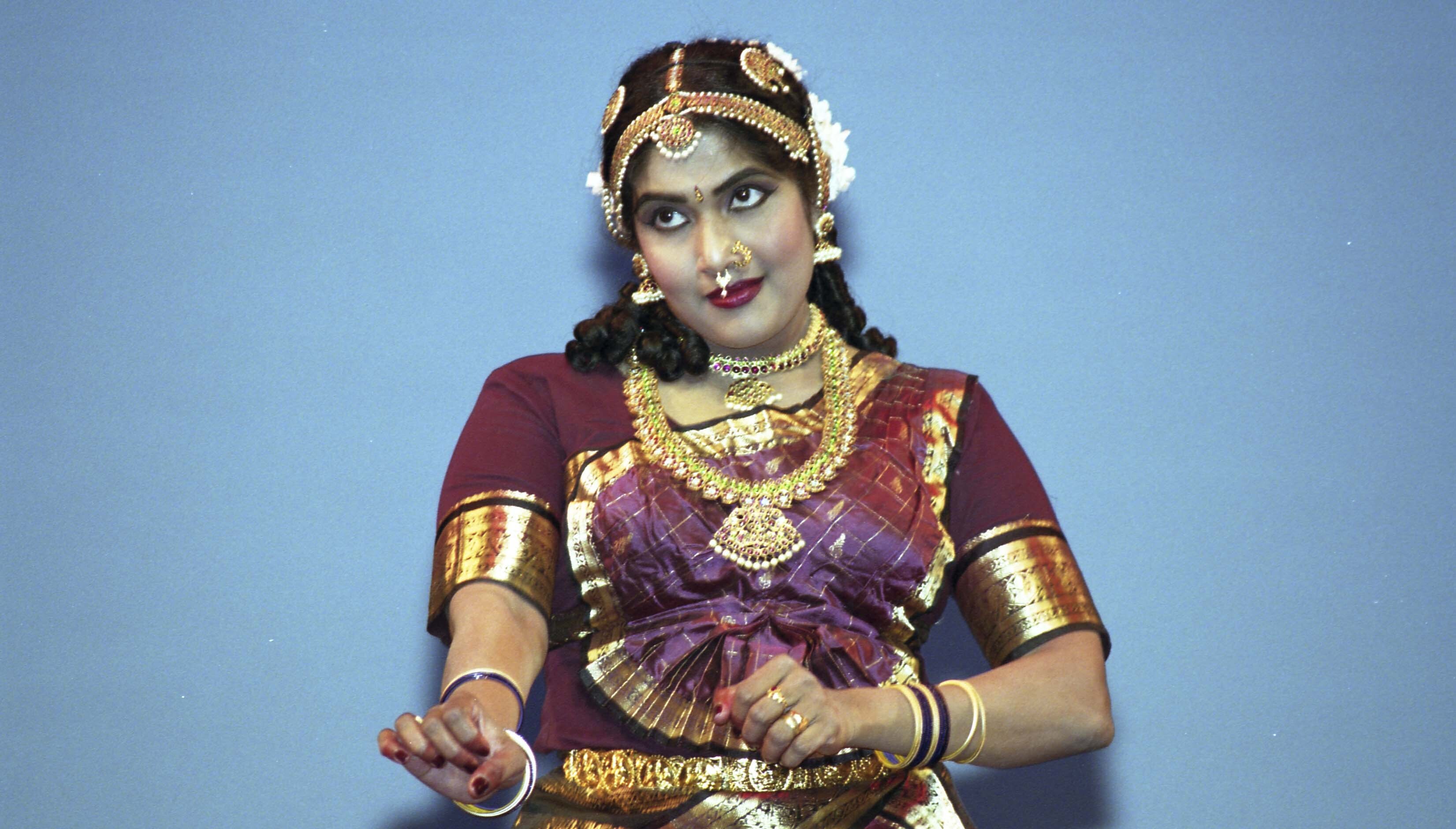
Photograph of an unidentified dancer performing Bharatanatyam at an event organized by the Theena Veena Kalashashthiram School of Bharata Natyam.
Bharatanatyam, a classical dance style of India, is indigenous to the Tamil Nadu region and prevalent in southern India. Bharatanatyam serves the expression of Hindu religious themes and devotions. Bharatanatyam was originally performed exclusively by female temple dancers and was not brought to the stage for public performance until about 1930. A vital tradition of Bharatanatyam is a graduation performance, called Arangetram, in which graduates showcase their talents.
Bharatanatyam, a classical dance style of India, is indigenous to the Tamil Nadu region and prevalent in southern India. Bharatanatyam serves the expression of Hindu religious themes and devotions. Bharatanatyam was originally performed exclusively by female temple dancers and was not brought to the stage for public performance until about 1930. A vital tradition of Bharatanatyam is a graduation performance, called Arangetram, in which graduates showcase their talents.
Creator: Bodalia, Chandra
Description
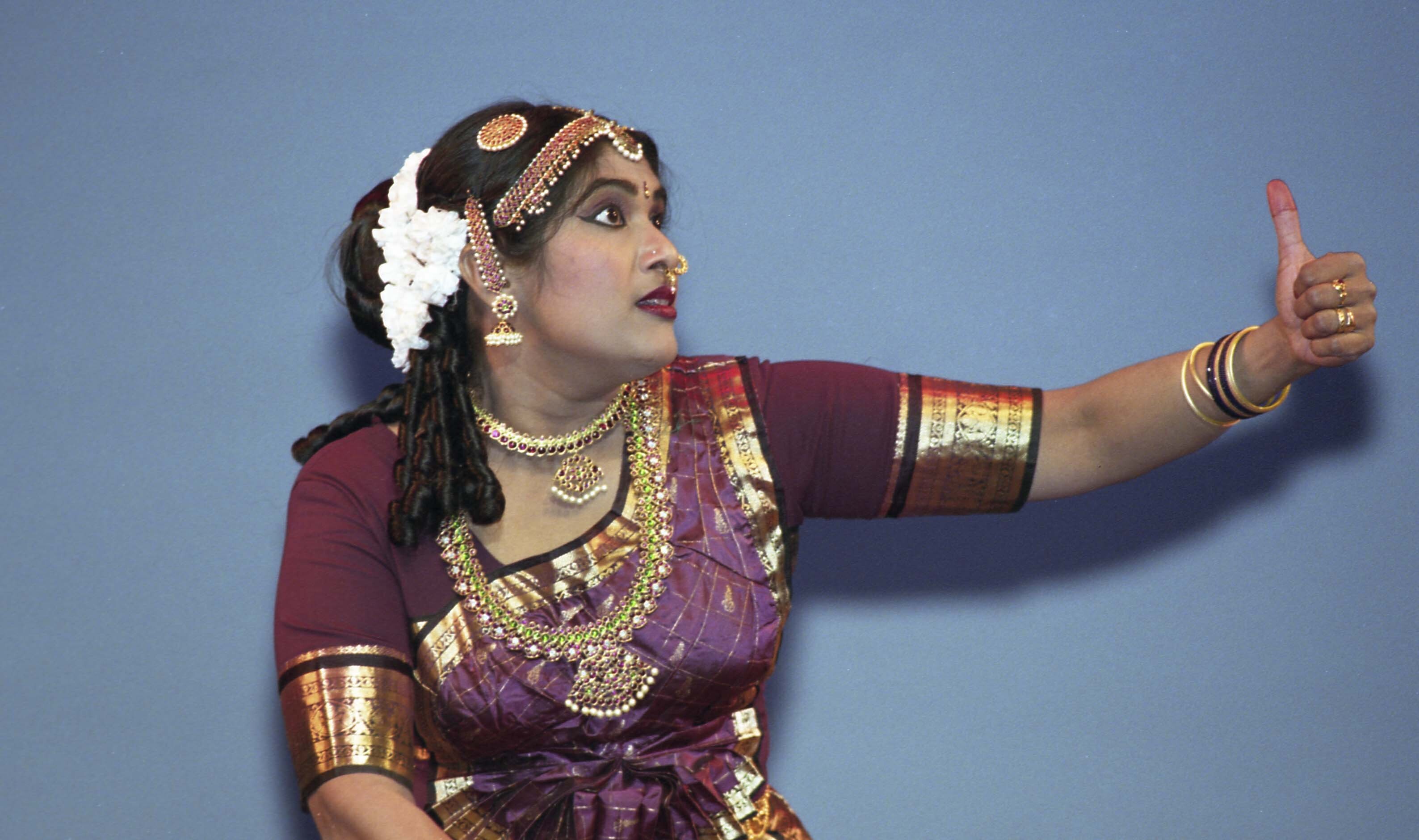
Photograph of an unidentified dancer performing Bharatanatyam at an event organized by the Theena Veena Kalashashthiram School of Bharata Natyam.
Bharatanatyam, a classical dance style of India, is indigenous to the Tamil Nadu region and prevalent in southern India. Bharatanatyam serves the expression of Hindu religious themes and devotions. Bharatanatyam was originally performed exclusively by female temple dancers and was not brought to the stage for public performance until about 1930. A vital tradition of Bharatanatyam is a graduation performance, called Arangetram, in which graduates showcase their talents.
Bharatanatyam, a classical dance style of India, is indigenous to the Tamil Nadu region and prevalent in southern India. Bharatanatyam serves the expression of Hindu religious themes and devotions. Bharatanatyam was originally performed exclusively by female temple dancers and was not brought to the stage for public performance until about 1930. A vital tradition of Bharatanatyam is a graduation performance, called Arangetram, in which graduates showcase their talents.
Creator: Bodalia, Chandra
Description
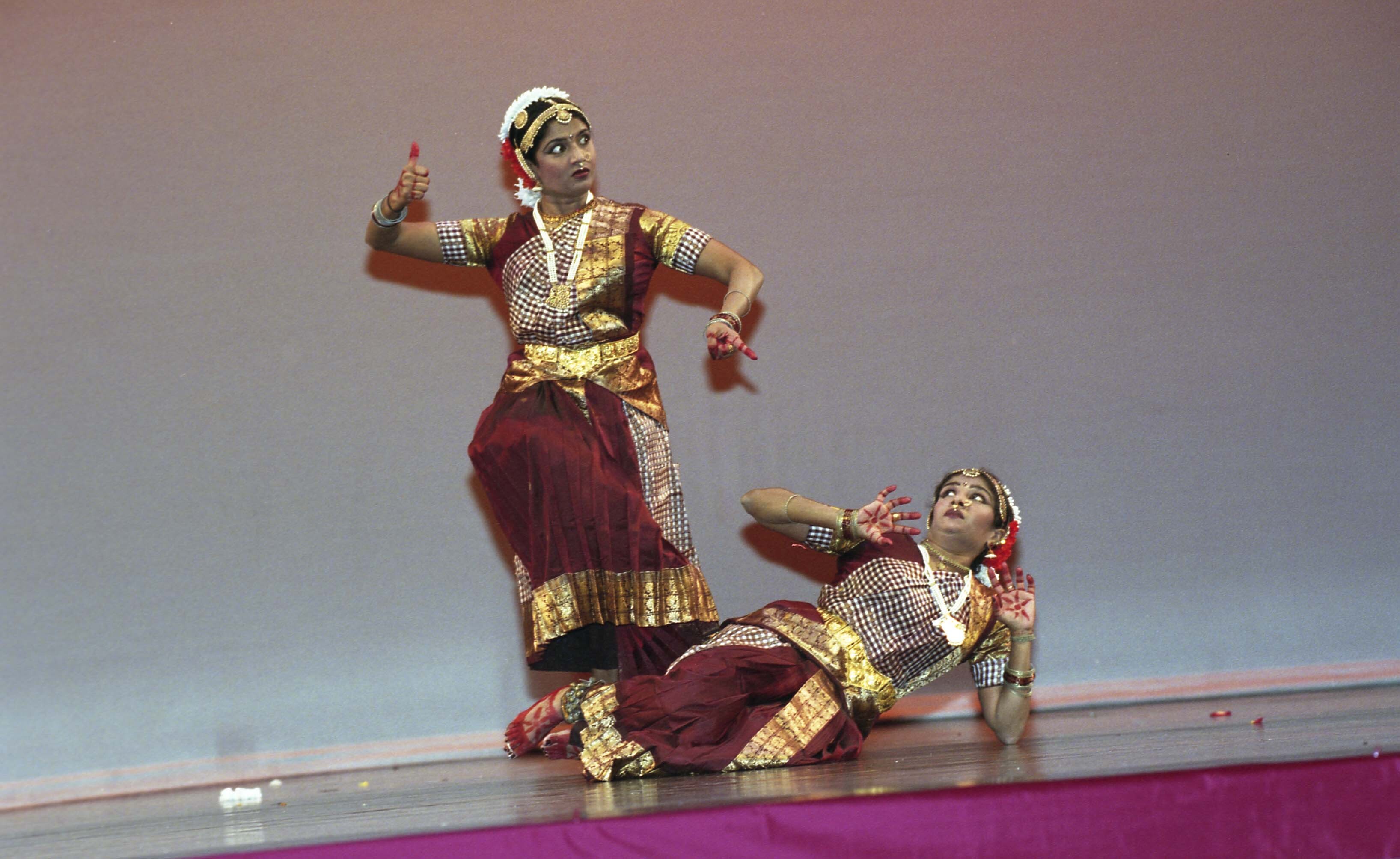
Photograph of two unidentified dancers performing Bharatanatyam at an event organized by the Theena Veena Kalashashthiram School of Bharata Natyam.
Bharatanatyam, a classical dance style of India, is indigenous to the Tamil Nadu region and prevalent in southern India. Bharatanatyam serves the expression of Hindu religious themes and devotions. Bharatanatyam was originally performed exclusively by female temple dancers and was not brought to the stage for public performance until about 1930. A vital tradition of Bharatanatyam is a graduation performance, called Arangetram, in which graduates showcase their talents.
Bharatanatyam, a classical dance style of India, is indigenous to the Tamil Nadu region and prevalent in southern India. Bharatanatyam serves the expression of Hindu religious themes and devotions. Bharatanatyam was originally performed exclusively by female temple dancers and was not brought to the stage for public performance until about 1930. A vital tradition of Bharatanatyam is a graduation performance, called Arangetram, in which graduates showcase their talents.
Creator: Bodalia, Chandra
Description
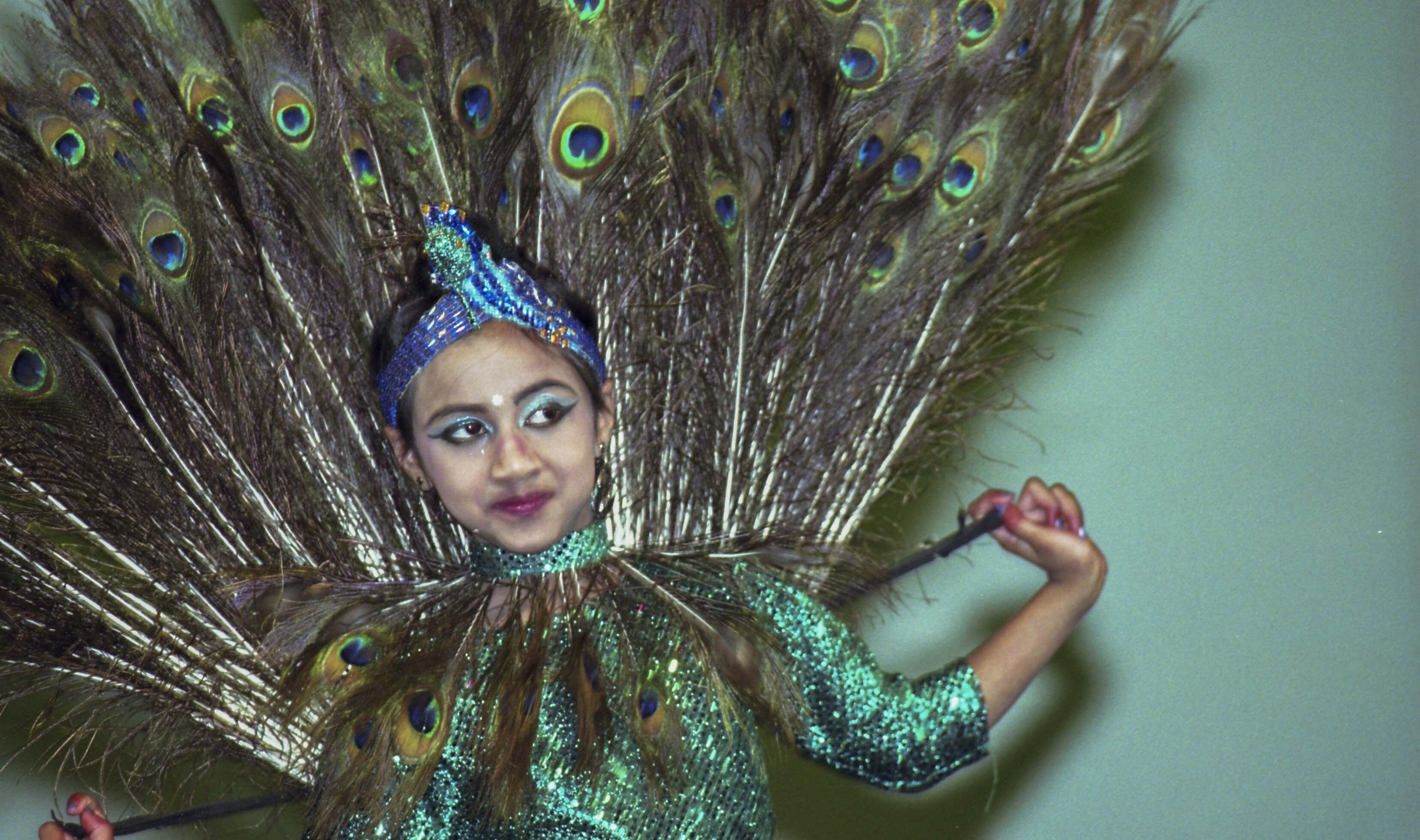
Photograph of an unidentified dancer performing Bharatanatyam at an event organized by the Theena Veena Kalashashthiram School of Bharata Natyam. She is seen adorning peacock features.
Bharatanatyam, a classical dance style of India, is indigenous to the Tamil Nadu region and prevalent in southern India. Bharatanatyam serves the expression of Hindu religious themes and devotions. Bharatanatyam was originally performed exclusively by female temple dancers and was not brought to the stage for public performance until about 1930. A vital tradition of Bharatanatyam is a graduation performance, called Arangetram, in which graduates showcase their talents.
Bharatanatyam, a classical dance style of India, is indigenous to the Tamil Nadu region and prevalent in southern India. Bharatanatyam serves the expression of Hindu religious themes and devotions. Bharatanatyam was originally performed exclusively by female temple dancers and was not brought to the stage for public performance until about 1930. A vital tradition of Bharatanatyam is a graduation performance, called Arangetram, in which graduates showcase their talents.
Creator: Bodalia, Chandra
Description
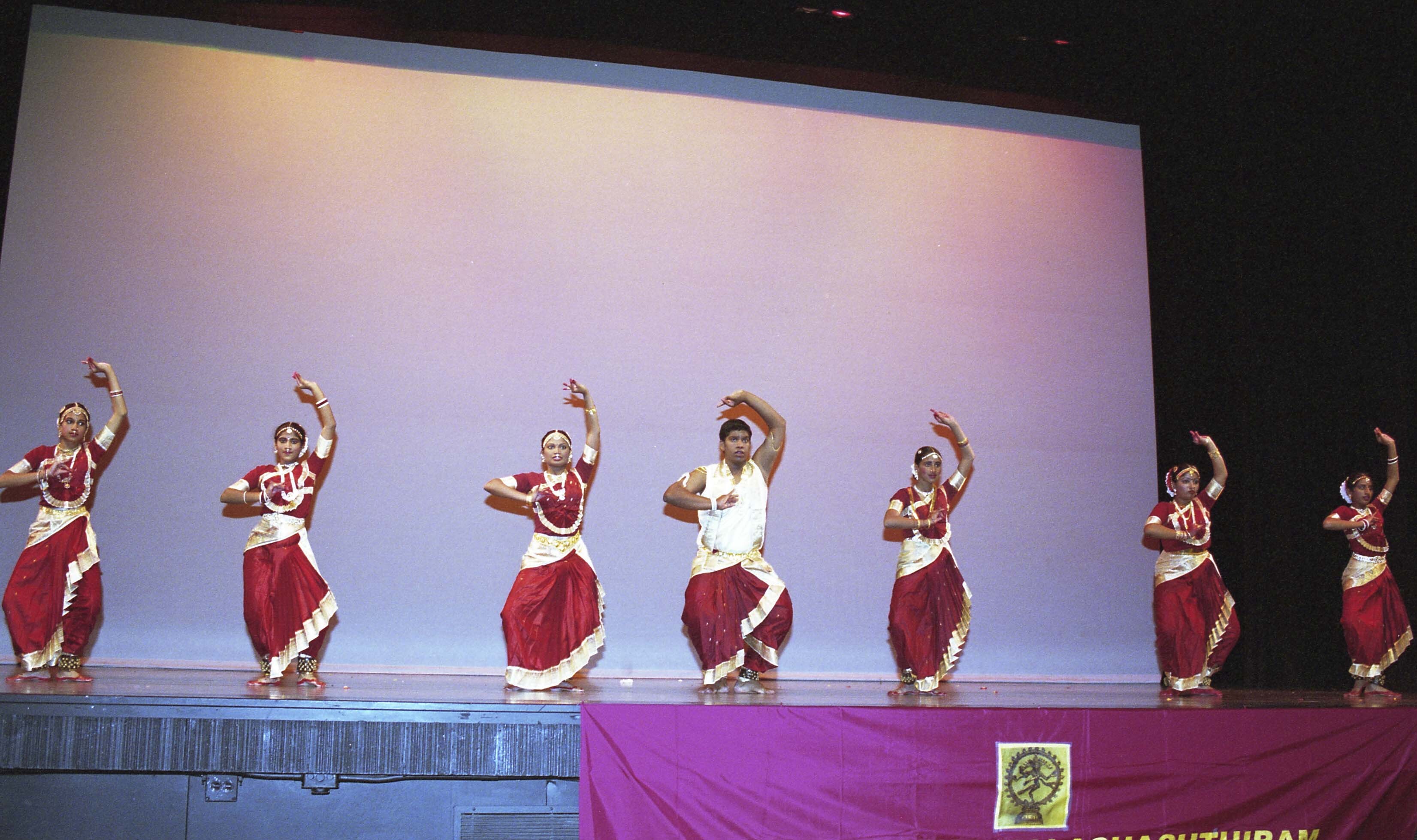
Photograph of a dance performance at an event organized by the Theena Veena Kalashashthiram School of Bharata Natyam.
Bharatanatyam, a classical dance style of India, is indigenous to the Tamil Nadu region and prevalent in southern India. Bharatanatyam serves the expression of Hindu religious themes and devotions. Bharatanatyam was originally performed exclusively by female temple dancers and was not brought to the stage for public performance until about 1930. A vital tradition of Bharatanatyam is a graduation performance, called Arangetram, in which graduates showcase their talents.
Bharatanatyam, a classical dance style of India, is indigenous to the Tamil Nadu region and prevalent in southern India. Bharatanatyam serves the expression of Hindu religious themes and devotions. Bharatanatyam was originally performed exclusively by female temple dancers and was not brought to the stage for public performance until about 1930. A vital tradition of Bharatanatyam is a graduation performance, called Arangetram, in which graduates showcase their talents.
Creator: Bodalia, Chandra
Description
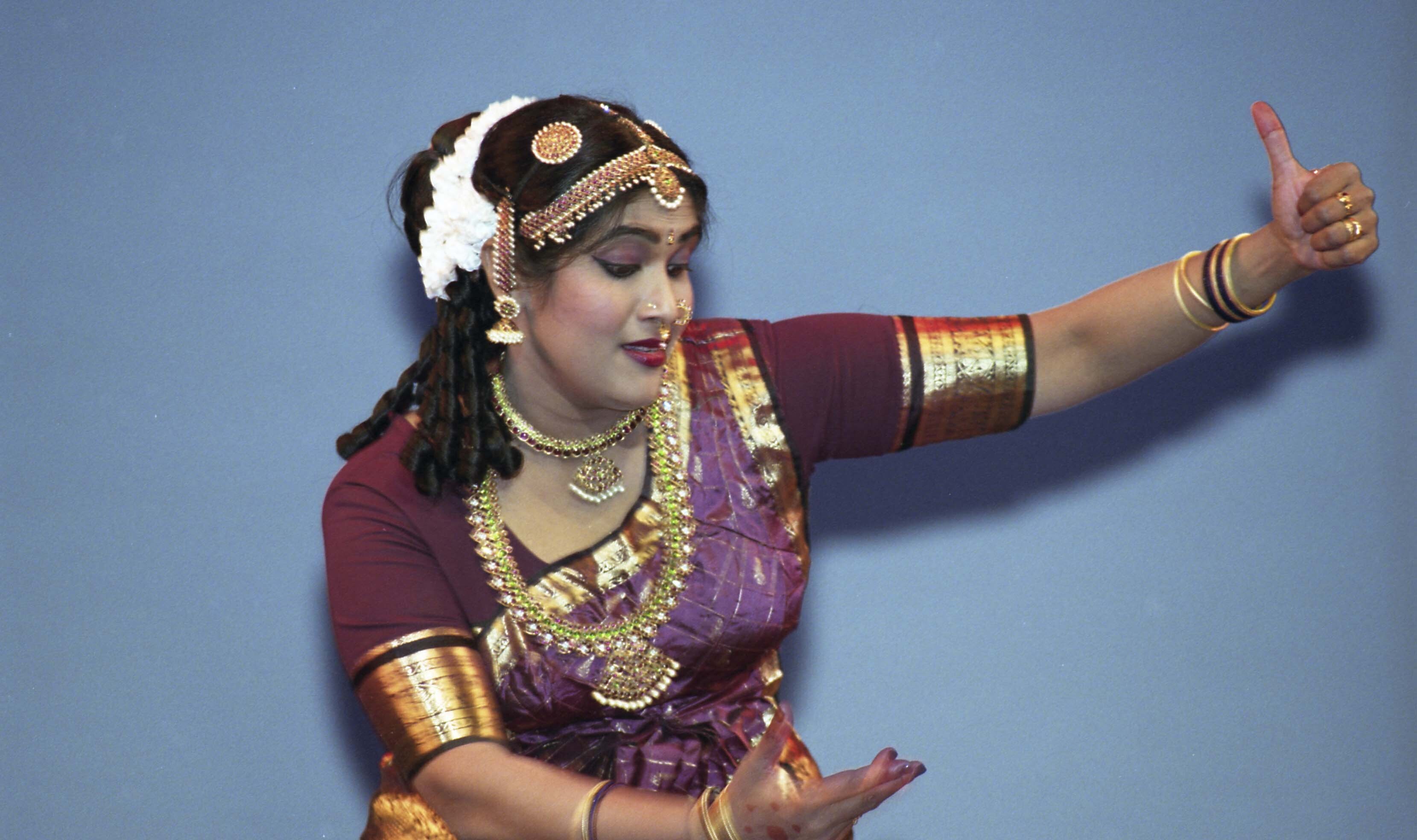
Photograph of an unidentified dancer performing Bharatanatyam at an event organized by the Theena Veena Kalashashthiram School of Bharata Natyam.
Bharatanatyam, a classical dance style of India, is indigenous to the Tamil Nadu region and prevalent in southern India. Bharatanatyam serves the expression of Hindu religious themes and devotions. Bharatanatyam was originally performed exclusively by female temple dancers and was not brought to the stage for public performance until about 1930. A vital tradition of Bharatanatyam is a graduation performance, called Arangetram, in which graduates showcase their talents.
Bharatanatyam, a classical dance style of India, is indigenous to the Tamil Nadu region and prevalent in southern India. Bharatanatyam serves the expression of Hindu religious themes and devotions. Bharatanatyam was originally performed exclusively by female temple dancers and was not brought to the stage for public performance until about 1930. A vital tradition of Bharatanatyam is a graduation performance, called Arangetram, in which graduates showcase their talents.