
Gill, Charan
2022_01_01_06_001.pdf
(4.24 MB)
Member of
Description
Newspaper clipping titled, 'An Era of Influence: 100 Indo-Canadians who are making a difference in British Columbia," edited by Stephen Snelgrove and published in the Vancouver Sun on March 29, 2008. The article highlights 100 South Asian Candians from British Columbia and their accomplishments in various fields such as arts, media, politics, education as well as their contributions towards the community.
2022_01_01_04_021.pdf
(404.29 KB)
Member of
Creator: Corbett, Neil
Description
Newspaper clipping titled, "Sikh funeral in Christian church denied," written by Neil Corbett in the Abbotsford News. The article details an incident of Abbotsford's Sevenoaks Alliance Church refusing to allow a Sikh funeral for Jasmer Singh 'Sher' Braich, to take place there. The article includes a discussion with Charan Gill, the CEO of Progressive Intercultural Community Serices in Surrey, who expressed the disappointment of the Sikh community. The article also includes the response from Pastor Lyle Magnus of Sevenoaks Alliance who argued that a Sikh funeral did not fit the facility usage policy and it was unfair to call the church prejudicial.
Member of
Description
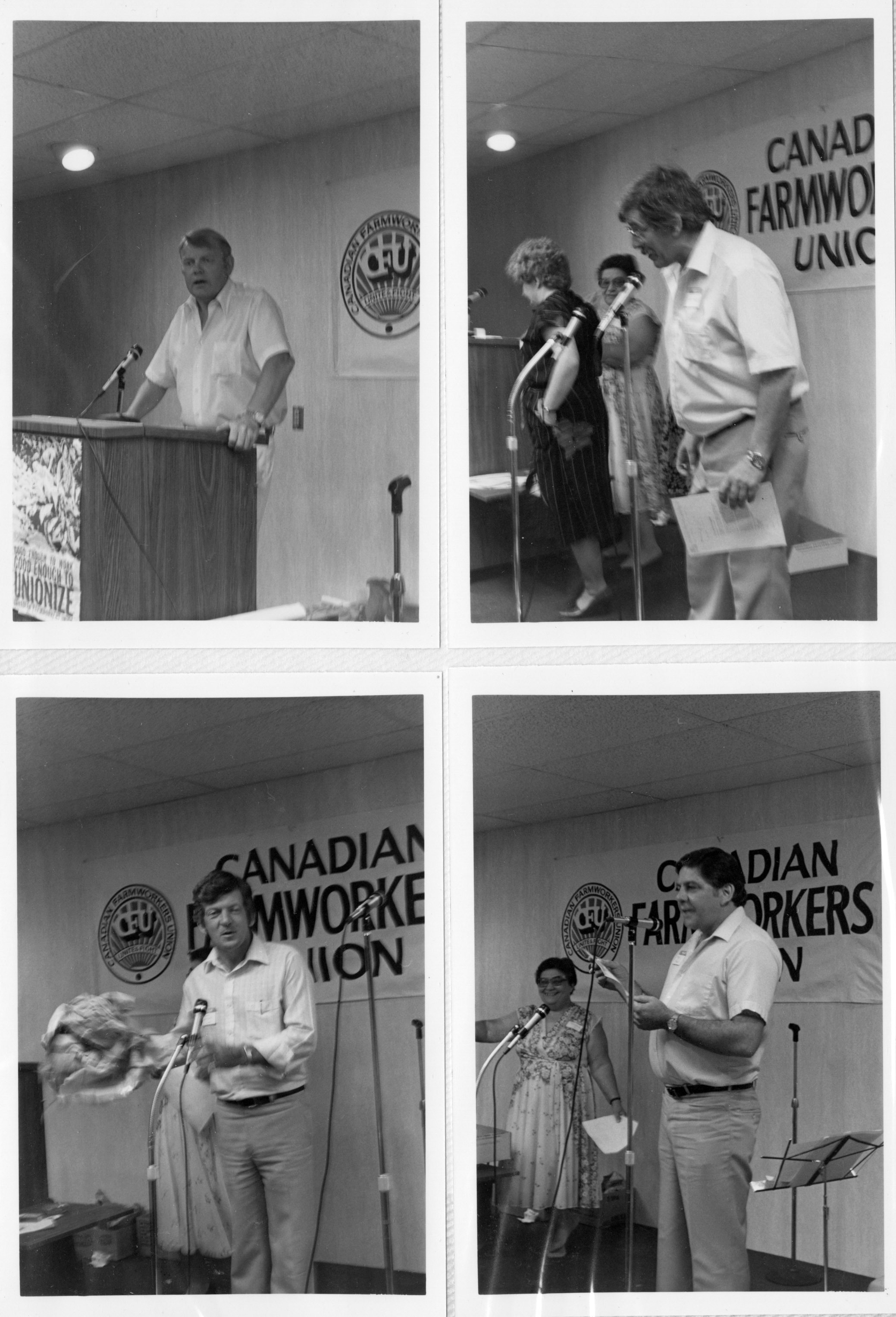
Photos of Jim Kinnaird, Mike Kramer, and Gerry Stoney addressing a union meeting. Jim Kinnaird, BC Federation of Labour President, Mike Kramer, BC Federation of Labour Secretary- Treasurer and Gerry Stoney (bottom left photo), President of IWA Local 1-357 (New Westminster) addressed a union meeting. Stoney was the key connection between the CFU and the BC labour movement.
Member of
Description
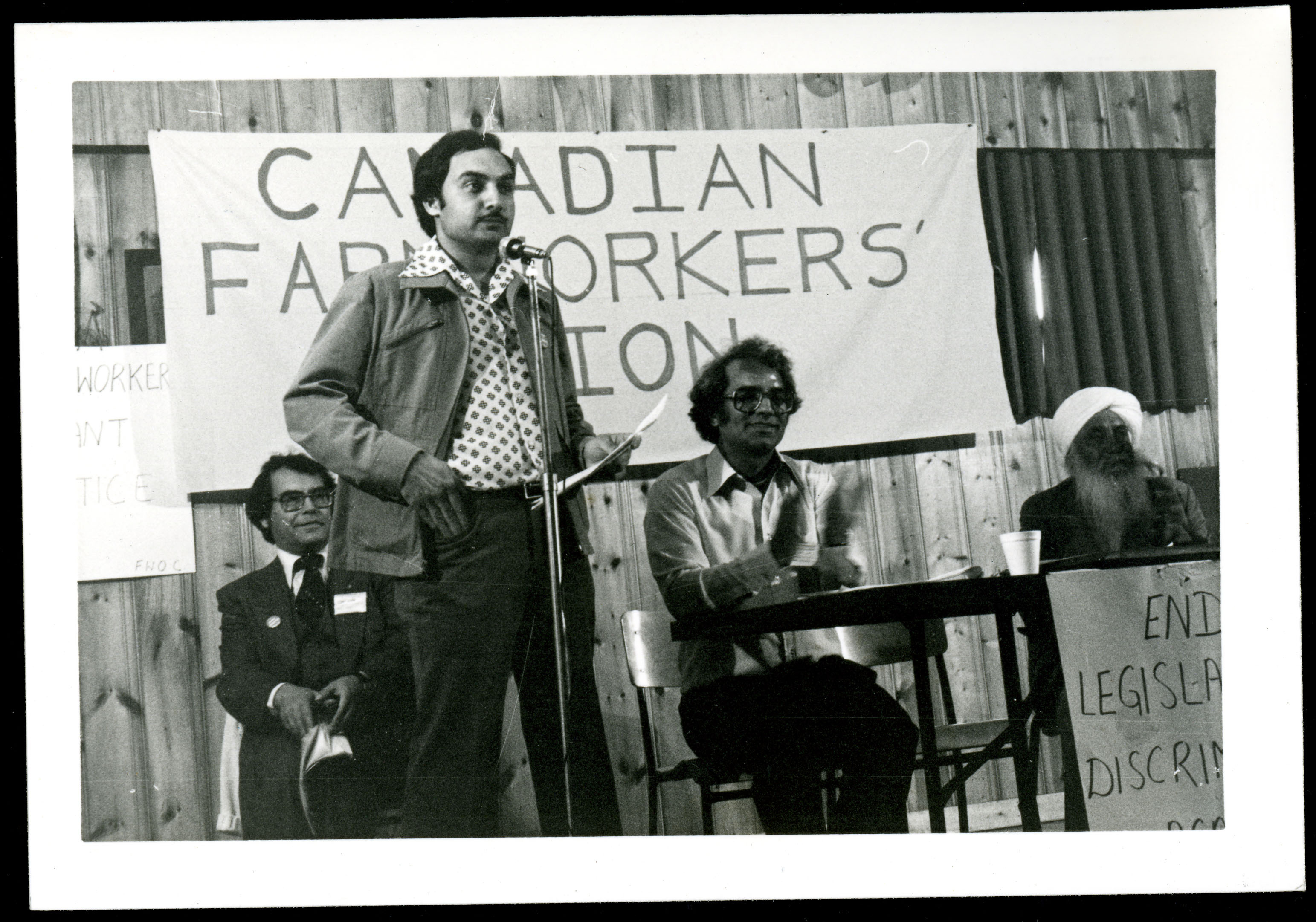
Photo of Raj Chouhan (at microphone) and Charan Gill (seated).
Creator: Bodalia, Chandra
Description
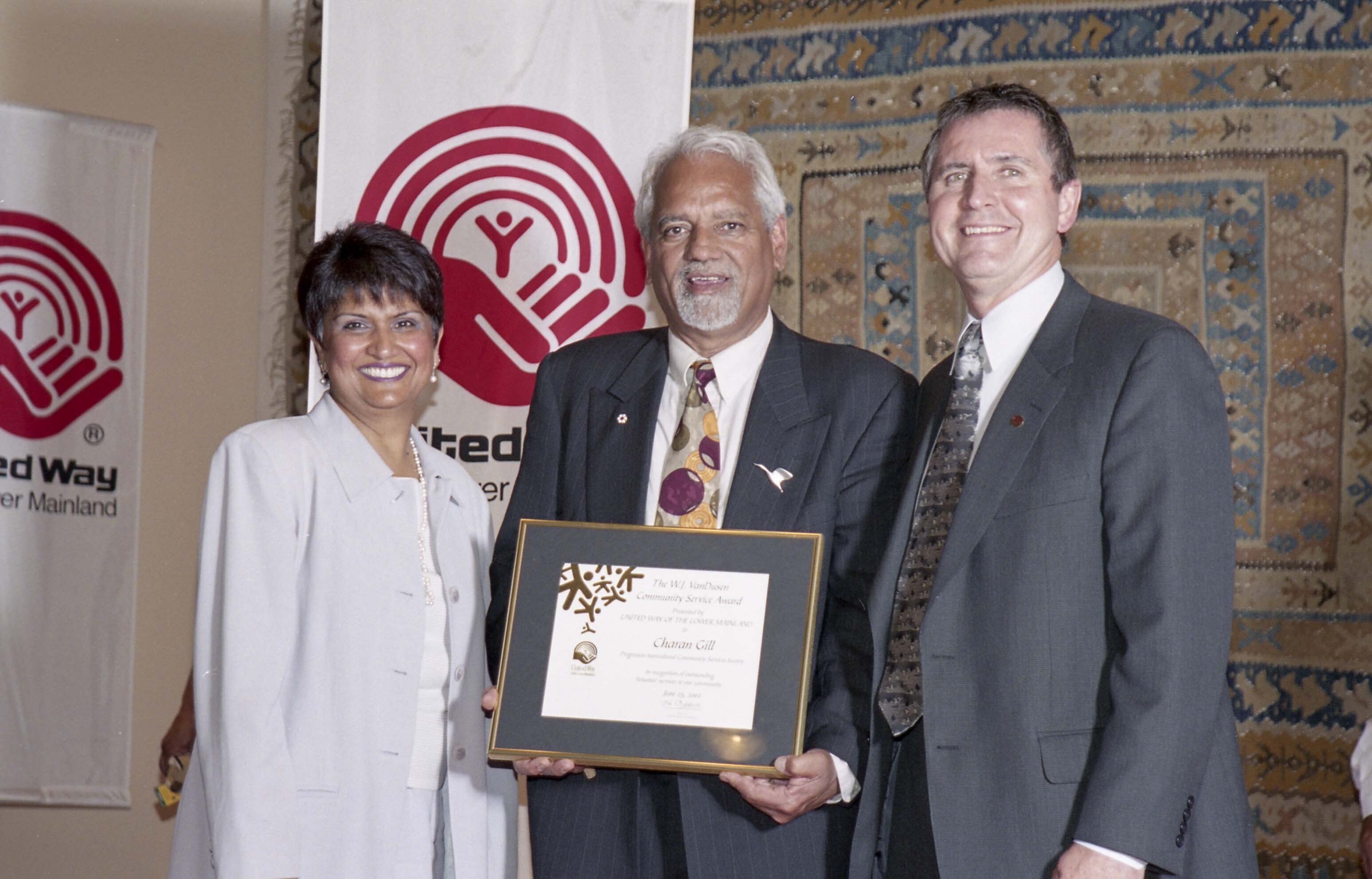
Group portrait of Charan Gill holding a certificate with unidentified individuals at a charity event hosted by the United Way British Columbia (then United Way of Lower Mainland), and hosted at one of the Ismaili jamatkhanas in Lower Mainland, B.C.
Charan Pal Gill (June 17, 1936 - February 2, 2021), born in Hong Kong, was a social worker, social activist, labour organizer, anti-racism pioneer and a South Asian community leader in British Columbia. Gill relocated to Vancouver, Canada in 1967, where he briefly worked as a berry picker before finding employment in a sawmill in Williams Lake, British Columbia. Due to an injury to his wrist, Gill left the sawmill and after some training began working as a social worker in Prince Rupert. After working for five years as a social worker, Gill became a registered social worker after obtaining his bachelor's degree from the University of British Columbia in 1970. Gill was involved with the Indian People's Association in North America (IPANA) in Vancouver. Founded in Montreal in June 1975, IPANA was a left-wing social group initially focused on generating support for the Naxalite movement in India. In 1979, Gill with IPANA in Vancouver played significant roles in the formation of the Farm Workers Organizing Committee (FWOC). On 6 April 1980, the FWOC transformed into the Canadian Farmworkers Union (CFU). The CFU became the first union in Canada's history centred on farmworkers. Gill was elected CFU founding secretary (by 2004 he also served as secretary and treasurer). He also became the editor of the Farmworker, the CFU's newspaper (published in English and Panjabi). While contributing towards the CFU, Gill pursued postgraduate studies and earned his master's degree in social work in 1983. For much of his professional career he worked for the BC Ministry of Human Resources and Ministry of Social Services and Housing. In November 1980, Gill co-founded the volunteer organization British Columbia Organization to Fight Racism (BCOFR). In 1985 Gill established a new service provider catering to the immediate needs of the South Asian community in British Columbia. The charitable organization was originally known as the Progressive Indo-Canadian Community Services Society and later became the Progressive Intercultural Community Services Society (PICS). Gill served as the organization's chief executive officer until 2017. Gill gradually retired from social work while working with PICS. He also served on the boards of various organizations, including the agriculture cooperative AgSafe (formerly FARSHA) since 1993; Rainbow Community Health Co-operative since 1998; Canadian Agricultural Safety Association (CASA) since 2011; and the BC Non-Profit Housing Association from 2008 to 2012. Gill was the recipient of numerous awards and honours in recognition of his activism and contributions to human rights and workers' rights, such as, the Order of British Columbia (1999) and the Queen's Diamond Jubilee Medal (2012).
United Way British Columbia (United Way BC) is a unified provincial organization with the mission to strengthen vital connections that support people in need in their local communities. Their vision is of creating and supporting a healthy, caring, and inclusive community. United Way BC undertakes many initiatives, such as maintaining a BC wildfire recovery fund, a BC flood response campaign, a campaign for Ukraine, and support for those vulnerable due to the COVID-19 pandemic.
Jamatkhanas, meaning "the house of the community," is a place of gathering and worship for Ismaili muslims. In jamatkhanas, the values of the Islamic faith are put into practice, including humility, generosity, kindness, compassion, pluralism, search for knowledge, and service to others.
Charan Pal Gill (June 17, 1936 - February 2, 2021), born in Hong Kong, was a social worker, social activist, labour organizer, anti-racism pioneer and a South Asian community leader in British Columbia. Gill relocated to Vancouver, Canada in 1967, where he briefly worked as a berry picker before finding employment in a sawmill in Williams Lake, British Columbia. Due to an injury to his wrist, Gill left the sawmill and after some training began working as a social worker in Prince Rupert. After working for five years as a social worker, Gill became a registered social worker after obtaining his bachelor's degree from the University of British Columbia in 1970. Gill was involved with the Indian People's Association in North America (IPANA) in Vancouver. Founded in Montreal in June 1975, IPANA was a left-wing social group initially focused on generating support for the Naxalite movement in India. In 1979, Gill with IPANA in Vancouver played significant roles in the formation of the Farm Workers Organizing Committee (FWOC). On 6 April 1980, the FWOC transformed into the Canadian Farmworkers Union (CFU). The CFU became the first union in Canada's history centred on farmworkers. Gill was elected CFU founding secretary (by 2004 he also served as secretary and treasurer). He also became the editor of the Farmworker, the CFU's newspaper (published in English and Panjabi). While contributing towards the CFU, Gill pursued postgraduate studies and earned his master's degree in social work in 1983. For much of his professional career he worked for the BC Ministry of Human Resources and Ministry of Social Services and Housing. In November 1980, Gill co-founded the volunteer organization British Columbia Organization to Fight Racism (BCOFR). In 1985 Gill established a new service provider catering to the immediate needs of the South Asian community in British Columbia. The charitable organization was originally known as the Progressive Indo-Canadian Community Services Society and later became the Progressive Intercultural Community Services Society (PICS). Gill served as the organization's chief executive officer until 2017. Gill gradually retired from social work while working with PICS. He also served on the boards of various organizations, including the agriculture cooperative AgSafe (formerly FARSHA) since 1993; Rainbow Community Health Co-operative since 1998; Canadian Agricultural Safety Association (CASA) since 2011; and the BC Non-Profit Housing Association from 2008 to 2012. Gill was the recipient of numerous awards and honours in recognition of his activism and contributions to human rights and workers' rights, such as, the Order of British Columbia (1999) and the Queen's Diamond Jubilee Medal (2012).
United Way British Columbia (United Way BC) is a unified provincial organization with the mission to strengthen vital connections that support people in need in their local communities. Their vision is of creating and supporting a healthy, caring, and inclusive community. United Way BC undertakes many initiatives, such as maintaining a BC wildfire recovery fund, a BC flood response campaign, a campaign for Ukraine, and support for those vulnerable due to the COVID-19 pandemic.
Jamatkhanas, meaning "the house of the community," is a place of gathering and worship for Ismaili muslims. In jamatkhanas, the values of the Islamic faith are put into practice, including humility, generosity, kindness, compassion, pluralism, search for knowledge, and service to others.
Creator: Bodalia, Chandra
Description
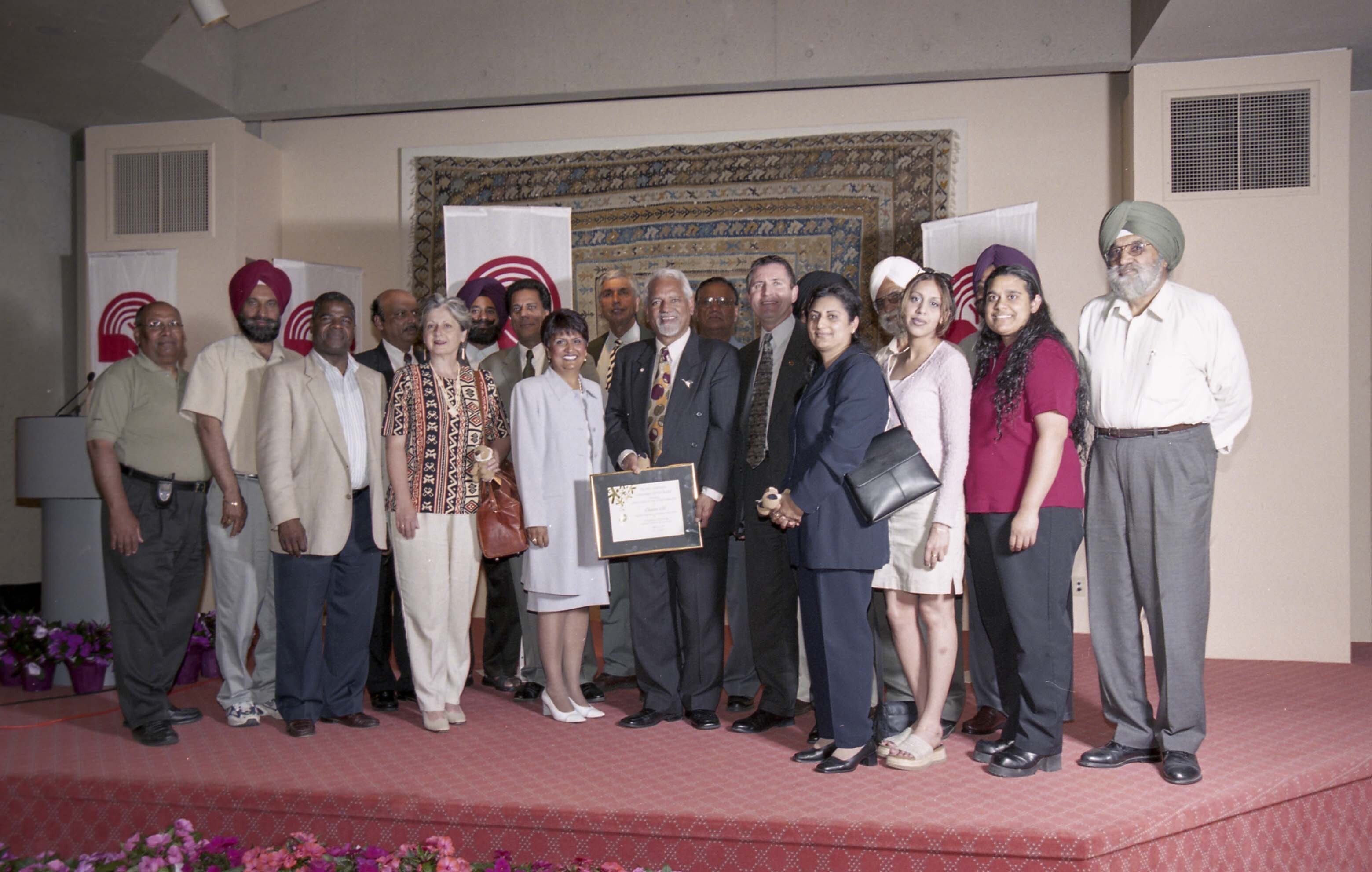
Group portrait of Charan Gill holding a certificate with unidentified individuals at a charity event hosted by the United Way British Columbia (then United Way of Lower Mainland), and hosted at one of the Ismaili jamatkhanas in Lower Mainland, B.C.
Charan Pal Gill (June 17, 1936 - February 2, 2021), born in Hong Kong, was a social worker, social activist, labour organizer, anti-racism pioneer and a South Asian community leader in British Columbia. Gill relocated to Vancouver, Canada in 1967, where he briefly worked as a berry picker before finding employment in a sawmill in Williams Lake, British Columbia. Due to an injury to his wrist, Gill left the sawmill and after some training began working as a social worker in Prince Rupert. After working for five years as a social worker, Gill became a registered social worker after obtaining his bachelor's degree from the University of British Columbia in 1970. Gill was involved with the Indian People's Association in North America (IPANA) in Vancouver. Founded in Montreal in June 1975, IPANA was a left-wing social group initially focused on generating support for the Naxalite movement in India. In 1979, Gill with IPANA in Vancouver played significant roles in the formation of the Farm Workers Organizing Committee (FWOC). On 6 April 1980, the FWOC transformed into the Canadian Farmworkers Union (CFU). The CFU became the first union in Canada's history centred on farmworkers. Gill was elected CFU founding secretary (by 2004 he also served as secretary and treasurer). He also became the editor of the Farmworker, the CFU's newspaper (published in English and Panjabi). While contributing towards the CFU, Gill pursued postgraduate studies and earned his master's degree in social work in 1983. For much of his professional career he worked for the BC Ministry of Human Resources and Ministry of Social Services and Housing. In November 1980, Gill co-founded the volunteer organization British Columbia Organization to Fight Racism (BCOFR). In 1985 Gill established a new service provider catering to the immediate needs of the South Asian community in British Columbia. The charitable organization was originally known as the Progressive Indo-Canadian Community Services Society and later became the Progressive Intercultural Community Services Society (PICS). Gill served as the organization's chief executive officer until 2017. Gill gradually retired from social work while working with PICS. He also served on the boards of various organizations, including the agriculture cooperative AgSafe (formerly FARSHA) since 1993; Rainbow Community Health Co-operative since 1998; Canadian Agricultural Safety Association (CASA) since 2011; and the BC Non-Profit Housing Association from 2008 to 2012. Gill was the recipient of numerous awards and honours in recognition of his activism and contributions to human rights and workers' rights, such as, the Order of British Columbia (1999) and the Queen's Diamond Jubilee Medal (2012).
United Way British Columbia (United Way BC) is a unified provincial organization with the mission to strengthen vital connections that support people in need in their local communities. Their vision is of creating and supporting a healthy, caring, and inclusive community. United Way BC undertakes many initiatives, such as maintaining a BC wildfire recovery fund, a BC flood response campaign, a campaign for Ukraine, and support for those vulnerable due to the COVID-19 pandemic.
Jamatkhanas, meaning "the house of the community," is a place of gathering and worship for Ismaili muslims. In jamatkhanas, the values of the Islamic faith are put into practice, including humility, generosity, kindness, compassion, pluralism, search for knowledge, and service to others.
Charan Pal Gill (June 17, 1936 - February 2, 2021), born in Hong Kong, was a social worker, social activist, labour organizer, anti-racism pioneer and a South Asian community leader in British Columbia. Gill relocated to Vancouver, Canada in 1967, where he briefly worked as a berry picker before finding employment in a sawmill in Williams Lake, British Columbia. Due to an injury to his wrist, Gill left the sawmill and after some training began working as a social worker in Prince Rupert. After working for five years as a social worker, Gill became a registered social worker after obtaining his bachelor's degree from the University of British Columbia in 1970. Gill was involved with the Indian People's Association in North America (IPANA) in Vancouver. Founded in Montreal in June 1975, IPANA was a left-wing social group initially focused on generating support for the Naxalite movement in India. In 1979, Gill with IPANA in Vancouver played significant roles in the formation of the Farm Workers Organizing Committee (FWOC). On 6 April 1980, the FWOC transformed into the Canadian Farmworkers Union (CFU). The CFU became the first union in Canada's history centred on farmworkers. Gill was elected CFU founding secretary (by 2004 he also served as secretary and treasurer). He also became the editor of the Farmworker, the CFU's newspaper (published in English and Panjabi). While contributing towards the CFU, Gill pursued postgraduate studies and earned his master's degree in social work in 1983. For much of his professional career he worked for the BC Ministry of Human Resources and Ministry of Social Services and Housing. In November 1980, Gill co-founded the volunteer organization British Columbia Organization to Fight Racism (BCOFR). In 1985 Gill established a new service provider catering to the immediate needs of the South Asian community in British Columbia. The charitable organization was originally known as the Progressive Indo-Canadian Community Services Society and later became the Progressive Intercultural Community Services Society (PICS). Gill served as the organization's chief executive officer until 2017. Gill gradually retired from social work while working with PICS. He also served on the boards of various organizations, including the agriculture cooperative AgSafe (formerly FARSHA) since 1993; Rainbow Community Health Co-operative since 1998; Canadian Agricultural Safety Association (CASA) since 2011; and the BC Non-Profit Housing Association from 2008 to 2012. Gill was the recipient of numerous awards and honours in recognition of his activism and contributions to human rights and workers' rights, such as, the Order of British Columbia (1999) and the Queen's Diamond Jubilee Medal (2012).
United Way British Columbia (United Way BC) is a unified provincial organization with the mission to strengthen vital connections that support people in need in their local communities. Their vision is of creating and supporting a healthy, caring, and inclusive community. United Way BC undertakes many initiatives, such as maintaining a BC wildfire recovery fund, a BC flood response campaign, a campaign for Ukraine, and support for those vulnerable due to the COVID-19 pandemic.
Jamatkhanas, meaning "the house of the community," is a place of gathering and worship for Ismaili muslims. In jamatkhanas, the values of the Islamic faith are put into practice, including humility, generosity, kindness, compassion, pluralism, search for knowledge, and service to others.
Creator: Bodalia, Chandra
Description
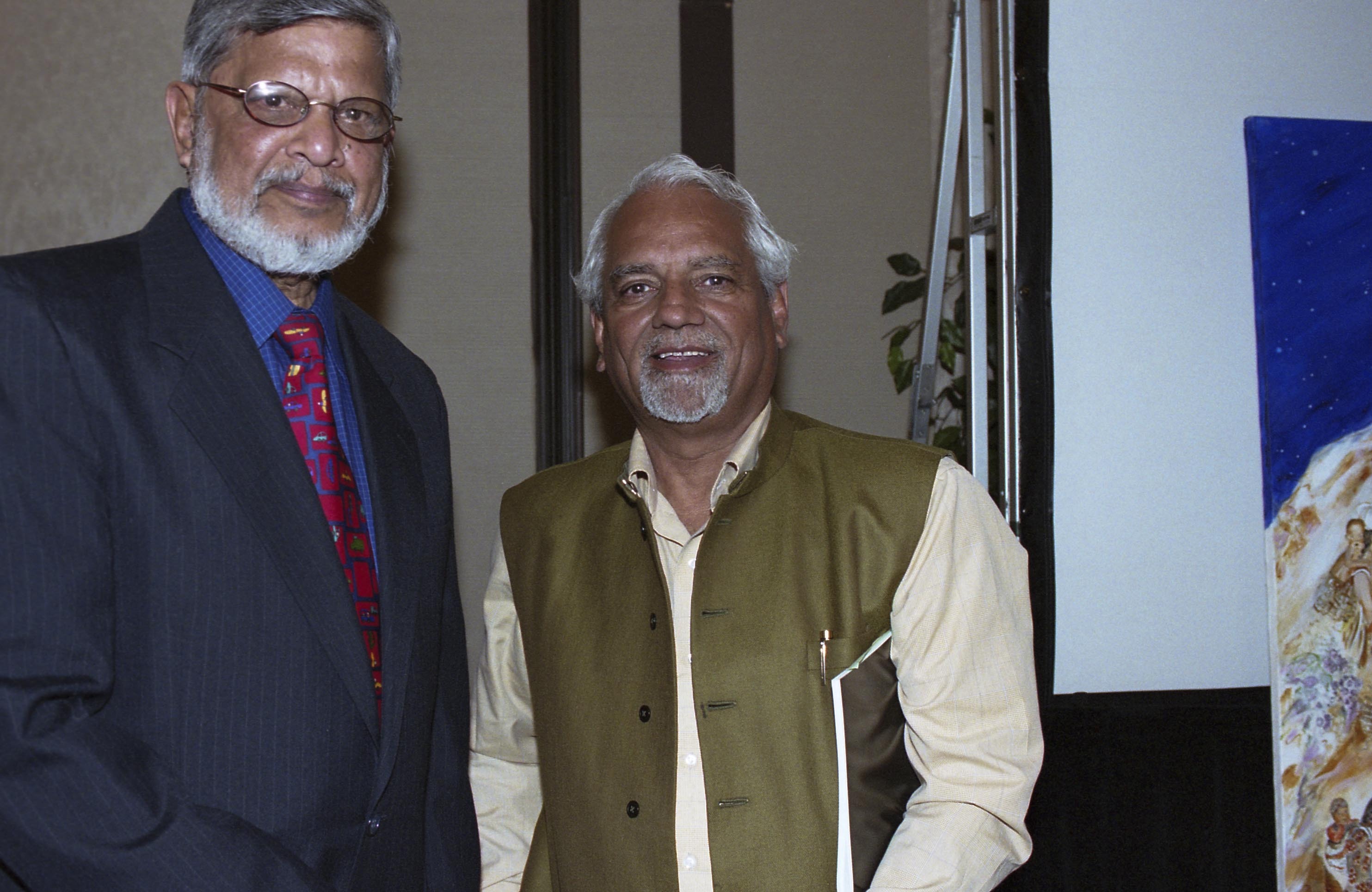
Group portrait of Arun Gandhi and Charan Gill at a lecture and book signing event for Arun Gandhi, which was organized by the International Network on Personal Meaning in Richmond, B.C.
Born in 1934 in Durban, South Africa, Arun Manilal Gandhi was the fifth grandson of Mohandas K. "Mahatma" Gandhi and was a socio-political activist, author, lecturer, and journalist. Having grown up under the apartheid laws of South Asian, both his parents and his grandfather taught him the importance of justice through love, suffering, understanding, and nonviolence. He and his late spouse, Sunanda, lived in India for thirty years, and then in 1987, they moved to the United States. The couple was extremely involved in activism, which included rescuing orphan children from the street, social and economic uplifting programs, starting the M. K. Gandhi Institute for Nonviolence, establishing residential-school in poorest rural India, and founding the Gandhi Worldwide Education Institute, among other contributions.
Charan Pal Gill (June 17, 1936 - February 2, 2021), born in Hong Kong, was a social worker, social activist, labour organizer, anti-racism pioneer and a South Asian community leader in British Columbia. Gill relocated to Vancouver, Canada in 1967, where he briefly worked as a berry picker before finding employment in a sawmill in Williams Lake, British Columbia. Due to an injury to his wrist, Gill left the sawmill and after some training began working as a social worker in Prince Rupert. After working for five years as a social worker, Gill became a registered social worker after obtaining his bachelor's degree from the University of British Columbia in 1970. Gill was involved with the Indian People's Association in North America (IPANA) in Vancouver. Founded in Montreal in June 1975, IPANA was a left-wing social group initially focused on generating support for the Naxalite movement in India. In 1979, Gill with IPANA in Vancouver played significant roles in the formation of the Farm Workers Organizing Committee (FWOC). On 6 April 1980, the FWOC transformed into the Canadian Farmworkers Union (CFU). The CFU became the first union in Canada's history centred on farmworkers. Gill was elected CFU founding secretary (by 2004 he also served as secretary and treasurer). He also became the editor of the Farmworker, the CFU's newspaper (published in English and Panjabi). While contributing towards the CFU, Gill pursued postgraduate studies and earned his master's degree in social work in 1983. For much of his professional career he worked for the BC Ministry of Human Resources and Ministry of Social Services and Housing. In November 1980, Gill co-founded the volunteer organization British Columbia Organization to Fight Racism (BCOFR). In 1985 Gill established a new service provider catering to the immediate needs of the South Asian community in British Columbia. The charitable organization was originally known as the Progressive Indo-Canadian Community Services Society and later became the Progressive Intercultural Community Services Society (PICS). Gill served as the organization's chief executive officer until 2017. Gill gradually retired from social work while working with PICS. He also served on the boards of various organizations, including the agriculture cooperative AgSafe (formerly FARSHA) since 1993; Rainbow Community Health Co-operative since 1998; Canadian Agricultural Safety Association (CASA) since 2011; and the BC Non-Profit Housing Association from 2008 to 2012. Gill was the recipient of numerous awards and honours in recognition of his activism and contributions to human rights and workers' rights, such as, the Order of British Columbia (1999) and the Queen's Diamond Jubilee Medal (2012).
International Network on Personal Meaning (INPM) follows the vision of Dr. Viktor Frankl, an Austrian neurologist and psychiatrist, and Dr. Paul T. P. Wong, a Canadian clinical psychologist. They advocate for research on meaning, by extending logotherapy and integrating it with the positive psychology. They engage in meaning research, meaning-centred practice, meaningful living group, as well as websites, publications, education, meaningful living groups, and meaning-centered counseling, coaching, and consultation.
Born in 1934 in Durban, South Africa, Arun Manilal Gandhi was the fifth grandson of Mohandas K. "Mahatma" Gandhi and was a socio-political activist, author, lecturer, and journalist. Having grown up under the apartheid laws of South Asian, both his parents and his grandfather taught him the importance of justice through love, suffering, understanding, and nonviolence. He and his late spouse, Sunanda, lived in India for thirty years, and then in 1987, they moved to the United States. The couple was extremely involved in activism, which included rescuing orphan children from the street, social and economic uplifting programs, starting the M. K. Gandhi Institute for Nonviolence, establishing residential-school in poorest rural India, and founding the Gandhi Worldwide Education Institute, among other contributions.
Charan Pal Gill (June 17, 1936 - February 2, 2021), born in Hong Kong, was a social worker, social activist, labour organizer, anti-racism pioneer and a South Asian community leader in British Columbia. Gill relocated to Vancouver, Canada in 1967, where he briefly worked as a berry picker before finding employment in a sawmill in Williams Lake, British Columbia. Due to an injury to his wrist, Gill left the sawmill and after some training began working as a social worker in Prince Rupert. After working for five years as a social worker, Gill became a registered social worker after obtaining his bachelor's degree from the University of British Columbia in 1970. Gill was involved with the Indian People's Association in North America (IPANA) in Vancouver. Founded in Montreal in June 1975, IPANA was a left-wing social group initially focused on generating support for the Naxalite movement in India. In 1979, Gill with IPANA in Vancouver played significant roles in the formation of the Farm Workers Organizing Committee (FWOC). On 6 April 1980, the FWOC transformed into the Canadian Farmworkers Union (CFU). The CFU became the first union in Canada's history centred on farmworkers. Gill was elected CFU founding secretary (by 2004 he also served as secretary and treasurer). He also became the editor of the Farmworker, the CFU's newspaper (published in English and Panjabi). While contributing towards the CFU, Gill pursued postgraduate studies and earned his master's degree in social work in 1983. For much of his professional career he worked for the BC Ministry of Human Resources and Ministry of Social Services and Housing. In November 1980, Gill co-founded the volunteer organization British Columbia Organization to Fight Racism (BCOFR). In 1985 Gill established a new service provider catering to the immediate needs of the South Asian community in British Columbia. The charitable organization was originally known as the Progressive Indo-Canadian Community Services Society and later became the Progressive Intercultural Community Services Society (PICS). Gill served as the organization's chief executive officer until 2017. Gill gradually retired from social work while working with PICS. He also served on the boards of various organizations, including the agriculture cooperative AgSafe (formerly FARSHA) since 1993; Rainbow Community Health Co-operative since 1998; Canadian Agricultural Safety Association (CASA) since 2011; and the BC Non-Profit Housing Association from 2008 to 2012. Gill was the recipient of numerous awards and honours in recognition of his activism and contributions to human rights and workers' rights, such as, the Order of British Columbia (1999) and the Queen's Diamond Jubilee Medal (2012).
International Network on Personal Meaning (INPM) follows the vision of Dr. Viktor Frankl, an Austrian neurologist and psychiatrist, and Dr. Paul T. P. Wong, a Canadian clinical psychologist. They advocate for research on meaning, by extending logotherapy and integrating it with the positive psychology. They engage in meaning research, meaning-centred practice, meaningful living group, as well as websites, publications, education, meaningful living groups, and meaning-centered counseling, coaching, and consultation.
Member of
Creator: Bodalia, Chandra
Description
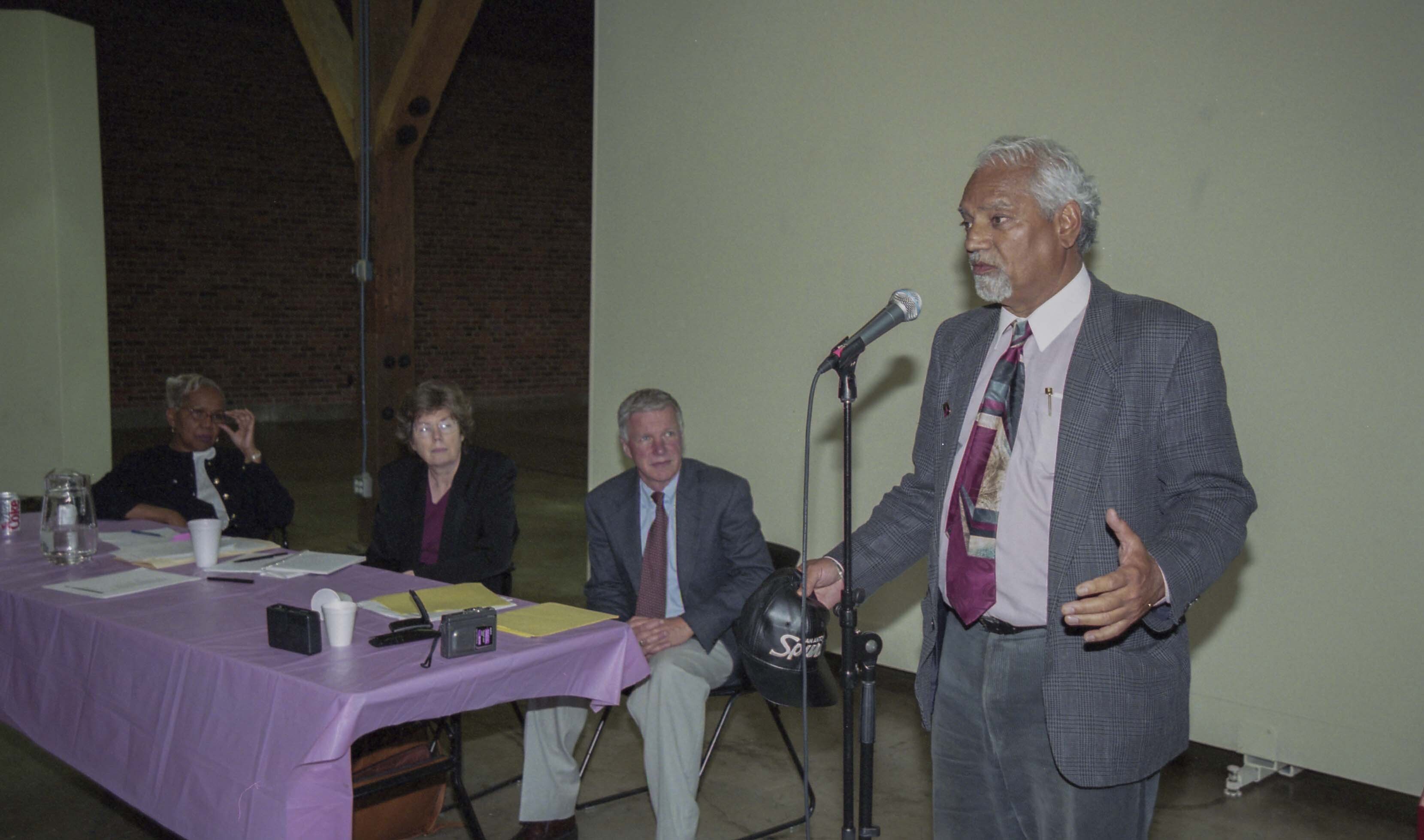
Photograph of Charan Gill speaking at the Community Forum on Human Rights organized by the Committee for Racial Justice and Human Rights Defenders at the Roundhouse Community Arts and Recreation Centre in Vancouver, B.C. Rosemary Brown and Bill Black are seen in the background.
Charan Pal Gill (June 17, 1936 - February 2, 2021), born in Hong Kong, was a social worker, social activist, labour organizer, anti-racism pioneer and a South Asian community leader in British Columbia. Gill relocated to Vancouver, Canada in 1967, where he briefly worked as a berry picker before finding employment in a sawmill in Williams Lake, British Columbia. Due to an injury to his wrist, Gill left the sawmill and after some training began working as a social worker in Prince Rupert. After working for five years as a social worker, Gill became a registered social worker after obtaining his bachelor's degree from the University of British Columbia in 1970. Gill was involved with the Indian People's Association in North America (IPANA) in Vancouver. Founded in Montreal in June 1975, IPANA was a left-wing social group initially focused on generating support for the Naxalite movement in India. In 1979, Gill with IPANA in Vancouver played significant roles in the formation of the Farm Workers Organizing Committee (FWOC). On 6 April 1980, the FWOC transformed into the Canadian Farmworkers Union (CFU). The CFU became the first union in Canada's history centred on farmworkers. Gill was elected CFU founding secretary (by 2004 he also served as secretary and treasurer). He also became the editor of the Farmworker, the CFU's newspaper (published in English and Panjabi). While contributing towards the CFU, Gill pursued postgraduate studies and earned his master's degree in social work in 1983. For much of his professional career he worked for the BC Ministry of Human Resources and Ministry of Social Services and Housing. In November 1980, Gill co-founded the volunteer organization British Columbia Organization to Fight Racism (BCOFR). In 1985 Gill established a new service provider catering to the immediate needs of the South Asian community in British Columbia. The charitable organization was originally known as the Progressive Indo-Canadian Community Services Society and later became the Progressive Intercultural Community Services Society (PICS). Gill served as the organization's chief executive officer until 2017. Gill gradually retired from social work while working with PICS. He also served on the boards of various organizations, including the agriculture cooperative AgSafe (formerly FARSHA) since 1993; Rainbow Community Health Co-operative since 1998; Canadian Agricultural Safety Association (CASA) since 2011; and the BC Non-Profit Housing Association from 2008 to 2012. Gill was the recipient of numerous awards and honours in recognition of his activism and contributions to human rights and workers' rights, such as, the Order of British Columbia (1999) and the Queen's Diamond Jubilee Medal (2012).
Born on June 17, 1930 in Kingston, Jamaica, Rosemary Brown immigrated to Canada in 1951 to earn her Bachelor of Arts in Social Work at McGill University and her Masters of Social Work at the University of British Columbia. Brown was Canada's first Black female member of a provincial legislature and the first woman to run for leadership of the federal NDP political party. She was a politician, feminist, writer, educator, lecturer, and mother who contributed significantly to B.C. and Canada, through her work with the British Columbia Association for the Advancement of Coloured People and Voice of Women.
Bill Black is a Professor Emeritus at the University of British Columbia's Peter A. Allard School of Law. After earning his J.D. from Harvard Law School, Professor Black joined the Allard School of Law in 1970 as an Assistant Professor and was promoted to Associate Professor in 1975, then Professor in 1998. His research interests lie in Human Rights Reform, Equality Rights, and Mediation and other Dispute Resolution within Human Rights Agencies.
The Roundhouse Community Arts and Recreation Centre is located in downtown Vancouver's Yaletown neighbourhood. It is home to Engine 374, a locomotive that pulled the first trans-continental passenger train across Canada and into Vancouver in 1887.
Charan Pal Gill (June 17, 1936 - February 2, 2021), born in Hong Kong, was a social worker, social activist, labour organizer, anti-racism pioneer and a South Asian community leader in British Columbia. Gill relocated to Vancouver, Canada in 1967, where he briefly worked as a berry picker before finding employment in a sawmill in Williams Lake, British Columbia. Due to an injury to his wrist, Gill left the sawmill and after some training began working as a social worker in Prince Rupert. After working for five years as a social worker, Gill became a registered social worker after obtaining his bachelor's degree from the University of British Columbia in 1970. Gill was involved with the Indian People's Association in North America (IPANA) in Vancouver. Founded in Montreal in June 1975, IPANA was a left-wing social group initially focused on generating support for the Naxalite movement in India. In 1979, Gill with IPANA in Vancouver played significant roles in the formation of the Farm Workers Organizing Committee (FWOC). On 6 April 1980, the FWOC transformed into the Canadian Farmworkers Union (CFU). The CFU became the first union in Canada's history centred on farmworkers. Gill was elected CFU founding secretary (by 2004 he also served as secretary and treasurer). He also became the editor of the Farmworker, the CFU's newspaper (published in English and Panjabi). While contributing towards the CFU, Gill pursued postgraduate studies and earned his master's degree in social work in 1983. For much of his professional career he worked for the BC Ministry of Human Resources and Ministry of Social Services and Housing. In November 1980, Gill co-founded the volunteer organization British Columbia Organization to Fight Racism (BCOFR). In 1985 Gill established a new service provider catering to the immediate needs of the South Asian community in British Columbia. The charitable organization was originally known as the Progressive Indo-Canadian Community Services Society and later became the Progressive Intercultural Community Services Society (PICS). Gill served as the organization's chief executive officer until 2017. Gill gradually retired from social work while working with PICS. He also served on the boards of various organizations, including the agriculture cooperative AgSafe (formerly FARSHA) since 1993; Rainbow Community Health Co-operative since 1998; Canadian Agricultural Safety Association (CASA) since 2011; and the BC Non-Profit Housing Association from 2008 to 2012. Gill was the recipient of numerous awards and honours in recognition of his activism and contributions to human rights and workers' rights, such as, the Order of British Columbia (1999) and the Queen's Diamond Jubilee Medal (2012).
Born on June 17, 1930 in Kingston, Jamaica, Rosemary Brown immigrated to Canada in 1951 to earn her Bachelor of Arts in Social Work at McGill University and her Masters of Social Work at the University of British Columbia. Brown was Canada's first Black female member of a provincial legislature and the first woman to run for leadership of the federal NDP political party. She was a politician, feminist, writer, educator, lecturer, and mother who contributed significantly to B.C. and Canada, through her work with the British Columbia Association for the Advancement of Coloured People and Voice of Women.
Bill Black is a Professor Emeritus at the University of British Columbia's Peter A. Allard School of Law. After earning his J.D. from Harvard Law School, Professor Black joined the Allard School of Law in 1970 as an Assistant Professor and was promoted to Associate Professor in 1975, then Professor in 1998. His research interests lie in Human Rights Reform, Equality Rights, and Mediation and other Dispute Resolution within Human Rights Agencies.
The Roundhouse Community Arts and Recreation Centre is located in downtown Vancouver's Yaletown neighbourhood. It is home to Engine 374, a locomotive that pulled the first trans-continental passenger train across Canada and into Vancouver in 1887.
Creator: Bodalia, Chandra
Description
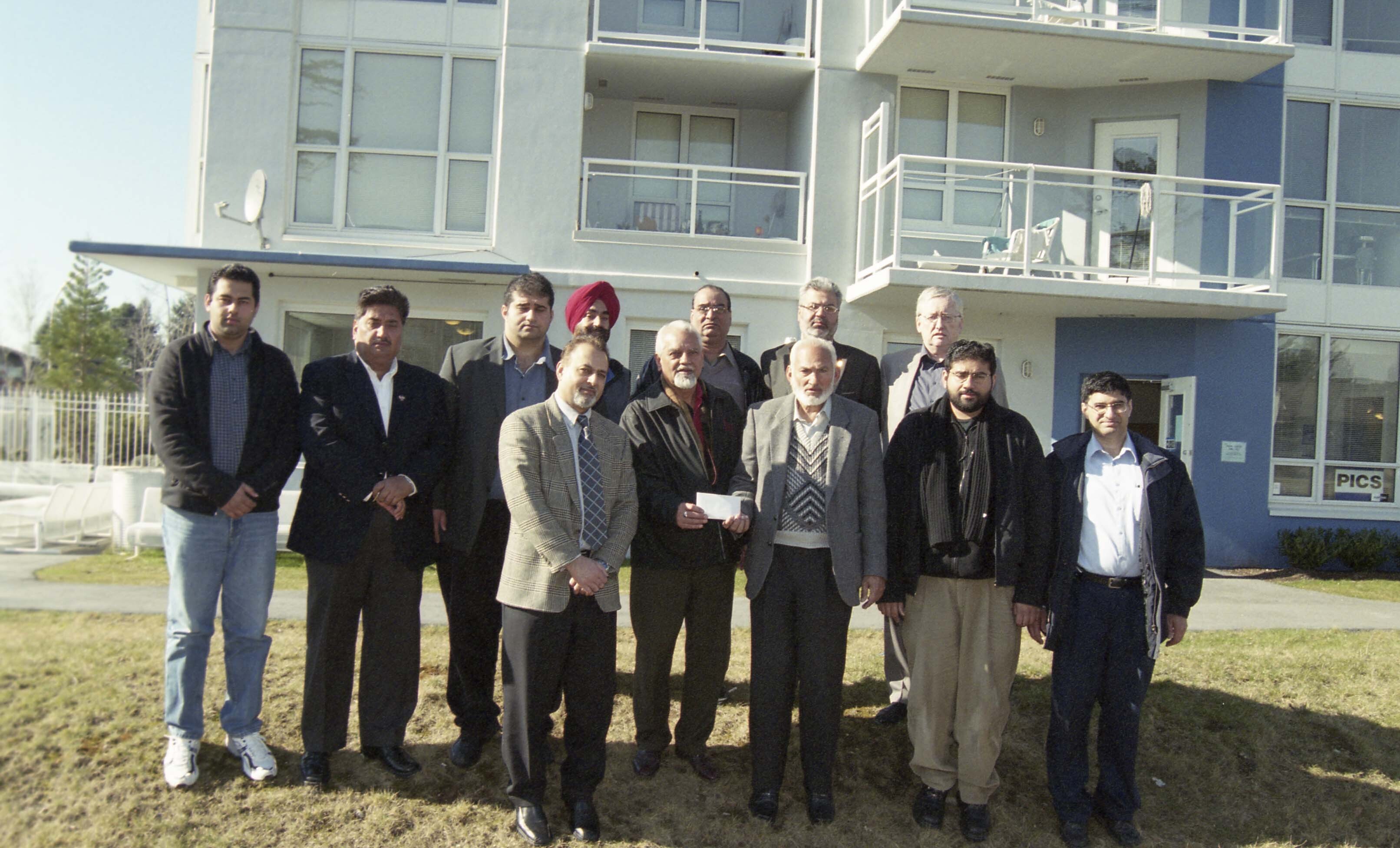
Photograph of a group of unidentified individuals at a meeting organized by the Progressive Intercultural Community Services (PICS) Society. The meeting was pertaining to a donation made in Riasat Ali Khan's memory from his family for the PICS Society. Standing among the group of individuals is Charan Gill.
Charan Pal Gill (June 17, 1936 - February 2, 2021), born in Hong Kong, was a social worker, social activist, labour organizer, anti-racism pioneer and a South Asian community leader in British Columbia. Gill relocated to Vancouver, Canada in 1967, where he briefly worked as a berry picker before finding employment in a sawmill in Williams Lake, British Columbia. Due to an injury to his wrist, Gill left the sawmill and after some training began working as a social worker in Prince Rupert. After working for five years as a social worker, Gill became a registered social worker after obtaining his bachelor's degree from the University of British Columbia in 1970. Gill was involved with the Indian People's Association in North America (IPANA) in Vancouver. Founded in Montreal in June 1975, IPANA was a left-wing social group initially focused on generating support for the Naxalite movement in India. In 1979, Gill with IPANA in Vancouver played significant roles in the formation of the Farm Workers Organizing Committee (FWOC). On 6 April 1980, the FWOC transformed into the Canadian Farmworkers Union (CFU). The CFU became the first union in Canada's history centred on farmworkers. Gill was elected CFU founding secretary (by 2004 he also served as secretary and treasurer). He also became the editor of the Farmworker, the CFU's newspaper (published in English and Panjabi). While contributing towards the CFU, Gill pursued postgraduate studies and earned his master's degree in social work in 1983. For much of his professional career he worked for the BC Ministry of Human Resources and Ministry of Social Services and Housing. In November 1980, Gill co-founded the volunteer organization British Columbia Organization to Fight Racism (BCOFR). In 1985 Gill established a new service provider catering to the immediate needs of the South Asian community in British Columbia. The charitable organization was originally known as the Progressive Indo-Canadian Community Services Society and later became the Progressive Intercultural Community Services Society (PICS). Gill served as the organization's chief executive officer until 2017. Gill gradually retired from social work while working with PICS. He also served on the boards of various organizations, including the agriculture cooperative AgSafe (formerly FARSHA) since 1993; Rainbow Community Health Co-operative since 1998; Canadian Agricultural Safety Association (CASA) since 2011; and the BC Non-Profit Housing Association from 2008 to 2012. Gill was the recipient of numerous awards and honours in recognition of his activism and contributions to human rights and workers' rights, such as, the Order of British Columbia (1999) and the Queen's Diamond Jubilee Medal (2012).
Progressive Intercultural Community Services (PICS) Society is a registered non-profit organization that has been serving the community since 1987. PICS Society provides a broad spectrum of programs and services which includes employment programs, settlement services, language services, social programs and housing services.
Charan Pal Gill (June 17, 1936 - February 2, 2021), born in Hong Kong, was a social worker, social activist, labour organizer, anti-racism pioneer and a South Asian community leader in British Columbia. Gill relocated to Vancouver, Canada in 1967, where he briefly worked as a berry picker before finding employment in a sawmill in Williams Lake, British Columbia. Due to an injury to his wrist, Gill left the sawmill and after some training began working as a social worker in Prince Rupert. After working for five years as a social worker, Gill became a registered social worker after obtaining his bachelor's degree from the University of British Columbia in 1970. Gill was involved with the Indian People's Association in North America (IPANA) in Vancouver. Founded in Montreal in June 1975, IPANA was a left-wing social group initially focused on generating support for the Naxalite movement in India. In 1979, Gill with IPANA in Vancouver played significant roles in the formation of the Farm Workers Organizing Committee (FWOC). On 6 April 1980, the FWOC transformed into the Canadian Farmworkers Union (CFU). The CFU became the first union in Canada's history centred on farmworkers. Gill was elected CFU founding secretary (by 2004 he also served as secretary and treasurer). He also became the editor of the Farmworker, the CFU's newspaper (published in English and Panjabi). While contributing towards the CFU, Gill pursued postgraduate studies and earned his master's degree in social work in 1983. For much of his professional career he worked for the BC Ministry of Human Resources and Ministry of Social Services and Housing. In November 1980, Gill co-founded the volunteer organization British Columbia Organization to Fight Racism (BCOFR). In 1985 Gill established a new service provider catering to the immediate needs of the South Asian community in British Columbia. The charitable organization was originally known as the Progressive Indo-Canadian Community Services Society and later became the Progressive Intercultural Community Services Society (PICS). Gill served as the organization's chief executive officer until 2017. Gill gradually retired from social work while working with PICS. He also served on the boards of various organizations, including the agriculture cooperative AgSafe (formerly FARSHA) since 1993; Rainbow Community Health Co-operative since 1998; Canadian Agricultural Safety Association (CASA) since 2011; and the BC Non-Profit Housing Association from 2008 to 2012. Gill was the recipient of numerous awards and honours in recognition of his activism and contributions to human rights and workers' rights, such as, the Order of British Columbia (1999) and the Queen's Diamond Jubilee Medal (2012).
Progressive Intercultural Community Services (PICS) Society is a registered non-profit organization that has been serving the community since 1987. PICS Society provides a broad spectrum of programs and services which includes employment programs, settlement services, language services, social programs and housing services.
Creator: Bodalia, Chandra
Description
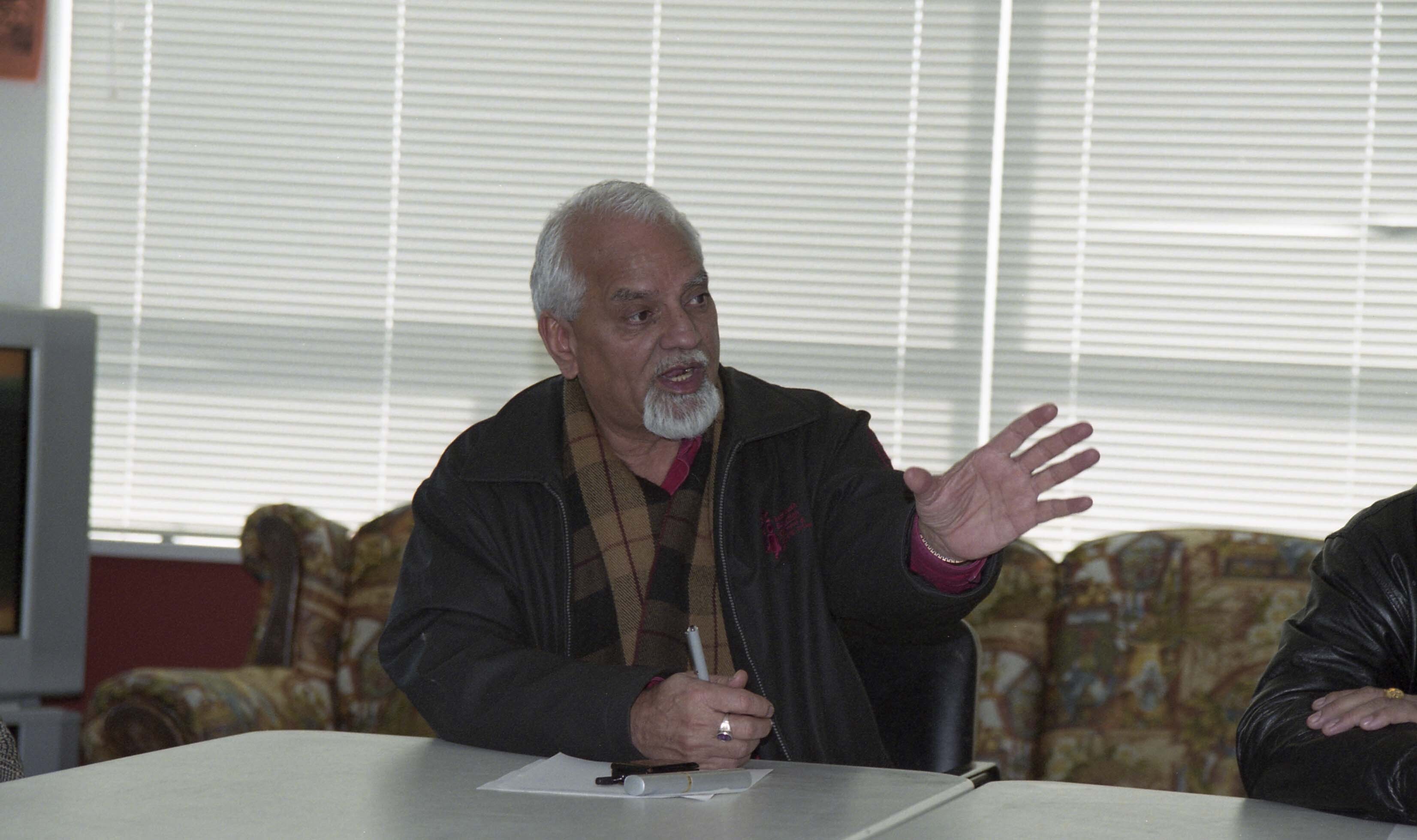
Photograph of Charan Gill at a meeting organized by the Progressive Intercultural Community Services (PICS) Society. The meeting was pertaining to a donation made in Riasat Ali Khan's memory from his family for the PICS Society.
Charan Pal Gill (June 17, 1936 - February 2, 2021), born in Hong Kong, was a social worker, social activist, labour organizer, anti-racism pioneer and a South Asian community leader in British Columbia. Gill relocated to Vancouver, Canada in 1967, where he briefly worked as a berry picker before finding employment in a sawmill in Williams Lake, British Columbia. Due to an injury to his wrist, Gill left the sawmill and after some training began working as a social worker in Prince Rupert. After working for five years as a social worker, Gill became a registered social worker after obtaining his bachelor's degree from the University of British Columbia in 1970. Gill was involved with the Indian People's Association in North America (IPANA) in Vancouver. Founded in Montreal in June 1975, IPANA was a left-wing social group initially focused on generating support for the Naxalite movement in India. In 1979, Gill with IPANA in Vancouver played significant roles in the formation of the Farm Workers Organizing Committee (FWOC). On 6 April 1980, the FWOC transformed into the Canadian Farmworkers Union (CFU). The CFU became the first union in Canada's history centred on farmworkers. Gill was elected CFU founding secretary (by 2004 he also served as secretary and treasurer). He also became the editor of the Farmworker, the CFU's newspaper (published in English and Panjabi). While contributing towards the CFU, Gill pursued postgraduate studies and earned his master's degree in social work in 1983. For much of his professional career he worked for the BC Ministry of Human Resources and Ministry of Social Services and Housing. In November 1980, Gill co-founded the volunteer organization British Columbia Organization to Fight Racism (BCOFR). In 1985 Gill established a new service provider catering to the immediate needs of the South Asian community in British Columbia. The charitable organization was originally known as the Progressive Indo-Canadian Community Services Society and later became the Progressive Intercultural Community Services Society (PICS). Gill served as the organization's chief executive officer until 2017. Gill gradually retired from social work while working with PICS. He also served on the boards of various organizations, including the agriculture cooperative AgSafe (formerly FARSHA) since 1993; Rainbow Community Health Co-operative since 1998; Canadian Agricultural Safety Association (CASA) since 2011; and the BC Non-Profit Housing Association from 2008 to 2012. Gill was the recipient of numerous awards and honours in recognition of his activism and contributions to human rights and workers' rights, such as, the Order of British Columbia (1999) and the Queen's Diamond Jubilee Medal (2012).
Progressive Intercultural Community Services (PICS) Society is a registered non-profit organization that has been serving the community since 1987. PICS Society provides a broad spectrum of programs and services which includes employment programs, settlement services, language services, social programs and housing services.
Charan Pal Gill (June 17, 1936 - February 2, 2021), born in Hong Kong, was a social worker, social activist, labour organizer, anti-racism pioneer and a South Asian community leader in British Columbia. Gill relocated to Vancouver, Canada in 1967, where he briefly worked as a berry picker before finding employment in a sawmill in Williams Lake, British Columbia. Due to an injury to his wrist, Gill left the sawmill and after some training began working as a social worker in Prince Rupert. After working for five years as a social worker, Gill became a registered social worker after obtaining his bachelor's degree from the University of British Columbia in 1970. Gill was involved with the Indian People's Association in North America (IPANA) in Vancouver. Founded in Montreal in June 1975, IPANA was a left-wing social group initially focused on generating support for the Naxalite movement in India. In 1979, Gill with IPANA in Vancouver played significant roles in the formation of the Farm Workers Organizing Committee (FWOC). On 6 April 1980, the FWOC transformed into the Canadian Farmworkers Union (CFU). The CFU became the first union in Canada's history centred on farmworkers. Gill was elected CFU founding secretary (by 2004 he also served as secretary and treasurer). He also became the editor of the Farmworker, the CFU's newspaper (published in English and Panjabi). While contributing towards the CFU, Gill pursued postgraduate studies and earned his master's degree in social work in 1983. For much of his professional career he worked for the BC Ministry of Human Resources and Ministry of Social Services and Housing. In November 1980, Gill co-founded the volunteer organization British Columbia Organization to Fight Racism (BCOFR). In 1985 Gill established a new service provider catering to the immediate needs of the South Asian community in British Columbia. The charitable organization was originally known as the Progressive Indo-Canadian Community Services Society and later became the Progressive Intercultural Community Services Society (PICS). Gill served as the organization's chief executive officer until 2017. Gill gradually retired from social work while working with PICS. He also served on the boards of various organizations, including the agriculture cooperative AgSafe (formerly FARSHA) since 1993; Rainbow Community Health Co-operative since 1998; Canadian Agricultural Safety Association (CASA) since 2011; and the BC Non-Profit Housing Association from 2008 to 2012. Gill was the recipient of numerous awards and honours in recognition of his activism and contributions to human rights and workers' rights, such as, the Order of British Columbia (1999) and the Queen's Diamond Jubilee Medal (2012).
Progressive Intercultural Community Services (PICS) Society is a registered non-profit organization that has been serving the community since 1987. PICS Society provides a broad spectrum of programs and services which includes employment programs, settlement services, language services, social programs and housing services.