
Khan, Riasat Ali
Creator: Bodalia, Chandra
Description
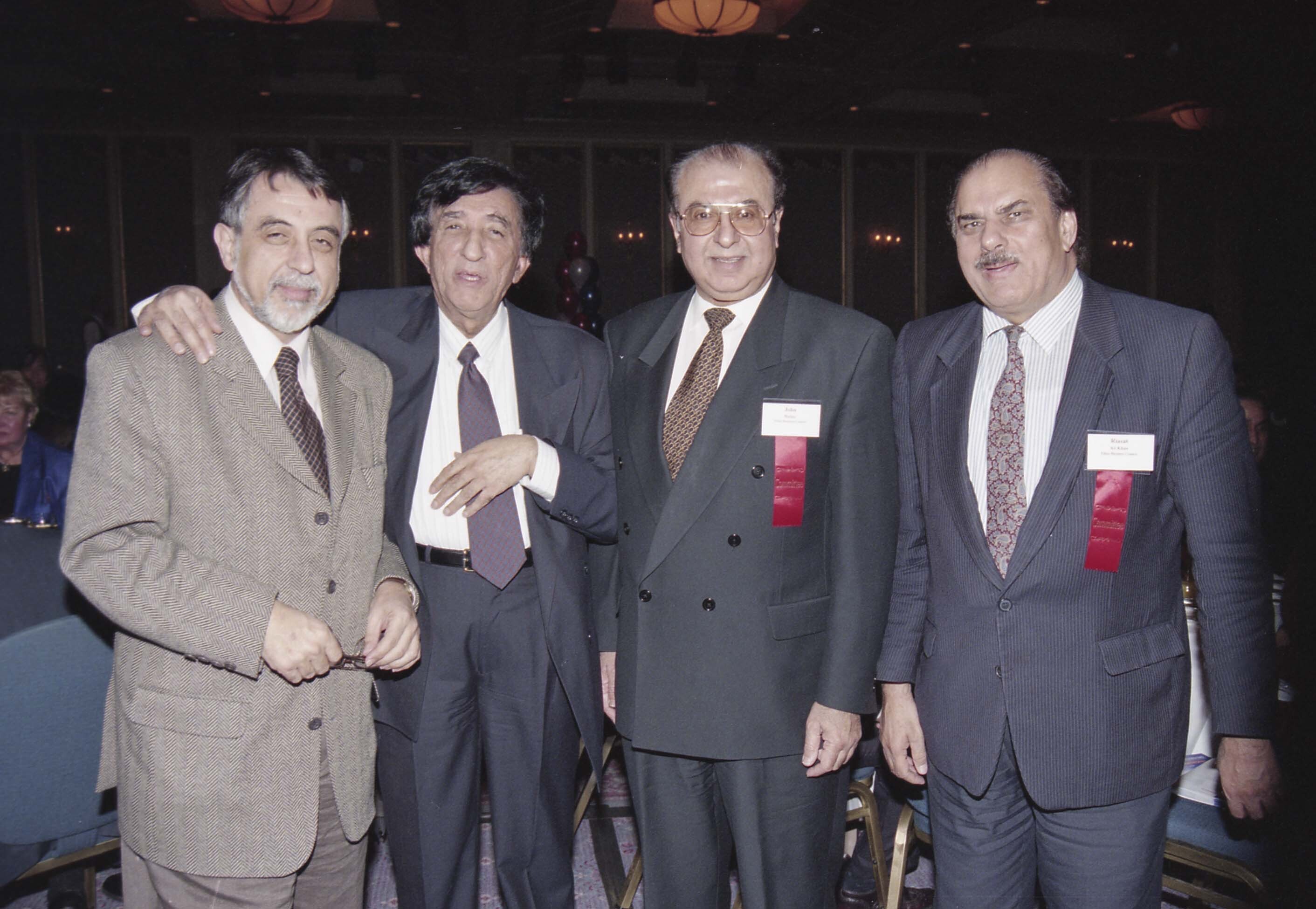
Photograph of Aziz Khaki, John Halani, and Riasat Ali Khan with an unidentified individual at the B.C. New Canadian Entrepreneur Awards event. The awards were sponsored by the Ethno Business Council of British Columbia in conjunction with corporate sponsors.
Dr. Abdulaziz 'Aziz' Khaki was an activist and leader in the Canadian Muslim community. He served as vice-president of the Canadian Muslim Federation and the Council of Muslim Communities of Canada. Dr. Khaki was a strong advocate for human rights, interfaith dialogue, and the integration of Muslim communities into Canadian society.
John Halani was a hotelier in Vancouver, British Columbia (B.C.) born in Masaka, Uganda. Halani came to B.C. in 1972 after escaping the persecution of the Idi Amin regime in Uganda. Halani, a 35-year-old business owner, had his assets confiscated by the Amin regime as he was leaving Uganda. His first job in Vancouver was with a glass company, from there he was able to lease out the Robsontrasse hotel in downtown Vancouver. By 1975, Halani was running the Tropicana Hotel across the street. Halani had an active political career, including being named honorary consul for Uganda in B.C., and was involved with the Immigrant Services Society of B.C. and other advocacy groups. He also served on multiple community boards, including as chair of the Ethno Business Council.
Riasat Ali Khan was born in India, but his family shifted to Pakistan after independence. Khan immigrated to Canada in 1959, working in the correctional services. Khan was a prominent leader of the Pakistani-Canadian community in Vancouver, British Columbia (B.C.). Khan was the founder of the Pakistan-Canada Association, which opened the first mosque in 1963, the Al Jamia Masjid in Vancouver, B.C. He served as the head of the B.C. Immigrant Services Society. Khan was also a board member of the B.C. Cancer Society and a delegate to the Committee for Racial Justice.
The Ethno Business Council of British Columbia (Ethno BC) was established in 1988 to recognize and celebrate the achievements of New Canadian entrepreneurs. Ethno BC acknowledges the contributions that multicultural businesses make to the British Columbia economy by recognizing the achievements of successful entrepreneurs who were born outside of Canada, and who have been in business for at least three years in Canada.
Dr. Abdulaziz 'Aziz' Khaki was an activist and leader in the Canadian Muslim community. He served as vice-president of the Canadian Muslim Federation and the Council of Muslim Communities of Canada. Dr. Khaki was a strong advocate for human rights, interfaith dialogue, and the integration of Muslim communities into Canadian society.
John Halani was a hotelier in Vancouver, British Columbia (B.C.) born in Masaka, Uganda. Halani came to B.C. in 1972 after escaping the persecution of the Idi Amin regime in Uganda. Halani, a 35-year-old business owner, had his assets confiscated by the Amin regime as he was leaving Uganda. His first job in Vancouver was with a glass company, from there he was able to lease out the Robsontrasse hotel in downtown Vancouver. By 1975, Halani was running the Tropicana Hotel across the street. Halani had an active political career, including being named honorary consul for Uganda in B.C., and was involved with the Immigrant Services Society of B.C. and other advocacy groups. He also served on multiple community boards, including as chair of the Ethno Business Council.
Riasat Ali Khan was born in India, but his family shifted to Pakistan after independence. Khan immigrated to Canada in 1959, working in the correctional services. Khan was a prominent leader of the Pakistani-Canadian community in Vancouver, British Columbia (B.C.). Khan was the founder of the Pakistan-Canada Association, which opened the first mosque in 1963, the Al Jamia Masjid in Vancouver, B.C. He served as the head of the B.C. Immigrant Services Society. Khan was also a board member of the B.C. Cancer Society and a delegate to the Committee for Racial Justice.
The Ethno Business Council of British Columbia (Ethno BC) was established in 1988 to recognize and celebrate the achievements of New Canadian entrepreneurs. Ethno BC acknowledges the contributions that multicultural businesses make to the British Columbia economy by recognizing the achievements of successful entrepreneurs who were born outside of Canada, and who have been in business for at least three years in Canada.
Creator: Bodalia, Chandra
Description
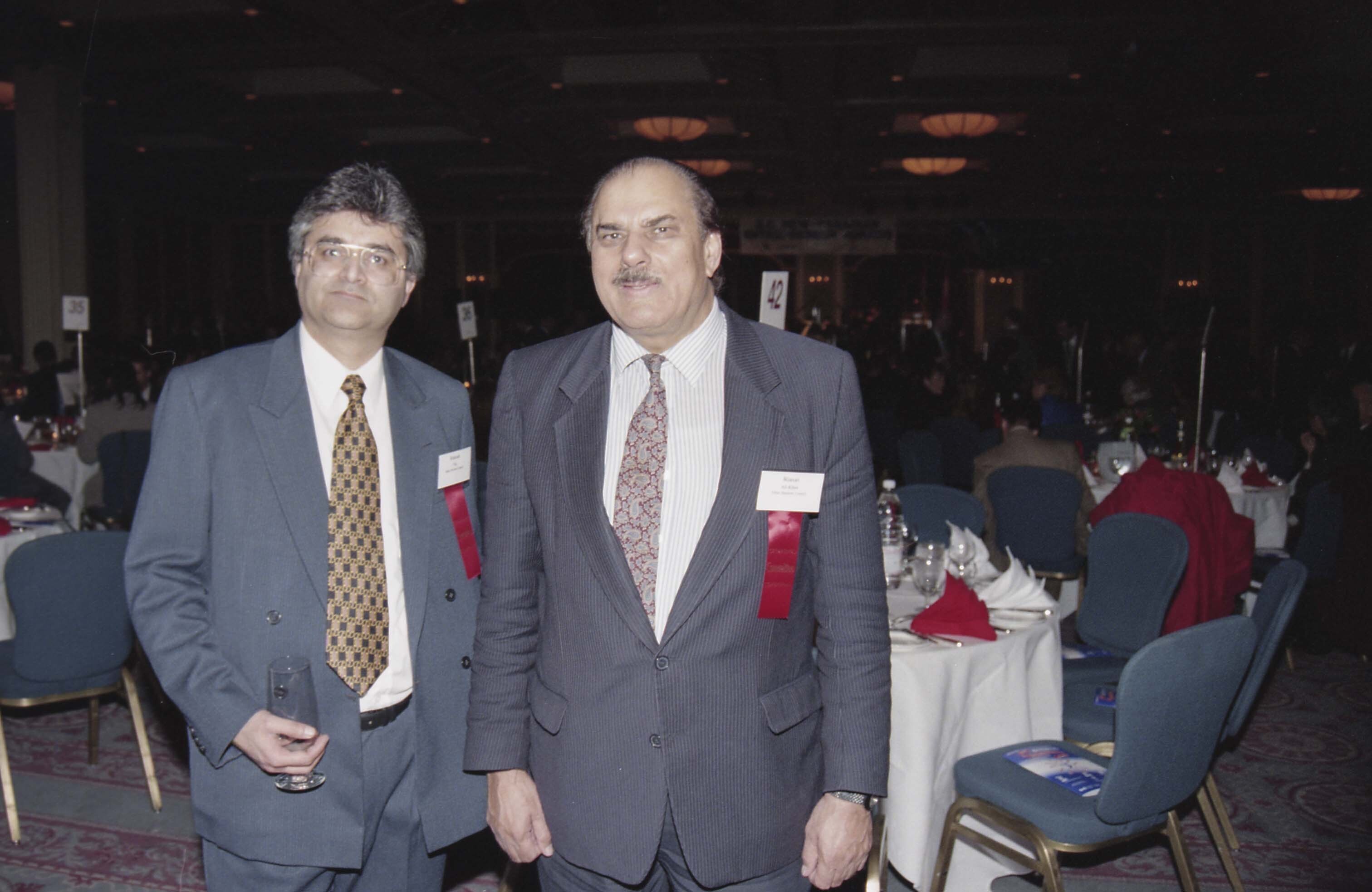
Photograph of Riasat Ali Khan with an unidentified individual at the B.C. New Canadian Entrepreneur Awards event. The awards were sponsored by the Ethno Business Council of British Columbia in conjunction with corporate sponsors.
Riasat Ali Khan was born in India, but his family shifted to Pakistan after independence. Khan immigrated to Canada in 1959, working in the correctional services. Khan was a prominent leader of the Pakistani-Canadian community in Vancouver, British Columbia (B.C.). Khan was the founder of the Pakistan-Canada Association, which opened the first mosque in 1963, the Al Jamia Masjid in Vancouver, B.C. He served as the head of the B.C. Immigrant Services Society. Khan was also a board member of the B.C. Cancer Society and a delegate to the Committee for Racial Justice.
The Ethno Business Council of British Columbia (Ethno BC) was established in 1988 to recognize and celebrate the achievements of New Canadian entrepreneurs. Ethno BC acknowledges the contributions that multicultural businesses make to the British Columbia economy by recognizing the achievements of successful entrepreneurs who were born outside of Canada, and who have been in business for at least three years in Canada.
Riasat Ali Khan was born in India, but his family shifted to Pakistan after independence. Khan immigrated to Canada in 1959, working in the correctional services. Khan was a prominent leader of the Pakistani-Canadian community in Vancouver, British Columbia (B.C.). Khan was the founder of the Pakistan-Canada Association, which opened the first mosque in 1963, the Al Jamia Masjid in Vancouver, B.C. He served as the head of the B.C. Immigrant Services Society. Khan was also a board member of the B.C. Cancer Society and a delegate to the Committee for Racial Justice.
The Ethno Business Council of British Columbia (Ethno BC) was established in 1988 to recognize and celebrate the achievements of New Canadian entrepreneurs. Ethno BC acknowledges the contributions that multicultural businesses make to the British Columbia economy by recognizing the achievements of successful entrepreneurs who were born outside of Canada, and who have been in business for at least three years in Canada.
Creator:
Description
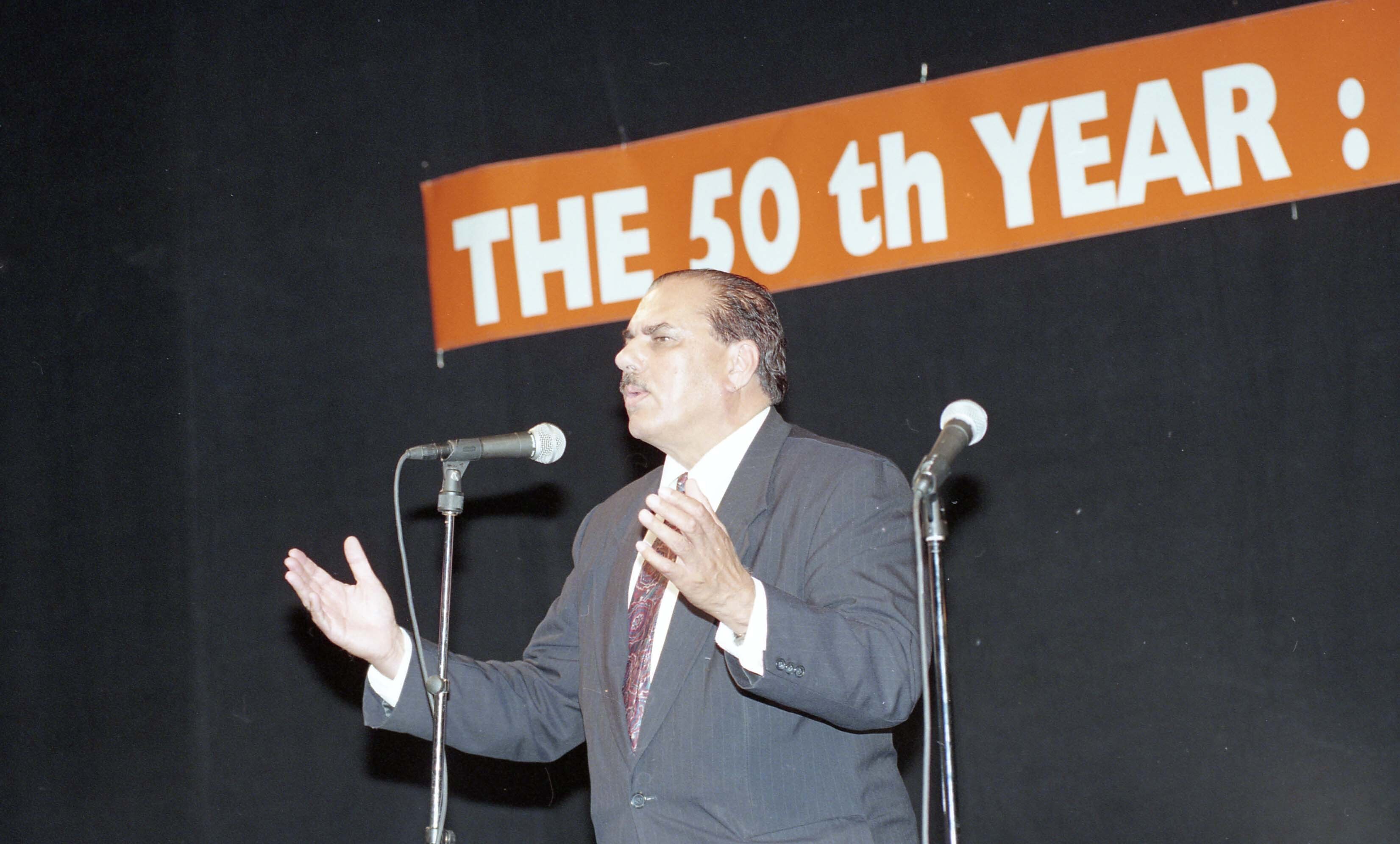
Photograph of Riasat Ali Khan addressing the audience at an event organized by the South Asian Network for Secularism and Democracy (SANSAD). The event was called The 50th Year: Looking Back; Looking Forward, celebrating the 50th anniversary of the independence of India from colonial rule.
Riasat Ali Khan was born in India, but his family shifted to Pakistan after independence. Khan immigrated to Canada in 1959, working in the correctional services. Khan was a prominent leader of the Pakistani-Canadian community in Vancouver, British Columbia (B.C.). Khan was the founder of the Pakistan-Canada Association, which opened the first mosque in 1963, the Al Jamia Masjid in Vancouver, B.C. He served as the head of the B.C. Immigrant Services Society. Khan was also a board member of the B.C. Cancer Society and a delegate to the Committee for Racial Justice.
The South Asian Network for Secularism and Democracy (SANSAD) is an organization of the South Asian diaspora based in British Columbia, Canada. It comprises people with origin in Bangladesh, India, Nepal, Pakistan, and Sri Lanka. The mission of SANSAD is to develop a secular democratic South Asian diaspora in Canada. SANSAD has grown out of a North American organization, called Non-Resident Indians for Secularism and Democracy (NRISAD) that was established in 1993. The Vancouver branch of the organization recognized through its practice that the concerns of NRISAD in regard to minorities and human rights were not specifically Indian but South Asian and had to be reformulated for the South Asian diaspora as a whole. This was realized with the formation of SANSAD in Vancouver in 2000.
Riasat Ali Khan was born in India, but his family shifted to Pakistan after independence. Khan immigrated to Canada in 1959, working in the correctional services. Khan was a prominent leader of the Pakistani-Canadian community in Vancouver, British Columbia (B.C.). Khan was the founder of the Pakistan-Canada Association, which opened the first mosque in 1963, the Al Jamia Masjid in Vancouver, B.C. He served as the head of the B.C. Immigrant Services Society. Khan was also a board member of the B.C. Cancer Society and a delegate to the Committee for Racial Justice.
The South Asian Network for Secularism and Democracy (SANSAD) is an organization of the South Asian diaspora based in British Columbia, Canada. It comprises people with origin in Bangladesh, India, Nepal, Pakistan, and Sri Lanka. The mission of SANSAD is to develop a secular democratic South Asian diaspora in Canada. SANSAD has grown out of a North American organization, called Non-Resident Indians for Secularism and Democracy (NRISAD) that was established in 1993. The Vancouver branch of the organization recognized through its practice that the concerns of NRISAD in regard to minorities and human rights were not specifically Indian but South Asian and had to be reformulated for the South Asian diaspora as a whole. This was realized with the formation of SANSAD in Vancouver in 2000.
Member of
Creator: Bodalia, Chandra
Description
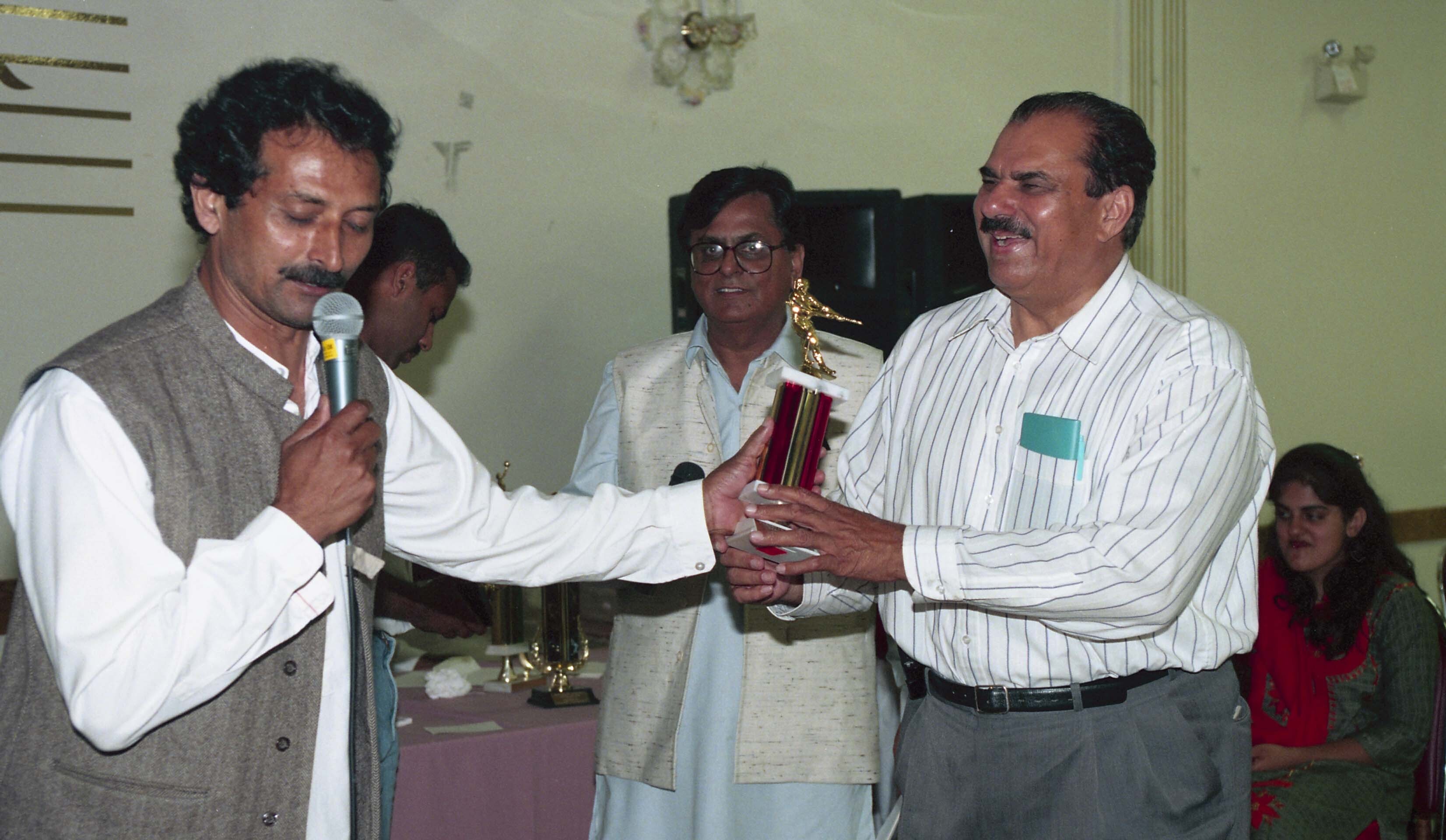
Photograph of a Riasat Ali Khan receiving an award at a community event.
Riasat Ali Khan was born in India, but his family shifted to Pakistan after independence. Khan immigrated to Canada in 1959, working in the correctional services. Khan was a prominent leader of the Pakistani-Canadian community in Vancouver, British Columbia (B.C.). Khan was the founder of the Pakistan-Canada Association, which opened the first mosque in 1963, the Al Jamia Masjid in Vancouver, B.C. He served as the head of the B.C. Immigrant Services Society. Khan was also a board member of the B.C. Cancer Society and a delegate to the Committee for Racial Justice.
Riasat Ali Khan was born in India, but his family shifted to Pakistan after independence. Khan immigrated to Canada in 1959, working in the correctional services. Khan was a prominent leader of the Pakistani-Canadian community in Vancouver, British Columbia (B.C.). Khan was the founder of the Pakistan-Canada Association, which opened the first mosque in 1963, the Al Jamia Masjid in Vancouver, B.C. He served as the head of the B.C. Immigrant Services Society. Khan was also a board member of the B.C. Cancer Society and a delegate to the Committee for Racial Justice.
Member of
Creator: Bodalia, Chandra
Description
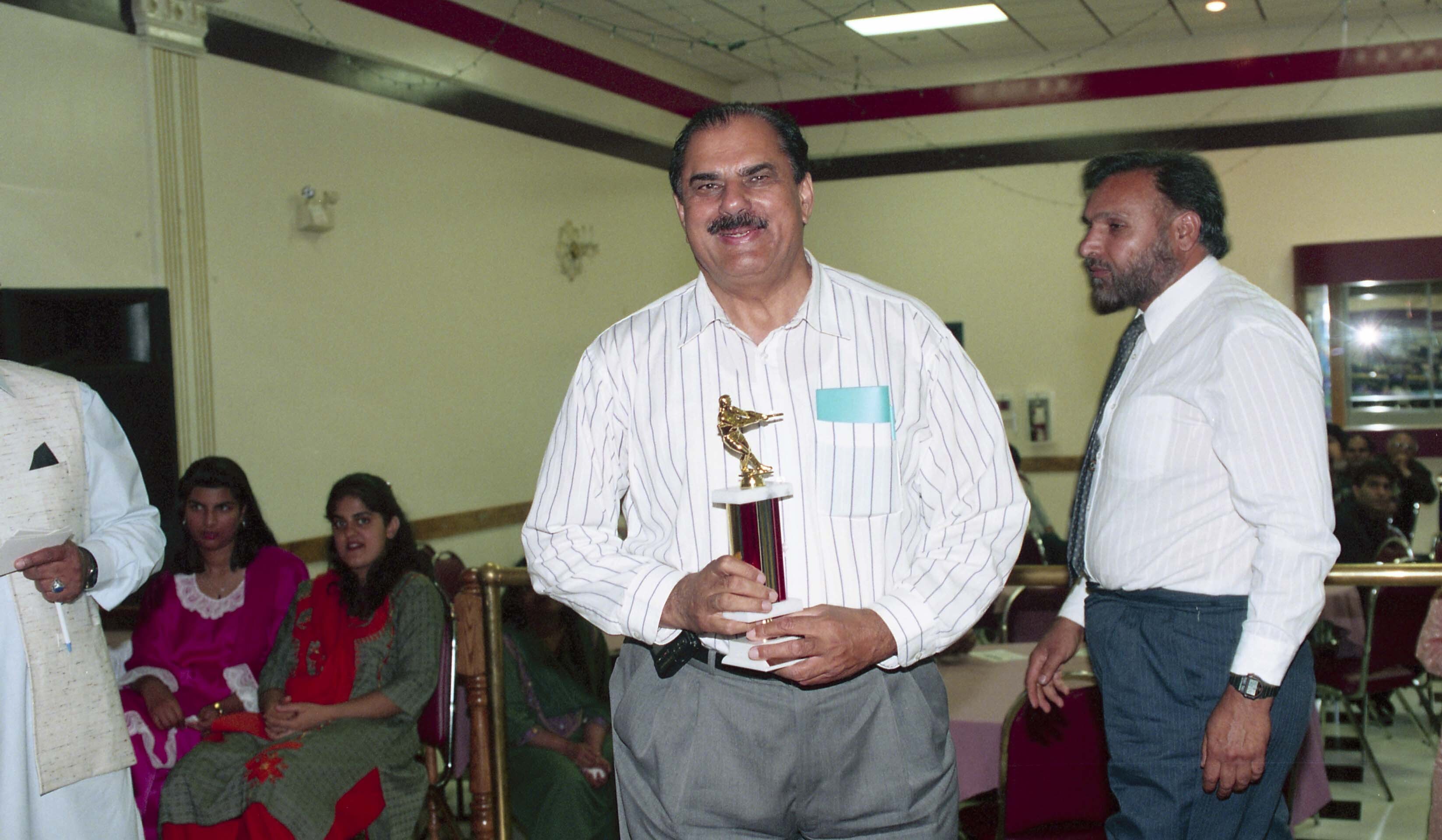
Photograph of a Riasat Ali Khan holding an award at a community event.
Riasat Ali Khan was born in India, but his family shifted to Pakistan after independence. Khan immigrated to Canada in 1959, working in the correctional services. Khan was a prominent leader of the Pakistani-Canadian community in Vancouver, British Columbia (B.C.). Khan was the founder of the Pakistan-Canada Association, which opened the first mosque in 1963, the Al Jamia Masjid in Vancouver, B.C. He served as the head of the B.C. Immigrant Services Society. Khan was also a board member of the B.C. Cancer Society and a delegate to the Committee for Racial Justice.
Riasat Ali Khan was born in India, but his family shifted to Pakistan after independence. Khan immigrated to Canada in 1959, working in the correctional services. Khan was a prominent leader of the Pakistani-Canadian community in Vancouver, British Columbia (B.C.). Khan was the founder of the Pakistan-Canada Association, which opened the first mosque in 1963, the Al Jamia Masjid in Vancouver, B.C. He served as the head of the B.C. Immigrant Services Society. Khan was also a board member of the B.C. Cancer Society and a delegate to the Committee for Racial Justice.
Member of
Creator: Bodalia, Chandra
Description
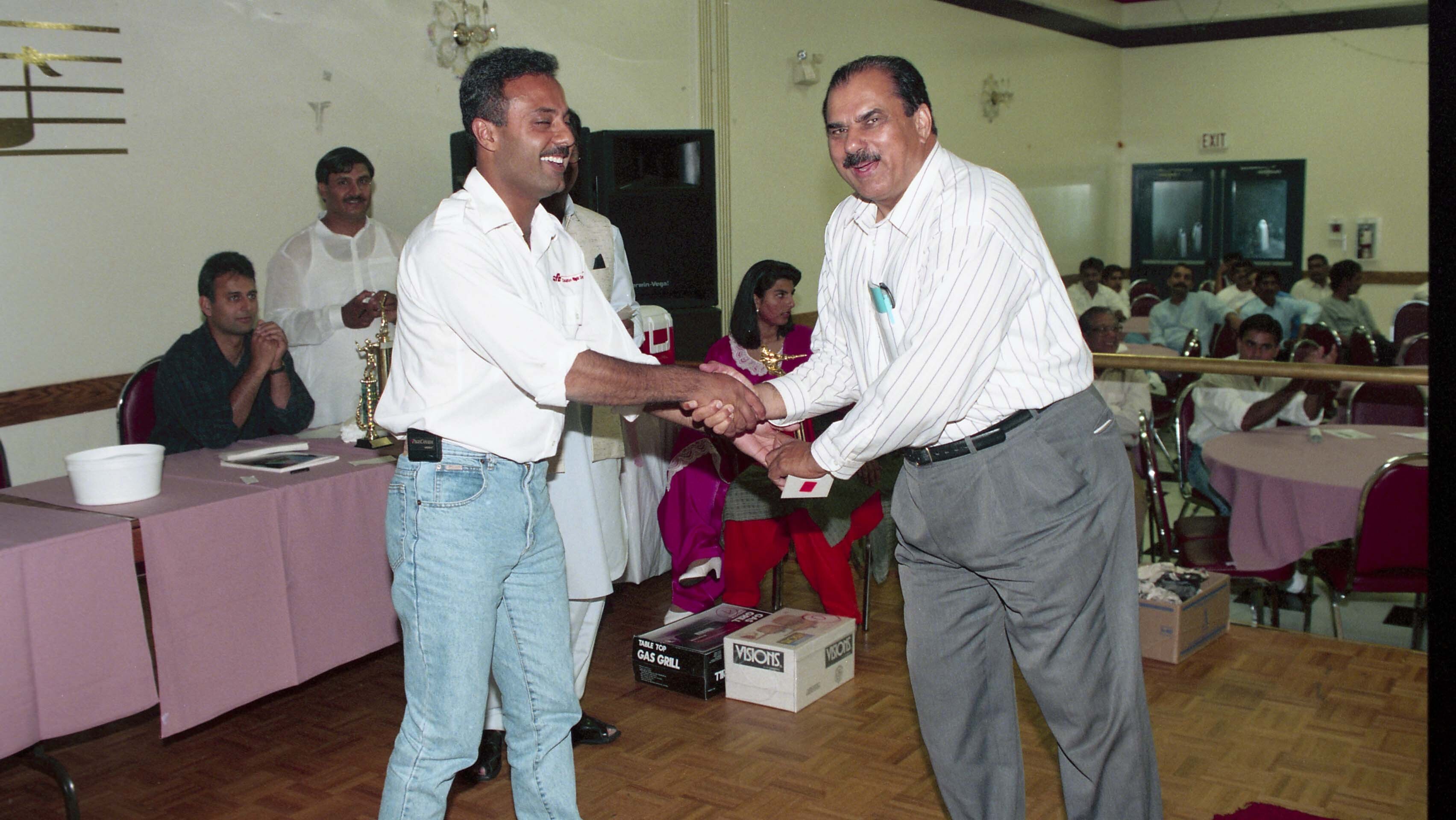
Photograph of a Riasat Ali Khan receiving an award at a community event.
Riasat Ali Khan was born in India, but his family shifted to Pakistan after independence. Khan immigrated to Canada in 1959, working in the correctional services. Khan was a prominent leader of the Pakistani-Canadian community in Vancouver, British Columbia (B.C.). Khan was the founder of the Pakistan-Canada Association, which opened the first mosque in 1963, the Al Jamia Masjid in Vancouver, B.C. He served as the head of the B.C. Immigrant Services Society. Khan was also a board member of the B.C. Cancer Society and a delegate to the Committee for Racial Justice.
Riasat Ali Khan was born in India, but his family shifted to Pakistan after independence. Khan immigrated to Canada in 1959, working in the correctional services. Khan was a prominent leader of the Pakistani-Canadian community in Vancouver, British Columbia (B.C.). Khan was the founder of the Pakistan-Canada Association, which opened the first mosque in 1963, the Al Jamia Masjid in Vancouver, B.C. He served as the head of the B.C. Immigrant Services Society. Khan was also a board member of the B.C. Cancer Society and a delegate to the Committee for Racial Justice.