
Festivals
Creator: Bodalia, Chandra
Description
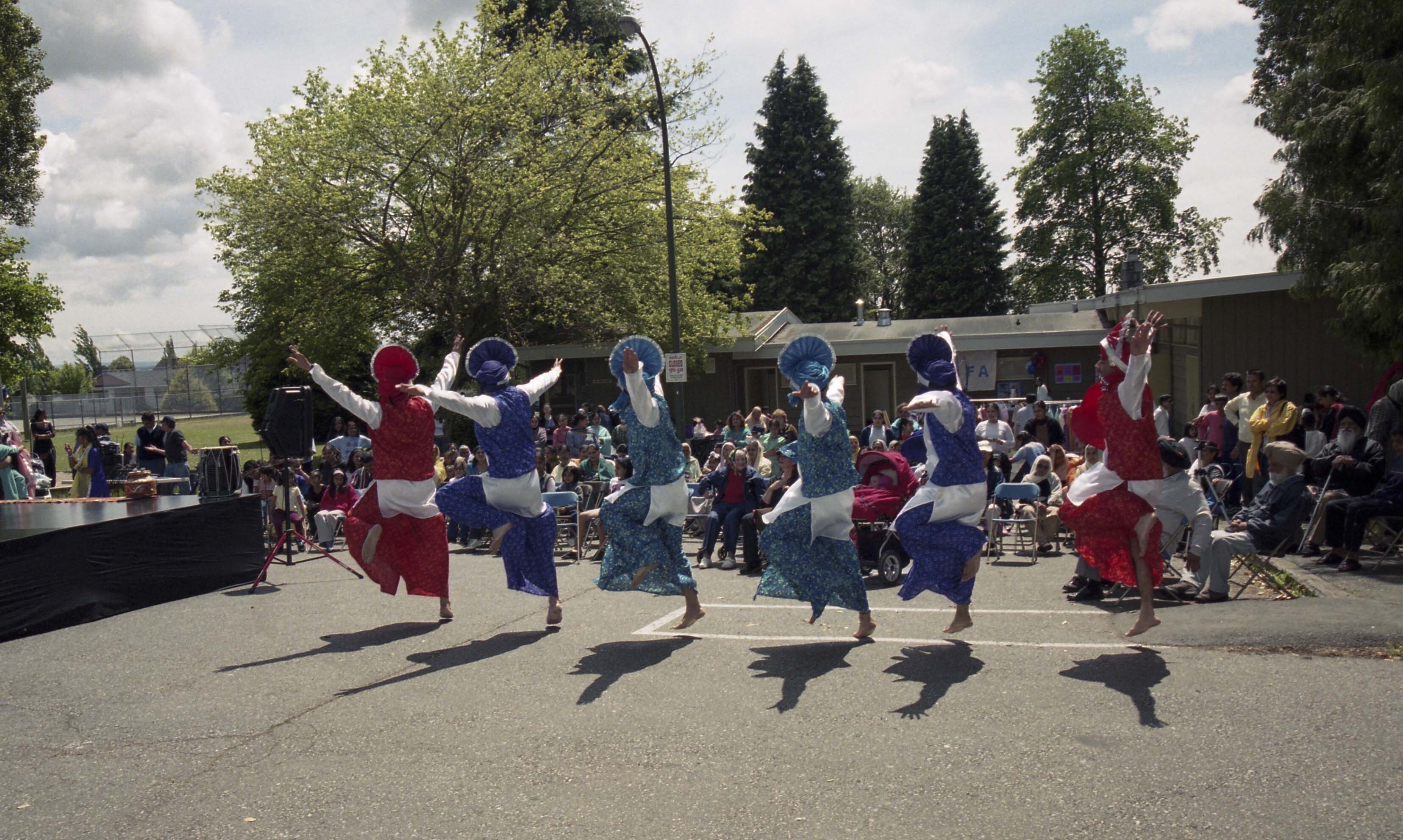
Photograph of a bhangra dance performance at the Sawan Mela, a cultural show, organized by the South Asian Family Association (SAFA) and held at Moberly Arts and Cultural Centre in Vancouver, B.C.
The South Asian Family Association (SAFA) is a non-profit organization that aims to highlight the South Asian community and culture. SAFA was formed in 2002 with goals to promote positive images of the South Asian community, enhance cross-cultural understanding, and empower families to maintain their heritage while embracing Canadian culture. Some of the ways they accomplish these goals are through organizing Indian festivals, including their annual summer India Live festival and Diwali functions, providing annual scholarships for high school students, holding International Women's Day forums, running youth summer camps and organizing health fairs for the South Asian community.
Operated by the Vancouver Park Board and the Sunset Community Association, the Moberly Arts and Cultural Centre provides a place for intercultural connections, a gathering place for the community, and an opportunity for all to experience the arts in programs, events, and performances.
Bhangra is a classical dance and music form that originated from Panjab, India. It originated as a classical dance celebrated during the time of the harvest. It's traditionally danced to the dhol instrument, a large drum, accompanied by boliyan, short sets of lyrics that describe scenes or stories from Panjab.
Creator: Bodalia, Chandra
Description
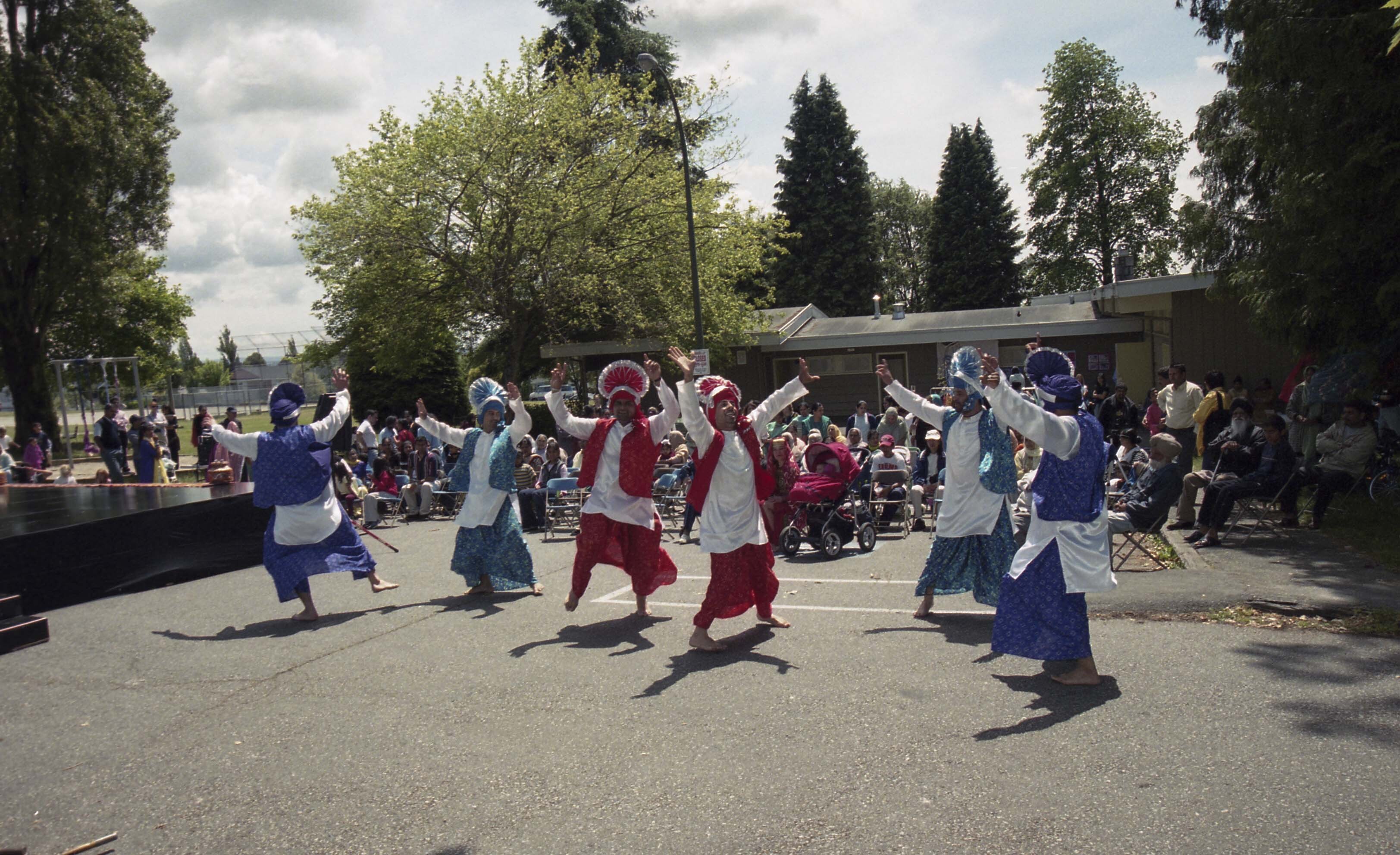
Photograph of a bhangra dance performance at the Sawan Mela, a cultural show, organized by the South Asian Family Association (SAFA) and held at Moberly Arts and Cultural Centre in Vancouver, B.C.
The South Asian Family Association (SAFA) is a non-profit organization that aims to highlight the South Asian community and culture. SAFA was formed in 2002 with goals to promote positive images of the South Asian community, enhance cross-cultural understanding, and empower families to maintain their heritage while embracing Canadian culture. Some of the ways they accomplish these goals are through organizing Indian festivals, including their annual summer India Live festival and Diwali functions, providing annual scholarships for high school students, holding International Women's Day forums, running youth summer camps and organizing health fairs for the South Asian community.
Operated by the Vancouver Park Board and the Sunset Community Association, the Moberly Arts and Cultural Centre provides a place for intercultural connections, a gathering place for the community, and an opportunity for all to experience the arts in programs, events, and performances.
Bhangra is a classical dance and music form that originated from Panjab, India. It originated as a classical dance celebrated during the time of the harvest. It's traditionally danced to the dhol instrument, a large drum, accompanied by boliyan, short sets of lyrics that describe scenes or stories from Panjab.
The South Asian Family Association (SAFA) is a non-profit organization that aims to highlight the South Asian community and culture. SAFA was formed in 2002 with goals to promote positive images of the South Asian community, enhance cross-cultural understanding, and empower families to maintain their heritage while embracing Canadian culture. Some of the ways they accomplish these goals are through organizing Indian festivals, including their annual summer India Live festival and Diwali functions, providing annual scholarships for high school students, holding International Women's Day forums, running youth summer camps and organizing health fairs for the South Asian community.
Operated by the Vancouver Park Board and the Sunset Community Association, the Moberly Arts and Cultural Centre provides a place for intercultural connections, a gathering place for the community, and an opportunity for all to experience the arts in programs, events, and performances.
Bhangra is a classical dance and music form that originated from Panjab, India. It originated as a classical dance celebrated during the time of the harvest. It's traditionally danced to the dhol instrument, a large drum, accompanied by boliyan, short sets of lyrics that describe scenes or stories from Panjab.
Member of
Creator: Bodalia, Chandra
Description
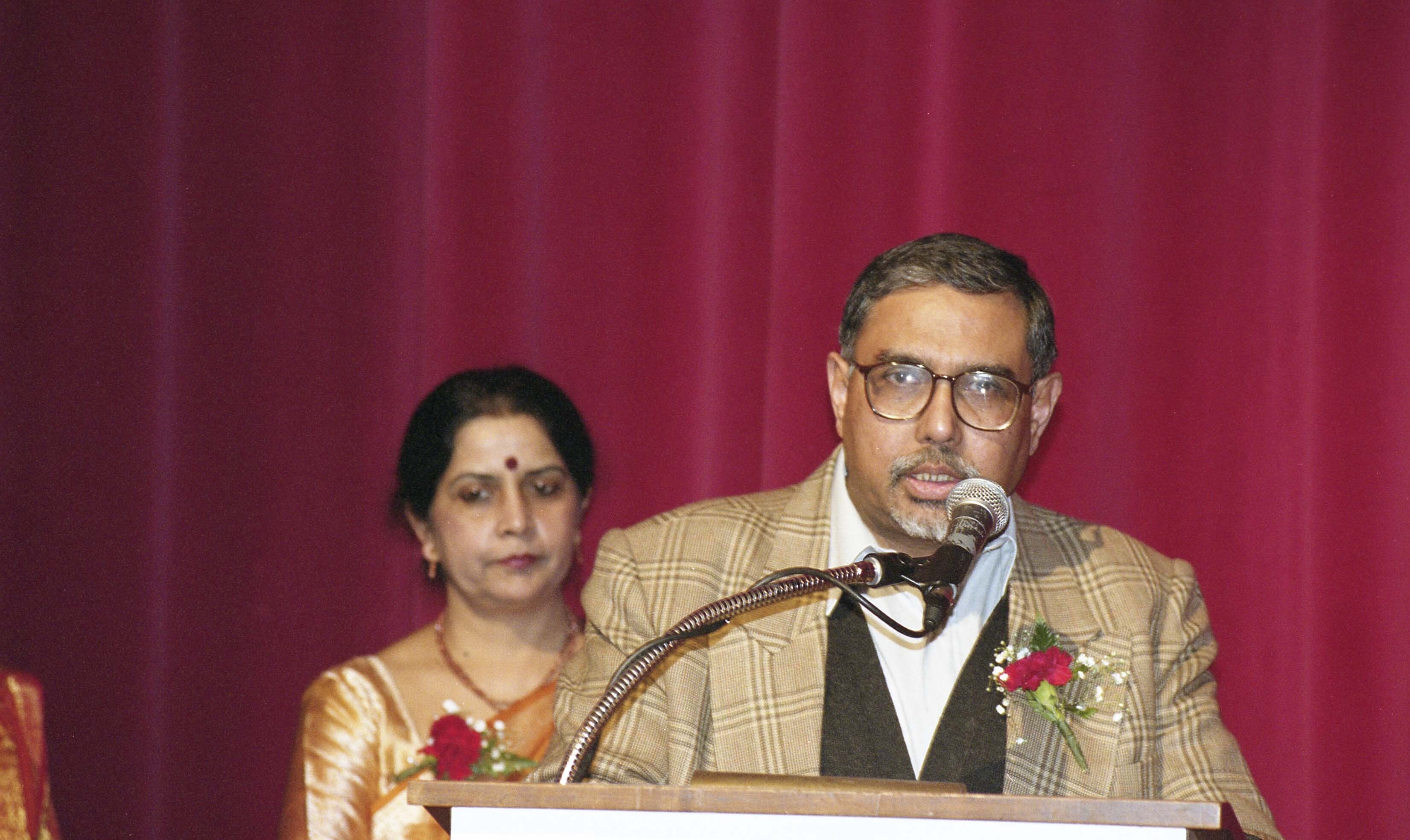
Photograph of an unidentified man speaking at a Holi celebration hosted at the Shree Mahalakshmi Temple in Vancouver, B.C.
Holi, often called the "festival of colors," is a vibrant and joyful Hindu celebration that marks spring's arrival and the triumph of good over evil. This festival, mainly observed in South Asia but also recognized globally, typically spans two days and is rooted in ancient traditions, mythology and community gatherings. Its date changes, as it is based on the full moon in the month of Phalguna, part of the Hindu lunar calendar, usually falling in late February or March. Holi, dating back to the 4th century, stands alongside Diwali, the festival of lights, as one of the most prominent Hindu celebrations and is famous for the playful tossing of colored powders and water.
Established in 1990, by Pandit Pramera Chaitanya, Shree Mahalakshmi Temple is a Hindu temple dedicated to Goddess Mahalakshmi. They offer various services, including workship, chanting, meditations, and ritualistic celebrations of all the Hindu festivals.
Member of
Creator: Bodalia, Chandra
Description
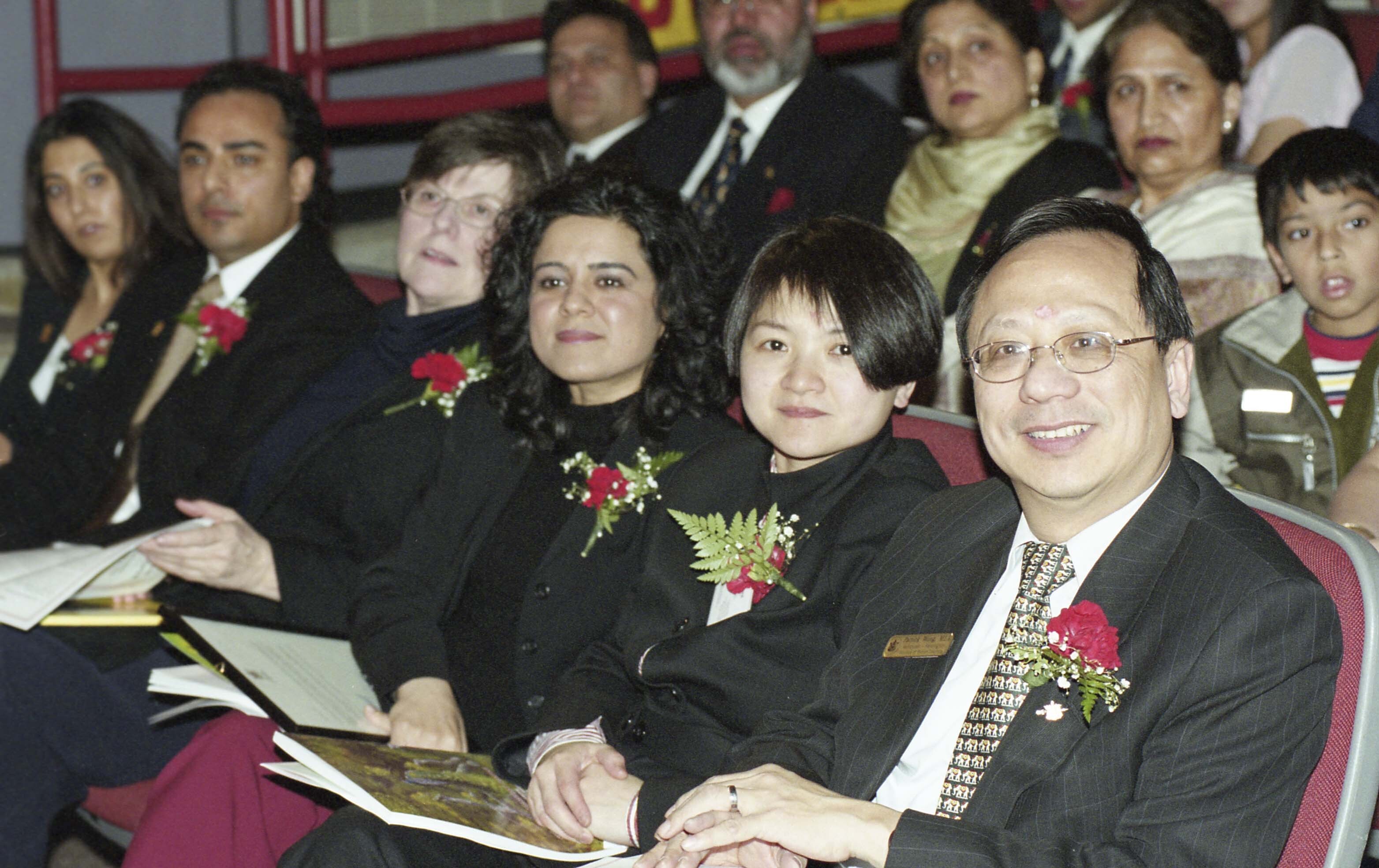
Photograph of former MLA Patty Sahota sitting in the audience at a Holi celebration hosted at the Shree Mahalakshmi Temple in Vancouver, B.C.
Patty Sahota was a Canadian politician who served as the Minister of State for Resort Development in British Columbia from 2005. She was first elected to the Legislative Assembly in 2001, representing Burnaby-Edmonds. During her tenure, she played a key role in securing the 2009 World Police and Fire Games for Burnaby and contributed to various legislative committees on Aboriginal affairs, finance, health, and policing. Before politics, she worked in the forestry industry and commercial real estate. Sahota held a BA in political science from the University of Victoria and had been actively involved with the B.C. Liberal Party. Born in India, she grew up in Merritt, B.C. She passed away February 12, 2024, at the age of 54.
Holi, often called the "festival of colors," is a vibrant and joyful Hindu celebration that marks spring's arrival and the triumph of good over evil. This festival, mainly observed in South Asia but also recognized globally, typically spans two days and is rooted in ancient traditions, mythology and community gatherings. Its date changes, as it is based on the full moon in the month of Phalguna, part of the Hindu lunar calendar, usually falling in late February or March. Holi, dating back to the 4th century, stands alongside Diwali, the festival of lights, as one of the most prominent Hindu celebrations and is famous for the playful tossing of colored powders and water.
Established in 1990, by Pandit Pramera Chaitanya, Shree Mahalakshmi Temple is a Hindu temple dedicated to Goddess Mahalakshmi. They offer various services, including workship, chanting, meditations, and ritualistic celebrations of all the Hindu festivals.
Member of
Creator: Bodalia, Chandra
Description
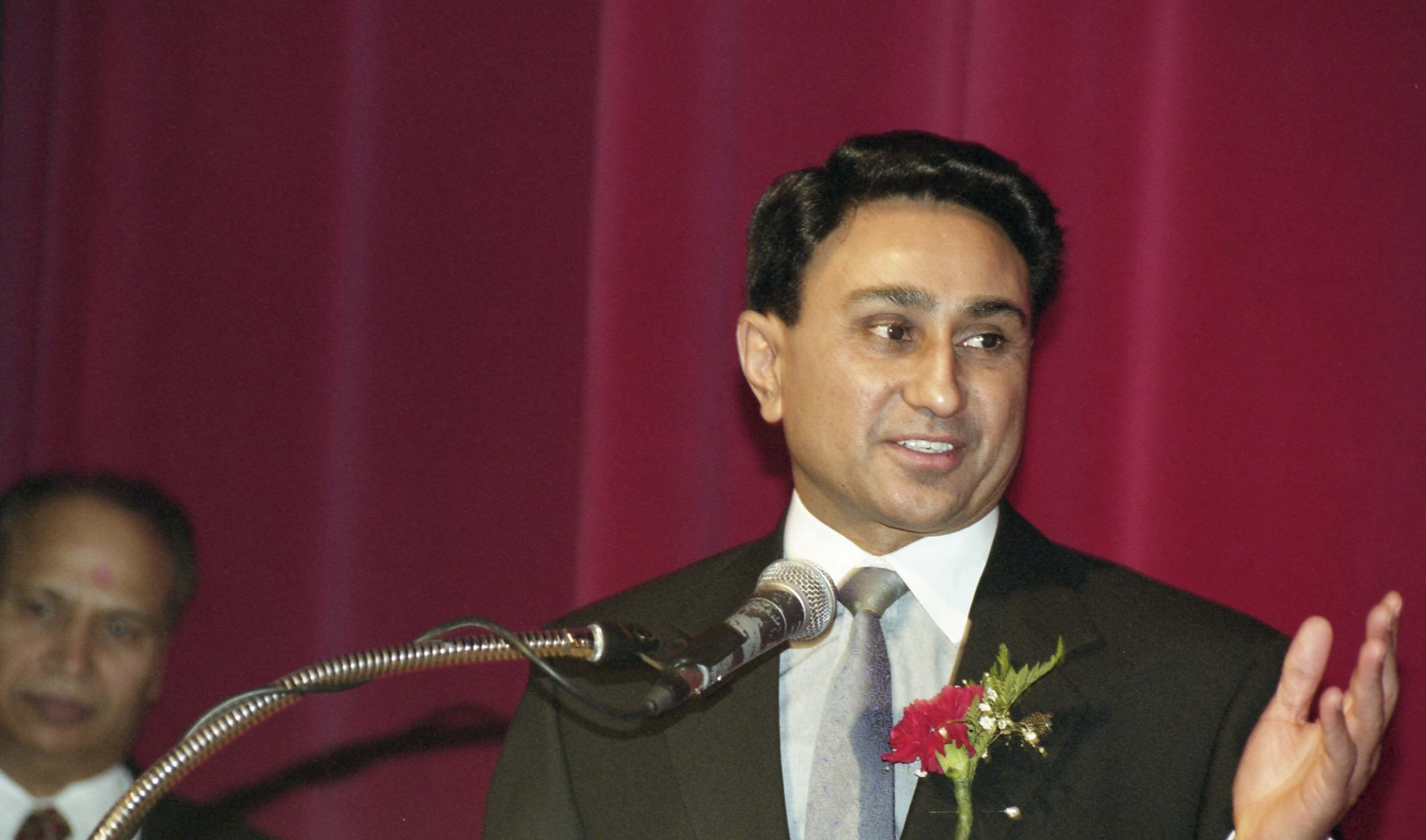
Photograph of an unidentified man speaking at a Holi celebration hosted at the Shree Mahalakshmi Temple in Vancouver, B.C.
Holi, often called the "festival of colors," is a vibrant and joyful Hindu celebration that marks spring's arrival and the triumph of good over evil. This festival, mainly observed in South Asia but also recognized globally, typically spans two days and is rooted in ancient traditions, mythology and community gatherings. Its date changes, as it is based on the full moon in the month of Phalguna, part of the Hindu lunar calendar, usually falling in late February or March. Holi, dating back to the 4th century, stands alongside Diwali, the festival of lights, as one of the most prominent Hindu celebrations and is famous for the playful tossing of colored powders and water.
Established in 1990, by Pandit Pramera Chaitanya, Shree Mahalakshmi Temple is a Hindu temple dedicated to Goddess Mahalakshmi. They offer various services, including workship, chanting, meditations, and ritualistic celebrations of all the Hindu festivals.
Holi, often called the "festival of colors," is a vibrant and joyful Hindu celebration that marks spring's arrival and the triumph of good over evil. This festival, mainly observed in South Asia but also recognized globally, typically spans two days and is rooted in ancient traditions, mythology and community gatherings. Its date changes, as it is based on the full moon in the month of Phalguna, part of the Hindu lunar calendar, usually falling in late February or March. Holi, dating back to the 4th century, stands alongside Diwali, the festival of lights, as one of the most prominent Hindu celebrations and is famous for the playful tossing of colored powders and water.
Established in 1990, by Pandit Pramera Chaitanya, Shree Mahalakshmi Temple is a Hindu temple dedicated to Goddess Mahalakshmi. They offer various services, including workship, chanting, meditations, and ritualistic celebrations of all the Hindu festivals.
Member of
Creator: Bodalia, Chandra
Description
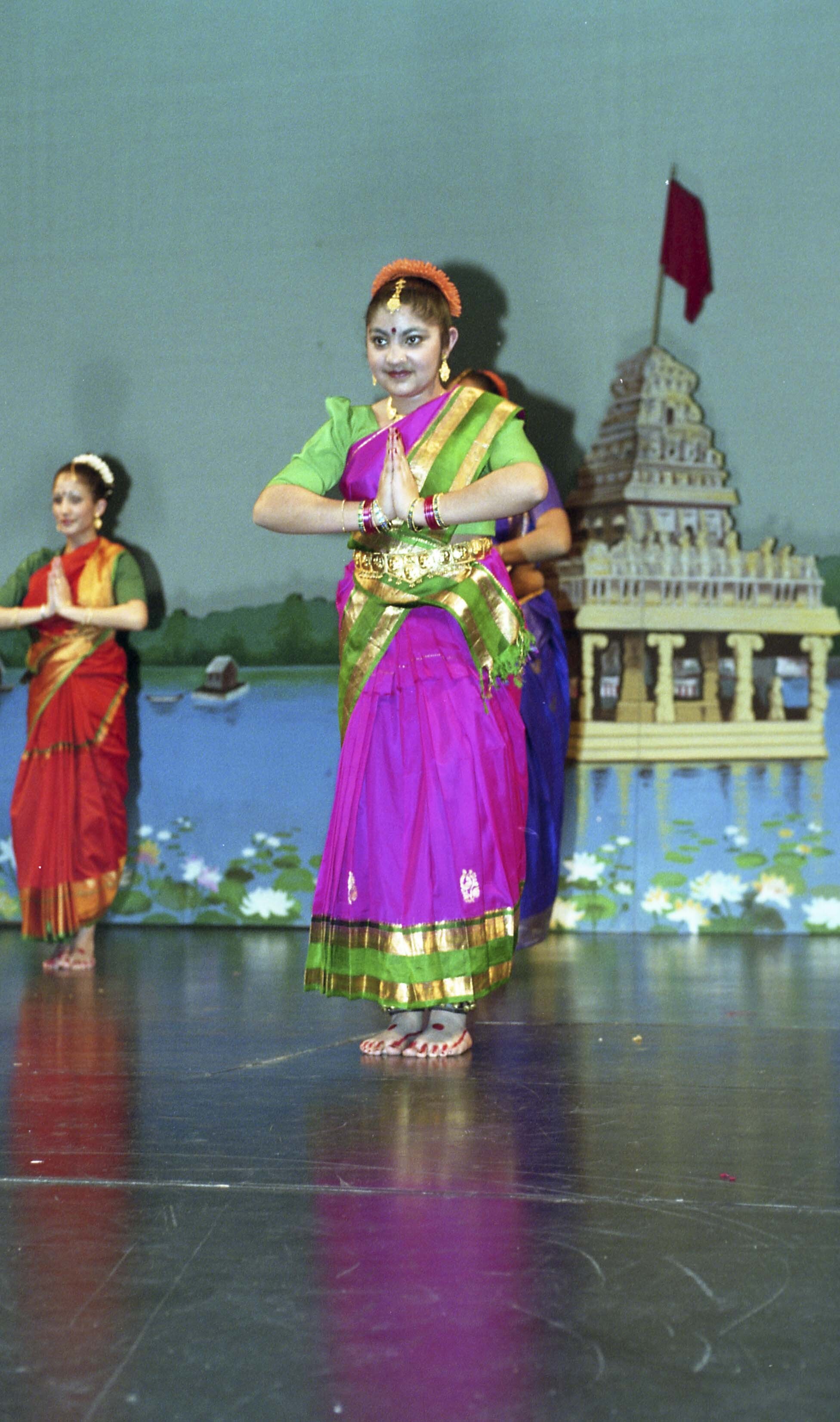
Photograph of a Kathak performance at a Holi celebration hosted at the Shree Mahalakshmi Temple in Vancouver, B.C.
Holi, often called the "festival of colors," is a vibrant and joyful Hindu celebration that marks spring's arrival and the triumph of good over evil. This festival, mainly observed in South Asia but also recognized globally, typically spans two days and is rooted in ancient traditions, mythology and community gatherings. Its date changes, as it is based on the full moon in the month of Phalguna, part of the Hindu lunar calendar, usually falling in late February or March. Holi, dating back to the 4th century, stands alongside Diwali, the festival of lights, as one of the most prominent Hindu celebrations and is famous for the playful tossing of colored powders and water.
Kathak is one of the eight major forms of Indian classical dance. Derived from the Sanskrit word kathakar, meaning "storyteller," it refers to the nomadic performers who narrated the tales of Mahabharata and the Ramayana through dance, music, and gestures. It is characterized by its extensive footwork, precise hand and body movements, flexibility, and facial expressions, which all comes together to tell a story.
Established in 1990, by Pandit Pramera Chaitanya, Shree Mahalakshmi Temple is a Hindu temple dedicated to Goddess Mahalakshmi. They offer various services, including workship, chanting, meditations, and ritualistic celebrations of all the Hindu festivals.
Member of
Creator: Bodalia, Chandra
Description
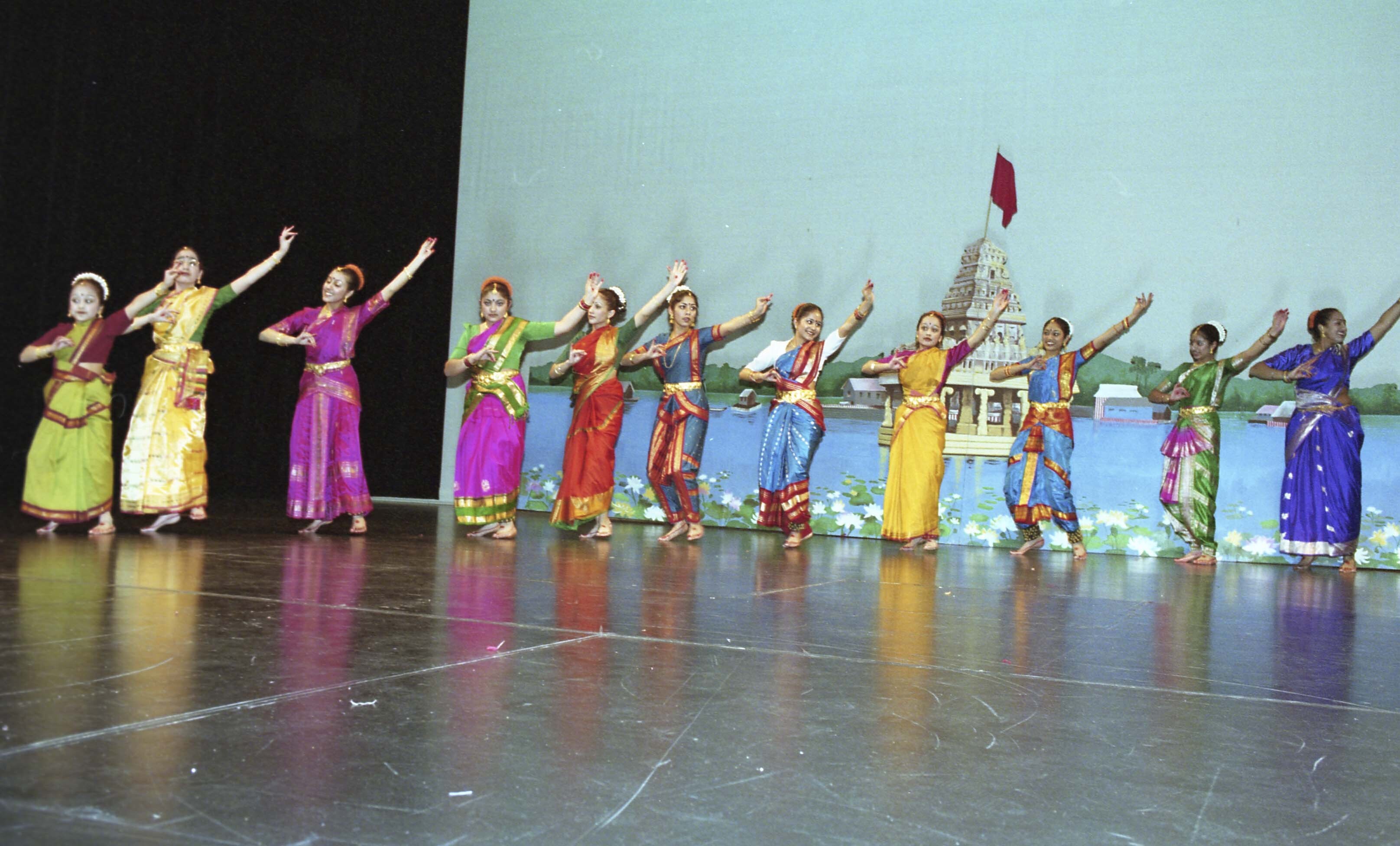
Photograph of a Kathak performance at a Holi celebration hosted at the Shree Mahalakshmi Temple in Vancouver, B.C.
Holi, often called the "festival of colors," is a vibrant and joyful Hindu celebration that marks spring's arrival and the triumph of good over evil. This festival, mainly observed in South Asia but also recognized globally, typically spans two days and is rooted in ancient traditions, mythology and community gatherings. Its date changes, as it is based on the full moon in the month of Phalguna, part of the Hindu lunar calendar, usually falling in late February or March. Holi, dating back to the 4th century, stands alongside Diwali, the festival of lights, as one of the most prominent Hindu celebrations and is famous for the playful tossing of colored powders and water.
Kathak is one of the eight major forms of Indian classical dance. Derived from the Sanskrit word kathakar, meaning "storyteller," it refers to the nomadic performers who narrated the tales of Mahabharata and the Ramayana through dance, music, and gestures. It is characterized by its extensive footwork, precise hand and body movements, flexibility, and facial expressions, which all comes together to tell a story.
Established in 1990, by Pandit Pramera Chaitanya, Shree Mahalakshmi Temple is a Hindu temple dedicated to Goddess Mahalakshmi. They offer various services, including workship, chanting, meditations, and ritualistic celebrations of all the Hindu festivals.
Holi, often called the "festival of colors," is a vibrant and joyful Hindu celebration that marks spring's arrival and the triumph of good over evil. This festival, mainly observed in South Asia but also recognized globally, typically spans two days and is rooted in ancient traditions, mythology and community gatherings. Its date changes, as it is based on the full moon in the month of Phalguna, part of the Hindu lunar calendar, usually falling in late February or March. Holi, dating back to the 4th century, stands alongside Diwali, the festival of lights, as one of the most prominent Hindu celebrations and is famous for the playful tossing of colored powders and water.
Kathak is one of the eight major forms of Indian classical dance. Derived from the Sanskrit word kathakar, meaning "storyteller," it refers to the nomadic performers who narrated the tales of Mahabharata and the Ramayana through dance, music, and gestures. It is characterized by its extensive footwork, precise hand and body movements, flexibility, and facial expressions, which all comes together to tell a story.
Established in 1990, by Pandit Pramera Chaitanya, Shree Mahalakshmi Temple is a Hindu temple dedicated to Goddess Mahalakshmi. They offer various services, including workship, chanting, meditations, and ritualistic celebrations of all the Hindu festivals.
Member of
Creator: Bodalia, Chandra
Description
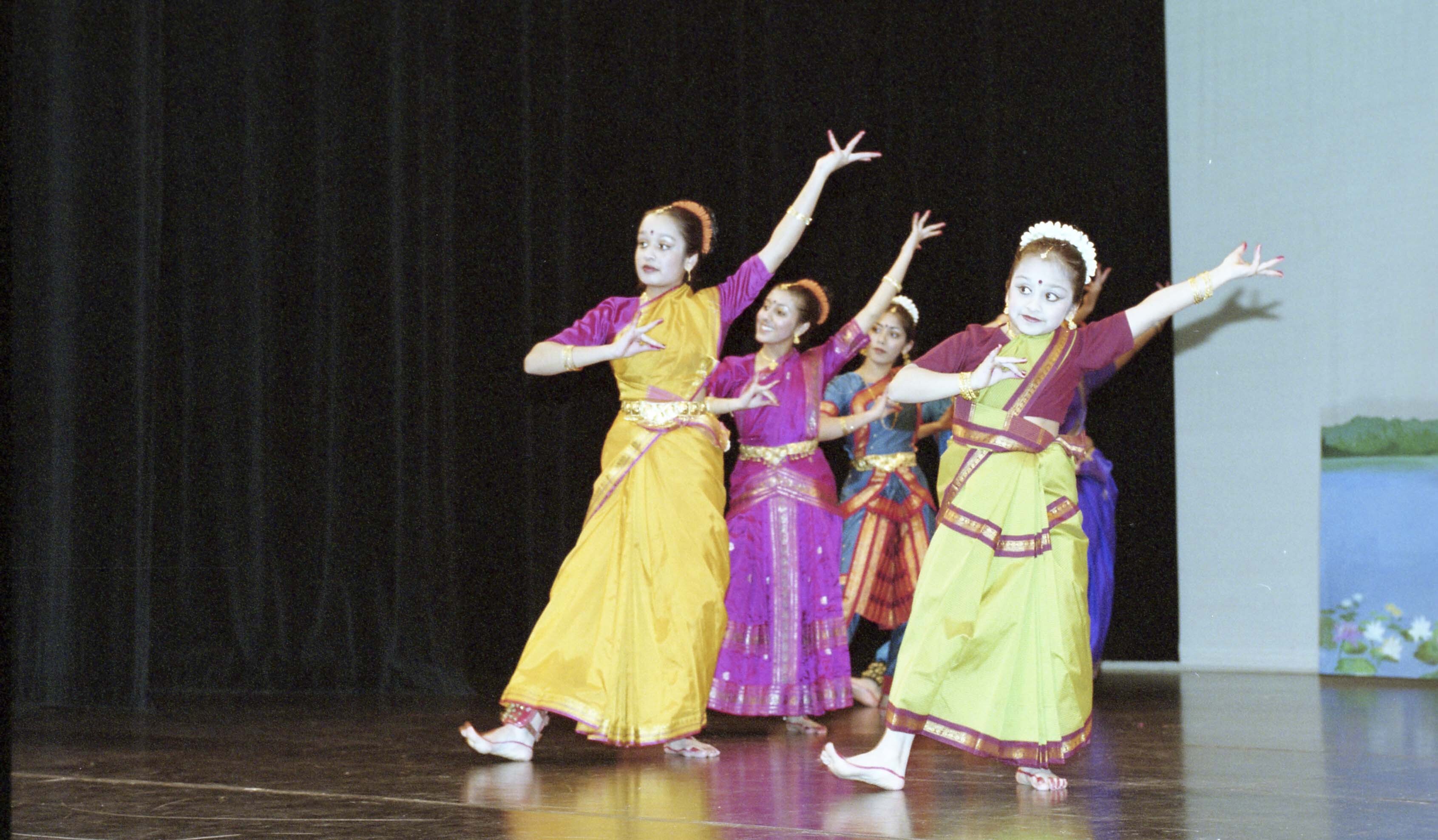
Photograph of a Kathak performance at a Holi celebration hosted at the Shree Mahalakshmi Temple in Vancouver, B.C.
Holi, often called the "festival of colors," is a vibrant and joyful Hindu celebration that marks spring's arrival and the triumph of good over evil. This festival, mainly observed in South Asia but also recognized globally, typically spans two days and is rooted in ancient traditions, mythology and community gatherings. Its date changes, as it is based on the full moon in the month of Phalguna, part of the Hindu lunar calendar, usually falling in late February or March. Holi, dating back to the 4th century, stands alongside Diwali, the festival of lights, as one of the most prominent Hindu celebrations and is famous for the playful tossing of colored powders and water.
Kathak is one of the eight major forms of Indian classical dance. Derived from the Sanskrit word kathakar, meaning "storyteller," it refers to the nomadic performers who narrated the tales of Mahabharata and the Ramayana through dance, music, and gestures. It is characterized by its extensive footwork, precise hand and body movements, flexibility, and facial expressions, which all comes together to tell a story.
Established in 1990, by Pandit Pramera Chaitanya, Shree Mahalakshmi Temple is a Hindu temple dedicated to Goddess Mahalakshmi. They offer various services, including workship, chanting, meditations, and ritualistic celebrations of all the Hindu festivals.
Holi, often called the "festival of colors," is a vibrant and joyful Hindu celebration that marks spring's arrival and the triumph of good over evil. This festival, mainly observed in South Asia but also recognized globally, typically spans two days and is rooted in ancient traditions, mythology and community gatherings. Its date changes, as it is based on the full moon in the month of Phalguna, part of the Hindu lunar calendar, usually falling in late February or March. Holi, dating back to the 4th century, stands alongside Diwali, the festival of lights, as one of the most prominent Hindu celebrations and is famous for the playful tossing of colored powders and water.
Kathak is one of the eight major forms of Indian classical dance. Derived from the Sanskrit word kathakar, meaning "storyteller," it refers to the nomadic performers who narrated the tales of Mahabharata and the Ramayana through dance, music, and gestures. It is characterized by its extensive footwork, precise hand and body movements, flexibility, and facial expressions, which all comes together to tell a story.
Established in 1990, by Pandit Pramera Chaitanya, Shree Mahalakshmi Temple is a Hindu temple dedicated to Goddess Mahalakshmi. They offer various services, including workship, chanting, meditations, and ritualistic celebrations of all the Hindu festivals.
Member of
Creator: Bodalia, Chandra
Description
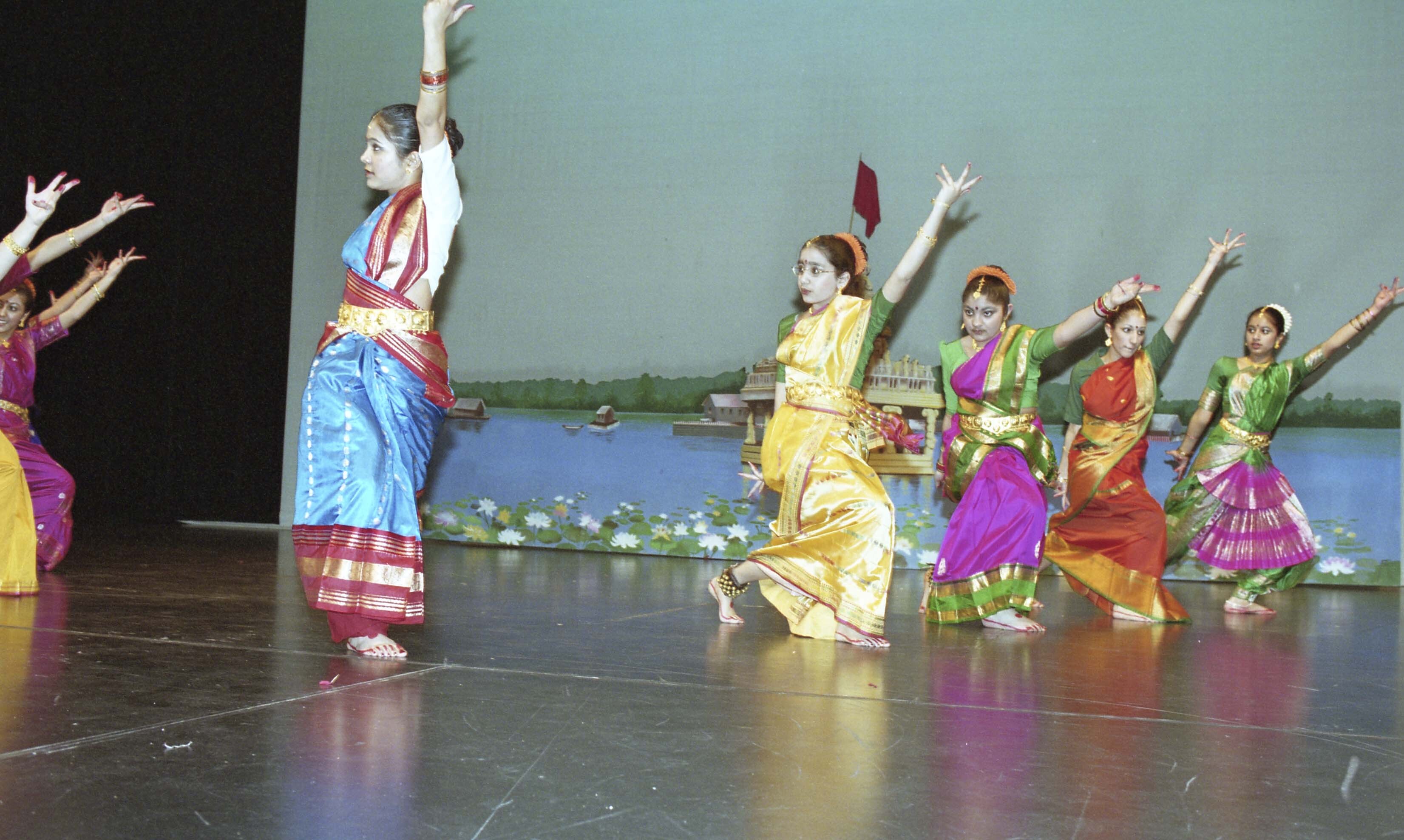
Photograph of a Kathak performance at a Holi celebration hosted at the Shree Mahalakshmi Temple in Vancouver, B.C.
Holi, often called the "festival of colors," is a vibrant and joyful Hindu celebration that marks spring's arrival and the triumph of good over evil. This festival, mainly observed in South Asia but also recognized globally, typically spans two days and is rooted in ancient traditions, mythology and community gatherings. Its date changes, as it is based on the full moon in the month of Phalguna, part of the Hindu lunar calendar, usually falling in late February or March. Holi, dating back to the 4th century, stands alongside Diwali, the festival of lights, as one of the most prominent Hindu celebrations and is famous for the playful tossing of colored powders and water.
Kathak is one of the eight major forms of Indian classical dance. Derived from the Sanskrit word kathakar, meaning "storyteller," it refers to the nomadic performers who narrated the tales of Mahabharata and the Ramayana through dance, music, and gestures. It is characterized by its extensive footwork, precise hand and body movements, flexibility, and facial expressions, which all comes together to tell a story.
Established in 1990, by Pandit Pramera Chaitanya, Shree Mahalakshmi Temple is a Hindu temple dedicated to Goddess Mahalakshmi. They offer various services, including workship, chanting, meditations, and ritualistic celebrations of all the Hindu festivals.
Holi, often called the "festival of colors," is a vibrant and joyful Hindu celebration that marks spring's arrival and the triumph of good over evil. This festival, mainly observed in South Asia but also recognized globally, typically spans two days and is rooted in ancient traditions, mythology and community gatherings. Its date changes, as it is based on the full moon in the month of Phalguna, part of the Hindu lunar calendar, usually falling in late February or March. Holi, dating back to the 4th century, stands alongside Diwali, the festival of lights, as one of the most prominent Hindu celebrations and is famous for the playful tossing of colored powders and water.
Kathak is one of the eight major forms of Indian classical dance. Derived from the Sanskrit word kathakar, meaning "storyteller," it refers to the nomadic performers who narrated the tales of Mahabharata and the Ramayana through dance, music, and gestures. It is characterized by its extensive footwork, precise hand and body movements, flexibility, and facial expressions, which all comes together to tell a story.
Established in 1990, by Pandit Pramera Chaitanya, Shree Mahalakshmi Temple is a Hindu temple dedicated to Goddess Mahalakshmi. They offer various services, including workship, chanting, meditations, and ritualistic celebrations of all the Hindu festivals.
Member of
Creator: Bodalia, Chandra
Description
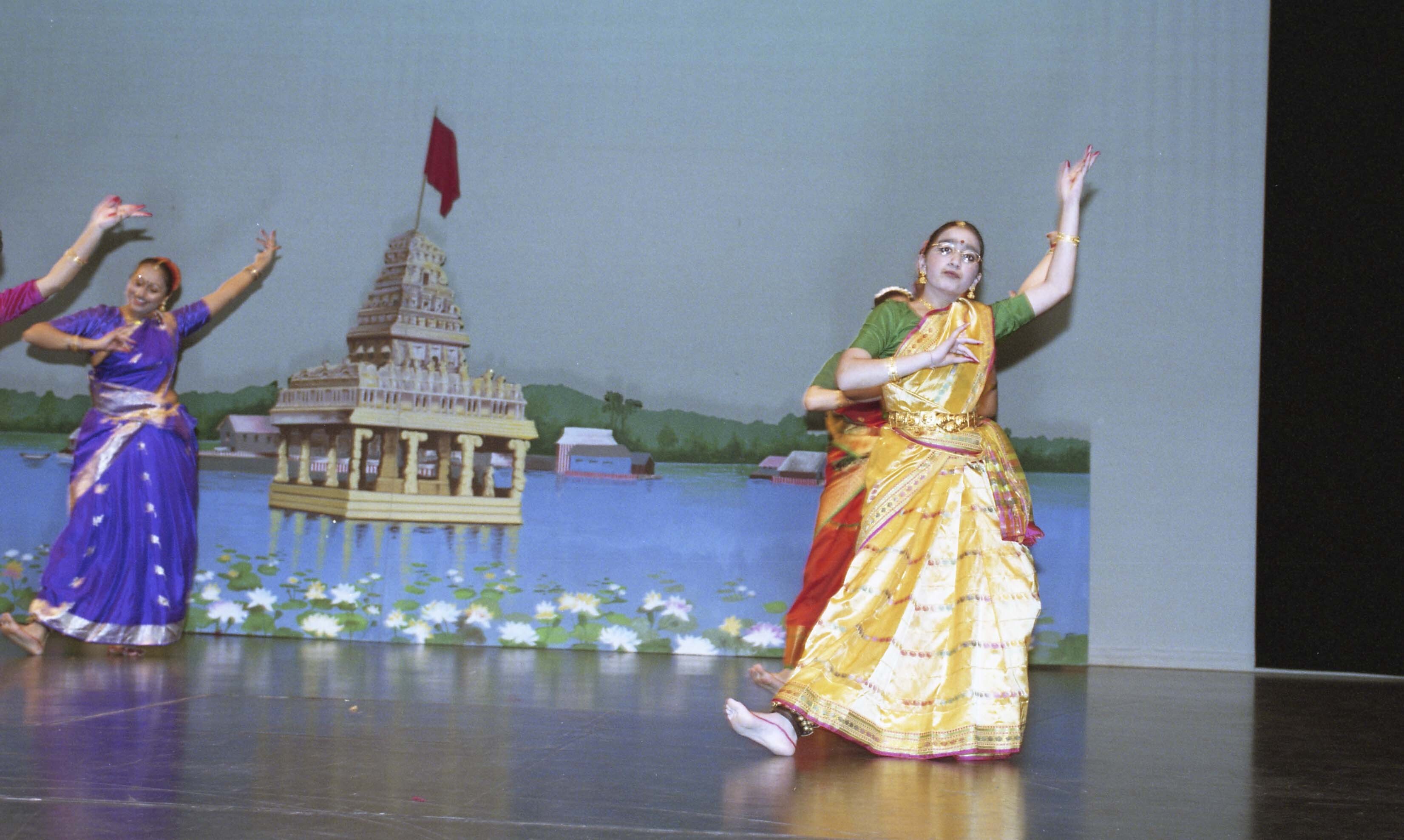
Photograph of a Kathak performance at a Holi celebration hosted at the Shree Mahalakshmi Temple in Vancouver, B.C.
Holi, often called the "festival of colors," is a vibrant and joyful Hindu celebration that marks spring's arrival and the triumph of good over evil. This festival, mainly observed in South Asia but also recognized globally, typically spans two days and is rooted in ancient traditions, mythology and community gatherings. Its date changes, as it is based on the full moon in the month of Phalguna, part of the Hindu lunar calendar, usually falling in late February or March. Holi, dating back to the 4th century, stands alongside Diwali, the festival of lights, as one of the most prominent Hindu celebrations and is famous for the playful tossing of colored powders and water.
Kathak is one of the eight major forms of Indian classical dance. Derived from the Sanskrit word kathakar, meaning "storyteller," it refers to the nomadic performers who narrated the tales of Mahabharata and the Ramayana through dance, music, and gestures. It is characterized by its extensive footwork, precise hand and body movements, flexibility, and facial expressions, which all comes together to tell a story.
Established in 1990, by Pandit Pramera Chaitanya, Shree Mahalakshmi Temple is a Hindu temple dedicated to Goddess Mahalakshmi. They offer various services, including workship, chanting, meditations, and ritualistic celebrations of all the Hindu festivals.
Holi, often called the "festival of colors," is a vibrant and joyful Hindu celebration that marks spring's arrival and the triumph of good over evil. This festival, mainly observed in South Asia but also recognized globally, typically spans two days and is rooted in ancient traditions, mythology and community gatherings. Its date changes, as it is based on the full moon in the month of Phalguna, part of the Hindu lunar calendar, usually falling in late February or March. Holi, dating back to the 4th century, stands alongside Diwali, the festival of lights, as one of the most prominent Hindu celebrations and is famous for the playful tossing of colored powders and water.
Kathak is one of the eight major forms of Indian classical dance. Derived from the Sanskrit word kathakar, meaning "storyteller," it refers to the nomadic performers who narrated the tales of Mahabharata and the Ramayana through dance, music, and gestures. It is characterized by its extensive footwork, precise hand and body movements, flexibility, and facial expressions, which all comes together to tell a story.
Established in 1990, by Pandit Pramera Chaitanya, Shree Mahalakshmi Temple is a Hindu temple dedicated to Goddess Mahalakshmi. They offer various services, including workship, chanting, meditations, and ritualistic celebrations of all the Hindu festivals.