
Human rights advocacy
Authority Sources
Creator: Bodalia, Chandra
Description
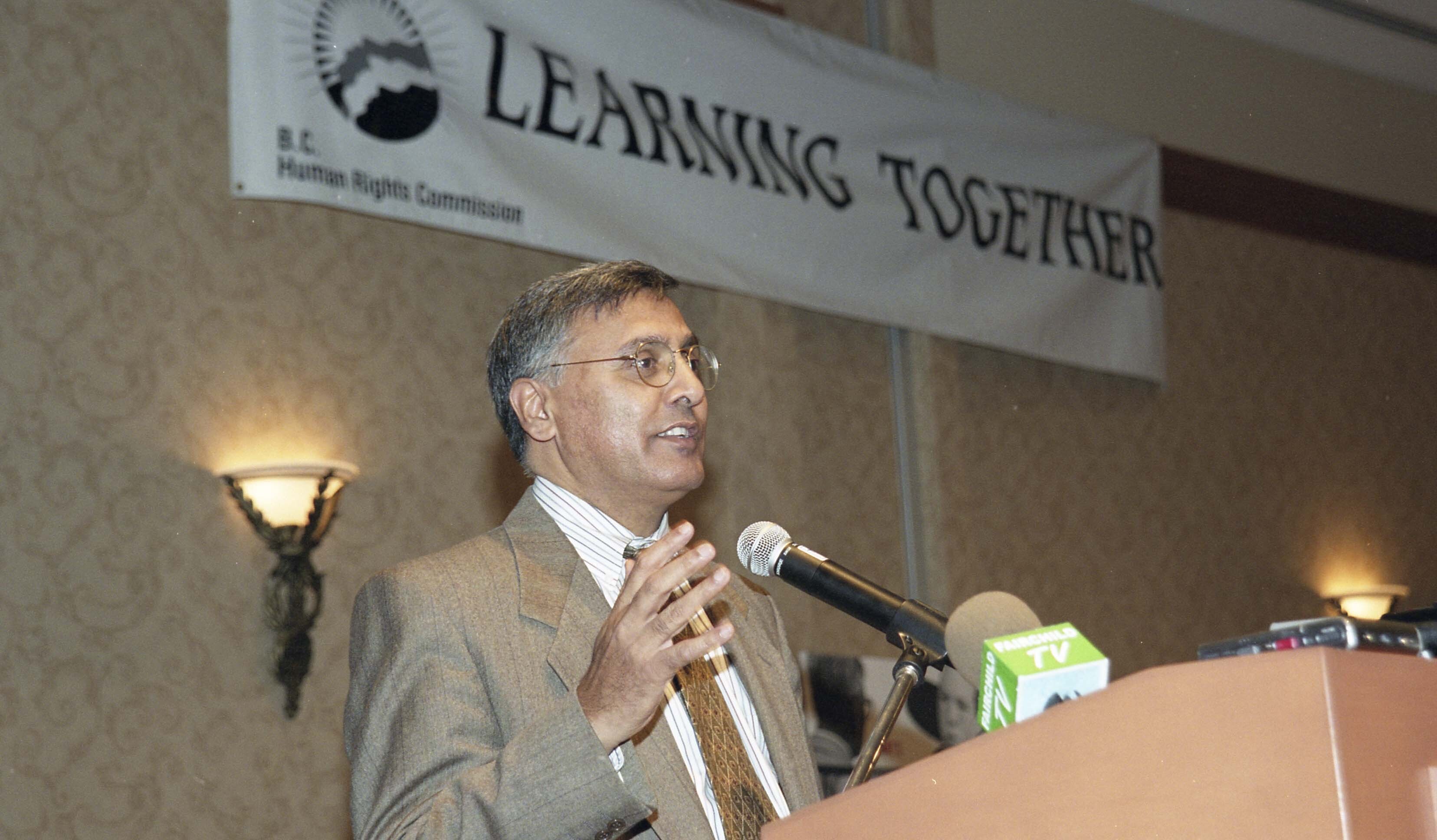
Photograph of Ujjal Dosanjh addressing the audience at the Learning Together event in Vancouver, British Columbia (B.C.). The event was hosted at the Hilton Hotel by the B.C. Human Rights Commission.
Ujjal Dosanjh is a Canadian lawyer, civil rights activist, and politician. Born in Panjab, India in 1947, Dosanjh emigrated to England at the age of 17 and came to Canada four years later, in 1968. He started off at a Vancouver sawmill, but when a back injury hindered his career at the mill, he enrolled at Langara College and completed a degree in political science at Simon Fraser University. He earned a law degree at the University of British Columbia and established a law practice in Vancouver in 1979. First elected as MLA for Vancouver-Kensington in 1991, Dosanjh twice served as Caucus Chair and also chaired the Select Standing Committee on Parliamentary Reform, Ethical Conduct, Standing Orders and Private Bills. Dosanjh was sworn in as British Columbia's 33rd Premier and Canada's first Indo-Canadian Premier on February 24, 2000, serving until 2001. He had previously served as Minister of Government Services and Minister Responsible for Multiculturalism, Human Rights, Sports and Immigration in 1995, and served as Attorney General from August 1995 to February 2000. He was also the leader of the provincial New Democratic Party (NDP) and later served as a Member of Parliament with the Liberal Party. A long time human rights activist, his past community involvements include: South Vancouver Neighbourhood House, MOSAIC, the B.C. Multicultural Society and the B.C. Civil Liberties Association. In 1977 he helped set up the first farm workers' legal information services while he was chair of the Labour Advocacy Research Association. Throughout his career, Dosanjh has been a strong advocate for social justice, healthcare, and public policy issues.
On August 4, 2017 Premier John Horgan along with Attorney General David Eby announced that British Columbia (B.C.) will re-establish the B.C. Human Rights Commission to address inequality and discrimination. In 2018, changes to B.C.'s Human Rights Code established the Office of the Human Rights Commissioner as an independent office of the Legislature and the Commissioner as the first independent Human Rights Commissioner in B.C.'s history. Under the Code, the Commissioner is responsible for promoting and protecting human rights in British Columbia. BC's Office of the Human Rights Commissioner exists to address the root causes of inequality, discrimination, and injustice in B.C. by shifting laws, policies, practices and cultures. They do this work through education, research, advocacy, inquiry and monitoring.
Ujjal Dosanjh is a Canadian lawyer, civil rights activist, and politician. Born in Panjab, India in 1947, Dosanjh emigrated to England at the age of 17 and came to Canada four years later, in 1968. He started off at a Vancouver sawmill, but when a back injury hindered his career at the mill, he enrolled at Langara College and completed a degree in political science at Simon Fraser University. He earned a law degree at the University of British Columbia and established a law practice in Vancouver in 1979. First elected as MLA for Vancouver-Kensington in 1991, Dosanjh twice served as Caucus Chair and also chaired the Select Standing Committee on Parliamentary Reform, Ethical Conduct, Standing Orders and Private Bills. Dosanjh was sworn in as British Columbia's 33rd Premier and Canada's first Indo-Canadian Premier on February 24, 2000, serving until 2001. He had previously served as Minister of Government Services and Minister Responsible for Multiculturalism, Human Rights, Sports and Immigration in 1995, and served as Attorney General from August 1995 to February 2000. He was also the leader of the provincial New Democratic Party (NDP) and later served as a Member of Parliament with the Liberal Party. A long time human rights activist, his past community involvements include: South Vancouver Neighbourhood House, MOSAIC, the B.C. Multicultural Society and the B.C. Civil Liberties Association. In 1977 he helped set up the first farm workers' legal information services while he was chair of the Labour Advocacy Research Association. Throughout his career, Dosanjh has been a strong advocate for social justice, healthcare, and public policy issues.
On August 4, 2017 Premier John Horgan along with Attorney General David Eby announced that British Columbia (B.C.) will re-establish the B.C. Human Rights Commission to address inequality and discrimination. In 2018, changes to B.C.'s Human Rights Code established the Office of the Human Rights Commissioner as an independent office of the Legislature and the Commissioner as the first independent Human Rights Commissioner in B.C.'s history. Under the Code, the Commissioner is responsible for promoting and protecting human rights in British Columbia. BC's Office of the Human Rights Commissioner exists to address the root causes of inequality, discrimination, and injustice in B.C. by shifting laws, policies, practices and cultures. They do this work through education, research, advocacy, inquiry and monitoring.
Creator: Bodalia, Chandra
Description
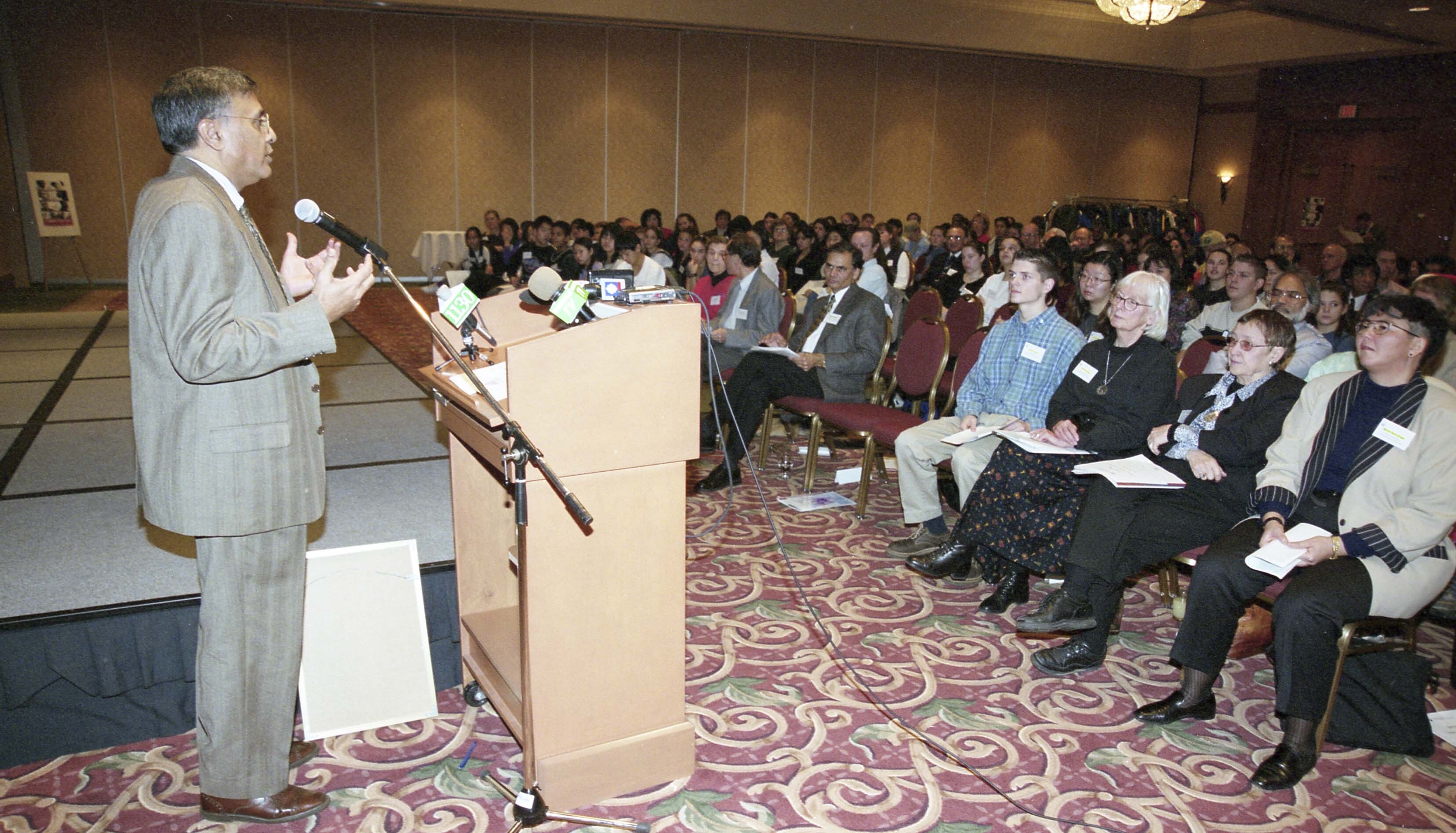
Photograph of Ujjal Dosanjh addressing the audience at the Learning Together event in Vancouver, British Columbia (B.C.). The event was hosted at the Hilton Hotel by the B.C. Human Rights Commission.
Ujjal Dosanjh is a Canadian lawyer, civil rights activist, and politician. Born in Panjab, India in 1947, Dosanjh emigrated to England at the age of 17 and came to Canada four years later, in 1968. He started off at a Vancouver sawmill, but when a back injury hindered his career at the mill, he enrolled at Langara College and completed a degree in political science at Simon Fraser University. He earned a law degree at the University of British Columbia and established a law practice in Vancouver in 1979. First elected as MLA for Vancouver-Kensington in 1991, Dosanjh twice served as Caucus Chair and also chaired the Select Standing Committee on Parliamentary Reform, Ethical Conduct, Standing Orders and Private Bills. Dosanjh was sworn in as British Columbia's 33rd Premier and Canada's first Indo-Canadian Premier on February 24, 2000, serving until 2001. He had previously served as Minister of Government Services and Minister Responsible for Multiculturalism, Human Rights, Sports and Immigration in 1995, and served as Attorney General from August 1995 to February 2000. He was also the leader of the provincial New Democratic Party (NDP) and later served as a Member of Parliament with the Liberal Party. A long time human rights activist, his past community involvements include: South Vancouver Neighbourhood House, MOSAIC, the B.C. Multicultural Society and the B.C. Civil Liberties Association. In 1977 he helped set up the first farm workers' legal information services while he was chair of the Labour Advocacy Research Association. Throughout his career, Dosanjh has been a strong advocate for social justice, healthcare, and public policy issues.
On August 4, 2017 Premier John Horgan along with Attorney General David Eby announced that British Columbia (B.C.) will re-establish the B.C. Human Rights Commission to address inequality and discrimination. In 2018, changes to B.C.'s Human Rights Code established the Office of the Human Rights Commissioner as an independent office of the Legislature and the Commissioner as the first independent Human Rights Commissioner in B.C.'s history. Under the Code, the Commissioner is responsible for promoting and protecting human rights in British Columbia. BC's Office of the Human Rights Commissioner exists to address the root causes of inequality, discrimination, and injustice in B.C. by shifting laws, policies, practices and cultures. They do this work through education, research, advocacy, inquiry and monitoring.
Ujjal Dosanjh is a Canadian lawyer, civil rights activist, and politician. Born in Panjab, India in 1947, Dosanjh emigrated to England at the age of 17 and came to Canada four years later, in 1968. He started off at a Vancouver sawmill, but when a back injury hindered his career at the mill, he enrolled at Langara College and completed a degree in political science at Simon Fraser University. He earned a law degree at the University of British Columbia and established a law practice in Vancouver in 1979. First elected as MLA for Vancouver-Kensington in 1991, Dosanjh twice served as Caucus Chair and also chaired the Select Standing Committee on Parliamentary Reform, Ethical Conduct, Standing Orders and Private Bills. Dosanjh was sworn in as British Columbia's 33rd Premier and Canada's first Indo-Canadian Premier on February 24, 2000, serving until 2001. He had previously served as Minister of Government Services and Minister Responsible for Multiculturalism, Human Rights, Sports and Immigration in 1995, and served as Attorney General from August 1995 to February 2000. He was also the leader of the provincial New Democratic Party (NDP) and later served as a Member of Parliament with the Liberal Party. A long time human rights activist, his past community involvements include: South Vancouver Neighbourhood House, MOSAIC, the B.C. Multicultural Society and the B.C. Civil Liberties Association. In 1977 he helped set up the first farm workers' legal information services while he was chair of the Labour Advocacy Research Association. Throughout his career, Dosanjh has been a strong advocate for social justice, healthcare, and public policy issues.
On August 4, 2017 Premier John Horgan along with Attorney General David Eby announced that British Columbia (B.C.) will re-establish the B.C. Human Rights Commission to address inequality and discrimination. In 2018, changes to B.C.'s Human Rights Code established the Office of the Human Rights Commissioner as an independent office of the Legislature and the Commissioner as the first independent Human Rights Commissioner in B.C.'s history. Under the Code, the Commissioner is responsible for promoting and protecting human rights in British Columbia. BC's Office of the Human Rights Commissioner exists to address the root causes of inequality, discrimination, and injustice in B.C. by shifting laws, policies, practices and cultures. They do this work through education, research, advocacy, inquiry and monitoring.
Creator: Bodalia, Chandra
Description
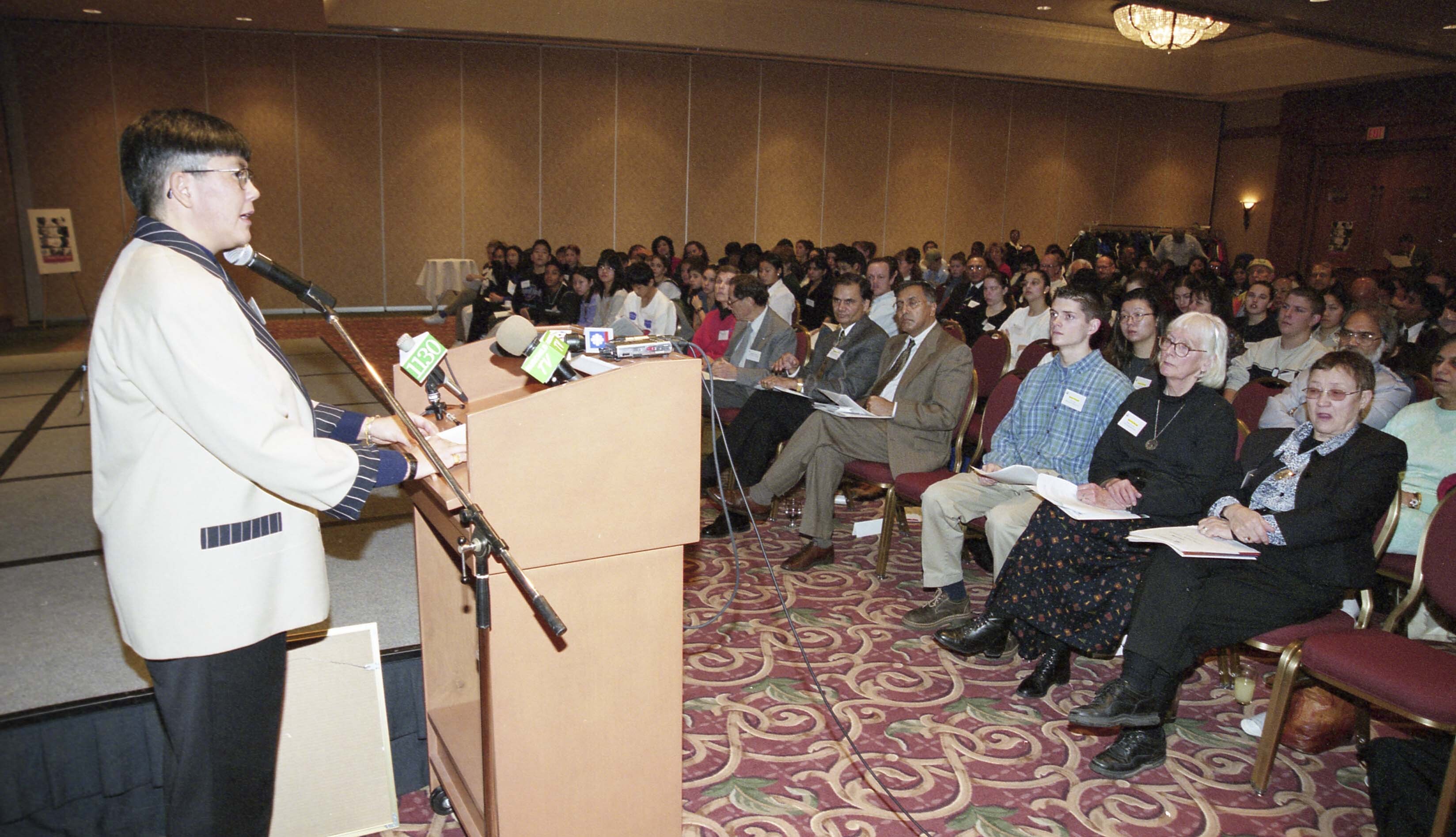
Photograph of Mary Woo Sims addressing the audience at the Learning Together event in Vancouver, British Columbia (B.C.). The event was hosted at the Hilton Hotel by the B.C. Human Rights Commission.
Mary Woo Sims was born in Hong Kong and became a Canadian citizen in 1978. Sims is a social justice activist, politician, and the former chief commissioner of the British Columbia Human Rights Commission from 1997 to 2001. As the chief human rights commissioner, she helped found the Women Against Violence Against Women (WAVAW) Rape Crisis Centre in Vancouver and recommended to expand the Human Rights Code to include gender identity. Sims was also a candidate for the New Democratic Party in the Port Moody – Westwood – Port Coquitlam district in the 2006 federal election. As an advocate of LGBTQ rights, same-sex spousal rights, employment equity, and co-chair of the Campaign for Equal Families, Sims' community work has been recognized through awards such as the Chinese National Council's 'Chinese Canadian Pioneer' Award, Metropolitan Community Church of Toronto's ˜Honoring Heroes' award, and awards from the Gay Asians of Toronto.
On August 4, 2017 Premier John Horgan along with Attorney General David Eby announced that British Columbia (B.C.) will re-establish the B.C. Human Rights Commission to address inequality and discrimination. In 2018, changes to B.C.'s Human Rights Code established the Office of the Human Rights Commissioner as an independent office of the Legislature and the Commissioner as the first independent Human Rights Commissioner in B.C.'s history. Under the Code, the Commissioner is responsible for promoting and protecting human rights in British Columbia. BC's Office of the Human Rights Commissioner exists to address the root causes of inequality, discrimination, and injustice in B.C. by shifting laws, policies, practices and cultures. They do this work through education, research, advocacy, inquiry and monitoring.
Mary Woo Sims was born in Hong Kong and became a Canadian citizen in 1978. Sims is a social justice activist, politician, and the former chief commissioner of the British Columbia Human Rights Commission from 1997 to 2001. As the chief human rights commissioner, she helped found the Women Against Violence Against Women (WAVAW) Rape Crisis Centre in Vancouver and recommended to expand the Human Rights Code to include gender identity. Sims was also a candidate for the New Democratic Party in the Port Moody – Westwood – Port Coquitlam district in the 2006 federal election. As an advocate of LGBTQ rights, same-sex spousal rights, employment equity, and co-chair of the Campaign for Equal Families, Sims' community work has been recognized through awards such as the Chinese National Council's 'Chinese Canadian Pioneer' Award, Metropolitan Community Church of Toronto's ˜Honoring Heroes' award, and awards from the Gay Asians of Toronto.
On August 4, 2017 Premier John Horgan along with Attorney General David Eby announced that British Columbia (B.C.) will re-establish the B.C. Human Rights Commission to address inequality and discrimination. In 2018, changes to B.C.'s Human Rights Code established the Office of the Human Rights Commissioner as an independent office of the Legislature and the Commissioner as the first independent Human Rights Commissioner in B.C.'s history. Under the Code, the Commissioner is responsible for promoting and protecting human rights in British Columbia. BC's Office of the Human Rights Commissioner exists to address the root causes of inequality, discrimination, and injustice in B.C. by shifting laws, policies, practices and cultures. They do this work through education, research, advocacy, inquiry and monitoring.
Creator: Bodalia, Chandra
Description
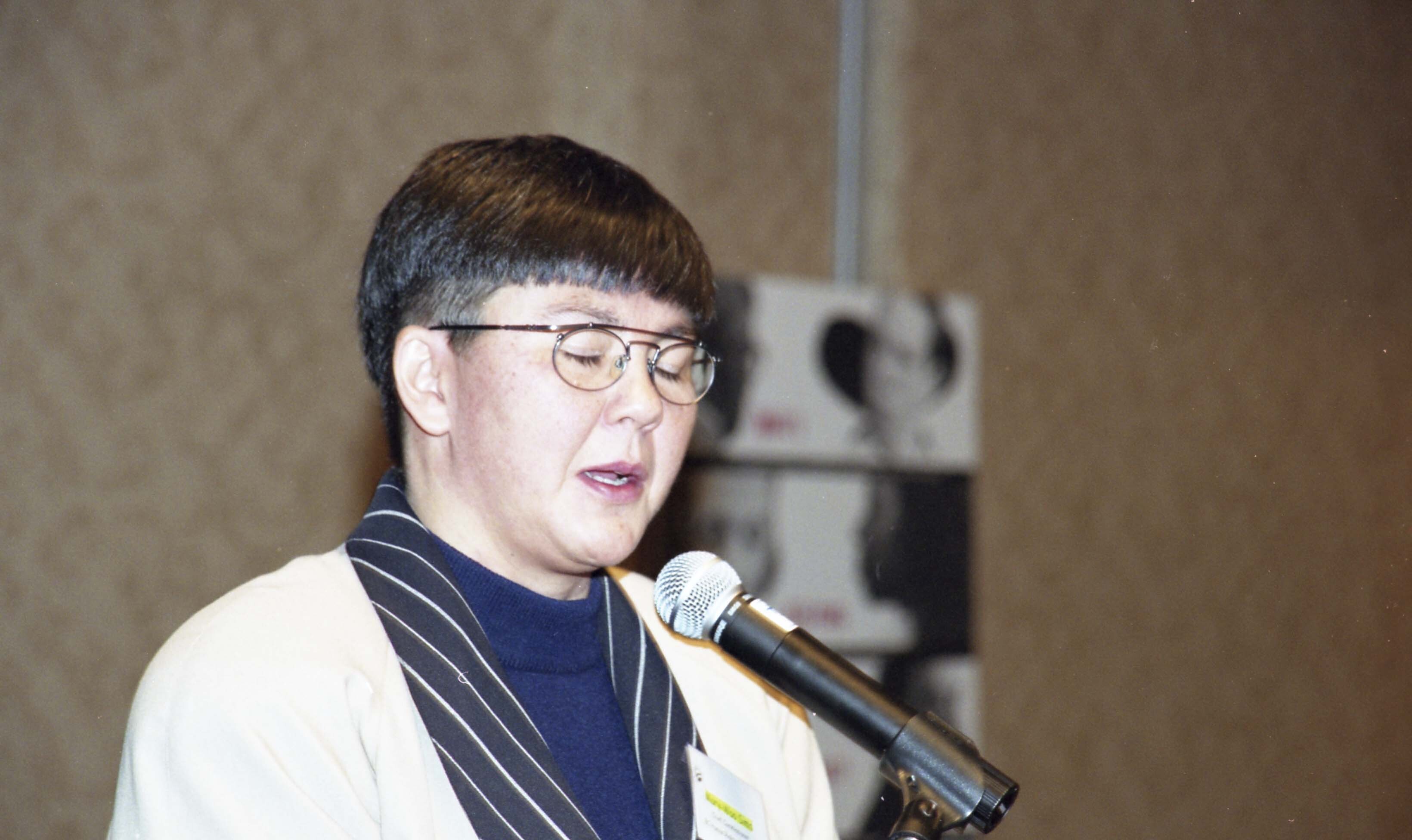
Photograph of Mary Woo Sims addressing the audience at the Learning Together event in Vancouver, British Columbia (B.C.). The event was hosted at the Hilton Hotel by the B.C. Human Rights Commission.
Mary Woo Sims was born in Hong Kong and became a Canadian citizen in 1978. Sims is a social justice activist, politician, and the former chief commissioner of the British Columbia Human Rights Commission from 1997 to 2001. As the chief human rights commissioner, she helped found the Women Against Violence Against Women (WAVAW) Rape Crisis Centre in Vancouver and recommended to expand the Human Rights Code to include gender identity. Sims was also a candidate for the New Democratic Party in the Port Moody – Westwood – Port Coquitlam district in the 2006 federal election. As an advocate of LGBTQ rights, same-sex spousal rights, employment equity, and co-chair of the Campaign for Equal Families, Sims' community work has been recognized through awards such as the Chinese National Council's 'Chinese Canadian Pioneer' Award, Metropolitan Community Church of Toronto's ˜Honoring Heroes' award, and awards from the Gay Asians of Toronto.
On August 4, 2017 Premier John Horgan along with Attorney General David Eby announced that British Columbia (B.C.) will re-establish the B.C. Human Rights Commission to address inequality and discrimination. In 2018, changes to B.C.'s Human Rights Code established the Office of the Human Rights Commissioner as an independent office of the Legislature and the Commissioner as the first independent Human Rights Commissioner in B.C.'s history. Under the Code, the Commissioner is responsible for promoting and protecting human rights in British Columbia. BC's Office of the Human Rights Commissioner exists to address the root causes of inequality, discrimination, and injustice in B.C. by shifting laws, policies, practices and cultures. They do this work through education, research, advocacy, inquiry and monitoring.
Mary Woo Sims was born in Hong Kong and became a Canadian citizen in 1978. Sims is a social justice activist, politician, and the former chief commissioner of the British Columbia Human Rights Commission from 1997 to 2001. As the chief human rights commissioner, she helped found the Women Against Violence Against Women (WAVAW) Rape Crisis Centre in Vancouver and recommended to expand the Human Rights Code to include gender identity. Sims was also a candidate for the New Democratic Party in the Port Moody – Westwood – Port Coquitlam district in the 2006 federal election. As an advocate of LGBTQ rights, same-sex spousal rights, employment equity, and co-chair of the Campaign for Equal Families, Sims' community work has been recognized through awards such as the Chinese National Council's 'Chinese Canadian Pioneer' Award, Metropolitan Community Church of Toronto's ˜Honoring Heroes' award, and awards from the Gay Asians of Toronto.
On August 4, 2017 Premier John Horgan along with Attorney General David Eby announced that British Columbia (B.C.) will re-establish the B.C. Human Rights Commission to address inequality and discrimination. In 2018, changes to B.C.'s Human Rights Code established the Office of the Human Rights Commissioner as an independent office of the Legislature and the Commissioner as the first independent Human Rights Commissioner in B.C.'s history. Under the Code, the Commissioner is responsible for promoting and protecting human rights in British Columbia. BC's Office of the Human Rights Commissioner exists to address the root causes of inequality, discrimination, and injustice in B.C. by shifting laws, policies, practices and cultures. They do this work through education, research, advocacy, inquiry and monitoring.
Creator: Bodalia, Chandra
Description
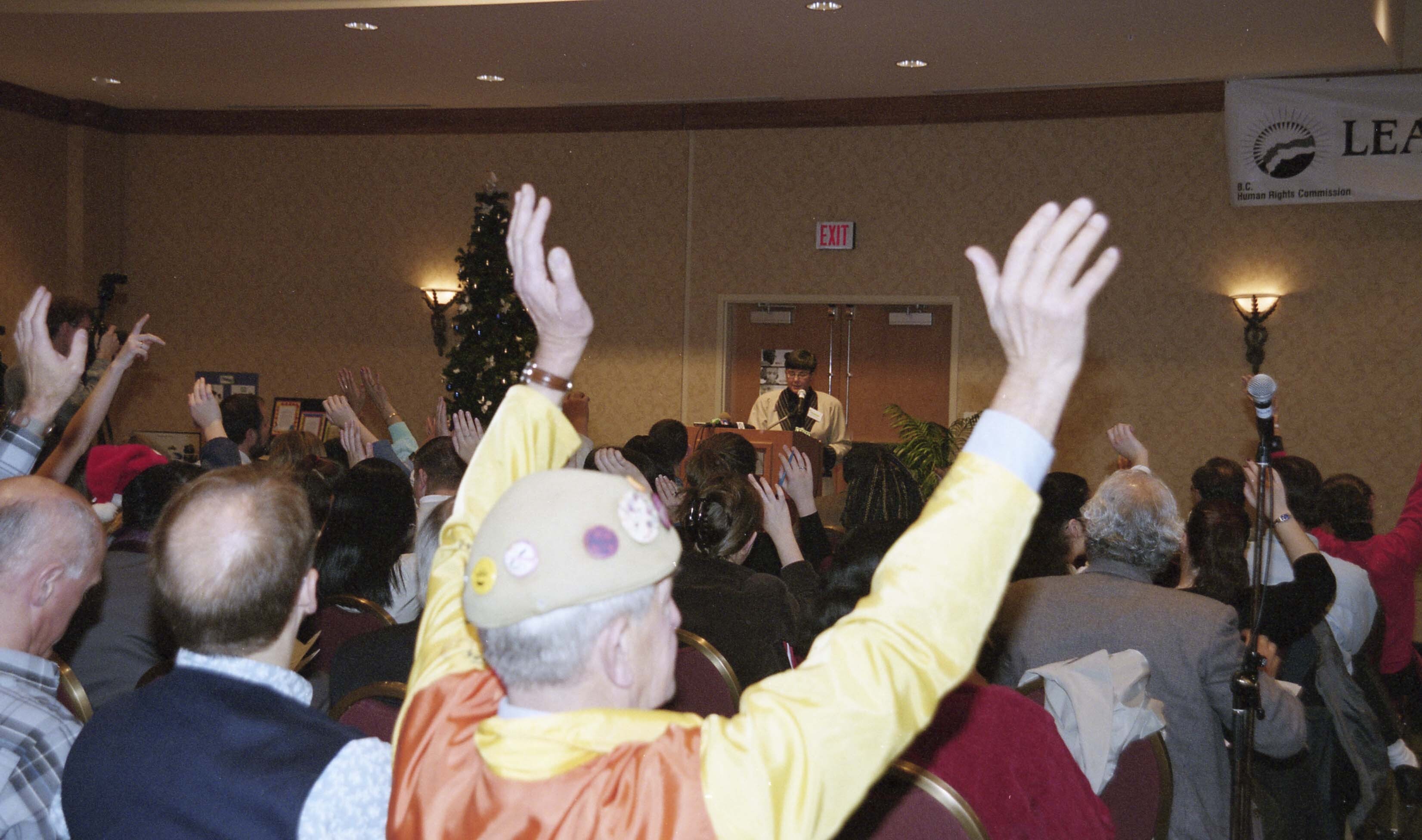
Photograph of Mary Woo Sims addressing the audience at the Learning Together event in Vancouver, British Columbia (B.C.). The event was hosted at the Hilton Hotel by the B.C. Human Rights Commission.
Mary Woo Sims was born in Hong Kong and became a Canadian citizen in 1978. Sims is a social justice activist, politician, and the former chief commissioner of the British Columbia Human Rights Commission from 1997 to 2001. As the chief human rights commissioner, she helped found the Women Against Violence Against Women (WAVAW) Rape Crisis Centre in Vancouver and recommended to expand the Human Rights Code to include gender identity. Sims was also a candidate for the New Democratic Party in the Port Moody – Westwood – Port Coquitlam district in the 2006 federal election. As an advocate of LGBTQ rights, same-sex spousal rights, employment equity, and co-chair of the Campaign for Equal Families, Sims' community work has been recognized through awards such as the Chinese National Council's 'Chinese Canadian Pioneer' Award, Metropolitan Community Church of Toronto's ˜Honoring Heroes' award, and awards from the Gay Asians of Toronto.
On August 4, 2017 Premier John Horgan along with Attorney General David Eby announced that British Columbia (B.C.) will re-establish the B.C. Human Rights Commission to address inequality and discrimination. In 2018, changes to B.C.'s Human Rights Code established the Office of the Human Rights Commissioner as an independent office of the Legislature and the Commissioner as the first independent Human Rights Commissioner in B.C.'s history. Under the Code, the Commissioner is responsible for promoting and protecting human rights in British Columbia. BC's Office of the Human Rights Commissioner exists to address the root causes of inequality, discrimination, and injustice in B.C. by shifting laws, policies, practices and cultures. They do this work through education, research, advocacy, inquiry and monitoring.
Mary Woo Sims was born in Hong Kong and became a Canadian citizen in 1978. Sims is a social justice activist, politician, and the former chief commissioner of the British Columbia Human Rights Commission from 1997 to 2001. As the chief human rights commissioner, she helped found the Women Against Violence Against Women (WAVAW) Rape Crisis Centre in Vancouver and recommended to expand the Human Rights Code to include gender identity. Sims was also a candidate for the New Democratic Party in the Port Moody – Westwood – Port Coquitlam district in the 2006 federal election. As an advocate of LGBTQ rights, same-sex spousal rights, employment equity, and co-chair of the Campaign for Equal Families, Sims' community work has been recognized through awards such as the Chinese National Council's 'Chinese Canadian Pioneer' Award, Metropolitan Community Church of Toronto's ˜Honoring Heroes' award, and awards from the Gay Asians of Toronto.
On August 4, 2017 Premier John Horgan along with Attorney General David Eby announced that British Columbia (B.C.) will re-establish the B.C. Human Rights Commission to address inequality and discrimination. In 2018, changes to B.C.'s Human Rights Code established the Office of the Human Rights Commissioner as an independent office of the Legislature and the Commissioner as the first independent Human Rights Commissioner in B.C.'s history. Under the Code, the Commissioner is responsible for promoting and protecting human rights in British Columbia. BC's Office of the Human Rights Commissioner exists to address the root causes of inequality, discrimination, and injustice in B.C. by shifting laws, policies, practices and cultures. They do this work through education, research, advocacy, inquiry and monitoring.
Creator: Bodalia, Chandra
Description
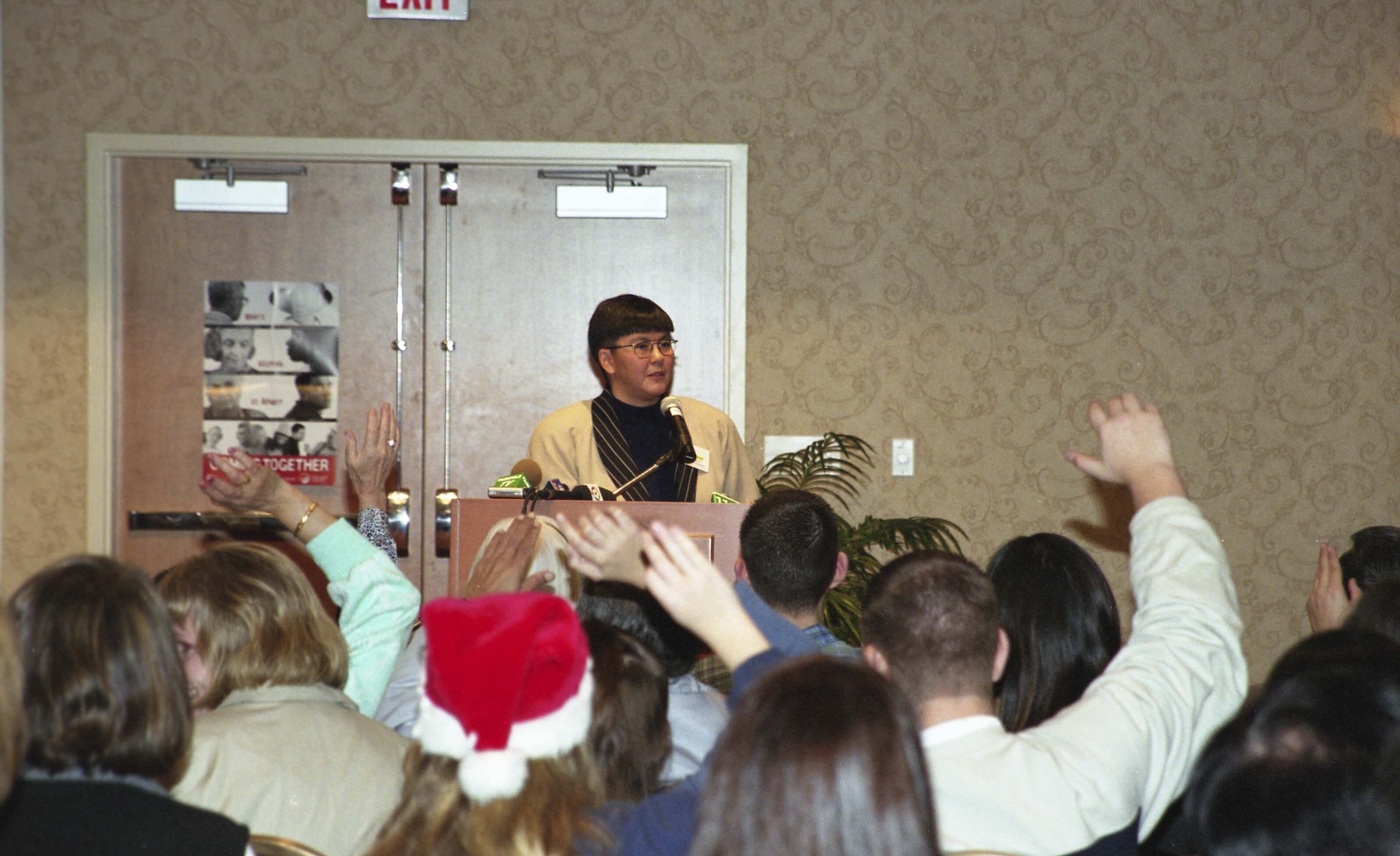
Photograph of Mary Woo Sims addressing the audience at the Learning Together event in Vancouver, British Columbia (B.C.). The event was hosted at the Hilton Hotel by the B.C. Human Rights Commission.
Mary Woo Sims was born in Hong Kong and became a Canadian citizen in 1978. Sims is a social justice activist, politician, and the former chief commissioner of the British Columbia Human Rights Commission from 1997 to 2001. As the chief human rights commissioner, she helped found the Women Against Violence Against Women (WAVAW) Rape Crisis Centre in Vancouver and recommended to expand the Human Rights Code to include gender identity. Sims was also a candidate for the New Democratic Party in the Port Moody – Westwood – Port Coquitlam district in the 2006 federal election. As an advocate of LGBTQ rights, same-sex spousal rights, employment equity, and co-chair of the Campaign for Equal Families, Sims' community work has been recognized through awards such as the Chinese National Council's 'Chinese Canadian Pioneer' Award, Metropolitan Community Church of Toronto's ˜Honoring Heroes' award, and awards from the Gay Asians of Toronto.
On August 4, 2017 Premier John Horgan along with Attorney General David Eby announced that British Columbia (B.C.) will re-establish the B.C. Human Rights Commission to address inequality and discrimination. In 2018, changes to B.C.'s Human Rights Code established the Office of the Human Rights Commissioner as an independent office of the Legislature and the Commissioner as the first independent Human Rights Commissioner in B.C.'s history. Under the Code, the Commissioner is responsible for promoting and protecting human rights in British Columbia. BC's Office of the Human Rights Commissioner exists to address the root causes of inequality, discrimination, and injustice in B.C. by shifting laws, policies, practices and cultures. They do this work through education, research, advocacy, inquiry and monitoring.
Mary Woo Sims was born in Hong Kong and became a Canadian citizen in 1978. Sims is a social justice activist, politician, and the former chief commissioner of the British Columbia Human Rights Commission from 1997 to 2001. As the chief human rights commissioner, she helped found the Women Against Violence Against Women (WAVAW) Rape Crisis Centre in Vancouver and recommended to expand the Human Rights Code to include gender identity. Sims was also a candidate for the New Democratic Party in the Port Moody – Westwood – Port Coquitlam district in the 2006 federal election. As an advocate of LGBTQ rights, same-sex spousal rights, employment equity, and co-chair of the Campaign for Equal Families, Sims' community work has been recognized through awards such as the Chinese National Council's 'Chinese Canadian Pioneer' Award, Metropolitan Community Church of Toronto's ˜Honoring Heroes' award, and awards from the Gay Asians of Toronto.
On August 4, 2017 Premier John Horgan along with Attorney General David Eby announced that British Columbia (B.C.) will re-establish the B.C. Human Rights Commission to address inequality and discrimination. In 2018, changes to B.C.'s Human Rights Code established the Office of the Human Rights Commissioner as an independent office of the Legislature and the Commissioner as the first independent Human Rights Commissioner in B.C.'s history. Under the Code, the Commissioner is responsible for promoting and protecting human rights in British Columbia. BC's Office of the Human Rights Commissioner exists to address the root causes of inequality, discrimination, and injustice in B.C. by shifting laws, policies, practices and cultures. They do this work through education, research, advocacy, inquiry and monitoring.
Creator: Bodalia, Chandra
Description
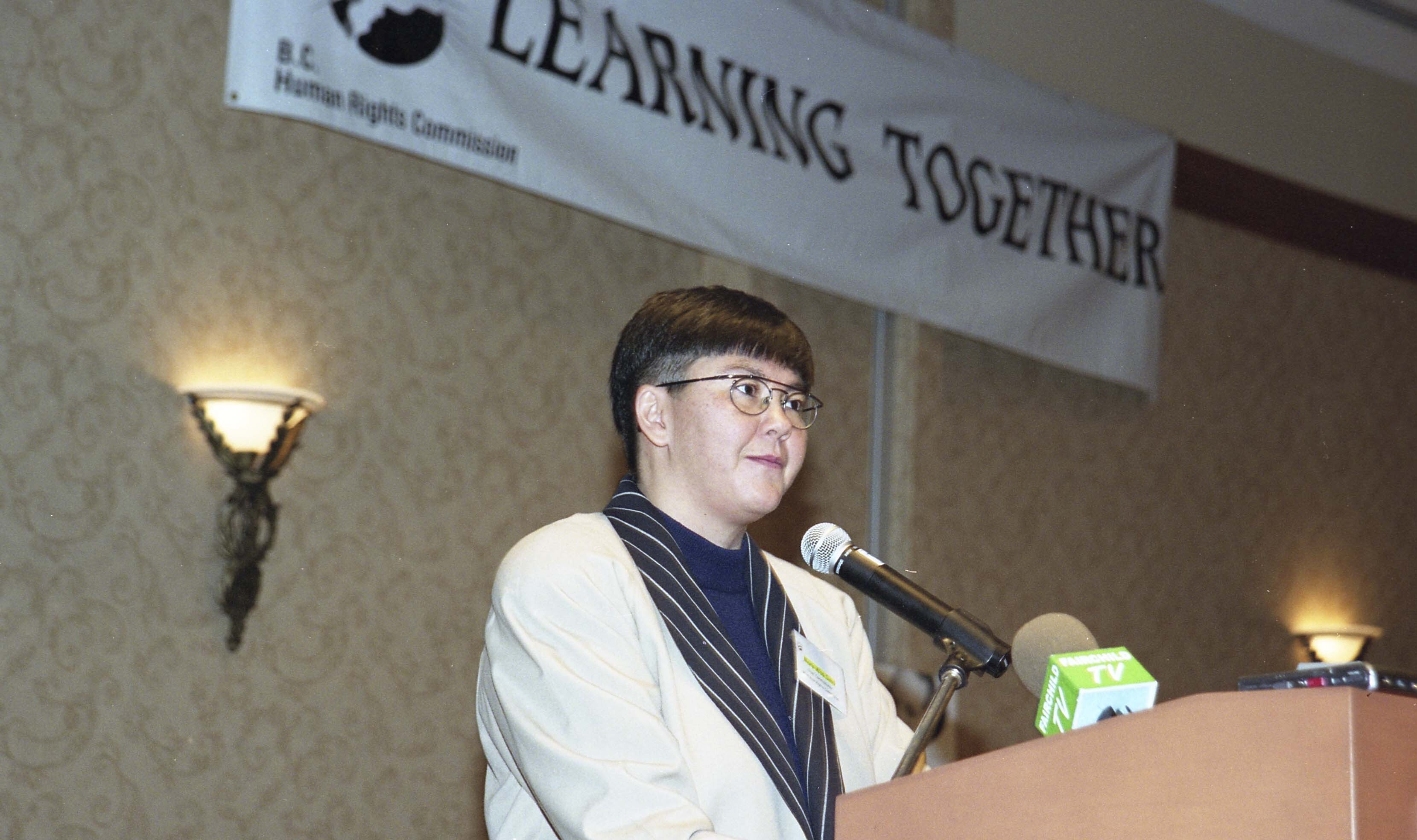
Photograph of Mary Woo Sims addressing the audience at the Learning Together event in Vancouver, British Columbia (B.C.). The event was hosted at the Hilton Hotel by the B.C. Human Rights Commission.
Mary Woo Sims was born in Hong Kong and became a Canadian citizen in 1978. Sims is a social justice activist, politician, and the former chief commissioner of the British Columbia Human Rights Commission from 1997 to 2001. As the chief human rights commissioner, she helped found the Women Against Violence Against Women (WAVAW) Rape Crisis Centre in Vancouver and recommended to expand the Human Rights Code to include gender identity. Sims was also a candidate for the New Democratic Party in the Port Moody – Westwood – Port Coquitlam district in the 2006 federal election. As an advocate of LGBTQ rights, same-sex spousal rights, employment equity, and co-chair of the Campaign for Equal Families, Sims' community work has been recognized through awards such as the Chinese National Council's 'Chinese Canadian Pioneer' Award, Metropolitan Community Church of Toronto's ˜Honoring Heroes' award, and awards from the Gay Asians of Toronto.
On August 4, 2017 Premier John Horgan along with Attorney General David Eby announced that British Columbia (B.C.) will re-establish the B.C. Human Rights Commission to address inequality and discrimination. In 2018, changes to B.C.'s Human Rights Code established the Office of the Human Rights Commissioner as an independent office of the Legislature and the Commissioner as the first independent Human Rights Commissioner in B.C.'s history. Under the Code, the Commissioner is responsible for promoting and protecting human rights in British Columbia. BC's Office of the Human Rights Commissioner exists to address the root causes of inequality, discrimination, and injustice in B.C. by shifting laws, policies, practices and cultures. They do this work through education, research, advocacy, inquiry and monitoring.
Mary Woo Sims was born in Hong Kong and became a Canadian citizen in 1978. Sims is a social justice activist, politician, and the former chief commissioner of the British Columbia Human Rights Commission from 1997 to 2001. As the chief human rights commissioner, she helped found the Women Against Violence Against Women (WAVAW) Rape Crisis Centre in Vancouver and recommended to expand the Human Rights Code to include gender identity. Sims was also a candidate for the New Democratic Party in the Port Moody – Westwood – Port Coquitlam district in the 2006 federal election. As an advocate of LGBTQ rights, same-sex spousal rights, employment equity, and co-chair of the Campaign for Equal Families, Sims' community work has been recognized through awards such as the Chinese National Council's 'Chinese Canadian Pioneer' Award, Metropolitan Community Church of Toronto's ˜Honoring Heroes' award, and awards from the Gay Asians of Toronto.
On August 4, 2017 Premier John Horgan along with Attorney General David Eby announced that British Columbia (B.C.) will re-establish the B.C. Human Rights Commission to address inequality and discrimination. In 2018, changes to B.C.'s Human Rights Code established the Office of the Human Rights Commissioner as an independent office of the Legislature and the Commissioner as the first independent Human Rights Commissioner in B.C.'s history. Under the Code, the Commissioner is responsible for promoting and protecting human rights in British Columbia. BC's Office of the Human Rights Commissioner exists to address the root causes of inequality, discrimination, and injustice in B.C. by shifting laws, policies, practices and cultures. They do this work through education, research, advocacy, inquiry and monitoring.
Creator:
Description
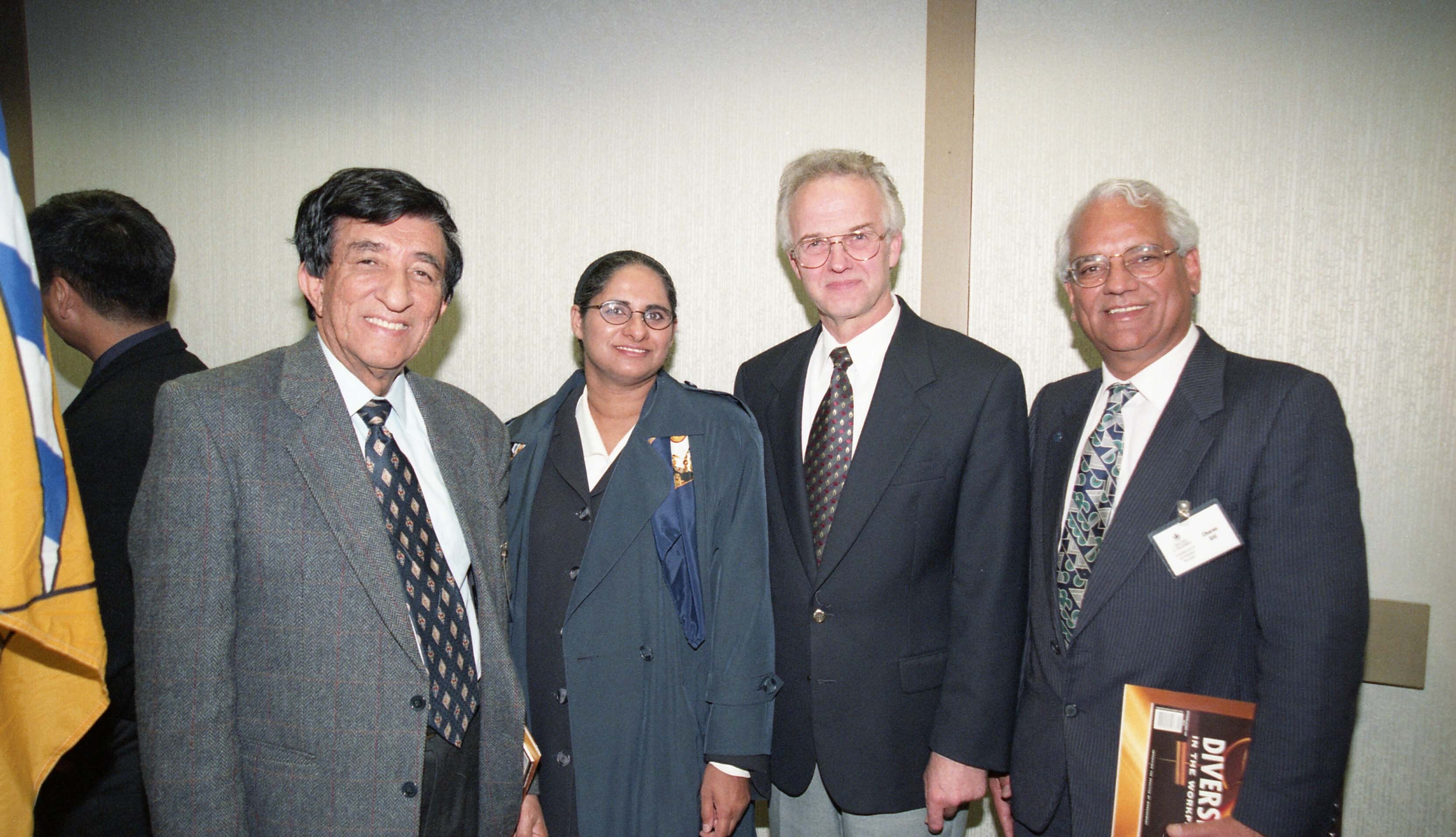
Photograph of Aziz Khaki, Kamaljit Sidhu, Helmut Giesbrecht, and Charan Gill in Vancouver, British Columbia.
The group of individuals had gathered for an announcement about a committee formed that would advise the government on ways to improve the employment equity in the public sector. Helmut Giesbrecht, former-minister responsible for public service, made the announcement and introduced the board. The Community Advisory Board on Employment Equity consisted of 11 individuals, Richard George was the chair of the committee while Wolfgang Zimmerman would be vice-chair. Other members included Tung Chan, Dianne Collins, Jerry Desjarlais, Josefina Gabas, Charan Gill, Aziz Khaki, Cindy Chan Piper, Kamaljit Kaur Sidhu and Faith Uchida.
Dr. Abdulaziz 'Aziz' Khaki was an activist and leader in the Canadian Muslim community. He served as vice-president of the Canadian Muslim Federation and the Council of Muslim Communities of Canada. Dr. Khaki was a strong advocate for human rights, interfaith dialogue, and the integration of Muslim communities into Canadian society.
Dr. Kamaljit Kaur Sidhu has over 30 years' experience as an educator and registered psychologist in British Columbia. She has worked with individuals across the lifespan, including elementary, high school and university level students. Dr. Sidhu completed her Ph.D. in Counselling Psychology from the University of British Columbia (2000), with a doctoral dissertation titled 'Second Generation Sikh Adolescent Males – A Grounded Theory Model of Self and Identity Construction.' She has served as a board member for the British Columbia School Counsellors' Association and as a board member and President for the British Columbia Psychological Association. In addition to her full-time private practice in psychology, Dr. Sidhu continues to volunteer to promote community education about mental health through media interviews, workshops and presentations to professionals and the public. Dr. Sidhu serves as the Director of Academic & Research at the Guru Nanak Institute in Canada.
Helmut Giesbrecht was born in the Ukraine on February 18, 1943 and came to Canada as a young child. Giesbrecht was appointed Parliamentary Secretary to the Minister of Agriculture, Food and Fisheries in November 2000. Previously, Helmut served as the Minister Responsible for the Public Service from July 1999 until February 2000. Before that, he served as Parliamentary Secretary to the Minister of Health from February 1998 to July 1999. He was also Parliamentary Secretary to the Minister of Small Business, Tourism and Culture from June 1996 to February 1998. Giesbrecht was first elected to the Legislative Assembly to represent the constituency of Skeena in 1991 and was re-elected in 1996. He holds a baccalaureate of education from the University of British Columbia before moving to Terrace in the late 60s. Giesbrecht taught at Skeena Junior Secondary School in Terrace for 24 years. He was elected to Terrace Municipal Council in 1976 and served as mayor from 1981 to 1985. Giesbrecht represented the Regional District of Kitimat-Stikine on the Northern Development Council and represented the district on the Municipal Finance Authority. In addition, he also served on the board of the Skeena Health Unit. Before being elected to the Legislative Assembly, Giesbrecht was on the executive of the Terrace District's Teachers Union and on the Board of Directors of the Terrace and District Credit Union. He also served two years as president of the Terrace District Teachers' Association.
Charan Pal Gill (June 17, 1936 - February 2, 2021), born in Hong Kong, was a social worker, social activist, labour organizer, anti-racism pioneer and a South Asian community leader in British Columbia. Gill relocated to Vancouver, Canada in 1967, where he briefly worked as a berry picker before finding employment in a sawmill in Williams Lake, British Columbia. Due to an injury to his wrist, Gill left the sawmill and after some training began working as a social worker in Prince Rupert. After working for five years as a social worker, Gill became a registered social worker after obtaining his bachelor's degree from the University of British Columbia in 1970. Gill was involved with the Indian People's Association in North America (IPANA) in Vancouver. Founded in Montreal in June 1975, IPANA was a left-wing social group initially focused on generating support for the Naxalite movement in India. In 1979, Gill with IPANA in Vancouver played significant roles in the formation of the Farm Workers Organizing Committee (FWOC). On 6 April 1980, the FWOC transformed into the Canadian Farmworkers Union (CFU). The CFU became the first union in Canada's history centred on farmworkers. Gill was elected CFU founding secretary (by 2004 he also served as secretary and treasurer). He also became the editor of the Farmworker, the CFU's newspaper (published in English and Panjabi). While contributing towards the CFU, Gill pursued postgraduate studies and earned his master's degree in social work in 1983. For much of his professional career he worked for the BC Ministry of Human Resources and Ministry of Social Services and Housing. In November 1980, Gill co-founded the volunteer organization British Columbia Organization to Fight Racism (BCOFR). In 1985 Gill established a new service provider catering to the immediate needs of the South Asian community in British Columbia. The charitable organization was originally known as the Progressive Indo-Canadian Community Services Society and later became the Progressive Intercultural Community Services Society (PICS). Gill served as the organization's chief executive officer until 2017. Gill gradually retired from social work while working with PICS. He also served on the boards of various organizations, including the agriculture cooperative AgSafe (formerly FARSHA) since 1993; Rainbow Community Health Co-operative since 1998; Canadian Agricultural Safety Association (CASA) since 2011; and the BC Non-Profit Housing Association from 2008 to 2012. Gill was the recipient of numerous awards and honours in recognition of his activism and contributions to human rights and workers' rights, such as, the Order of British Columbia (1999) and the Queen's Diamond Jubilee Medal (2012).
The group of individuals had gathered for an announcement about a committee formed that would advise the government on ways to improve the employment equity in the public sector. Helmut Giesbrecht, former-minister responsible for public service, made the announcement and introduced the board. The Community Advisory Board on Employment Equity consisted of 11 individuals, Richard George was the chair of the committee while Wolfgang Zimmerman would be vice-chair. Other members included Tung Chan, Dianne Collins, Jerry Desjarlais, Josefina Gabas, Charan Gill, Aziz Khaki, Cindy Chan Piper, Kamaljit Kaur Sidhu and Faith Uchida.
Dr. Abdulaziz 'Aziz' Khaki was an activist and leader in the Canadian Muslim community. He served as vice-president of the Canadian Muslim Federation and the Council of Muslim Communities of Canada. Dr. Khaki was a strong advocate for human rights, interfaith dialogue, and the integration of Muslim communities into Canadian society.
Dr. Kamaljit Kaur Sidhu has over 30 years' experience as an educator and registered psychologist in British Columbia. She has worked with individuals across the lifespan, including elementary, high school and university level students. Dr. Sidhu completed her Ph.D. in Counselling Psychology from the University of British Columbia (2000), with a doctoral dissertation titled 'Second Generation Sikh Adolescent Males – A Grounded Theory Model of Self and Identity Construction.' She has served as a board member for the British Columbia School Counsellors' Association and as a board member and President for the British Columbia Psychological Association. In addition to her full-time private practice in psychology, Dr. Sidhu continues to volunteer to promote community education about mental health through media interviews, workshops and presentations to professionals and the public. Dr. Sidhu serves as the Director of Academic & Research at the Guru Nanak Institute in Canada.
Helmut Giesbrecht was born in the Ukraine on February 18, 1943 and came to Canada as a young child. Giesbrecht was appointed Parliamentary Secretary to the Minister of Agriculture, Food and Fisheries in November 2000. Previously, Helmut served as the Minister Responsible for the Public Service from July 1999 until February 2000. Before that, he served as Parliamentary Secretary to the Minister of Health from February 1998 to July 1999. He was also Parliamentary Secretary to the Minister of Small Business, Tourism and Culture from June 1996 to February 1998. Giesbrecht was first elected to the Legislative Assembly to represent the constituency of Skeena in 1991 and was re-elected in 1996. He holds a baccalaureate of education from the University of British Columbia before moving to Terrace in the late 60s. Giesbrecht taught at Skeena Junior Secondary School in Terrace for 24 years. He was elected to Terrace Municipal Council in 1976 and served as mayor from 1981 to 1985. Giesbrecht represented the Regional District of Kitimat-Stikine on the Northern Development Council and represented the district on the Municipal Finance Authority. In addition, he also served on the board of the Skeena Health Unit. Before being elected to the Legislative Assembly, Giesbrecht was on the executive of the Terrace District's Teachers Union and on the Board of Directors of the Terrace and District Credit Union. He also served two years as president of the Terrace District Teachers' Association.
Charan Pal Gill (June 17, 1936 - February 2, 2021), born in Hong Kong, was a social worker, social activist, labour organizer, anti-racism pioneer and a South Asian community leader in British Columbia. Gill relocated to Vancouver, Canada in 1967, where he briefly worked as a berry picker before finding employment in a sawmill in Williams Lake, British Columbia. Due to an injury to his wrist, Gill left the sawmill and after some training began working as a social worker in Prince Rupert. After working for five years as a social worker, Gill became a registered social worker after obtaining his bachelor's degree from the University of British Columbia in 1970. Gill was involved with the Indian People's Association in North America (IPANA) in Vancouver. Founded in Montreal in June 1975, IPANA was a left-wing social group initially focused on generating support for the Naxalite movement in India. In 1979, Gill with IPANA in Vancouver played significant roles in the formation of the Farm Workers Organizing Committee (FWOC). On 6 April 1980, the FWOC transformed into the Canadian Farmworkers Union (CFU). The CFU became the first union in Canada's history centred on farmworkers. Gill was elected CFU founding secretary (by 2004 he also served as secretary and treasurer). He also became the editor of the Farmworker, the CFU's newspaper (published in English and Panjabi). While contributing towards the CFU, Gill pursued postgraduate studies and earned his master's degree in social work in 1983. For much of his professional career he worked for the BC Ministry of Human Resources and Ministry of Social Services and Housing. In November 1980, Gill co-founded the volunteer organization British Columbia Organization to Fight Racism (BCOFR). In 1985 Gill established a new service provider catering to the immediate needs of the South Asian community in British Columbia. The charitable organization was originally known as the Progressive Indo-Canadian Community Services Society and later became the Progressive Intercultural Community Services Society (PICS). Gill served as the organization's chief executive officer until 2017. Gill gradually retired from social work while working with PICS. He also served on the boards of various organizations, including the agriculture cooperative AgSafe (formerly FARSHA) since 1993; Rainbow Community Health Co-operative since 1998; Canadian Agricultural Safety Association (CASA) since 2011; and the BC Non-Profit Housing Association from 2008 to 2012. Gill was the recipient of numerous awards and honours in recognition of his activism and contributions to human rights and workers' rights, such as, the Order of British Columbia (1999) and the Queen's Diamond Jubilee Medal (2012).
Creator:
Description
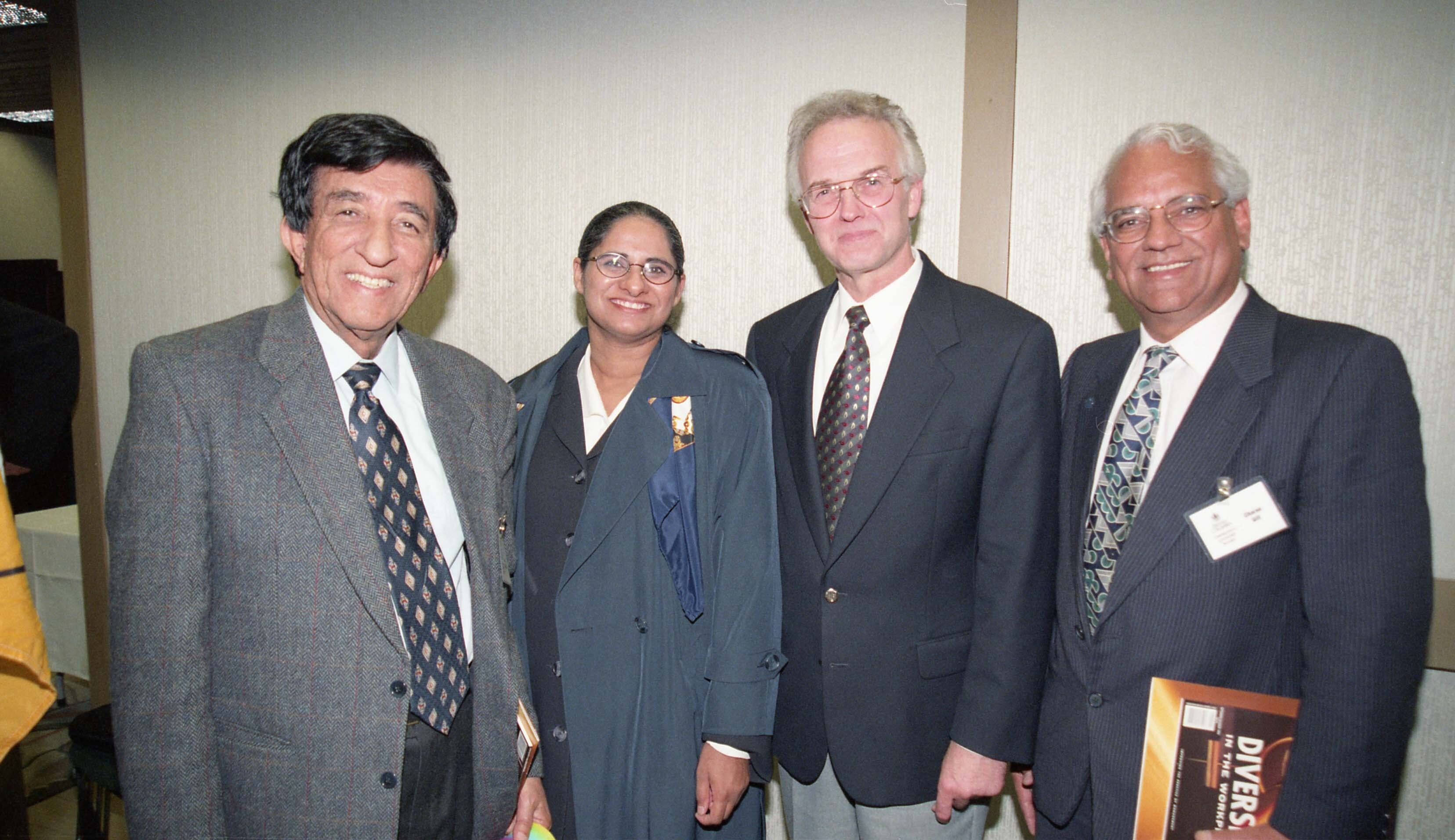
Photograph of Aziz Khaki, Kamaljit Sidhu, Helmut Giesbrecht, and Charan Gill in Vancouver, British Columbia.
The group of individuals had gathered for an announcement about a committee formed that would advise the government on ways to improve the employment equity in the public sector. Helmut Giesbrecht, former-minister responsible for public service, made the announcement and introduced the board. The Community Advisory Board on Employment Equity consisted of 11 individuals, Richard George was the chair of the committee while Wolfgang Zimmerman would be vice-chair. Other members included Tung Chan, Dianne Collins, Jerry Desjarlais, Josefina Gabas, Charan Gill, Aziz Khaki, Cindy Chan Piper, Kamaljit Kaur Sidhu and Faith Uchida.
Dr. Abdulaziz 'Aziz' Khaki was an activist and leader in the Canadian Muslim community. He served as vice-president of the Canadian Muslim Federation and the Council of Muslim Communities of Canada. Dr. Khaki was a strong advocate for human rights, interfaith dialogue, and the integration of Muslim communities into Canadian society.
Dr. Kamaljit Kaur Sidhu has over 30 years' experience as an educator and registered psychologist in British Columbia. She has worked with individuals across the lifespan, including elementary, high school and university level students. Dr. Sidhu completed her Ph.D. in Counselling Psychology from the University of British Columbia (2000), with a doctoral dissertation titled 'Second Generation Sikh Adolescent Males – A Grounded Theory Model of Self and Identity Construction.' She has served as a board member for the British Columbia School Counsellors' Association and as a board member and President for the British Columbia Psychological Association. In addition to her full-time private practice in psychology, Dr. Sidhu continues to volunteer to promote community education about mental health through media interviews, workshops and presentations to professionals and the public. Dr. Sidhu serves as the Director of Academic & Research at the Guru Nanak Institute in Canada.
Helmut Giesbrecht was born in the Ukraine on February 18, 1943 and came to Canada as a young child. Giesbrecht was appointed Parliamentary Secretary to the Minister of Agriculture, Food and Fisheries in November 2000. Previously, Helmut served as the Minister Responsible for the Public Service from July 1999 until February 2000. Before that, he served as Parliamentary Secretary to the Minister of Health from February 1998 to July 1999. He was also Parliamentary Secretary to the Minister of Small Business, Tourism and Culture from June 1996 to February 1998. Giesbrecht was first elected to the Legislative Assembly to represent the constituency of Skeena in 1991 and was re-elected in 1996. He holds a baccalaureate of education from the University of British Columbia before moving to Terrace in the late 60s. Giesbrecht taught at Skeena Junior Secondary School in Terrace for 24 years. He was elected to Terrace Municipal Council in 1976 and served as mayor from 1981 to 1985. Giesbrecht represented the Regional District of Kitimat-Stikine on the Northern Development Council and represented the district on the Municipal Finance Authority. In addition, he also served on the board of the Skeena Health Unit. Before being elected to the Legislative Assembly, Giesbrecht was on the executive of the Terrace District's Teachers Union and on the Board of Directors of the Terrace and District Credit Union. He also served two years as president of the Terrace District Teachers' Association.
Charan Pal Gill (June 17, 1936 - February 2, 2021), born in Hong Kong, was a social worker, social activist, labour organizer, anti-racism pioneer and a South Asian community leader in British Columbia. Gill relocated to Vancouver, Canada in 1967, where he briefly worked as a berry picker before finding employment in a sawmill in Williams Lake, British Columbia. Due to an injury to his wrist, Gill left the sawmill and after some training began working as a social worker in Prince Rupert. After working for five years as a social worker, Gill became a registered social worker after obtaining his bachelor's degree from the University of British Columbia in 1970. Gill was involved with the Indian People's Association in North America (IPANA) in Vancouver. Founded in Montreal in June 1975, IPANA was a left-wing social group initially focused on generating support for the Naxalite movement in India. In 1979, Gill with IPANA in Vancouver played significant roles in the formation of the Farm Workers Organizing Committee (FWOC). On 6 April 1980, the FWOC transformed into the Canadian Farmworkers Union (CFU). The CFU became the first union in Canada's history centred on farmworkers. Gill was elected CFU founding secretary (by 2004 he also served as secretary and treasurer). He also became the editor of the Farmworker, the CFU's newspaper (published in English and Panjabi). While contributing towards the CFU, Gill pursued postgraduate studies and earned his master's degree in social work in 1983. For much of his professional career he worked for the BC Ministry of Human Resources and Ministry of Social Services and Housing. In November 1980, Gill co-founded the volunteer organization British Columbia Organization to Fight Racism (BCOFR). In 1985 Gill established a new service provider catering to the immediate needs of the South Asian community in British Columbia. The charitable organization was originally known as the Progressive Indo-Canadian Community Services Society and later became the Progressive Intercultural Community Services Society (PICS). Gill served as the organization's chief executive officer until 2017. Gill gradually retired from social work while working with PICS. He also served on the boards of various organizations, including the agriculture cooperative AgSafe (formerly FARSHA) since 1993; Rainbow Community Health Co-operative since 1998; Canadian Agricultural Safety Association (CASA) since 2011; and the BC Non-Profit Housing Association from 2008 to 2012. Gill was the recipient of numerous awards and honours in recognition of his activism and contributions to human rights and workers' rights, such as, the Order of British Columbia (1999) and the Queen's Diamond Jubilee Medal (2012).
The group of individuals had gathered for an announcement about a committee formed that would advise the government on ways to improve the employment equity in the public sector. Helmut Giesbrecht, former-minister responsible for public service, made the announcement and introduced the board. The Community Advisory Board on Employment Equity consisted of 11 individuals, Richard George was the chair of the committee while Wolfgang Zimmerman would be vice-chair. Other members included Tung Chan, Dianne Collins, Jerry Desjarlais, Josefina Gabas, Charan Gill, Aziz Khaki, Cindy Chan Piper, Kamaljit Kaur Sidhu and Faith Uchida.
Dr. Abdulaziz 'Aziz' Khaki was an activist and leader in the Canadian Muslim community. He served as vice-president of the Canadian Muslim Federation and the Council of Muslim Communities of Canada. Dr. Khaki was a strong advocate for human rights, interfaith dialogue, and the integration of Muslim communities into Canadian society.
Dr. Kamaljit Kaur Sidhu has over 30 years' experience as an educator and registered psychologist in British Columbia. She has worked with individuals across the lifespan, including elementary, high school and university level students. Dr. Sidhu completed her Ph.D. in Counselling Psychology from the University of British Columbia (2000), with a doctoral dissertation titled 'Second Generation Sikh Adolescent Males – A Grounded Theory Model of Self and Identity Construction.' She has served as a board member for the British Columbia School Counsellors' Association and as a board member and President for the British Columbia Psychological Association. In addition to her full-time private practice in psychology, Dr. Sidhu continues to volunteer to promote community education about mental health through media interviews, workshops and presentations to professionals and the public. Dr. Sidhu serves as the Director of Academic & Research at the Guru Nanak Institute in Canada.
Helmut Giesbrecht was born in the Ukraine on February 18, 1943 and came to Canada as a young child. Giesbrecht was appointed Parliamentary Secretary to the Minister of Agriculture, Food and Fisheries in November 2000. Previously, Helmut served as the Minister Responsible for the Public Service from July 1999 until February 2000. Before that, he served as Parliamentary Secretary to the Minister of Health from February 1998 to July 1999. He was also Parliamentary Secretary to the Minister of Small Business, Tourism and Culture from June 1996 to February 1998. Giesbrecht was first elected to the Legislative Assembly to represent the constituency of Skeena in 1991 and was re-elected in 1996. He holds a baccalaureate of education from the University of British Columbia before moving to Terrace in the late 60s. Giesbrecht taught at Skeena Junior Secondary School in Terrace for 24 years. He was elected to Terrace Municipal Council in 1976 and served as mayor from 1981 to 1985. Giesbrecht represented the Regional District of Kitimat-Stikine on the Northern Development Council and represented the district on the Municipal Finance Authority. In addition, he also served on the board of the Skeena Health Unit. Before being elected to the Legislative Assembly, Giesbrecht was on the executive of the Terrace District's Teachers Union and on the Board of Directors of the Terrace and District Credit Union. He also served two years as president of the Terrace District Teachers' Association.
Charan Pal Gill (June 17, 1936 - February 2, 2021), born in Hong Kong, was a social worker, social activist, labour organizer, anti-racism pioneer and a South Asian community leader in British Columbia. Gill relocated to Vancouver, Canada in 1967, where he briefly worked as a berry picker before finding employment in a sawmill in Williams Lake, British Columbia. Due to an injury to his wrist, Gill left the sawmill and after some training began working as a social worker in Prince Rupert. After working for five years as a social worker, Gill became a registered social worker after obtaining his bachelor's degree from the University of British Columbia in 1970. Gill was involved with the Indian People's Association in North America (IPANA) in Vancouver. Founded in Montreal in June 1975, IPANA was a left-wing social group initially focused on generating support for the Naxalite movement in India. In 1979, Gill with IPANA in Vancouver played significant roles in the formation of the Farm Workers Organizing Committee (FWOC). On 6 April 1980, the FWOC transformed into the Canadian Farmworkers Union (CFU). The CFU became the first union in Canada's history centred on farmworkers. Gill was elected CFU founding secretary (by 2004 he also served as secretary and treasurer). He also became the editor of the Farmworker, the CFU's newspaper (published in English and Panjabi). While contributing towards the CFU, Gill pursued postgraduate studies and earned his master's degree in social work in 1983. For much of his professional career he worked for the BC Ministry of Human Resources and Ministry of Social Services and Housing. In November 1980, Gill co-founded the volunteer organization British Columbia Organization to Fight Racism (BCOFR). In 1985 Gill established a new service provider catering to the immediate needs of the South Asian community in British Columbia. The charitable organization was originally known as the Progressive Indo-Canadian Community Services Society and later became the Progressive Intercultural Community Services Society (PICS). Gill served as the organization's chief executive officer until 2017. Gill gradually retired from social work while working with PICS. He also served on the boards of various organizations, including the agriculture cooperative AgSafe (formerly FARSHA) since 1993; Rainbow Community Health Co-operative since 1998; Canadian Agricultural Safety Association (CASA) since 2011; and the BC Non-Profit Housing Association from 2008 to 2012. Gill was the recipient of numerous awards and honours in recognition of his activism and contributions to human rights and workers' rights, such as, the Order of British Columbia (1999) and the Queen's Diamond Jubilee Medal (2012).
Creator:
Description
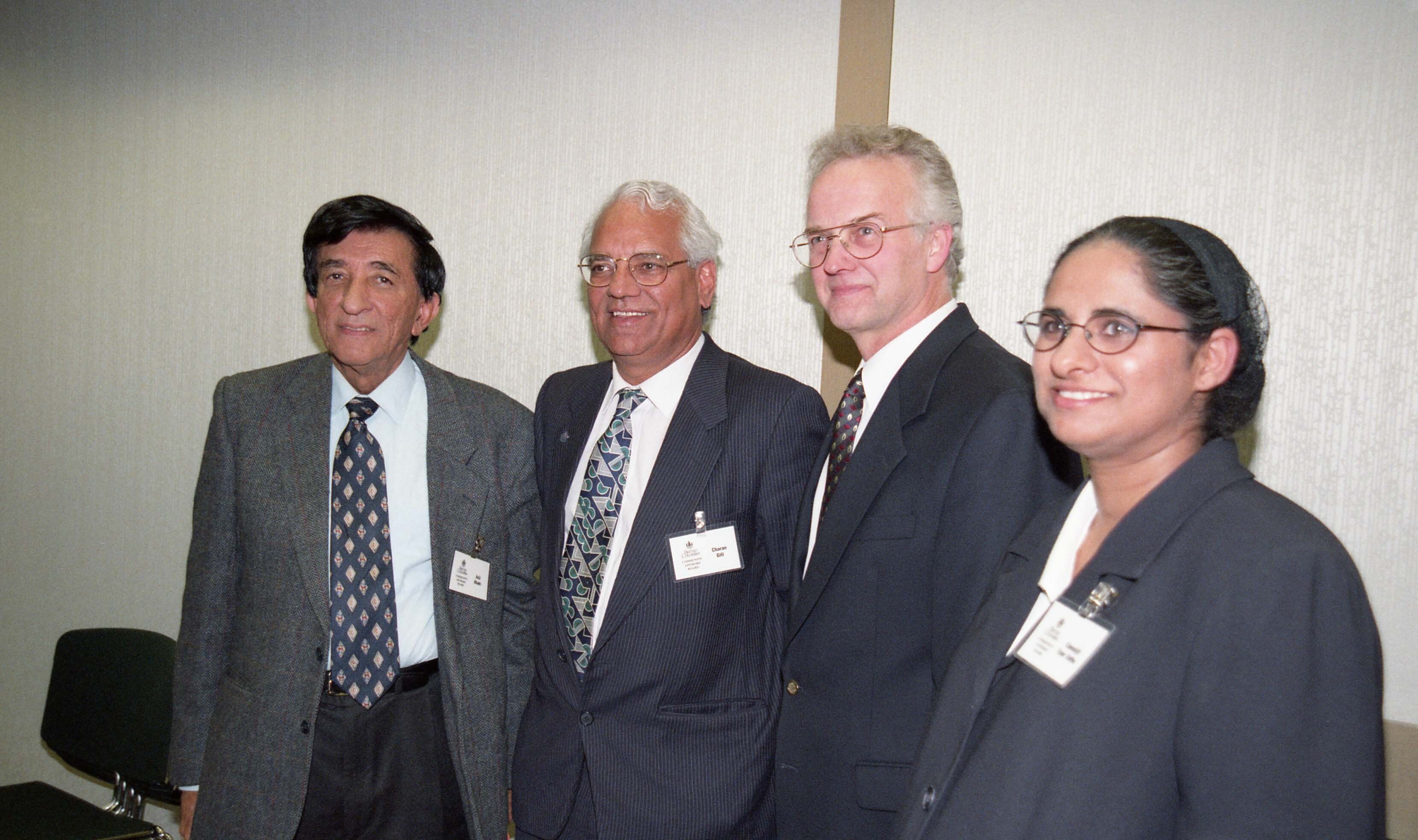
Photograph of Aziz Khaki, Charan Gill, Helmut Giesbrecht and Kamaljit Sidhu in Vancouver, British Columbia.
The group of individuals had gathered for an announcement about a committee formed that would advise the government on ways to improve the employment equity in the public sector. Helmut Giesbrecht, former-minister responsible for public service, made the announcement and introduced the board. The Community Advisory Board on Employment Equity consisted of 11 individuals, Richard George was the chair of the committee while Wolfgang Zimmerman would be vice-chair. Other members included Tung Chan, Dianne Collins, Jerry Desjarlais, Josefina Gabas, Charan Gill, Aziz Khaki, Cindy Chan Piper, Kamaljit Kaur Sidhu and Faith Uchida.
Dr. Abdulaziz 'Aziz' Khaki was an activist and leader in the Canadian Muslim community. He served as vice-president of the Canadian Muslim Federation and the Council of Muslim Communities of Canada. Dr. Khaki was a strong advocate for human rights, interfaith dialogue, and the integration of Muslim communities into Canadian society.
Charan Pal Gill (June 17, 1936 - February 2, 2021), born in Hong Kong, was a social worker, social activist, labour organizer, anti-racism pioneer and a South Asian community leader in British Columbia. Gill relocated to Vancouver, Canada in 1967, where he briefly worked as a berry picker before finding employment in a sawmill in Williams Lake, British Columbia. Due to an injury to his wrist, Gill left the sawmill and after some training began working as a social worker in Prince Rupert. After working for five years as a social worker, Gill became a registered social worker after obtaining his bachelor's degree from the University of British Columbia in 1970. Gill was involved with the Indian People's Association in North America (IPANA) in Vancouver. Founded in Montreal in June 1975, IPANA was a left-wing social group initially focused on generating support for the Naxalite movement in India. In 1979, Gill with IPANA in Vancouver played significant roles in the formation of the Farm Workers Organizing Committee (FWOC). On 6 April 1980, the FWOC transformed into the Canadian Farmworkers Union (CFU). The CFU became the first union in Canada's history centred on farmworkers. Gill was elected CFU founding secretary (by 2004 he also served as secretary and treasurer). He also became the editor of the Farmworker, the CFU's newspaper (published in English and Panjabi). While contributing towards the CFU, Gill pursued postgraduate studies and earned his master's degree in social work in 1983. For much of his professional career he worked for the BC Ministry of Human Resources and Ministry of Social Services and Housing. In November 1980, Gill co-founded the volunteer organization British Columbia Organization to Fight Racism (BCOFR). In 1985 Gill established a new service provider catering to the immediate needs of the South Asian community in British Columbia. The charitable organization was originally known as the Progressive Indo-Canadian Community Services Society and later became the Progressive Intercultural Community Services Society (PICS). Gill served as the organization's chief executive officer until 2017. Gill gradually retired from social work while working with PICS. He also served on the boards of various organizations, including the agriculture cooperative AgSafe (formerly FARSHA) since 1993; Rainbow Community Health Co-operative since 1998; Canadian Agricultural Safety Association (CASA) since 2011; and the BC Non-Profit Housing Association from 2008 to 2012. Gill was the recipient of numerous awards and honours in recognition of his activism and contributions to human rights and workers' rights, such as, the Order of British Columbia (1999) and the Queen's Diamond Jubilee Medal (2012).
Helmut Giesbrecht was born in the Ukraine on February 18, 1943 and came to Canada as a young child. Giesbrecht was appointed Parliamentary Secretary to the Minister of Agriculture, Food and Fisheries in November 2000. Previously, Helmut served as the Minister Responsible for the Public Service from July 1999 until February 2000. Before that, he served as Parliamentary Secretary to the Minister of Health from February 1998 to July 1999. He was also Parliamentary Secretary to the Minister of Small Business, Tourism and Culture from June 1996 to February 1998. Giesbrecht was first elected to the Legislative Assembly to represent the constituency of Skeena in 1991 and was re-elected in 1996. He holds a baccalaureate of education from the University of British Columbia before moving to Terrace in the late 60s. Giesbrecht taught at Skeena Junior Secondary School in Terrace for 24 years. He was elected to Terrace Municipal Council in 1976 and served as mayor from 1981 to 1985. Giesbrecht represented the Regional District of Kitimat-Stikine on the Northern Development Council and represented the district on the Municipal Finance Authority. In addition, he also served on the board of the Skeena Health Unit. Before being elected to the Legislative Assembly, Giesbrecht was on the executive of the Terrace District's Teachers Union and on the Board of Directors of the Terrace and District Credit Union. He also served two years as president of the Terrace District Teachers' Association.
Dr. Kamaljit Kaur Sidhu has over 30 years' experience as an educator and registered psychologist in British Columbia. She has worked with individuals across the lifespan, including elementary, high school and university level students. Dr. Sidhu completed her Ph.D. in Counselling Psychology from the University of British Columbia (2000), with a doctoral dissertation titled 'Second Generation Sikh Adolescent Males – A Grounded Theory Model of Self and Identity Construction.' She has served as a board member for the British Columbia School Counsellors' Association and as a board member and President for the British Columbia Psychological Association. In addition to her full-time private practice in psychology, Dr. Sidhu continues to volunteer to promote community education about mental health through media interviews, workshops and presentations to professionals and the public. Dr. Sidhu serves as the Director of Academic & Research at the Guru Nanak Institute in Canada.
The group of individuals had gathered for an announcement about a committee formed that would advise the government on ways to improve the employment equity in the public sector. Helmut Giesbrecht, former-minister responsible for public service, made the announcement and introduced the board. The Community Advisory Board on Employment Equity consisted of 11 individuals, Richard George was the chair of the committee while Wolfgang Zimmerman would be vice-chair. Other members included Tung Chan, Dianne Collins, Jerry Desjarlais, Josefina Gabas, Charan Gill, Aziz Khaki, Cindy Chan Piper, Kamaljit Kaur Sidhu and Faith Uchida.
Dr. Abdulaziz 'Aziz' Khaki was an activist and leader in the Canadian Muslim community. He served as vice-president of the Canadian Muslim Federation and the Council of Muslim Communities of Canada. Dr. Khaki was a strong advocate for human rights, interfaith dialogue, and the integration of Muslim communities into Canadian society.
Charan Pal Gill (June 17, 1936 - February 2, 2021), born in Hong Kong, was a social worker, social activist, labour organizer, anti-racism pioneer and a South Asian community leader in British Columbia. Gill relocated to Vancouver, Canada in 1967, where he briefly worked as a berry picker before finding employment in a sawmill in Williams Lake, British Columbia. Due to an injury to his wrist, Gill left the sawmill and after some training began working as a social worker in Prince Rupert. After working for five years as a social worker, Gill became a registered social worker after obtaining his bachelor's degree from the University of British Columbia in 1970. Gill was involved with the Indian People's Association in North America (IPANA) in Vancouver. Founded in Montreal in June 1975, IPANA was a left-wing social group initially focused on generating support for the Naxalite movement in India. In 1979, Gill with IPANA in Vancouver played significant roles in the formation of the Farm Workers Organizing Committee (FWOC). On 6 April 1980, the FWOC transformed into the Canadian Farmworkers Union (CFU). The CFU became the first union in Canada's history centred on farmworkers. Gill was elected CFU founding secretary (by 2004 he also served as secretary and treasurer). He also became the editor of the Farmworker, the CFU's newspaper (published in English and Panjabi). While contributing towards the CFU, Gill pursued postgraduate studies and earned his master's degree in social work in 1983. For much of his professional career he worked for the BC Ministry of Human Resources and Ministry of Social Services and Housing. In November 1980, Gill co-founded the volunteer organization British Columbia Organization to Fight Racism (BCOFR). In 1985 Gill established a new service provider catering to the immediate needs of the South Asian community in British Columbia. The charitable organization was originally known as the Progressive Indo-Canadian Community Services Society and later became the Progressive Intercultural Community Services Society (PICS). Gill served as the organization's chief executive officer until 2017. Gill gradually retired from social work while working with PICS. He also served on the boards of various organizations, including the agriculture cooperative AgSafe (formerly FARSHA) since 1993; Rainbow Community Health Co-operative since 1998; Canadian Agricultural Safety Association (CASA) since 2011; and the BC Non-Profit Housing Association from 2008 to 2012. Gill was the recipient of numerous awards and honours in recognition of his activism and contributions to human rights and workers' rights, such as, the Order of British Columbia (1999) and the Queen's Diamond Jubilee Medal (2012).
Helmut Giesbrecht was born in the Ukraine on February 18, 1943 and came to Canada as a young child. Giesbrecht was appointed Parliamentary Secretary to the Minister of Agriculture, Food and Fisheries in November 2000. Previously, Helmut served as the Minister Responsible for the Public Service from July 1999 until February 2000. Before that, he served as Parliamentary Secretary to the Minister of Health from February 1998 to July 1999. He was also Parliamentary Secretary to the Minister of Small Business, Tourism and Culture from June 1996 to February 1998. Giesbrecht was first elected to the Legislative Assembly to represent the constituency of Skeena in 1991 and was re-elected in 1996. He holds a baccalaureate of education from the University of British Columbia before moving to Terrace in the late 60s. Giesbrecht taught at Skeena Junior Secondary School in Terrace for 24 years. He was elected to Terrace Municipal Council in 1976 and served as mayor from 1981 to 1985. Giesbrecht represented the Regional District of Kitimat-Stikine on the Northern Development Council and represented the district on the Municipal Finance Authority. In addition, he also served on the board of the Skeena Health Unit. Before being elected to the Legislative Assembly, Giesbrecht was on the executive of the Terrace District's Teachers Union and on the Board of Directors of the Terrace and District Credit Union. He also served two years as president of the Terrace District Teachers' Association.
Dr. Kamaljit Kaur Sidhu has over 30 years' experience as an educator and registered psychologist in British Columbia. She has worked with individuals across the lifespan, including elementary, high school and university level students. Dr. Sidhu completed her Ph.D. in Counselling Psychology from the University of British Columbia (2000), with a doctoral dissertation titled 'Second Generation Sikh Adolescent Males – A Grounded Theory Model of Self and Identity Construction.' She has served as a board member for the British Columbia School Counsellors' Association and as a board member and President for the British Columbia Psychological Association. In addition to her full-time private practice in psychology, Dr. Sidhu continues to volunteer to promote community education about mental health through media interviews, workshops and presentations to professionals and the public. Dr. Sidhu serves as the Director of Academic & Research at the Guru Nanak Institute in Canada.