
Interviews
Video file
Member of
Description
This is part one and two of Surjit Kaur's video interview with Kusum Soni, the Coordinator for the South Asian Studies Institute. This interview encompasses Surjit Kaur's childhood, marriage, and immigration journey to Canada. This interview was conducted in Surjit Kaur's living room in Punjabi.
2022_05_04_028.pdf
(92.94 KB)
Member of
Description
This document narrates Surjit Kaur's interview with Kusum Soni, the Coordinator for the South Asian Studies Institute. Surjit Kaur discussed her childhood, the circumstances of her marriage, and her husband's six-year absence when he came to Canada. Also, she talks about her new life in Canada and her bittersweet feelings about leaving Punjab, India.
Member of
Description
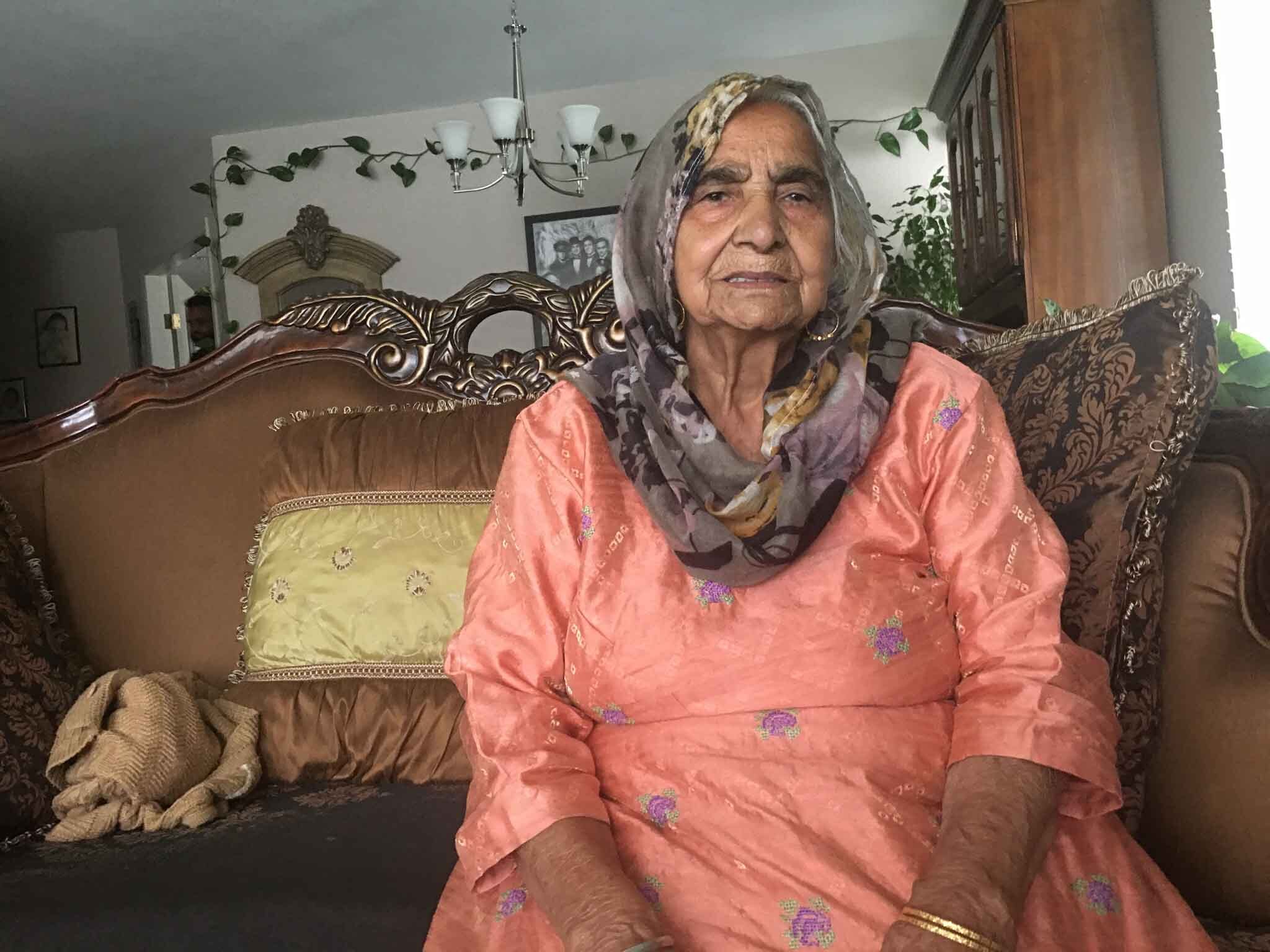
Surjit Kaur is giving an interview sitting in her living room for South Asian Studies Institute's 'Where Are The Women' collection. Surjit Kaur is wearing a pink-peach-coloured salwar suit, an Indian women's attire, with a chunni covering her head. She has gold hoops in her ears. There are several family photographs in the background, and a male family member can be seen entering the room.
Member of
Description
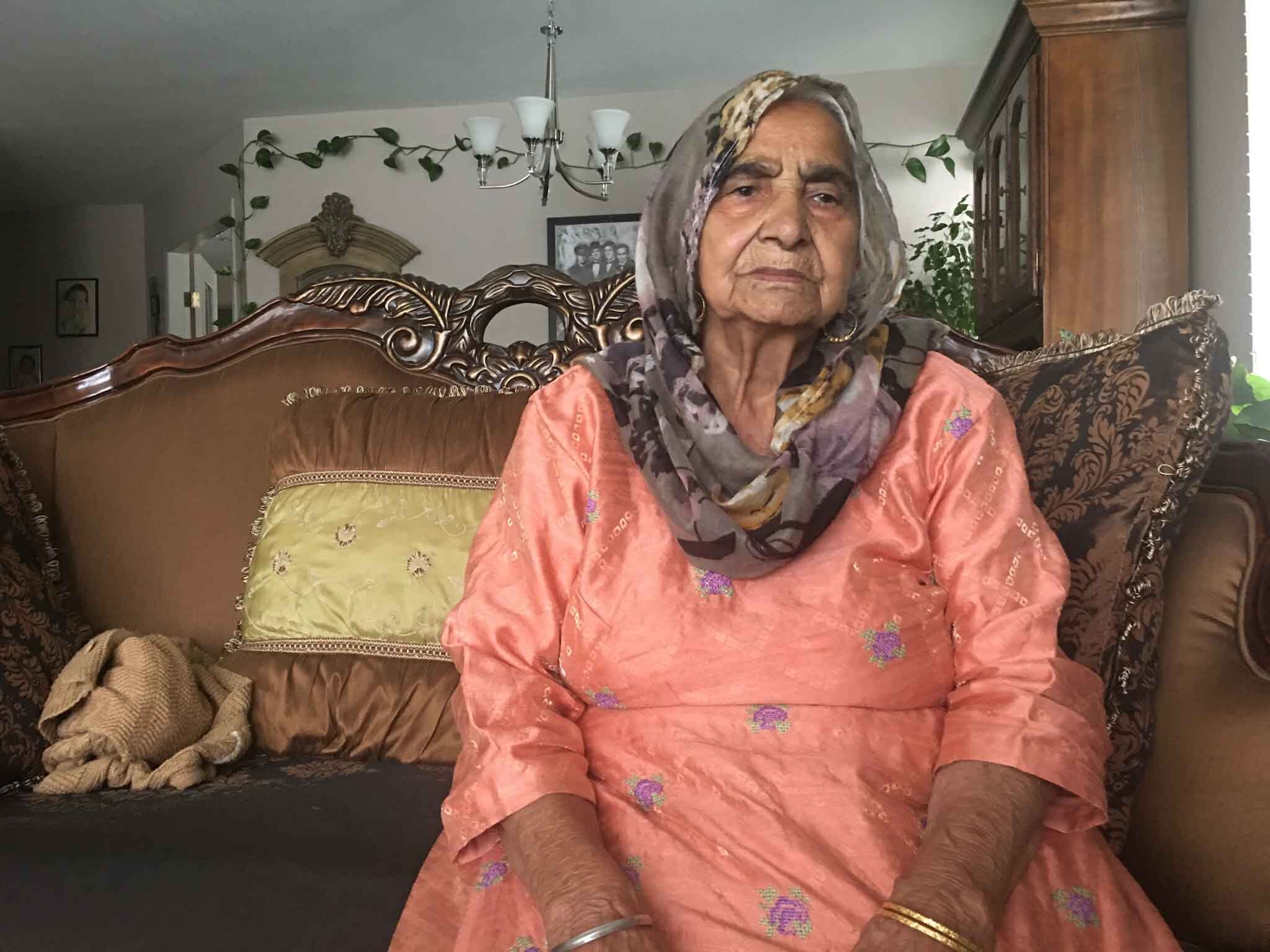
Surjit Kaur is giving an interview sitting in her living room for South Asian Studies Institute's 'Where Are The Women' collection. Surjit Kaur is wearing a pink-peach-coloured salwar suit, an Indian women's attire, with a chunni covering her head. She has gold hoops in her ears and two gold bangles on her wrist. On her right wrist is a karha, an iron bracelet that symbolizes a Sikh's earthly mission to commit good deeds. There are several family photographs in the background.
2022_05_03_005.pdf
(97.44 KB)
Member of
Description
This document is about Kuldip Gill's first poetry collection called Dharma Rasa, where there is an analysis of select poems about her parents, Bhagwant Kaur (1914-1980) and Indar Singh (1901-1969). First, Kuldip's "Love letters-Canada to India" depicts Indar Singh's painful separation from his family in the 1930s while he was in Canada and his family was in India. Second, Kuldip's poem "Oud ja Kaliya Kauva (Fly away black crow)" narrates Bhagwant Kaur's loneliness living without her husband with her in-laws. Third, Kuldip's poem "My Eyes Hurt When You're Not Here" shows Indar Singh haunted by memories of his wife, while working in Canada alone. Fourth, "The Dream Train," where Kuldip writes about her parents meeting in the dreamland to escape their separation. The document continues with depictions of "Love Song," "Kildeer's dance," "Samaran," and many others.
Audio file
Member of
Description
Audio recording of Nash Gill being interviewed by Rishi for the Canadian Sikh Heritage project. He was interviewed about his family's journey from India to Canada, where the interview primarily talked about his father, Indar Singh Gill. The interview revealed why the Gill family came to Canada, how Indar Singh earned money in Canada, and the Gill family's legacy in British Columbia.
2022_05_02_051.pdf
(160.84 KB)
Member of
Description
This is a document of Indar Singh's biography, where the information was given by his son, Nash Gill. The biography begins with a 17-year-old Indar Singh leaving India for Canada in 1930, while his wife and daughter were left behind. Because of the 1930s depression, Indar Singh had difficulty finding work but eventually did in Kamloops. Indar Singh worked as a sawmill worker and eventually became a business owner during his time in Canada. He was separated from his wife, Kartar Kaur, for 17 years before he was able to bring her and their newborn son to Canada; the couple had two additional daughters later.
2022_05_02_050.pdf
(83.2 KB)
Member of
Description
This is a document of Indar Singh's biography, where the information was given by his son, Nash Gill. The biography begins with a 17-year-old Indar Singh leaving India for Canada in 1930, while his wife and daughter were left behind. Because of the 1930s depression, Indar Singh had difficulty finding work but eventually did in Kamloops. Indar Singh worked as a sawmill worker and eventually became a business owner during his time in Canada. He was separated from his wife, Kartar Kaur, for 17 years before he was able to bring her and their newborn son to Canada; the couple had two additional daughters later.
2022_05_02_049.pdf
(126.54 KB)
Member of
Description
This is a document of Indar Singh's biography, where the information was given by his son, Nash Gill. The biography begins with a 17-year-old Indar Singh leaving India for Canada in 1930, while his wife and daughter were left behind. Because of the 1930s depression, Indar Singh had difficulty finding work but eventually did in Kamloops. Indar Singh worked as a sawmill worker and eventually became a business owner during his time in Canada. He was separated from his wife, Kartar Kaur, for 17 years before he was able to bring her and their newborn son to Canada; the couple had two additional daughters later.

Member of
Description
Nash Singh Gill is seated in an armchair after giving his interview about his father, Indar Singh Gill.